Special Category - Gold ARCHITECT: T. R. Hamzah & Yeang Sdn Bhd CLIENT: Tenaga Nasional Berhad (TNB), Commissioned by Penang Development Corporation (PDC) CONTRACTOR: CH2M Services Sdn Bhd
The pylons are an abstraction of the betel nut fruit (Areca Catechu), demonstrating how local cultural references can drive engineering design and innovation
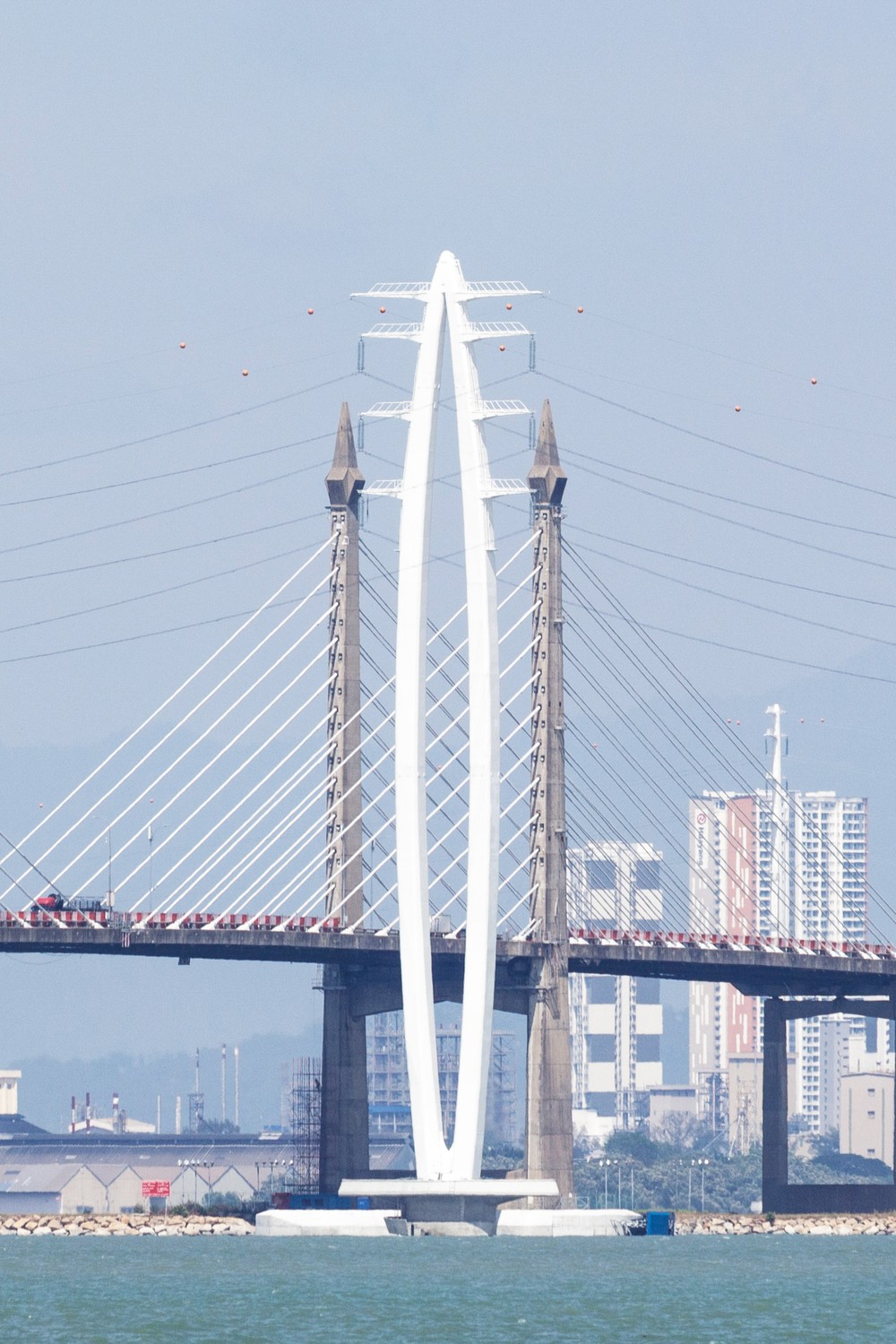
This project is unique because it transforms the conventional high-voltage transmission structure into a visually iconic and aesthetically fulfilling work of civic architecture, alongside Malaysia’s most recognisable bridge linking Penang Island to the Mainland. The TNB Monopole Transmission Towers form part of the electrical transmission line linking Mainland Penang to Penang Island. The project comprises twenty-two architecturally designed pylons across six typologies, unified by a single structural and formal language. This submission focuses on Type A design, the tallest and most visually prominent of the system.
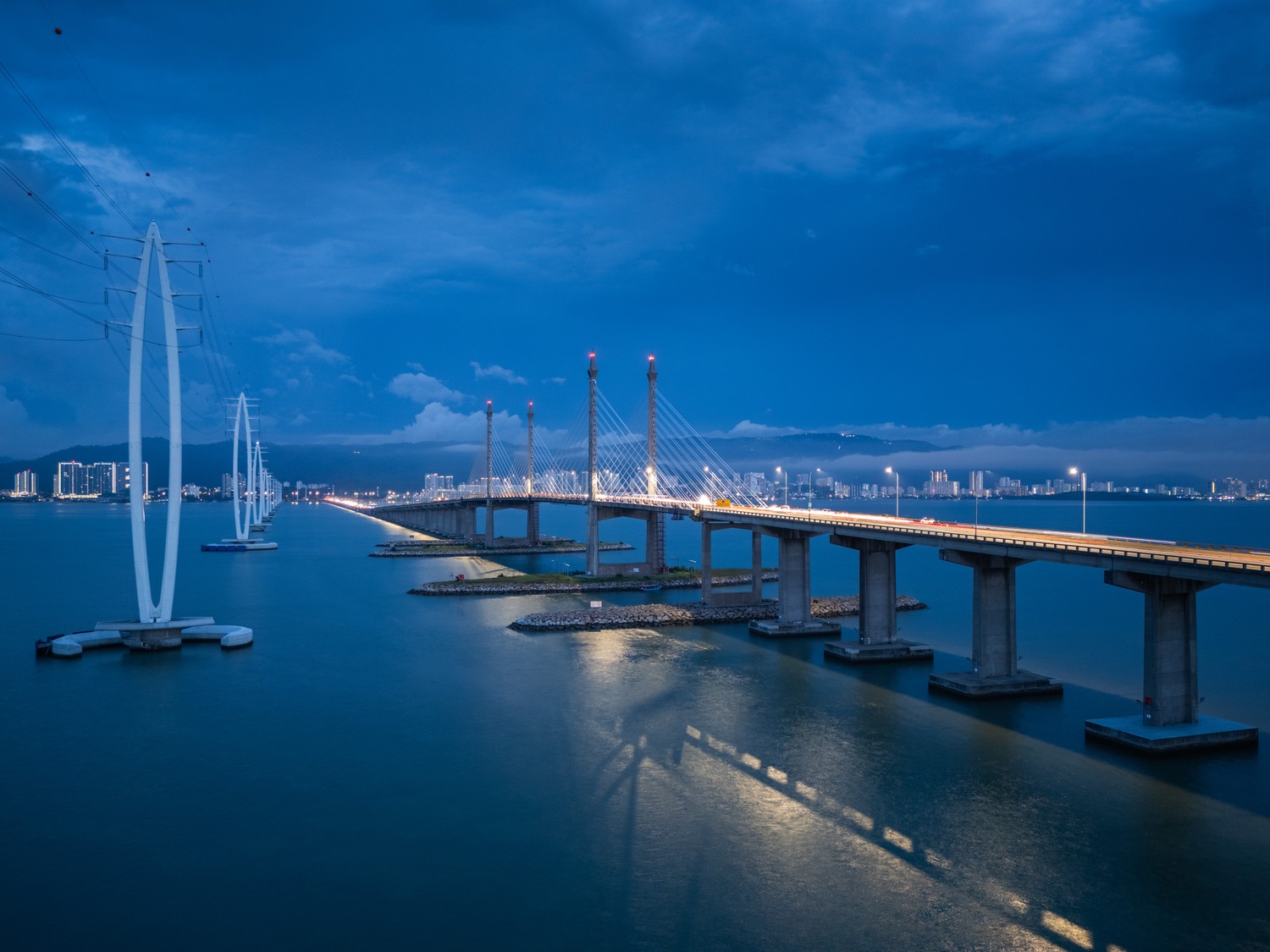
Night view of the pylons alongside the Penang Bridge
The uniqueness of the project lies in its inspiration from the betel nut, a cultural symbol of Penang, which is translated into an elegant architectural form. Infrastructure of this scale is typically treated as a purely technical structure, prioritising function and cost above all else. In this instance, as the towers stand adjacent to the Penang Bridge, one of the nation’s most recognisable infrastructural landmarks, their presence could not be neutral. They inevitably contribute to the skyline and to the daily visual experience of thousands of commuters and visitors using the bridge.
Originally proposed as an undersea cable, the transmission strategy was reconsidered due to cost, constructability, and long-term maintenance factors. The decision to adopt an above-sea solution introduced a new architectural question: how to introduce tall vertical elements into a horizontal coastal panorama without creating visual disorder. The answer was not to conceal the towers, but to refine them.
Because of their proximity to a national landmark, the pylons are designed to be aesthetically fulfilling and visually prominent to commuters on the bridge and avoid the ugly conventional pylon towers
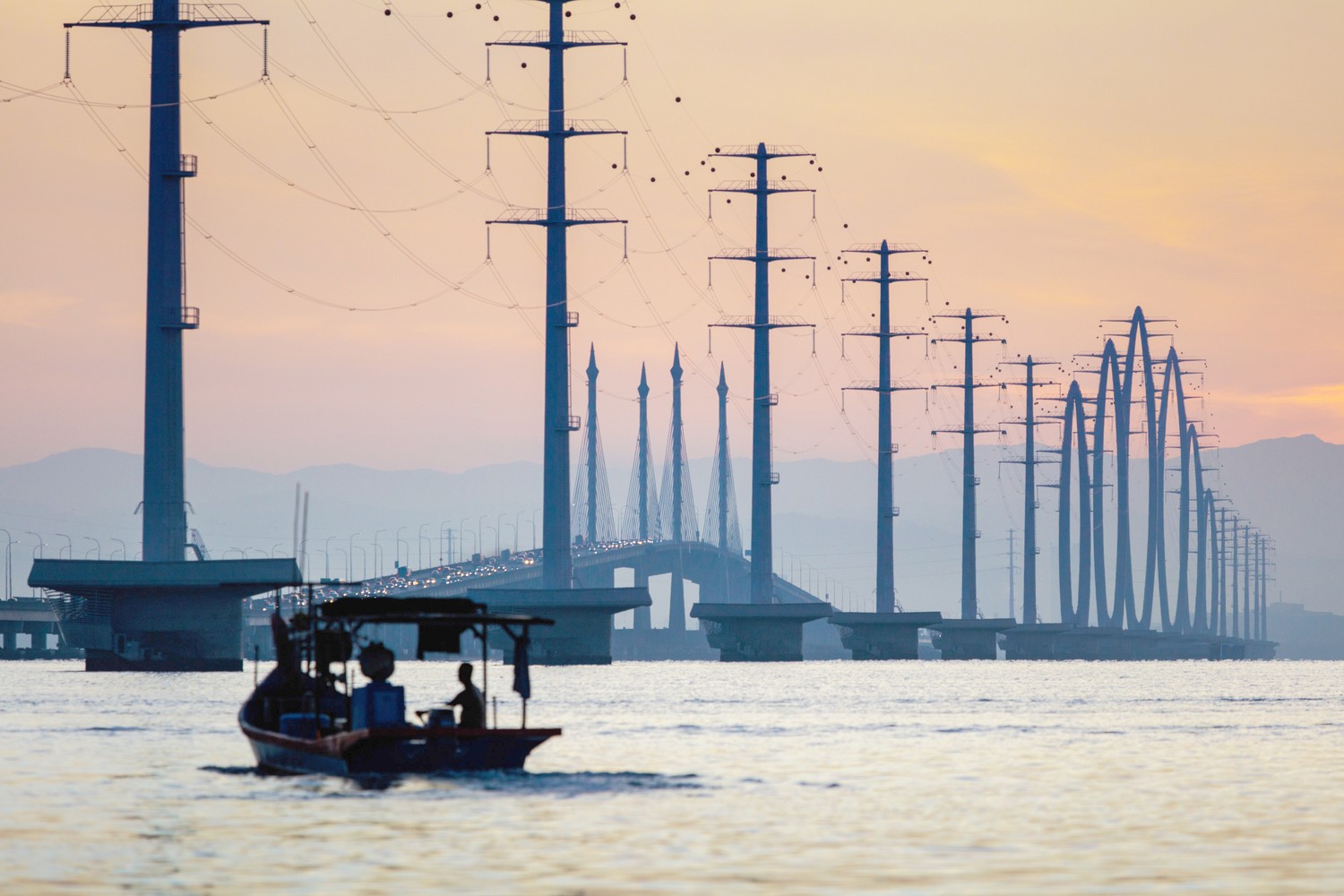
Instead of conventional lattice pylons, the project adopts a monopole configuration that consolidates the structure into a singular, legible form. This reduces visual complexity and creates clarity in its silhouette. The towers are composed as sculptural yet restrained vertical markers, designed to be read clearly from multiple vantage points along the bridge and coastline. Their proportions are calibrated to maintain balance with the scale of the sea, the sky, and the bridge structure.
Their geometry is biomorphic in character, tapering and swelling in a manner that suggests organic growth while remaining structurally rational. The cultural reference is subtle rather than literal, allowing the towers to resonate with regional identity without becoming aesthetically fulfilling objects.
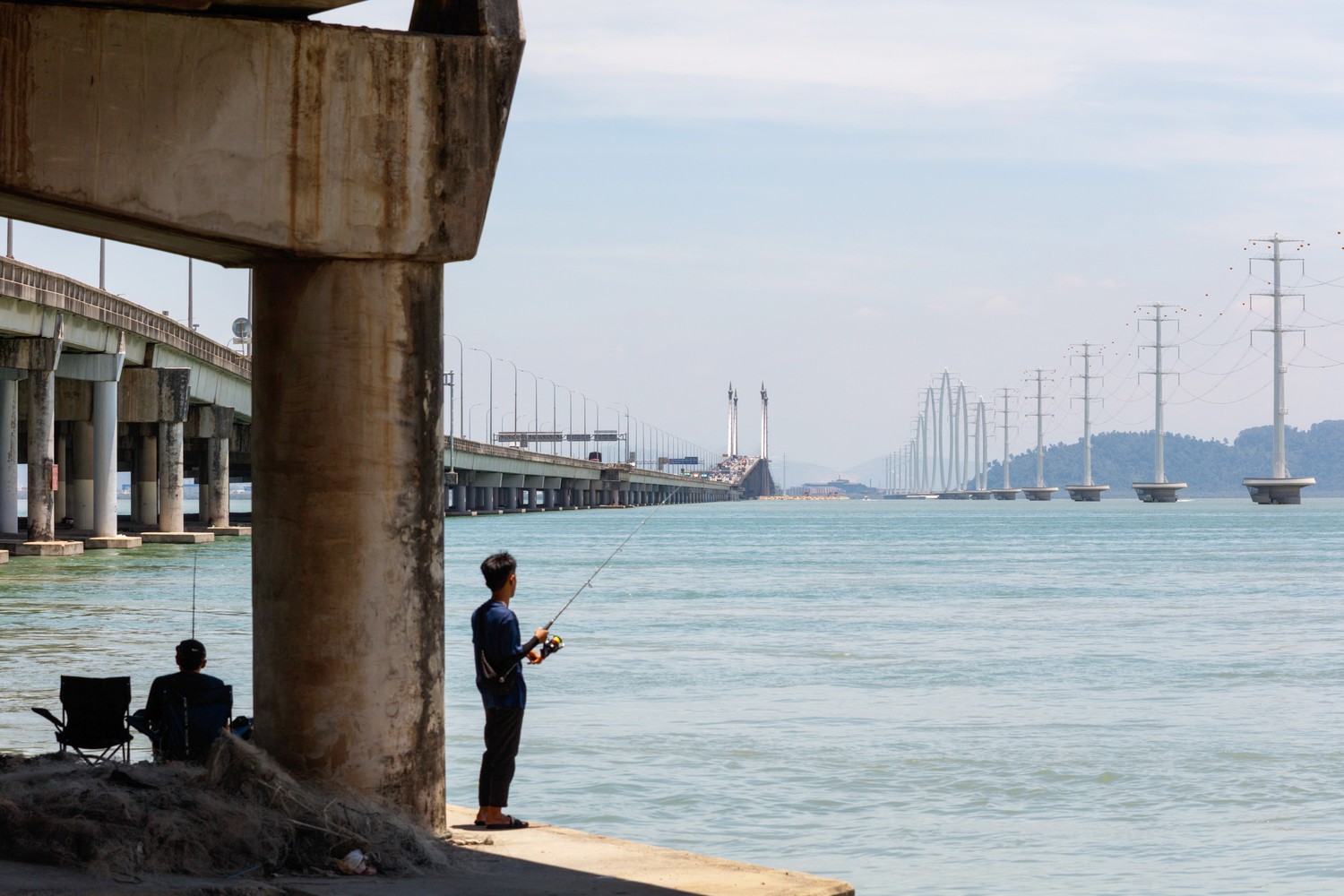
The evening view from distant pylons
Ultimately, the TNB Monopole Transmission Towers argue for a broader understanding of architecture. Infrastructure should neither remain anonymous nor be visually disruptive. Through proportion, restraint, and contextual awareness, they contribute meaningfully to making the bridge and the locality into a “place” and to the evolving identity of Penang’s coastal landscape.
A sculptural coastal landmark demonstrating how architectural thinking can elevate the design of utility infrastructure beyond pure engineering.
The TNB Monopole Transmission Towers are landmark infrastructures, designed to carry power between Malaysia’s mainland (PMU New Prai) and Penang Island. Commissioned by the Penang Development Corporation (PDC) and Tenaga Nasional Berhad (TNB), the towers serve as a 275kV transmission links running parallel to the iconic Penang Bridge