Set within the historic streetscape of Petaling Street, the Prism of Merdeka Pavilion reframes independence as an evolving, lived condition — a spatial dialogue between memory and aspiration, where reflection, colour and movement weave Kuala Lumpur’s past into its unfolding future.
Text by the architects
From disciplined vertical fins to a weave of colourful cotton threads, the façade transitions from structure to play
Set within the historic fabric of Petaling Street, the Prism of Merdeka Pavilion reimagines Merdeka as a layered, evolving experience – not a single moment frozen in time, but a condition of constant reflection and transformation.
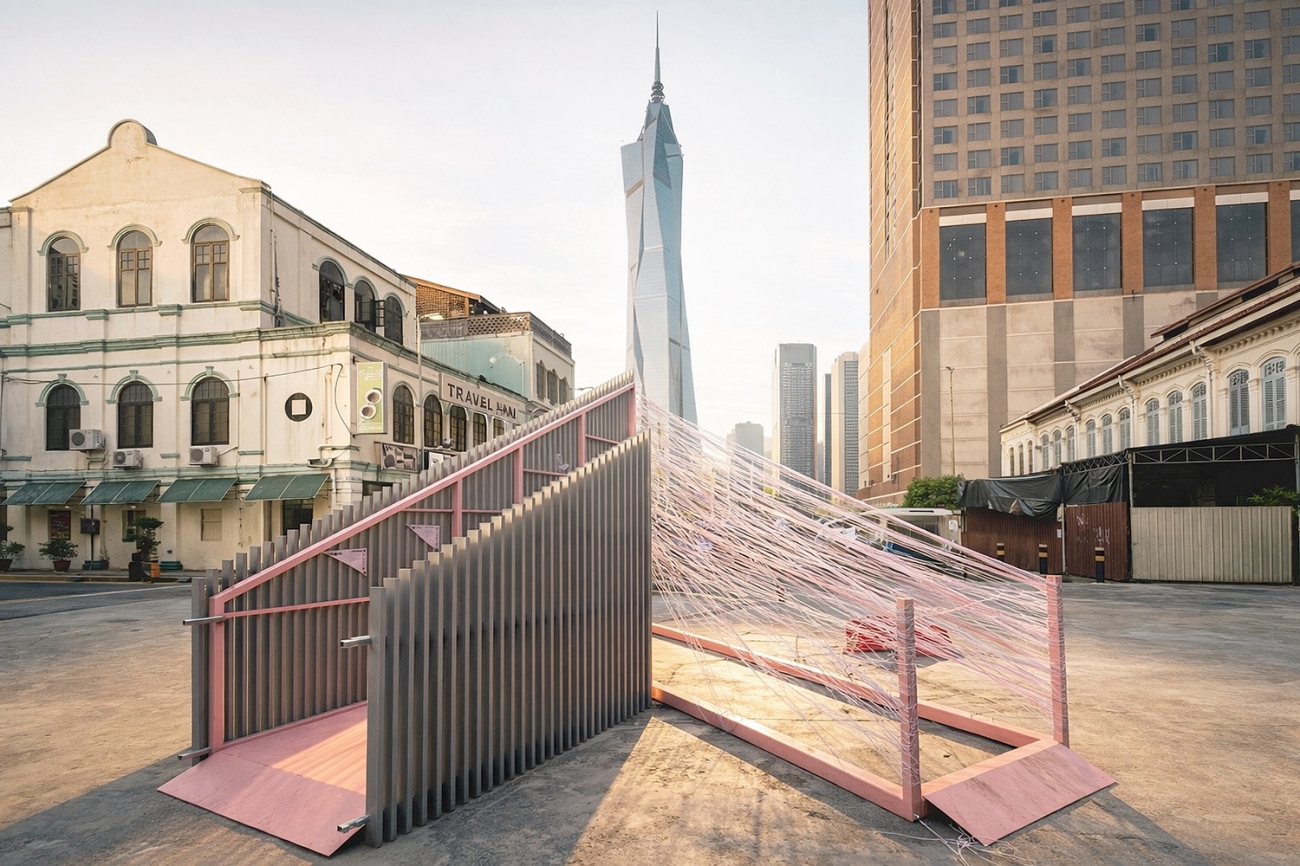
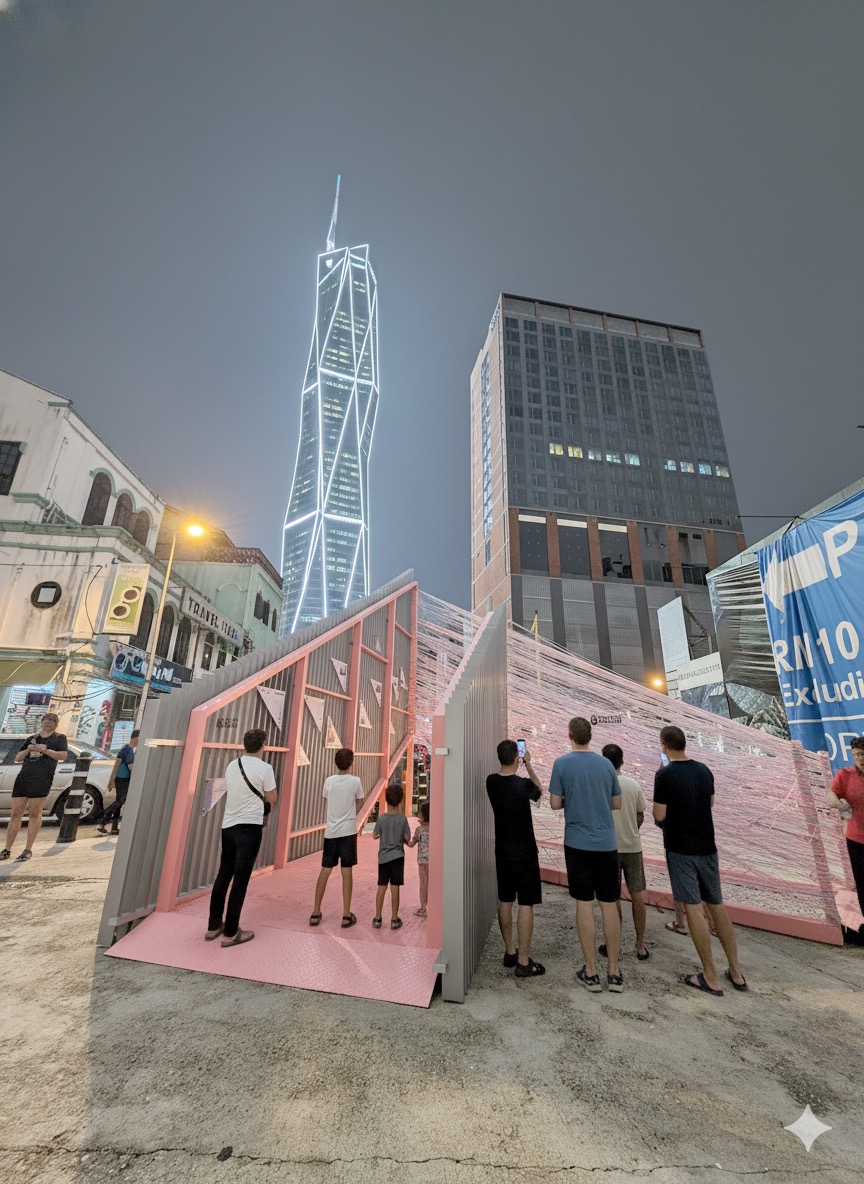
Inspired by the optical quality of a prism, the pavilion illustrates how a single idea of independence can generate multiple perspectives, emotions, and interpretations. Its triangular frames align toward Merdeka 118, forming a visual axis between the nation’s past and its aspirations for the future. Positioned between heritage shophouses and the modern skyline, the installation serves as a spatial bridge — where memory, urban life, and progress intersect.
The pavilion is intentionally designed with a dual condition. On one side, the structure retains its original language of pink frames and silver louvres. This side reflects the urban surroundings the textures of old shopfronts, the movement of pedestrians, and fragments of the city’s everyday life. The subtle reflectivity speaks of continuity, grounding the installation within its existing context and reminding visitors that Merdeka is built upon layers of history and lived experience.
Aluminium strip cladding, layering lightness over strength and allowing the structure to read as both frame and expression
Aluminium strip cladding, layering lightness over strength and allowing the structure to read as both frame and expression Inspired by the optical quality of a prism, the pavilion illustrates how a single idea of independence can generate multiple perspectives, emotions, and interpretations.
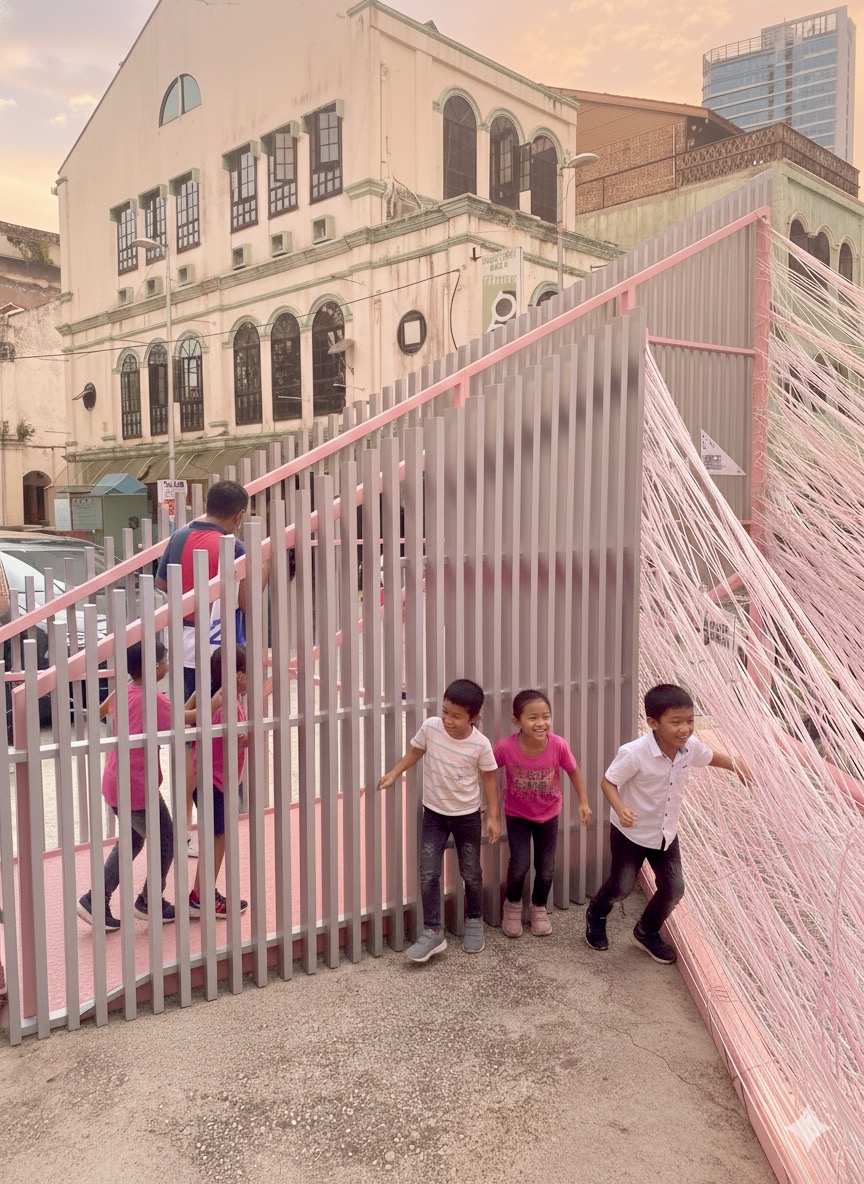
On the opposite side, a so! veil of colourful pastel cotton threads introduces a contrasting perception. These threads create a translucent membrane-filtering light, casting gentle shadows, and forming a more immersive, tactile environment. The colours represent the diversity of voices, cultures, and stories that make up Kuala Lumpur and Malaysia. As sunlight and movement alter their appearance throughout the day, they embody the idea that identity and freedom are never fixed — always shifting, weaving, and reweaving themselves through time.
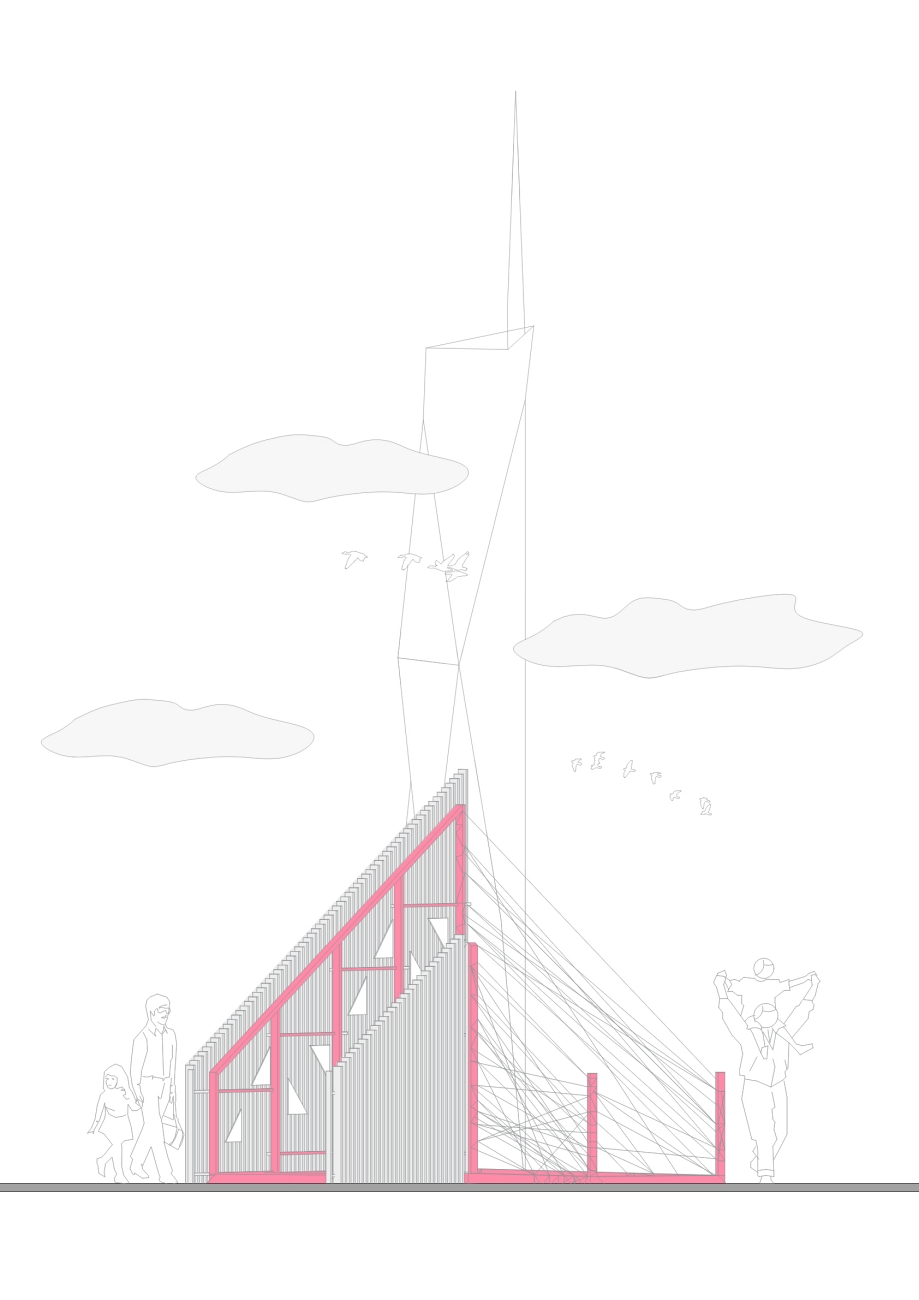
Front Elevation
Together, these two conditions form a spatial metaphor: One side reflects what has been, the other imagines what can become. As visitors walk through the pavilion, they encounter a timeline narrative of Petaling Street and Kuala Lumpur’s architectural evolution — from its early trading roots to its con-temporary urban identity. The structure becomes both a passage and a pause, encouraging people to slow down, obsearve, and rediscover the significance of the place they stand in.
As a temporary public installation, the Prism of Merdeka Pavilion embraces impermanence. It reminds us that architecture does not only exist in concrete and permanence, but also in memory, encounter, and experience. Just as the cotton threads may one day be removed, the ideas and reflections they inspire continue weaving into the city’s collective consciousness. More than a pavilion, this is a prism of memory and possibility — where light, colour, history and people converge to reflect the many meanings of Merdeka.
The colourful string façade dances with movement and light, a playful celebration of Malaysia’s vibrancy and unity. Each thread, like a ribbon of national spirit, weaves joy and energy into the architecture