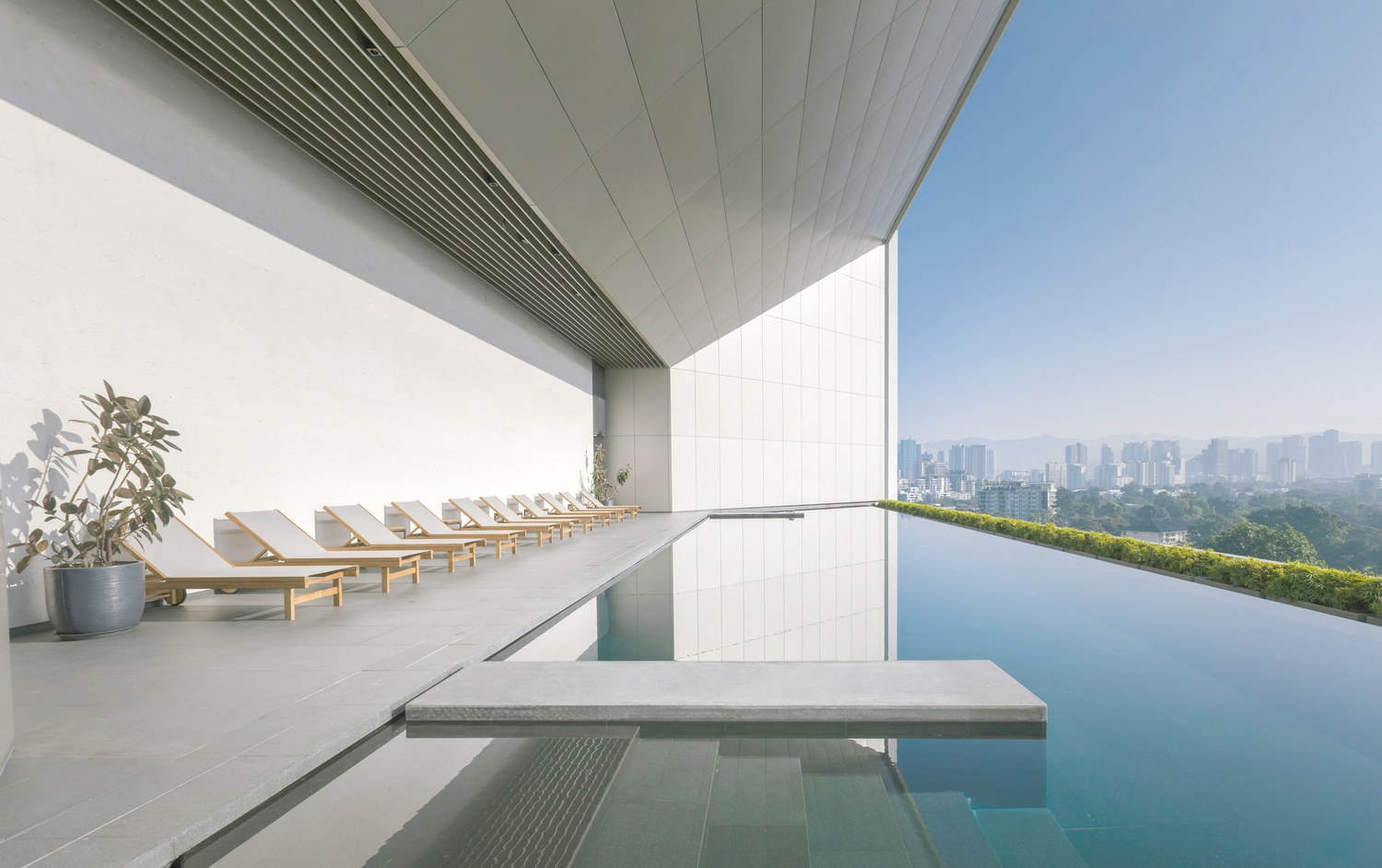
Architecture is more than the buildings we see—it is the experience of light, atmosphere, material, and movement through space. While architects shape these experiences, architectural photographers play an equally important role in revealing them to the world. Through a carefully composed image, they capture not only a building’s form, but also its character and the emotions it evokes.
Among Malaysia’s leading architectural photographers, Patrick Teow, professionally known as Heartpatrick, has developed a distinctive visual language that celebrates architecture as a lived experience rather than as a static form.
In this conversation, he reflects on his journey into architectural photography, the art of storytelling through the lens, and his observations on Malaysian architecture, heritage, and the evolving relationship between design, photography, and digital media. His insights remind us that the most memorable photographs do more than document buildings—they invite us to truly see them.
VN
When you first arrive at a project, what are you looking for beyond the architecture itself?
HP
For me, my photography work on a site starts before the camera is out. We usually do a round of recce sessions, during which I get to explore the various sections of the space. While the building stays the same, this is when I identify all the different moving parts (mentioned above) and study how they interact and affect the shoot’s outcome, especially as natural light shifts.
VN
How do you balance documenting the architect’s intentions with expressing your own interpretation of a space?
HP
During the assignment’s planning stage, we always request renderings from the architects. The rendering is key to understanding the architect’s vision for the space and is a strong indication of the type and style of visuals they would like. This is usually our starting point when planning the deliverables. Once we got these shots out of the way, the fun began as we explored other potential angles on the space that might not be immediately obvious. In the end, the ideal work we want to deliver is a good balance between the architect’s intent and our own vision.
VN
What makes a photograph reveal something about a building that a drawing or rendering cannot?
HP
As there are so many different elements at play, sometimes a drawing or rendering may not be able to consider the effect all these shifting elements have on a space visually, for example, the shape and texture of sunlight filtering through a series of openings and gaps, and what kind of shadows they can cast on the surfaces below.
VN
How important is the presence—or absence—of people in architectural photography?
HP
The addition of human subjects in a scene helps anchor the scale of the space; without them, we may not fully appreciate how vast (or tight) a space is. Injecting human subjects is also a great way to suggest the intent of a space. The viewer of a photo always tends to project themselves into the scene when they see a nice photo, and I feel the appeal of a photo (and the space it’s selling) is elevated so much more when we actually fill in the imagination the viewer has.
VN
What do you notice first when entering a space: light, material, scale, atmosphere, or something else?
HP
I’d love to use the word ‘vibe’. For me, it’s a direct evaluation of how the space makes me feel when I first enter it, and it’s usually a combination of many things – the design, the scale, the flow, the lighting, and the styling.
VN
How do you “read” a building before deciding where to place your camera?
HP
I have shared more in earlier responses. We usually start with a recce session that’s conducted on a separate day before the shoot. This is where we identify the potential (and challenges) of each section of the building.
VN
Are there spaces that are difficult to photograph because their qualities are experiential rather than visual?
HP
Definitely! Photography is essentially just us documenting one of
VN
Your photography journey began long before architecture became a major focus. How did you transition from travel, street and lifestyle photography into architectural photography?
HP
My break came when my friend, who was appointed editor at D+A magazine, got me in to cover a series of architecture projects in Malaysia, ranging from commercial office buildings to restaurants and boutique hotels. And that did two things. Firstly, it helped develop my interest in this field. My earlier work in shooting, especially weddings, sometimes did not give me the time to compose my shots and wait for the best weather conditions to realise what I had in mind. With architecture shoots, it was truly just between me and a subject that does not physically shift (and will not complain if I take three hours to get that one shot). Secondly, the exposure I gained from documenting these projects for architects, interior designers, and developers enabled me to take on more work in the same field.
Incidentally, this shift happened around the same time as third-wave coffee was taking off in KL. Suddenly, the city got a steady supply of cool cafes and spaces where I could bring my camera and spend hours. And that really helped seal in the direction of my photography journey from then on.
VN
Was there a particular building, city, or photographic assignment that made you realise architecture would become a central part of your practice?
HP
I could not pinpoint any particular site or assignment that gave me that strong realisation. It was really a combination of the constant stream of D+A assignments and other interesting food and beverage spaces, but these did happen within a short 1-2-year timeframe.
VN
Looking back, how has your understanding of architecture evolved through the act of photographing it?
HP
I have gradually developed the appreciation that while a building may really just be physically stationary, there cannot be anything more fluid than the experience of interacting with a space, from the way that a space looks with the shift of natural light throughout the day, the way humans interact and move around the space, and how differently a space look from observing it at different vantage points and perspective. Being able to spend days, and sometimes weeks, in the same space made me realise that the thought process behind crafting a space goes much deeper than one might think.
VN
What continues to excite you about photographing buildings after all these years?
HP
Before making photography my full-time career, I was in IT consulting for 15 years. I got worn down by the routine of a corporate desk job that I saw no end of – the same workplace, the same hours, the same colleagues and responsibilities. Some people may appreciate the stability and predictability of such a setup, but I was miserable and wanted something I could look forward to every day when I woke up. The IT job now feels like a different lifetime.
The exciting thing about shooting buildings is that none of them is the same. The location, the vibe, the architectural style, the flow of the space, and how they change with the shift in natural light, down to the people we have to deal with regarding access. All these moving parts make each project a freshly unique experience. And I love the challenge of teasing out the best story I could tell.
VN
Many people see architectural photography as simply the documentation of a building. You seem to approach it as storytelling. What story are you trying to tell when you photograph architecture?
HP
I feel a good photo evokes emotion and curiosity, inviting viewers to head over to the space and explore more. our five senses. Many of the cool spaces that I have been playing with involve our other senses as well. Also, photography can capture only a single frame of the experience, whereas certain spaces excel at creating an entire experience that builds on a storyline. I feel videos may do these spaces more justice, which is also why IG Reels and TikToks are fast becoming essential formats for extending a space’s storytelling.
VN
Can a photograph capture atmosphere, or does it inevitably simplify the experience of architecture?
HP
We experience the world in continuous frames. Some moments may be magical, but they are fleeting. I feel that a photograph, when captured at the right moment, helps immortalise that fleeting, magical scene. For example, that brief 10- to 15-minute window of the rising or setting sun, dressing everything in the softest warm hues. Most people will look at the photo and say our photography skills are good, but the magic is that it’s technically there for that brief moment, and anyone with a camera could get some reasonably good shots.
VN
Which architectural qualities are the most challenging to communicate through photography?
HP
I feel the sense of the scale of space is a tricky thing to capture. The combination of different focal lengths and perspectives can significantly alter a viewer’s impression of a space’s actual size in a photo. But this is also where photography is so interesting, because photographers determine how large or small the space will appear, depending on the effects we want to convey.
VN
Having photographed numerous projects across Malaysia, what unique qualities do you think define Malaysian architecture today?
HP
The Malaysian experience is such a beautiful drawing board of inspiration, from colonial buildings and Straits shophouses to culturally inspired motifs and textures, and to our small towns and kampung baru, set against the backdrop of a tropical country with lush rainforest and greenery. I love projects that draw on the story of their setting.
VN
What aspects of Malaysian cities and urban spaces do you feel are underappreciated?
HP
We are not doing enough to preserve old buildings. They are bridges to our roots and history, and they deserve to be maintained and experienced by f uture generations.
VN
Your work often explores the relationship between old and new in cities such as Kuala Lumpur, Penang and Malacca. What draws you to these urban contrasts?
HP
It’s quite close to my response to question 15. Penang and Malacca were among the first places to be developed in Malaysia, and naturally, their buildings date back further and hold greater historical and cultural significance. I’m always intrigued by the preservation efforts on them and how architects integrate and adapt them for modern use.
VN
How do heritage buildings and contemporary architecture differ as photographic subjects?
HP
Heritage buildings usually have a more intimate setting. I would pay more attention to capturing finer, more intricate details, some of which appear in the most surprising spots throughout the building. Contemporary architecture often seeks to impress with grander gestures, so I start with wider shots to capture its magic.
VN
Are there places in Malaysia that you believe deserve much more attention from architects and designers?
HP
As urbanisation progresses, we tend to focus our attention and effort on big cities where opportunities are, leaving many of our small towns behind. After exploring many other countries, I feel that Malaysian small towns hold a unique charm I have not seen anywhere else in the world. Places like Papan and Sg. Lembing could see a beautiful revival of interest again if we just care to restore them.
VN
Light seems to be a recurring protagonist in your work. How does light shape your understanding of architecture?
HP
Light is the only reason we can see anything. Our interpretation of a space is really just us collecting the light rays that bounce off it. I have come to appreciate how differently the same space can look at different times of the day. I feel a good design anticipates how the shifting of daylight relative to its orientation affects its appearance.
VN
How much patience is involved in waiting for the “right moment” to photograph a building?
HP
I always tell my friend that my work is 80% planning and waiting for the right weather, and 20% actual photography. So yes, architecture photographers are very patient people, and with Malaysia’s inconsistent (and unpredictable) weather patterns, it can be frustrating at times. But the rewards that we get when we finally hit a beautiful day are worth it. VN: Have you ever returned to the same building repeatedly because the photograph you envisioned had not yet appeared?
All the time. A one-day shoot rarely happens in a single day because we end up splitting the coverage into multiple sessions over days, sometimes weeks. We usually tackle a project by breaking it into multiple sections, each of which looks its best at a certain time of day. And if the weather doesn’t work on shoot day, we will need to return when it does.
VN
How do weather, seasons and time of day alter the character of architecture?
HP
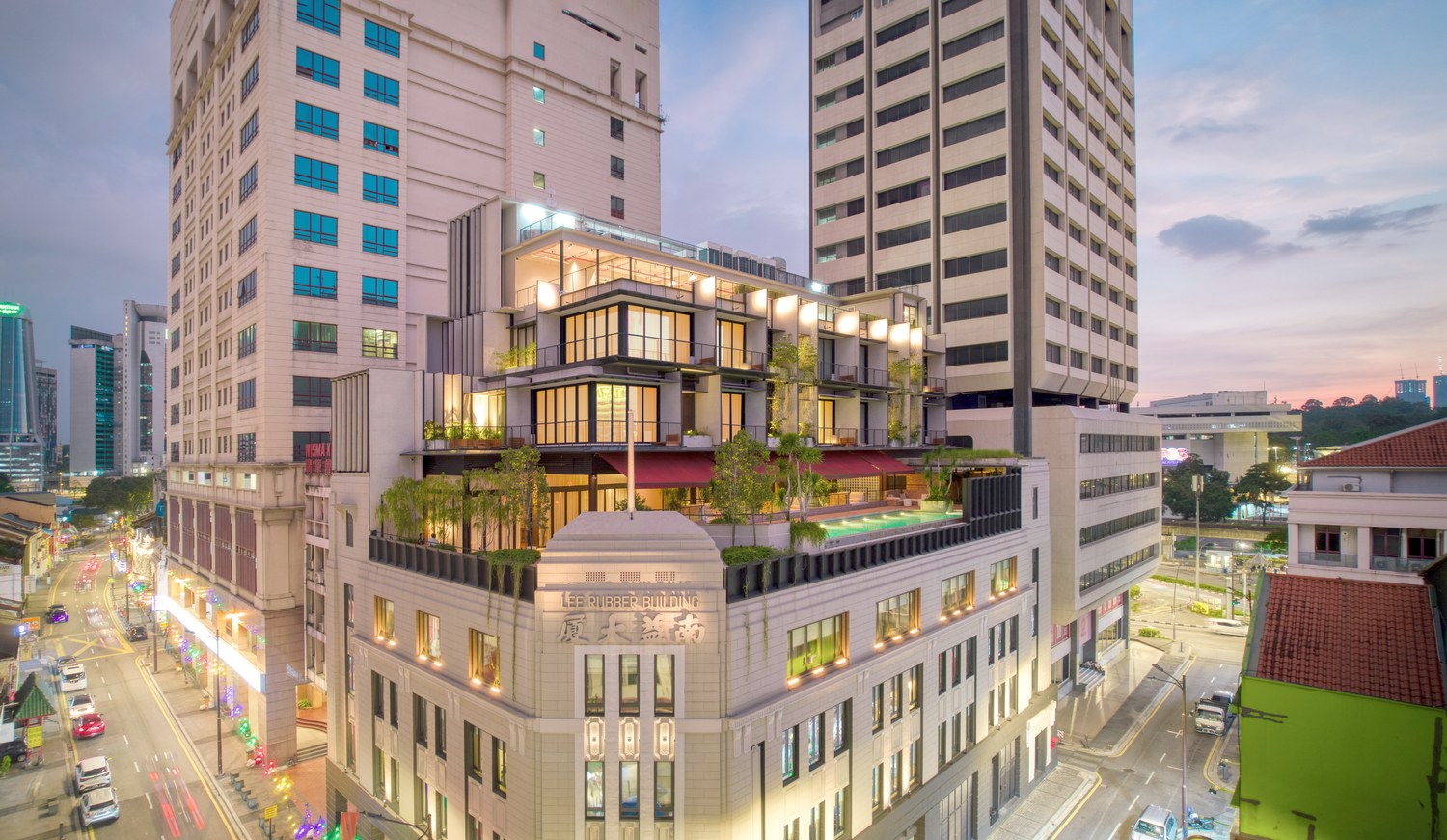
A bright, sunny day often features stronger, more solid light that works surprisingly well for buildings with many facets and architectural details, as the shadows and contrasts help emphasise and elevate them. Softer light, closer to dusk and dawn, is best for highlighting sites that show a strong connection between their interiors and exteriors, and it also helps suggest a softer, more laid-back vibe. This is what we call the ‘magic hour’, and while it only lasts for 10-15 minutes, we usually get our best shots around this time.
VN
Do you ever feel that architecture reveals itself differently at night than during the day?
HP
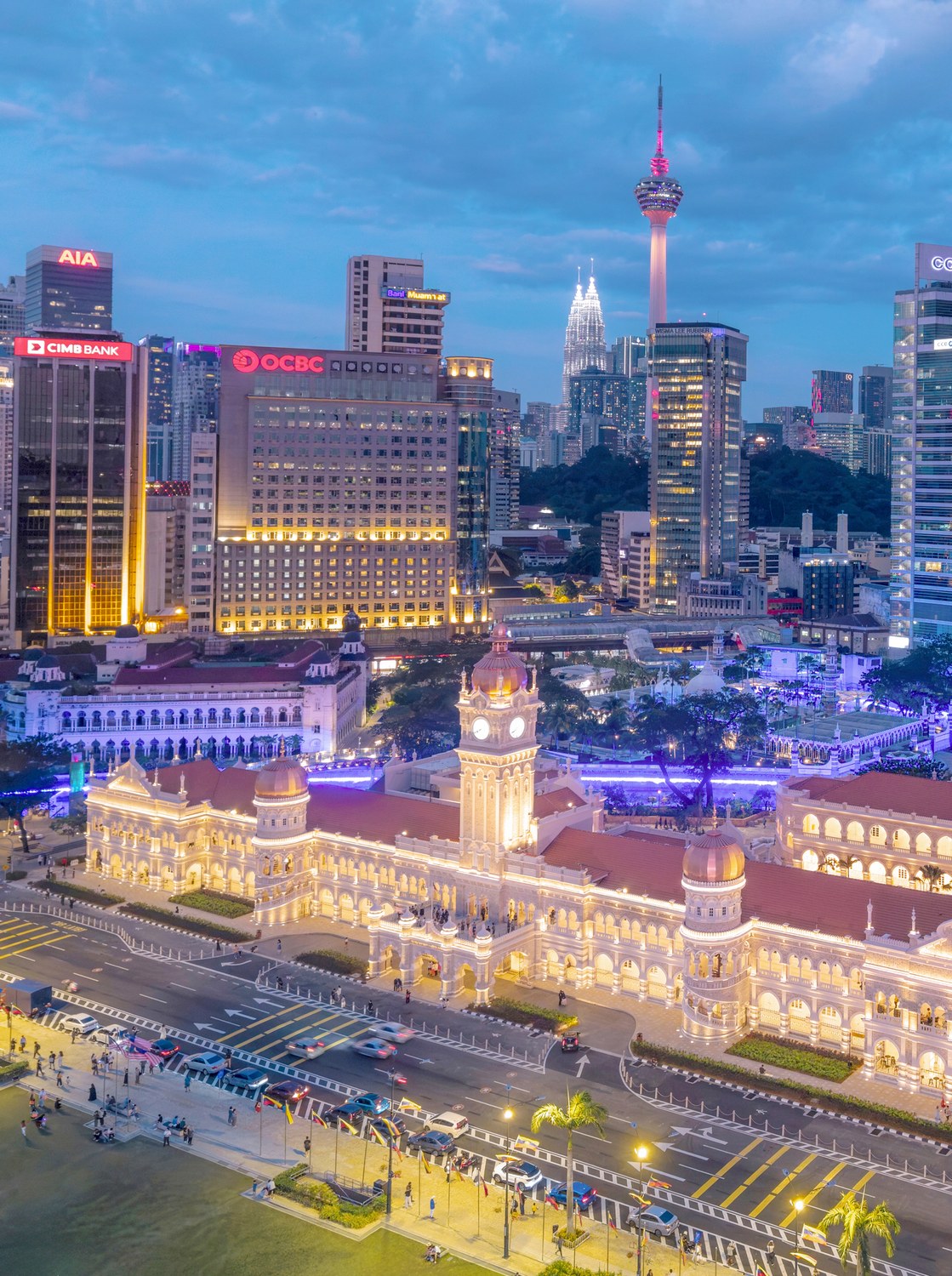
It very well does. During the day, the interiors of a building are usually not immediately obvious and well presented, as the daylight on the exterior has most probably overpowered the scene. With the exterior daylight gone, the story shifts to the interiors, and we can let the details from the inside be the hero of the shot.
VN
Instagram and social media have transformed how people consume architectural imagery. Has this changed the way architecture is designed or photographed?
HP
It definitely does. Socials are mobile phone-centric, i.e., vertical screens. And I find myself taking more time now to envision a shot I will shoot vertically if I know I’m going to be presenting it on social media. It’s easy to spot spaces nowadays that are designed for social media. They usually have their key angles dressed up with opportunities for a human subject to be placed inside to interact with them, and feature vertically oriented details to ‘fill the frame’ of a phone.
VN
Are architects becoming more conscious of how their projects will appear in photographs?
HP
Yes, I feel so. Architectural firms have asked me to share my photography process when shooting buildings, and I feel this is their way of finding out what to look for in a building designed to look good in photographs. It’s interesting to note that even things like the wrong placement of a lamppost will affect a good shot. (For example, a lamppost planted carelessly off on an otherwise symmetrical shot). Buildings are also often designed with interesting shapes and details that can only be appreciated from an aerial perspective. And this is because many of us own drones and would definitely want to shoot the building from the air.
VN
What are the opportunities and dangers of architecture being increasingly experienced through screens?
HP
With visual representations of buildings becoming increasingly important for selling the vibe and value of a space on social media, I do feel that sometimes we may go overboard, focusing on aesthetics rather than practicality and functionality. Picture stories-high bookcases with books that nobody will ever be able to reach and read. Or visitors travelling to an archaeological site just to get that instafamous shot, ignoring its cultural significance or history, or even taking time to explore other parts of the site that could be similarly interesting.
On a positive note, the advent of viral images of cool buildings has definitely helped elevate people’s interest in architecture, reinforcing the role of good design and visually appealing scenes in a building’s overall success. This, in turn, allows architects to focus on creating more interesting spaces to explore in the future.
VN
How do you balance creating visually striking images with producing honest representations of a building?
HP
I feel striking images of a building should really be an extension of an actually well-designed building. Some spaces pay all their attention to ‘dressing up’ a few Instagram angles, ignoring the fact that the vibe of these ‘decorated’ spots does not carry over into the rest of the building.
VN
After photographing so many projects, what separates memorable architecture from ordinary architecture?
HP
The projects I keep thinking about years after photographing them are the ones that continue to surprise me as I move my camera through the space and across different times of day. These are usually projects that understand how light and perspective work.
VN
What common mistakes do architects make when thinking about how their buildings will be experienced?
HP
Architects may sometimes forget that humans do not fly. I have seen designs that look most impressive from up in the air, but on a day-to-day basis, the regular visitor to a building is stuck at ground level, within the confines of walkways and interior spaces. The space should remain interesting, if not more so, when experienced through the eyes of a regular, nonflying visitor.
On another note, architects should realise there WILL be additional elements installed on their creations, such as way-finding signage, TV screens, directories, and large hanging banners. I don’t think we’re short on examples of these addons killing the design. If we can plan and integrate these items into the overall architectural design, the final experience would be much more appealing.
VN
Which architects or designers have influenced the way you see space?
HP
I can’t think of anyone more influential to me than Seksan. The way he uses and combines everyday local materials to create the most interesting designs and spaces that feel so elevated yet so grounded has kept me inspired for a long time. Being a plant lover myself, I love to observe how he vastly improves the vibe of a space with the clever use of different plants.
VN
Are there contemporary architectural trends that excite you—or concern you?
HP
The adaptive reuse trend is truly exciting and inspiring. Set against the Malaysian context, where we have a string of old, forgotten buildings. Being able to witness architects adapting and reimagining the space to give it a new lease of life is just beautiful.
VN
What lessons can architects learn from photographers about observation?
HP
It would be that a person experiencing a building does not differentiate between architecture, interior, and landscape. We take it all as one unbroken experience. The wrong type of trees, misplaced lampposts, or signage can make or break a place. While I understand the scope of an architect may not extend to other design fields, I’m positive nobody wants to kill the vibe purposely, so perhaps some form of influence needs to be established.
VN
Has photography changed the way you inhabit spaces in everyday life?
HP
I pay very close attention to light control now. I love bright, airy spaces, and I have chosen my current space as it has both morning and afternoon sunlight. A photogenic space is also one that will continue to inspire me, so I made sure to spend time dressing up every corner of my space.
VN
Are there buildings you revisit repeatedly, even when there is no assignment involved?
HP
Sekeping Retreats and other similarly designed charming stays around Malaysia.
VN
What project or photograph are you most proud of, and why?
HP
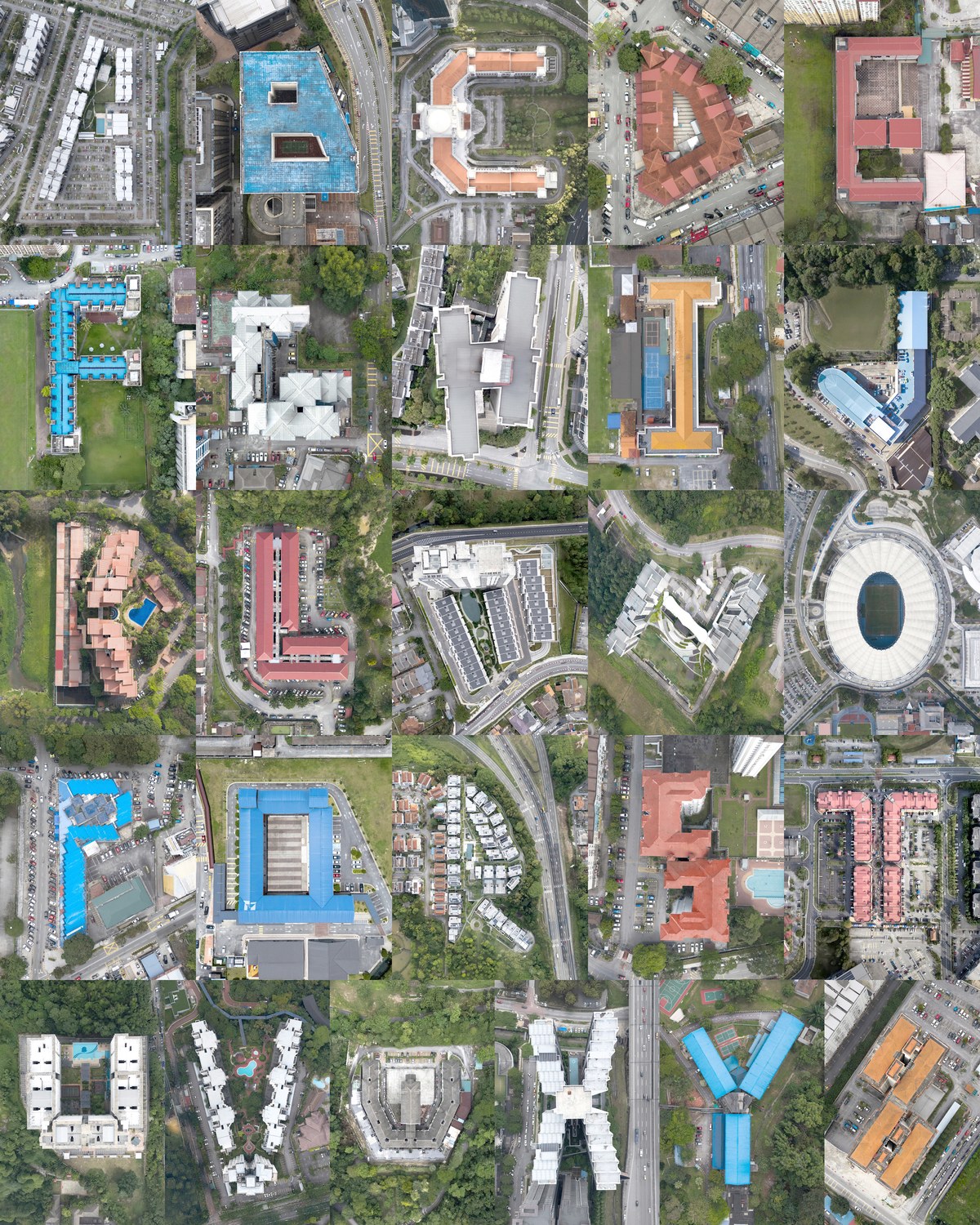
It would definitely be the KL Alphabet project. It’s a compilation of aerial photos of buildings in KL resembling the letters of the English alphabet. It took me months to hunt and document all 26 of them. Definitely my most fulfilling project ever.
VN
If you could spend a week photographing any building in the world, what would it be?
HP
It would definitely be the Basilica of the Sagrada Familia in Barcelona. Gaudi’s masterpiece has finally topped off. And during my only visit there years ago, it was so crowded that I could not really linger long enough to get decent shots. A week here (without any other tourists) would be God-sent.
VN
What still surprises you about architecture?
HP
It is this field that keeps me excited every single day. Perhaps, aside from the hours we spend hiking, we are always in some form of architecture. I love that this field has remained vibrant and exciting. I keep a wish list of spaces to visit, and this list has never gotten shorter despite all my travels and exploring.
VN
How do you see architectural photography evolving with drones, AI, immersive media and new technologies?
HP
I feel the emergence of drones (and aerial photography) has pushed architects to pay more attention to how their designs look from the air. Beyond the boundaries of physical and traditional building materials, immersive media and other new tech are extending the experience with interesting installations. We are in exciting times.
VN
What advice would you give young architects about understanding and communicating their work visually?
HP
It would also be worth spending time developing their eye for photography, as a building is only ever as interesting as it is through a visitor’s eyes. Spend time understanding how non-core architectural elements (as mentioned earlier) could affect the outcome of their design. I learned a lot by looking at impressive architectural photos and then visiting the actual sites to see how and where they were taken. This process reveals a lot about the design elements that made it so visually compelling. It could be the presence of symmetry, leading lines, stacked perspectives, or maybe an element of surprise when different sections of the building lined up visually to create an interesting pattern.
VN
What advice would you give young photographers who wish to specialise in architecture?
HP
Similar to the above approach, I would encourage them to collect a set of impressive architectural photos of a site, then visit the site to recreate them. This process forces them to go through the same thought process and experience of finding that angle, which helps develop their photography eye for future projects with similar visual potential.
VN
Finally, after years of documenting buildings, cities and landscapes, what does architecture mean to you today?
HP
Architecture is such a natural part of our everyday life that the boundaries between it and other areas have blurred to the point where I sometimes can’t tell where it starts and where it ends. Many people think architecture means striking skyscrapers, grand museums, and posh malls, but to me, it’s simply the art of how we interact with the space around us.
VN
When people look at one of your photographs, what do you hope they see beyond the building itself?
HP
I hope they also appreciate the effort we may have put into getting that shot, and the story we want to present beyond the obvious visuals.
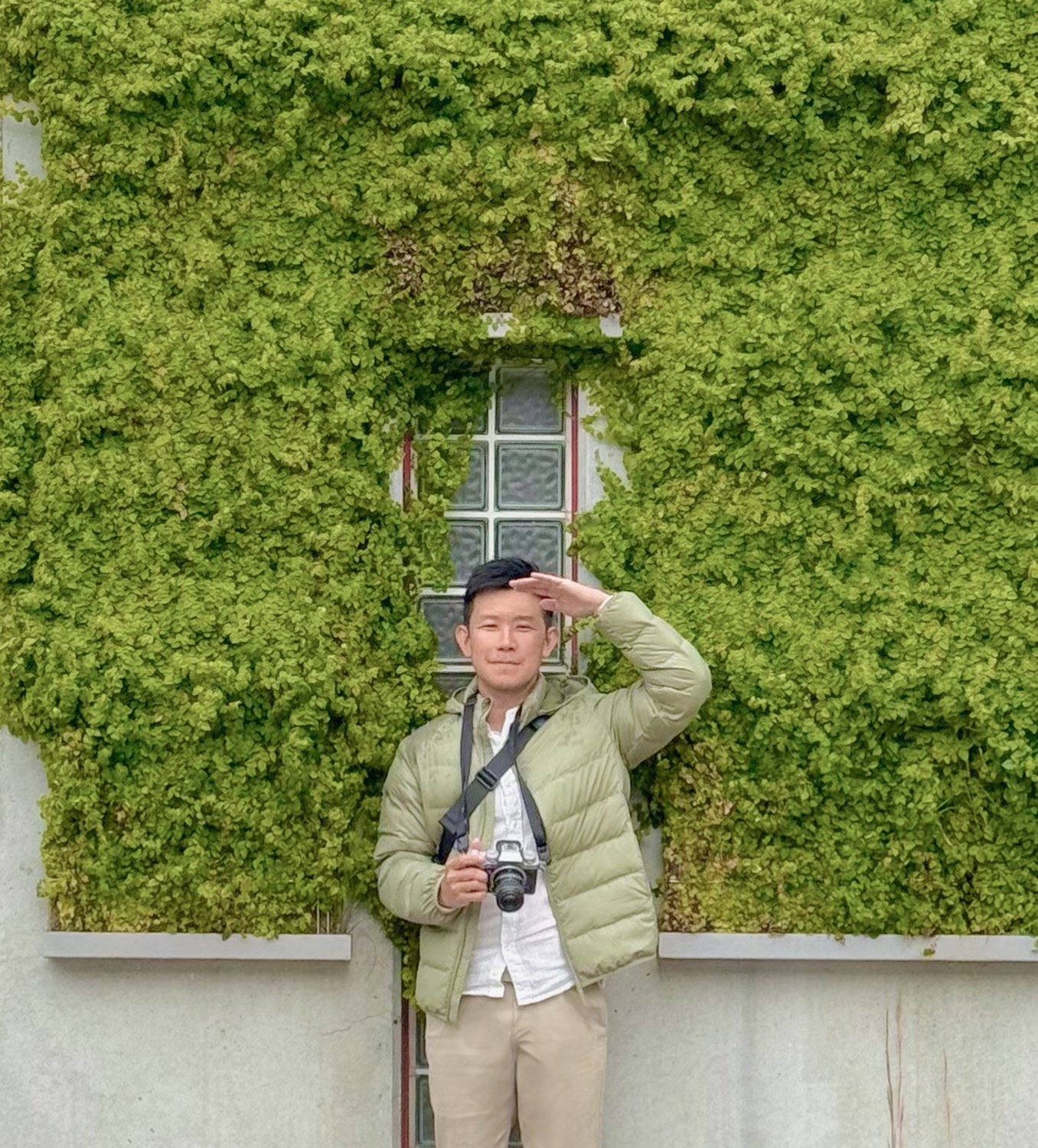
PATRICK is a Kuala Lumpur-based visual storyteller and commercial photographer. Although academically trained in engineering, he soon realised his true calling was in documenting the colourful urban stories unfolding around him. What started as passion projects in travel and portrait photography naturally expanded over the years into full-scale commercial shoots focusing on architecture and interiors.
VERONICA NG is a Professor and Head of the Department of Architecture at Sunway University, with research interests in place-making and contemporary Malaysian architecture. Her work is grounded in her PhD, titled Rethinking Place, and extends to sociospatial studies of migrant housing and purpose-driven learning in architecture education. Committed to bridging education, research, and real-world application, she champions empathetic, place-based design approaches that empower local communities and contribute to a sustainable urban future. They include the educational programme in Malaysia with Aga Khan Trust for Culture, and curated community-based projects such as Pavilion-NOW, SentulWorks, and the Kampong Baru Vernadoc Camp. As an avid writer, she has authored books and contributed regularly to Architecture Asia, World Architecture, Architecture Malaysia, and d+a. Actively engaged in editorial and curatorial work, Veronica serves on PAM’s Media and Publication Committee and PAM Education Committee.