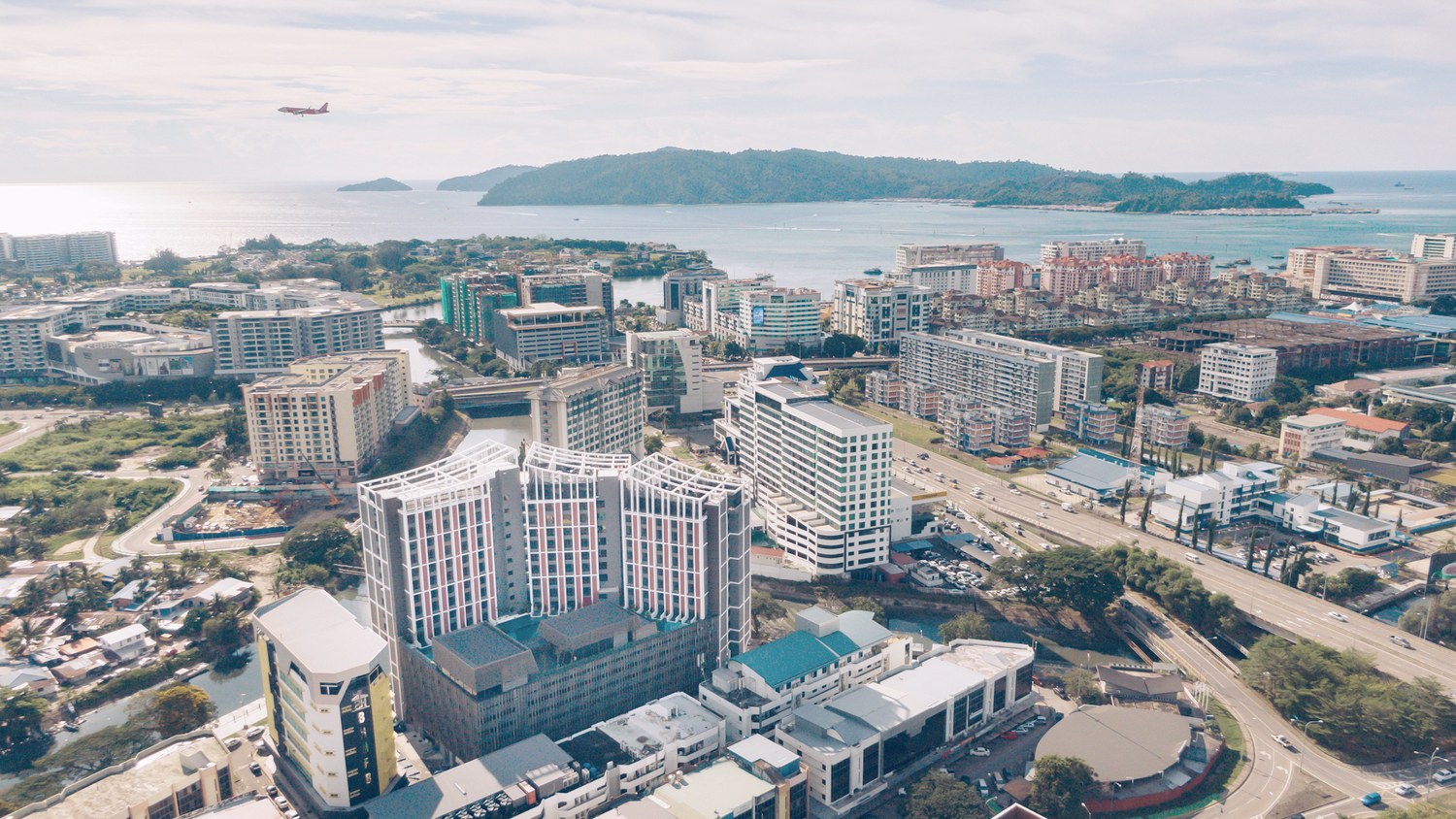
Sutera Bay by Arkitek KOPA weaves Sabah’s cultural identity into a contemporary riverfront destination. Text by the architects
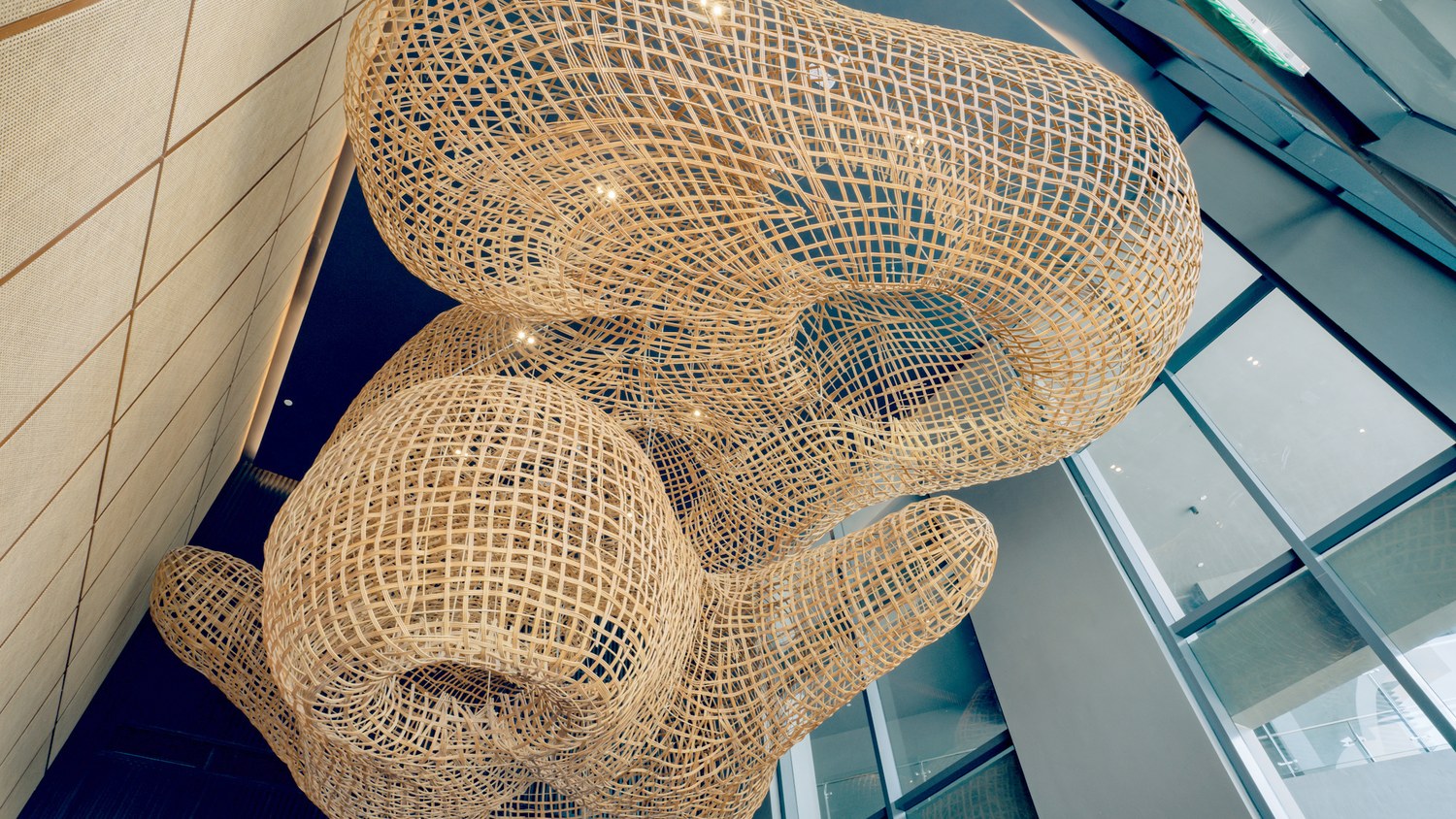
Rattan-inspired sculpture reinterprets traditional references in a fluid manner
Architecture has the power to shape not only skylines but also the stories that define a place. At its best, it becomes a vessel for culture, memory, and identity, connecting people with their surroundings through meaningful spatial experiences. This philosophy forms the foundation of Sutera Bay, a mixed-use commercial and hospitality development in Sadong Jaya, Kota Kinabalu. Rather than pursuing a generic international aesthetic, the project embraces Sabah’s cultural heritage, tropical climate, and waterfront setting to create an architecture that is unmistakably rooted in its context.
Strategically positioned along the Sembulan River within the Kota Kinabalu Central Business District, Sutera Bay forms part of the wider Sembulan River Waterfront Regeneration. The development contributes to the city’s continuing transformation by activating the riverfront, strengthening pedestrian connectivity, and introducing a vibrant commercial and hospitality destination that complements the evolving urban skyline. More than a collection of buildings, the project seeks to establish a dialogue between architecture, landscape, and the city’s natural environment.
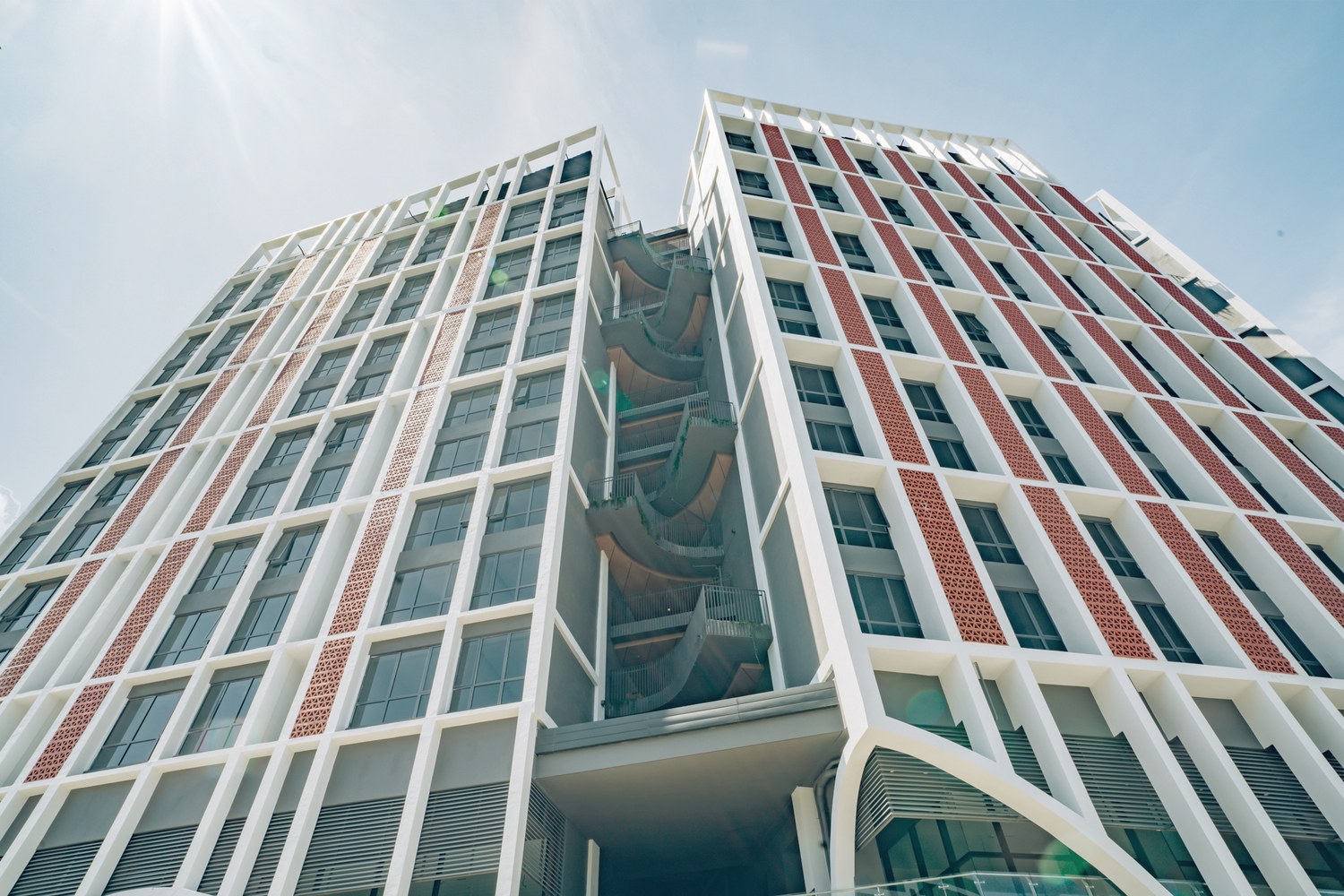
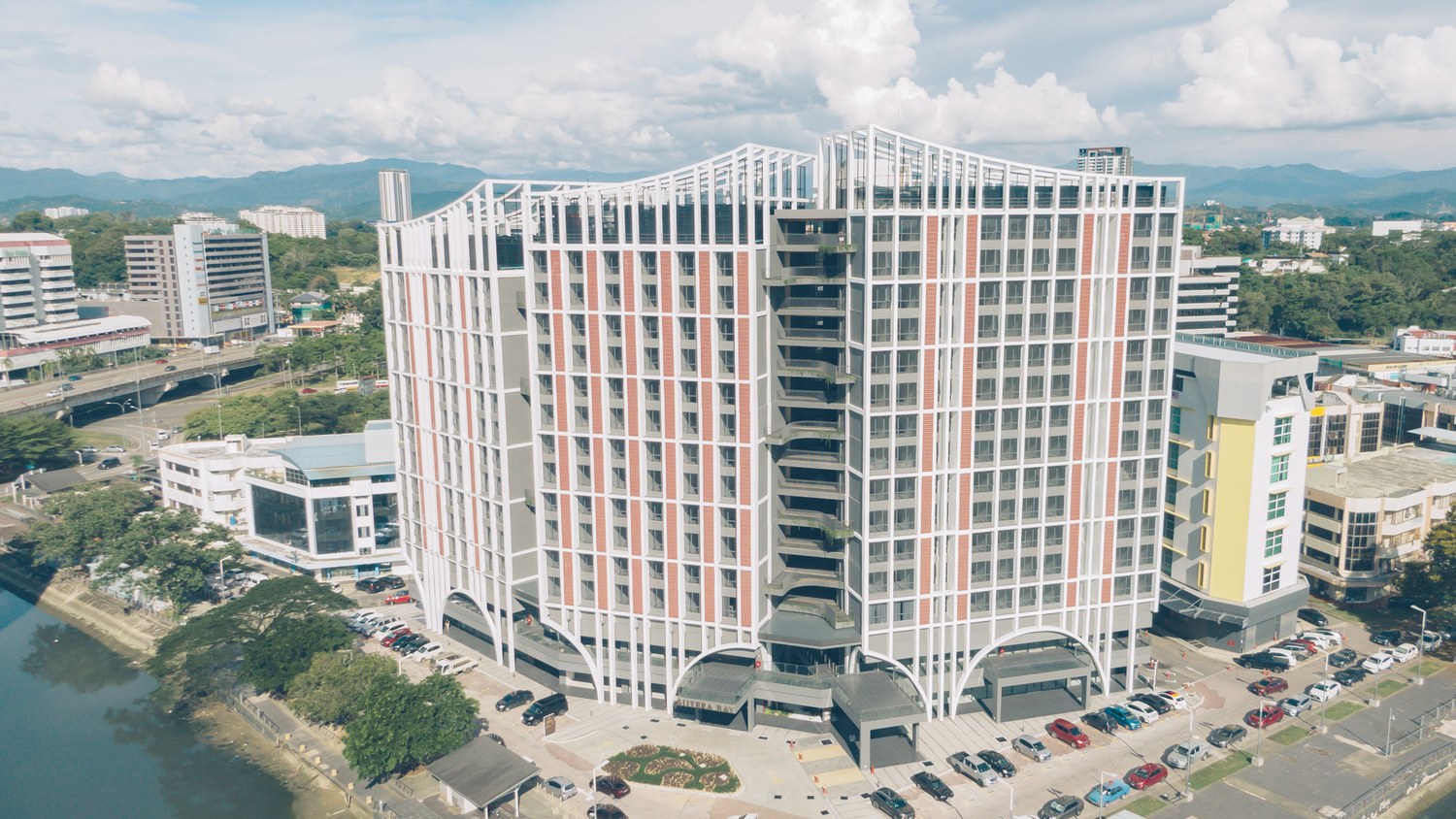
Central to the design is the belief that contemporary architecture can express local identity without relying on literal imitation. The architectural language draws inspiration from the Sigah, the traditional ceremonial headgear of the Kadazan-Dusun community. Rather than reproducing its form directly, the design abstracts its layered geometry and dignified silhouette into the building’s massing, vertical façade rhythm, and distinctive roof crowns. This interpretation transforms a cultural symbol into a modern architectural expression, creating a visual identity that celebrates Sabah’s heritage while remaining relevant within an international urban setting.
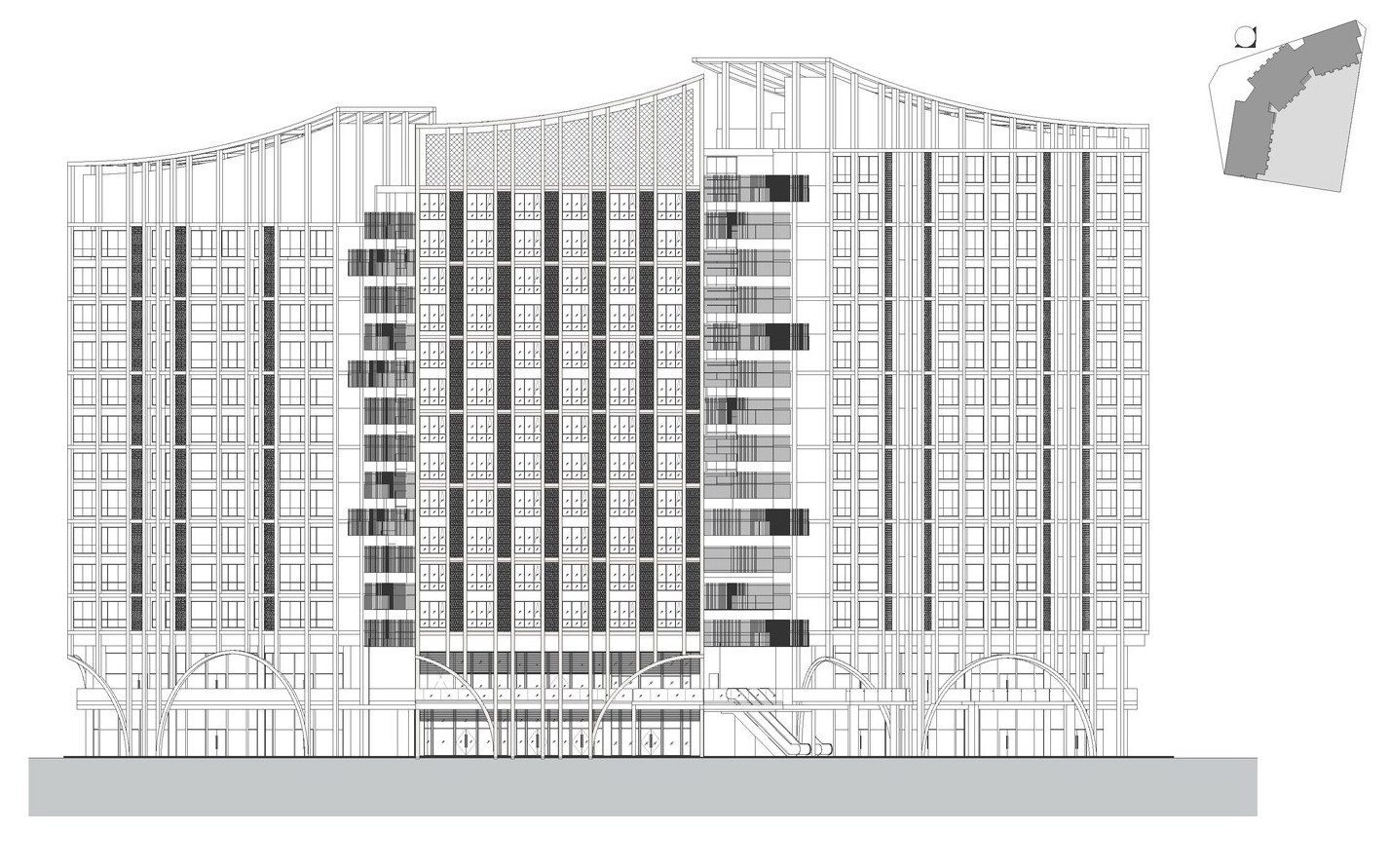
The three towers are carefully arranged to embrace the riverfront, maximising views while responding to prevailing breezes and the surrounding urban fabric. Their orientation enhances natural ventilation and strengthens the relationship between the development and the waterfront, allowing the river to become an integral part of the architectural experience rather than a backdrop. The stepped roof profiles subtly echo the mountainous horizon surrounding Kota Kinabalu, reinforcing the project’s connection to both the natural landscape and the city’s identity.
Vertical structural frames and vent blocks establish a strong rhythm while screening the mechanical services
The façade balances the architectural expression with environmental performance
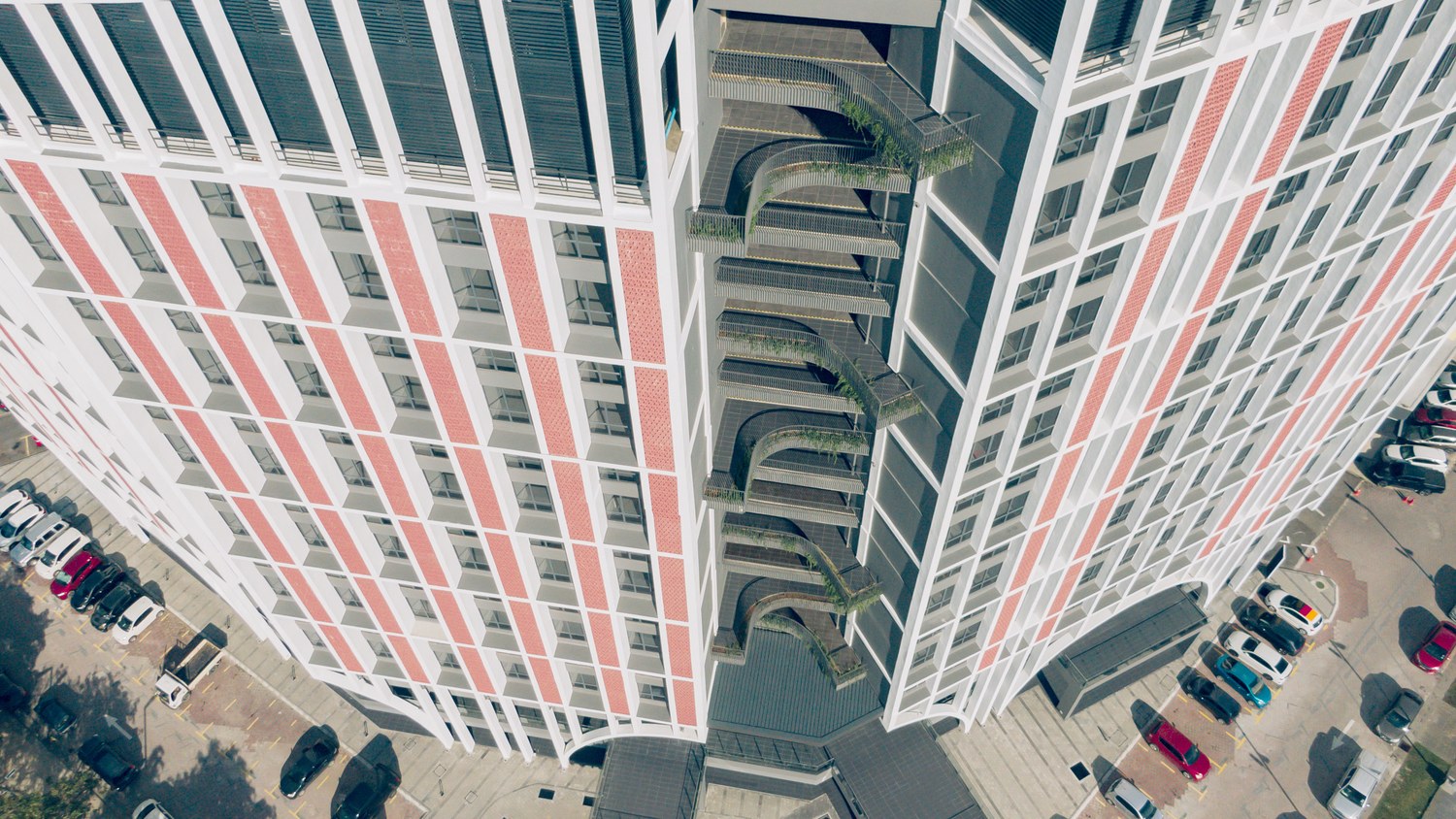
Climate responsiveness is equally fundamental to the design. Located in Sabah’s warm, humid tropical environment, Sutera Bay incorporates passive environmental strategies to enhance comfort while reducing reliance on mechanical cooling. Naturally ventilated circulation corridors, landscaped sky decks, and open communal spaces encourage continuous airflow throughout the development. These spaces also become social connectors, providing opportunities for residents and visitors to pause, interact, and experience the city from elevated viewpoints.
The façade balances architectural expression with environmental performance. Vertical structural frames establish a strong visual rhythm while acting as sun-shading elements that reduce solar heat gain. Diamond-shaped ventilation blocks screen mechanical services without compromising airflow, while carefully positioned vertical louvres around the podium provide privacy and shade. Together, these layers create a façade that changes character throughout the day as sunlight moves across its surfaces, producing an ever-changing interplay of light, shadow, and texture.
Above the podium, the development opens onto a generous landscaped facilities deck conceived as an oasis suspended above the city’s activity. This elevated environment serves as a transitional layer between the lively commercial podium and the private accommodation above, providing residents and guests with spaces for recreation, relaxation, and social interaction. Lush tropical planting, shaded seating areas, and integrated water features work together to moderate the microclimate, creating cooler outdoor spaces while enhancing air quality and visual comfort.
Water plays a particularly important role in shaping the character of the landscape. Reflecting pools and feature ponds introduce movement, sound, and visual calm, reinforcing the project’s relationship with the nearby river. Selected suites extend towards these water bodies through semi-sunken terrace pods that project over the ponds, creating intimate outdoor spaces where architecture and landscape merge seamlessly. These carefully choreographed moments encourage occupants to reconnect with nature despite being located within a dense urban environment.
Front elevation
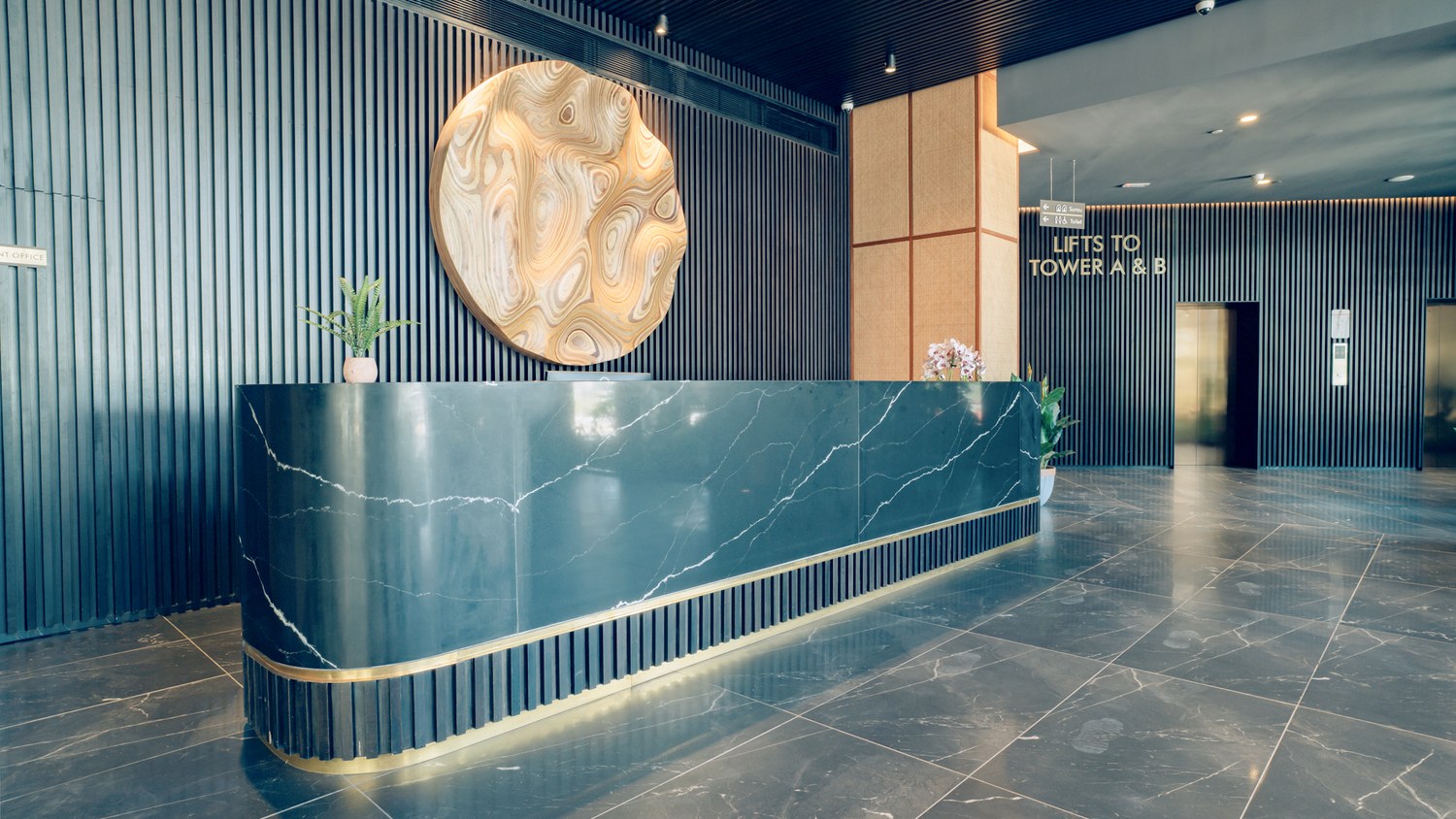
The narrative established by the architecture continues within the interior spaces. Arrival areas reinterpret traditional craftsmanship with contemporary materials, incorporating sculptural elements inspired by woven rattan, warm timber finishes, natural textures, and soft lighting. These materials create an atmosphere that feels both sophisticated and welcoming, subtly reflecting Sabah’s cultural heritage without resorting to decorative pastiche.
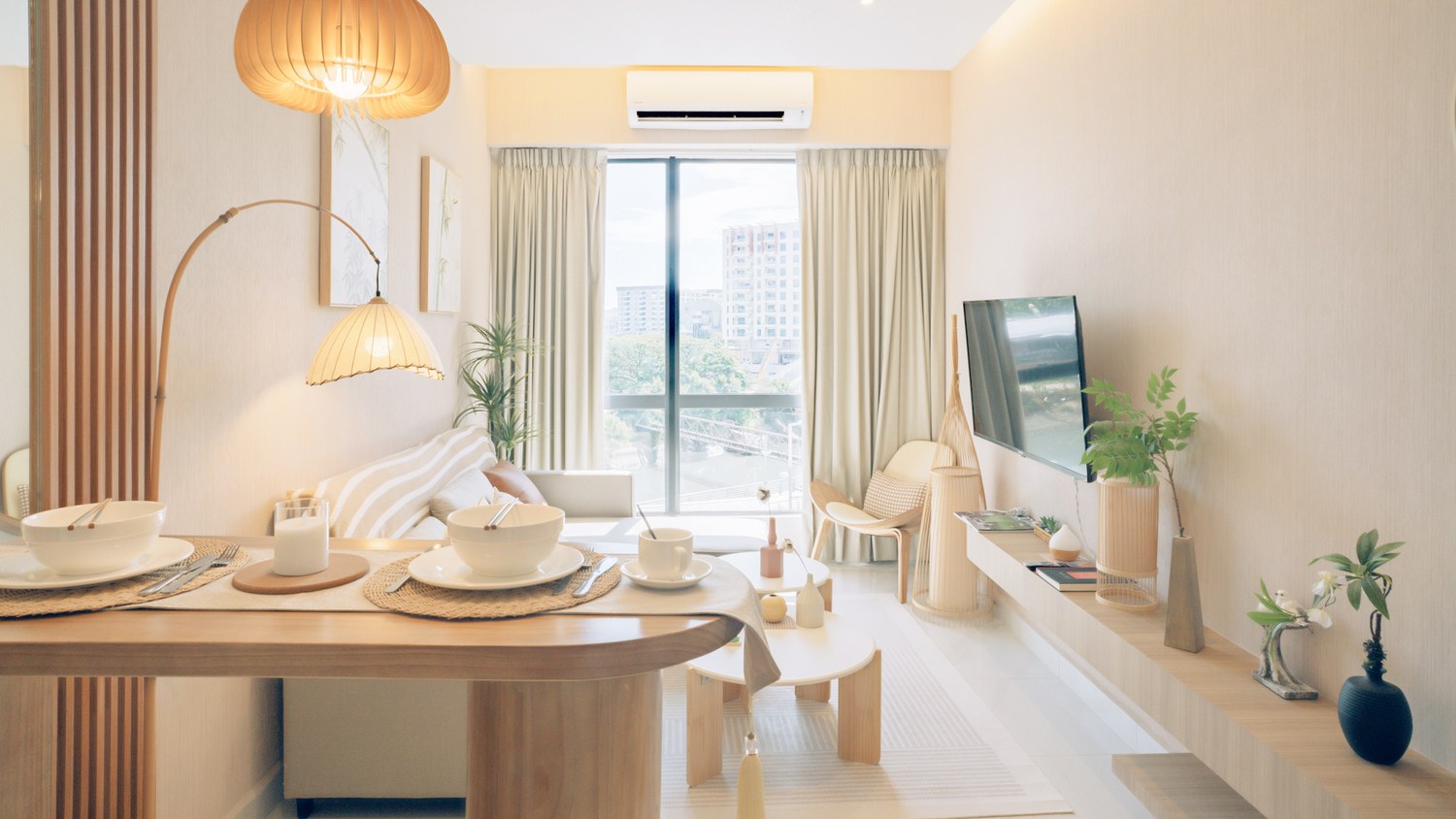
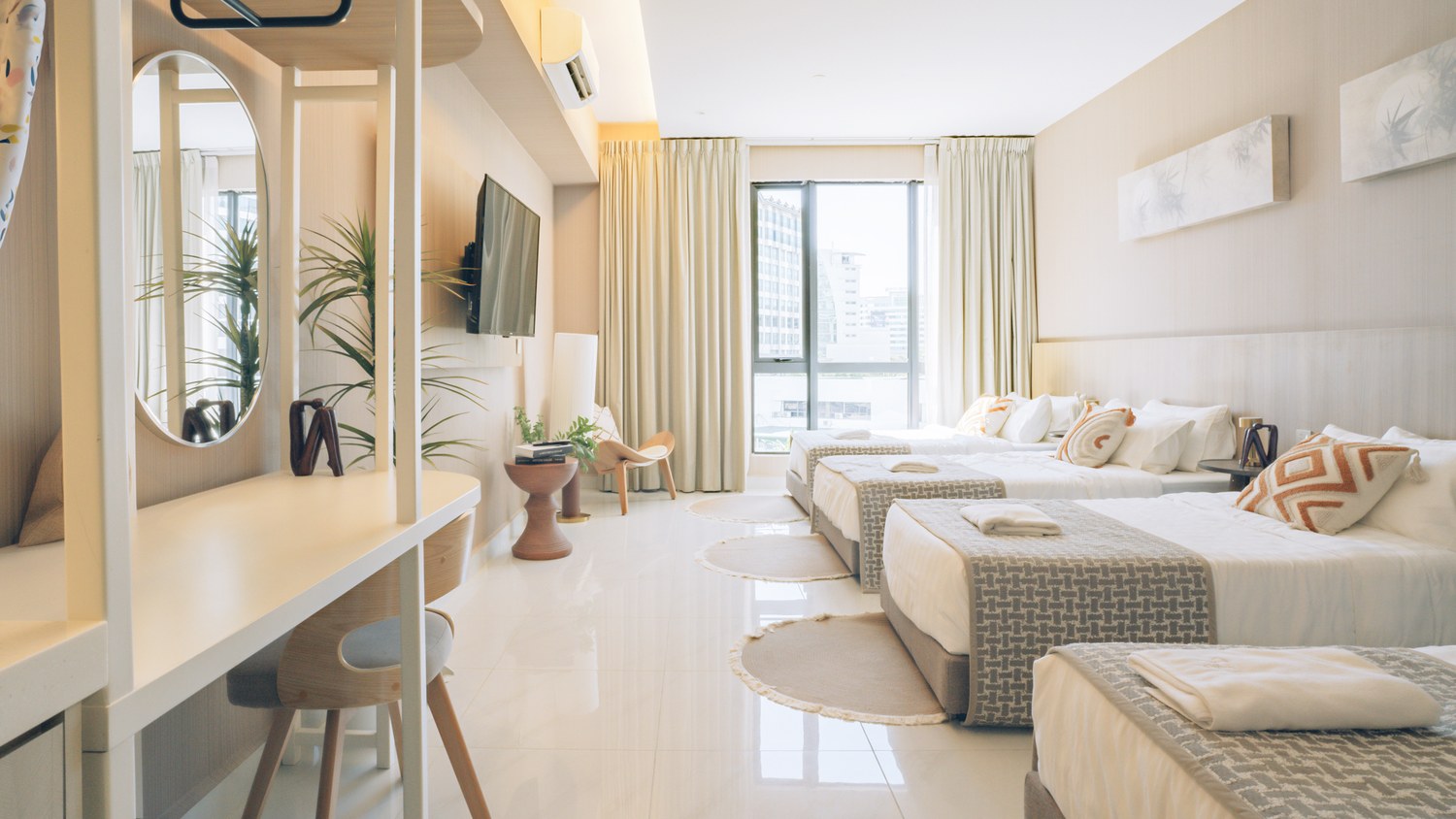
The commercial suites further reinforce this sense of place through a restrained palette of light-toned timber, warm beige finishes, crisp white surfaces, and abundant natural daylight. Indoor greenery and tactile materials soften the interiors, while clean contemporary forms provide flexibility for short-stay accommodation. The result is an environment that responds naturally to Sabah’s tropical lifestyle, offering comfort, simplicity, and a strong connection to nature.
Ultimately, Sutera Bay demonstrates how contemporary architecture can become an authentic expression of local identity while responding thoughtfully to climate, culture, and urban transformation. By integrating cultural narratives with environmental responsibility and humancentred design, the project creates more than a commercial destination—it establishes a memorable architectural experience that celebrates Sabah’s unique character. As Kota Kinabalu continues to evolve, Sutera Bay stands as an example of how new developments can contribute meaningfully to the city, respecting its heritage while embracing its future.
Sutera Bay’s design is inspired by the "Sigah" headgear of Kadazan Dusun
Commercial Suites reception desk and lift lobby at the ground floor
Dual key Suite – Living
Flexi Suite
Sutera Bay overlooking Sembulan River and South China Sea horizon
LOCATION: Sadong Jaya, Kota Kinabalu CLIENT: VTS Property Collection Sdn Bhd PRINCIPAL USE: Commercial Suites and Shops ARCHITECT: Arkitek KOPA Sdn Bhd in collaboration with Konzepte + Design Architects PROJECT TEAM MEMBERS: KOPA: Ar Daniel Koh Chung Hou, Ar Chin Khon Ket, Jack; Konzepte: Nicholas Ling, Goh Zuo Bin DESIGN PERIOD: January – November 2019 CONSTRUCTION PERIOD: 15 January 2020– 6 May 2024 SITE AREA: 4,050 sqm FLOOR AREA: 22,600 sqm PROJECT COST: RM83,690,000.00 CONSTRUCTION COMPANY: VTS Property Builders Sdn Bhd CIVIL ENGINEER: K. S. Engineering Consultant M&E ENGINEER: CYES Konsult QUANTITY SURVEYOR: Prokosman Konsultant LANDSCAPING: Arkitek KOPA Sdn Bhd MAIN MATERIALS: Paint & Texture Paint – Nippon Paint (Sabah) Sdn Bhd; Tiles – Niro Granite; Vent Block – PBM; Paver – Sunway Paving Solutions (Sabah) Sdn Bhd; Pool Tiles – GNGS; Sanitary – Potex; Tap Fitting – DOE Plus; Ironmongery – Hafele (M) Sdn Bhd; Plaster Ceiling – Gyproc; Strip Ceiling – DML PHOTOGRAPHERS: VTS Property Collection Sdn Bhd, Arkitek KOPA Sdn Bhd