Adaptive Re-Use - Commendation ARCHITECT: HL Architecture Sdn Bhd CLIENT: Asset 1 Land Sdn Bhd CONTRACTOR: Weststar Construction Sdn Bhd
Open, intuitive circulation, adapting existing structure by opening up and integrating seamlessly with the landscape
THE CAMPUS AMPANG: A PARADIGM OF ADAPTIVE REUSE AND COMMUNITY-CENTRIC ARCHITECTURE
Located in the heart of Kuala Lumpur, The Campus Ampang represents a bold reimagining of an educational landmark into a vibrant, naturally ventilated lifestyle and community hub. Formerly the International School of Kuala Lumpur (ISKL), which occupied the site from 1976 until its relocation in 2018, the project embraces an emerging architectural typology for Malaysia by prioritising adaptive reuse over wholesale redevelopment. Led by HL Architecture Sdn Bhd, the intervention departs from the conventional enclosed mall model, focusing on subtle transformation, heritage preservation, and climate-responsive design.
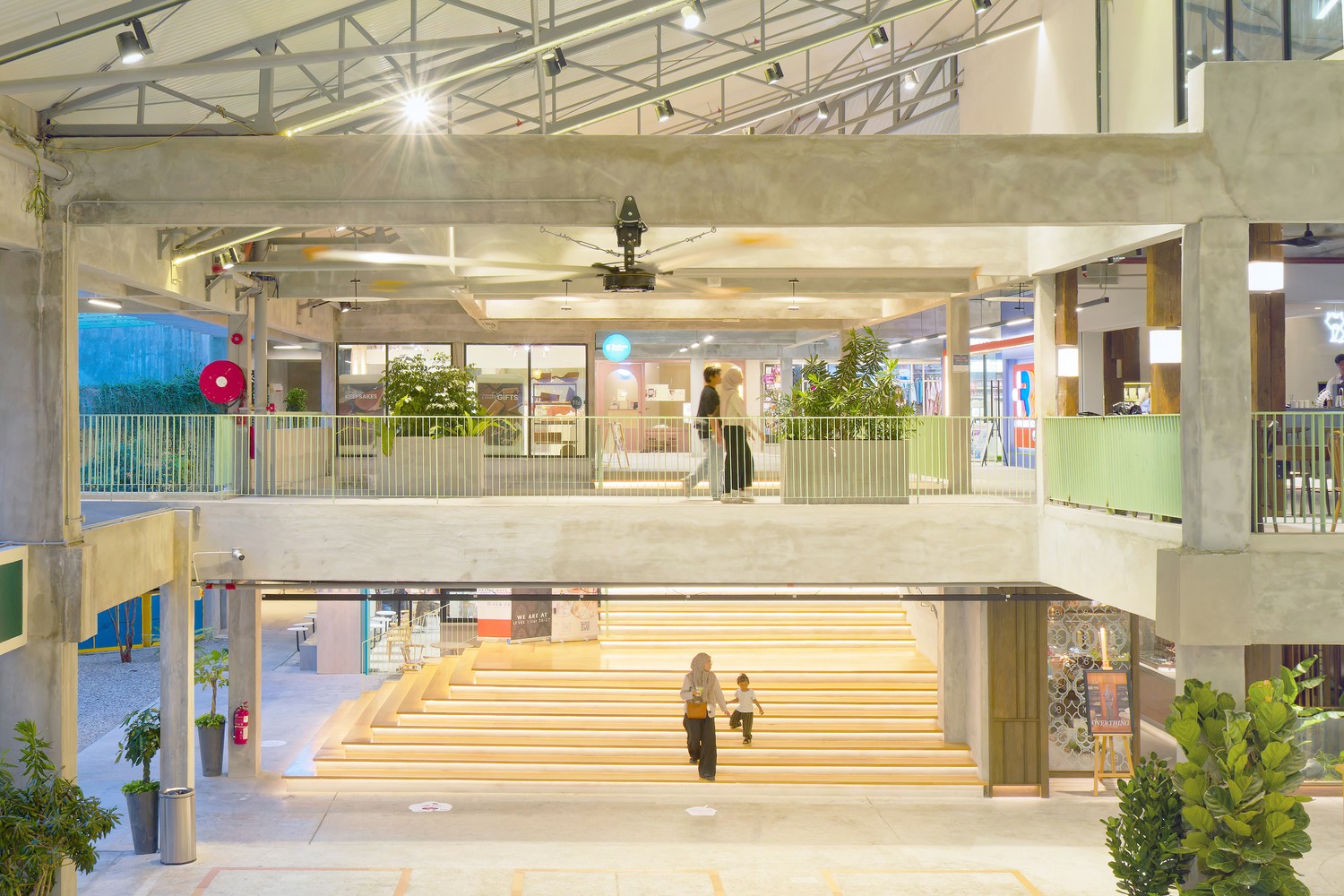
The primary architectural challenge was converting a traditional school typology, characterised by cellular classrooms and narrow corridors, into an intuitive, open, and porous public venue. The core of the masterplan involved carving out a new central courtyard, now known as ‘The Playground,’ achieved by strategically demolishing existing rooms over two levels. This new social heart is defined by amphitheatre-style steps that encourage gathering, interaction, and natural seating for curated events. To ensure seamless circulation and visual connectivity, original solid classroom walls were removed and replaced with welcoming, transparent retail frontages.
The remaining existing structure creates a sense of depth and orientation over multiple levels
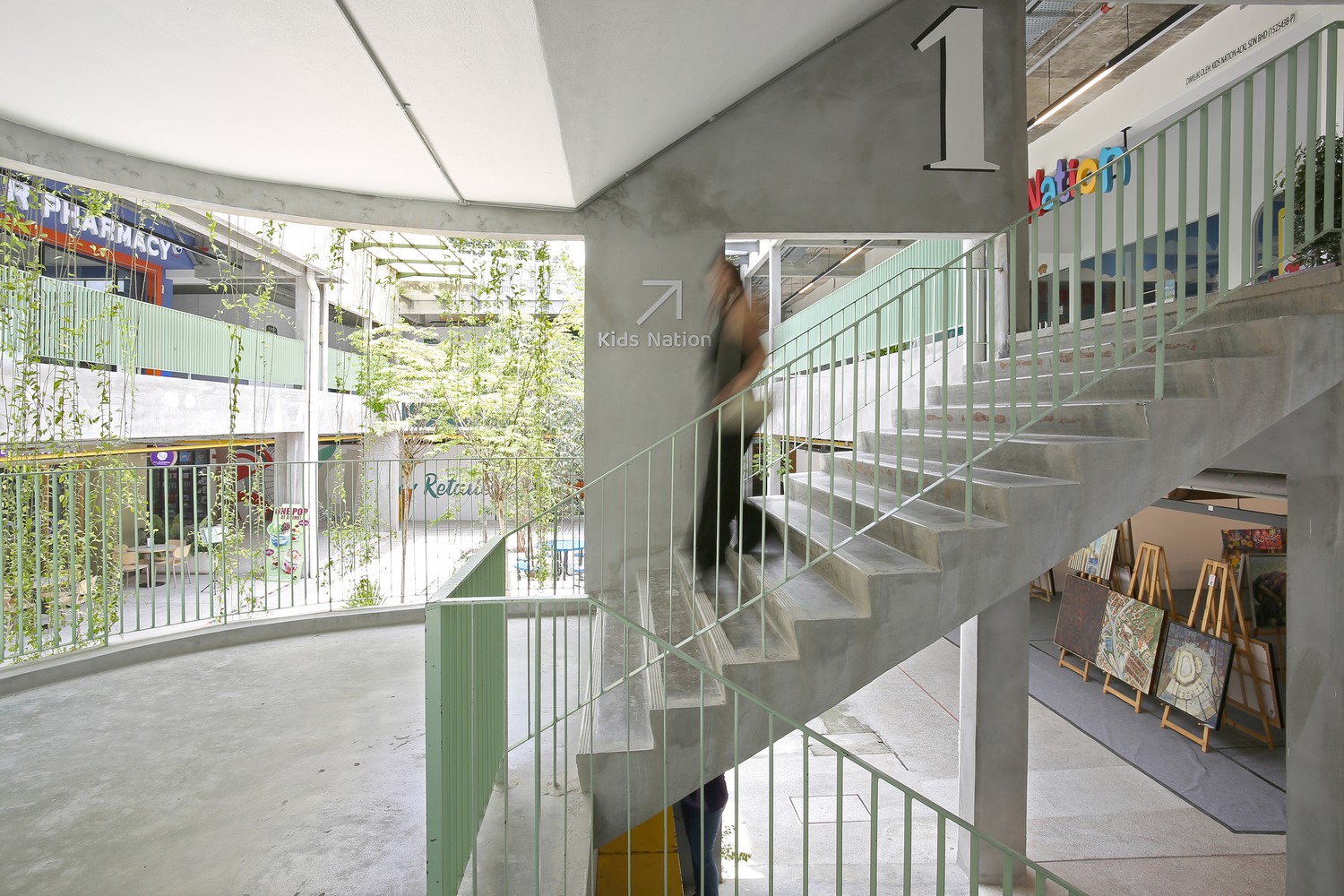
Furthermore, existing half-round stair towers were deconstructed and revitalised with hanging creepers, merging the built form with the landscape. At key drop-off points, iconic folded-roof canopies inspired by origami were introduced. These contemporary architectural interventions provide shelter and promote natural ventilation while creating a striking juxtaposition against the simple, human-scale vernacular of the original structures.
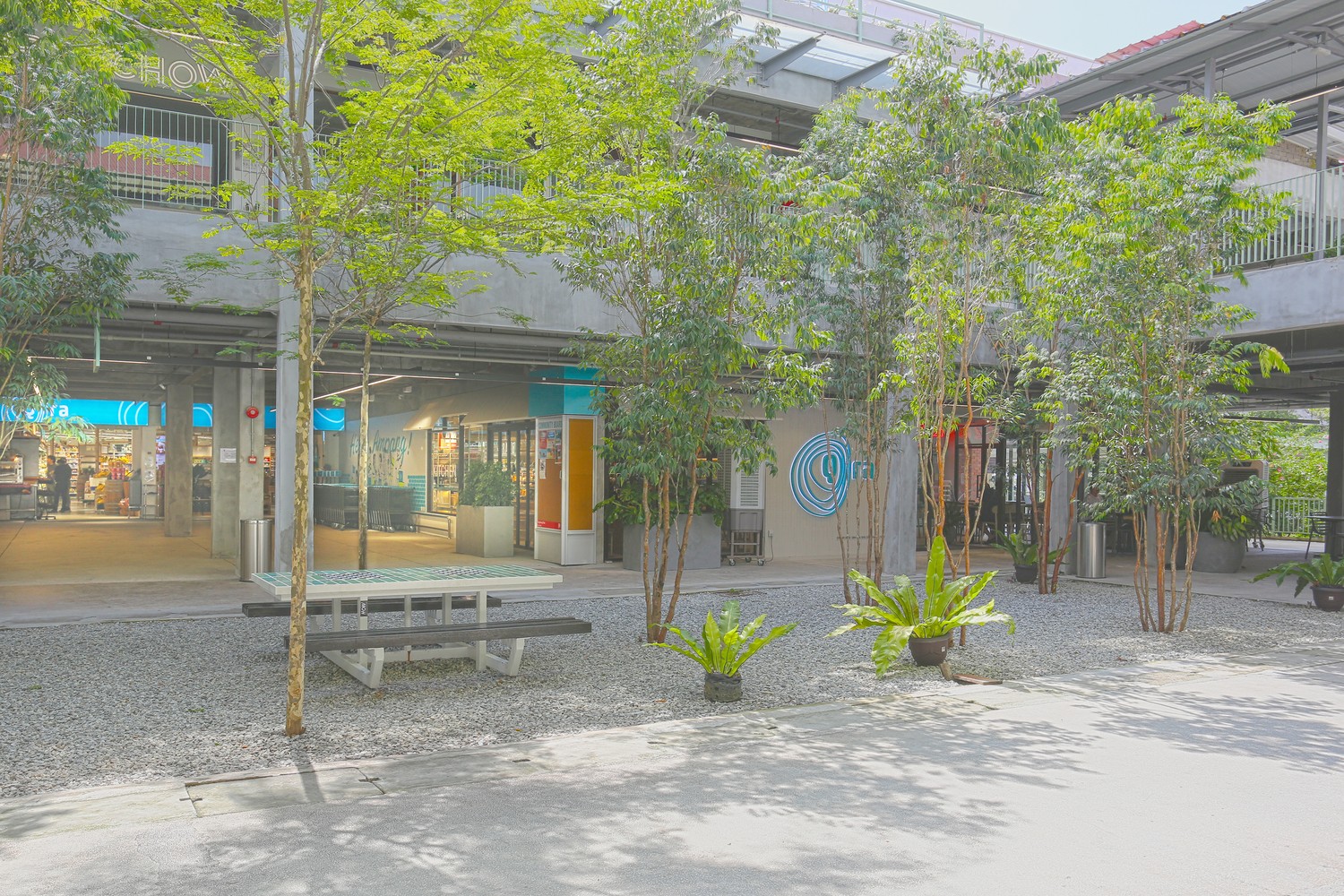
In a tropical climate where heat and humidity typically dictate fully air-conditioned environments, The Campus takes a bold, sustainable stance by prioritising passive design. To avoid extensive mechanical cooling, the architecture relies on naturally ventilated spaces, drawing on regional vernacular traditions such as breezeways, verandas, and deep roof overhangs. Landscaped courtyards strategically promote cross-ventilation, allowing natural breezes to flow freely through the development. Landscape integration softens the raw structural elements through biophilic design, utilising indigenous planting to provide natural shade and reduce long-term irrigation and maintenance needs.
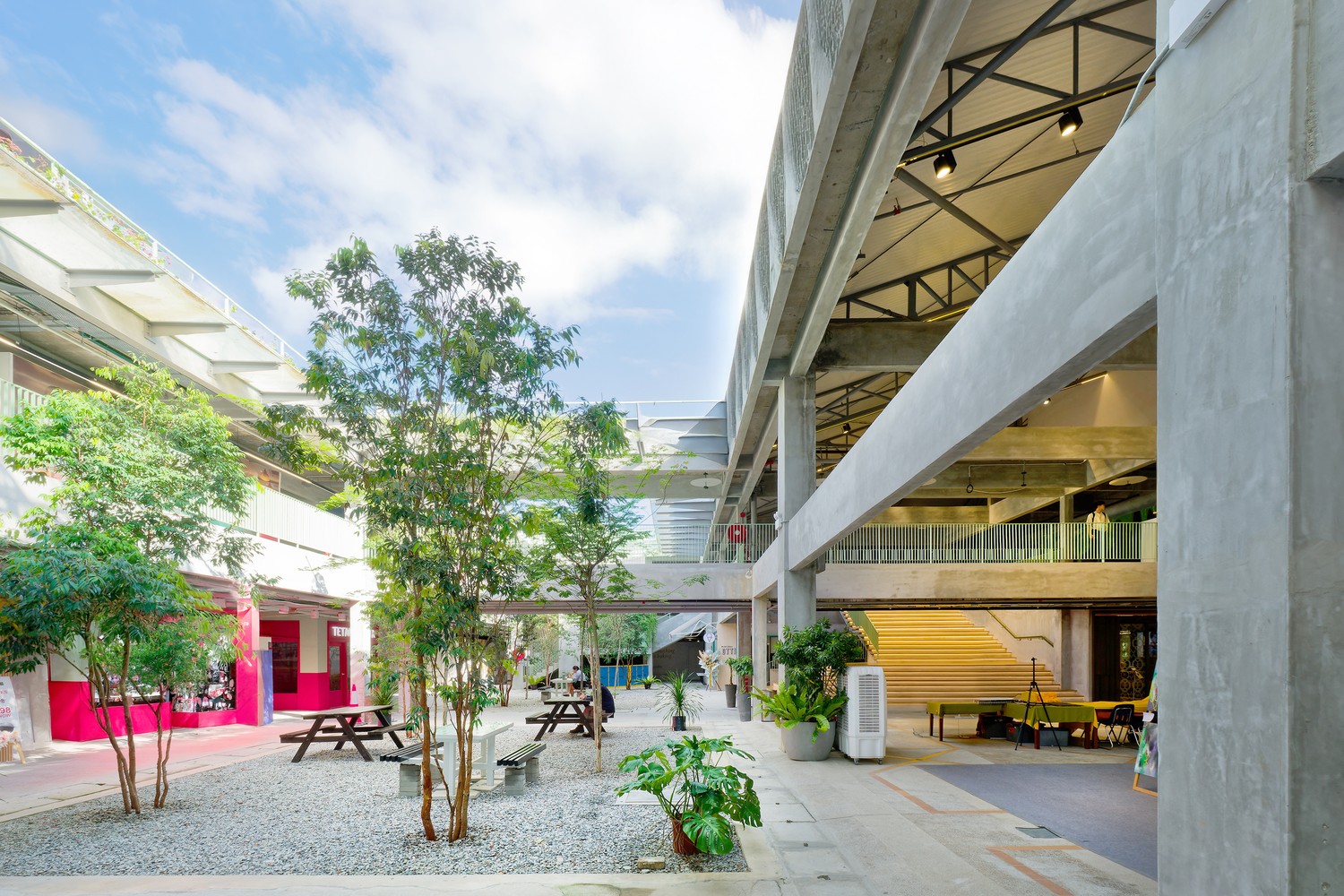
Landscaped courtyards, juxtaposing preserved structure with indigenous species and repurposed furniture
Sustainability through rigorous resource consciousness was a guiding principle. Demolition was meticulously minimised, with the structural integrity of stairwells, beams, and slabs retained. Legacy amenities, including the 500-seat auditorium, multipurpose halls, swimming pool, and football field, were preserved and integrated into the new programming for ongoing community use. The architectural language celebrates raw materiality; original finishes such as fair-faced brick, pebble-wash, and concrete were meticulously restored rather than replaced. Innovative upcycling is evident throughout: salvaged glass panels from old classrooms introduce natural light into communal zones, former security grilles were repurposed into the site’s signage programme, and original school dining tables now furnish the courtyards.
Ultimately, The Campus Ampang transcends the traditional retail paradigm. Hosting over 80 retail units interwoven with legacy sports and arts facilities, the development is fundamentally a platform for community life. The project stands as a commercially viable blueprint for adaptive reuse in Southeast Asia, dramatically reducing construction waste and demonstrating how legacy architecture can organically evolve to serve modern community needs while celebrating its historical resonance.
A convincing and successful adaptive reuse dialogue between retained fabric and contemporary insertions.
Indigenous planting creates natural shade and promotes noncommercial enjoyment of this community space