Sustainable Building Category - Silver ARCHITECT: Environmental Design Practice Sdn Bhd CLIENT: Cloudvest Sdn Bhd CONTRACTOR: Grand Dynamic Builders Sdn Bhd
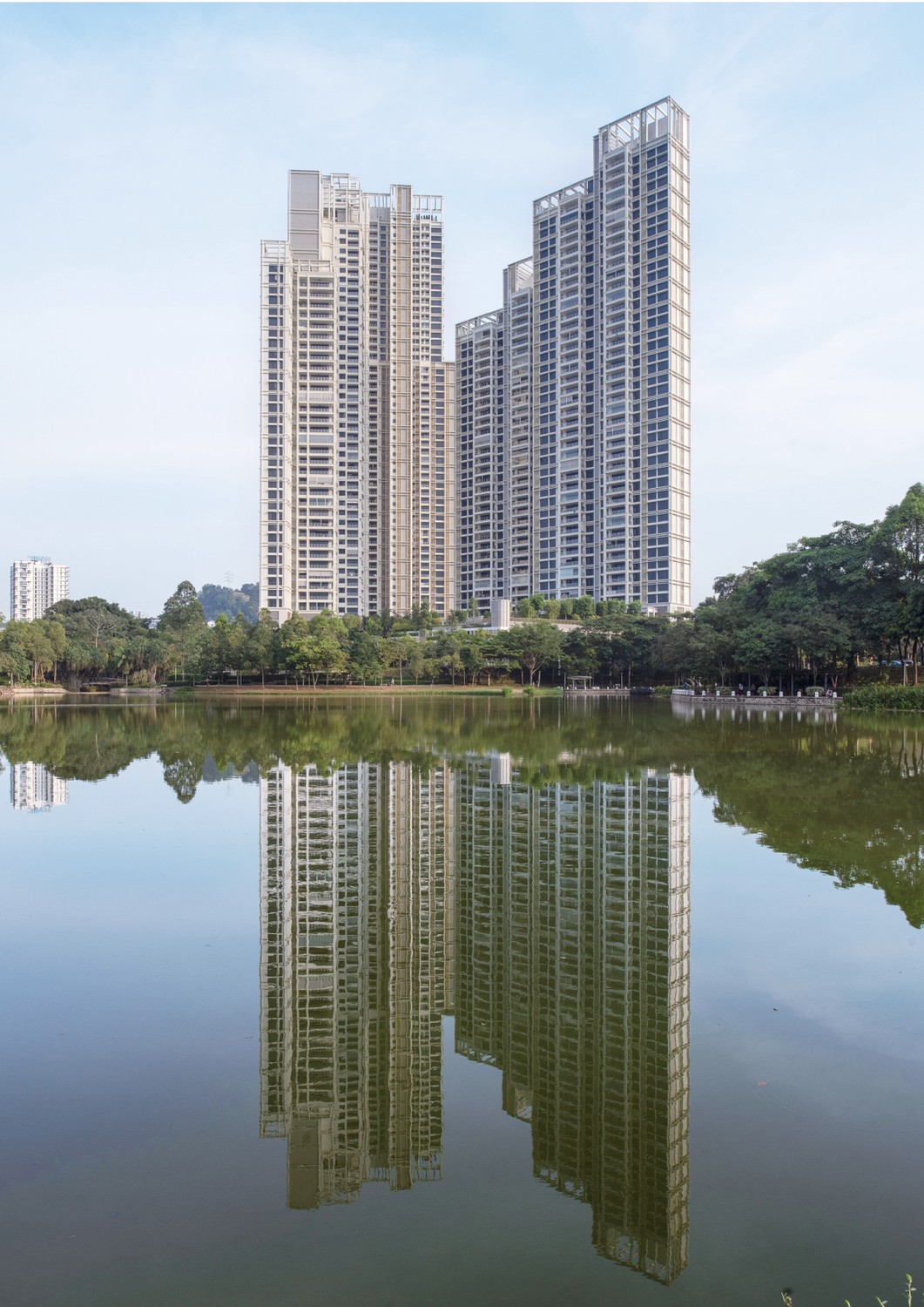
Park Regent is a masterpiece of urban integration, blending seamlessly with its landscape
INTRODUCTION
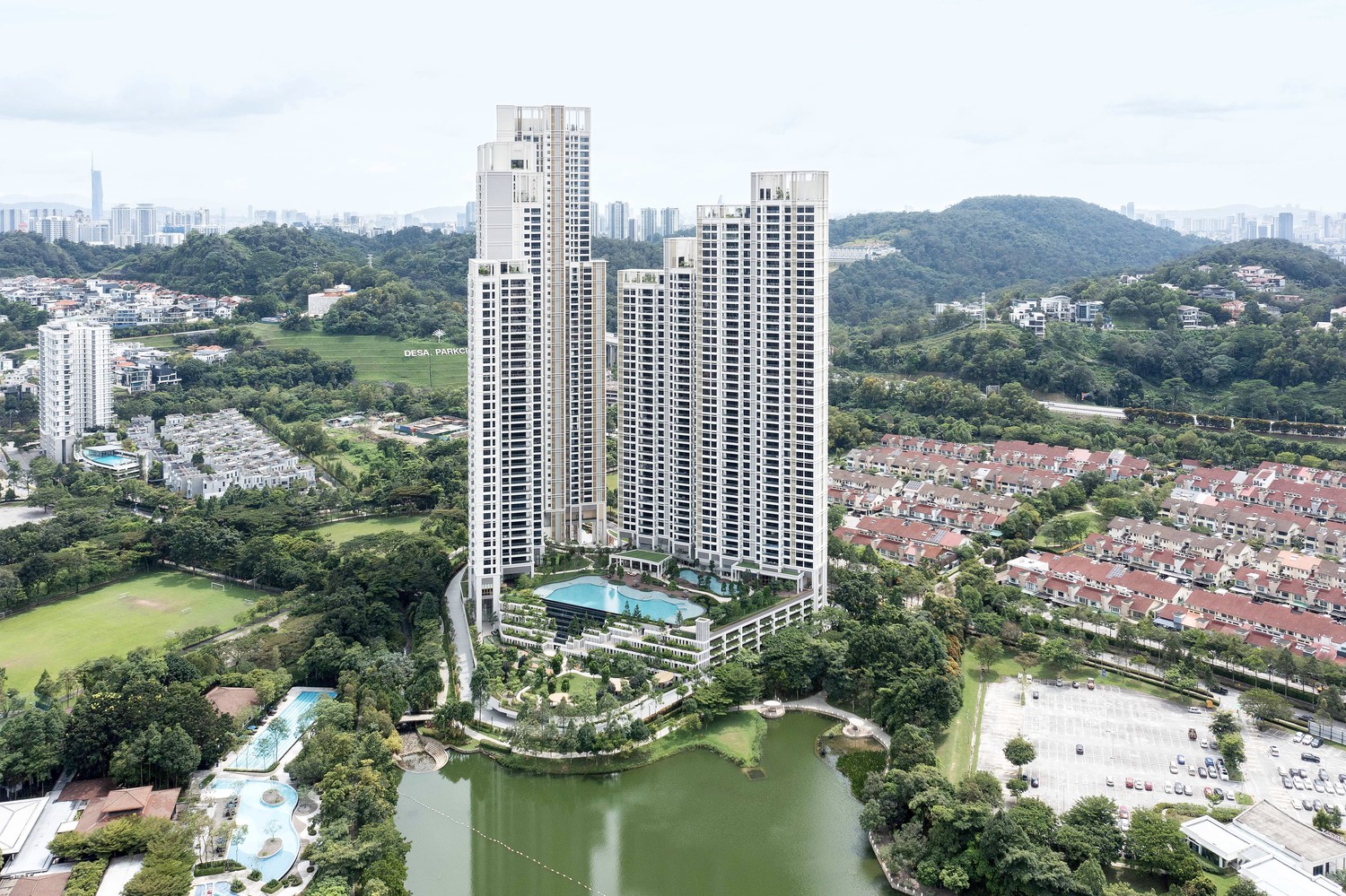
Rising within the lush urban fabric of Desa Parkcity, Kuala Lumpur, Park Regent is a GBI-certified high-rise residential development that reinterprets sustainable living through climate-responsive architecture. Comprising two towers ranging from 34 to 53 storeys and housing 505 apartments, the development sits atop a cascading podium that accommodates parking and amenity spaces, with additional parking tucked within sub-basement levels. Sustainability is integral to the architectural strategy, in which building form, façade articulation, spatial planning, and landscape are orchestrated to shape a responsive microclimate, enhancing comfort, energy efficiency, and everyday wellbeing for residents.
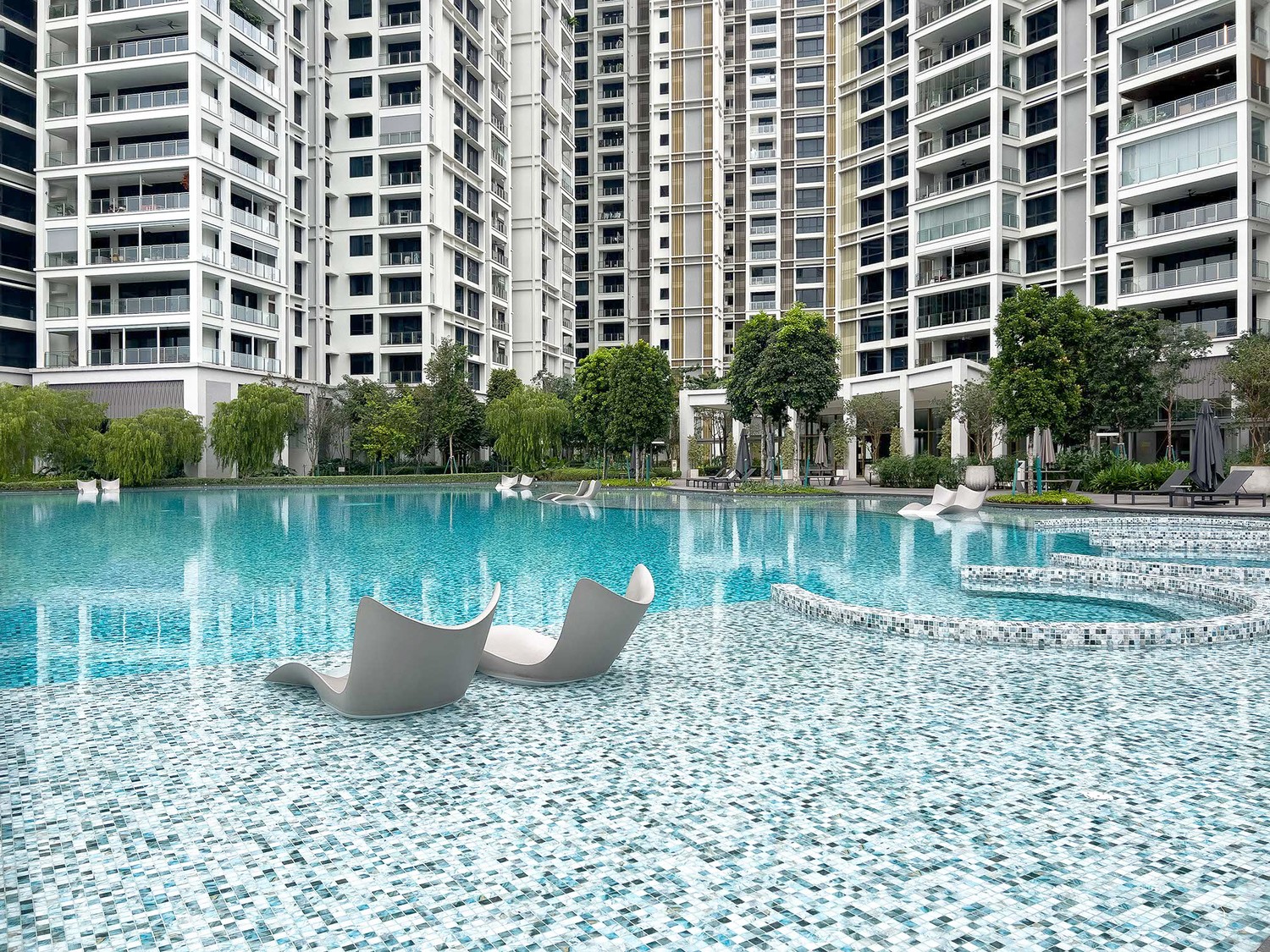
Integrated landscaping design, centred around the tranquil bio-pond, creates an oasis of calm within the urban setting
DESIGNING FOR CLIMATE AND COMFORT
Park Regent integrates passive design principles from its early planning stages, responding sensitively to climate and context. The orientation of the towers optimises prevailing wind flow, daylight penetration, and visual connections towards the central park lake.
A layered façade, integrating external shading devices over 50% of the glazed area, balconies, and strategically positioned yards, provides effective horizontal shading. High-performance glazing enhances thermal control by reducing solar heat gain. These integrated strategies create a cooler and energy-efficient living environment.
Inside, residents enjoy natural light, guided by façade articulation that maximises daylight penetration and external views. A sequence of communal spaces with varying volumes allows natural light and ventilation to flow through lobbies and circulation spaces, reducing dependence on mechanical systems and improving energy efficiency. The use of low-VOC paints and low-formaldehyde materials further elevates indoor air quality, supporting residents’ wellbeing.
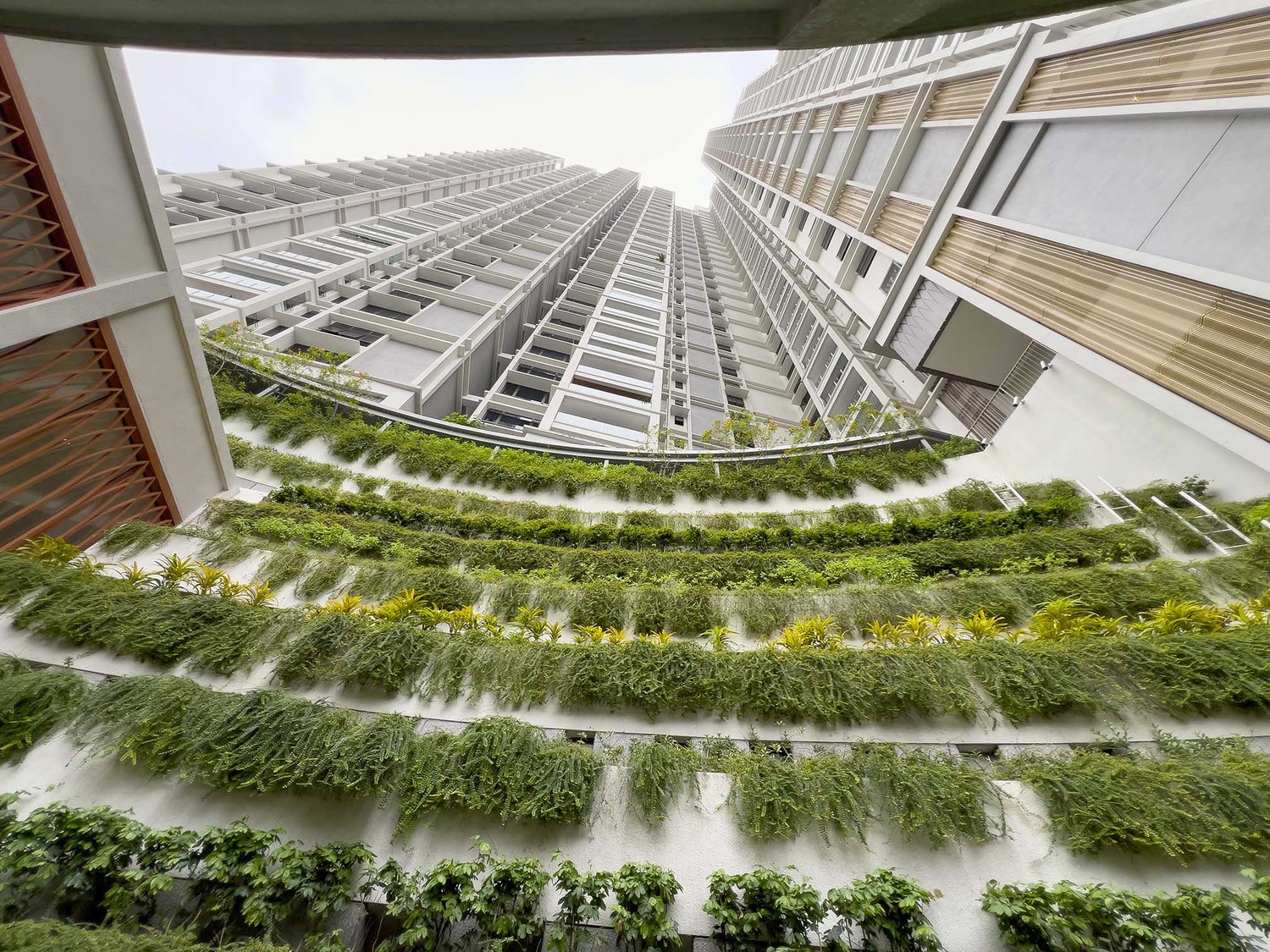
Cascading greenery at the main drop-off creates a welcoming and refreshing entrance
At the crown of the towers, the roof plays an important role in reducing heat gain. An insulated roof system minimises solar heat absorption, improving thermal performance and helping stabilise indoor temperatures, thereby lowering cooling loads. The rooftop also integrates hardscape areas with pockets of gardens that encourage community interaction.
Beyond the building envelope, expansive landscape and water bodies significantly mitigate the urban heat island effect and enhance outdoor comfort. More than 55% of the site is dedicated to lush softscapes and water elements. These elements act as natural thermal buffers that regulate surrounding ambient temperatures, as well as noise absorbers and social gathering spaces. Visual connections to greenery and water bodies strengthen the biophilic experience for residents. To further mitigate the urban heat island effect, 90% of hardscape materials are selected with high Solar Reflectance Index (SRI) values.
Complementing the passive strategies, responsible sustainability practices, material selection and active systems reduce embodied carbon. The rooftop solar photovoltaic system generates energy that can offset carbon emissions. The rainwater harvesting system supports landscape irrigation and storm water management, reducing potable water demand. Water-efficient sanitary fittings reduce indoor potable water consumption, while fire system water recycling minimises water wastage during testing. EV charging infrastructure and a cycling network further support low-carbon mobility. Together, these strategies create a refined environment where comfort, sustainability, and contemporary living are seamlessly aligned.
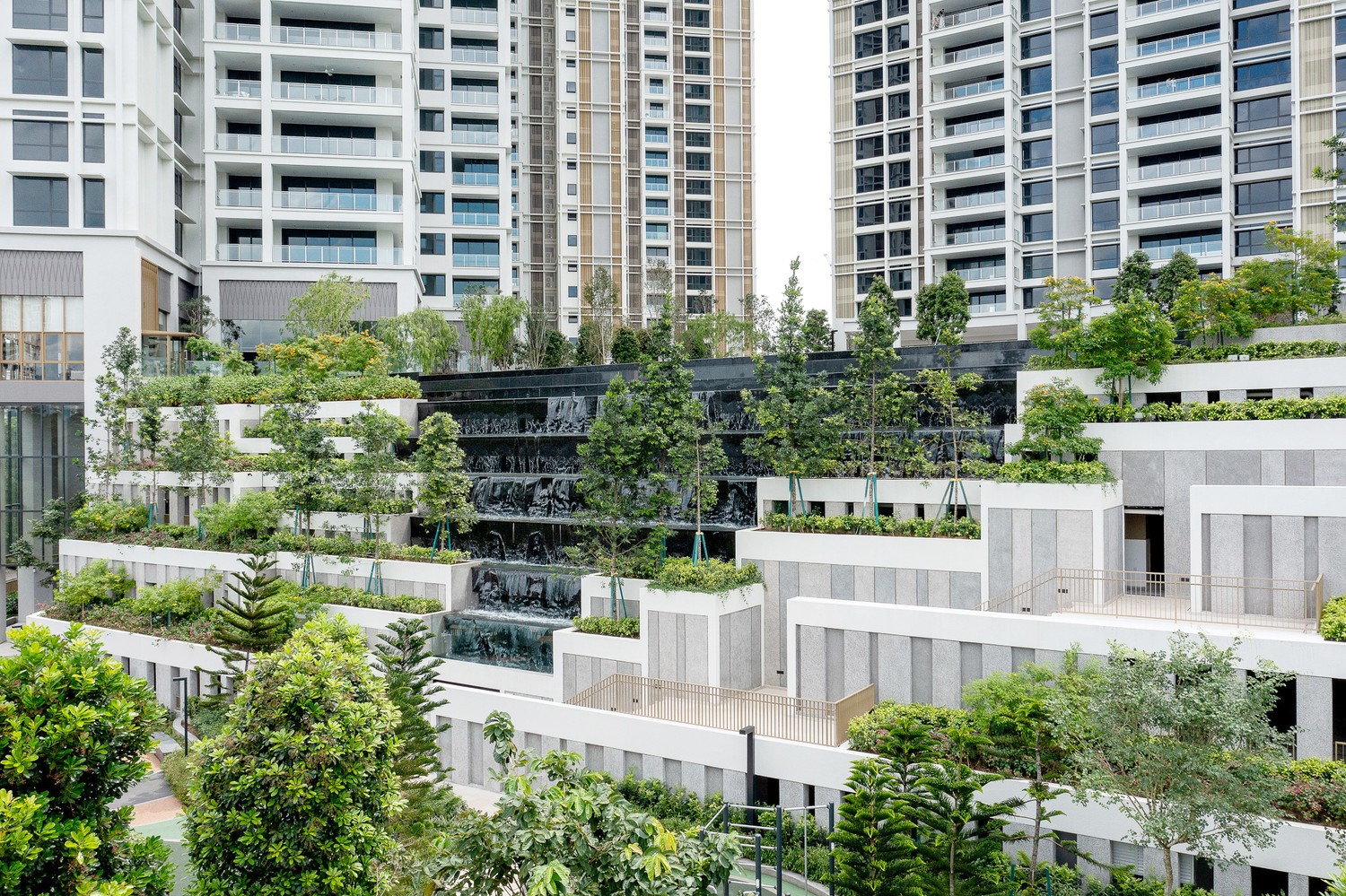
Softscape zones function as thermal buffers, noise absorbers, and social spaces for residents
CONCLUSION
Through the integration of design strategies, high-performance building envelopes, renewable energy systems, and water-sensitive infrastructure, Park Regent achieves significant improvements in energy efficiency, carbon reduction, and environmental resilience. Landscape integration, responsible material sourcing, and construction waste reduction further strengthen its sustainability credentials. By combining environmental performance with high-quality living environments, Park Regent demonstrates a comprehensive and future-ready approach to sustainable high-rise living. Continuous performance verification under the GBI framework affirms Park Regent’s commitment to resilient, future-ready urban living.
A refined residential development in which climate-responsive massing, passive environmental strategies, and landscape-driven cooling collectively shape a resilient model for contemporary urban living.
Lush greenery and water features weave through more than half of the site, naturally lowering the surrounding ambient temperature