Industrial - Commendation ARCHITECT: T&T Architect CLIENT: Esteem Business Park Sdn Bhd CONTRACTOR: GCW System Sdn Bhd
Façade design improves the daylight access and enhances energy efficiency and overall user amenity
Esteem Business Park is strategically positioned within Taman Perindustrian Meru Selatan, a sought-after industrial enclave at the heart of Klang. Surrounded by thriving townships including Bandar Baru Setia Alam, Bandar Bukit Raja, Meru, and Kapar, the development benefits from proximity to a diverse and skilled workforce, established residential communities, and a robust transportation network. Its strategic location ensures efficient connectivity to major logistics routes, positioning the project as a forward-looking industrial hub within a rapidly evolving urban-industrial context.
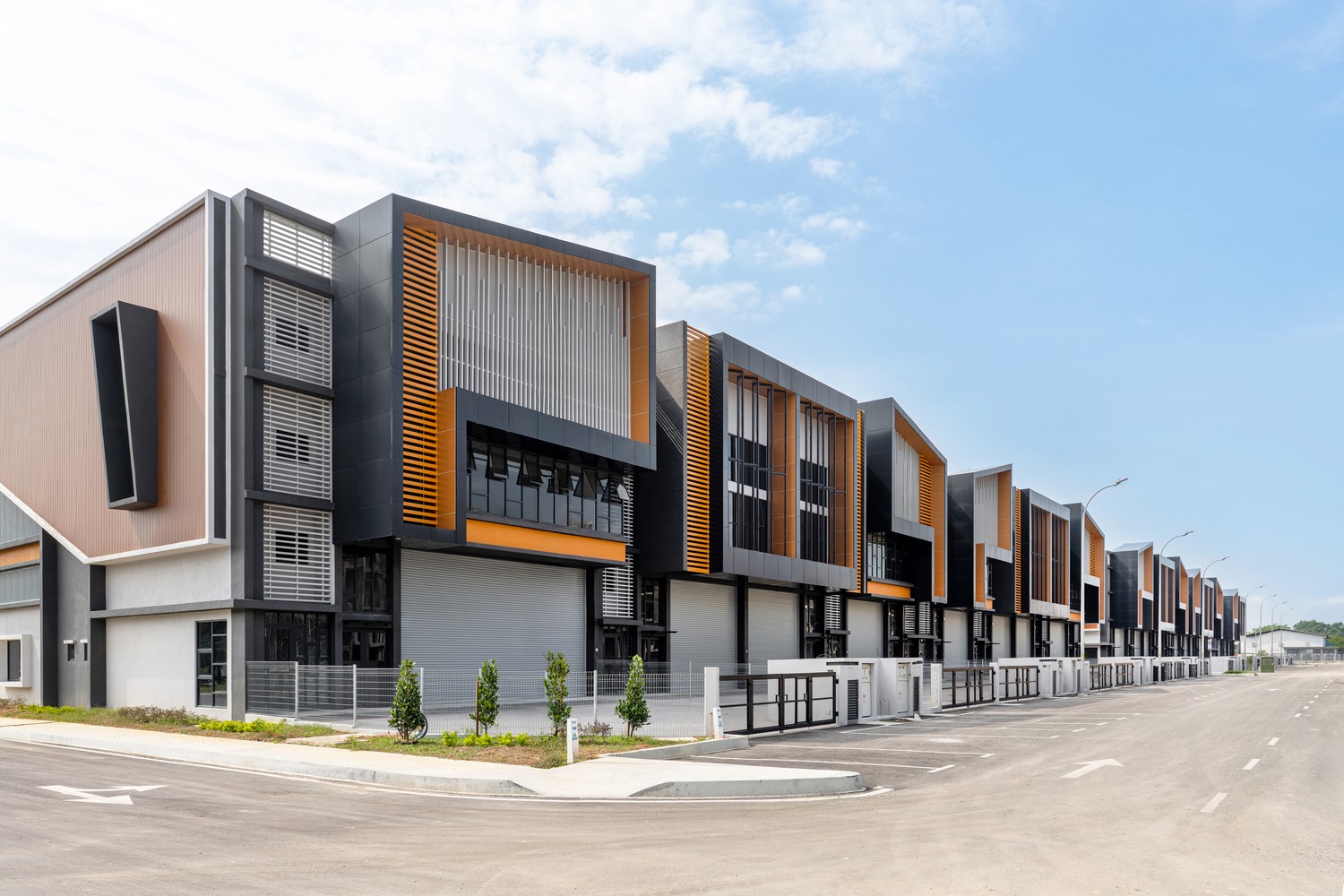
Comprising thirty-nine light industrial factory units delivered in two phases, Esteem Business Park reinterprets the conventional industrial typology through a contemporary architectural language that emphasises clarity of form, environmental responsiveness, and spatial adaptability. Rather than replicating the monolithic warehouse model typical of industrial estates, the design introduces a carefully articulated variation in height, scale, and massing. This deliberate modulation creates a rhythmic streetscape, resulting in a dynamic yet cohesive composition that distinguishes the development from its surroundings.
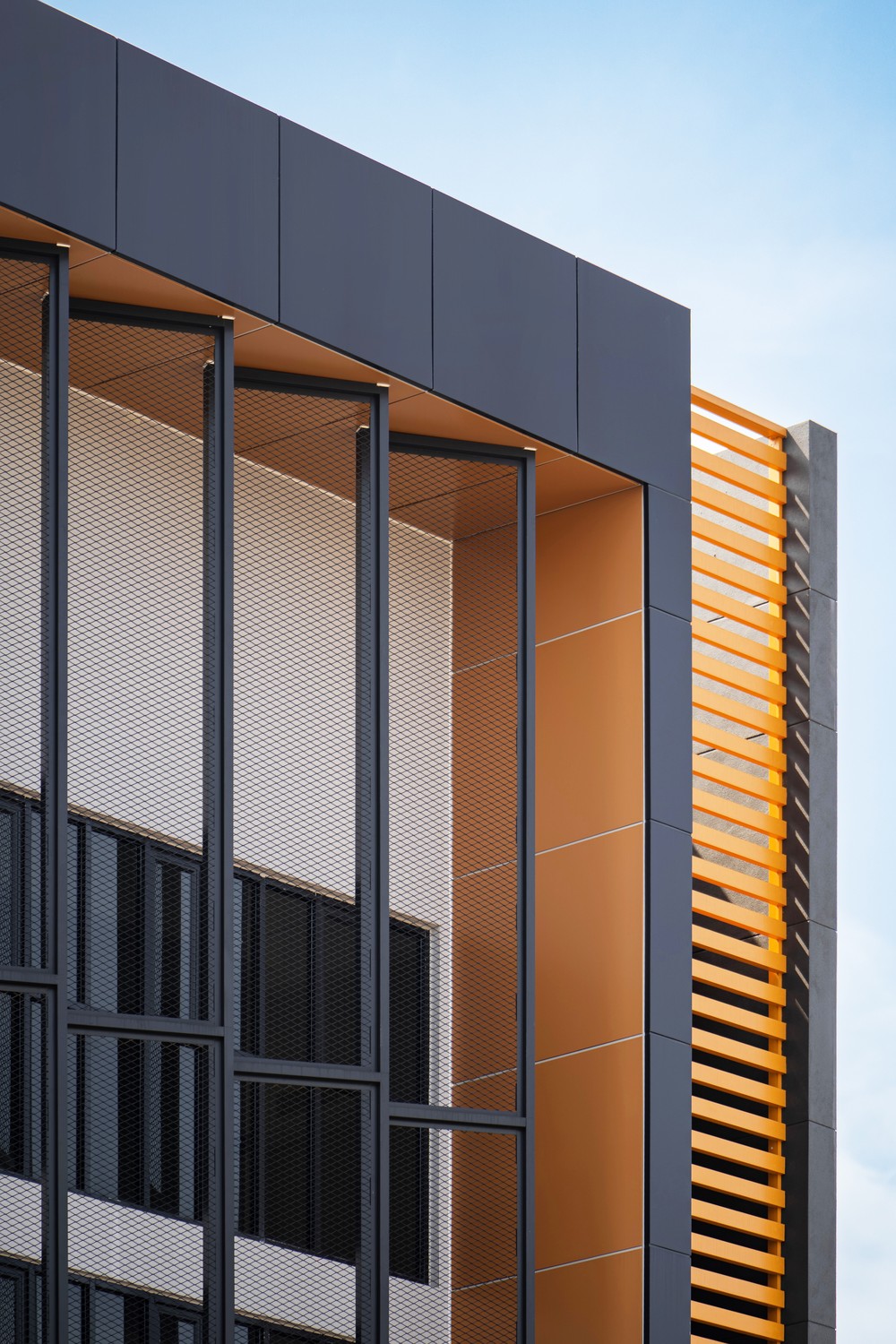
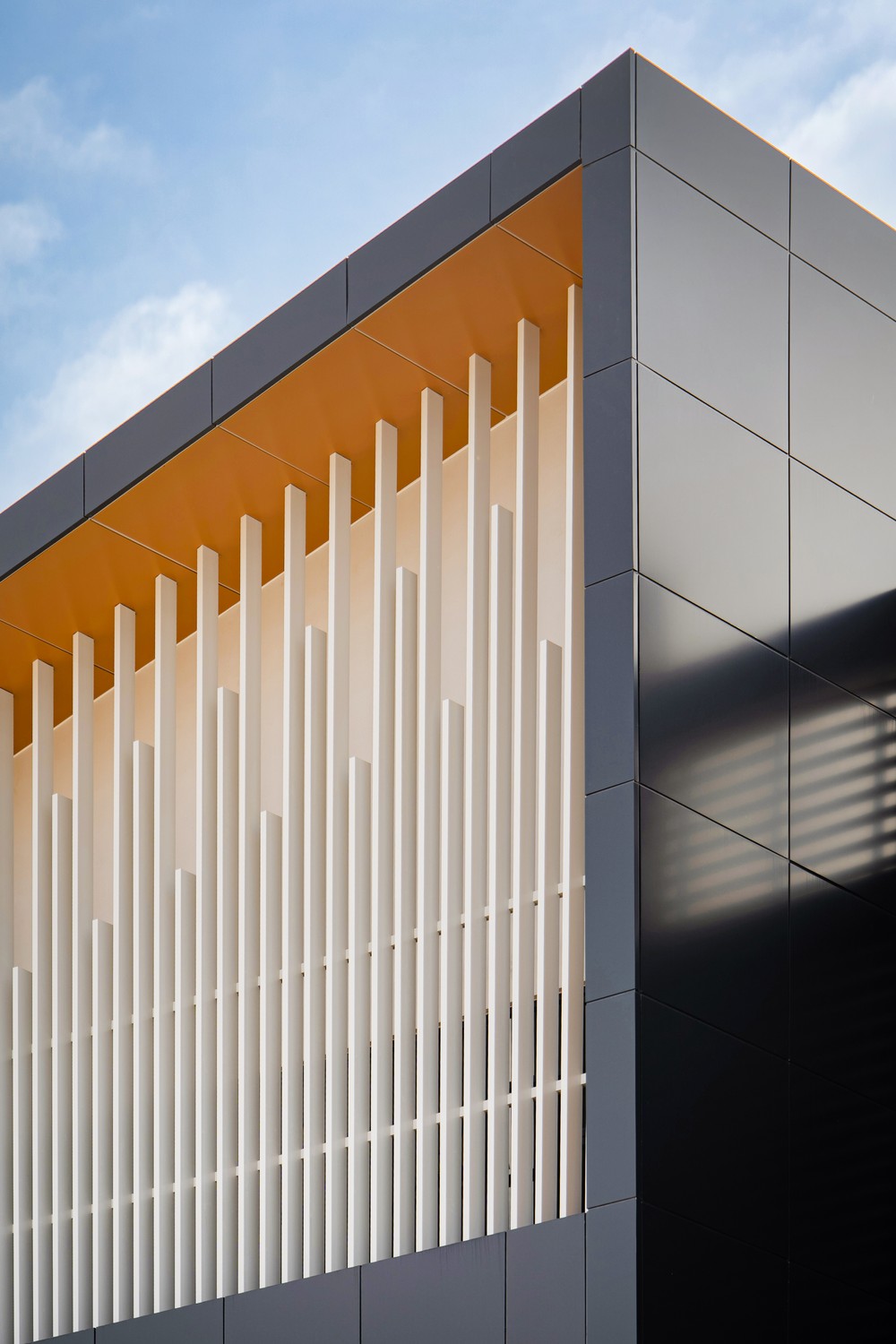
Each unit is conceived as an individual architectural statement while contributing to a unified masterplan. The interplay of solids and voids, together with façade articulation through perforated panels and large louvre screens, establishes depth and texture across the elevation. These elements are not merely aesthetic gestures; they function as climate-responsive devices, moderating solar gain, controlling glare, and promoting cross-ventilation. The building envelope thus performs as an environmental mediator, reducing reliance on mechanical cooling systems and enhancing occupant comfort.
View from the main entrance
The project’s planning strategy prioritises operational efficiency. Wide, unobstructed frontages and generous driveways allow direct, sheltered loading and unloading. Broad internal access roads and rear service lanes enable smooth truck and lorry circulation, ensuring seamless logistics movement throughout the site. Extensive on-street parking facilities—accommodating over 400 cars, 80 motorcycles, and 8 lorries—further reinforce user convenience and functionality.
Internally, the spatial organisation is defined by a clear vertical hierarchy. The double-volume ground floor provides generous headroom to accommodate industrial processes, forklift manoeuvrability, pallet stacking, and bulk storage. This flexible, high-clearance environment supports diverse light-industrial operations, from manufacturing to warehousing and distribution.
A mezzanine level is strategically integrated as an office and administrative zone. Optional internal glazing overlooking the factory floor enhances supervision and collaboration while maintaining spatial coherence—enabling visual connectivity between management and production areas. Full-height glazed openings introduce abundant daylight, fostering a productive and comfortable work environment.
Large louvres screens provide effective solar shading, controlling the direct sunlight and glare
The upper floor is engineered with an equivalent floor loading capacity to the ground level, allowing it to function as a heavy-duty storage warehouse. This structural robustness maximises usable floor area without compromising performance. Skylight panels positioned above draw natural light deep into the interior, reducing energy consumption while elevating spatial quality.
Sustainability is embedded within the architectural language. Generous skylights, ventilated louvre systems, perforated façades, and full-height glazing collectively orchestrate daylight, airflow, and thermal comfort. The integration of passive environmental strategies minimises reliance on artificial lighting and mechanical ventilation, aligning operational performance with long-term energy efficiency goals.
Esteem Business Park ultimately challenges the perception of industrial development as a purely utilitarian construct. By synthesising functional precision with contemporary architectural expression, the project establishes a progressive industrial environment—one that balances aesthetics, adaptability, and environmental responsibility. It stands not only as a business park, but as a redefinition of the modern industrial workplace within Klang’s evolving urban-industrial landscape.
A bold reinterpretation of the contemporary industrial typology through expressive massing, articulated façades, and adaptable workspaces that integrate passive environmental strategies with flexible planning and a strong architectural identity.
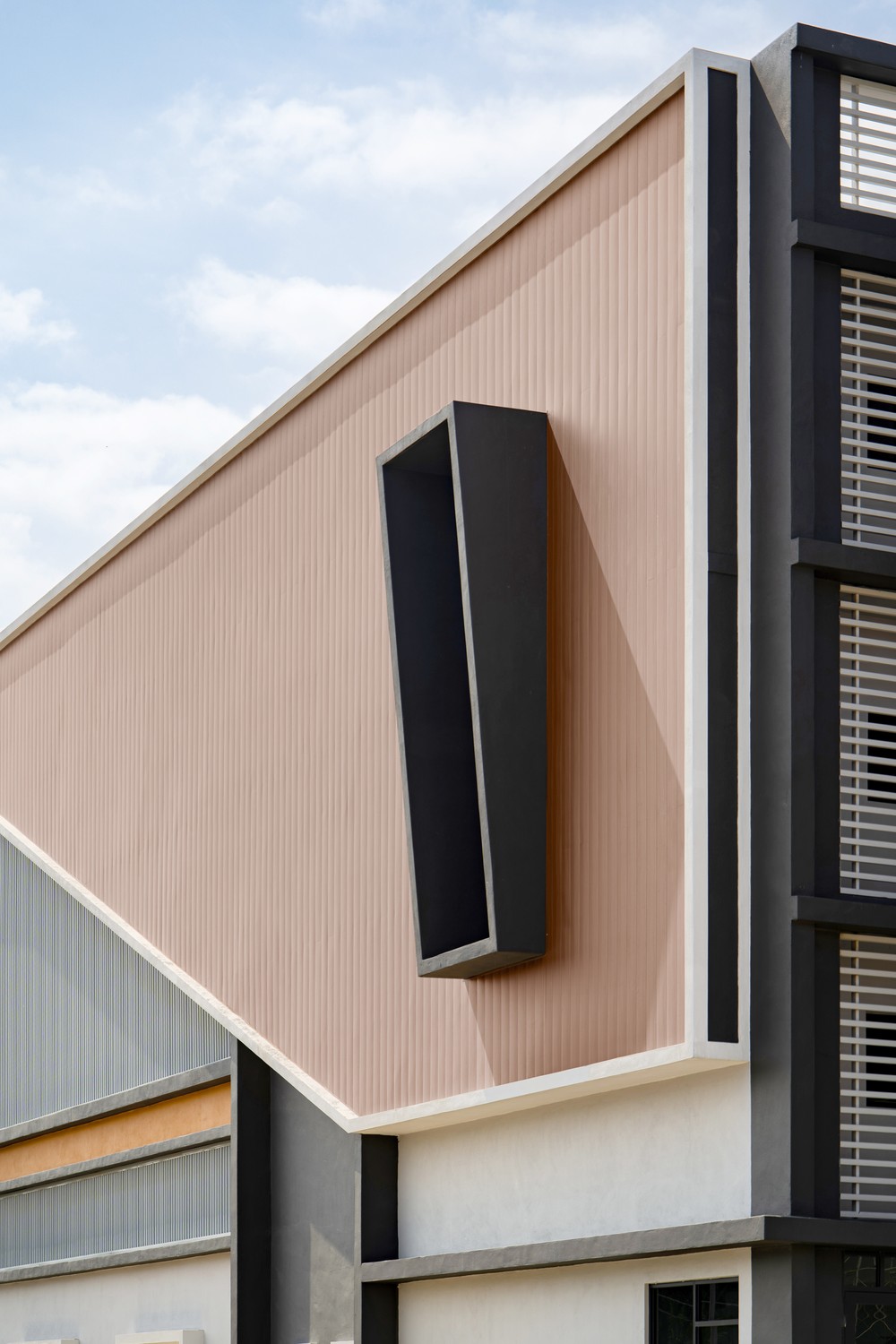
Side perspective of the end and corner lot showcasing the warmth and texture of the timber-effect wall cladding