Education & Sustainable Building Category - Gold ARCHITECT: DRTAN LM Architect CLIENT: TARC Education Foundation CONTRACTOR: Mawar Abadi (M) Sdn Bhd
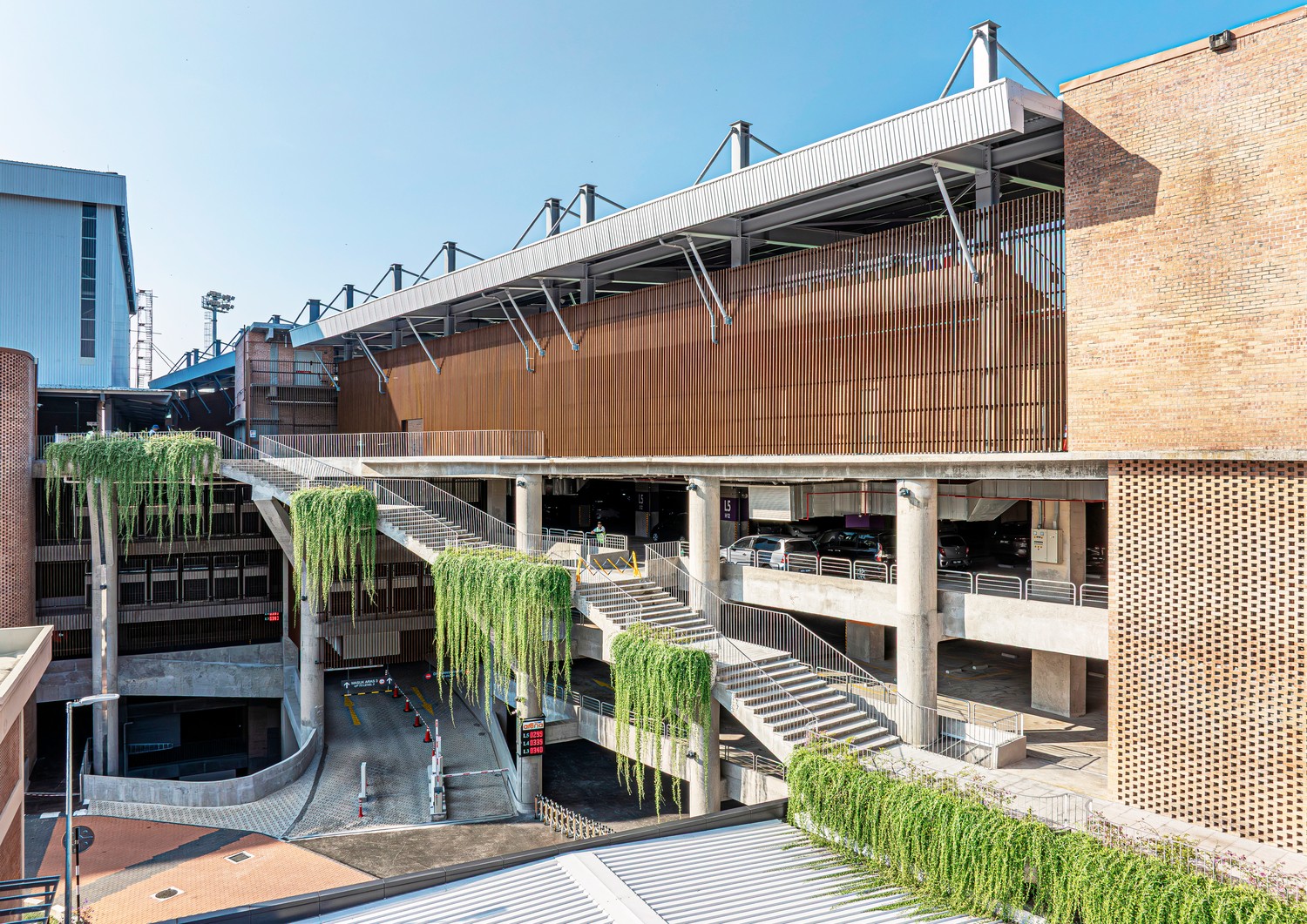
Natural clay bricks mediate with greens
Reconceiving institutional infrastructure as a civic landscape, the development transforms a steep hillside into an integrated campus hub where sports, learning and entrepreneurship are interwoven through climate-responsive design and socially activated communal spaces.
6-storey sustainable hub that brings together academic, social, entrepreneurial, and recreational functions
TAR UMT Arena is a 6-storey sustainable hub at the heart of TAR UMT’s Kuala Lumpur campus, bringing together academic, social, entrepreneurial, and recreational functions. Rooted in tropical design principles, the building is thoughtfully organised around a naturally ventilated central atrium, with open corridors, passive cooling strategies, and extensive daylighting to reduce energy demand. A wide roof canopy, integrated with solar panels, provides shading and renewable energy, while rainwater harvesting supports landscape irrigation. Perimeter planting and green buffers further enhance thermal comfort and help mitigate heat gain, while flexible student facilities and rooftop sports amenities actively promote wellbeing, interaction, and a vibrant campus community.
Large verandahs and overhangs
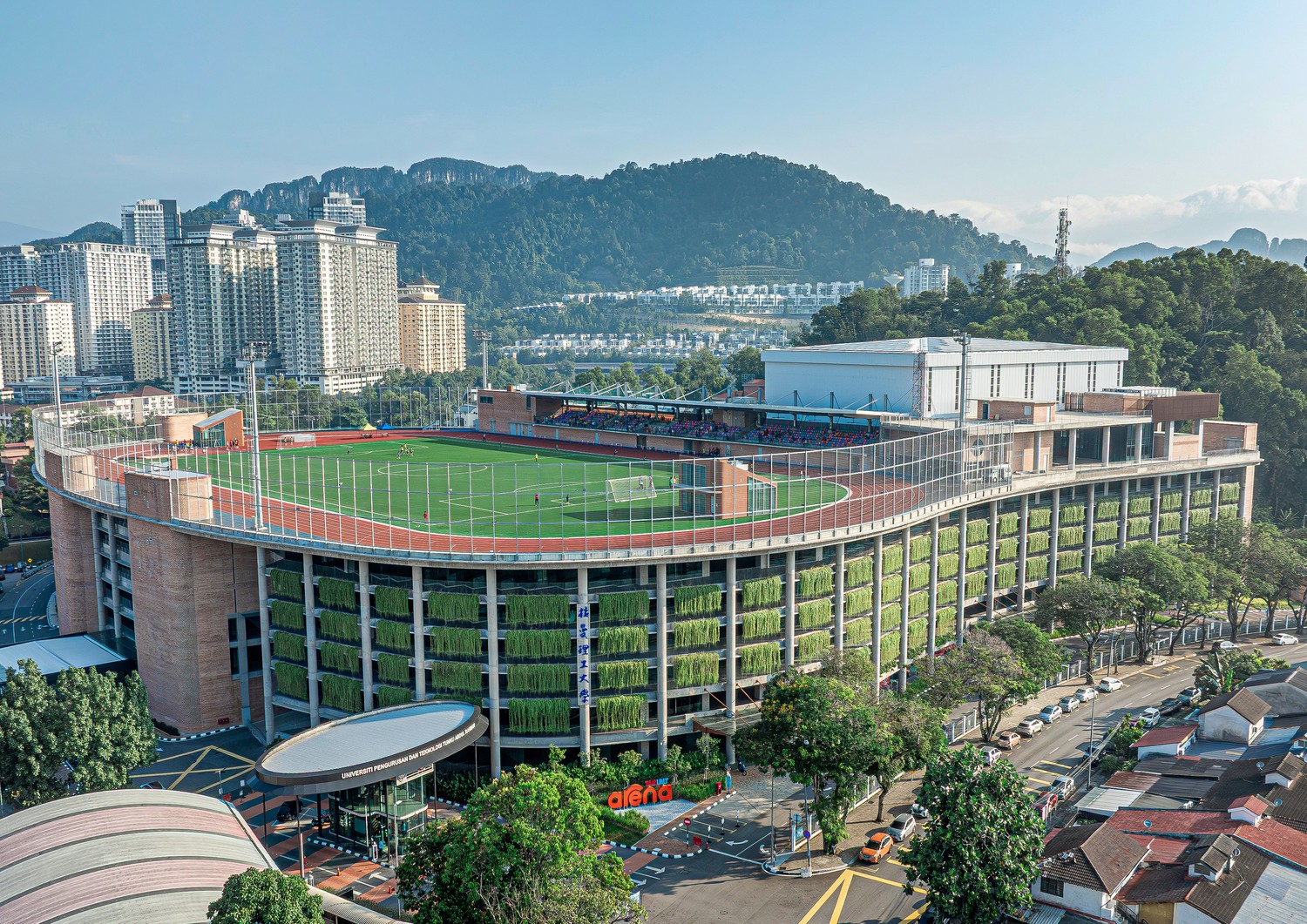
The Arena at Tunku Abdul Rahman University of Management and Technology (TAR UMT) is conceived as a contemporary reinterpretation of the Roman Colosseum—a civic sports structure that is both functional and symbolic. It brings together athletics, student life, and community engagement into a single architectural landmark at the Kuala Lumpur campus.
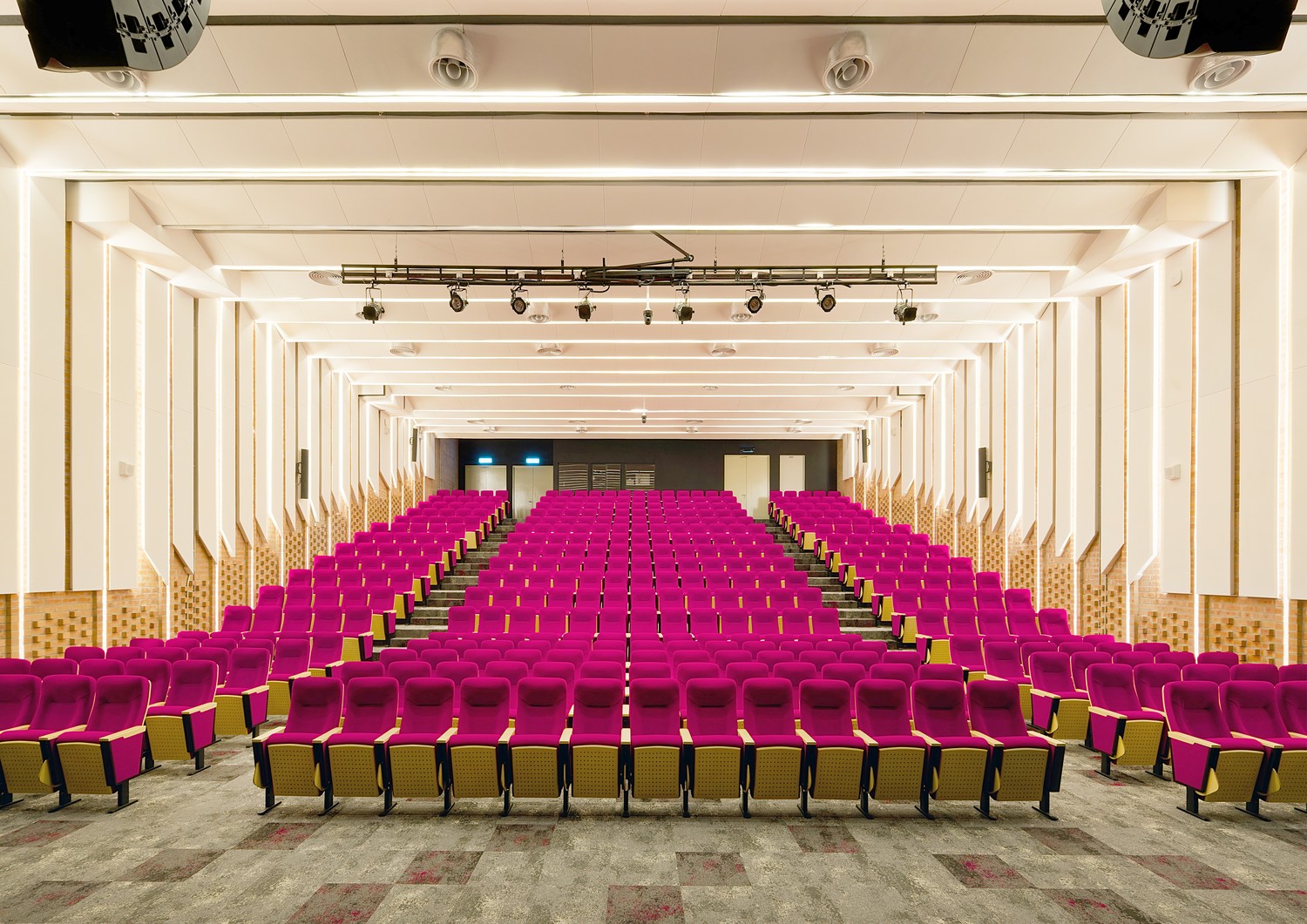
Acoustic panels overlaid on patterned brickwork representing the honesty of two materials
Programmatically, The Arena houses a full-sized FIFA-certified football pitch, an eight-lane 400-metre running track, multipurpose indoor courts, training facilities, spectator seating, and supporting amenities. Beyond sports, it integrates student lounges, F&B outlets, event spaces, and innovation zones, enabling the building to serve as a social and cultural hub throughout the day rather than merely a single-use stadium.
The design concept draws from the Colosseum’s principles: monumentality, repetition, and openness. Layered façades, rhythmic structural bays, and generous circulation echo the Roman use of colonnades and concentric planning. These elements are reinterpreted in modern materials and construction techniques. The building is inward-focused around a central field, fostering collective experience, while remaining visually porous to the campus. This approach allows the Arena to be both a monumental civic space and an accessible everyday facility for students and visitors.
The circular planning of TAR UMT Arena establishes a powerful sense of focus, equality, and collective experience, placing the arena at the heart of campus life. This form naturally encourages efficient circulation, clear sightlines, and flexible internal planning, allowing the building to seamlessly support sports, ceremonies, performances, and large assemblies.
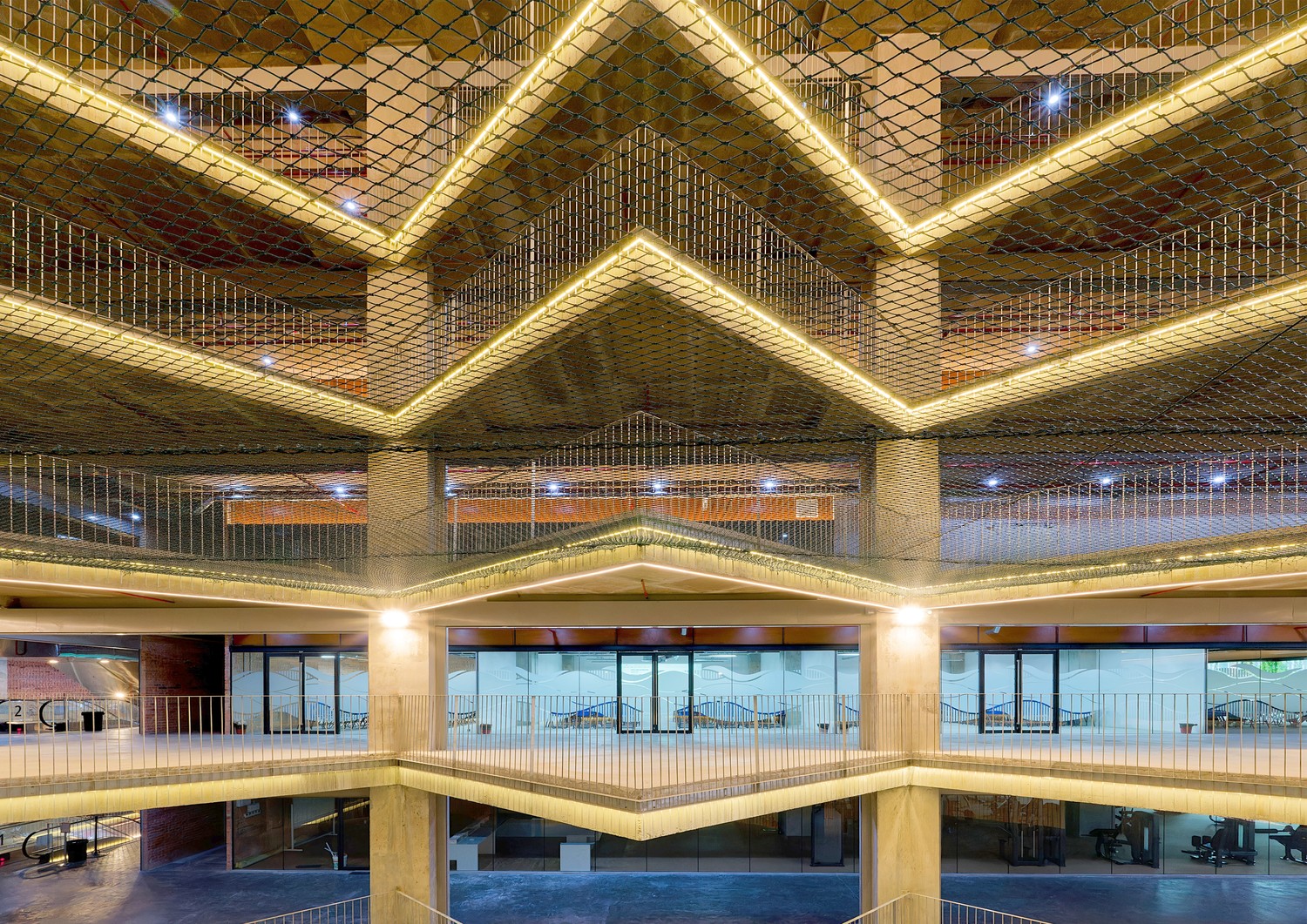
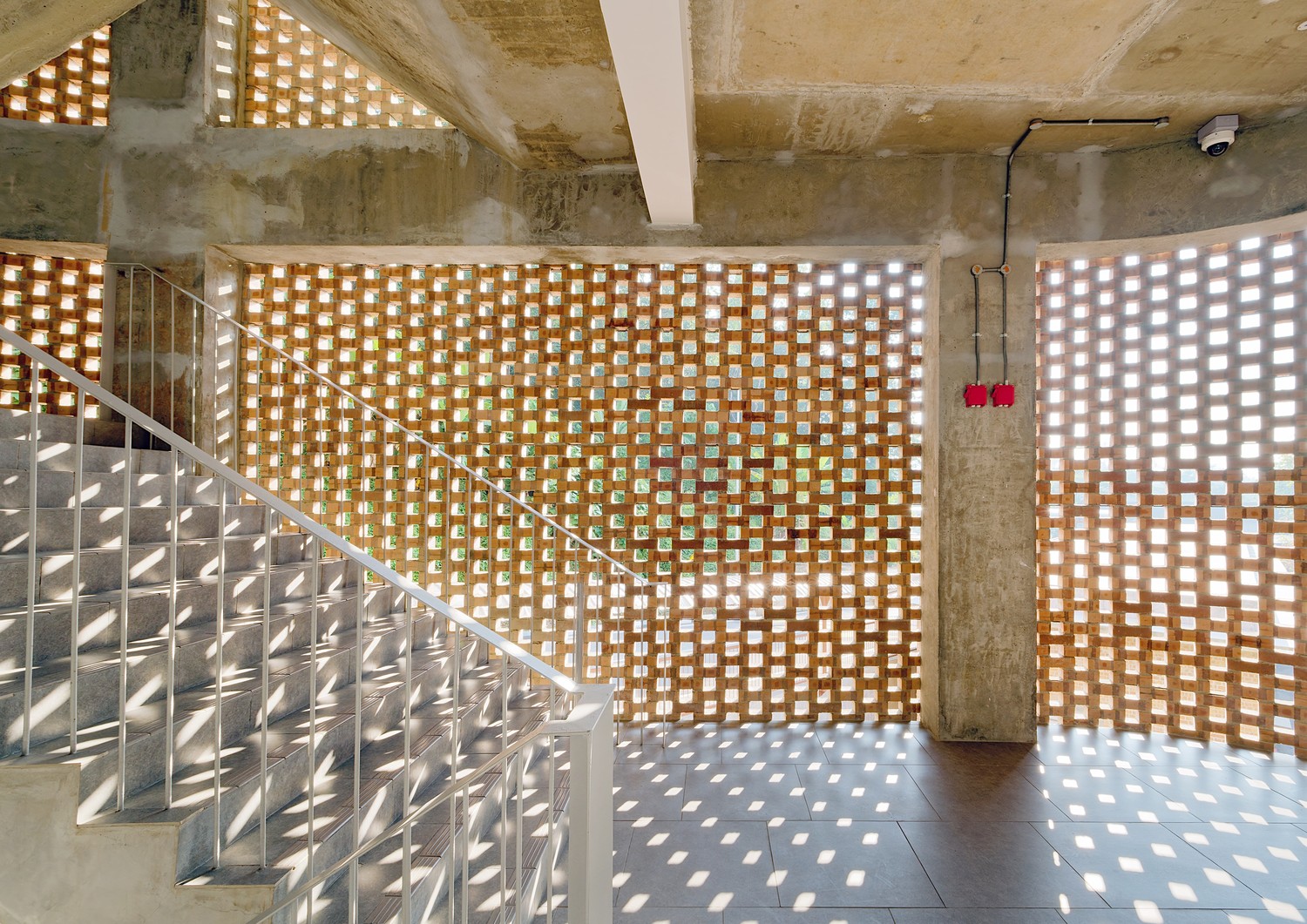
Naturally-ventilated lattice structure fostering light and shadow play
Surrounding the main arena, the Student and Innovation Centre acts as an active perimeter, extending learning beyond classrooms into collaborative and entrepreneurial spaces. An integrated car park is discreetly embedded within the overall massing, preserving walkability and visual coherence across the campus.
Sustainability is integral to the project and reinforces the Arena’s role as a future-ready campus landmark. The development has achieved GBI Gold, Greenre Platinum, and Mycrest Platinum, reflecting a comprehensive approach to environmental performance, user wellbeing, and long-term operational efficiency. Passive design strategies, energy-efficient building systems, and climate-responsive architectural elements work together to reduce energy demand while improving indoor comfort and overall environmental quality.
The Arena, comprising 6 levels and a rooftop designed to accommodate a football field, futsal court, and other amenities, sits on an 11.79-acre site in Setapak, Kuala Lumpur. The average building envelope of the whole non-residential development has an Overall Thermal Transfer Value (OTTV) of 35.76 W/m² which translates to the fact that lesser heat will be allowed to pass into the building compared to the minimum requirement of 50 W/m² for building envelope and 0.6 W/m² for heavyweight and 0.4 W/m² for lightweight Roof Thermal Transmittance. Thus, the building has lower heat gain, requires less energy for cooling, and reduces CO2 emissions.
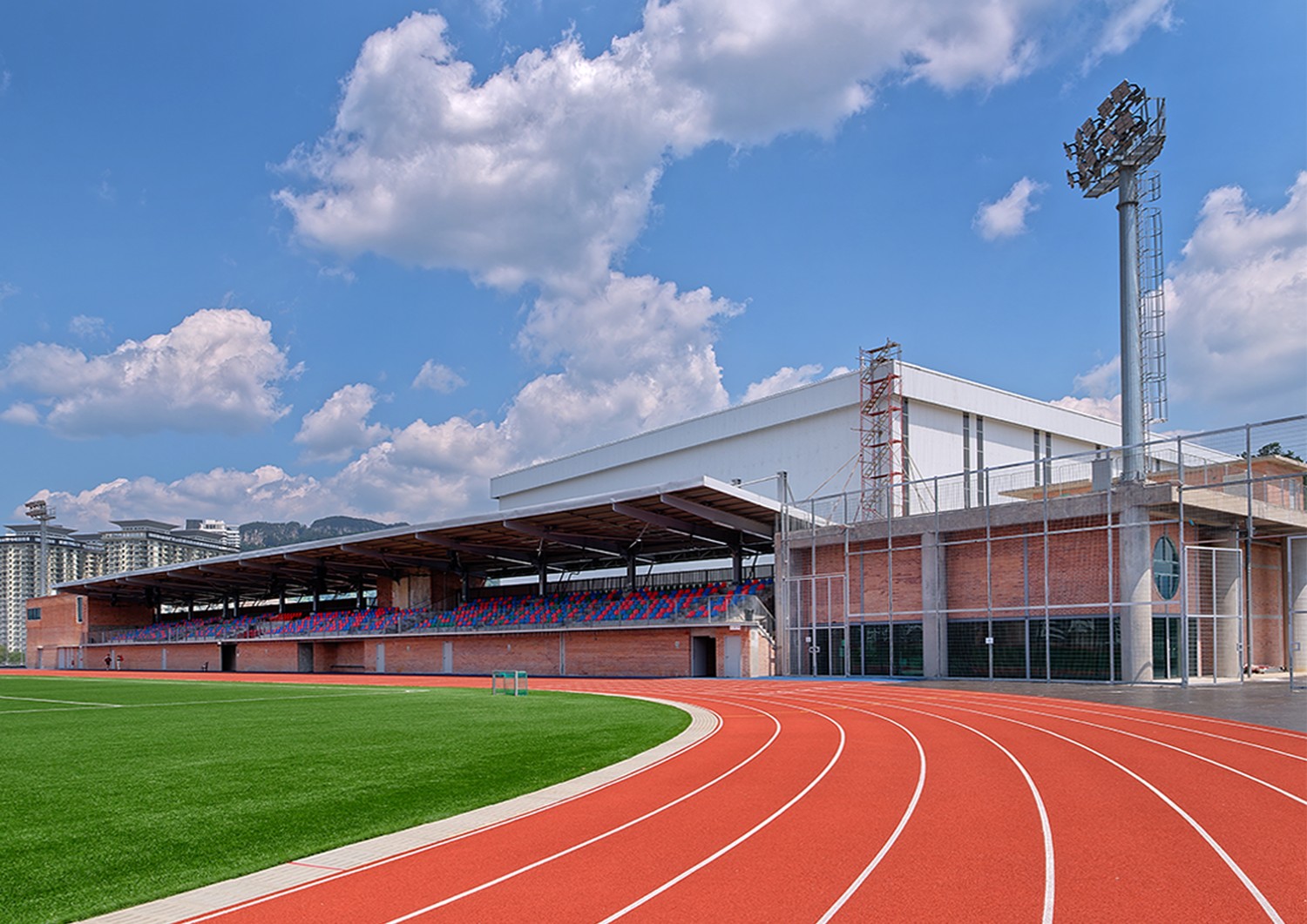
Large canopies and overhangs shrouding the stands
High-efficiency external lighting will be provided to all areas in the development, subject to maintaining a minimum NELA, as specified in MS1525:2007, for 90% of NLA measured at the working plane. Daylight sensors are installed in the building’s corridors, an energy-saving feature that electronically adjusts lighting based on the intensity of natural light. The Arena is well-designed to optimise energy savings through flexible lighting controls and lighting design practices that enable more flexible light switching in occupied areas.
The Arena is designed with unitary air conditioners that allow for air circulation in the building and provide cool air to occupants. Heat recovery wheel and CO2 sensors are installed at the outdoor air system for all AHUs serving large halls and auditoriums. Air-conditioning air-cooled VRF (Variable refrigerant flow) type with a COP of at least 4.5 will be selected, with fan power improvements compared to MS1525.
Moreover, the development is designed with a lift with energy-efficient features such as an AC variable voltage and variable frequency (VVVF) motor drive and a sleep mode feature that provides low starting current and high-power factor and efficiency.
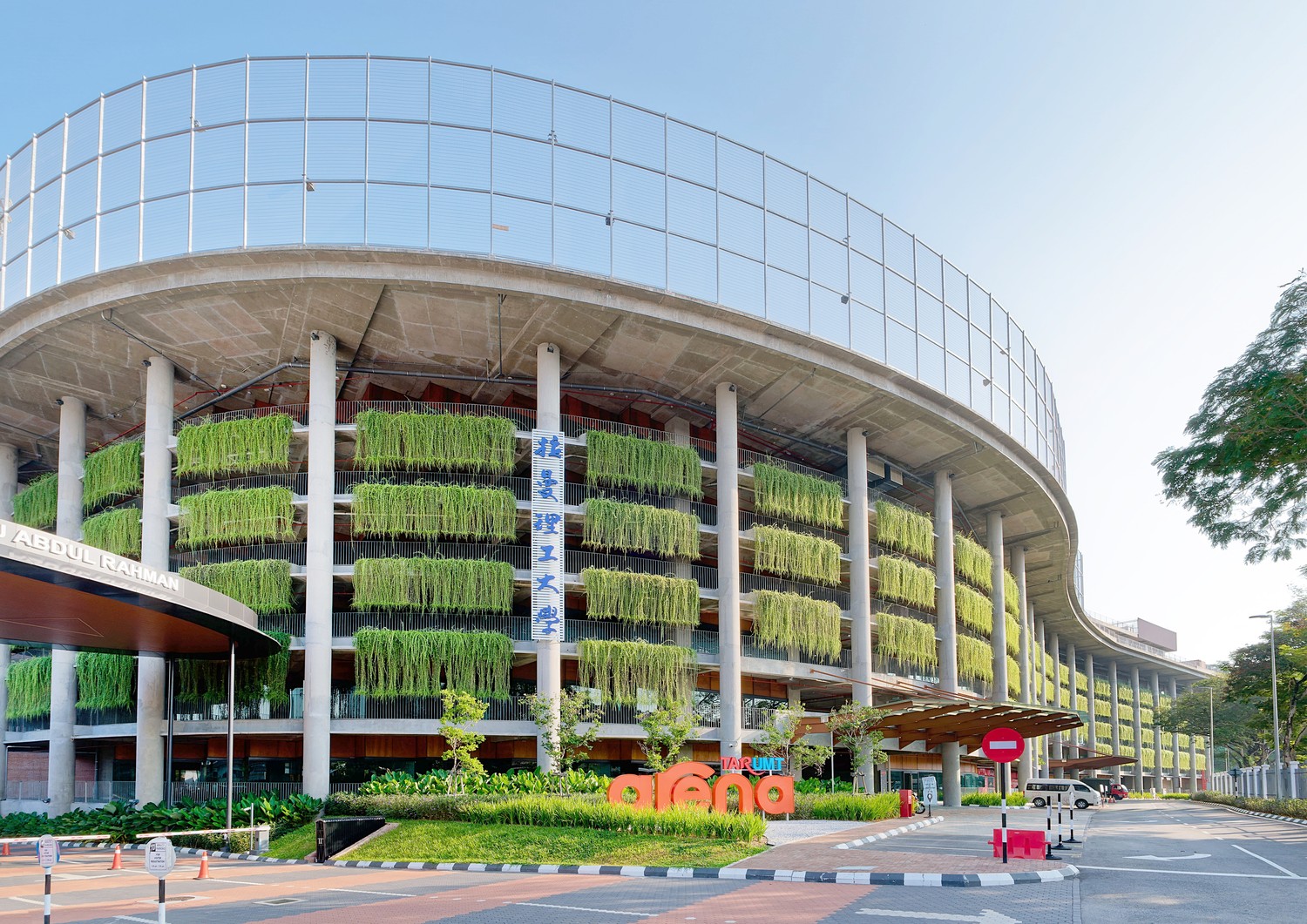
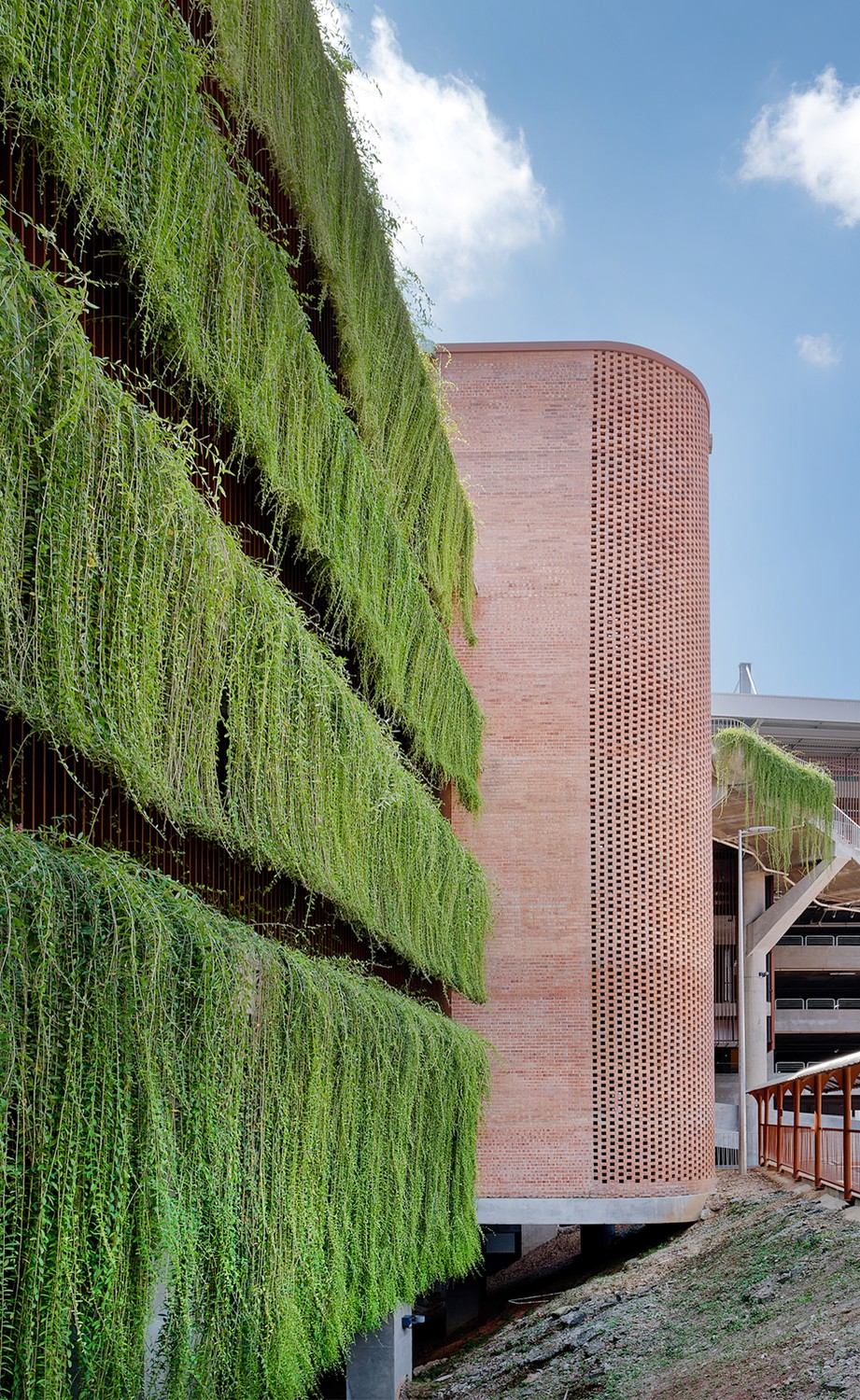
The building shrouded by greenery
The Arena uses solar panels to reduce its electricity use. Solar panels will be installed on the roof of the building, occupying a 3,403 m2 area, which can support a maximum demand of 4.3MW per hour. With solar panels, the building owner can save up to 1.22% on electricity costs and reduce pollution by promoting clean, environmentally friendly energy.
The development adopts sustainable and environmentally friendly programmes during the construction stage. An experienced builder is assigned to constantly monitor the project to reduce energy and water use and construction waste. The development also uses recycling bins to encourage occupants in 3R programmes to recycle unwanted paper, plastic and glass, reducing waste and potentially minimising the carbon footprint.
Through its integration of sports facilities, student spaces, and sustainable design strategies, TAR UMT Arena represents a contemporary civic building for the university community. The project successfully unites architecture, education, and public life into a single multifunctional development that supports learning, interaction, and collective experience for future generations.
A bold civic intervention transforming infrastructural constraints into an integrated campus hub through monumental expression, naturally ventilated communal spaces, and socially activated student environments.