PERMEABILITY HOUSED

A PROGRESSIVE TEST BED FOR DESIGN INNOVATION, RESEARCH AND
DEVELOPMENT, AND TRIAL OF IDEAS AND PRINCIPLES CONTINUOUSLY
DEVELOPED BY TANGU ARCHITECTURE
TEXT BY THE ARCHITECTS
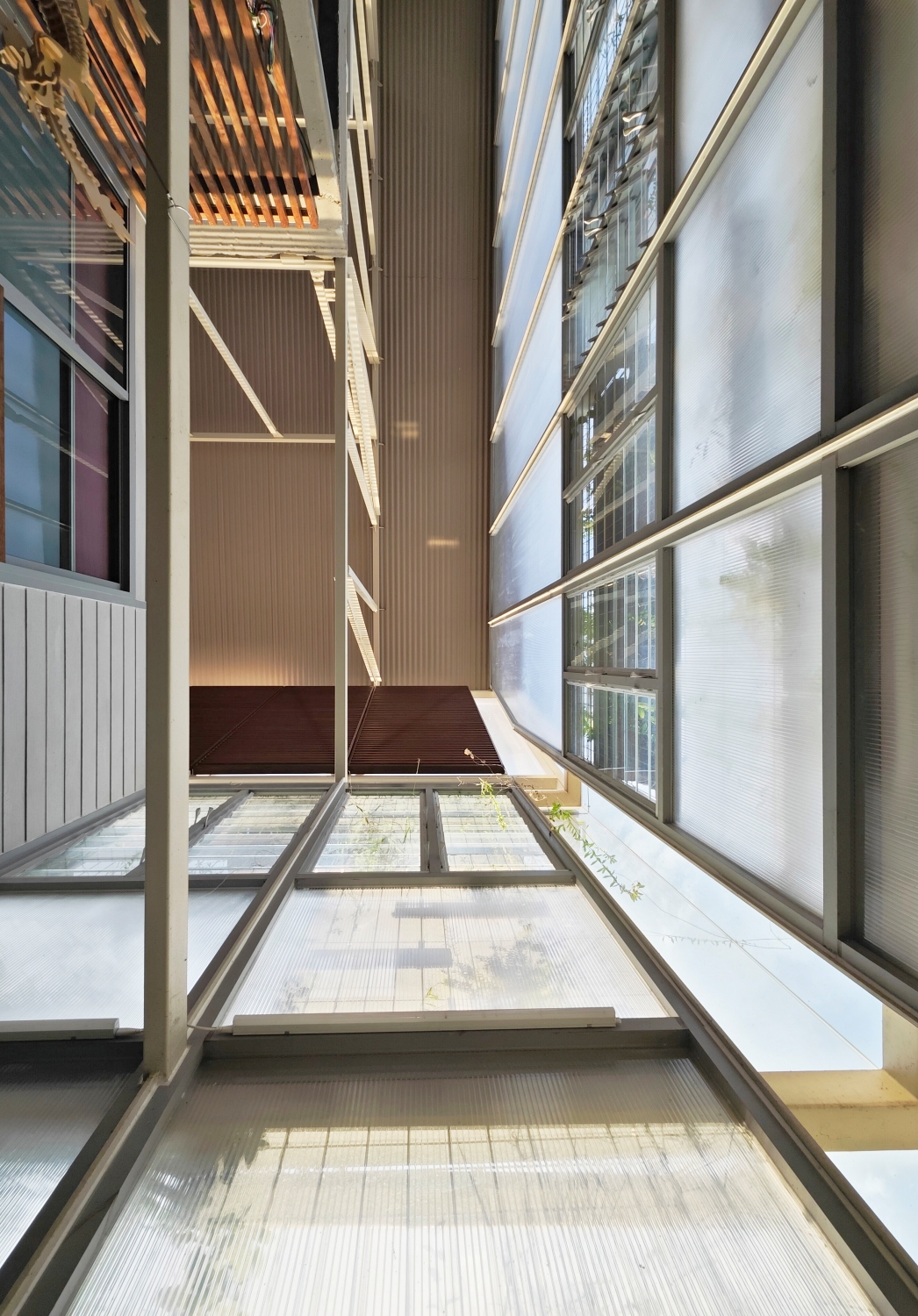
Diffused natural light help to reduce glare, creating a more comfortable indoor environment
In an established suburb of Greater Kuala Lumpur, within a closed-knitted community, lies this east-fronting house that had been renovated incongruently over the years. It has now been transformed into a progressive test bed for design innovation, research and development, and trial of ideas and principles continuously developed by the practice. The approach stems from a minimalistic standpoint that “lightness” – of building footprint, carbon footprint, weight, construction/materials and logistics, embedded energy – applied through the well-considered design of the spatial configuration, envelope and form, coupled with the principles of “permeability” of the elements brings forth holistic sustainable solutions. These are fundamentally found in time-tested passive concepts, and vernacular practices, and occur in natural processes and phenomena, as expressed in the equation below:
Skewed angles to break away from the linearity of the site
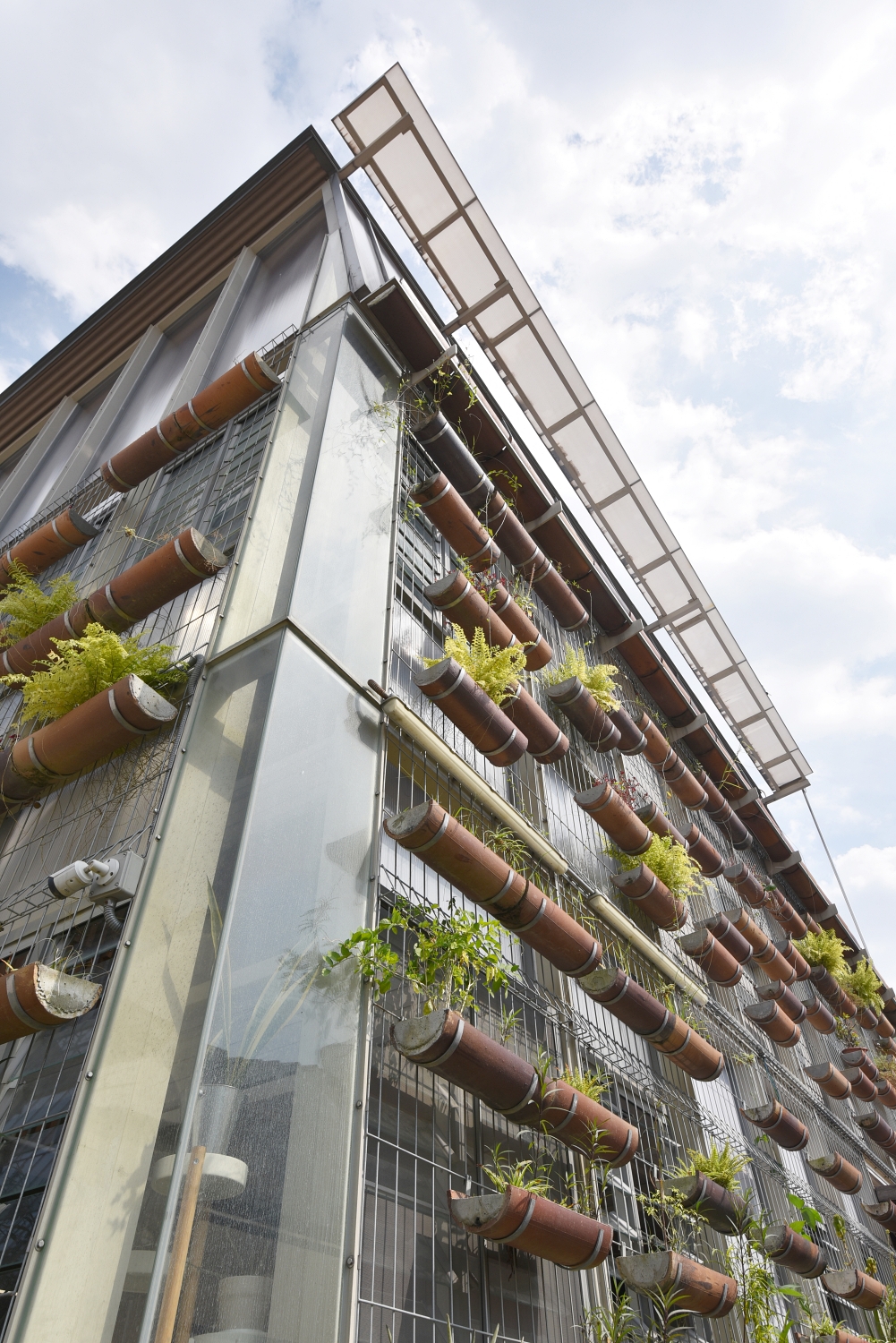
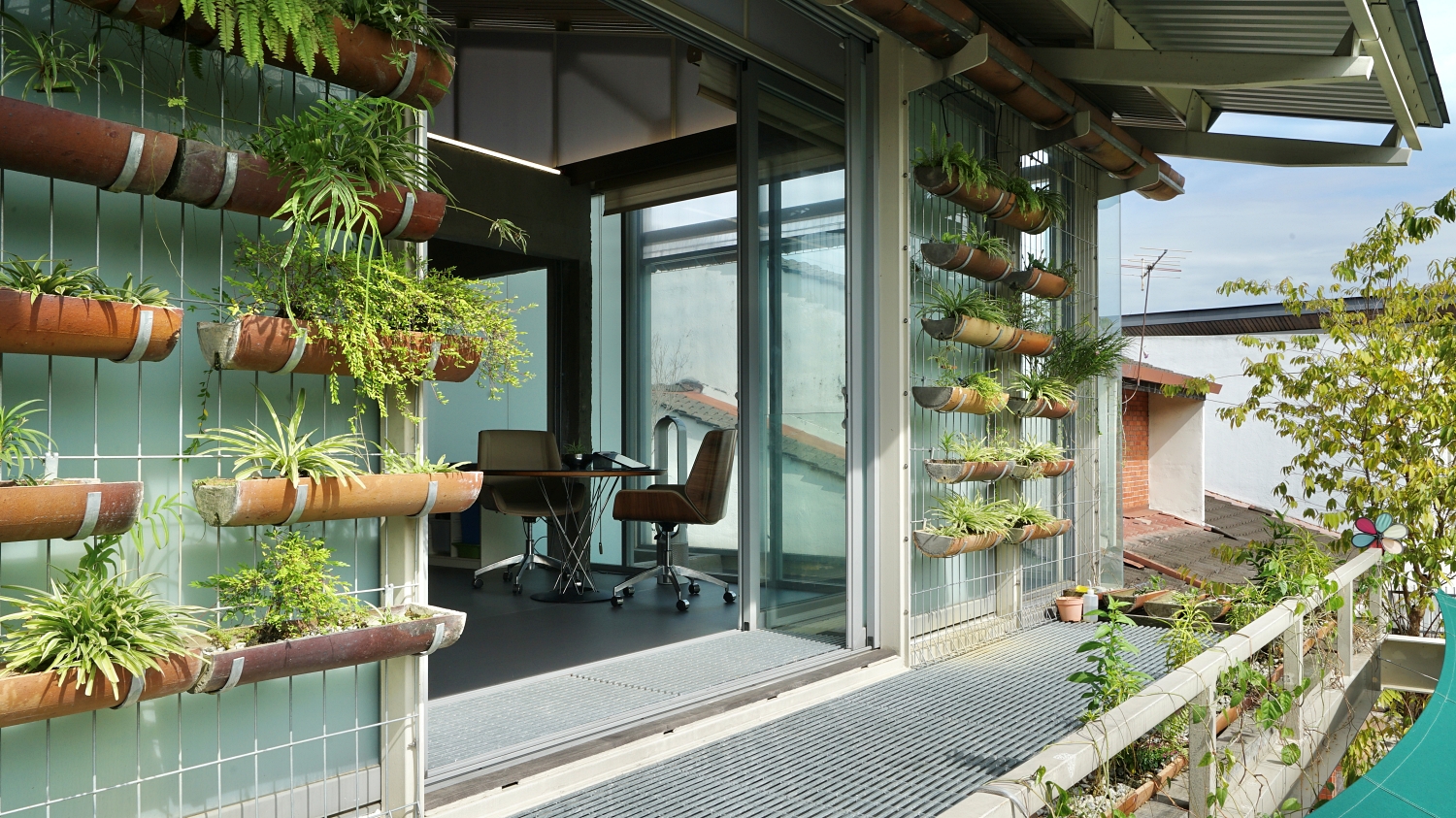
Photo on left: The hanging clay planter boxes can be used to grow plants that provide additional benefits, such as reducing air pollution, improving indoor air quality, and providing visual interest

Through the methodology as expressed in the equation above, the design principles and strategies applied are found in these built solutions:
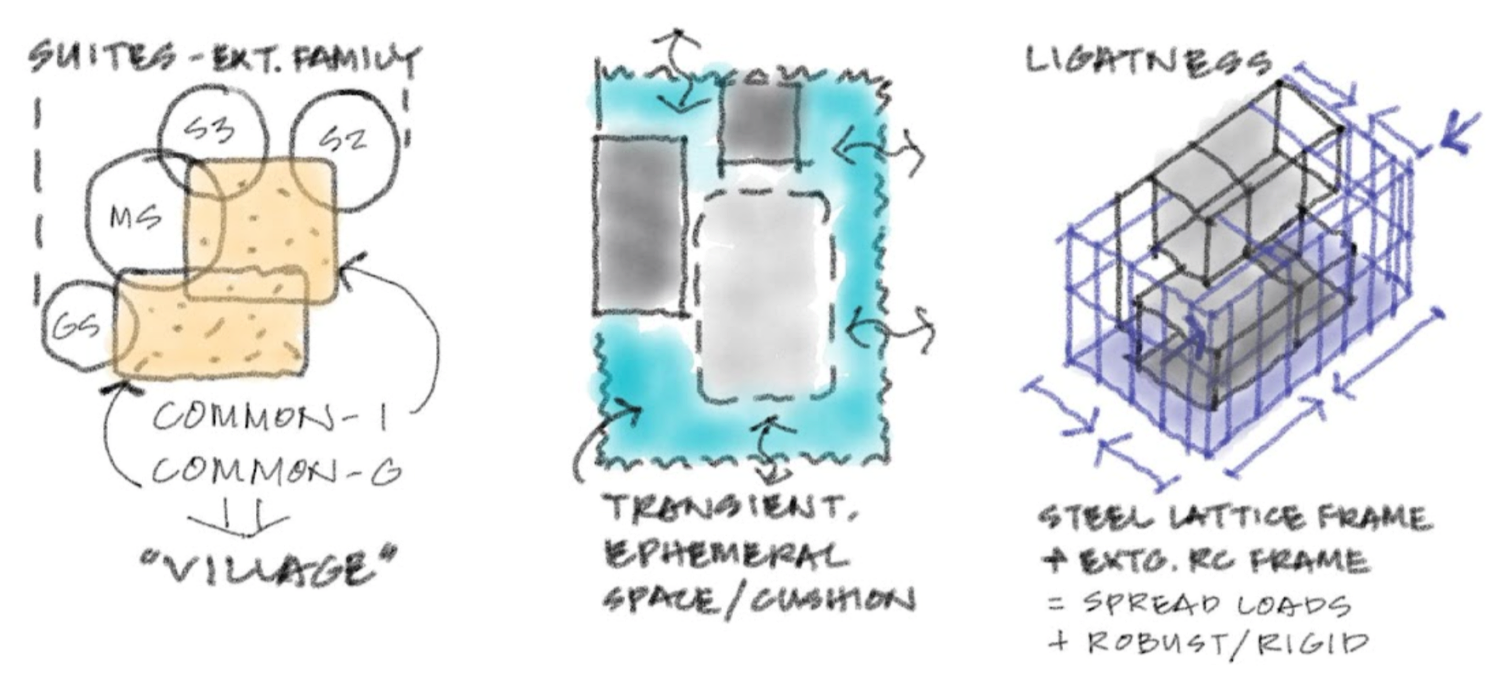
• Configuration of 3 sub-units of extended family bedroom suites hinge around a common area on each floor analogically akin to a village.
• Spatial configuration composing of box (private); congregation (communal); transient (ephemeral, in-between): Living + Dining – communal; Gallery (transient) – in-between in/out; Social Kitchen – communal; Chef’s Kitchen (box) – semi-private; Bedroom Suites (box) – private.
• Wrapped around by intermediate + transient spaces (Entrance Courtyard, double-storey Gallery, Atrium, Attic) – climatically ephemeral, dynamic, multi-storey, multi-layered – for circulation use, as a climatic cushion, air exchange, visual buffer and vertical planting.
• Encapsulated by the lightness of the steel frame lattice in the extension that wraps around the existing concrete frame – for rigidity and robustness by spreading the loads in the 3D framework around the perimeter.

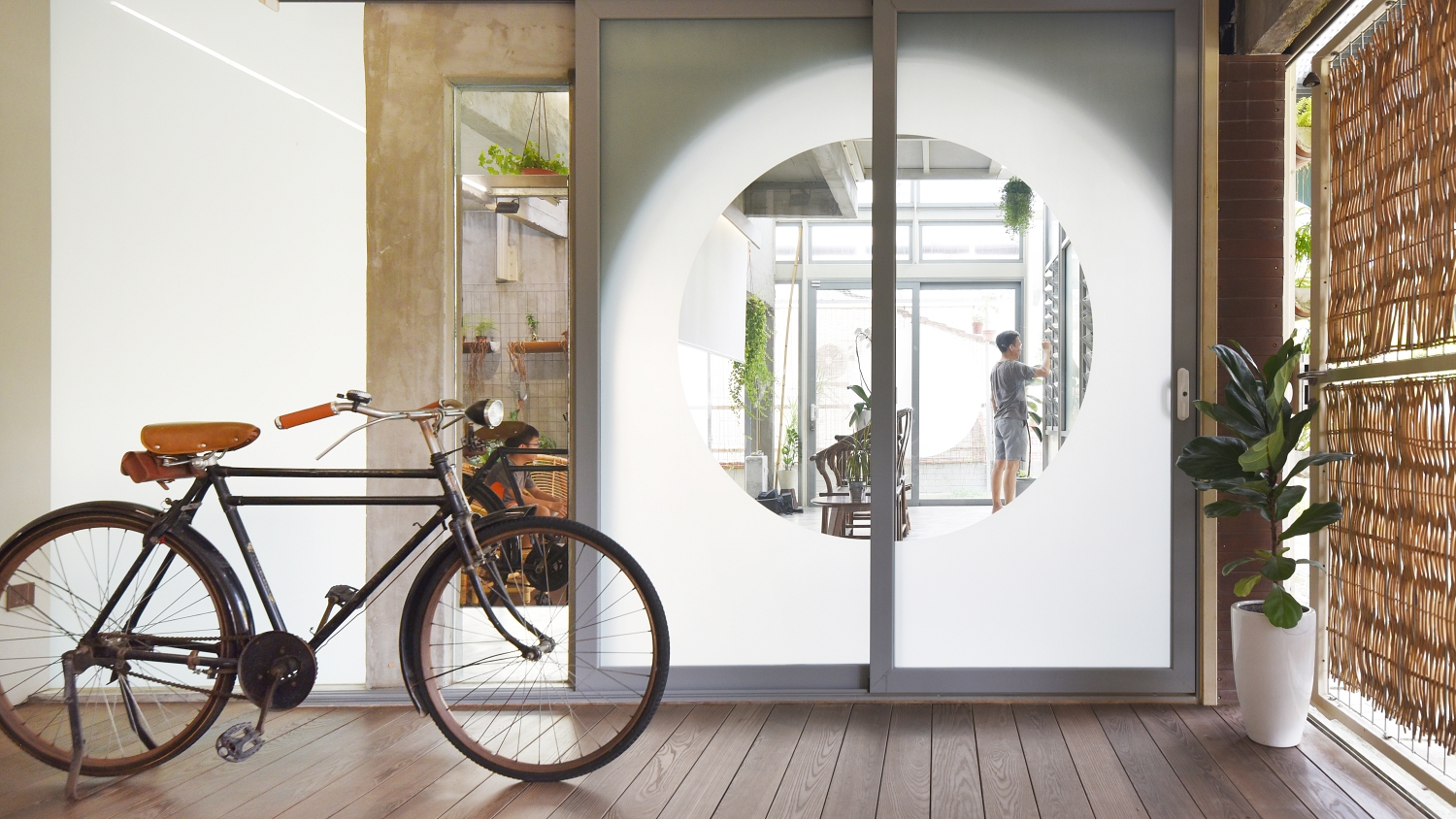
Photo on right: “Moon Entrance” was inspired by the existing arch structure, aesthetics and attitude of working with the rawness of materials and construction, leaving behind traces of history

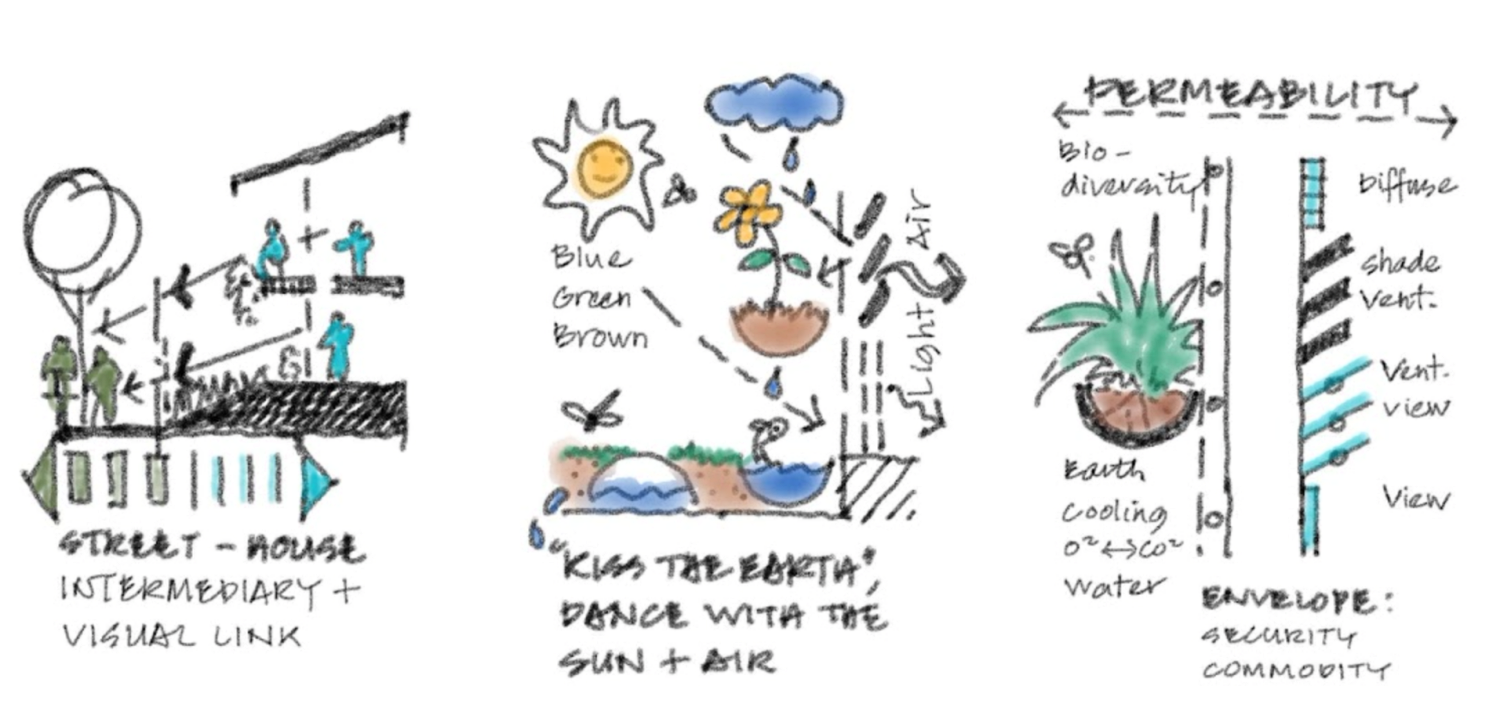
• Inducing the intermediary between house – garden – street to foster communal interaction and surveillance by blurring the boundaries of spaces, by programming ambiguity and multiplicity of usage.
• Innovating the building envelope design with layering of materials and construction to “Kiss the earth, dance with the sun + air” – to bring fore and multiply the benefits of topsoil and microbes in the CO2 – O2 cycle, to be fully integrated with the blue-green cycle (rainwater harvesting, vertical + subsoil irrigation, detention/retention, cooling, aquaponic), to promote on-site micro biodiversity and passive cooling.
• Permeability control of the elements of air (breeze, convection, cushion, exchange plenum/atrium), light (direct, diffused, reflected, filtered), cooling (radiation, insulation, shading, evaporative), view (direct, obscured, screened, borrowed, object). Achieved through the assemblage of these infill components mounted on steel and aluminium frames: insulated fibre-cement cladding, glass (clear & translucent), polycarbonate twin-wall panels (translucent & solid), adjustable clear glass louvres, timber louvres, steel mesh & suspended planter channels, and a veil of vertical landscaping to achieve different intended, specific performance and qualitative criteria.

Natural stained Balau pool deck

• Improvising new usage and repurposing of traditional artisanal construction and vernacular materials – clay (drain) channels for planters and lightweight green roofs, cane (rattan) wicker for fence/door/screen application, cement screeding and plastering techniques for flooring and walls instead of modern tile finish, re-using old timber for wall framing and roofing, and old rubble stones for landscaping.
• Selection of materials for the lowest embedded energy, lightness, unprocessed rawness, thinness, efficacy from the minimal, simplicity of construction and trades contributes to lower consumption of energy both embedded and sustained during construction.
• Aesthetics and attitude of working with the rawness of materials and construction, leaving behind traces of history, expressing the pureness of materiality, paring down to the essence and accepting imperfections, weathering, patina and mistakes from handmade construction techniques, much like the Japanese concept of “wabi-sabi”.

Exploration of traditional terracotta/clay pipe as a planter - half-round clay pipe as permeable planter tray to allow the vegetation serves as a dust filter, as a humidifier and also generate cold air

At the fundamental level, it’s based on biophilic principles – using greenery as an environmental cushion on the building envelope or skin to mediate air temperature, shading against solar heat gain from direct sunlight and radiation (also against reflecting into the surroundings), manage and harvest rainwater and drainage cycle (for irrigation, aquaponic and stormwater management) and to induce biodiversity into the neighbourhood. In the hot and humid tropical climate, protection from direct sunlight, low thermal mass and cross ventilation are key to keeping the building cool – whereby daily outdoor air temperature difference is small (24C – 34C) and constant throughout the year.

The concept of permeability applies to the building skin design and construction to filter and temper the elements of air /breeze, light and water using plants, soil and planters, glazing (glass, polycarbonate, etc), louvres, mesh, wall covering, et al, for cooling by air change/ ventilation/ stack effect, heat penetration control, organic insulation, daylight diffusion, evaporative cooling from plants and water drips. The outcome is to reduce energy consumption in lighting and mechanical cooling quantitatively, while qualitatively, it induces the perception of a cool ambience visually and by feeling through lower heat radiation from the surfaces in the environment. The permeable ground absorbs and percolates water – cools the compound, waters the plants, charges the fish ponds and mitigates stormwater discharge rate to reduce the thermal footprint and water impact sustainably. This system is looped back up to the roof tanks to repeat the cycle, harvesting rainwater-pond water and filtering it with the vertical greens for the fish ponds in an aquaponic cycle as well as continuously cooling the house envelope.The lightness principle entails low weight, thermal mass and carbon footprint.

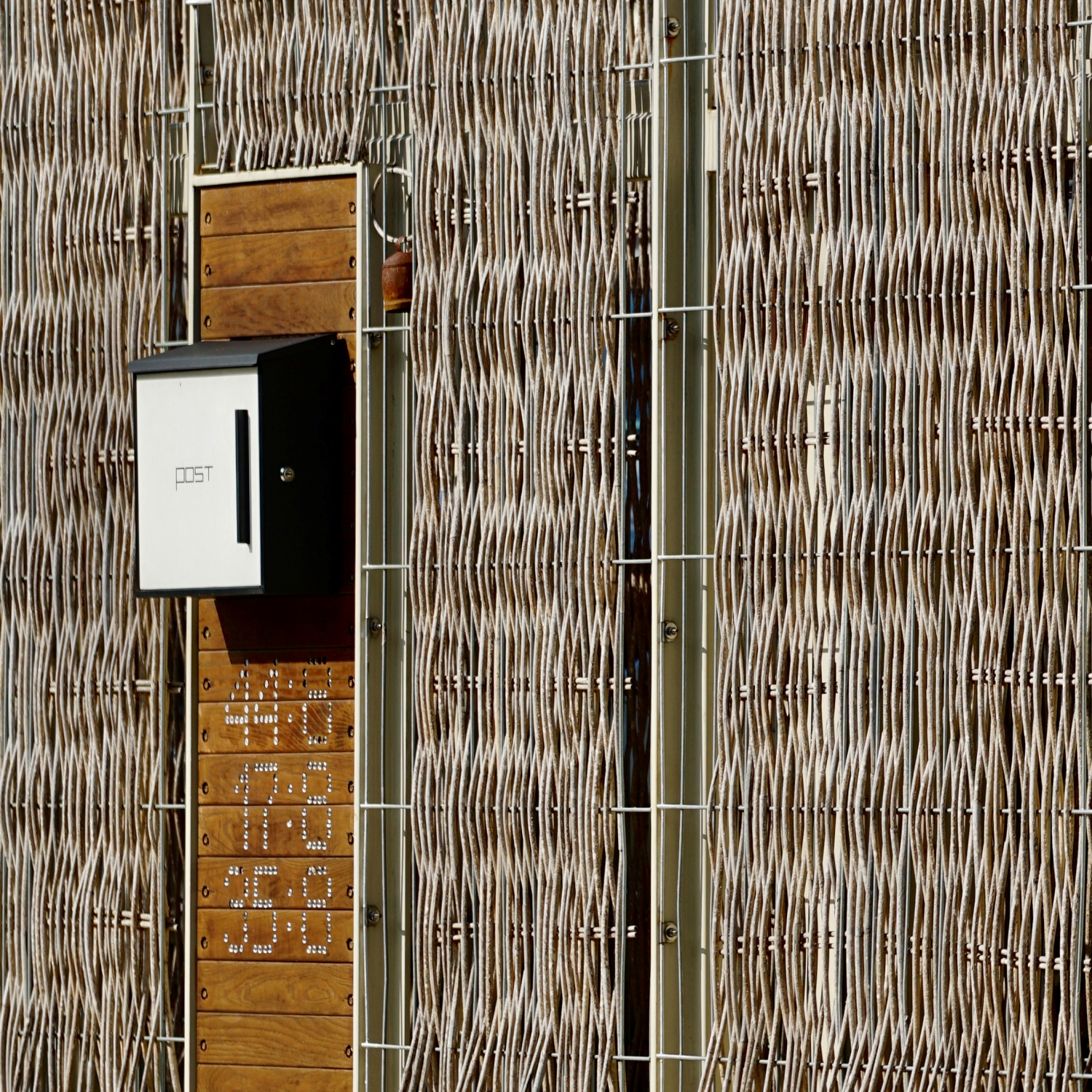
House Numbers has been crafted with Flat Glass Marble by displaying them on a wooden background and woven rattan gate. Colourful glass marbles benefit from the little glimmers of sunlight

The refurbishment process is incorporating the permeability housed concept for living spaces. A multi-layered building facade with planter boxes can be an effective monsoon architecture strategy that promotes natural ventilation, natural lighting, and shading while also incorporating greenery into the building’s design. The Monsoon Architecture strategies include:
• Natural ventilation: The multi-layered facade design includes operable windows and vents that allow for natural ventilation. Planter boxes are strategically placed near these openings to help channel air into the building and improve indoor air quality.
• Natural lighting: The use of clay pipe planter boxes and other greenery help to diffuse natural light and reduce glare, creating a more comfortable indoor environment.
• Shading: The use of clay pipe planter boxes on the facade can help shade the building and reduce solar heat gain. Additionally, shading devices such as louvres or screens are incorporated into the design to further reduce the amount of sunlight entering the building.
• Greenery: The planter boxes can be used to grow plants that provide additional benefits, such as reducing air pollution, improving indoor air quality, and providing visual interest. The greenery also helps regulate indoor temperatures and humidity levels.

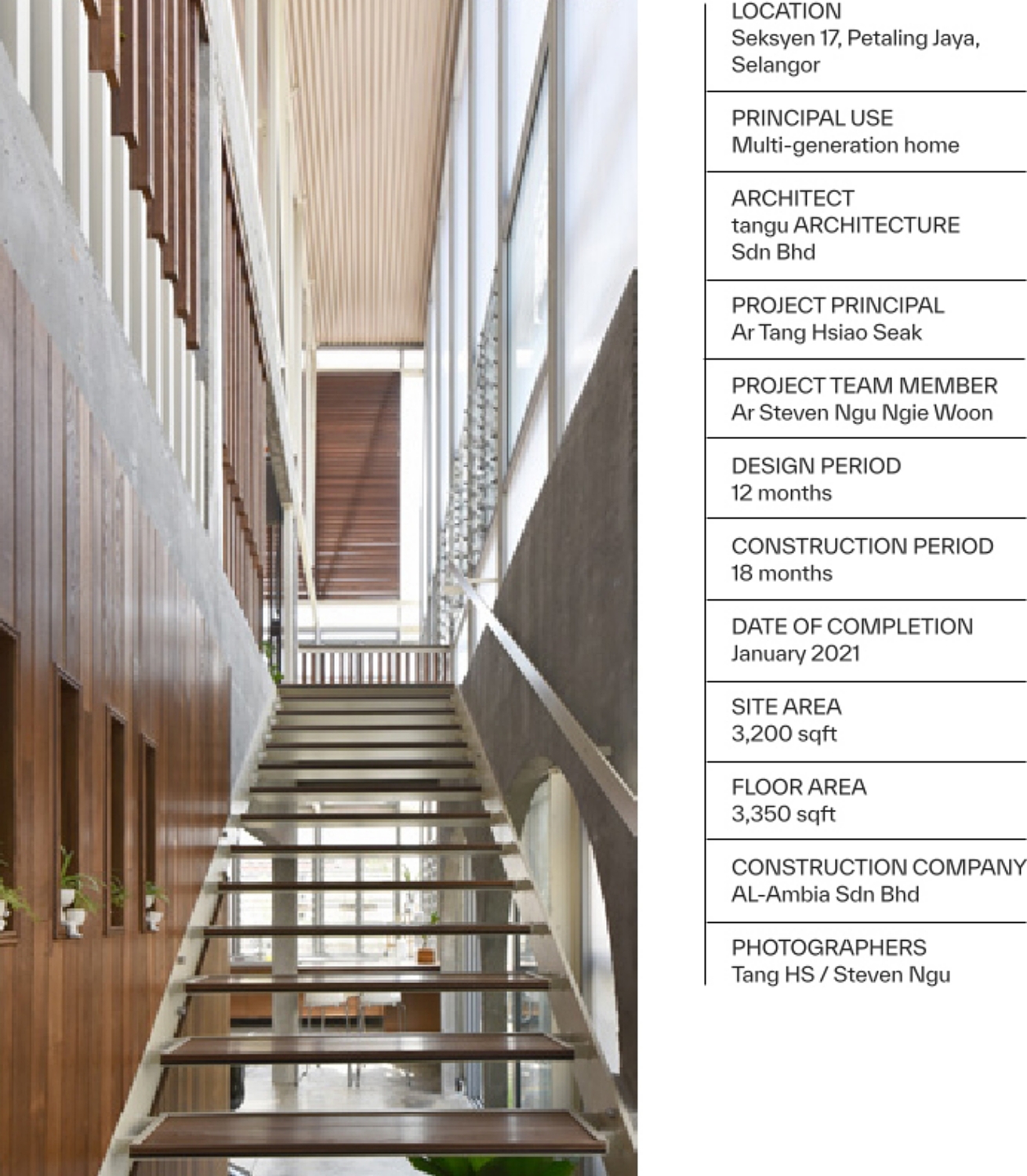
Open tread staircase enhances the permeability of the spaces

By incorporating these features into the design of a multi-layered building facade with clay pipe planter boxes, occupants can enjoy a healthier and more comfortable living environment while also reducing energy consumption and promoting sustainable architecture. This approach is well-suited to monsoon regions, where natural ventilation and shading are especially important during the hot and humid monsoon season.

Overall, the approach of this residential building refurbishment with a permeable facade that takes into account monsoon architecture has improved the building’s performance, comfort, and resilience during the monsoon season while providing a sustainable and healthy living environment for its occupants.

The design and construction integrate greenery as a living and dynamic component of the building envelope hand in glove and symbiotically rather than treating greenery as an add-on feature. It could contribute to the ratio of greenery over the given plot size, expressed as the “green plot ratio”. If collectively more buildings in the city could similarly play their role to reduce ambient heat radiation back into the environment, the urban heat sink effect could be reduced thereby lowering the overall ambient air temperature and perceived heat sensation. We need to have a collective view and effort and be holistic in our approach. Current efforts and rating systems on sustainable/ green buildings seem to have a narrow base approach, satisfying minimal criteria and individual building focus.

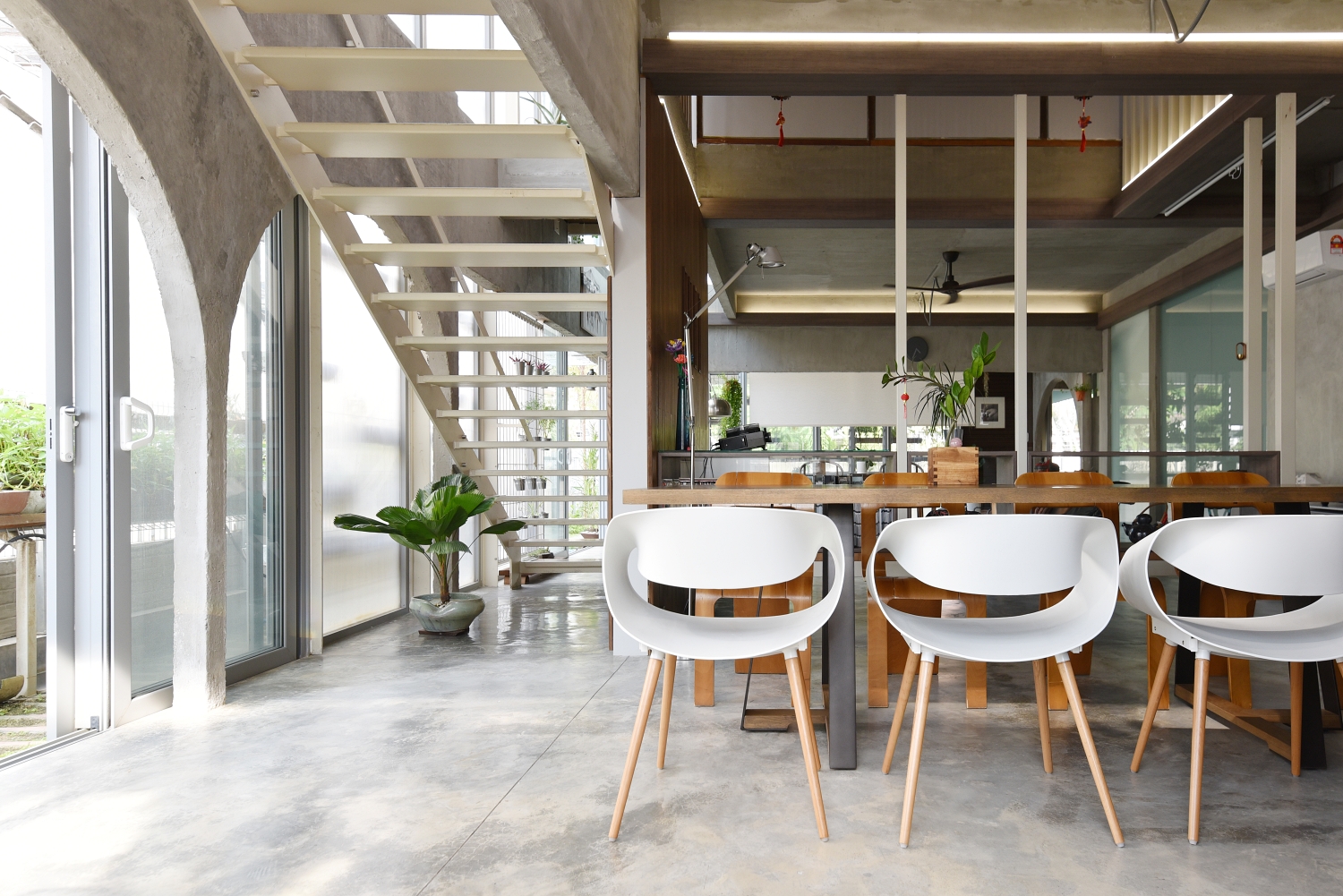
Selection of interior material palette emphasizing lightness and unprocessed rawness

FEATURES

RELATED ARTICLES