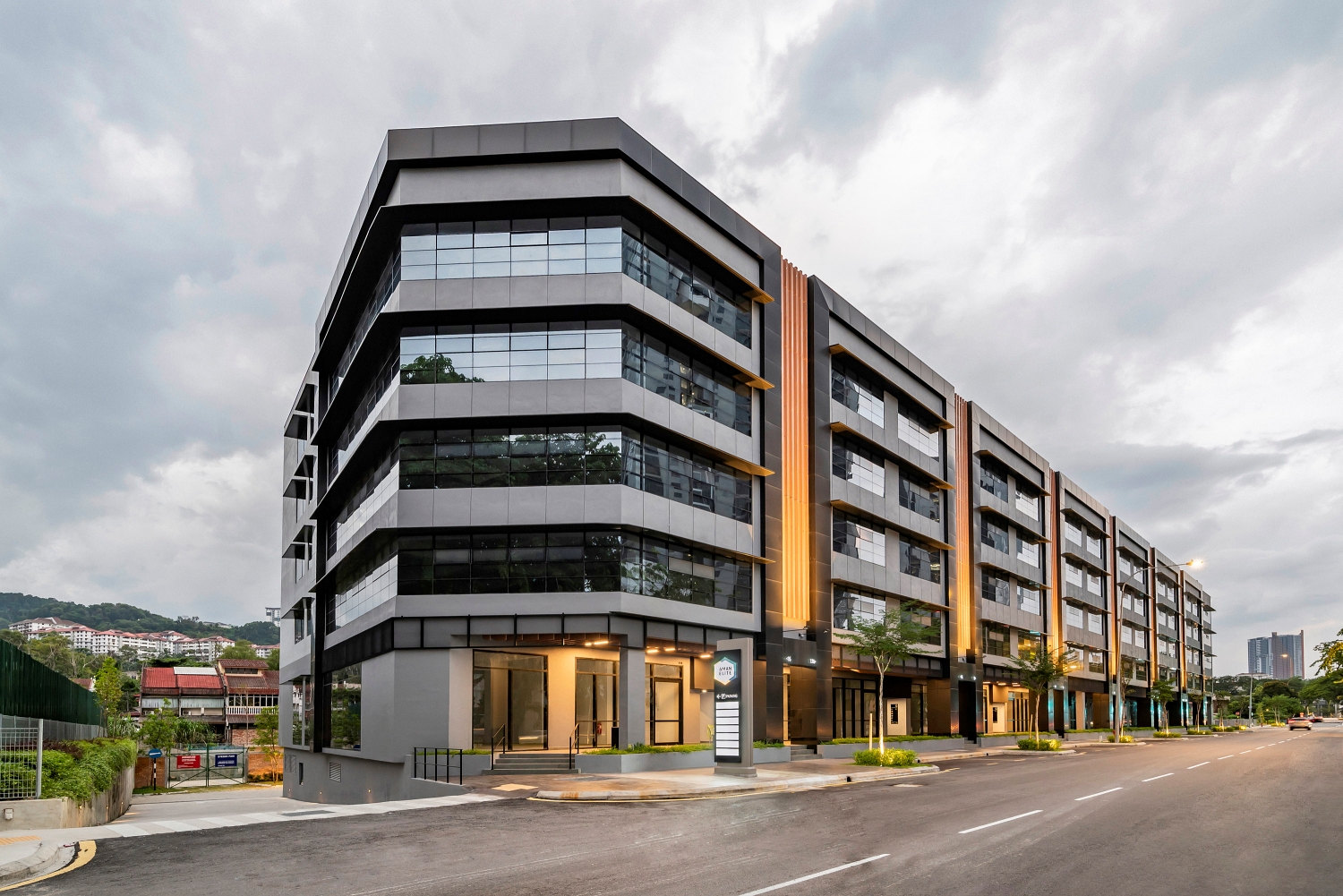
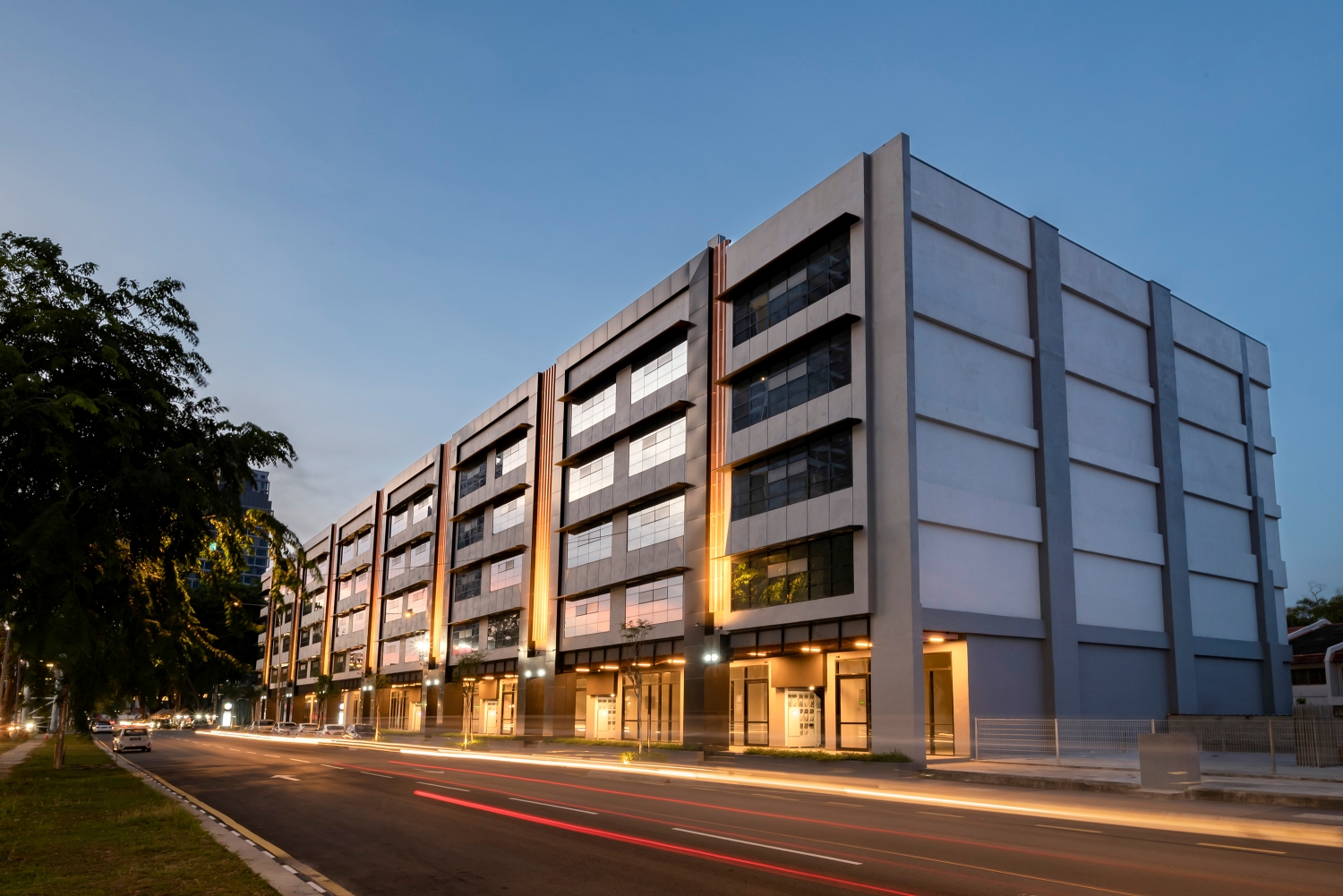
We were approached by the developer to advise them on how to maximise their returns on an odd-shaped plot along Jalan Desa Aman 1 fronting the major arterial road – Jalan Cheras.The 1.5-acre wedge-shaped site measuring 180m in length and 58m at its deepest point typically would not have been profitable when considering typical planning setbacks.
After considering the issues, we proposed an integrated development with the major component being shop offices.The planning guidelines for shop offices afforded no setback along the street front thus we were able to maximise the buildable area of the site.This also provided an opportunity to create a pedestrian-friendly urban landscape and offers safe public access to the nearby Taman Mutiara MRT station.
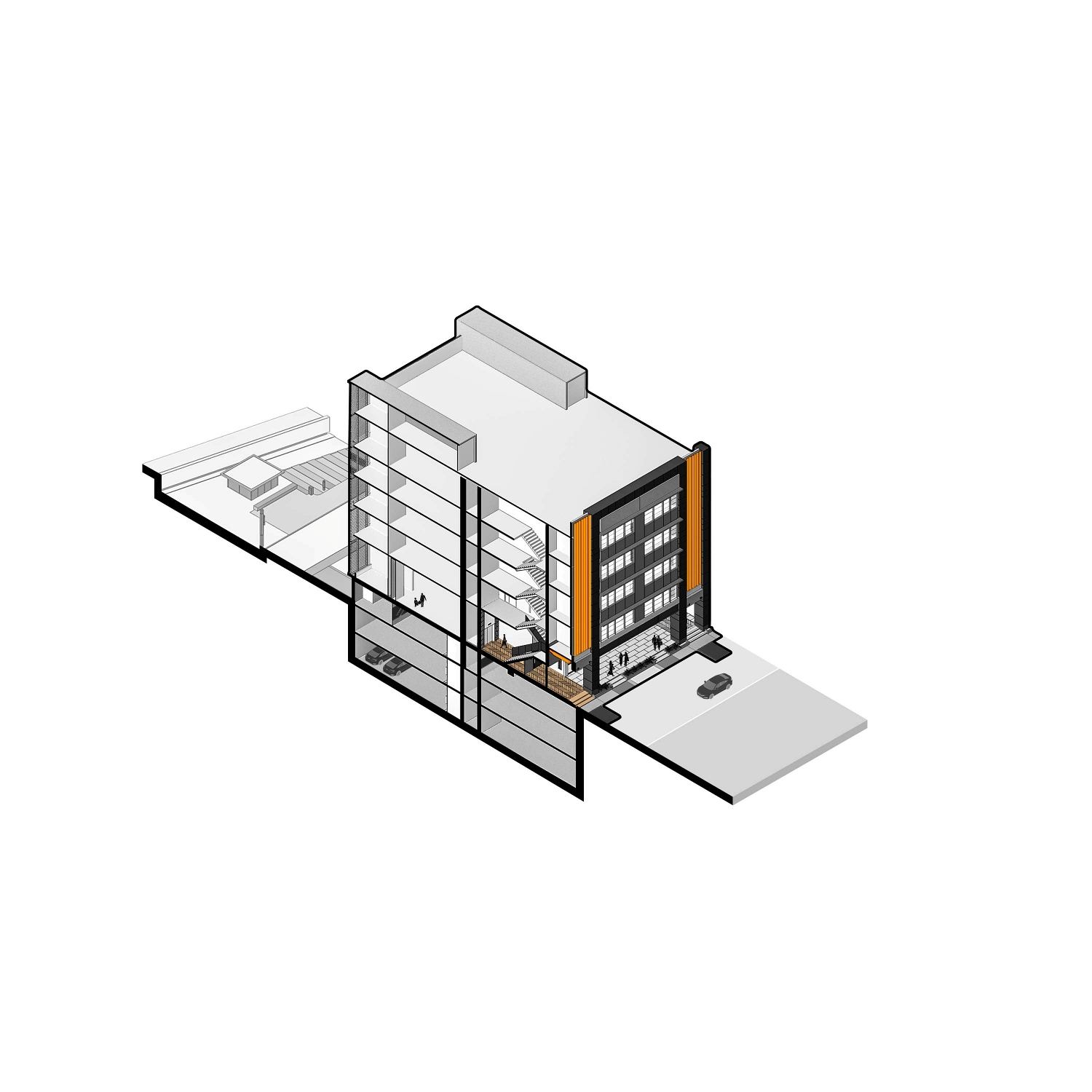
The development consists of 7 pairs of shop offices, each 5 storeys tall; each pair of units shares a dedicated lift lobby.One corner of the site is earmarked for a 14-storey boutique hotel with business and events facilities – this tower is to be completed in the next phase.
The rear of the site faces Sungai Kerayong and a row of existing terrace houses.A well-landscaped garden becomes the buffer between the existing houses and the development, offering a pleasant green space for the building users and the greater neighbourhood.
The East-West orientation of the building and the surrounding environment informs the treatment of the façade.The building strategically faces the busy Jalan Cheras and provides address and exposure to tenant-occupiers.The existing tall trees shield the building from direct exposure to the low evening sun.The incorporation of sun shading along the building elevations mitigates the high afternoon sun while creating consistent linear elements on the façade.
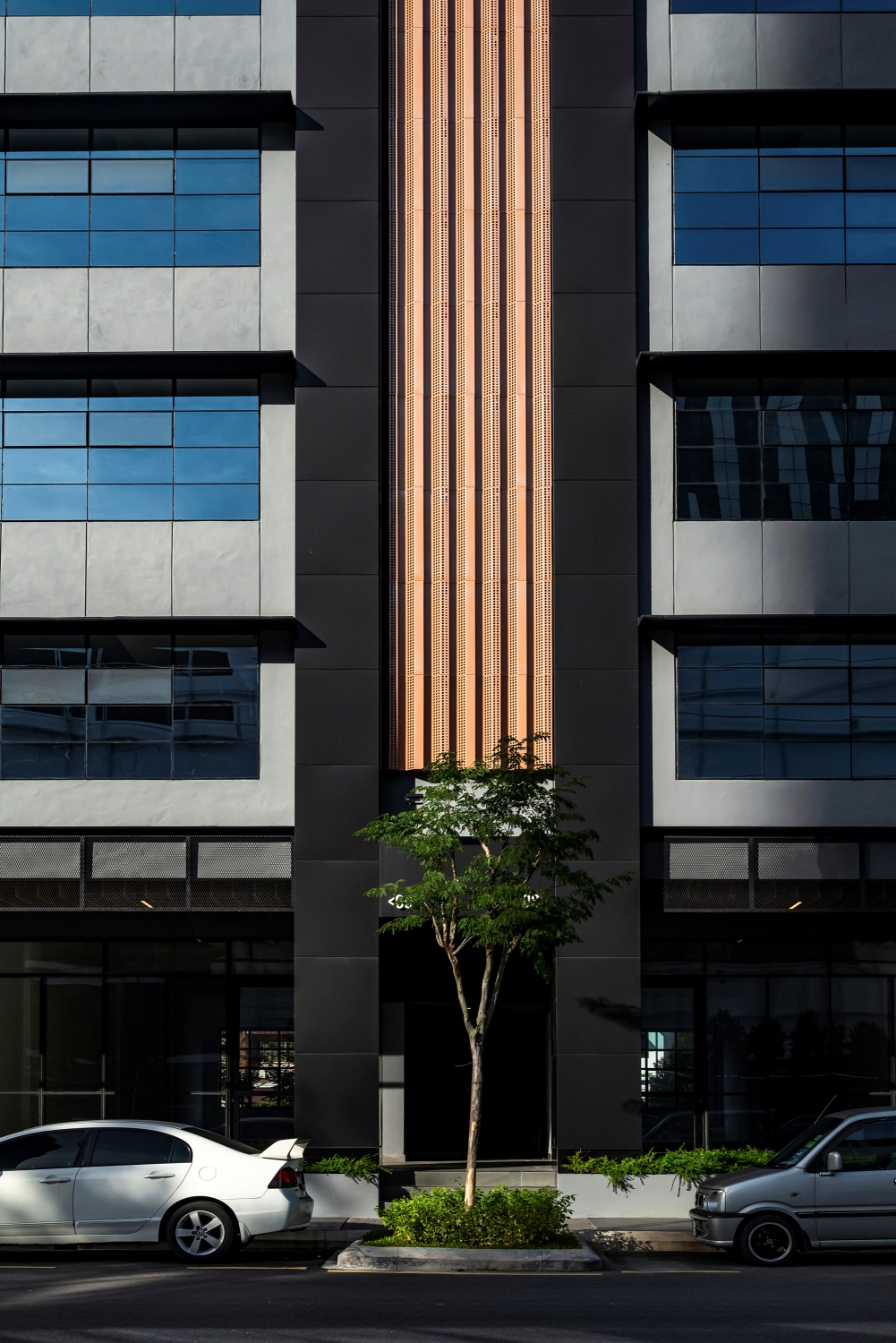
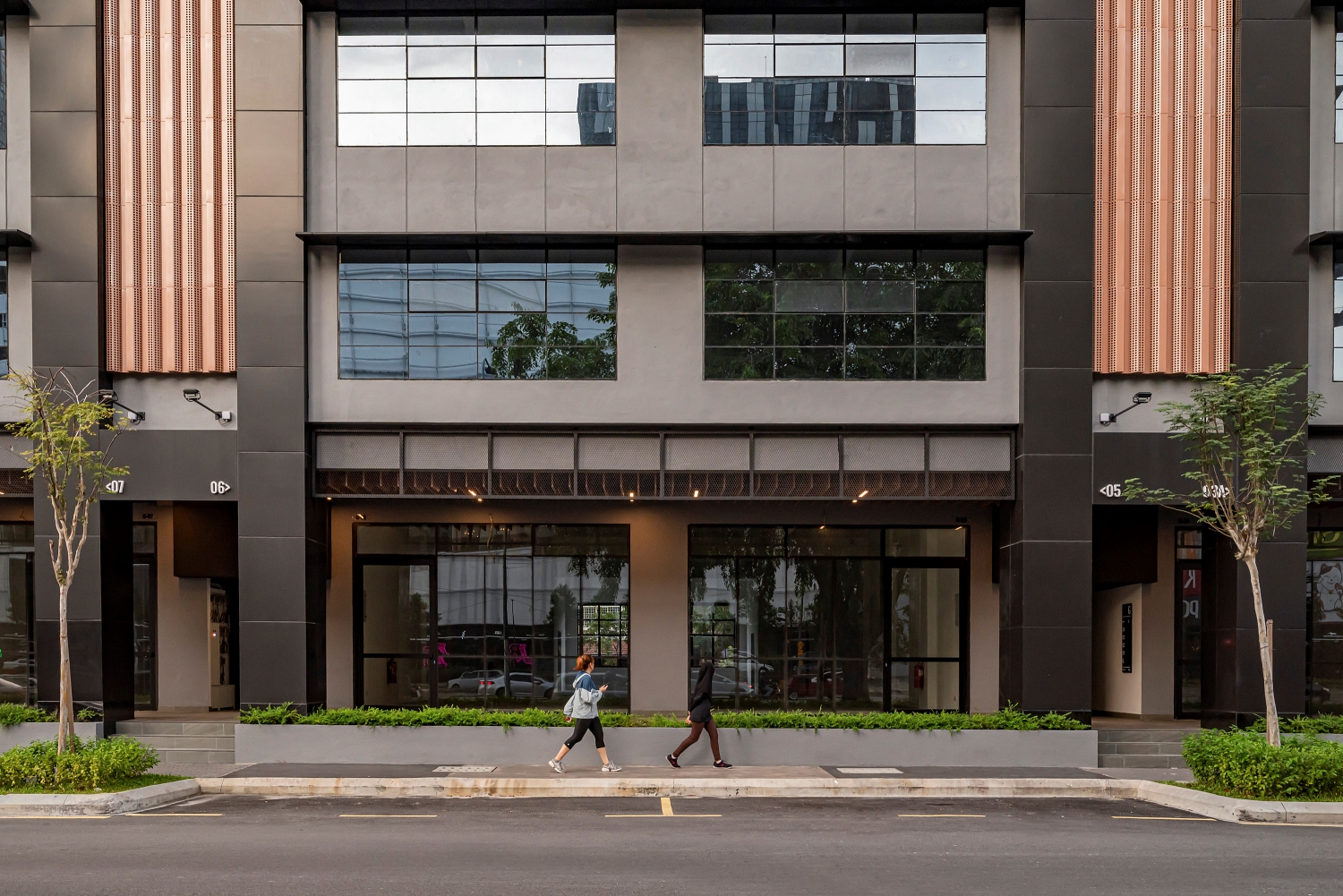
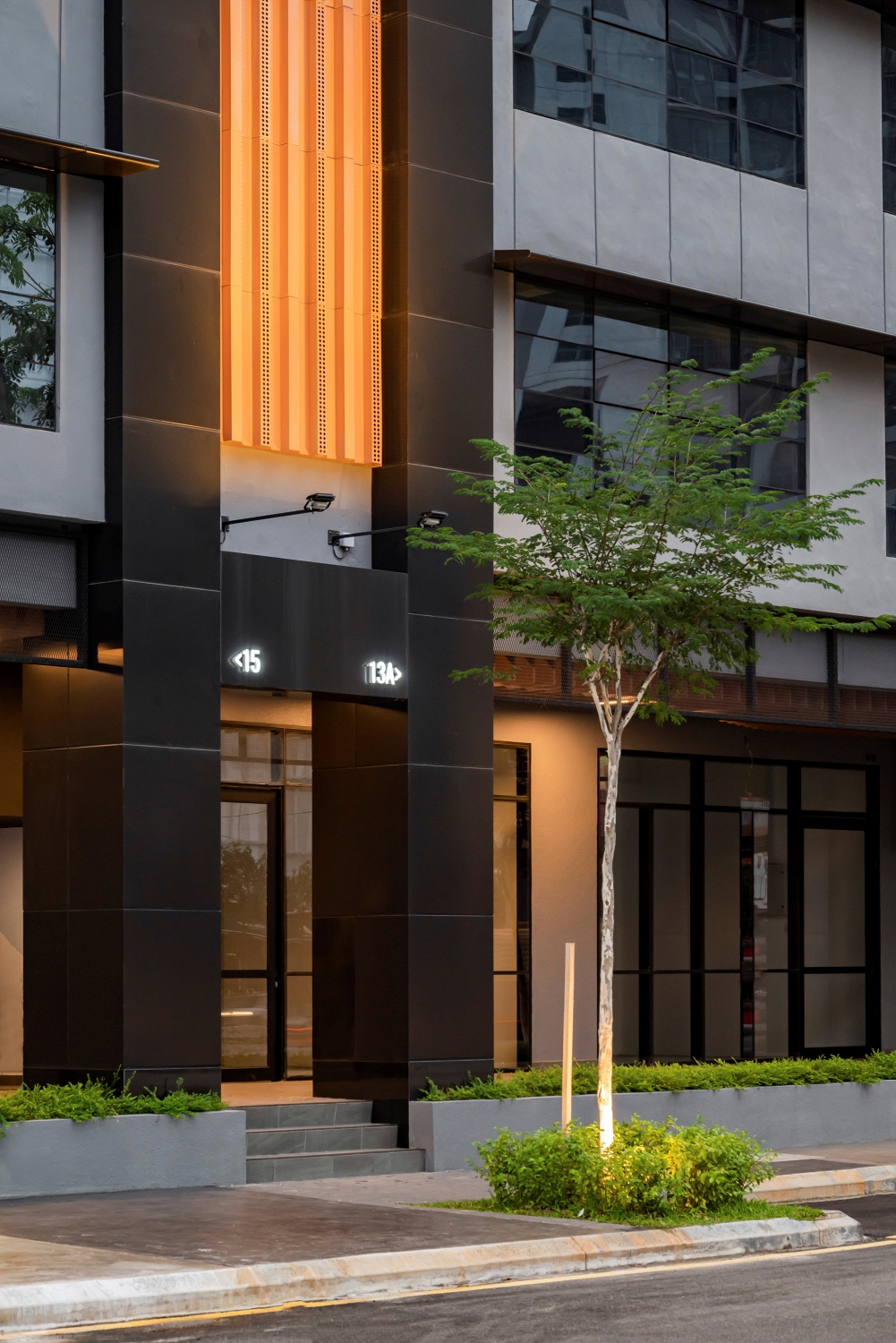
The shop offices are framed in pairs: the shared vertical access cores between units interrupt the long front elevation.These breaks are expressed as copper curtain-like perforated panels accentuating the entrance to each lift lobby.A frameless window profile for the entire development establishes a seamless façade profile which grants prominence to façade accents.
Upon entering the veranda, tiles laid out in a herringbone pattern guide visitors from the veranda to the lift lobbies.At the lift lobbies, a low-ceilinged passage opens to a tall lobby, providing an appropriately welcoming arrival space for visitors.The spaciously generous veranda with its undulating copper baffle ceiling creates an entry statement for the shop fronts, shades the ground level from the afternoon sun, and offers a covered space for retail activities.
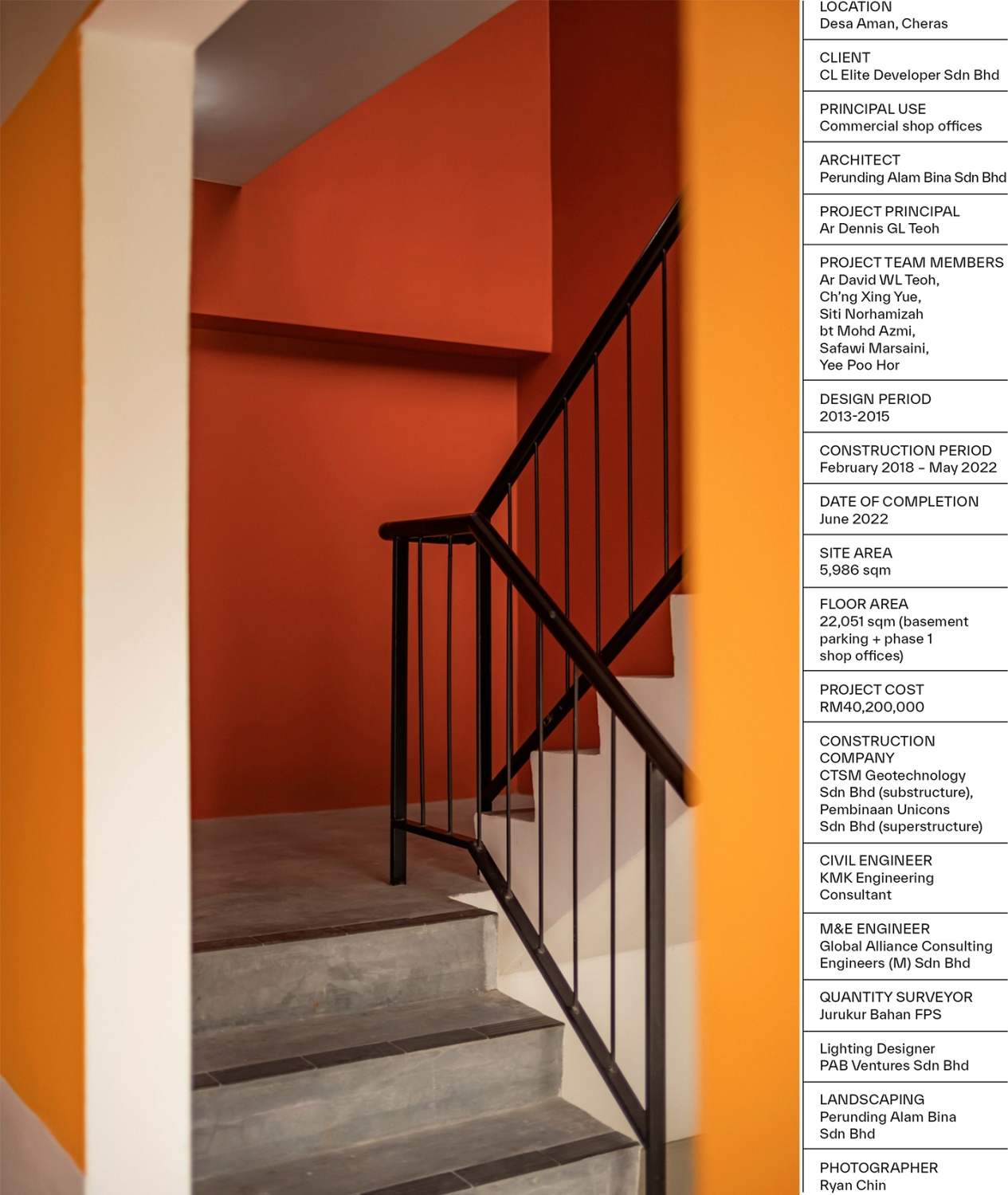
Along the rear elevation, full-height wall openings housing the rear stairways and air-conditioning ledges are installed with louvres to facilitate natural ventilation and protect from rain.These openings are encased by extruded cuboid forms, an inverse response to the recessed elements at the front.
Pedestrian crossings marked by pixelated concrete pavers on the ground lead the visitor to a garden sanctuary.Here, the visitor is greeted by a row of tembusu trees between the parking spaces, complemented by green creepers draping over the retaining walls, softening what would have otherwise been a harsh vehicular driveway.
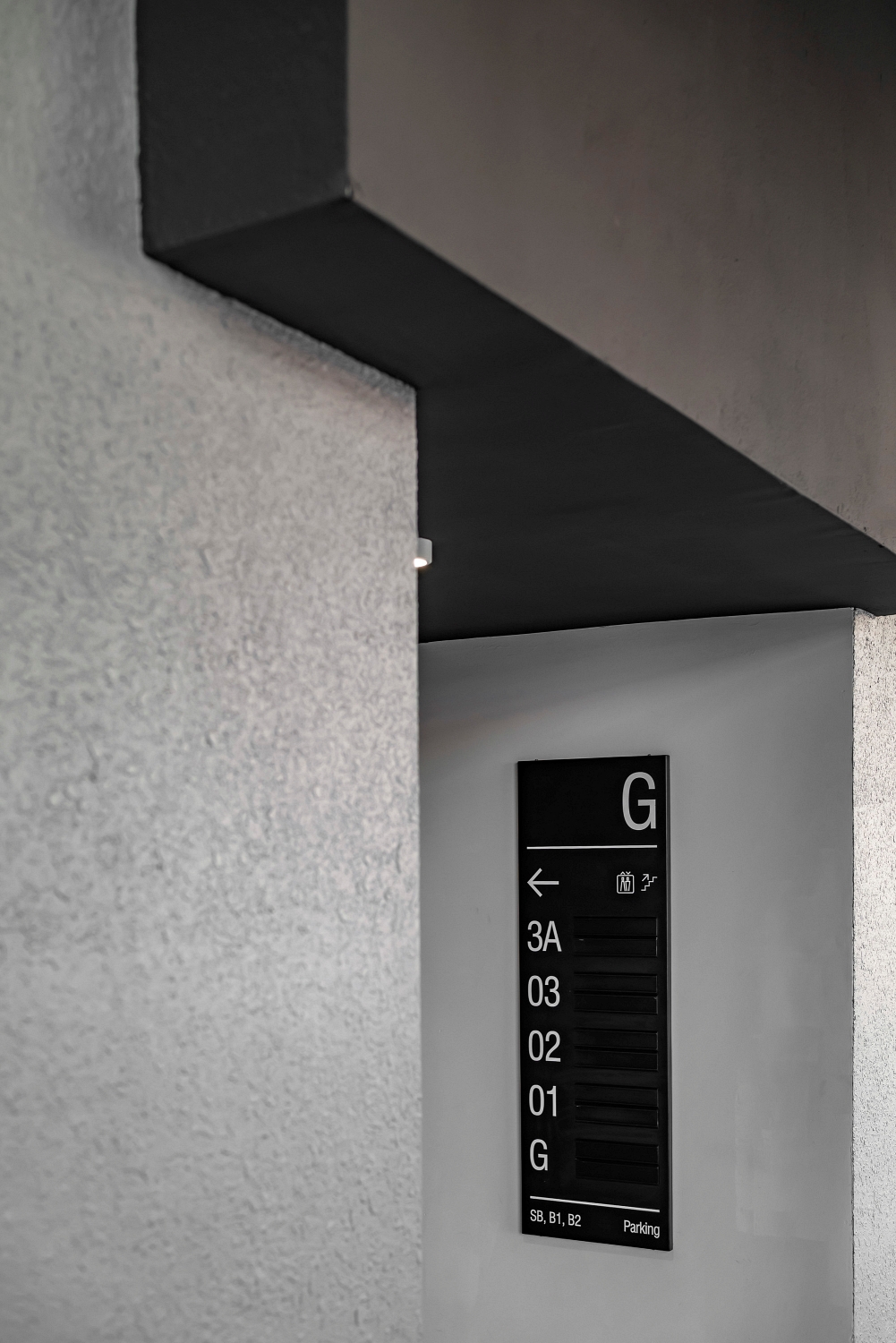
We communicated to our clients the importance of investing in key touch-points for the building.Similar materiality and detailing are used throughout the common areas where the veranda space visually extends into the lift lobbies, creating a seamless connection from exterior to interior.
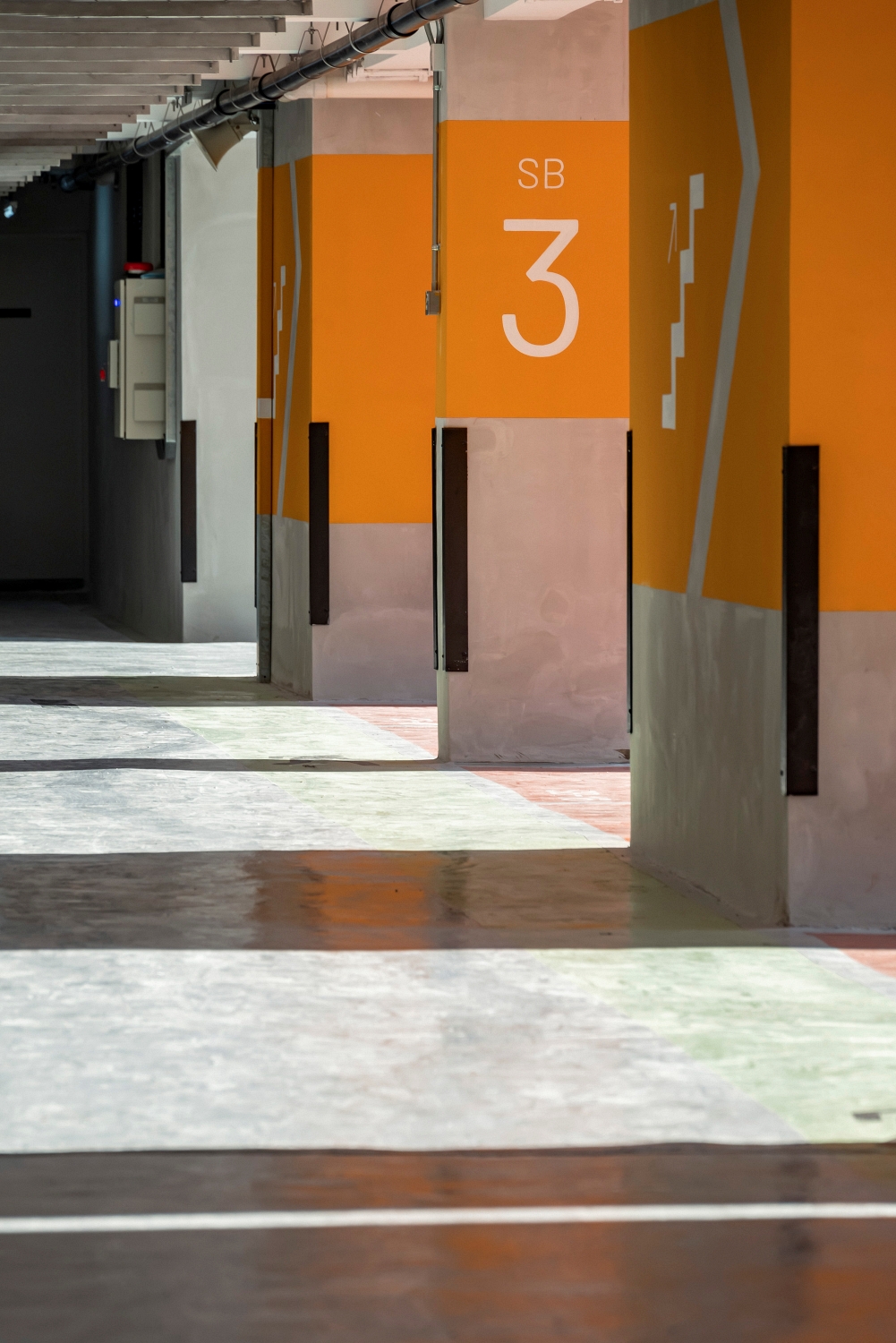
The car park – often perceived as a utilitarian space – is approached as an important touch-point for visitors to the building.The car park is lit brightly in cool daylight for the safety of the users, whereas lift lobbies are fitted with warm lighting to create a cosy differentiation between the spaces.