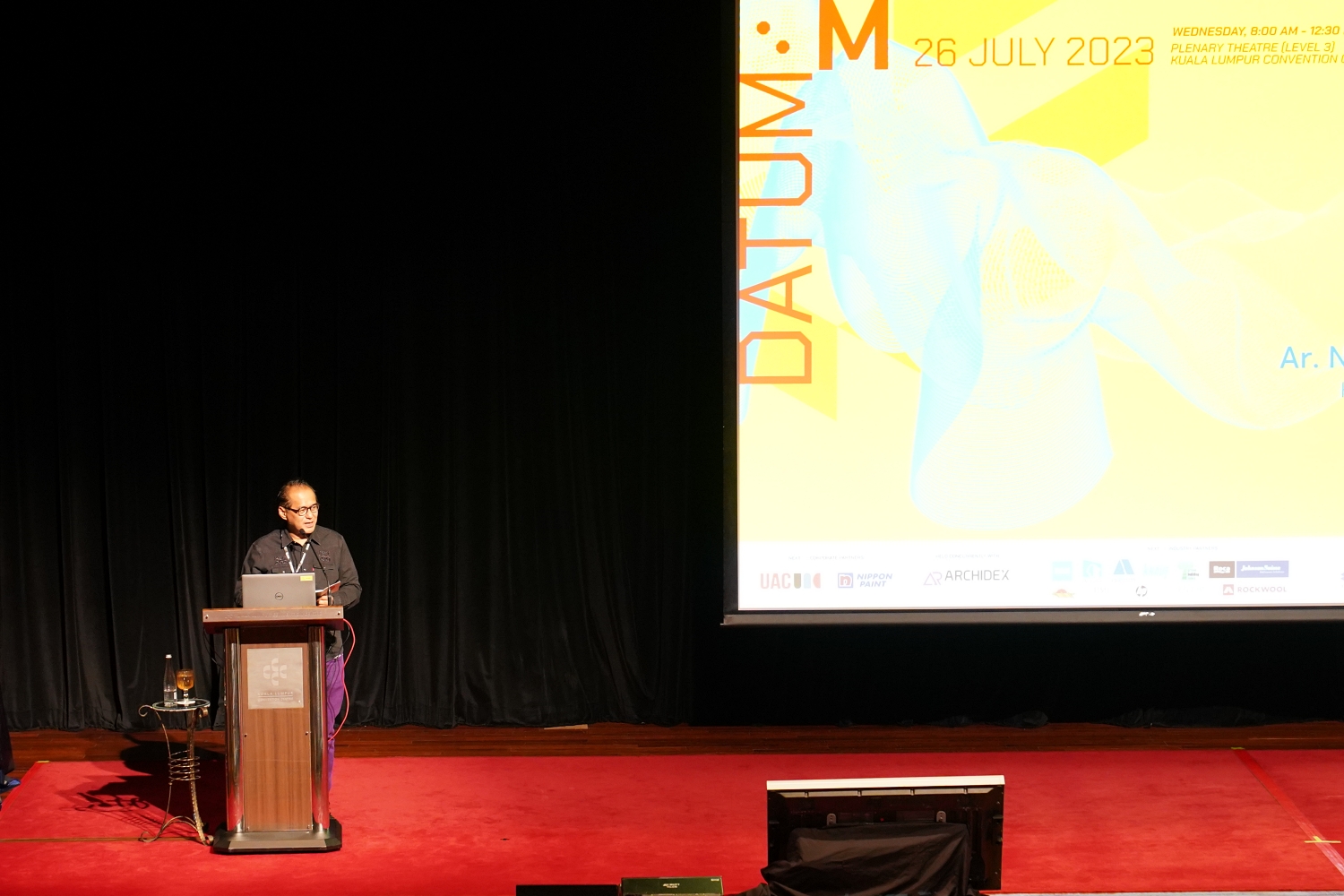
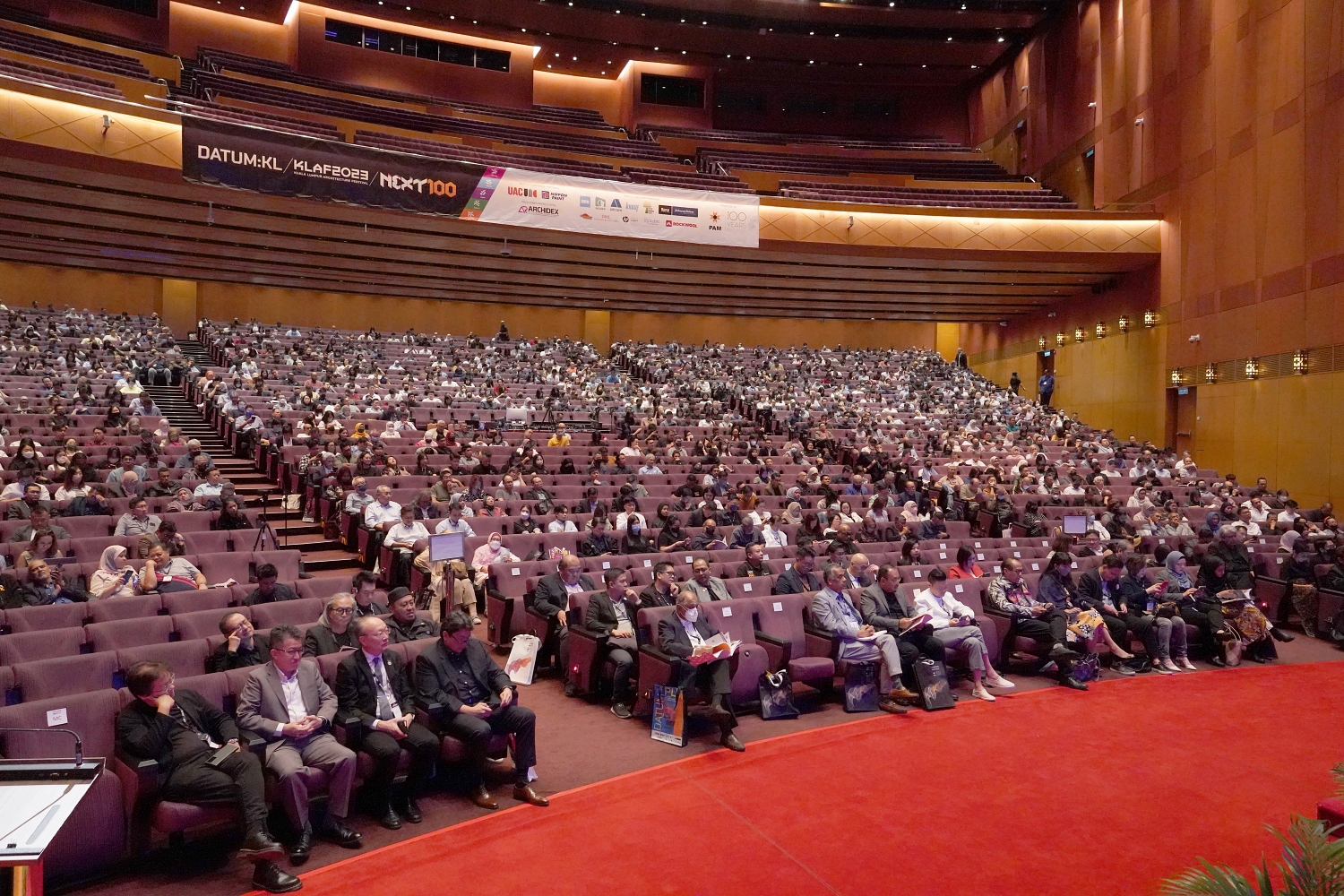
KLAF 2023 Director Ar. Norzaini Mufti draws attention to the pivotal role of building materials in shaping architectural landscapes
OFFICIAL OPENING CEREMONY
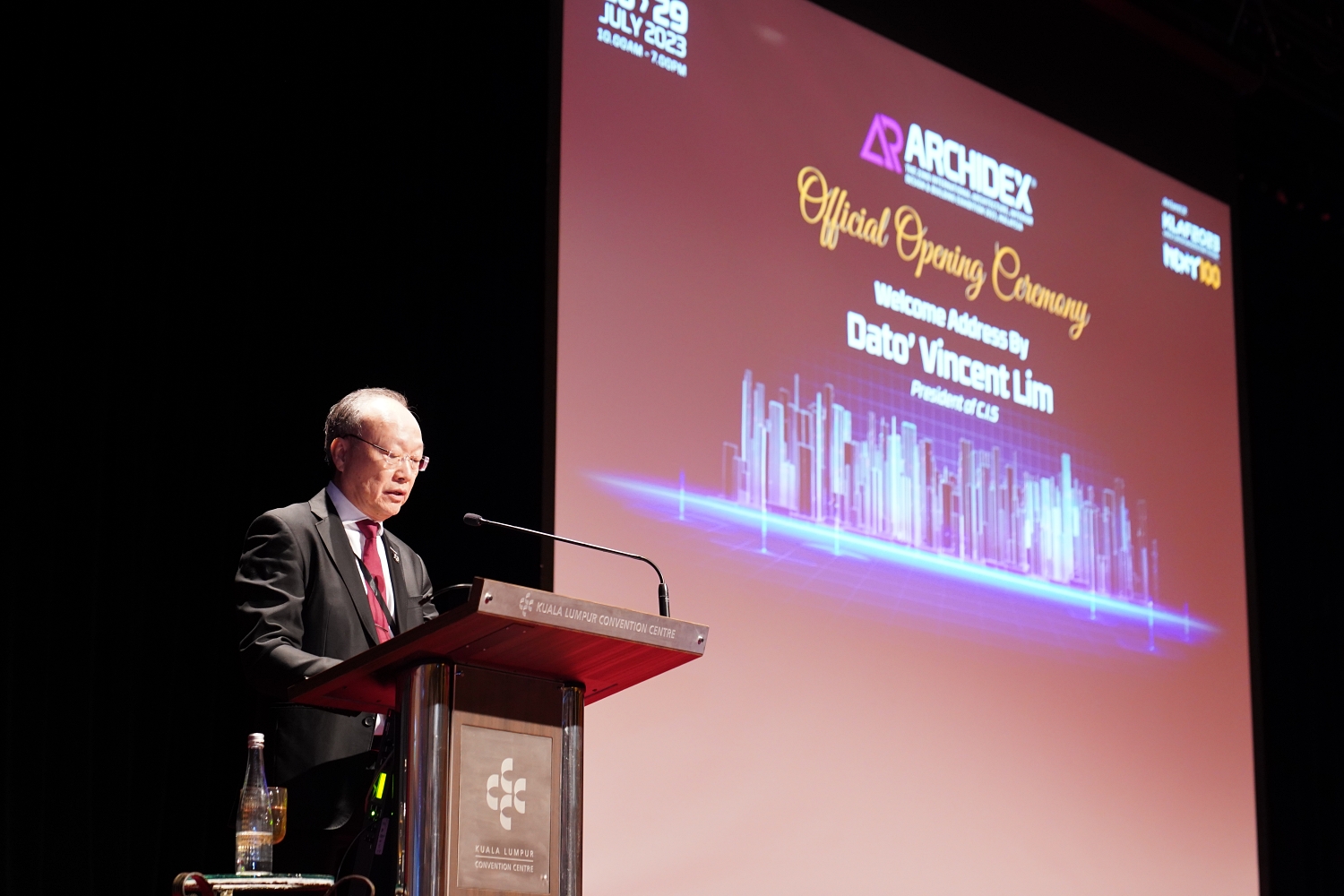
Dato’ Vincent Lim, the visionary behind Archidex, lays the foundation for a groundbreaking collaboration that highlights sustainability, future-oriented architecture, and well-being. These themes echo the direction where architecture is headed, highlighting smart living, new-age materials, and cutting-edge technology that together spark transformative ideas.
Following that, Ar. Norzaini Mufti, Director of KLAF 2023, draws attention to the pivotal role of building materials in shaping the architectural landscape. Archidex’s carefully curated booths and exhibitions provide a dynamic platform for architects and industry players to explore innovative materials and concepts that drive the field forward.
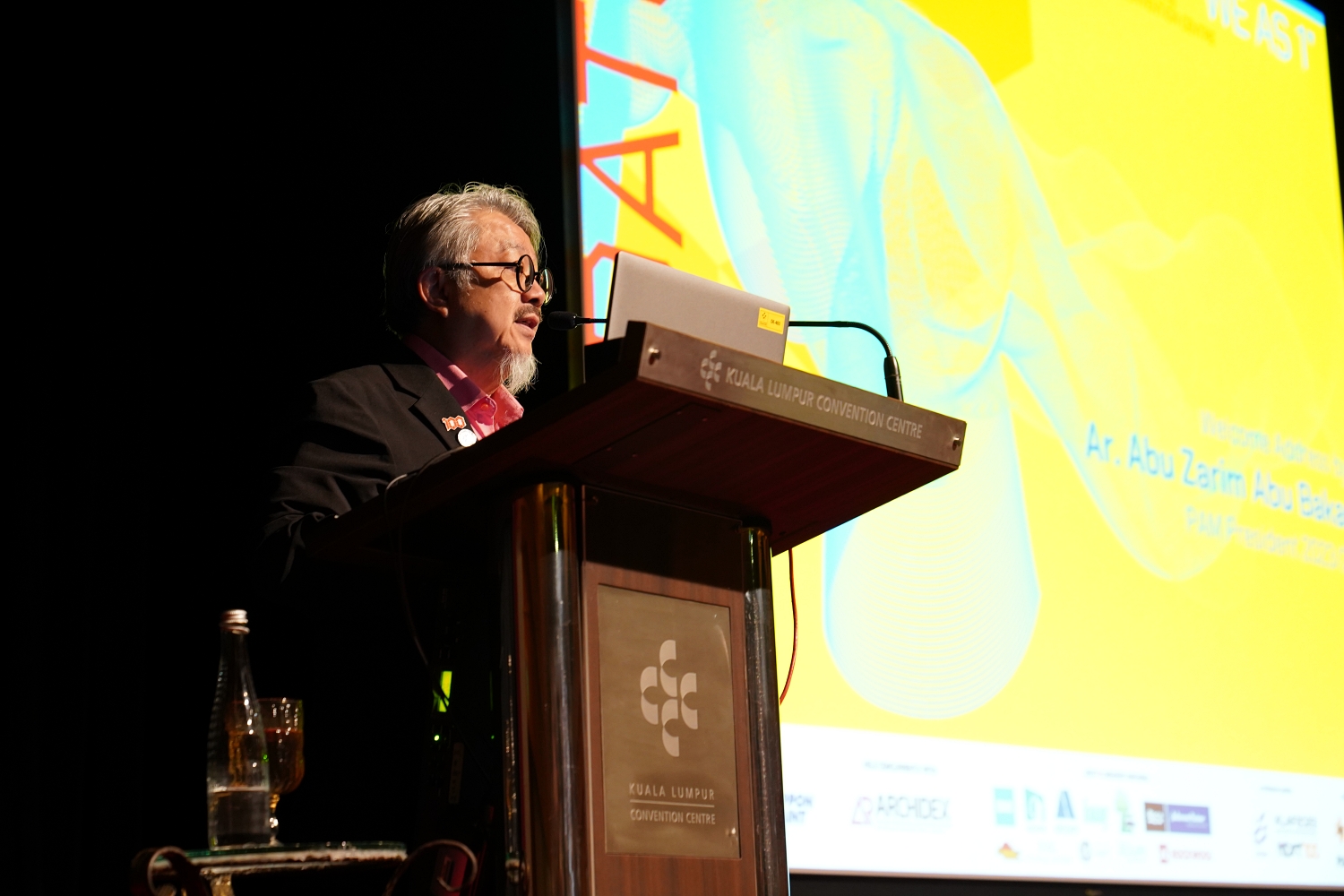
Ar. Abu Zarim bin Abu Bakar, PAM President 2023/2024 underlines the spirit of unity and growth, as PAM’s journey reaches its remarkable 100-year milestone. The partnership and shared commitment to excellence resonate with the theme “stronger together.” He champions raising standards, sustainable design, and platforms for emerging architects.
Dato’ Vincent Lim, the visionary behind Archidex, lays the foundation for a groundbreaking collaboration that spotlights sustainability, future-oriented architecture, and well-being
PAM President Ar. Abu Zarim Abu Bakar underlines the spirit of unity and growth, as PAM's journey reaches its remarkable 100-year milestone
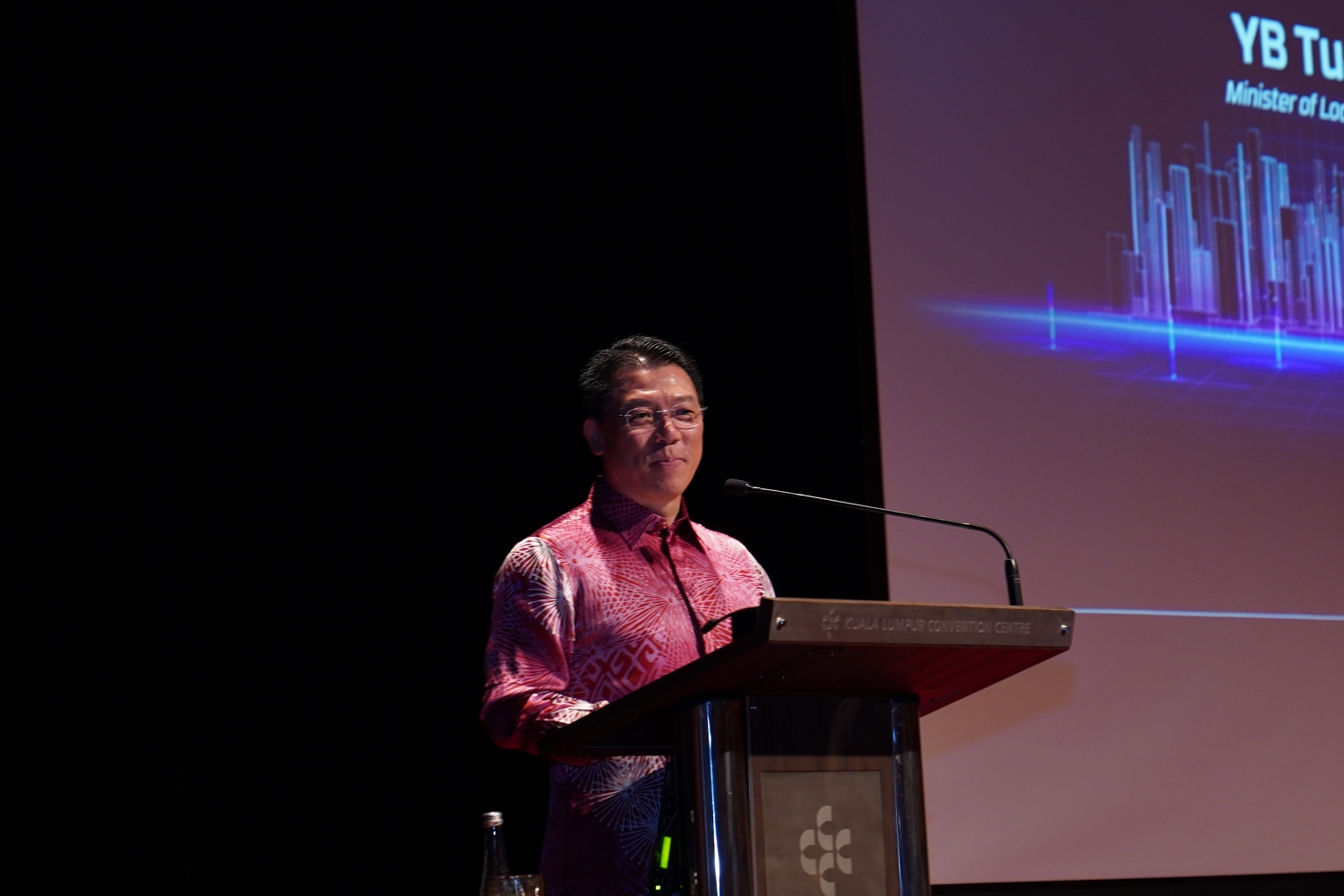
Lastly, the esteemed Minister of Local Government Development, YB Nga Kor Ming, extols Archidex’s contribution to progress, unity, and knowledge dissemination. This dynamic platform has evolved into a hub for inspiration, innovation, and valuable networking opportunities. As Malaysia sets its sights on excellence, Archidex aligns perfectly with the theme “stronger together,” fostering growth and unity.
Amidst the celebration of Archidex’s 22nd edition and PAM’s 100th anniversary, the stage is set for a future of innovation and unity. The event unfolds with the promise of nurturing the next generation, ensuring a sustainable and impactful architectural journey. The doors to Archidex and DATUM: KL 2023 are open, inviting everyone to witness the dawn of a new architectural era.
The esteemed Minister of Local Government Development, YB Nga Kor Ming, extols Archidex's contribution to progress, unity, and knowledge dissemination
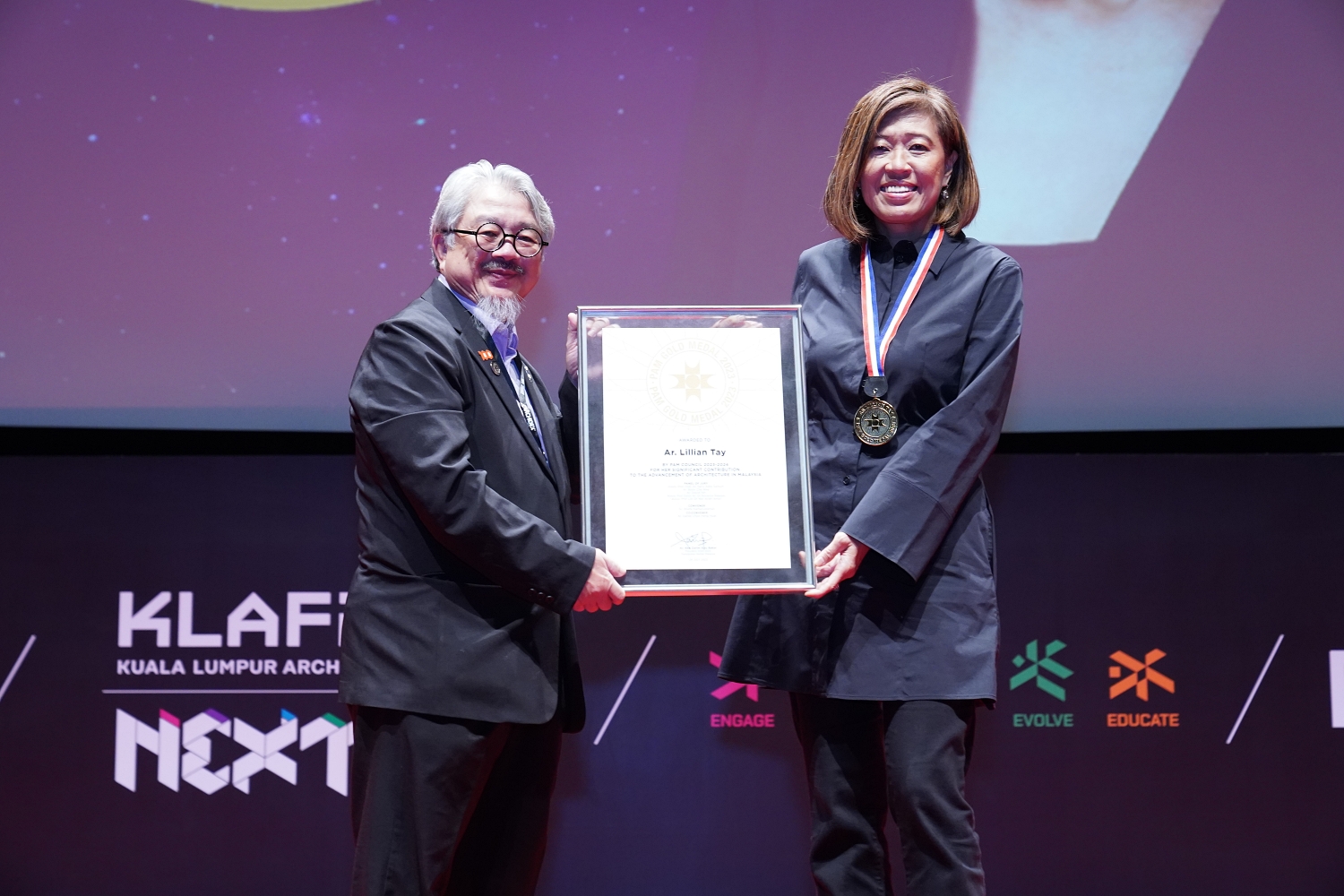
Ar. Lilian Tay was conferred the PAM Gold Medal 2023 by the PAM President
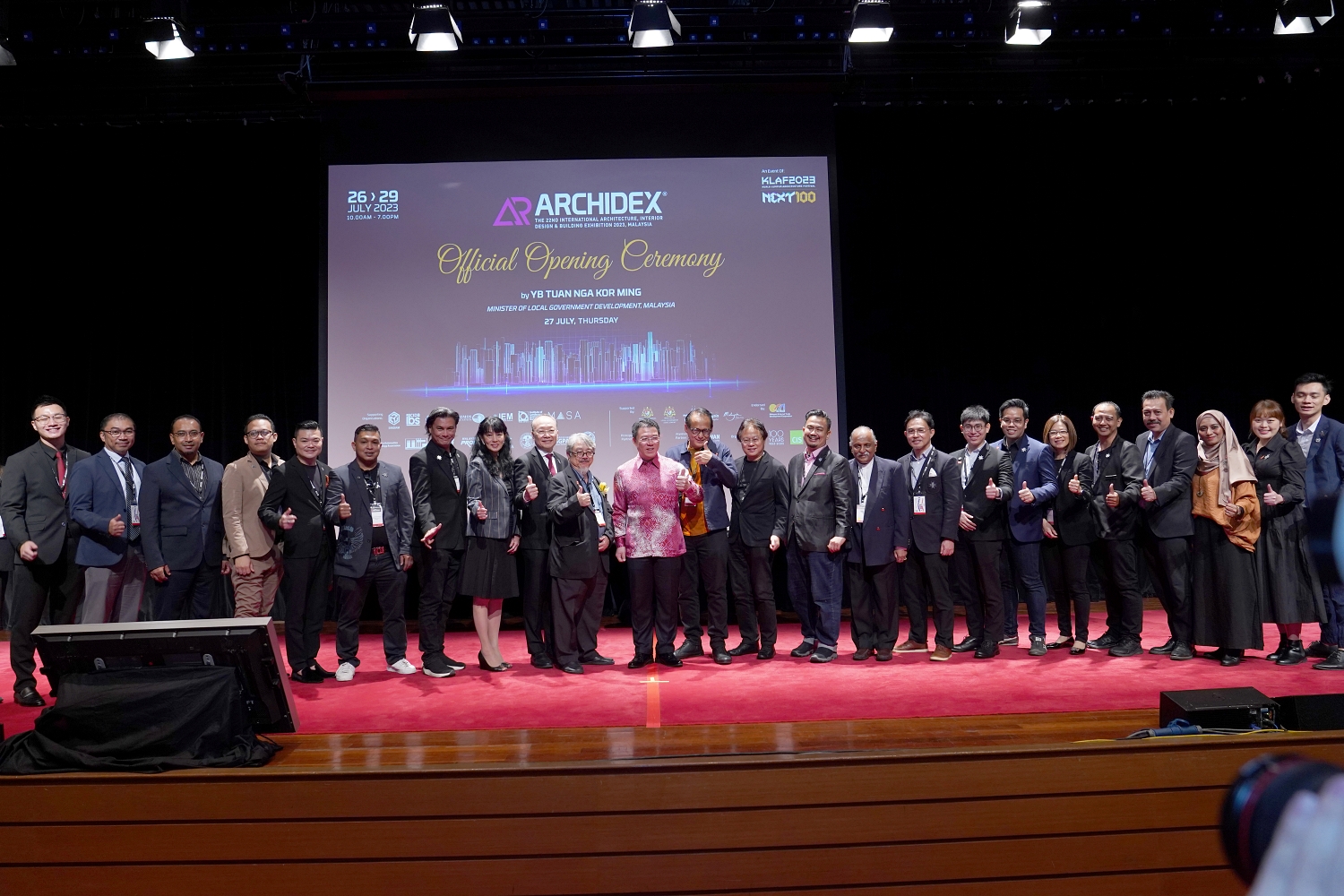
PAM Council Members 2023 – 2024 with Minister of Local Government Development, YB Nga Kor Ming
DATUM M: CELEBRATED MALAYSIAN BUILDINGS PRESENTATION
Datum M is an annual gathering that brings together architectural experts and enthusiasts. Held on July 26, 2023, at Kuala Lumpur’s Plenary Theatre, this event became a platform for sharing cutting-edge ideas in Malaysian building design. Seven award winning architects took the stage, leaving a lasting impact on the architectural landscape. This article provides an insightful overview of their thought-provoking presentations, highlighting the transformative ideas that emerged.
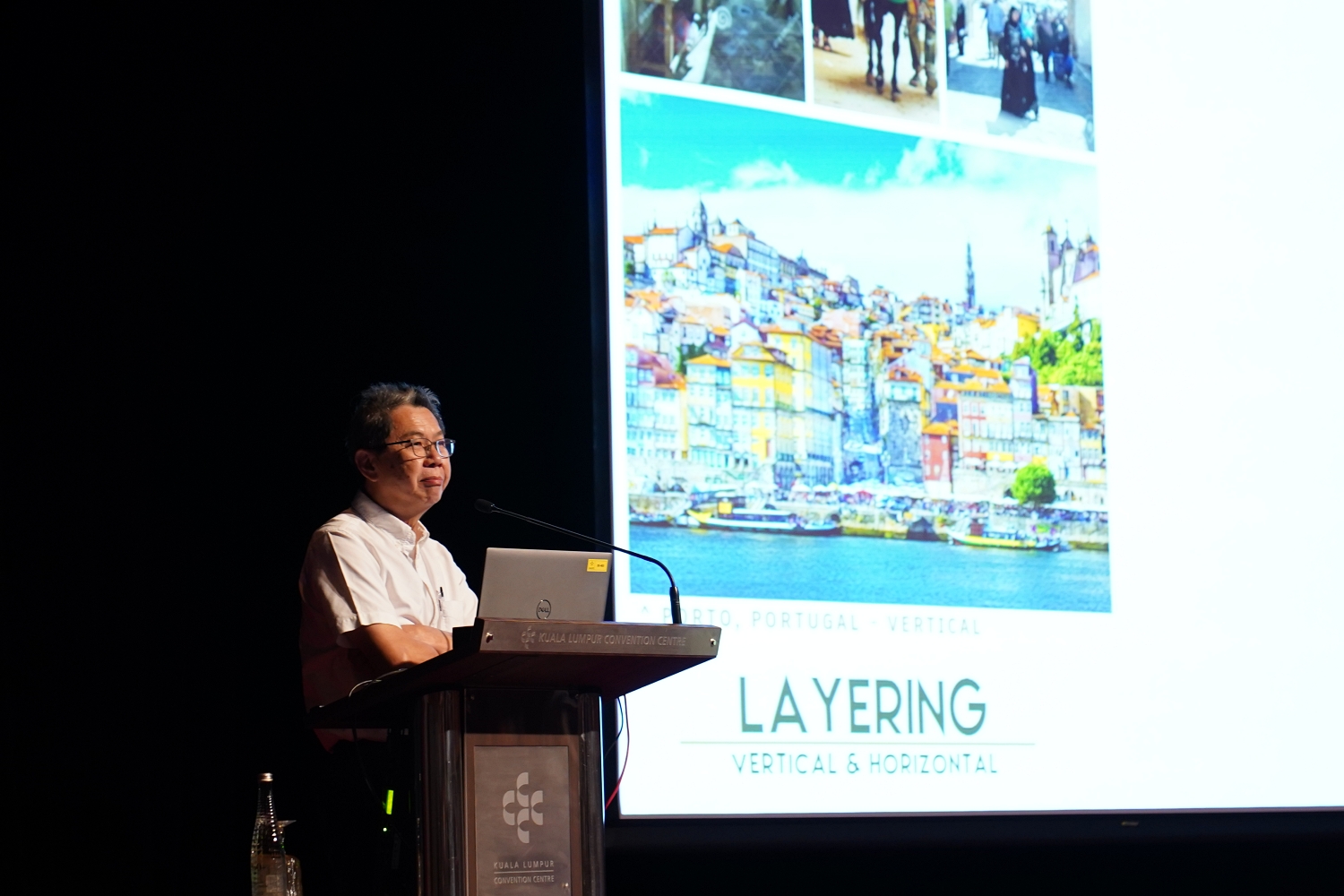
Ar. Laurence Loh Kwong Yu, from Arkitek LAA Sdn Bhd, brought attention to the revival of the UAB Building. His emphasis on inclusivity and sustainability was portrayed through the metaphor of “heavy doors,” symbolising a welcoming space for everyone. Ar. Kuee Sheau Shyuan’s focus was on 1Lasam, an innovative project in Perak aspiring to be the region’s first GBI Platinum Building. With an impressive 87% GBI Platinum rating and eight Sustainable Development Goals, this project blended architectural brilliance with sustainability.
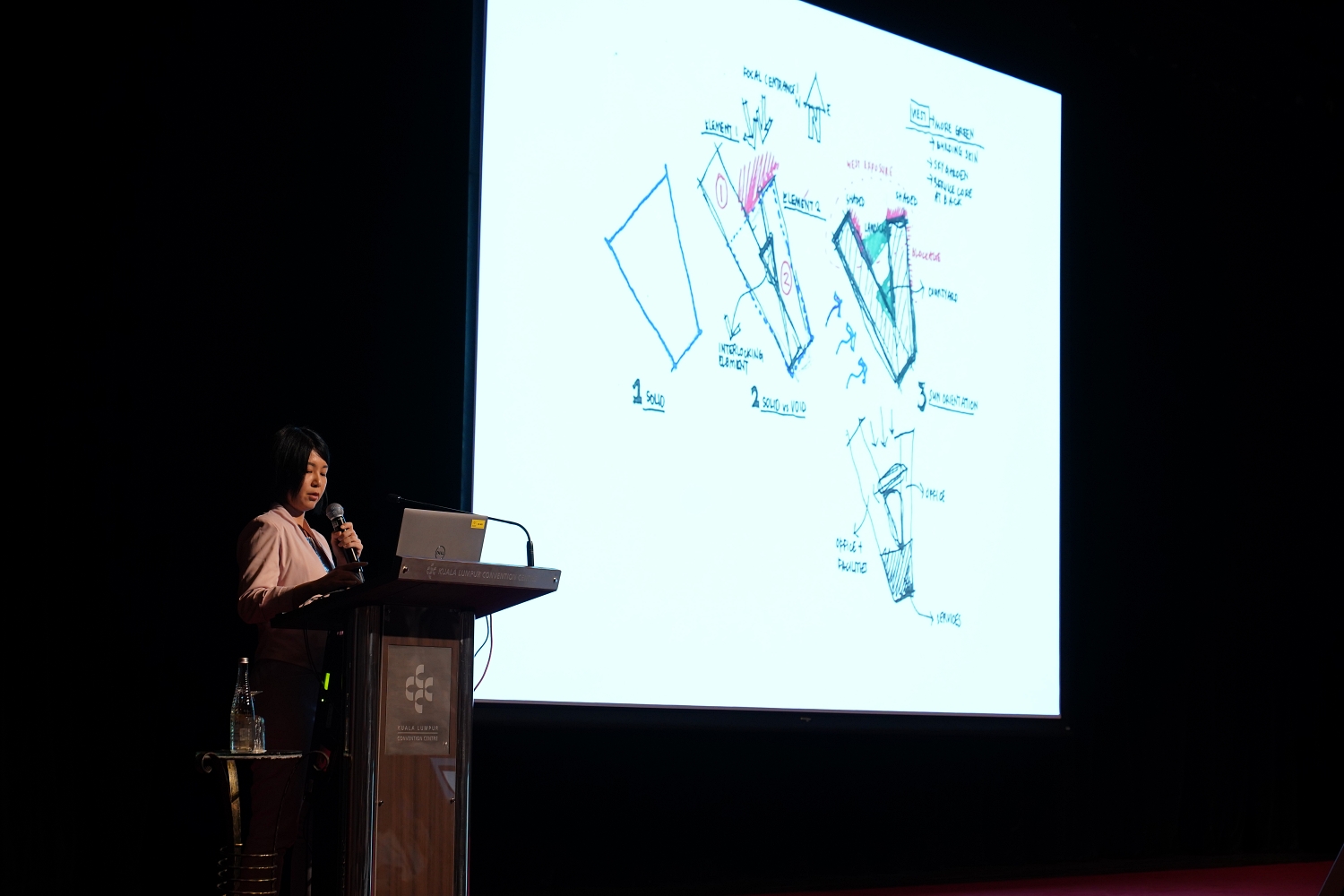
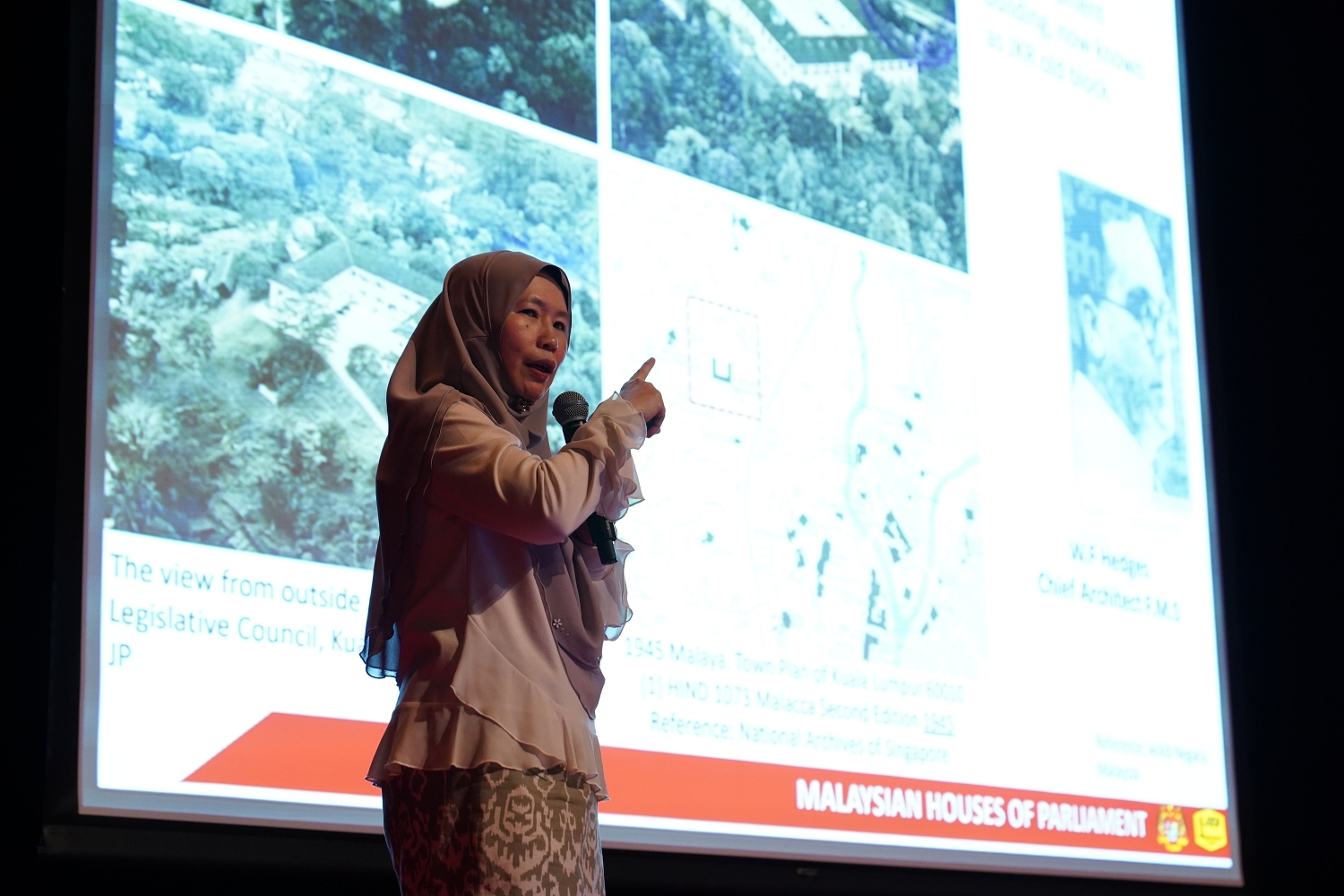
Next, Ar. Mok Chee Paan shared insights on Tamarind Square, an urban development fostering community interaction and sustainability. Ar. Sharina Intan Abdullah’s discussion of the Parliament Refurbishment project highlighted the meticulous preservation of Malaysia’s historical heritage.
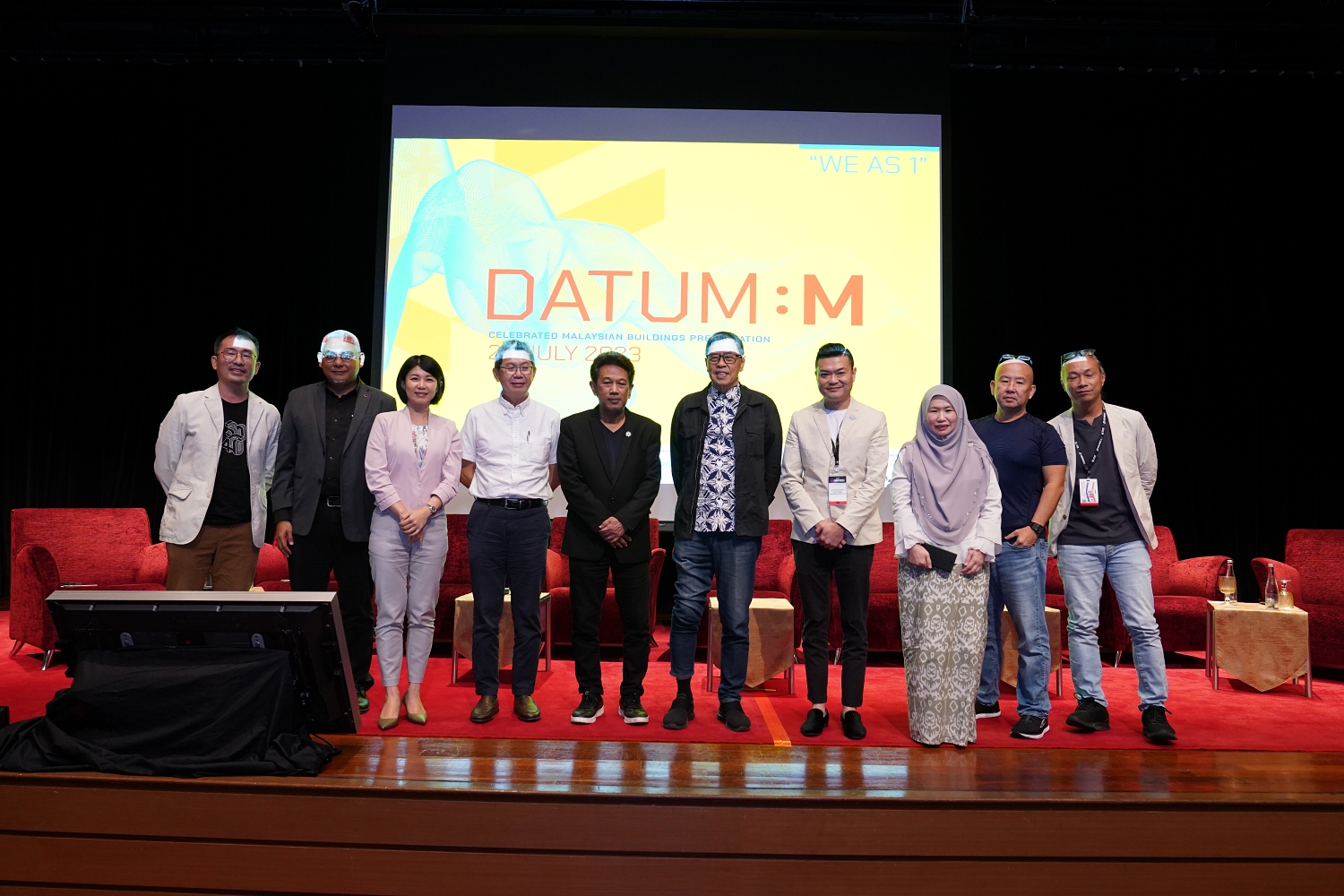
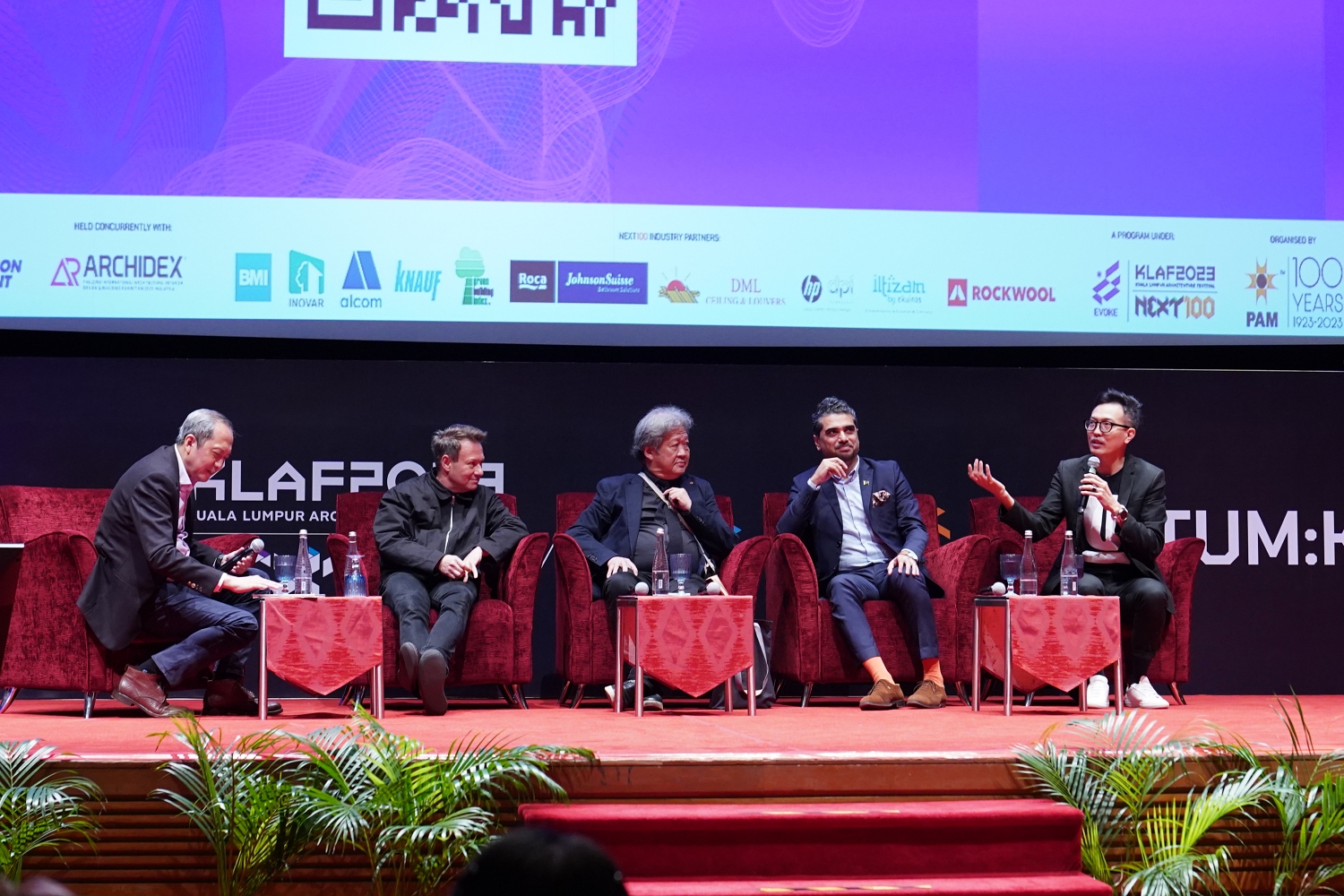
Moderators and speakers for DATUM: M
Following that, Wee Hii Min showcased the Malaysian Sibu Heritage Centre’s transformation, emphasising the power of architecture in preserving cultural legacy. Next, Ar Dexter Koh unveiled the journey behind the award-winning KYM Tower, combining aesthetics with structural integrity.
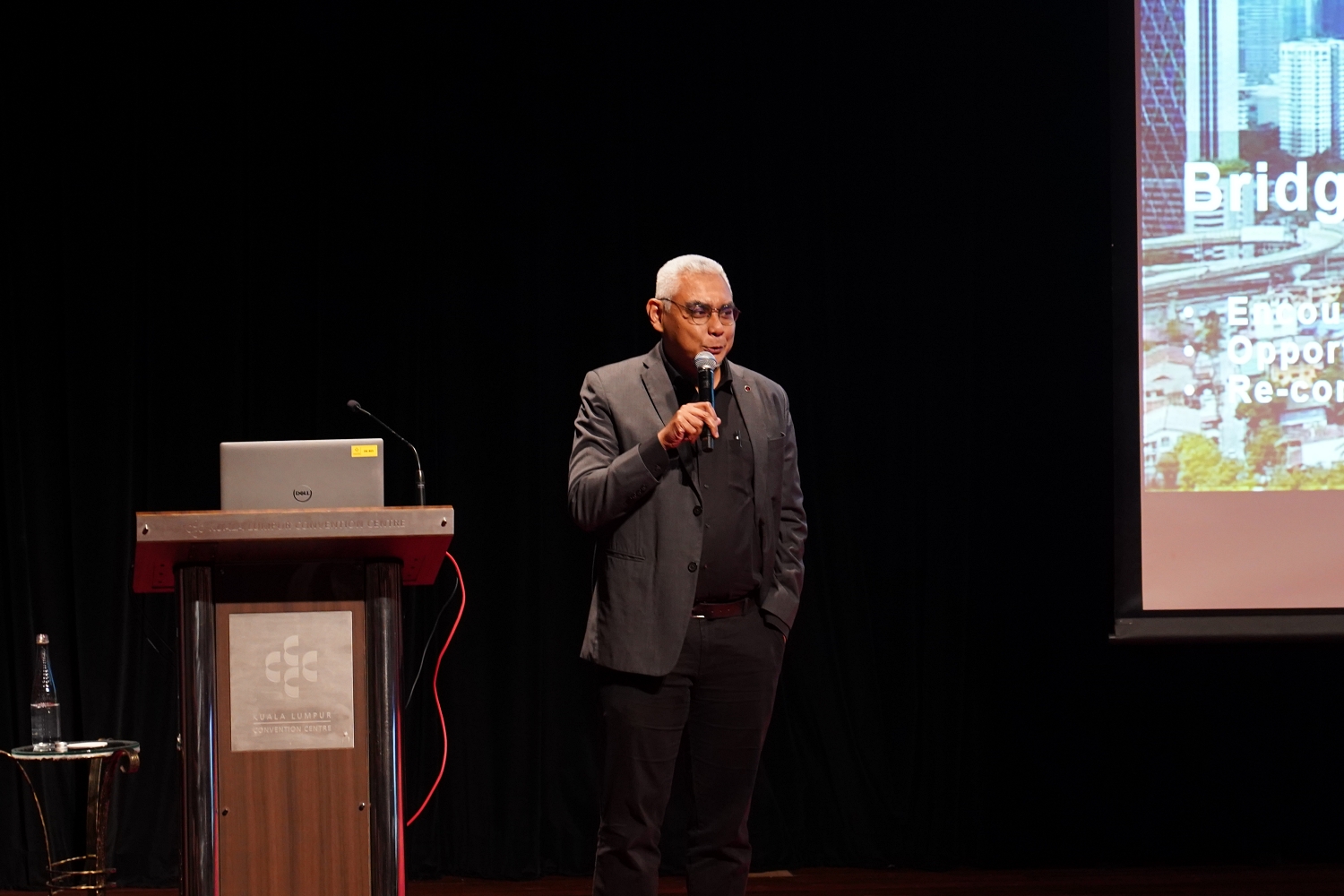
Finally, Ar. Azril Amir Jaafar’s presentation on Saloma Link focused on a remarkable bridge uniting old and new Kuala Lumpur, emphasising connectivity and prosperity.
Themes of sustainability, historical preservation, people-centric design, and innovative materials emerged throughout the lectures, reflecting architects’ commitment to creating a better future through architecture that harmonises with nature and communities.
Ar. Kuee Sheau Shyuan's focus was on 1Lasam, an innovative project in Perak aspiring to be the region's first GBI Platinum Building
Ar. Mok Chee Paan shared insights on Tamarind Square, an urban development fostering community interaction and sustainability
Ar. Laurence Loh, from Arkitek LAA Sdn Bhd, brought attention to the revival of the UAB Building
DATUM EDU: BRIDGING THE GAP IN ARCHITECTURAL EDUCATION The DATUM: EDU 2023 conference,
with the theme “Bridging the Gap in Architectural Education” featured five distinguished speakers illuminated the evolving landscape and challenges of architectural learning in Malaysia, offering insightful perspectives on reshaping the educational journey.
Kicking off the discussions, Azari Mat Yasir delved into the “Historical Transition of Architecture Education in Malaysia.” His talk traced the evolution of architectural programs from 1906 to the present, emphasising the growth of universities like USM, UTM, and ITM as crucial pillars in the educational journey. Yasir advocated for a more dynamic and tech-savvy approach to education, aligning with the fast-paced advancements of the modern world.
Ida Marlina Mazlan, from UCSI University, tackled “The Current Challenges and Goals of Architecture Education.” She highlighted the pressing issues of curriculum congestion and the importance of interdisciplinary cooperation for students’ growth. Emphasising partnerships with industries for enriched learning, Mazlan underscored the value of well-rounded graduates prepared for the industry’s evolving demands.
Ar. Sharina Intan Abdullah's discussion of the Parliament Refurbishment project highlighted the meticulous preservation of Malaysia's historical heritage
Ar. Azril Amir Jaafar's presentation on Saloma Link focused on a remarkable bridge uniting old and new Kuala Lumpur, emphasising connectivity and prosperitybrought attention to the revival of the UAB Building
Assoc Prof Dr Chong Keng Hua, hailing from the Singapore University of Technology and Science, offered insights into “Breaking the Silo of Academic & Practice.” He championed the integration of real-world projects, empathetic design, and community engagement as transformative components in architectural education. Hua’s presentation painted a picture of an innovative framework shaping architects equipped to navigate the challenges of the future.
Ar. Razin Mahmood explored “Qualities of Highly Employable Graduates (Employer’s Expectations).” In his address, he highlighted traits such as problem-solving, effective communication, and management skills as crucial for budding architects. He emphasised the significance of adaptability, and how well-rounded and adaptable graduates are better poised for success in a rapidly evolving industry.
Ar. Dr Mohd Zulhemlee An wrapped up the conference with “Addressing the Capacities Gap – Ideas to Redefine Architectural Education.” His talk focused on synergising theory and practice, using innovative approaches like workshops to bridge the academia-industry gap. Zulhemlee An’s proposed ideas aimed at refining the educational journey by integrating practical experience and transitioning students seamlessly into the professional realm.
The conference encapsulated a dynamic shiftin architectural education, advocating for adaptable methodologies, interdisciplinary collaboration, and real-world engagement. These insights offer a roadmap for a redefined architectural education in Malaysia, poised to equip graduates for the challenges and opportunities of the modern architectural landscape.
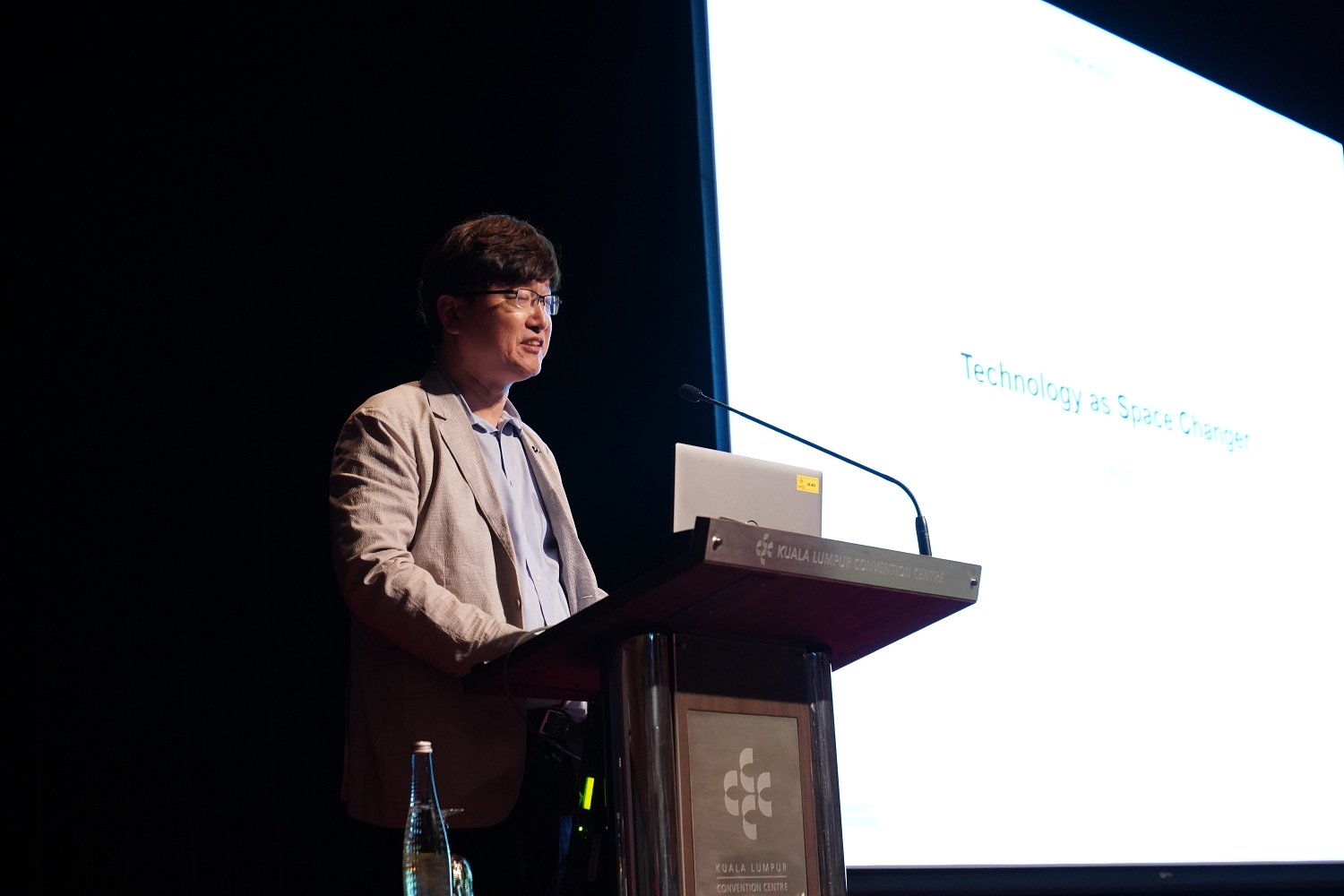
Dongkyu Lee of SAMOO Architects & Engineers delved into the impact of internet technology, robotics, and smart systems on architecture's trajectory
DATUM: PRO – DIGITAL FUTURES: INNOVATE OR PERISH DATUM: PRO – Digital Futures:
Innovate or Perish featured captivating speakers who shed light on the evolving landscape of architecture. Dr Immanuel Koh, hailing from Singapore University of Technology & Design, delved into the world of generative AI and how the technology is fast evolving from image making to the automated generation of functional architectural outcomes by prompting. For AI to generate viable architecture, it would require a large dataset correlated to language through ‘prompts’.
Next, Ts. Suffian Shahabuddin of 6ix Design Office presented his take on networked practices, new forms of collaboration and future modes of working. Amid the pandemic, adaptability and collaboration took centre stage, compelling architects to embrace technology and partnerships. The synergy of adaptable spaces and global connections reshapes design horizons, with technologies like BIM offering precise customisation.
Ms. Teoh Pui Mun from Speedbrick Sdn Bhd emphasised the need for building industry players to adopt digitisation in their work processes. Beyond BIM which elevates visualization and communication, fostering creative and precise designs, offices need to also fully digitise other aspects of their organisation for efficiency. Collaborative platforms promote teamwork among stakeholders, refining project management. Drones and robots provide holistic site data, guiding architects’ decisions. Streamlined processes redefine project coordination, while the union of technology and architecture opens doors to innovative possibilities.
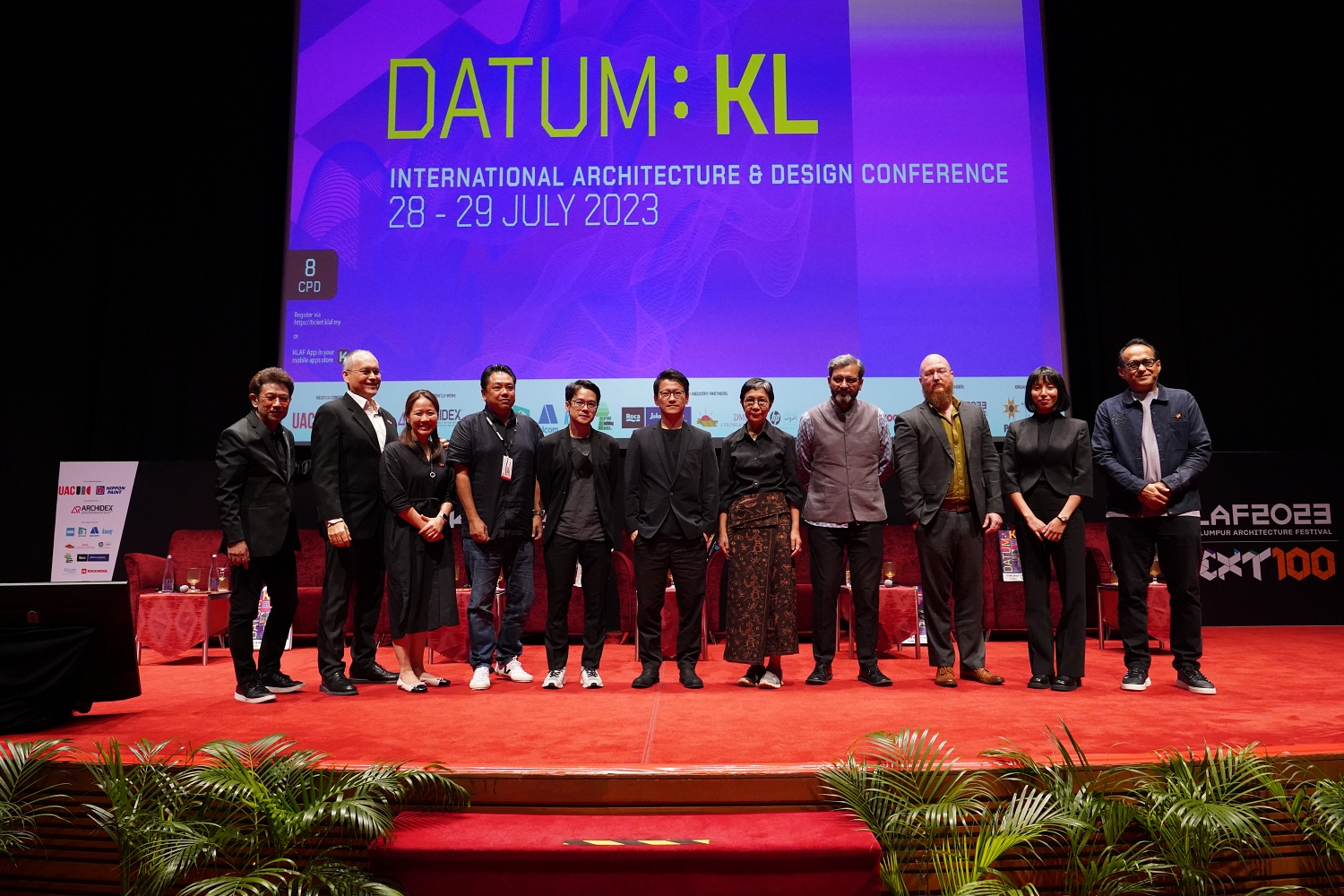
DATUM: KL Day 1 Speakers and Moderators.
Dongkyu Lee of SAMOO Architects & Engineers, a company that operates as part of the SAMSUNG Group, delved into the impact of internet technology, robotics, and smart systems on architecture’s trajectory. Internet technology enhances user experiences through data-driven insights, while robotics introduces adaptable structures. Designs driven by smart living and sustainability engage dynamically with users and the environment. Human-centric design remains pivotal in these advancements, yielding inventive and user-friendly architectural marvels.
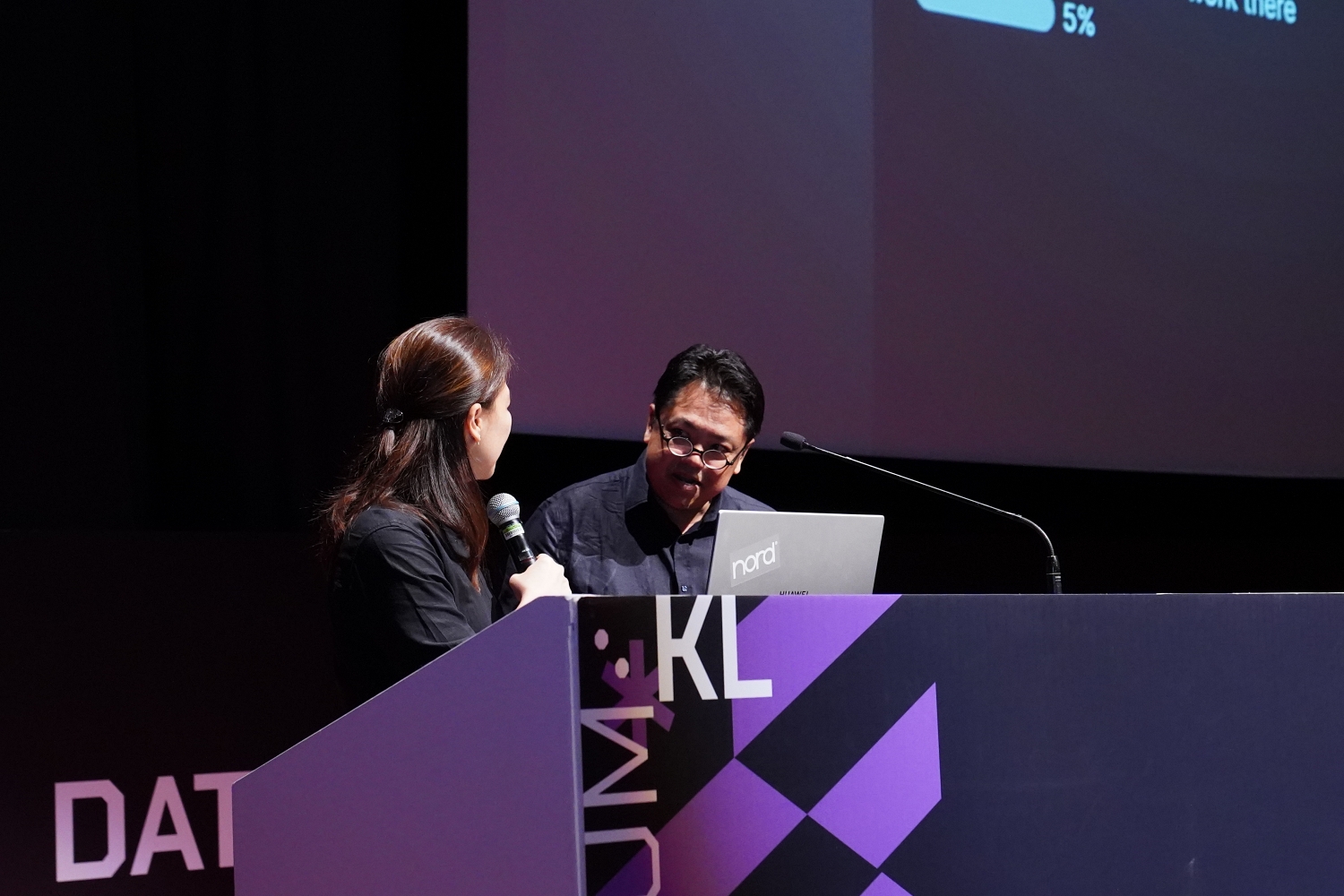
The discussion on Architects’ exploration of AI integration touched on education and existing tools. Proposed solutions include tailored courses to introduce designers to AI applications. AI platforms expedite learning, and 3D rendering revolutionises architectural visualisation. Challenges like cultural shifts and hardware adoption were addressed, highlighting the importance of cross-generational collaboration. Instances of AI in architecture included
DATUM PLUS: REDEFINING ARCHITECTURE BEYOND LIMITS DATUM:
PLUS is a dynamic platform that shatters conventional architectural boundaries. Here, architects are trailblazing new paths, breaking free from the ordinary, and creating a future where spaces and perspectives are reimagined in extraordinary ways. These architectural pioneers share their journeys, inspiring fresh perspectives that can spark innovative transformations.
KLAF 2023 Director, Ar. Norzaini Mufti, raised a thought-provoking concern about the profession’s attrition rate, prompting reflections on personal happiness and career choices. Ar. Adrianta Aziz introduces DATUM: PLUS as the nexus where architecture meets innovation and vision. Through insightful talks, architects lead an intellectual adventure that reshapes the way we see design, integrating modern technology with timeless tradition, all aimed at crafting a more compassionate, innovative, and sustainable society.
BEP Akitek's Ar. Johan Abdul Samad and Ar. Yvonne Leong spotlights the fusion of tropical architecture with contextual nuances, vividly exemplified by their projects
Ar. Mohd Affendi Md Salleh shares his voyage of discovering inspiration outside the norm through satire and humour. He advocates embracing vulnerability and using humour as a tool to confront both architectural and societal challenges. Next, Dr. Rachaporn Choochuey explores the deep connection between architecture, human life, and the environment, showcasing projects that transform spaces into vibrant realms of engagement. Ar. Wendy Teo’s journey weaves together creativity, community engagement, and innovation, leaving lasting imprints on the built environment.
Ar. Budi Pradono then draws on experiences from Italy and Indonesia, highlighting the power of collaboration and sustainable solutions. In a moderated Q& A session, the panelists discussed the vital role of community in architecture, exploring insights and the fusion of community wisdom and expertise. By defying norms and embracing collaboration, DATUM: PLUS provided a different perspective on the architectural narrative, inspiring a future where innovation and community engagement sculpt a truly extraordinary built world.
DATUM: KL DAY 1 The DATUM:
The DATUM: KL kicked offwith a host of visionary architects presenting their transformative ideas, forging a path toward innovative and sustainable architecture.
BEP Akitek’s Ar. Johan Abdul Samad and Ar. Yvonne Leong presented a fusion of tropical architecture with contextual nuances, vividly exemplified by their projects in vibrant locations like Putrajaya, Malaysia. Thailand’s Stu/D/O architects, Apichart Srirojanapinyo and Chanasit Cholasuek shines a spotlight on the intricate marriage of urbanism, nature, and sustainability through their ingenious Naiipa Art Complex in Bangkok.
From Indonesia, Ar. Chiquita M. Pitono champions environmental consciousness, skillfully incorporating sustainable materials and lighting techniques in designs such as the Bogor Kindergarten. Ar. Sidharta Talwar of India’s Studio Lotus emphasises the art of collaboration and unity, intertwining heritage and innovation to create spaces that resonate with meaning.
Harlen Miller and Atira Ariffin, architects of UNStudio from the Netherlands, conquer challenges as catalysts for architectural innovation, proving that hurdles inspire creativity
Harlen Miller and Atira Ariffin, architects of UNStudio from the Netherlands, conquer challenges as catalysts for architectural innovation, proving that hurdles inspire creativity. The discussions delve into the importance of upholding design excellence amidst technological shifts, underlining architects’ role in shaping a responsible and enduring architectural future.
During the panel discussion, the architects hoped that their work would serve as a beacon of inspiration, showcasing how these architects are revolutionising the world of architecture by embracing innovation, collaboration, and sustainability, thereby sculpting a lasting legacy that enriches lives for generations to come.
DATUM: KL DAY 2
The second day of DATUM: KL brought together a lineup of remarkable speakers hailing from Malaysia and beyond. Ar. David Teh took the stage as the first speaker, showcasing a visionary approach that reverberates through his architectural creations. His design philosophy is firmly grounded in an intense appreciation for geometry, serving as the cornerstone for crafting architectural marvels that are not only visually captivating but also profoundly functional. The essence of Teh’s work lies in seamlessly merging built structures with their natural surroundings, exemplified in projects like PD Marina Resort. This essence speaks volumes about his dedication to achieving a harmonious balance between nature and design. Yet, Teh’s designs go beyond mere aesthetics; they are thoughtfully tailored to provide users with comprehensive and fulfilling experiences, addressing their needs and desires. What truly distinguishes his work is the infusion of metaphors and narratives that breathe life into the very core of his architectural pieces. The emblematic “guiding light” concept at the Lutheran Bible Training Institute serves as a testament to this depth, imbuing his creations with profound meaning.
DATUM: KL Day 2 Moderating Session
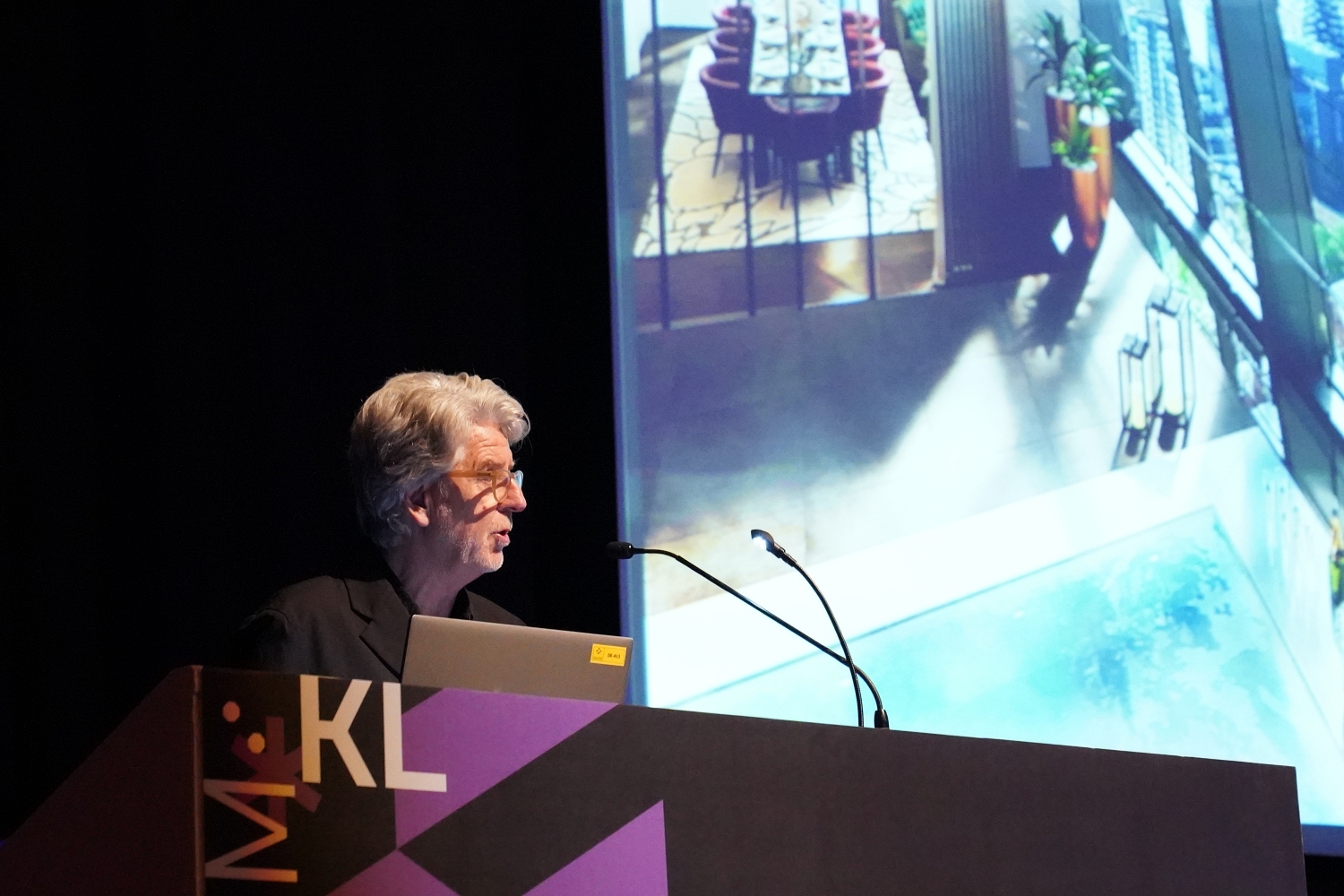
Moving across the urban landscape, the ingenious Ian Simpson, the driving force behind SimpsonHaugh Architects, reshapes the very essence of architecture. His guiding principle revolves around seamlessly intertwining architecture with nature, community, and sustainability. This ethos radiates through projects like Circus West, where history elegantly converges with modernity, creating a living tapestry of the city’s identity. The marriage of historical essence with modernity is echoed through the transparent facades of Dollar Bay, which offer breathtaking panoramas while paying homage to the River Thames. This artistic approach finds its pinnacle in One Blackfriars, an embodiment of sustainability and inviting public spaces, reflecting his unwavering commitment to crafting a better, more interconnected world.
Ray Winkler, the third speaker hailing from Stufish, delved into the mesmerising realm of entertainment architecture. He eloquently emphasised the profound impact of immersive experiences and narratives on shaping human civilization. Winkler’s portfolio spans a broad spectrum, encompassing religious, political, entertainment, and storytelling architecture. A highlight of his journey is his navigation through the ever-evolving domain of hybrid entertainment, skillfully blending the digital and tangible realms in projects like Abba Voyage. This metamorphosis erases boundaries, akin to the allegory of Plato’s Cave, where our perceptions challenge reality itself.
Ian Simpson, the driving force behind SimpsonHaugh Architects, reshapes the very essence of architecture.
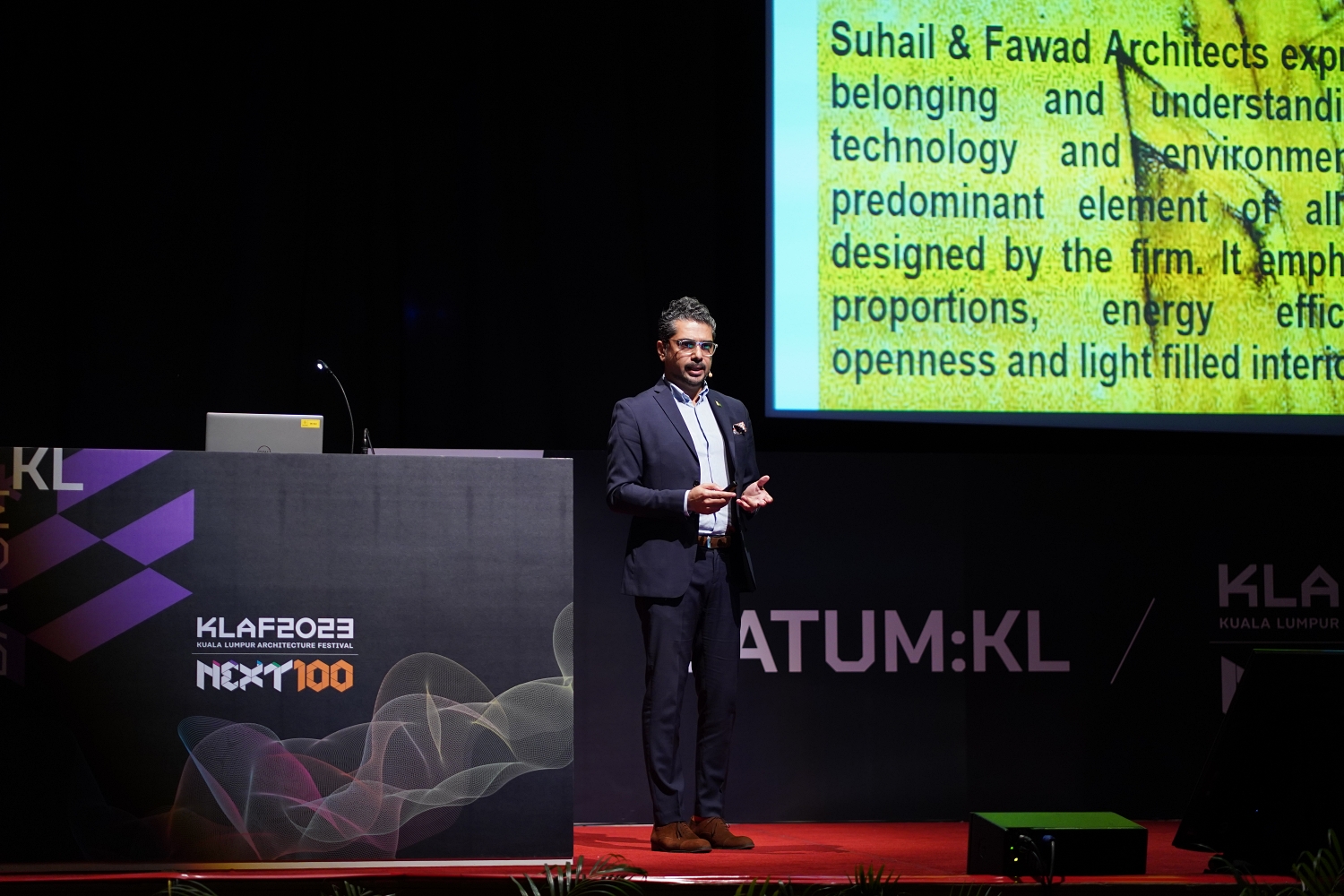
Subsequently, Ar. Fawad Suhail Abbasi’s sustainable designs at Suhail & Fawad Architects evoke a sense of heritage and timelessness. Anchored in a collaborative process, his architecture breathes vitality into spaces, seamlessly connecting them with the natural world. Abbasi’s integration of indigenous elements and vibrant hues is a tribute to his regional heritage and traditions, epitomised in projects that ingeniously use materials in innovative ways.
Lastly, Ar. Seah Chee Huang, representing DP Architects, etches his mark by crafting designs that shape communities. His philosophy resonates through projects such as the Singapore Sports Hub, Our Tampines Hub, One Ponggol, and Bukit Canberra. These spaces mirror his vision of merging urban planning with sustainability, creating thriving environments that invite communities to flourish. The collaborative design process enhances social cohesion, while the intertwined relationship between nature and infrastructure metamorphoses spaces into sanctuaries of well-being.
Central to the architectural discourse are shared values and challenges. Architects navigate an evolving landscape, driven by technology, yet their commitment to ethical responsibility stands firm. The future of this profession rests on a harmonious blend of adaptability and unwavering adherence to foundational principles, paving the way for a better world for generations to come.
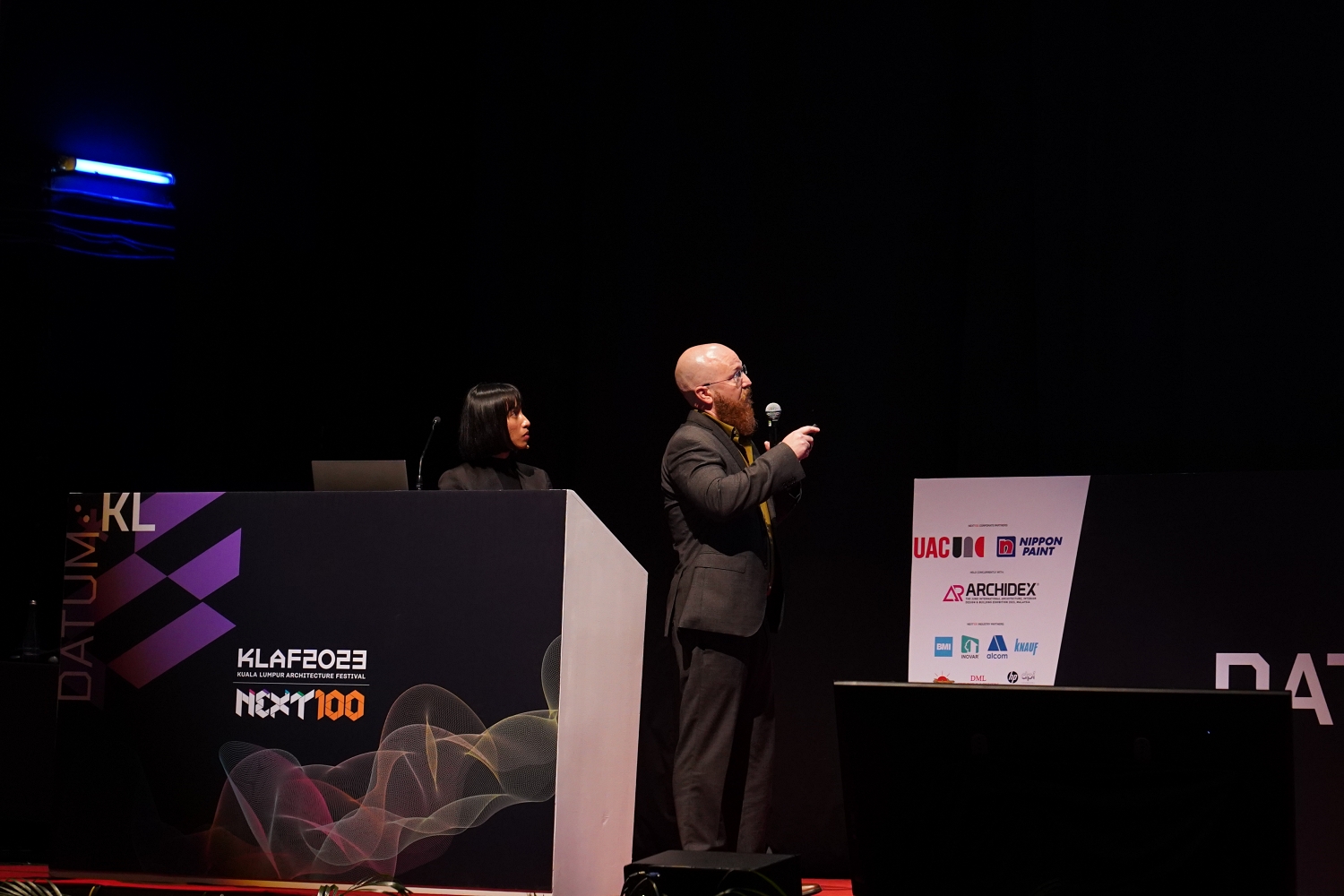
Ar. Fawad Suhail Abbasi of Suhail & Fawad Architects (Pakistan) delivering his presentation.
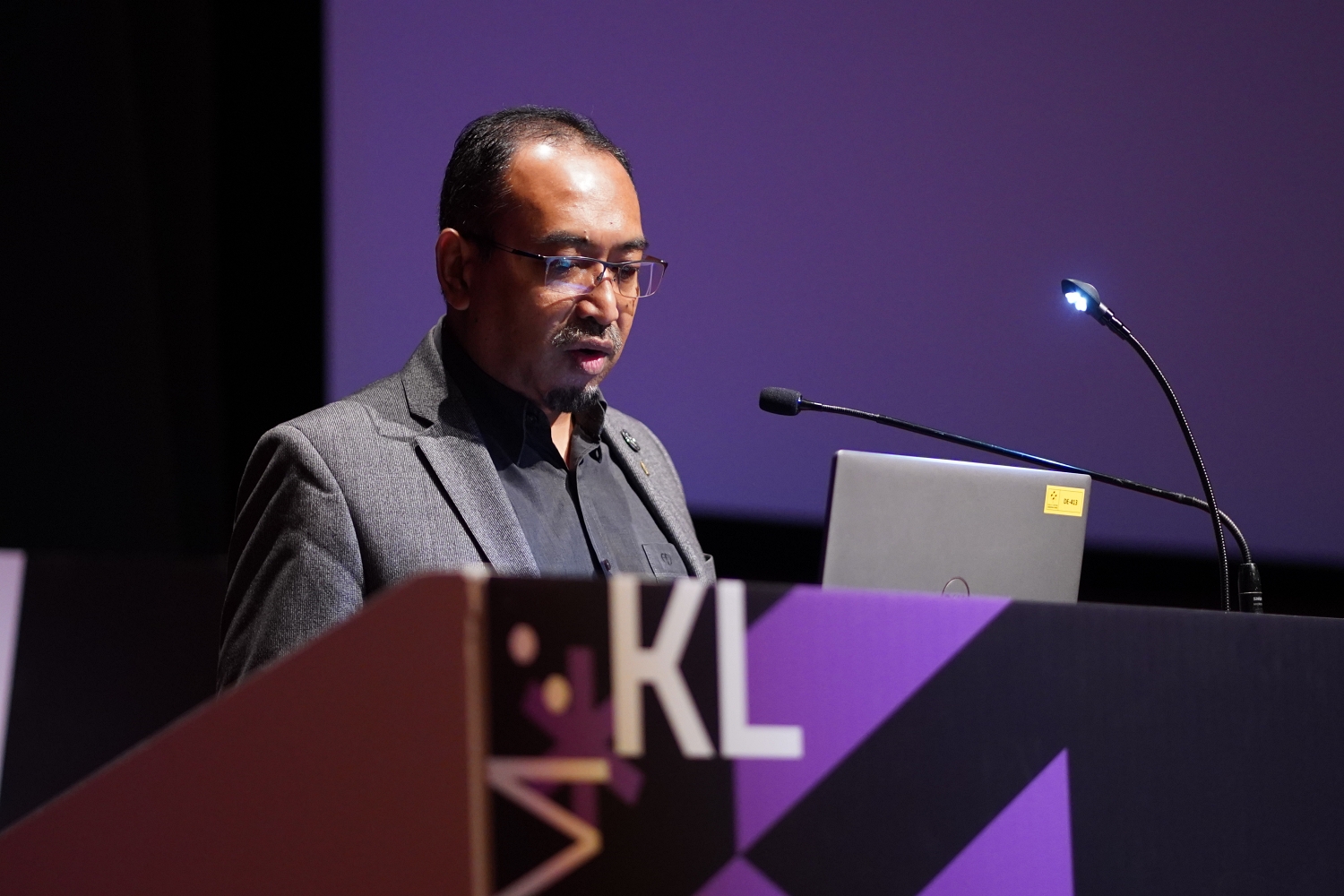
PAM Past President Dato Ar. Ezumi Harzani informing audience on the upcoming UIA International Forum in 2024 to be held in Kuala Lumpur, Malaysia.