HEE RESIDENCE BY KWAN KIM HUAH ARCHITECT IS A BALINESE UTOPIA SURROUNDED BY NATURE.
TEXT BY THE ARCHITECT
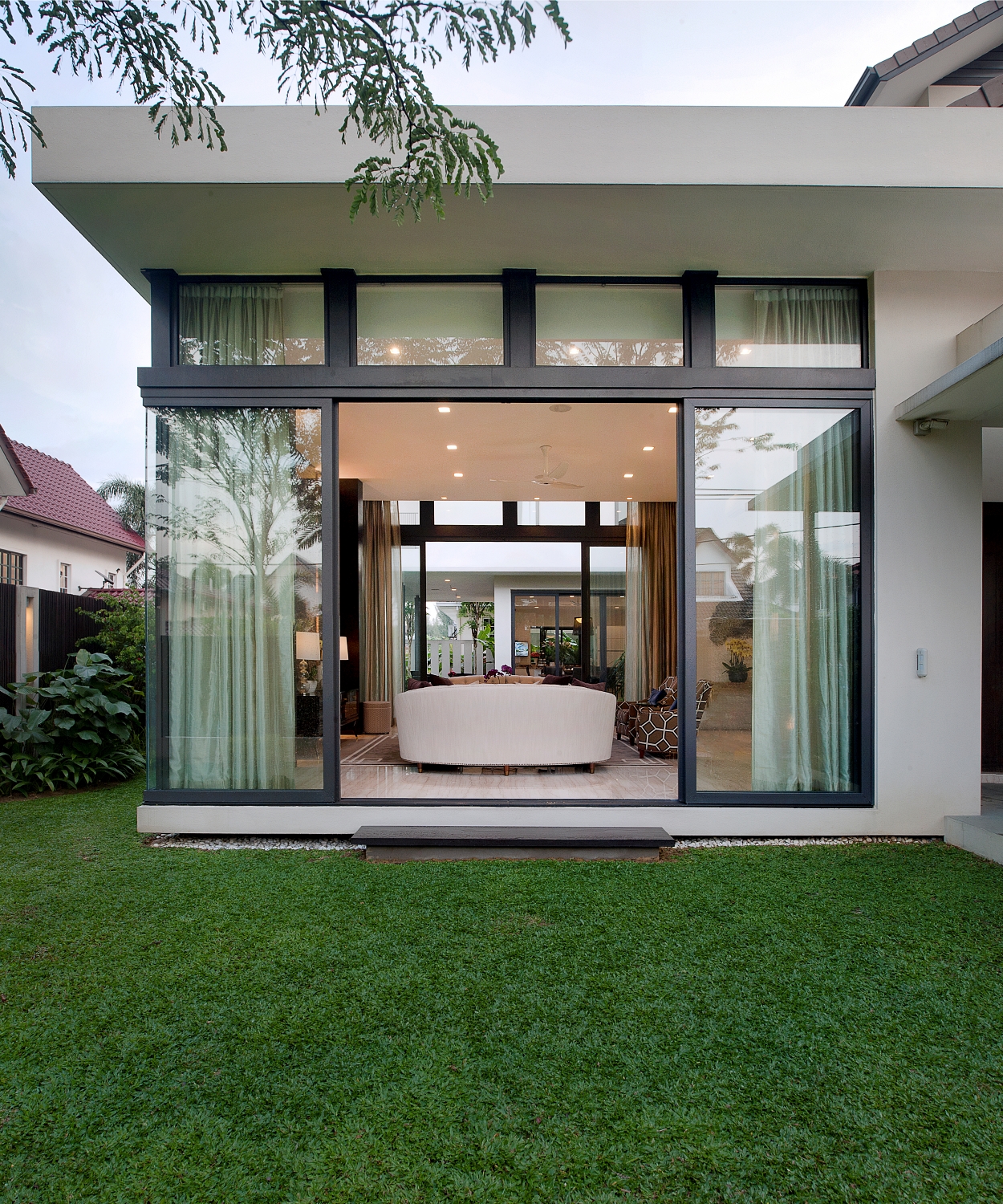
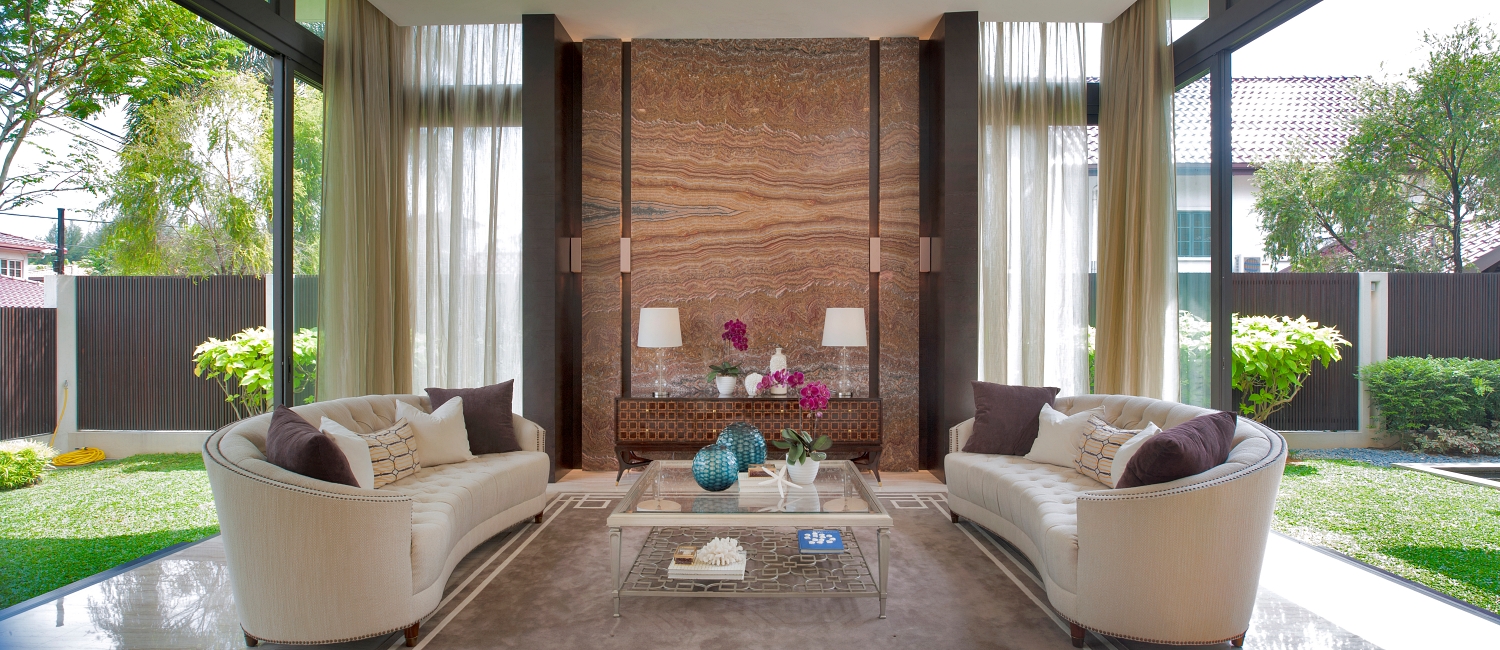
Living Hall was designed to mimic a standalone pavilion
BRIEF
As the client was very fond of Balinese-style homes and nature-inspired tranquillity to allow them to have an immersive connection with the outdoors, this formed the foundation of the design, and the client accepted the concept of his contemporary tropical architecture. Coupled with a need to react to the sunlight direction, spaces were derived and placed accordingly to make full use of these requirements.
SITE
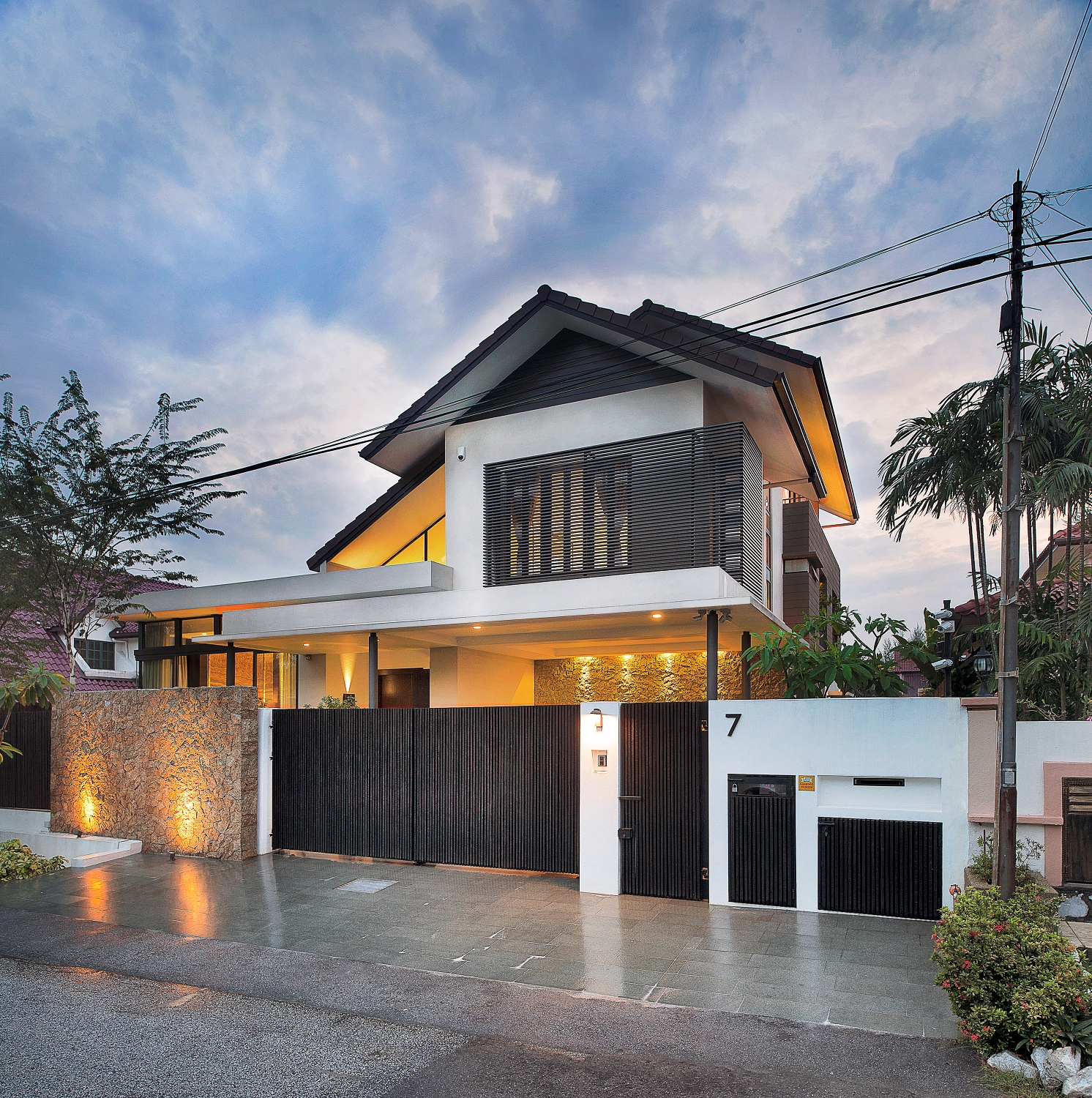
Situated in the residential belt of Subang Jaya in USJ 2, Hee Residence is a bungalow-sized home designed to meet the client’s specific requirements as well as to meet and tackle the context head-on.
Balinese concept and nature-inspired bungalow
ORIENTATION
The residence’s main facade points to the north, and the topography of the land size 100ft × 75ft changes within the 7,500sqft area but remains relatively constant throughout.
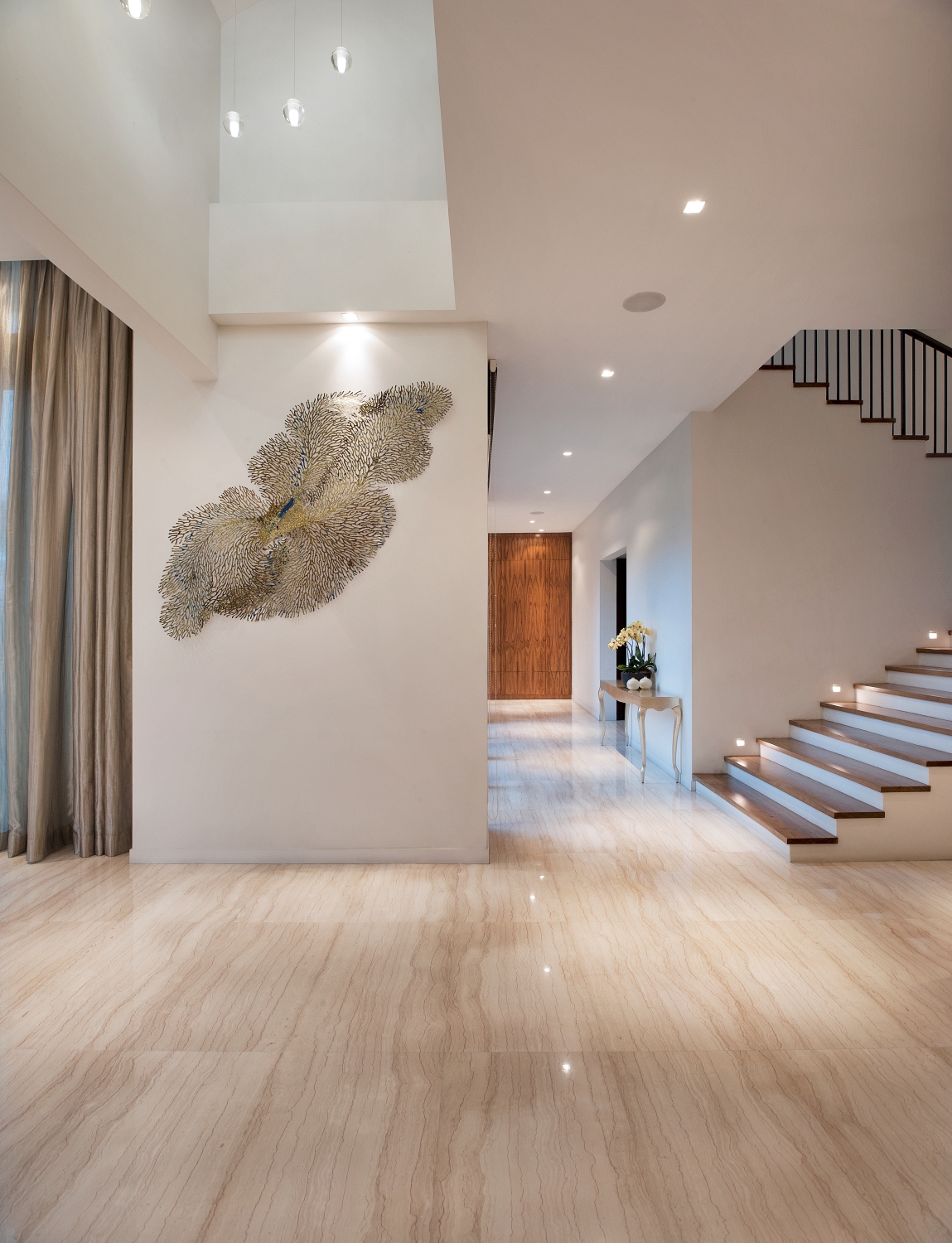
The foyer connecting the Living Hall and other indoor spaces
Living Hall was designed to look as much like a standalone division of the home, much like the separate pavilions typically found in Balinese homes.
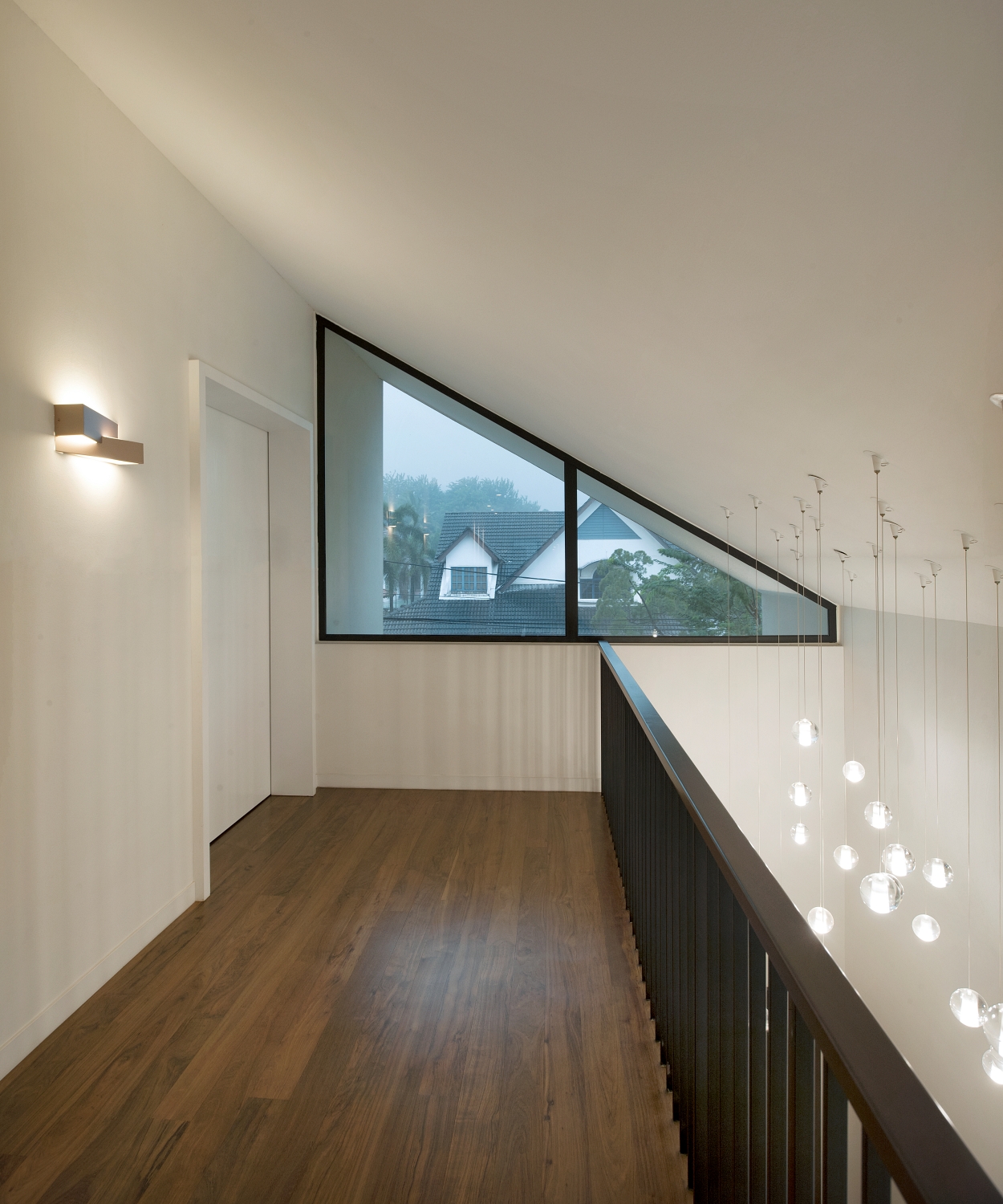
First-floor corridor with a glass window overlooking the front gate
SPATIAL IDEA
The Living Hall was designed to look as much like a standalone division of the home, much like the separate pavilions typically found in Balinese homes. Also, based on the idea of a villa, larger, higher spaces with full-height retractable glass panels 4.35 metres high on 2 sides of the walls provide maximum glazing for the best views out, daylight and cross ventilation. This is also emphasised in the height of the Living Hall as the space is higher at 4.5 metres compared to all other spaces throughout the home with a ceiling height of 4 metres high. The construction and design of the Living Hall are unique, where the roof slab is cantilevered 1.5 metres due to astute placements of the columns. This also enables the implementation of corner glass windows, which enhances the user experience by creating a more immersive connection between outdoors and indoors. The standalone villa will create a look akin to that of a lit lantern when the space is in use at night.
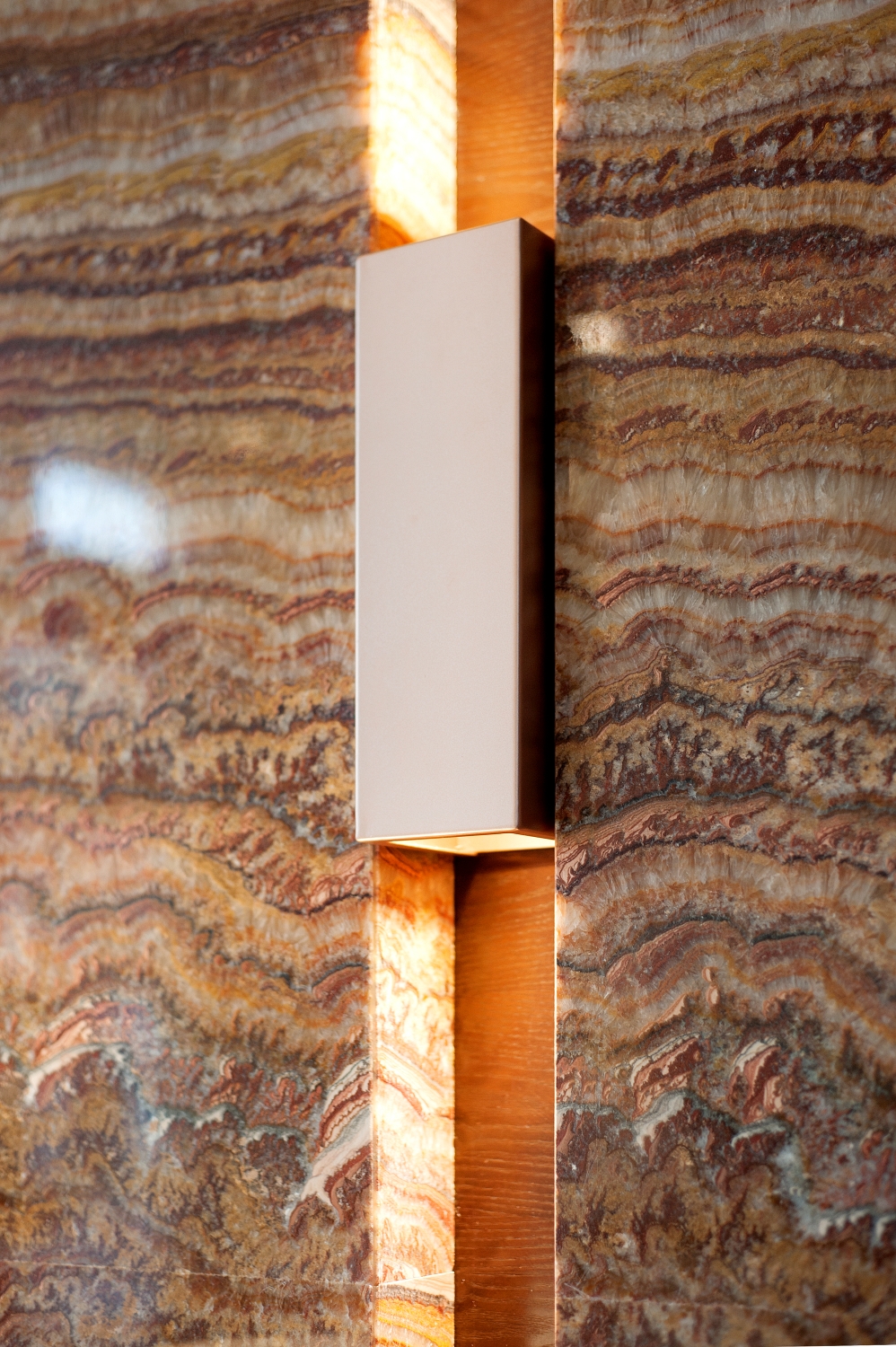
Feature wall in the Living Hall using Rosetto Sepeggiante marble with light fittings
Towards the exterior, the west facade is dominated by a boxed-shaped extrusion that encompasses the children’s room. This modern take on the timber home frames the children’s rooms of the residence. The way in which spaces were designed in a way that would encourage the most pleasing experience to the user, where the highest vertical space is placed in the rear corner where is seen the least whilst first and double-storey sections of the home field the eye views.
The placement of voids in the foyer creates connections to the first floor, connecting spaces that are otherwise solitary. Most private spaces such as the bedrooms are placed on the back portion of the home when possible for more privacy, whilst common spaces are either placed in the front or on the ground floor.
4.5m high Living Hall with full height retractable glass panel to provide maximum glazing for the best views out
GREEN DESIGN
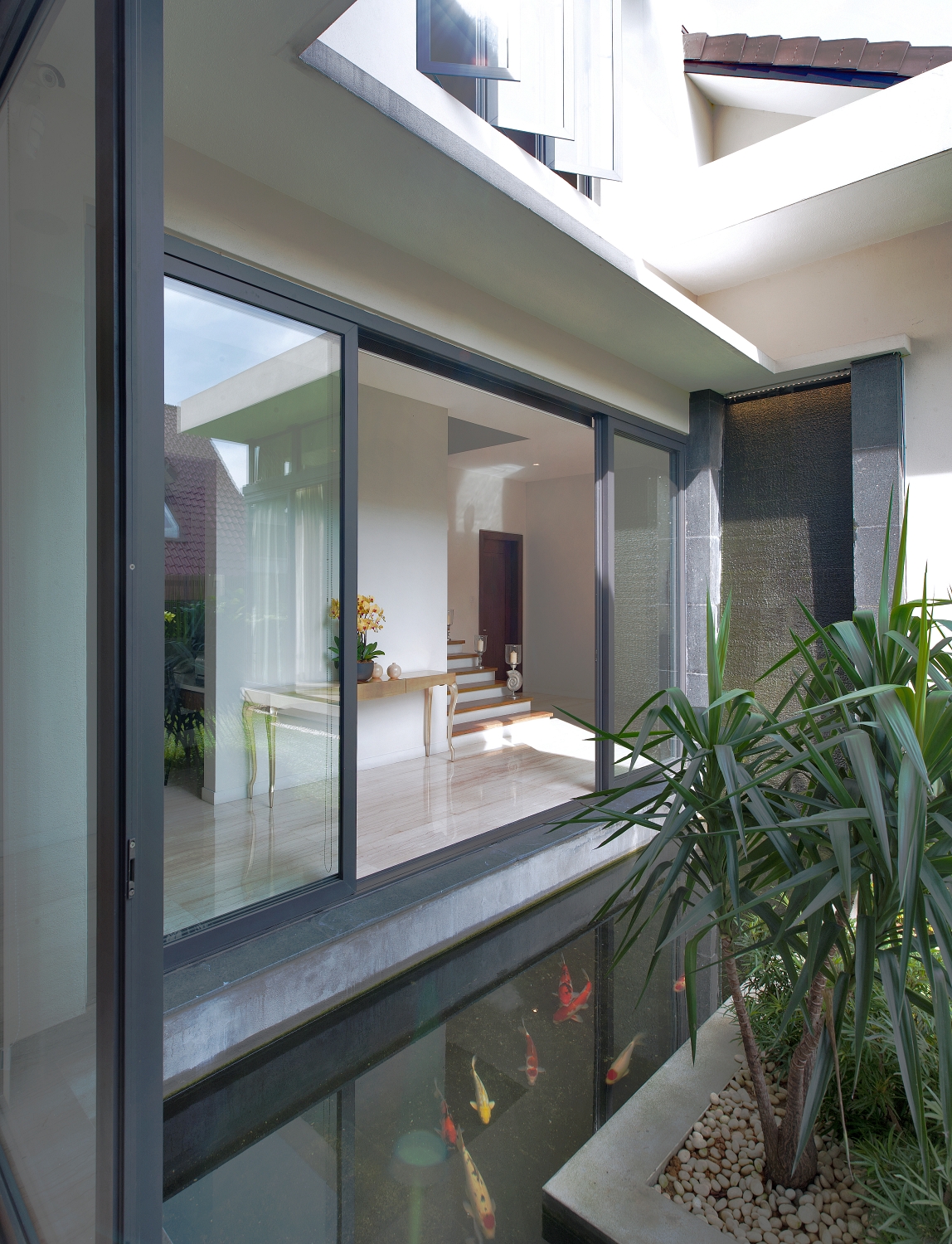
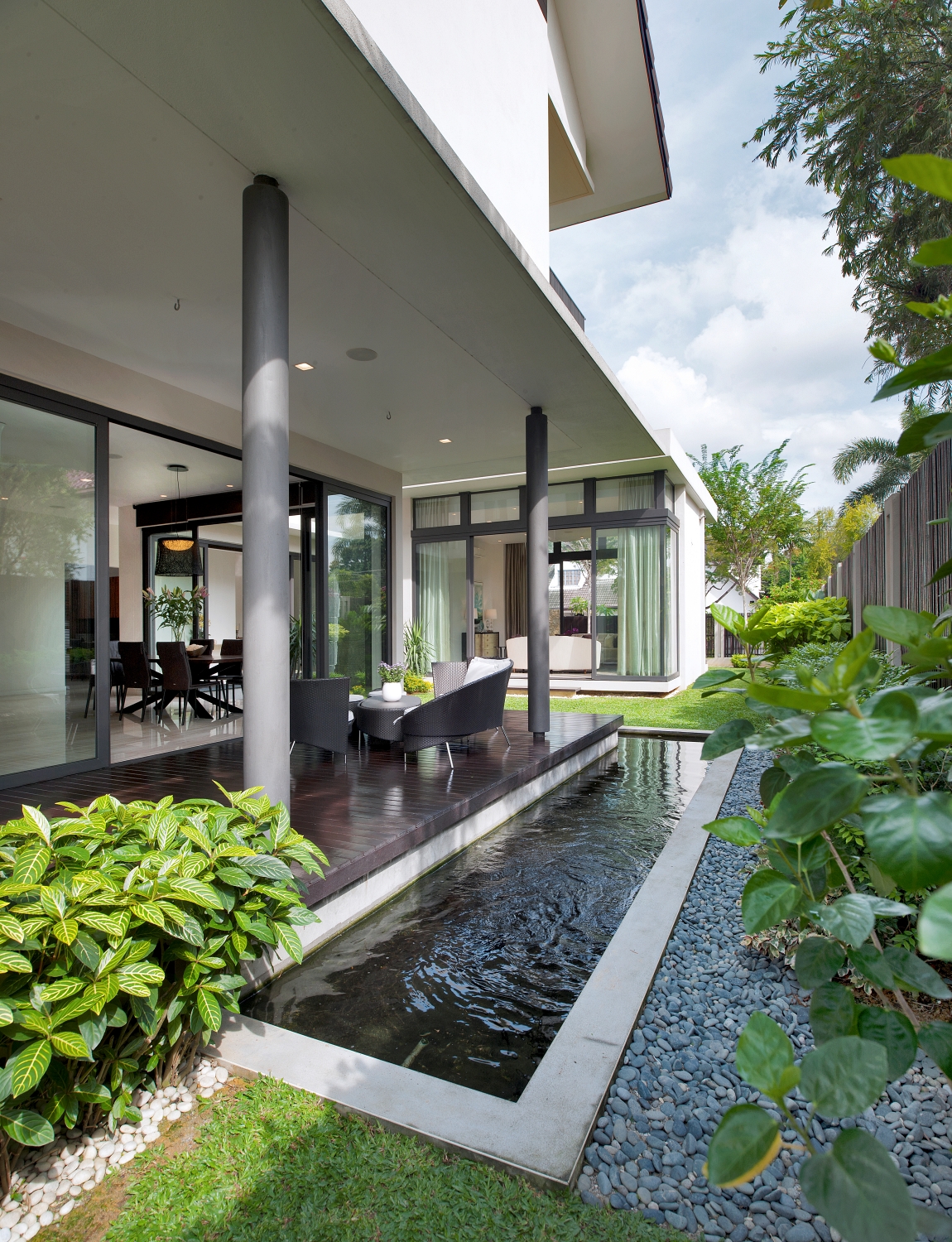
The presence of a water feature complete with koi fish by the terrace and dining hall adds to the nature-inspired tranquillity. During a breeze, the water feature also helps the home stay cool through passive measures.
The louvres, which form the contrast in the design and are located sparsely in specific locations around the home are used to provide a clear separation of public and private spaces, as well as providing the semi-enclosed space concept of Balinese architecture and filter light where it is necessary. The usage of this system particularly in the ground floor Powder Room, coupled with the implementation of rock and plant features strives to bring in the landscape indoors. There also lies a screen that is placed on the front facade as a means of maximising natural light penetration and adding privacy to the gym room.
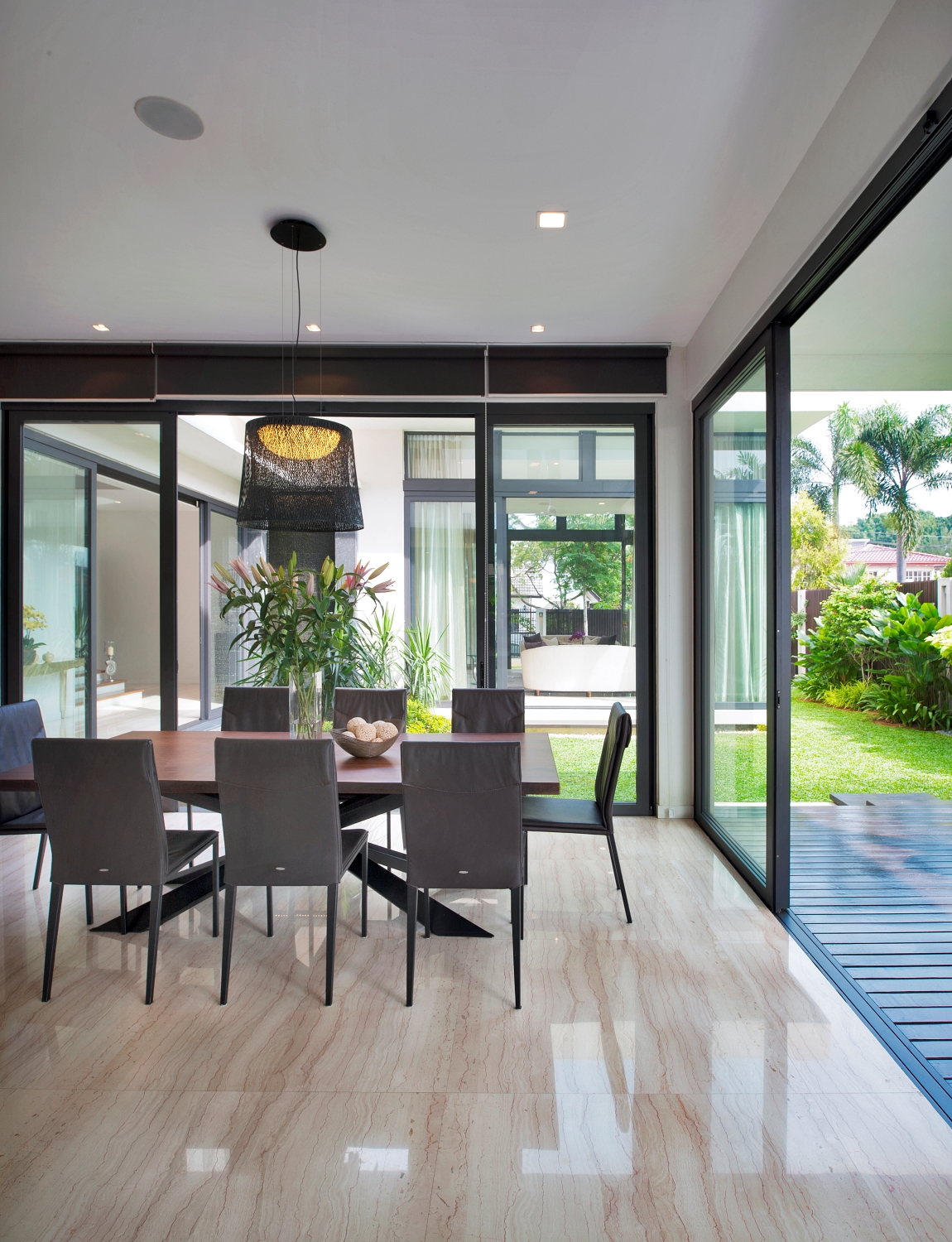
Open Dining view towards the Courtyard & Living Hall with sliding glass door to maximize cross ventilation
Hee Residence’s 30-degree angled roof pitches are also a nod to Balinese-inspired homes with the use of French-produced Terreal Volnay natural clay roof tiles. Furthermore, heat insulation is also applied on all roofs. Used is the DOW (50mm thickness) extruded polystyrene with aluminium sisalation and marine plywood underneath. Located on the roof of the living hall lies the artificial turfing, which not only provides extra heat insulation but also serves as a view enhancement when viewed from the master bedroom.
Natural materials are carefully selected such as Chengal timber deck, Burmese walnut timber for the internal floor, and Italian Rossetto Serpeggiante marble on Ground Floor to give a naturally inspired tranquillity.
At the Gate and Car Porch, a stone-cladding wall using Tiger Strip yellow stone is the first sight that greets the owners as they enter the home, providing a sense of home warmth and comfort.
Presence of water feature complete with koi fish adds to the nature inspired tranquility
Outdoor seating at Chengal timber deck surrounded by koi pond provides soothing and serene sights