Penang Town Hall

A JEWEL OF PENANG’S HERITAGE AND THE REVIVAL OF THE TOWN HALL
GBI FACILITATOR - Ir. Julian Saw from Green Quarter Sdn Bhd
ARCHITECT - Ar. Michael Ong Chin Keong from BYG Architecture Sdn Bhd
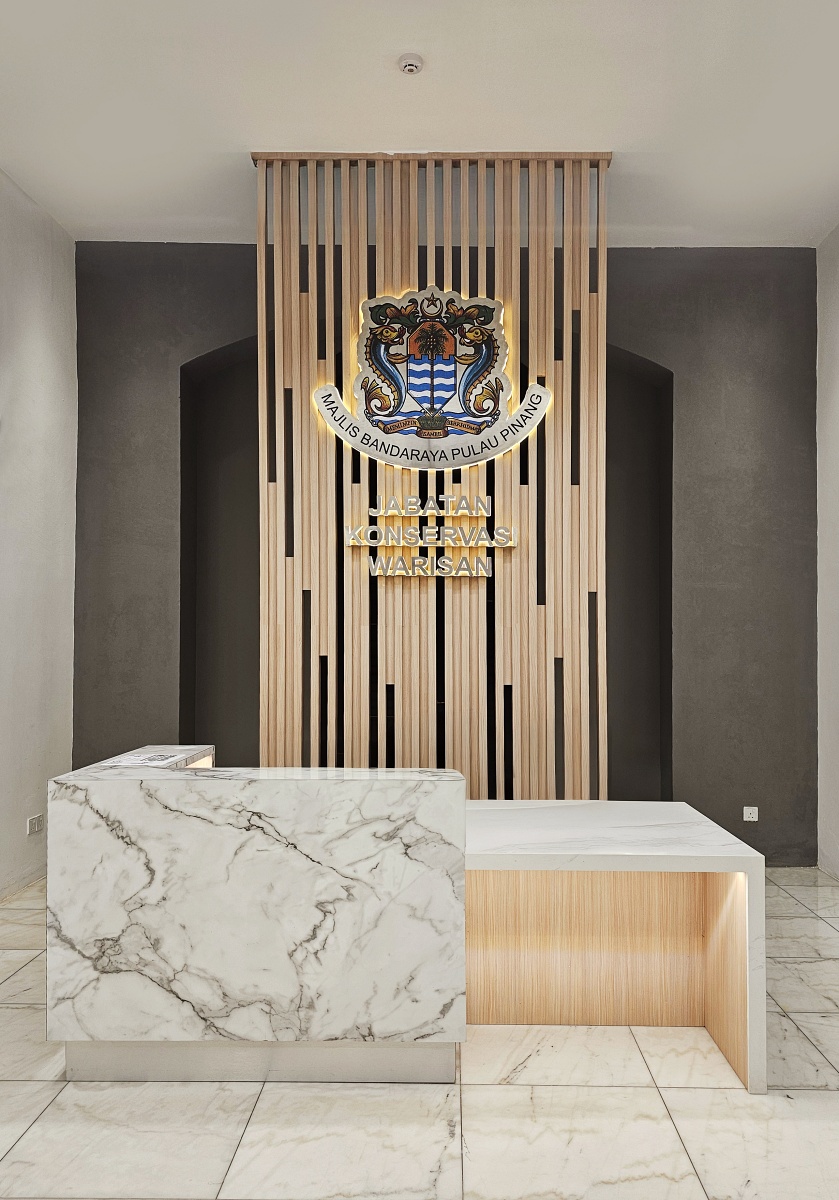
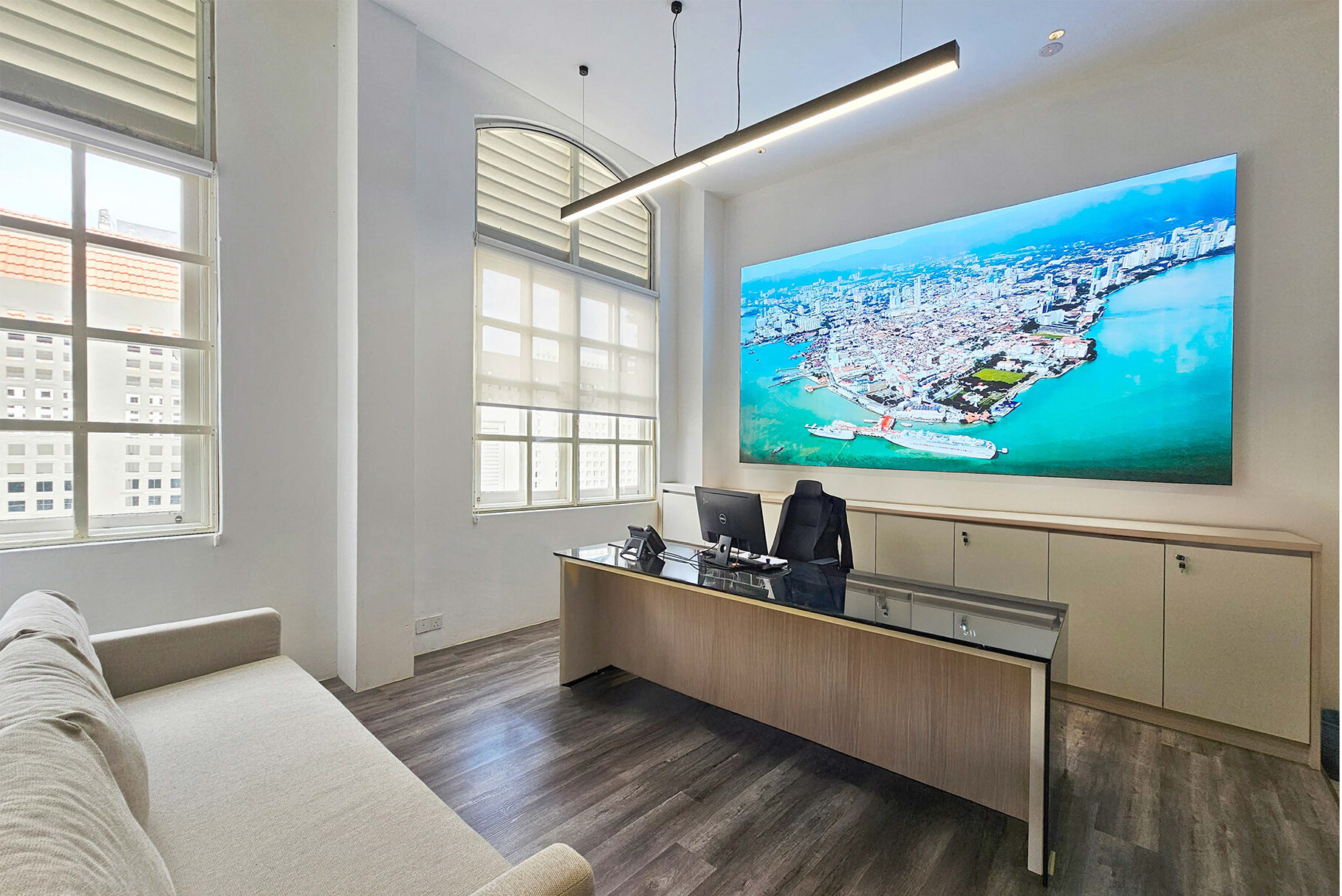
The Reception Desk at the Heritage Department

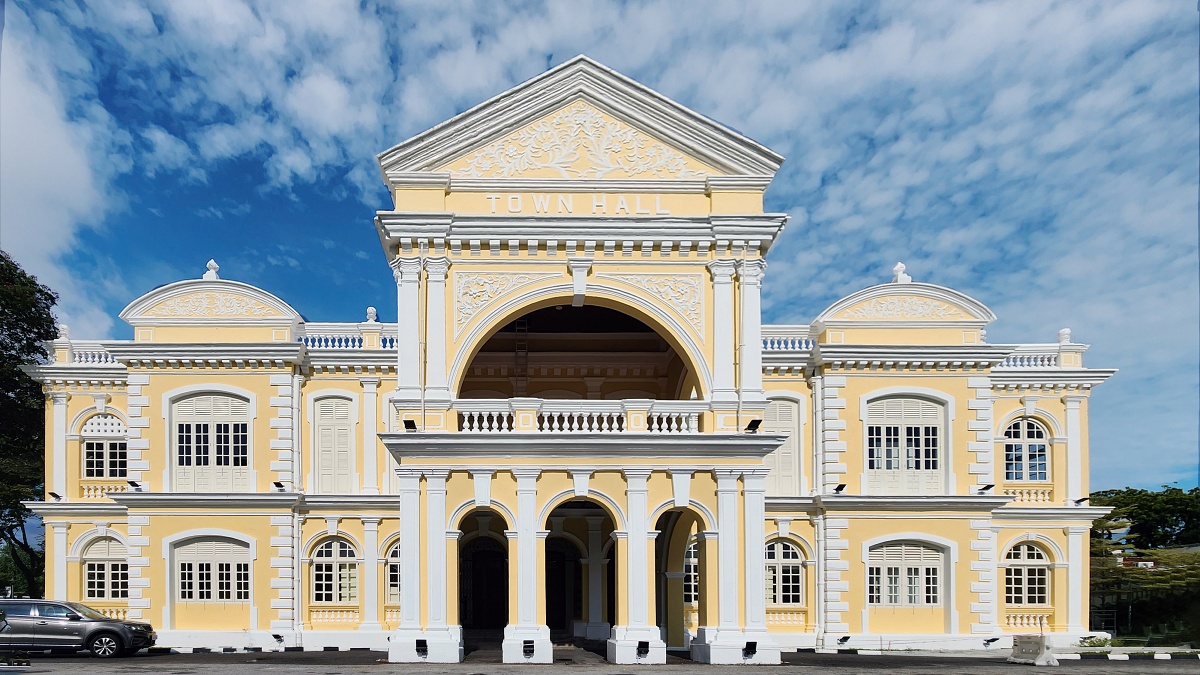
Located opposite Padang Kota Lama, the Penang Town Hall is one of the earliest colonial-era administrative buildings in Penang. First completed in 1883, the Penang Town Hall initially served as the headquarters for Penang’s municipal council. Beyond its functional purpose, the building housed a grand ballroom, and an auditorium, and even birthed the Penang State Library. Over the years, it underwent several expansions, including an annexe in 1890 and an extended porch with an upper floor in 1903. However, following the completion of the adjacent City Hall in 1906, municipal offices relocated, and the Town Hall continued to serve as a prominent social venue for Penang’s European elite.

In 2008, George Town’s designation as a UNESCO World Heritage Site elevated the Town Hall to a Category 1 heritage building—reserved for structures of exceptional historical and cultural significance. Despite its iconic status, by 2019, the building had fallen into disrepair, prompting the Penang Island City Council (MBPP) to commission an RM8 million restoration project aimed at conserving this historical landmark.

Today, while part of the building functions as office space for the State Heritage Department, the Town Hall remains an esteemed venue, hosting exhibitions, galas, and major events like the George Town Festival. However, its revival was far from straighfforward, as the restoration revealed structural challenges, particularly with the flooring. The original marble, laid over compacted earth and thin concrete, was replaced with a reinforced slab and a new marble finish, ensuring lasting elegance. The annexe required new piling to strengthen its foundation, and a new roof addressed persistent leaks. Remarkably, these interventions were carried out without major demolition, preserving the building’s integrity. As a commitment to universal access and inclusivity, a handicapped access ramp and a small elevator were added.

Exterior View of the restored Town Hall

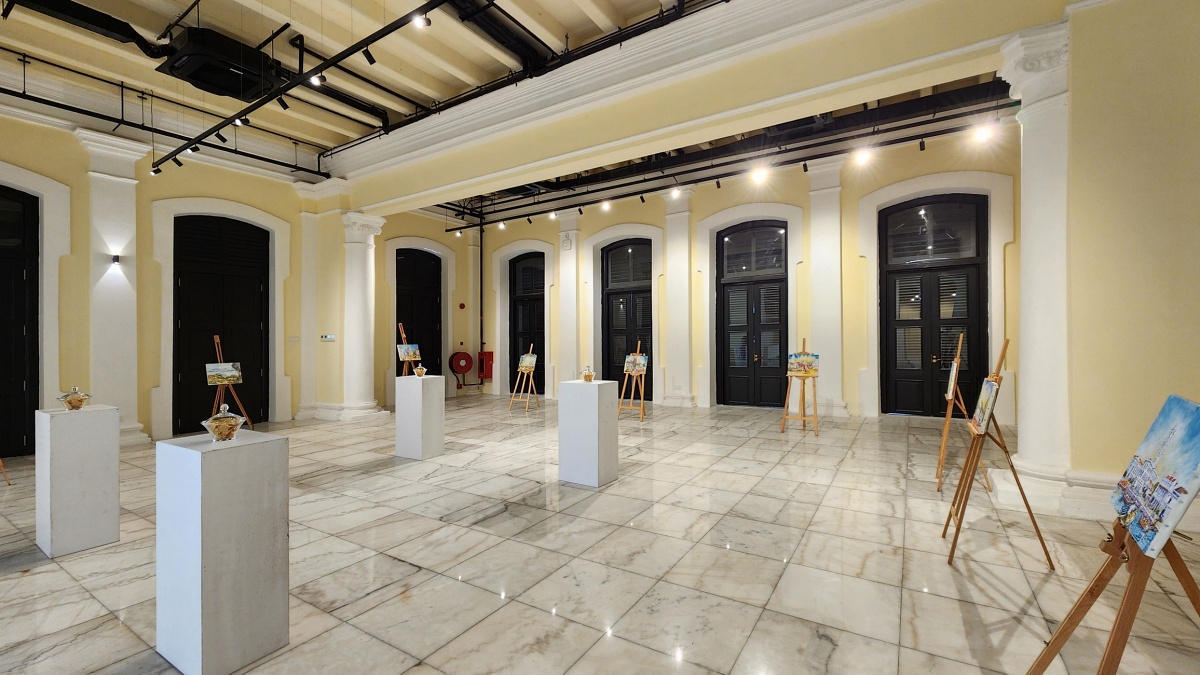
The exhibition hall underwent a transformative redesign, removing partitions to create an unobstructed 4,000-squarefoot space. This change not only highlights the grandeur of colonial-era architecture but also provides a stunning backdrop for exhibitions. Meanwhile, the annexe’s poorly designed roof— responsible for significant moisture damage—was replaced with a flat concrete roof. This solution not only resolved the leaks but also restored visual symmetry to the building’s original design.

Faithful to its origins, the grand ballroom received meticulous attention. Lacquered timber flooring and ceiling planks were restored alongside original chandeliers and intricate mouldings, authentically reviving its historic charm.

A notable milestone in the restoration was achieving Green Building Index (GBI) certification. Despite heritage restrictions, the building incorporated several eco-friendly features, including an Energy Monitoring System (EMS) to track energy usage, low-VOC paints, and rainwater harvesting systems. Additionally, 42% of materials were regionally sourced, with 88.6% of timber procured from sustainable sources, reflecting a commitment to traditional craftsmanship and sustainability.

The Town Hall continues to adapt, with interior spaces undergoing further refurbishment for future use. Once an exclusive venue for British colonial elites, it now serves as a symbol of George Town’s vibrant history and cultural diversity. A place of heritage and renewal, the Penang Town Hall, with its newly implemented eco-friendly features, stands as a testament to the harmonious blend of preservation and progress.

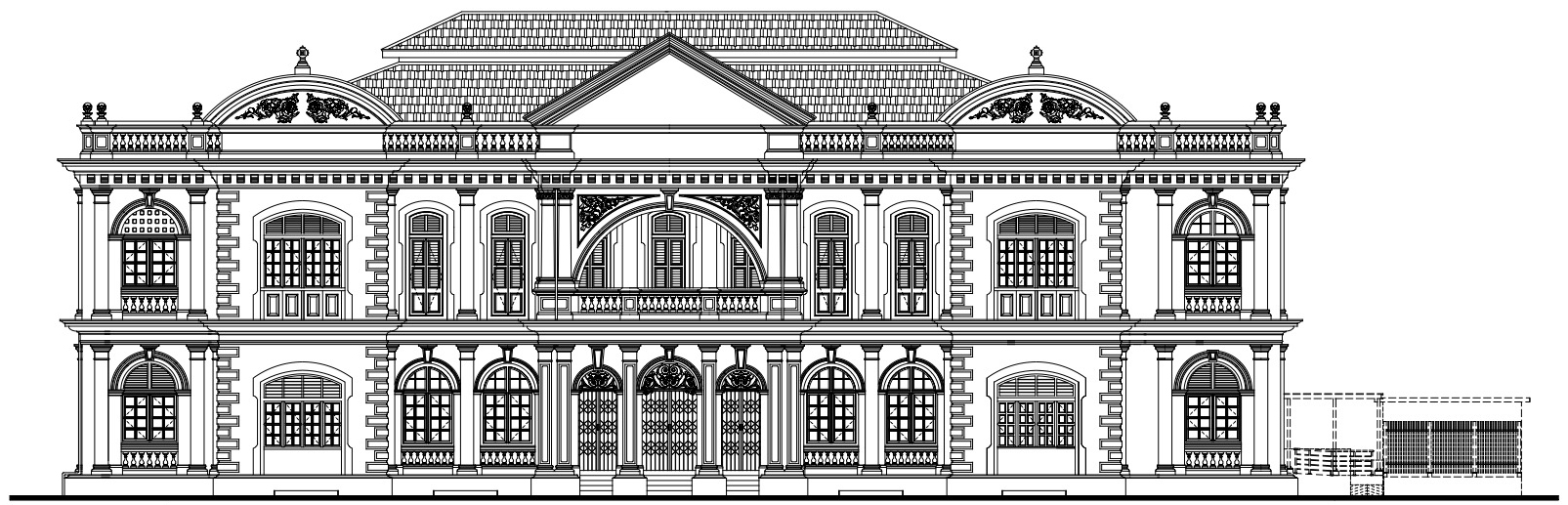
Front elevation
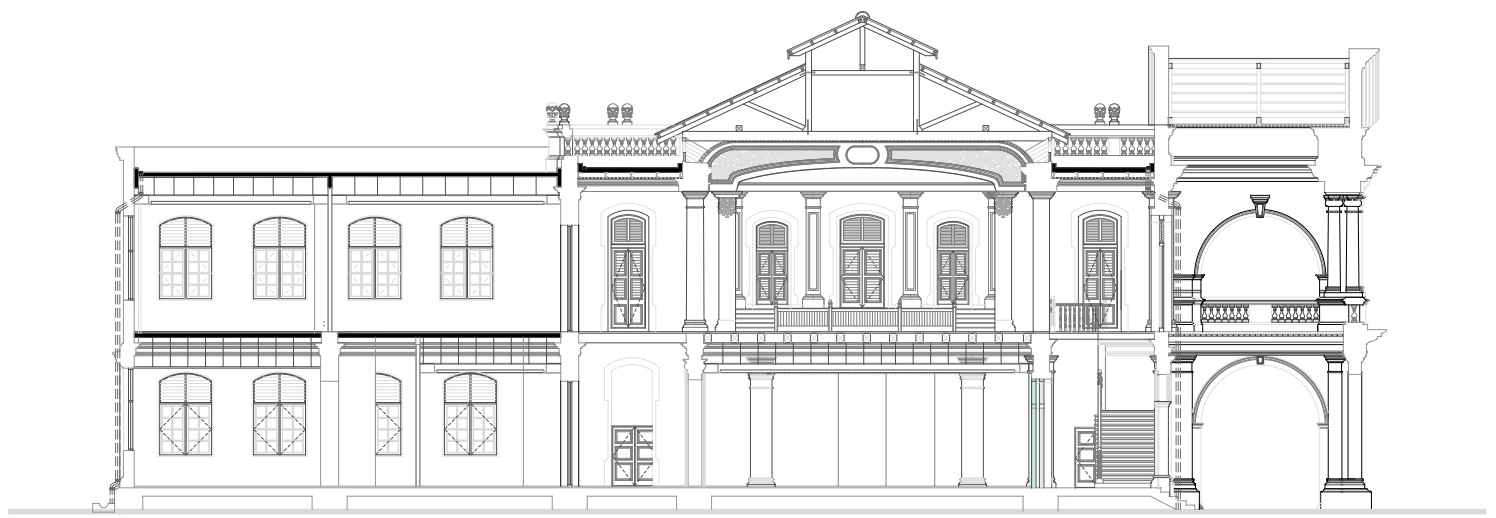
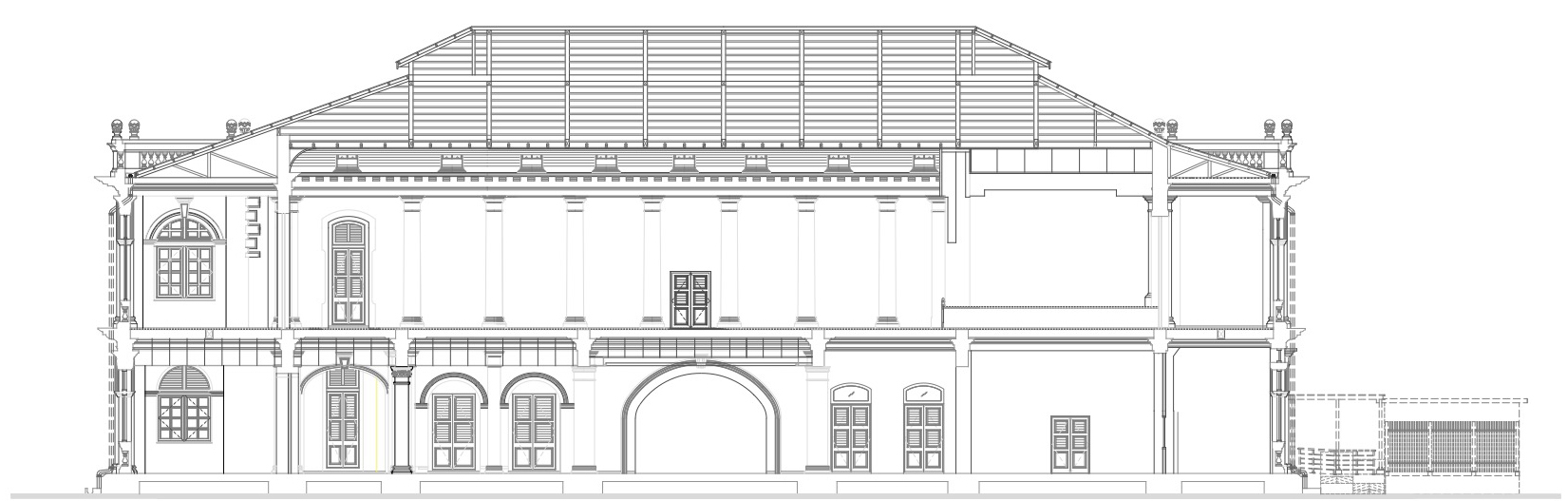
Section 1 drawing
Section 2 drawing
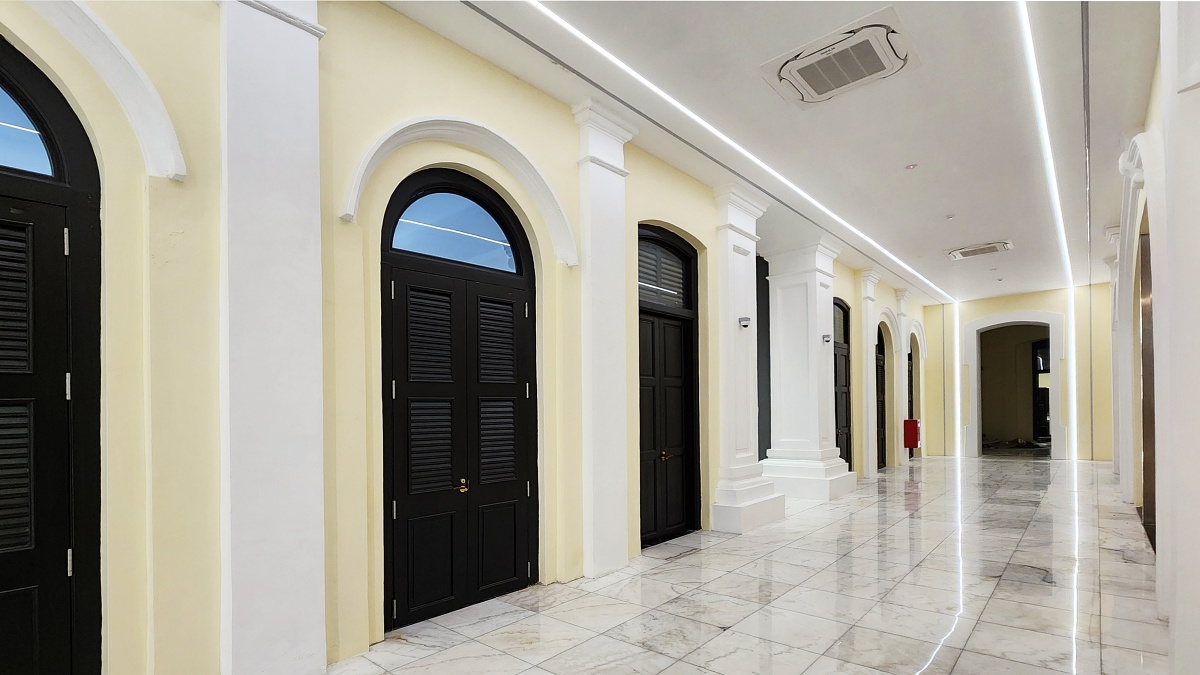
The primary Hallway between the Exhibition Hall and the Heritage Department Headquarters
The Exhibition Hall

BEI (kWh/m²/yr):

119 kWh/m²/yr (BEI office baseline 250 kWh/m²/yr)

Energy savings as compared
to average Malaysia office
building (%):

43% energy savings as compared to average Malaysia office building = (119/210 x 100)-100

OTTV (W/m²):

33.09 W/m² (OTTV max 50W/m²)

Improvement as compared to MS1525 (%):

34% improvement as compared to MS1525
= (33.09/50 x 100)-100

External views (% of NLA):

89%

% of construction waste diverted from landfill via recycling:

16%

The director’s Office at the Heritage Department

FEATURES

RELATED ARTICLES