Commercial Low Rise - Silver ARCHITECT: CKHO Architect CLIENT: Dsquare Sdn Bhd CONTRACTOR: Peninsular Hohup Sdn Bhd
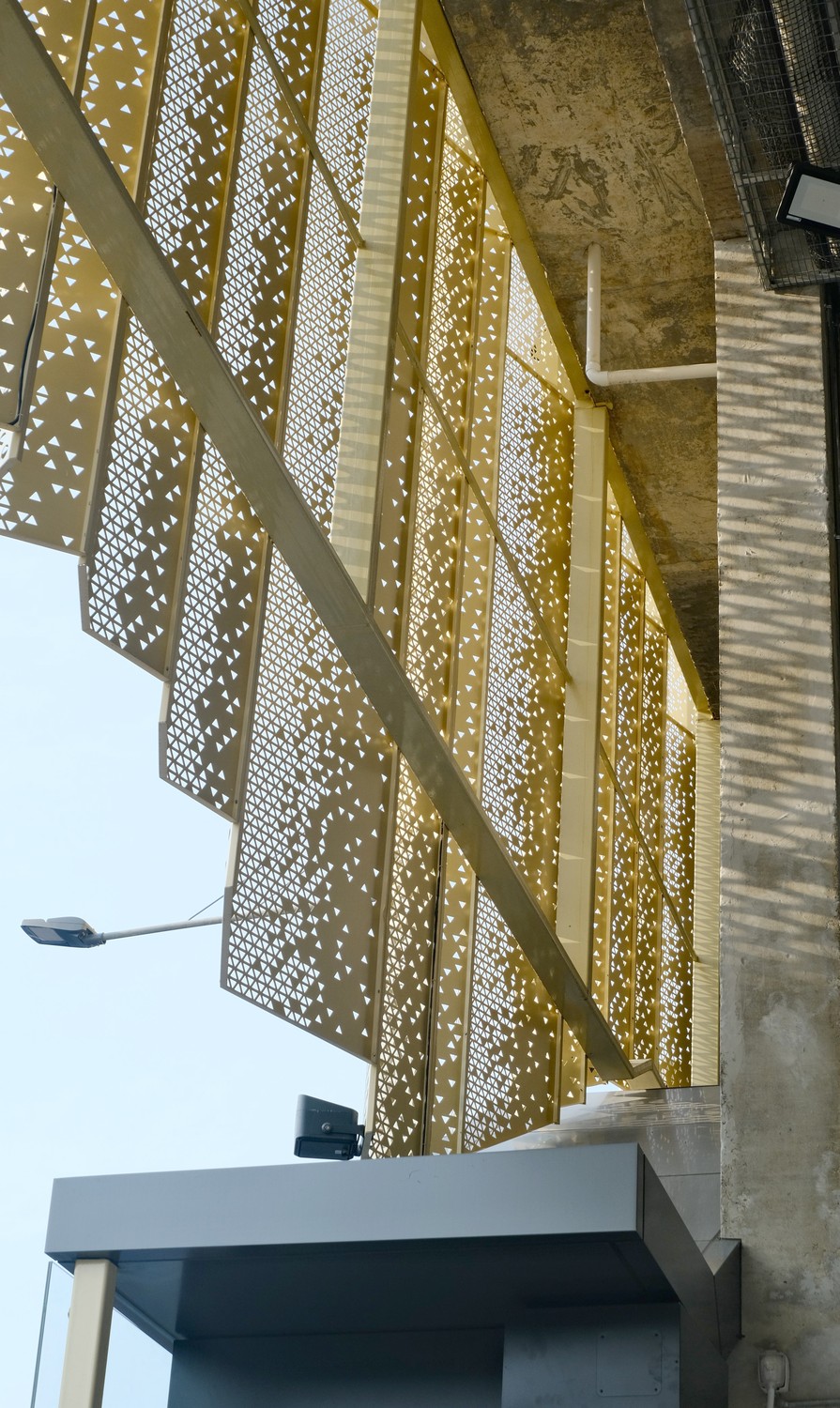
The perforation and light slits
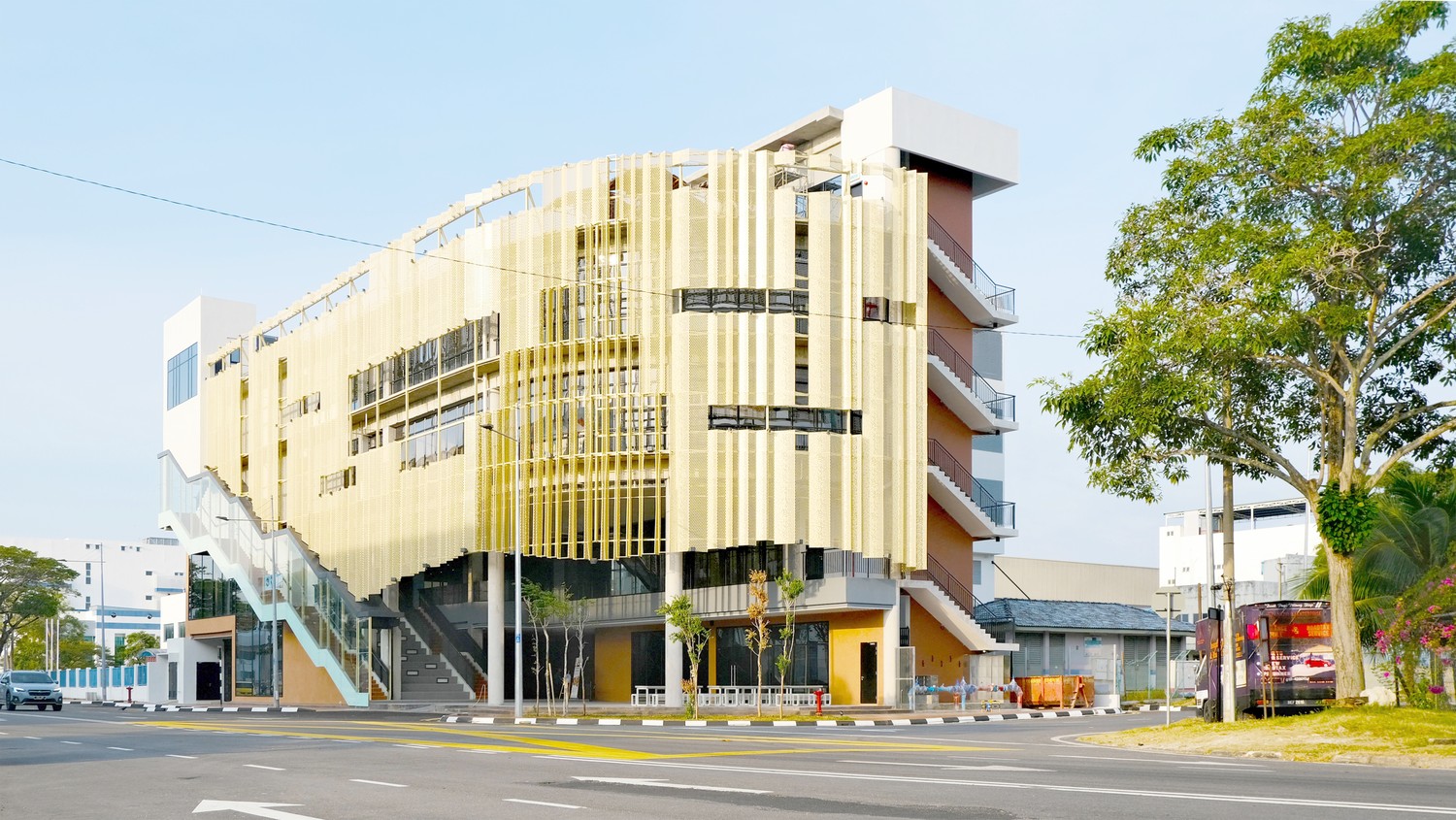
Located within the industrial context of the Bayan Lepas Free Trade Zone (FTZ) in Penang, Bayana Hub is a five-storey commercial development that transforms the typical factory-dominated environment into a vibrant destination for people, business, and community interaction. The surrounding context is characterised by utilitarian industrial buildings that prioritise efficiency, often resulting in monotonous streetscapes with limited public engagement. In response, Bayana Hub introduces a contemporary commercial typology that humanises this industrial setting by placing people, movement, and social connectivity at the forefront.
Overall expression of Bayana Hub Sit within the FTZ context
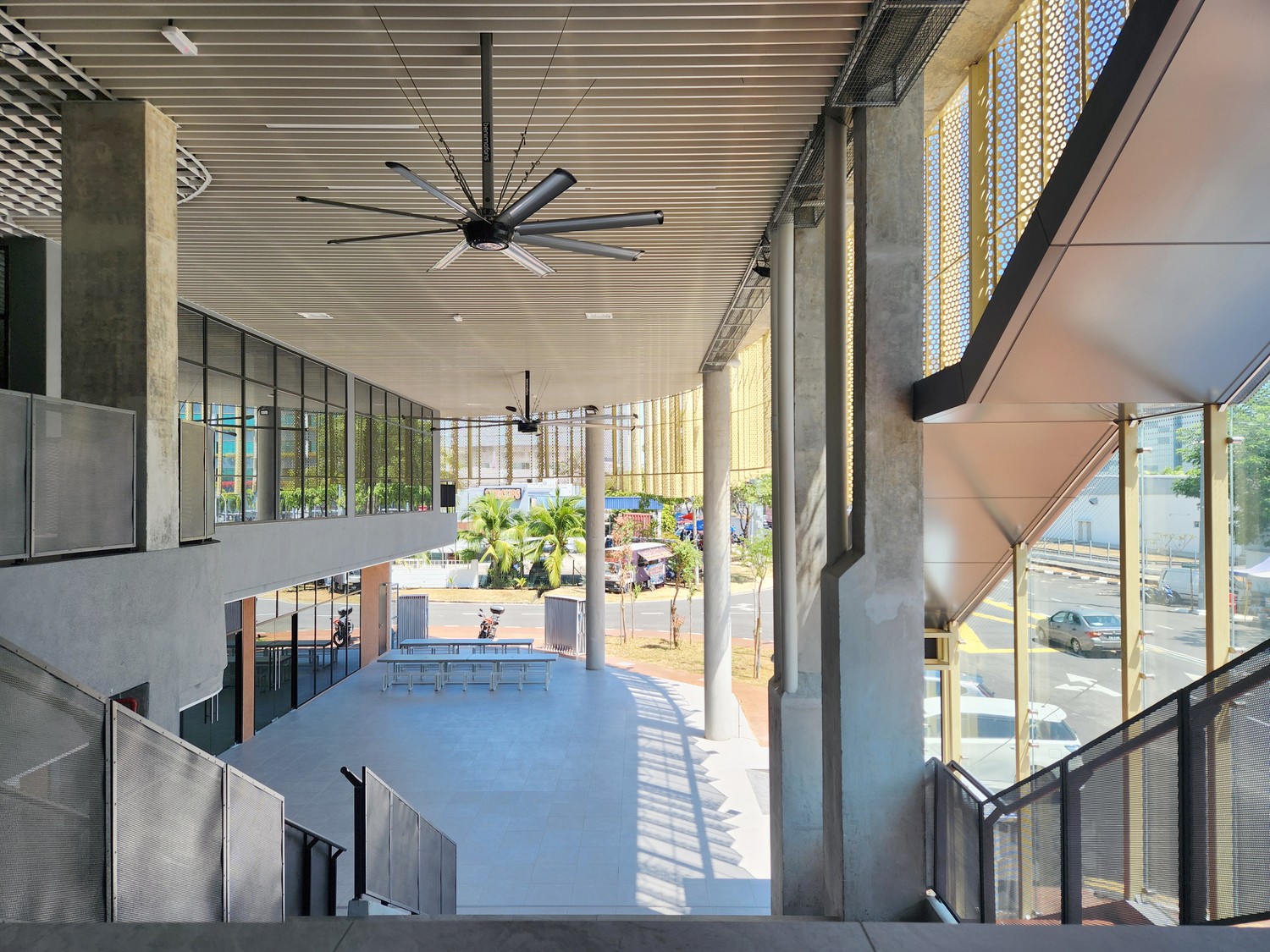
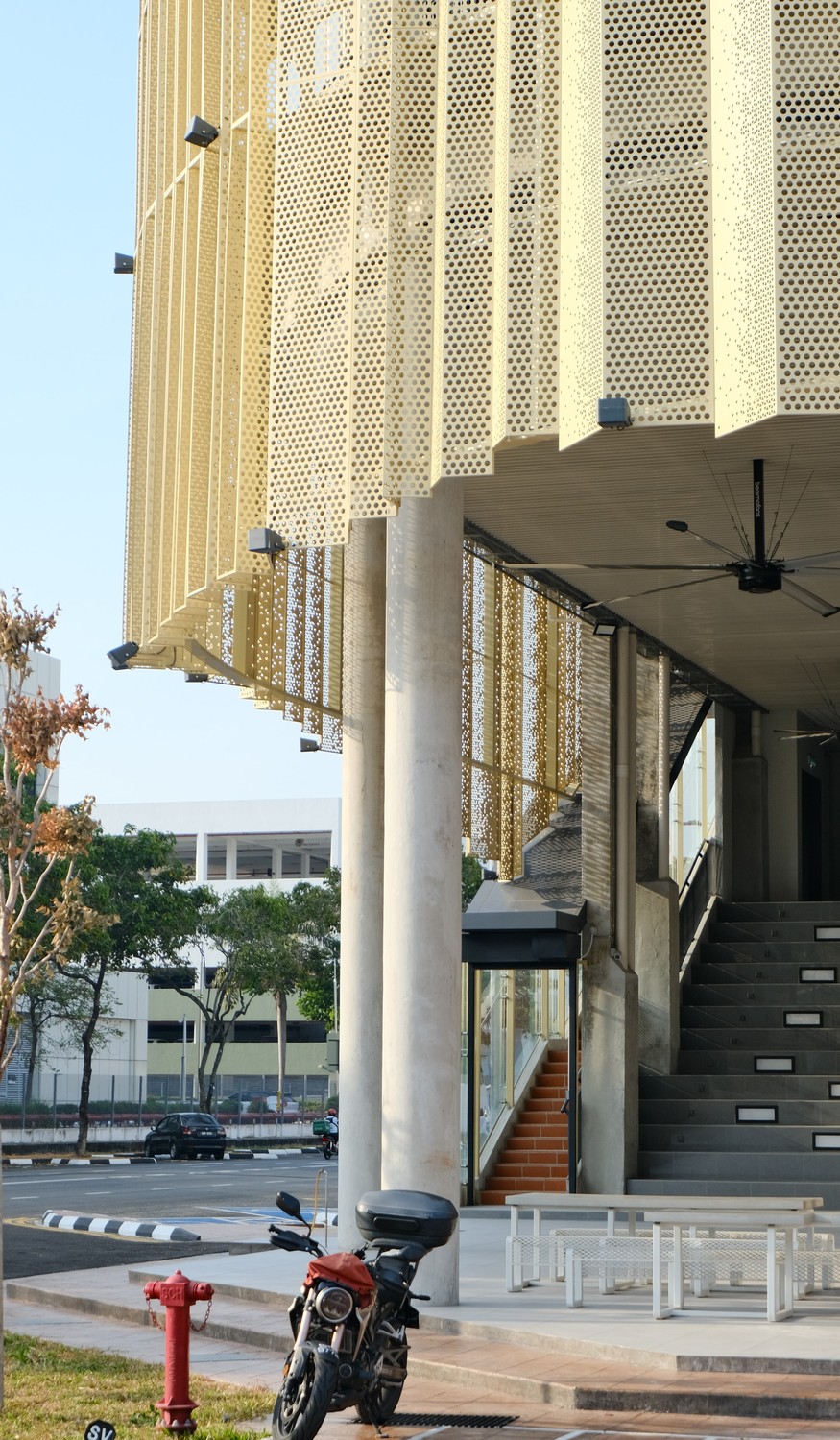
The development maximises the site’s potential through an elevated building mass that liberates the ground plane, transforming it into an active, porous public plaza. By lifting the primary volume, the design creates a generous open space that encourages permeability, visual connectivity, and pedestrian movement. This ground-level plaza functions as a social interface between the building and the surrounding industrial context, allowing workers, visitors, and the wider community to gather and interact. The approach redefines the conventional inward-looking industrial site into an outward-facing environment that welcomes public life.
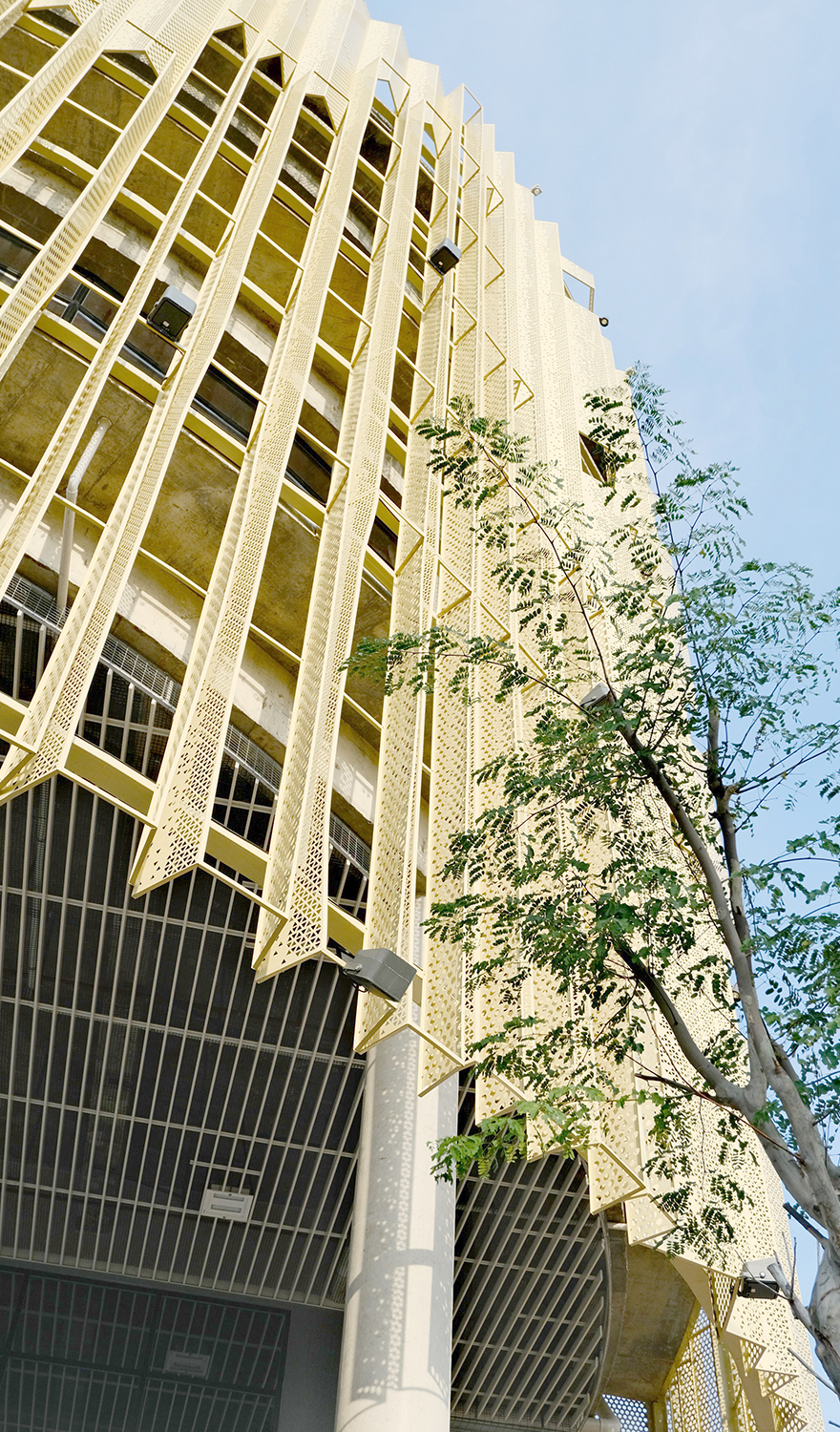
The "curtain" inspired folded façade
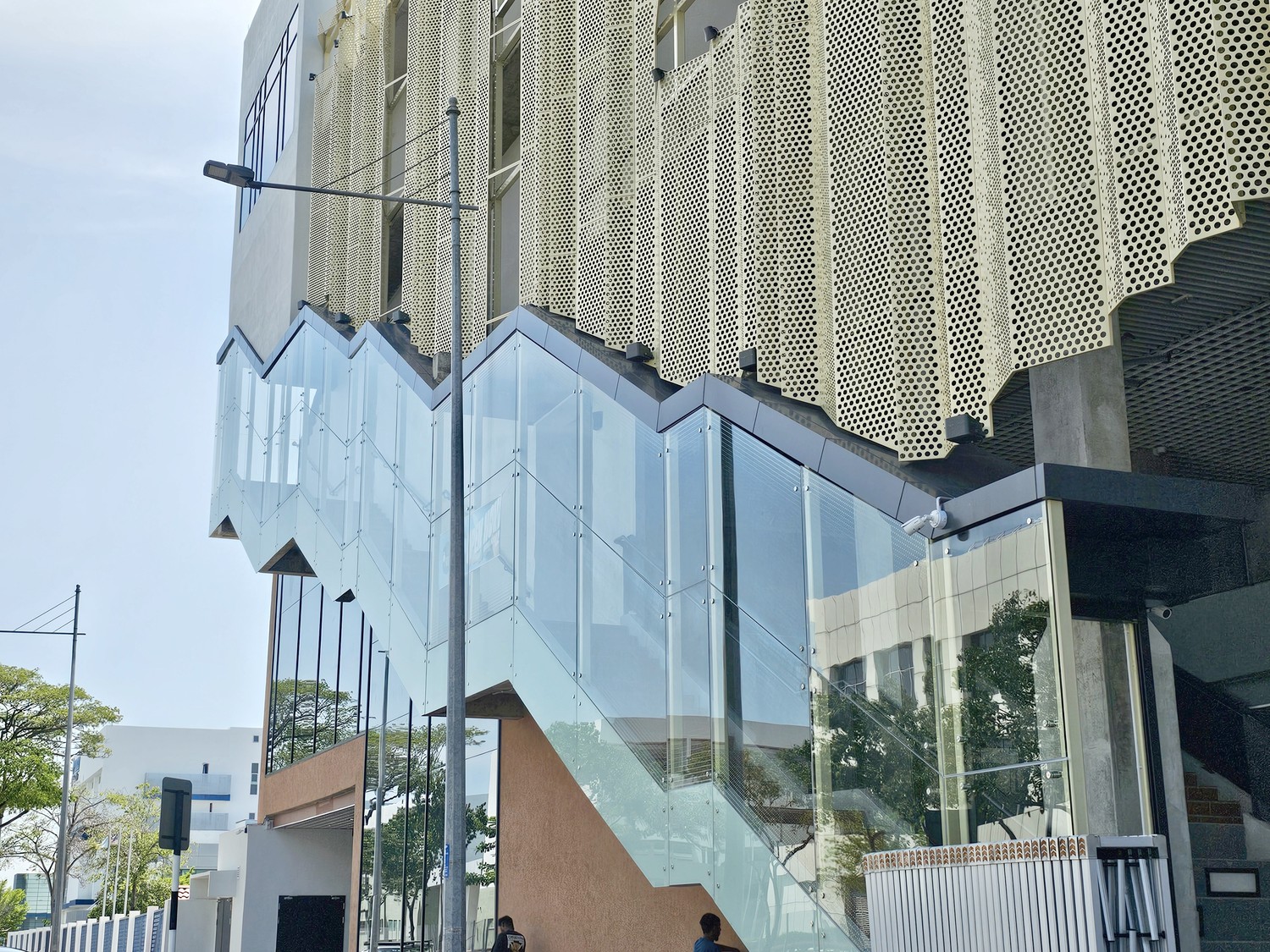
A key architectural feature is the prominently articulated sculptural staircase enclosed within a transparent glass volume. This vertical element serves as the primary circulation spine, visually connecting all five levels while reinforcing the building’s sense of openness and movement. Positioned along the façade, the staircase becomes a dynamic architectural expression, revealing the flow of people and animating the structure with constant activity. Beyond its functional role, it acts as a spatial landmark that enhances orientation and contributes to the building’s distinctive identity.
Entrance statement with an open grand staircase leading up
The architectural language further distinguishes Bayana Hub through its expressive façade design. Curved building edges soften the massing and introduce fluidity that contrasts with the rigid geometry of the surrounding factories. The façade comprises a layered, curtain-inspired skin system that modulates scale, depth, and transparency. This envelope filters daylight, casts dynamic shadows, and creates visual rhythm across the elevation while simultaneously concealing and revealing internal activities.
Programmatically, Bayana Hub integrates a wide spectrum of functions designed to support productivity and wellbeing. Lower levels accommodate drive-through dining and retail spaces that activate the plaza, while upper levels introduce flexible co-working environments, recreational facilities, and rock climbing. Rooftop amenities provide communal areas where users can relax, socialise, or engage in wellness activities with views across the industrial district.
The featured glass staircase interacts with the street
Sustainability forms an integral component of the design. Energy-efficient strategies optimise daylight, ventilation, and shading, reducing reliance on mechanical systems while enhancing comfort. Locally sourced materials minimise environmental impact and support regional supply chains. Bayana Hub has achieved Green Building Index (GBI) certification, demonstrating a commitment to sustainable development in an industrial setting.
Ultimately, Bayana Hub positions architecture as an active participant in shaping the urban experience of the Bayan Lepas FTZ. By transforming a conventional industrial site into a multi-layered social and commercial hub, the project proposes a model where architecture fosters community, encourages interaction, and enriches everyday experiences. Through its elevated public realm, expressive architectural elements, and integrated programme mix, Bayana Hub emerges as a destination that bridges work, leisure, and social life while contributing positively to the evolving urban fabric of Bayan Lepas.
Through elevated massing and a performative architectural language, the project humanises the industrial landscape through openness, connectivity, and urban activation.
The curved façade plays a dramatic role corresponding to the street