Education - Commendation ARCHITECT: GDP Architects Sdn Bhd CLIENT: Academy of Medicine of Malaysia & Academy of Family Physicians of Malaysia CONTRACTOR: Pembinaan Teknikhas Sdn Bhd
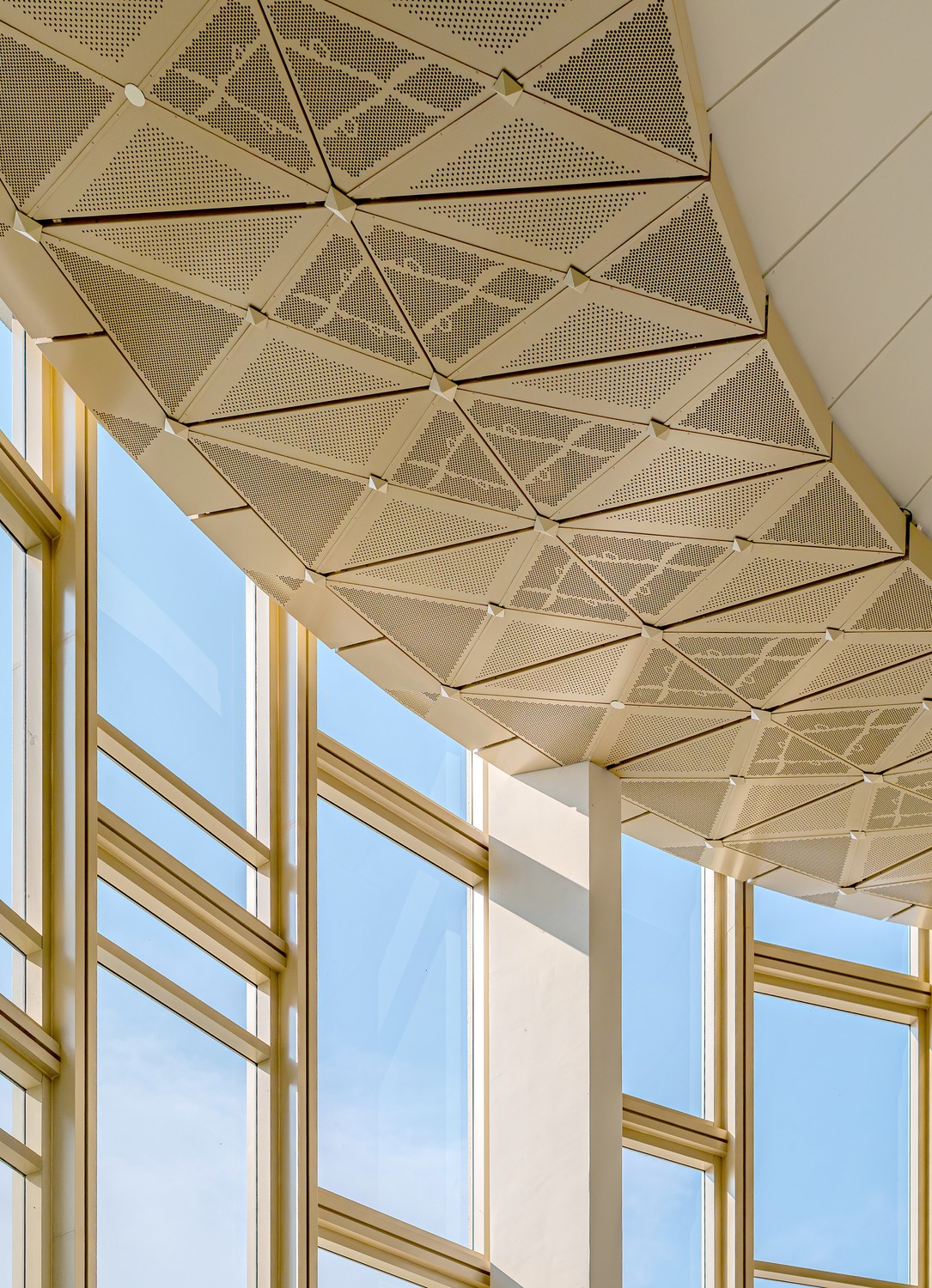
A sophisticated fusion of environmental performance and medical heritage, features perforated aluminium ceiling panels inspired by the silhouettes of traditional medical tools. Functioning as a high-performance environmental moderator, the geometric skin diffuses natural light by day and transforms into a glowing 'lantern' by night, illuminating the main lobby through its symbolic perforations.
The proposed Medical Academies of Malaysia is envisioned as a holistic institutional campus that integrates healing, learning, research, and community engagement within a cohesive architectural and landscape framework. Located within a serene institutional precinct and adjacent to established healthcare facilities, the project responds sensitively to its context by creating a calm, restorative environment that supports academic excellence while reinforcing the therapeutic qualities of the surrounding medical ecosystem. The planning approach prioritises accessibility, clarity of movement, and meaningful connections between indoor and outdoor spaces, ensuring users experience a welcoming and intuitive environment.
A central landscaped courtyard forms the heart of the masterplan, functioning as both an environmental moderator and a social nucleus. This courtyard anchors the building’s organisation, allowing academic blocks, simulation laboratories, collaborative learning spaces, and administrative components to be arranged in a clear, cohesive configuration. Beyond strengthening wayfinding, the courtyard encourages informal interaction, interdisciplinary exchange, and moments of respite. Shaded walkways, transitional verandas, and permeable ground-level spaces further blur the boundaries between architecture and landscape, fostering a campus atmosphere that promotes wellbeing, reflection, and community engagement.
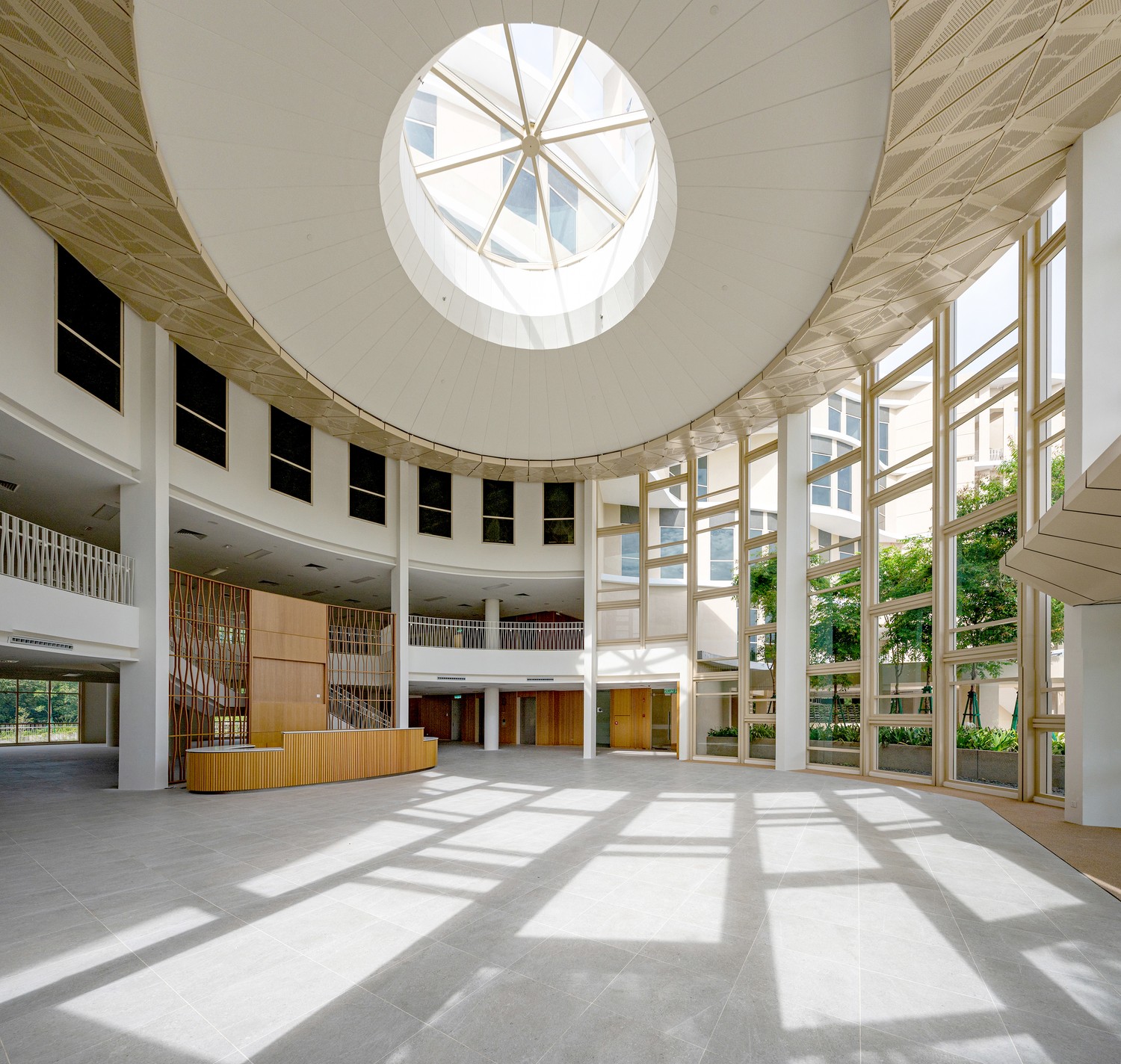
A light-filled circular atrium forms the spatial heart of the academy, where a sculpted oculus introduces controlled daylight that animates the interior throughout the day. The transparency of the glazed perimeter dissolves boundaries between learning spaces and surrounding greenery, while the warm material palette and filtered shadows create a calm, contemplative environment that reinforces the project’s biophilic and climate-responsive design intent
The architectural design embraces a passive, human-centred philosophy tailored to the tropical climate through careful massing, façade articulation, and environmental control strategies. Building forms are oriented to optimise daylight penetration while minimising heat gain, enabling naturally bright interiors that enhance comfort and reduce reliance on artificial lighting. Deep overhangs, vertical fins, and articulated brise-soleil elements provide effective solar shading while contributing to a distinctive architectural identity. Open corridors, naturally ventilated communal areas, and strategically positioned voids facilitate cross ventilation, reinforcing thermal comfort and indoor environmental quality.
Landscape design reinforces the campus’s restorative character. Lush planting, water-sensitive features, and shaded garden pockets are carefully curated to create sensory-rich outdoor environments that support mental restoration and stress reduction while accommodating social and academic events. The integration of existing greenery and the introduction of native planting species strengthen biodiversity while reducing long-term maintenance demands and supporting ecological resilience.
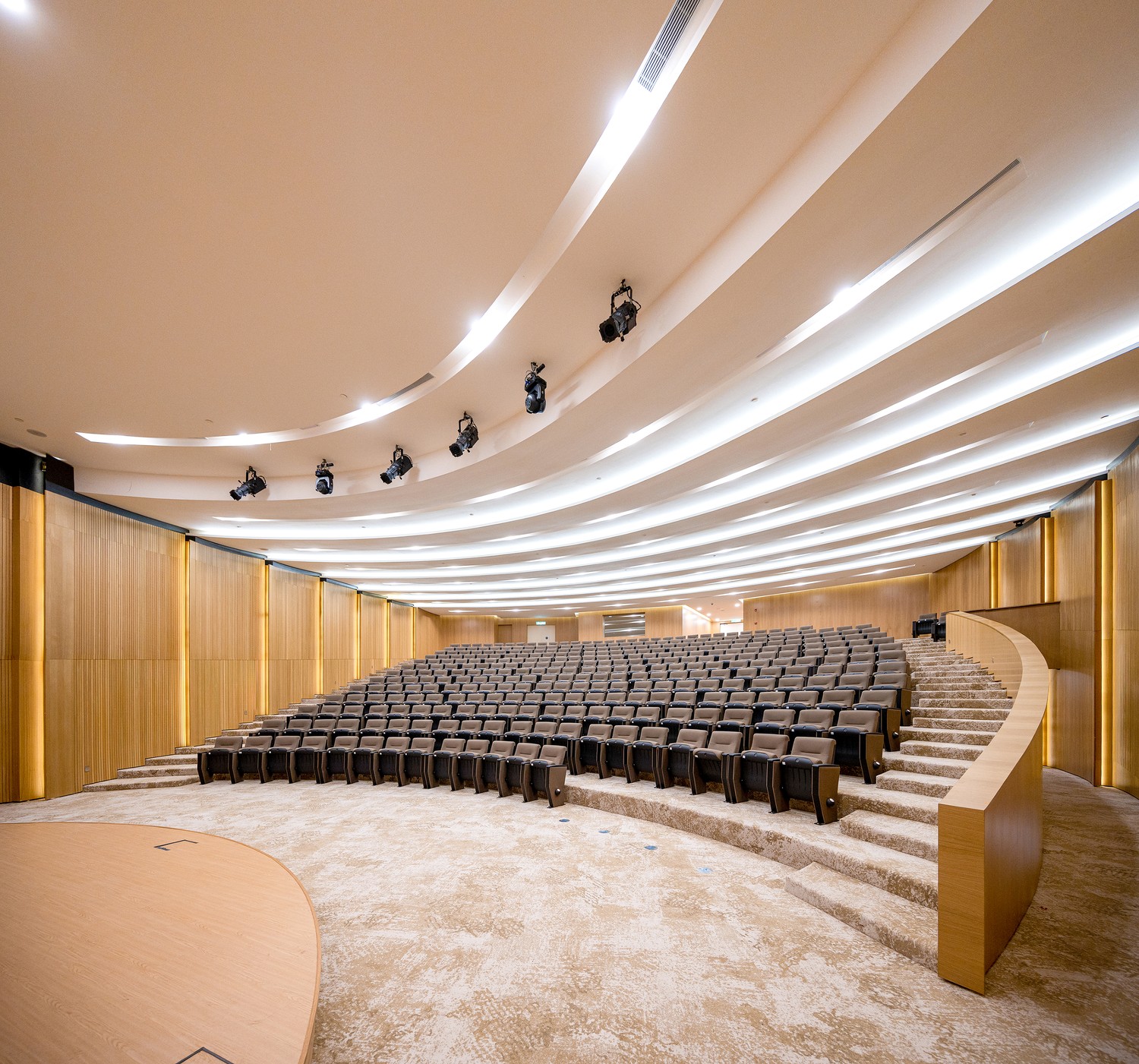
The auditorium embodies a balance between acoustic performance and visual warmth, with vertically articulated timber wall panels enhancing sound quality while creating a refined educational setting. Tiered seating and integrated lighting support focused learning and engagement, reflecting the academy’s commitment to adaptable, technologically enabled teaching environments that foster clarity, comfort, and academic excellence
Material and colour strategies are derived from the site’s natural identity, with building tones inspired by onsite rock formations to create a warm, earthy palette that anchors the architecture within its surroundings. The façade adopts textured paint finishes, complemented by high-performance glazing and metal sun-shading elements, achieving durability and environmental performance. Internally, robust yet welcoming flexible learning spaces, simulation suites, and collaborative hubs support evolving pedagogical needs and technological advancement.
Environmental sustainability forms a core aspiration of the project, aligning with national green building objectives and long-term operational efficiency. Passive design strategies are complemented by energy-efficient systems, rainwater management measures, and rooftop solar panels that contribute to renewable energy generation and reduced operational costs. Daylight optimisation, water-sensitive landscaping, and responsible material use contribute to a comprehensive sustainability framework that enhances both environmental performance and user wellbeing.
Ultimately, the Medical Academies of Malaysia embodies a forward-looking vision for medical education, one that supports innovation, fosters community, and promotes healing through thoughtful, climate-responsive design.
A climate-responsive educational complex shaped through layered massing, shaded façades and courtyard planning that supports wellbeing, collaboration and contemporary medical learning.
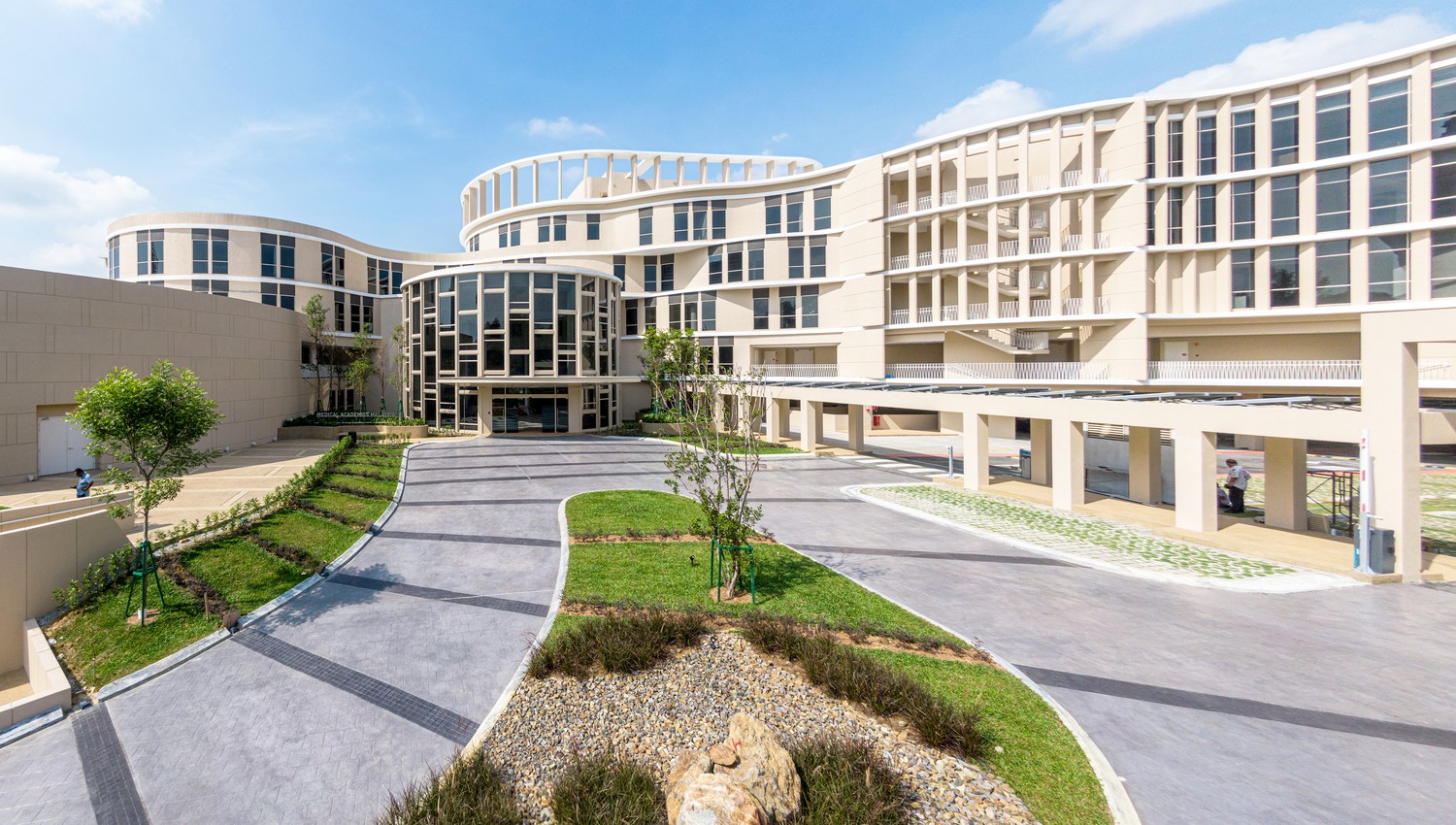
The arrival sequence unfolds as a carefully choreographed approach, where a gently curving drop-off drive is framed by pocket gardens and textured planting beds