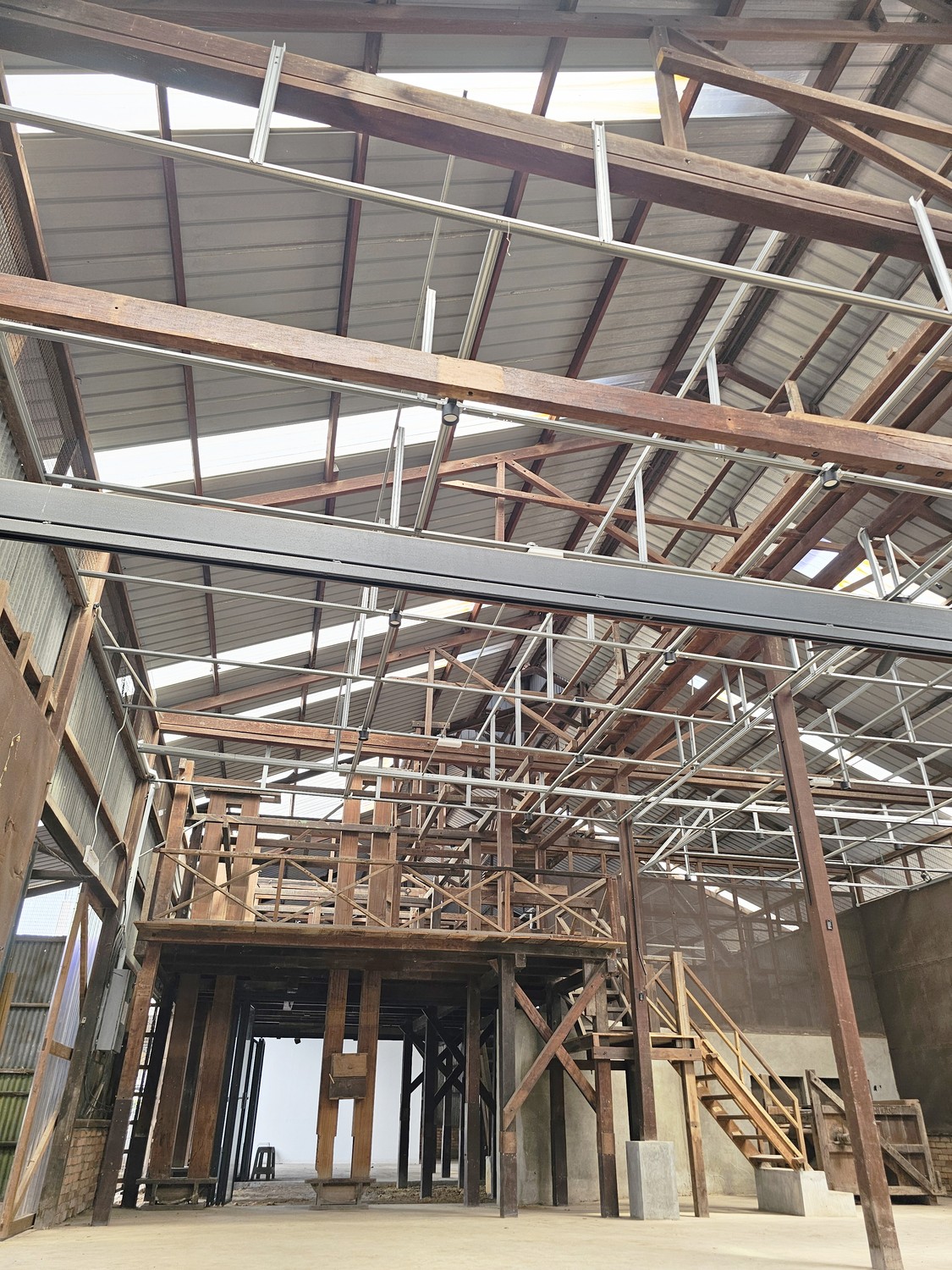
Traditional rice milling has become obsolete, leading to the abandonment of large industrial machinery once central to agricultural production. This project focuses on the architectural complexity of relocating, adapting, and reinstating heritage rice-mill machinery as the core design act. Submitted under the Special Category, the work treats relocation itself as architecture, where dismantling, transportation, spatial recalibration, and reassembly shape the final environment. The machines are reinterpreted as large-scale architectural furniture within an existing warehouse, transforming it into a new spatial narrative. This approach preserves cultural memory while demonstrating sustainability through adaptive reuse, positioning relocation as a deliberate and meaningful architectural intervention.
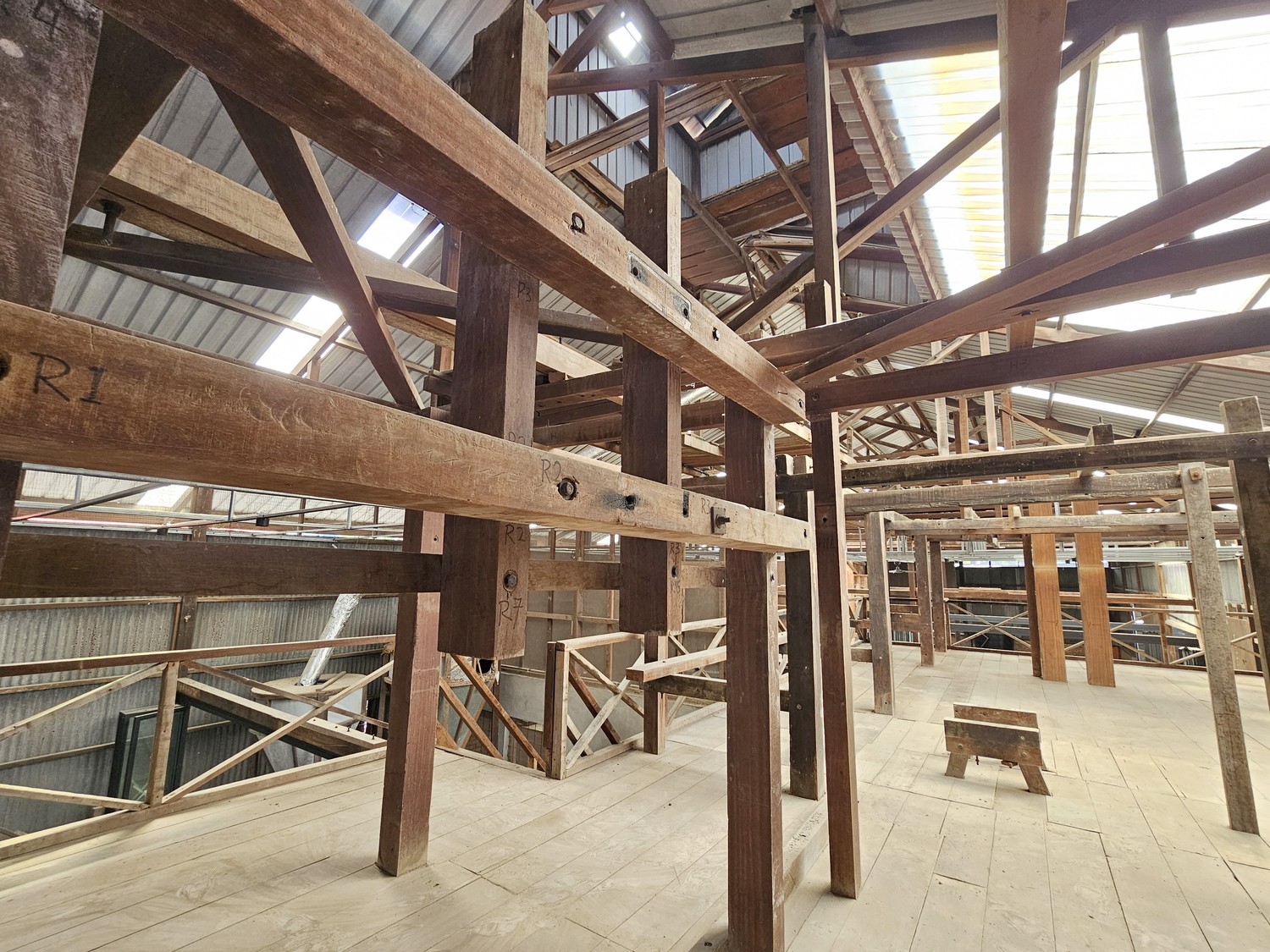
Detailed timber joinery at the mezzanine platorm of the rice mill
This submission frames relocation as a form of architectural craft, where dismantling, calibration, and reinstatement become the primary design work. Rather than treating the machines as static artefacts, the project recognises their physical scale, structural weight, and spatial presence as defining architectural elements. The process of dismantling and reconstructing the machinery, therefore, becomes equivalent to constructing architecture itself, where the sequence of removal, transportation, and reassembly determines the eventual spatial order. Through this approach, the machines are not merely preserved but reinterpreted as architectural anchors that organise the interior environment.
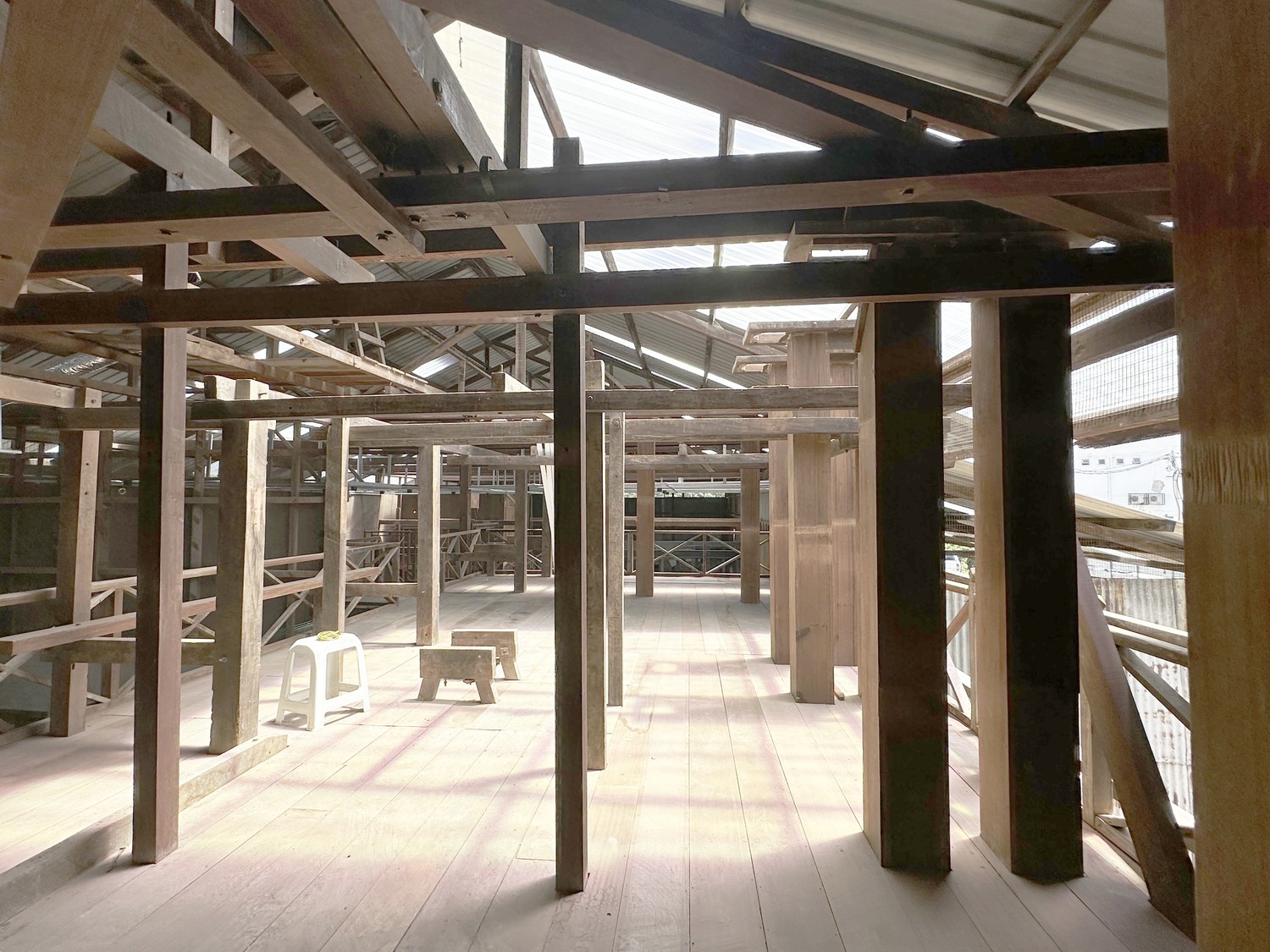
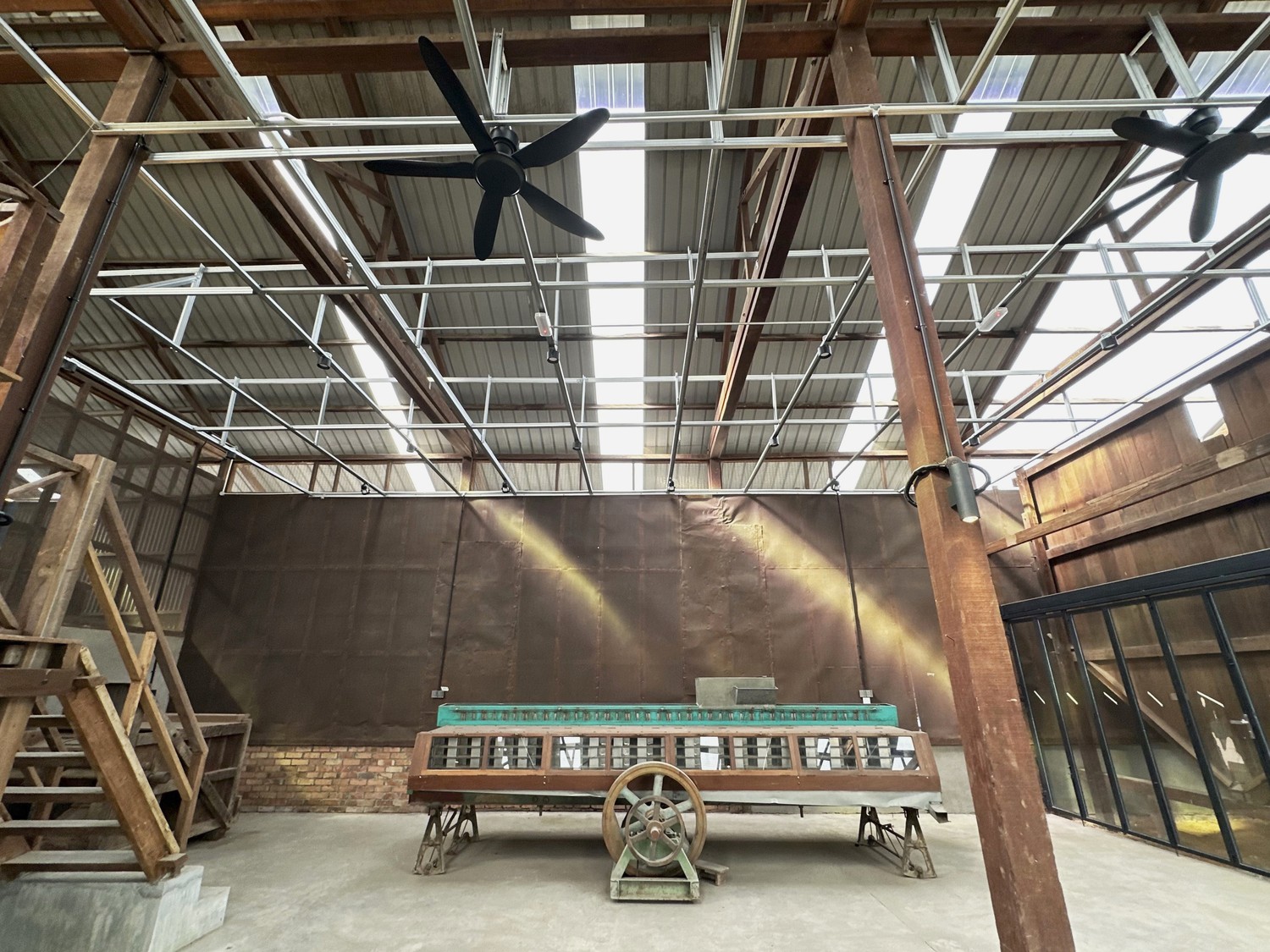
Mezzanine platform with light and shadow casting
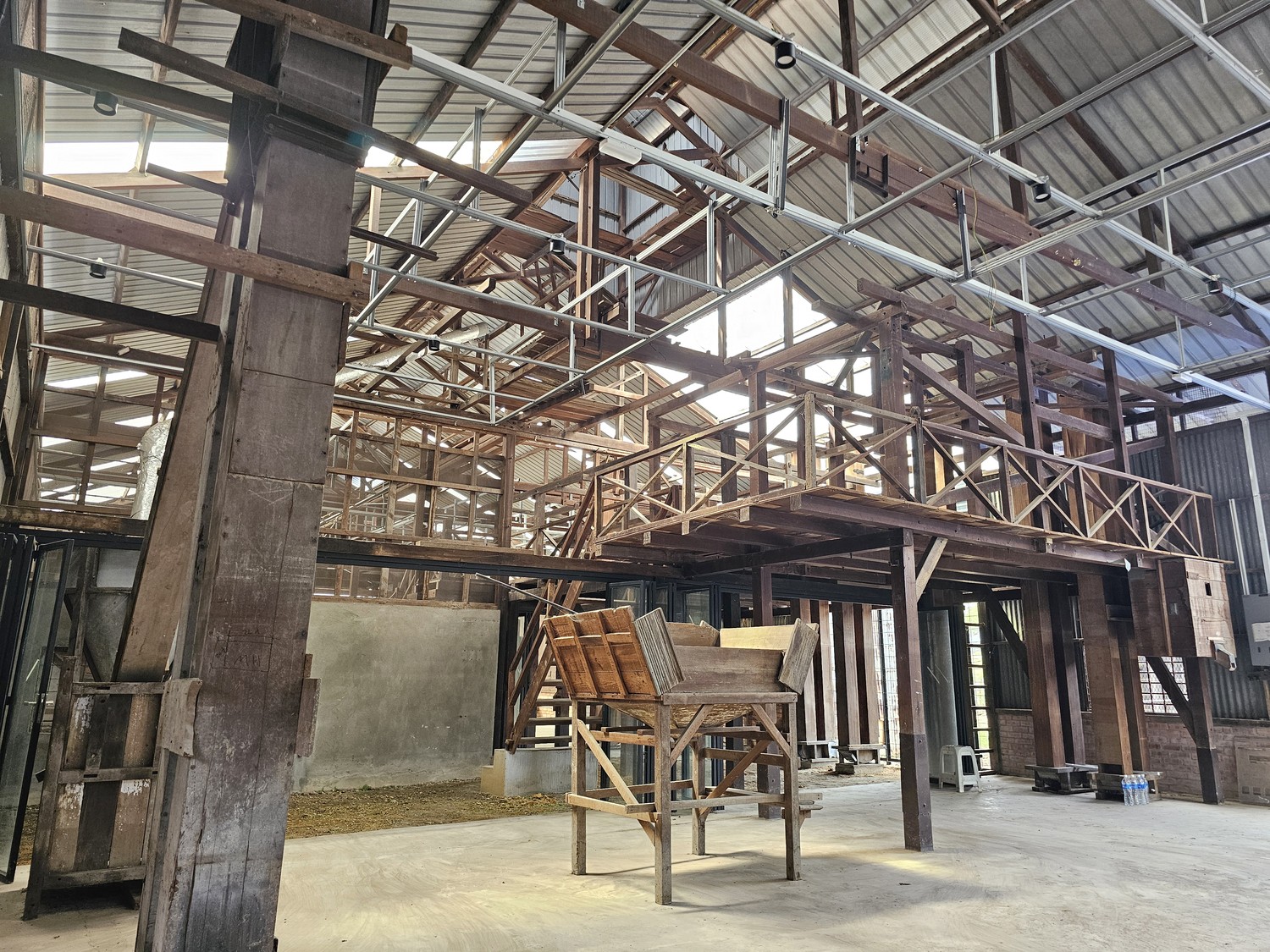
The project demanded a fit-and-fill methodology, carefully negotiating existing warehouse constraints while allowing heritage machinery to define a new spatial order. Unlike conventional architectural projects that begin with empty space, this work required the architecture to respond to pre-existing industrial artefacts with irregular dimensions and complex configurations. Each component required measured placement, structural coordination, and purposeful composition, turning industrial remnants into architectural anchors rather than display objects. Through this method, the machines dictate the spatial rhythm of the warehouse, creating a layered environment in which circulation, scale, and perspective are shaped by the machinery itself.
Structural expression of the timber platform with its details
The process relied heavily on specialised craftsmen and hands-on labour, sustaining a form of sustainable manpower often overlooked in contemporary construction. The dismantling and reassembly of heritage-scale machinery required precision, patience, and tacit knowledge accumulated through manual skill. These craftsmen play a crucial role in ensuring that each element is carefully reinstated without compromising its integrity. By prolonging the life of heritage-scale artefacts through careful reassembly, the work preserves not only objects but also the embedded knowledge, skills, and cultural memory that would otherwise disappear with the decline of traditional industries.
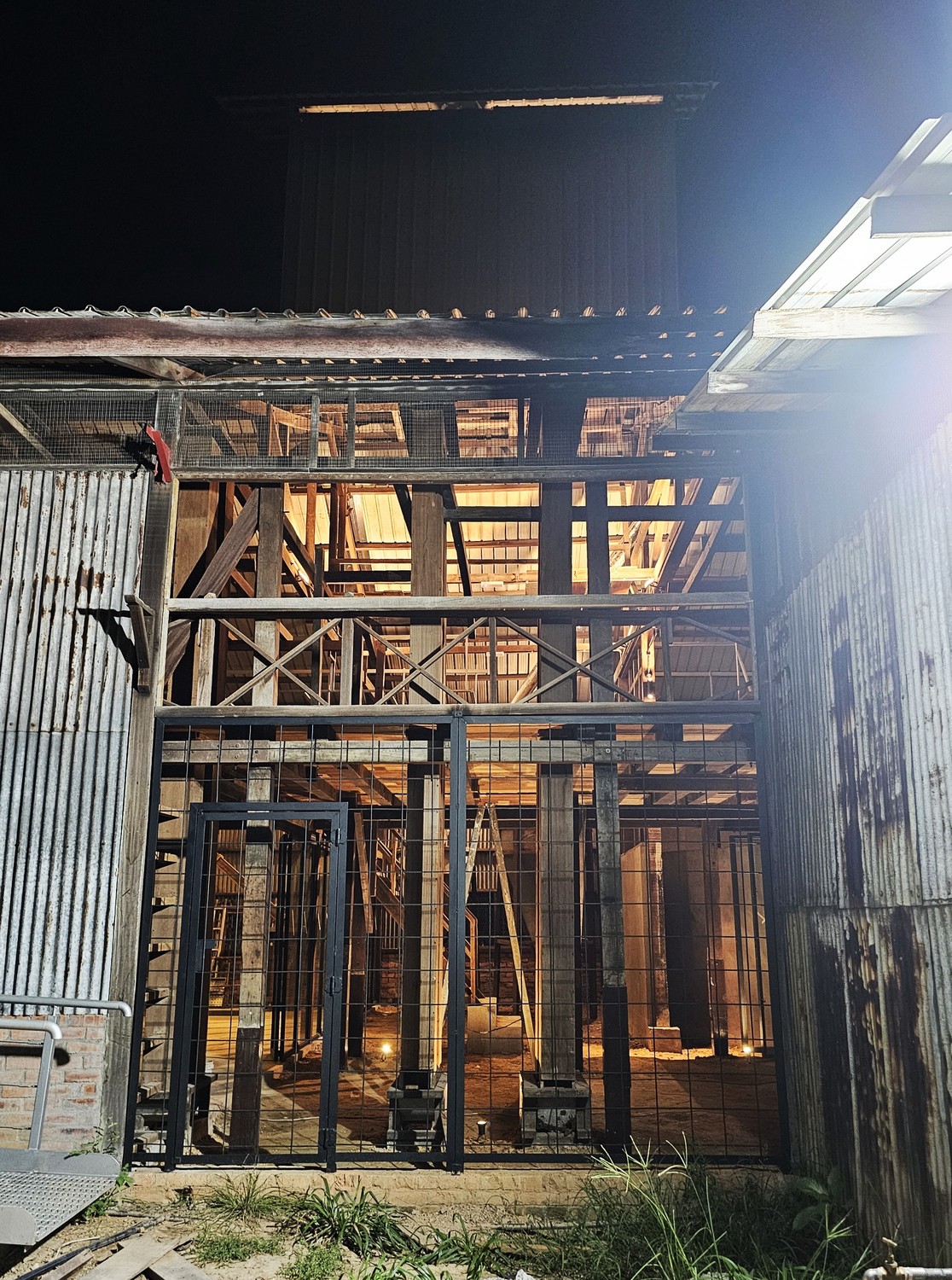
External view with lit internal structure
Culturally, the machinery is repositioned with renewed meaning, transforming what was once purely industrial equipment into an interpretive spatial experience. Socially, the project creates an accessible environment that reconnects people to an industrial legacy closely tied to local agricultural history. The machines become storytellers within the architecture, allowing visitors to understand the scale, complexity, and significance of rice milling as part of collective heritage.
The project demonstrates sustainability through preservation, workmanship, and long-term relevance. Instead of replacing obsolete machinery or discarding it as scrap, the design extends its life through thoughtful architectural integration. Sustainability here is understood as continuity of material, culture, and labour. Value is added through reinstatement rather than renewal via disposal, in which relocation becomes a meaningful architectural strategy that bridges past industrial heritage and contemporary spatial experience.
A thoughtful intervention recognising the careful relocation and reinstatement of heritage rice-mill machinery, preserving industrial memory through craftsmanship and spatial reinterpretation.