Multiple Residential High-Rise - Gold ARCHITECT: Ken Wong Architect CLIENT: O&C Makok Isola Sdn Bhd CONTRACTOR: OCR Construction Sdn Bhd
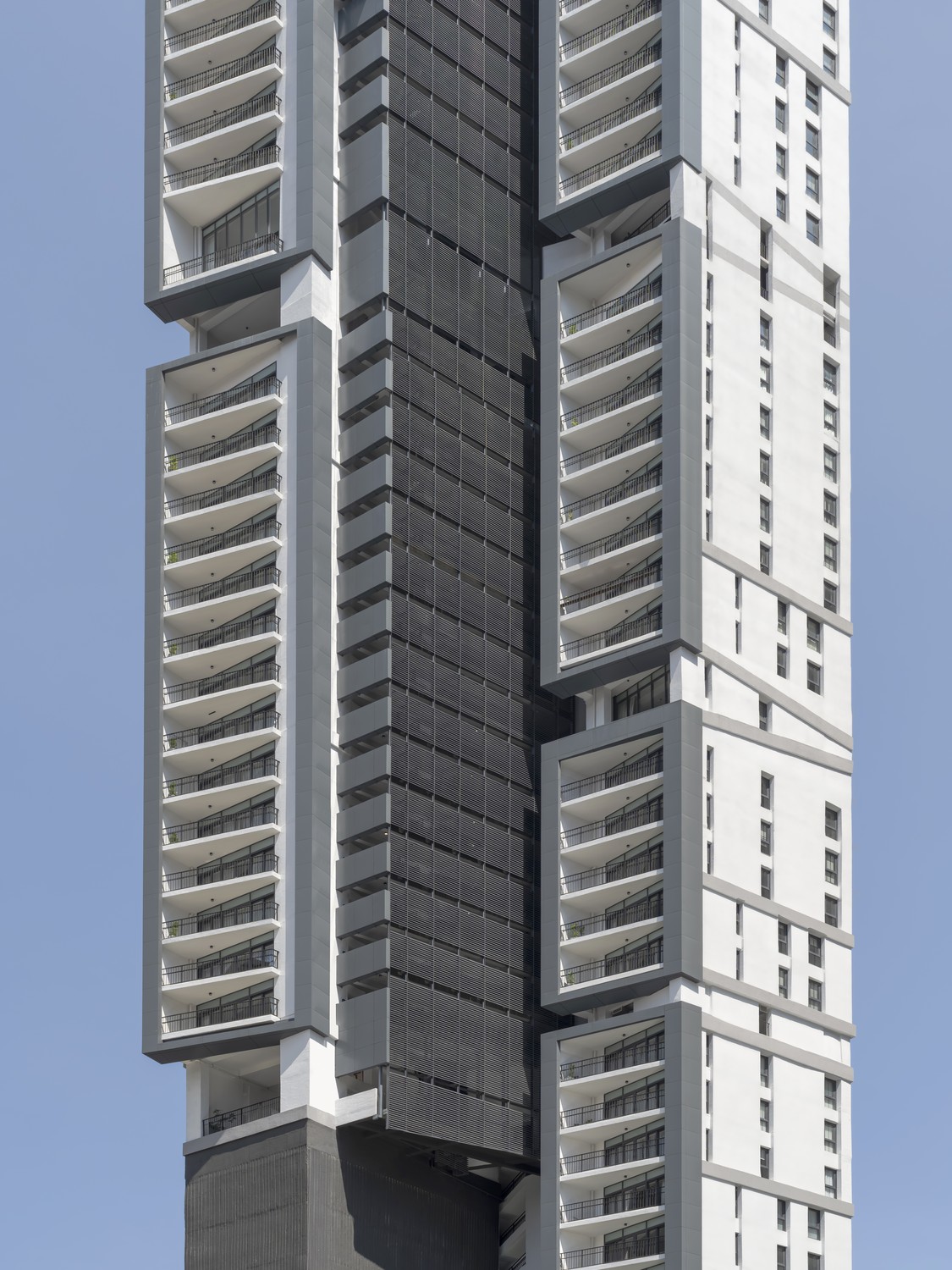
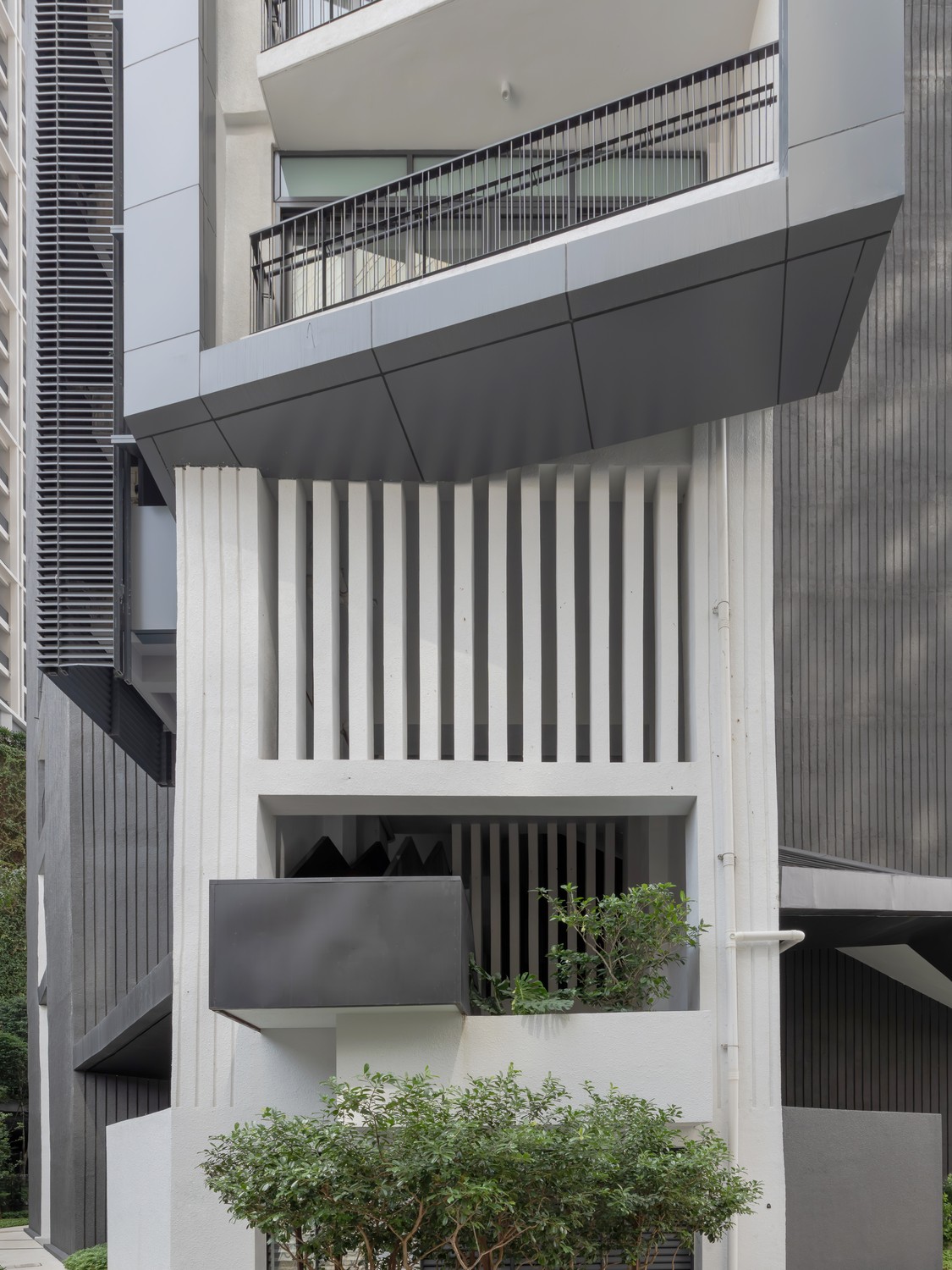
Façade articulation is eventually modulated through two unit variations: vertical lines generated by shifting window positions, and calibrated horizontal precast concrete bands expressing differences in unit type
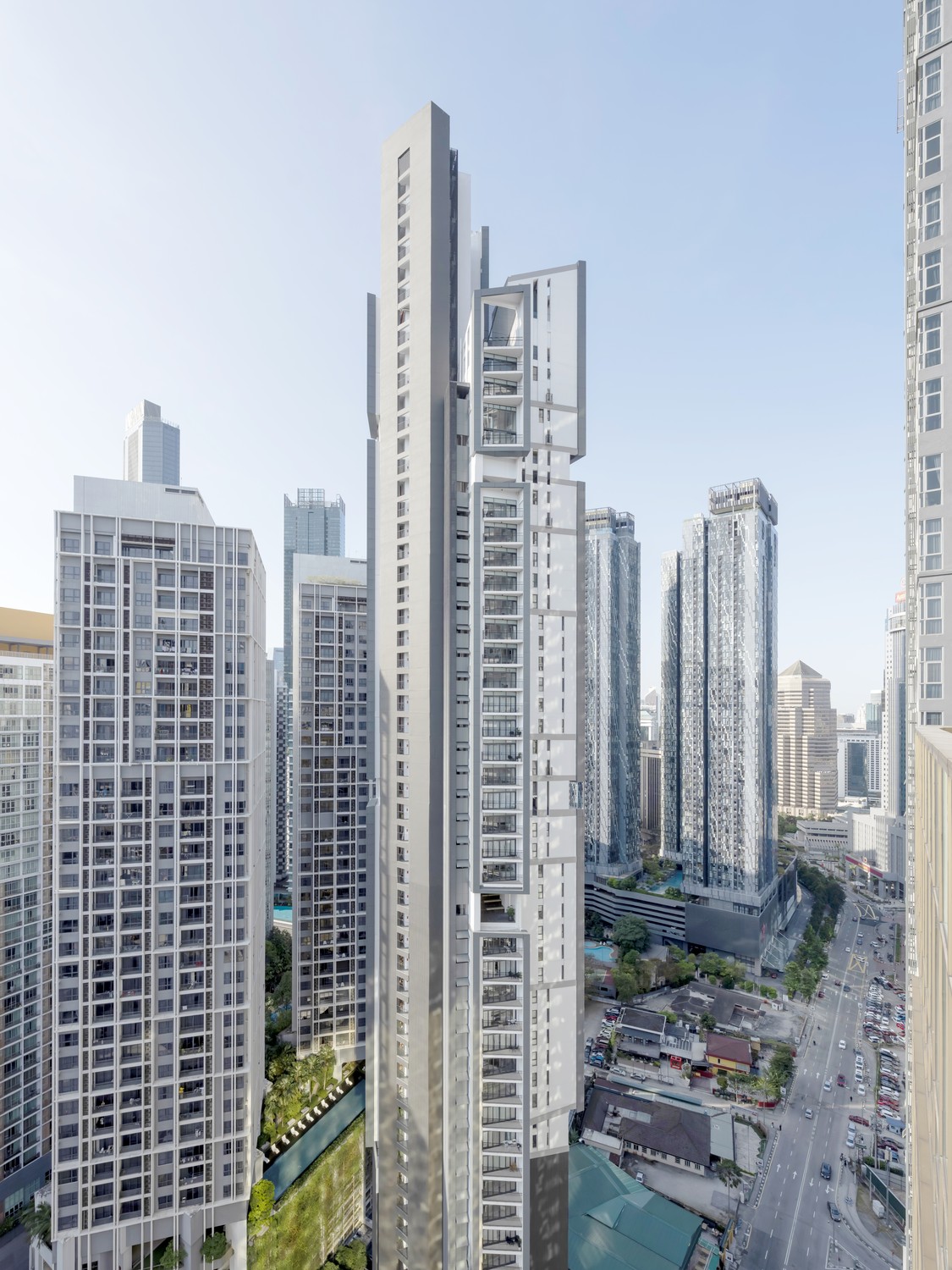
Isola is a 52-storey private residential tower in Kuala Lumpur City Centre that demonstrates a measured response to high-density urban living. Situated within the high-density urban fabric characterised by commercial towers and metropolitan infrastructure, the project addresses site constraints through strategic positioning that minimises visual obstruction while maximising views toward the city skyline. These conditions necessitate a disciplined approach to spatial efficiency and accessibility within a compact site. Variations in the heights of surrounding developments create a series of view corridors that inform both the tower’s position and configuration. Rather than a singular monolithic form, the building mass is fragmented into a cluster of five slender residential pins of varying heights.
Street-level view of Isola in a dense urban skyline demonstrating scale, proportion, and its dialogue with the surrounding high-rise context
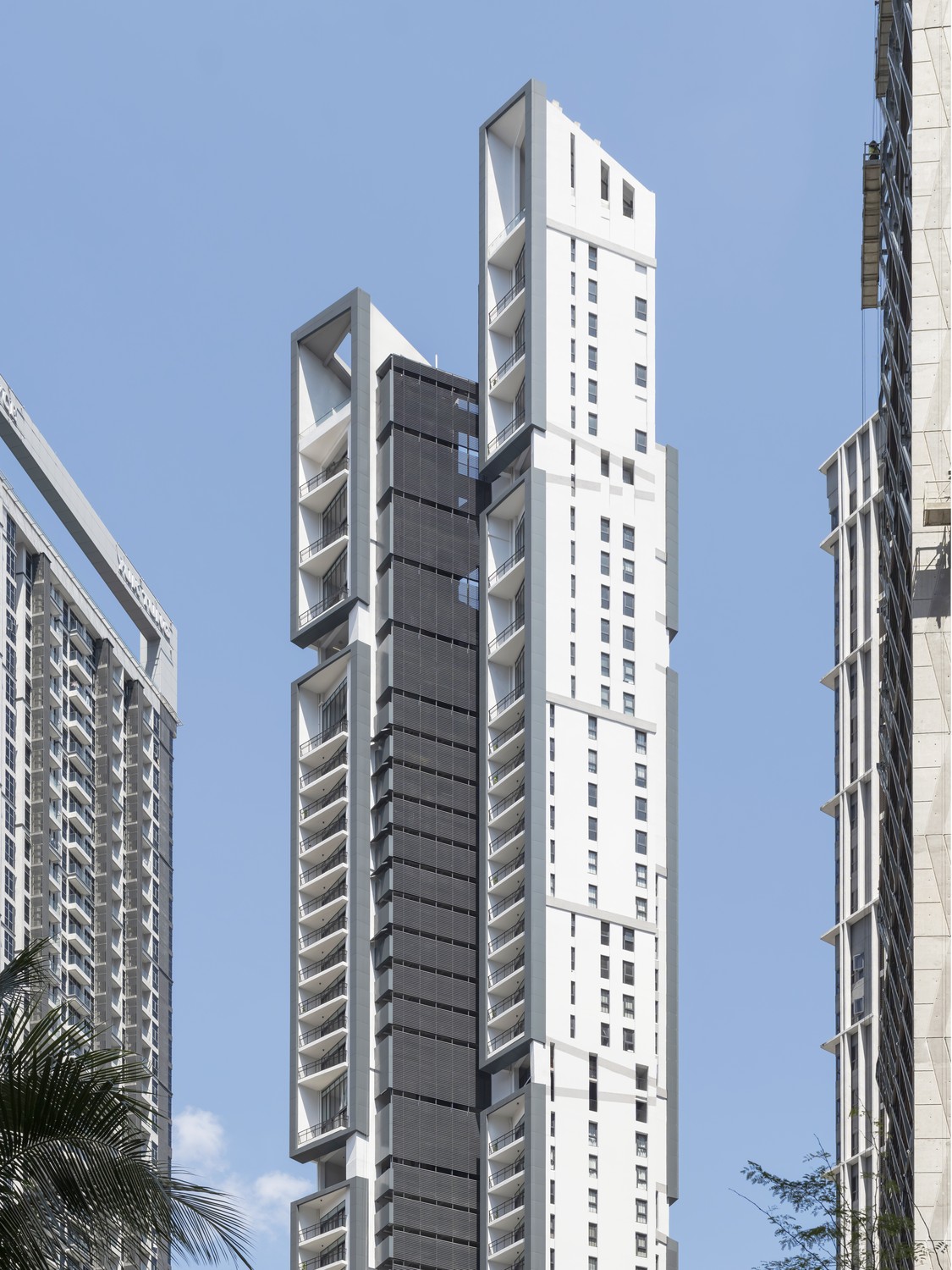
The towers rise over 200 metres, with varying heights, the tallest reaching 52 storeys
Derived from the Italian word for “island”, the name Isola reflects the composition of distinct vertical elements. The cluster of five slender, varying-height residential pins, allowing each unit to occupy an entire floor, provides residents with individuality and a sense of privacy within a high-rise environment. The fragmented massing is oriented to preserve key view corridors and mitigate visual obstruction from neighbouring development, enabling residences to benefit from unobstructed panoramic views while maintaining visual permeability between the towers. The towers maximise perimeter exposure, allowing natural air, light, and views to move through the development and enhancing the quality of vertical living.
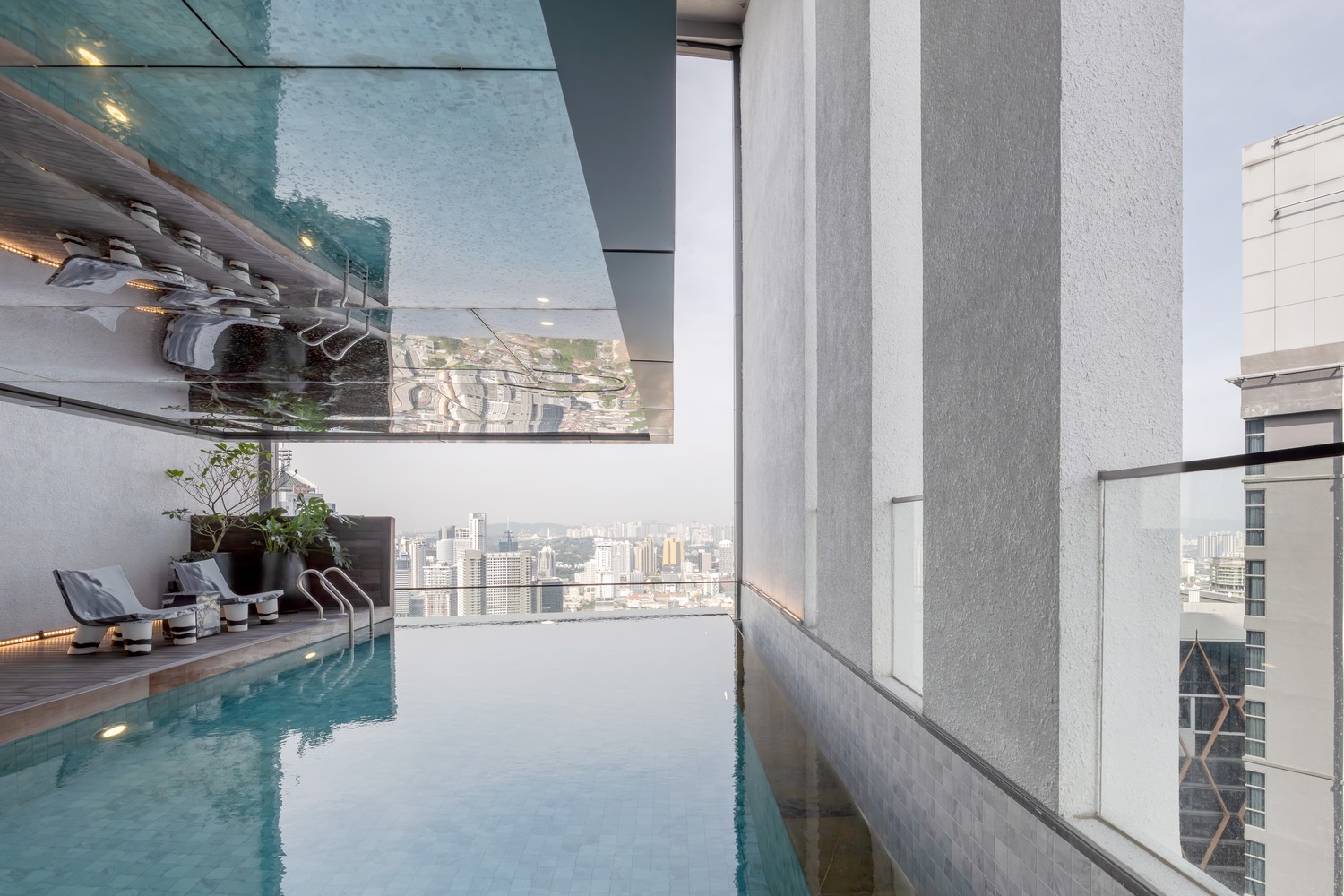
Selected floors are subtracted to accommodate communal amenities, including a pool. Reflective ceiling boards intended to amplify the experience and extend views, making every square foot count on this compact site
The architectural expression of the façade articulation is ultimately modulated by two variations in unit configuration: vertical lines generated by shifting window positions, and calibrated horizontal precast concrete bands that express differences in unit type. Service floors are articulated as intentional architectural breaks within each tower, rather than being concealed within the façade. These levels remain visible and directly accessible for long-term building performance and maintenance.
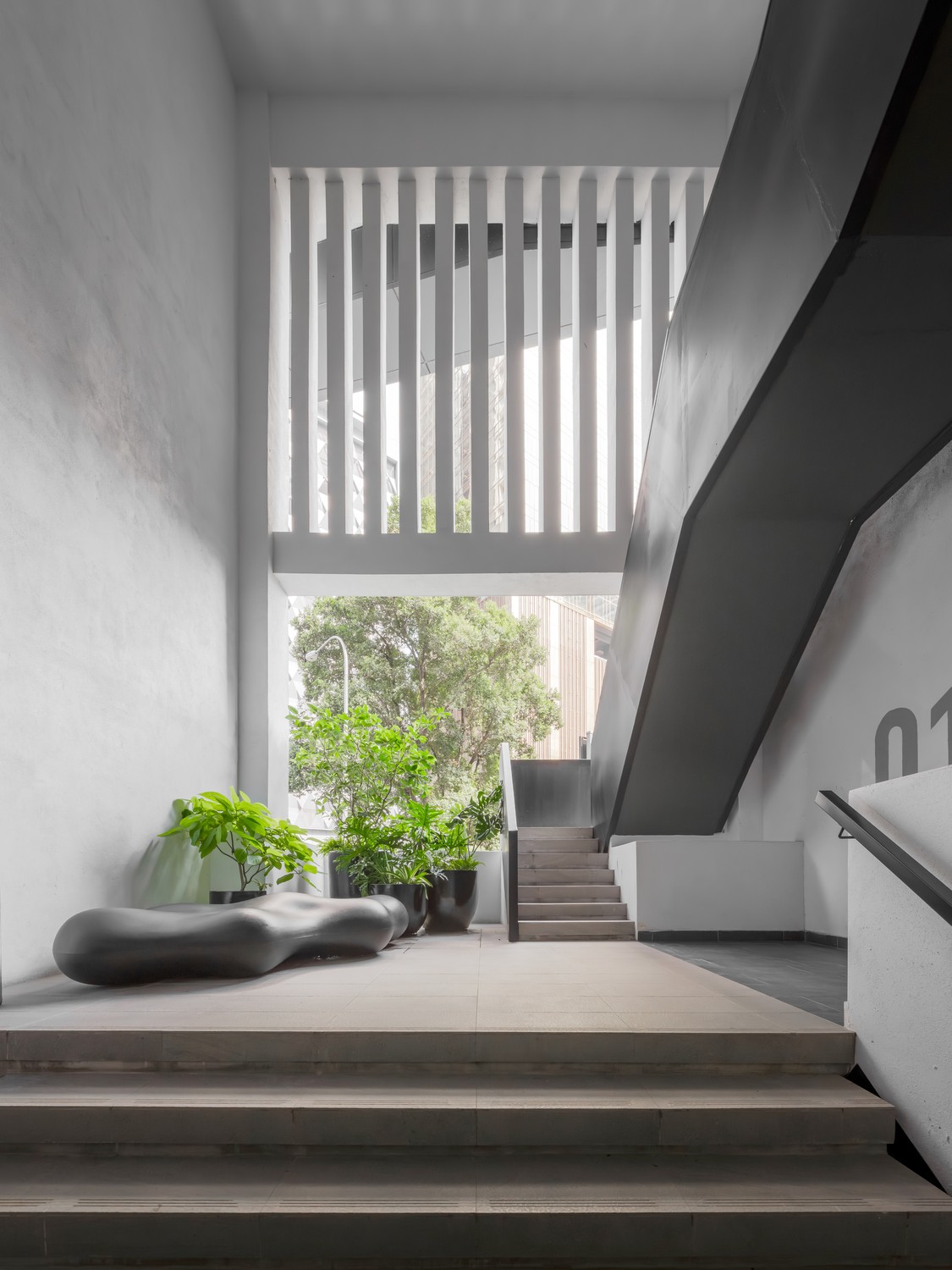
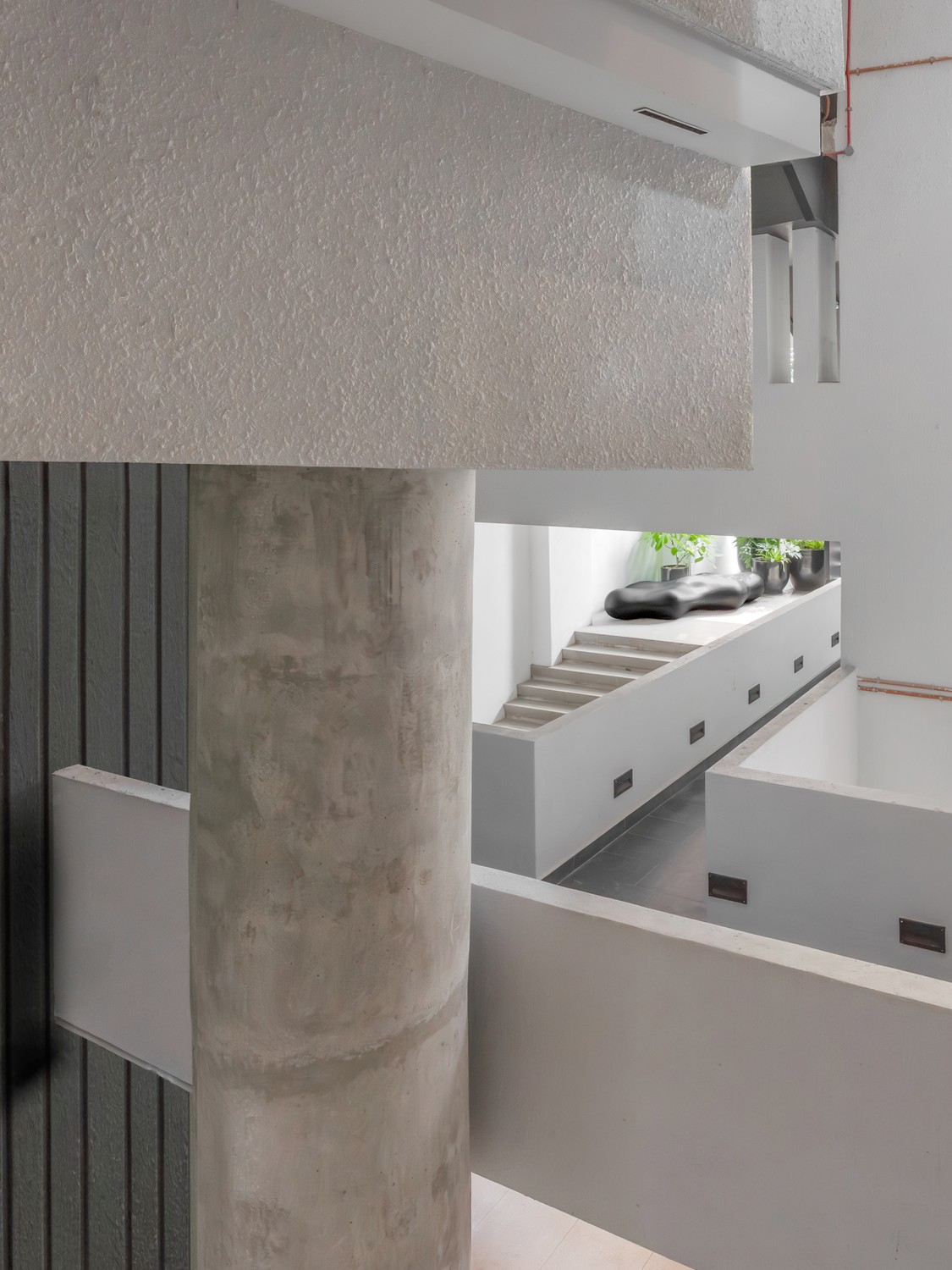
The circulation unfolds across multiple levels, with internal walkways creating visual connections between levels
A confident and elegant sculpted form showcasing excellence in design, strategic space planning, materiality, and meticulous attention to detail.
Parking infrastructure is accommodated through a mechanical stacking system that vertically arranges vehicles within dedicated decks inserted between residential levels. This strategy maximises parking efficiency within the site’s limited footprint while preserving the slender proportions of the residential floor plates above. By integrating parking infrastructure into the tower rather than relying on an extensive podium structure, the project maintains a compact, vertically articulated architectural mass.
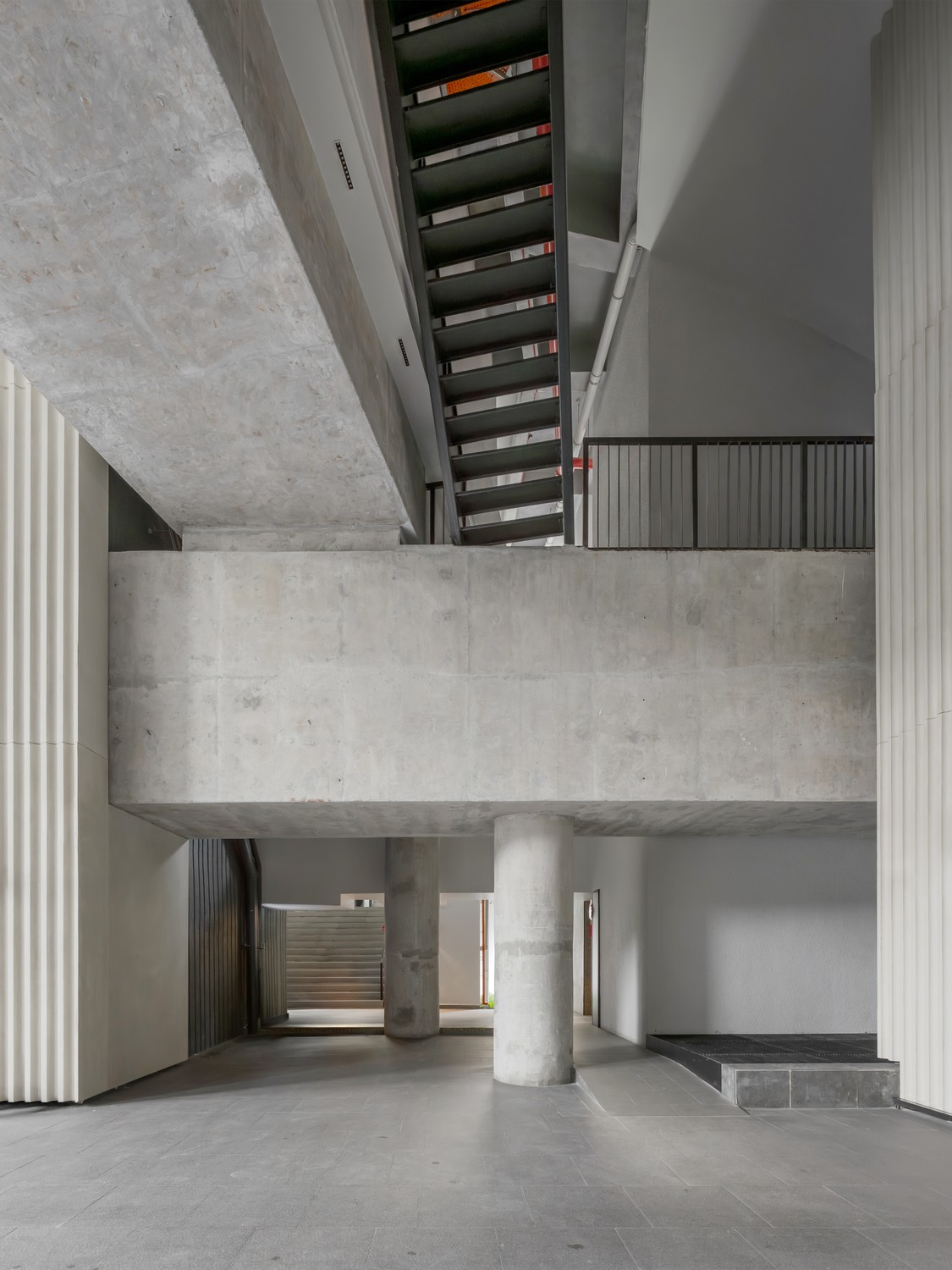
The ground floor is greeted by a monumental exposed concrete transfer beam spanning horizontally across the triple-volume space, boldly expressing the structural logic
As one moves along the internal walkways, pockets of space punctuate the circulation, creating moments of spatial interest
Across the majority of the tower, a consistent unit layout is repeated to establish planning efficiency and structural clarity. At selected intervals, units are strategically subtracted and reconfigured into common facilities. These void levels introduce intentional breaks within the residential massing, inserting shared spaces within the vertical structure of the building. By embedding communal spaces throughout the tower, the project creates opportunities for social and recreational interaction among residents while simultaneously modulating the tower’s vertical scale. Through this approach, Isola reinterprets vertical living within Kuala Lumpur city centre as a layered residential environment that prioritises individuality, openness and shared space.
Common areas are articulated as intentional architectural breaks, visually conveying the building’s internal functions