Multiple Residential Low Rise - Commendation ARCHITECT: Design Collective Architects CLIENT: Gamuda Land (T12) Sdn Bhd CONTRACTOR: Lim Hoo Seng Construction Sdn Bhd
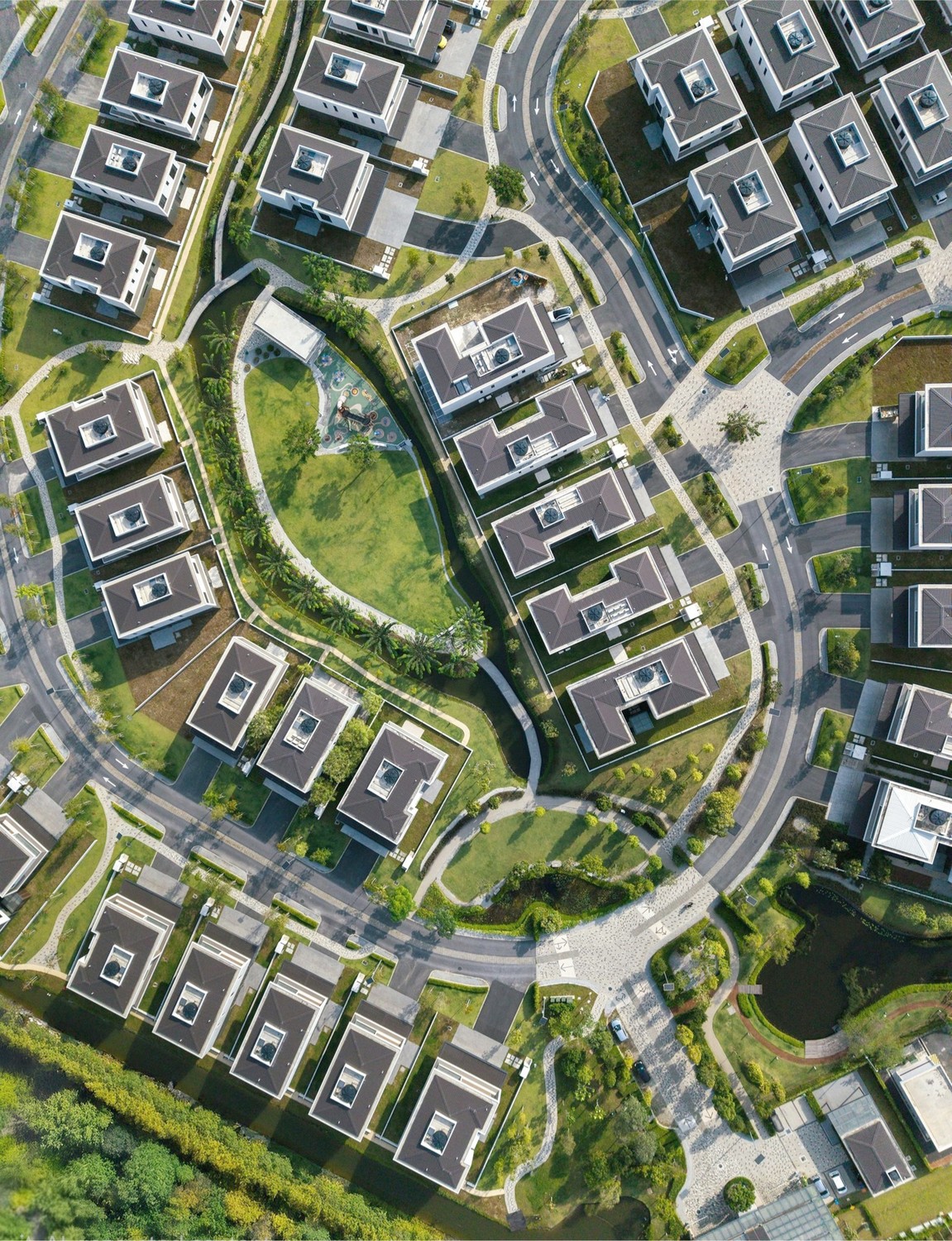
Aerial view reveals canals and green pockets shaping the neighbourhood, where landscape corridors organise homes around shared open spaces
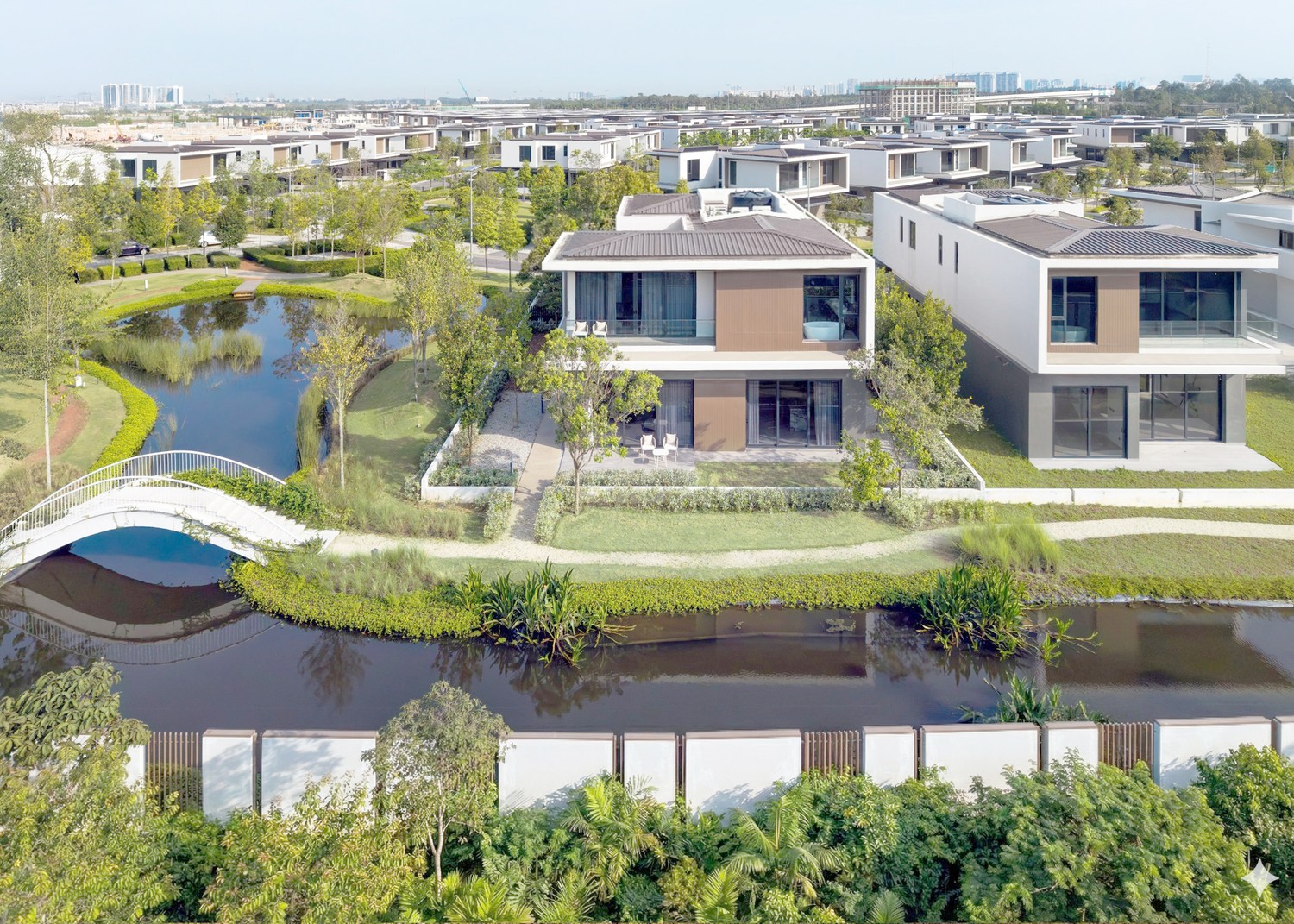
The Waterlily is a low-density residential enclave carefully integrated within the wetland landscape of Gamuda Cove. The neighbourhood is organised through a network of canals, landscaped corridors, and communal green spaces that structure the masterplan while embedding water and vegetation into everyday living. Rather than adopting a conventional suburban grid, the development positions homes along waterways, making the surrounding landscape an integral part of the residential experience. Living spaces are oriented toward landscaped fronts, canals, or wetland edges, allowing views and natural elements to extend into homes while maintaining privacy and openness.
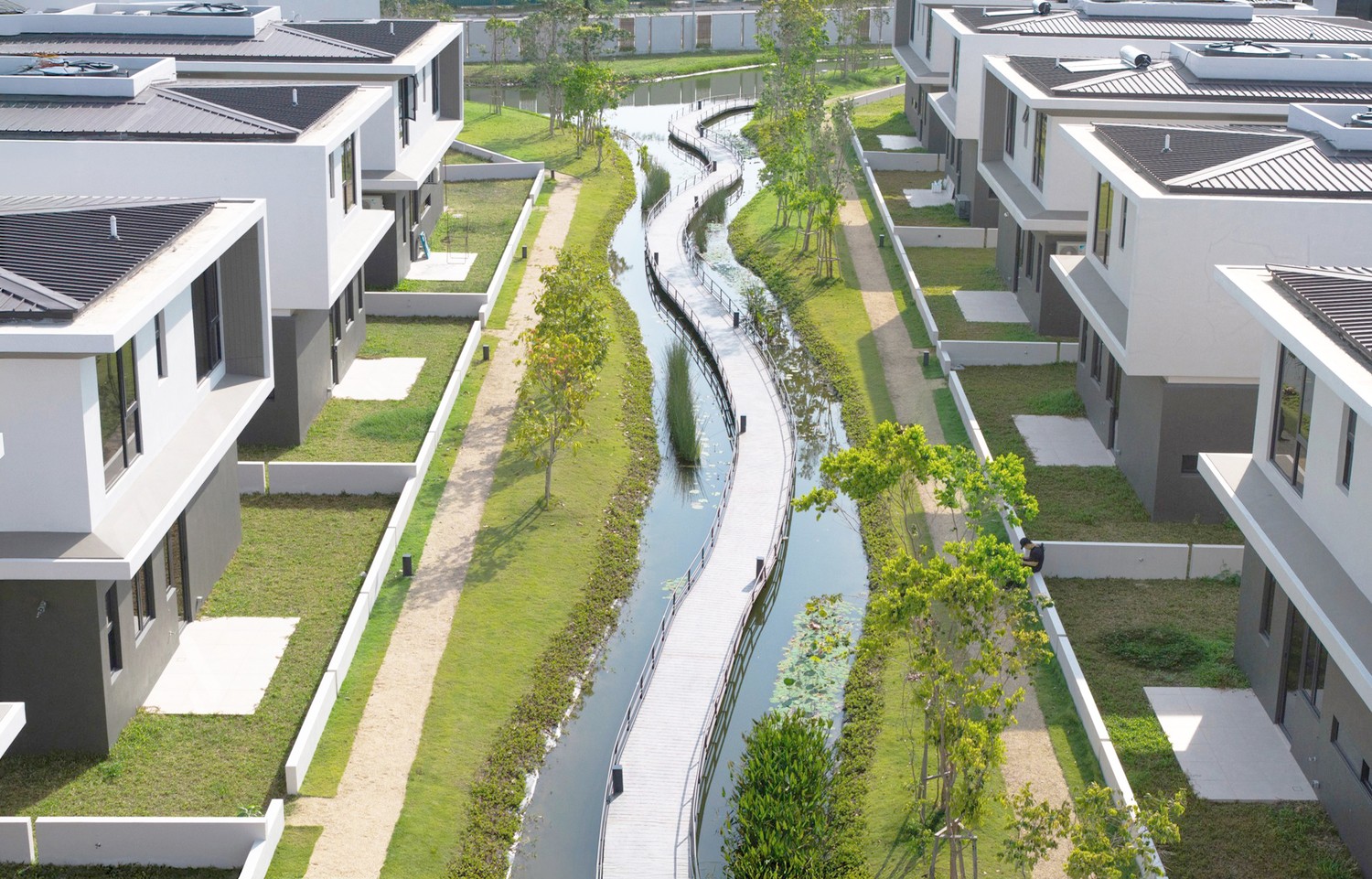
The canal and pedestrian path form a central spine, weaving water and landscape through the neighbourhood
Water functions as the primary structuring element of the masterplan. The canal network establishes frontage conditions and informs the orientation of each house, creating a continuous relationship between built form and the surrounding environment. Gardens and pedestrian pathways connect homes to pocket green spaces distributed throughout the site, forming communal nodes that support informal interaction among residents. These landscaped pockets introduce moments of pause within the neighbourhood while maintaining visual continuity across the broader landscape. The careful distribution of these green spaces also reinforces the sense of openness that characterises the development.
Aerial view reveals canals and green pockets shaping the neighbourhood, where arched bridges connect paths and allow canals to be explored by kayak
The residential architecture is derived from a single-core house typology, carefully adapted into four plan variations. This strategy allows the homes to respond to differing plot widths, frontage conditions, and site orientations while maintaining a consistent architectural language across the development. Each variation adjusts spatial arrangements and openings to ensure daylight, ventilation, and privacy are preserved without compromising neighbourhood coherence. This approach supports both planning efficiency and clarity in the development’s overall identity.
Spatial organisation within each house follows a clear front-to-back sequence that strengthens the relationship between interior spaces and the landscape beyond. Entry points transition through small landscaped thresholds before opening into the main living areas. These living spaces engage directly with gardens or canal edges, allowing natural views to become part of the interior environment. This arrangement creates visual flow throughout the house, reinforcing the connection between architecture and its surroundings while establishing a calm, open spatial experience.
Environmental responsiveness plays an important role in shaping the design. Openings are positioned to facilitate cross-ventilation, allowing breezes to move through the interiors and reducing reliance on mechanical cooling. House orientation and spacing help minimise exposure to harsh east-west sunlight, while overhangs and façade articulation provide shading to control heat gain. These passive design strategies contribute to comfortable interior conditions while strengthening the relationship between indoor and outdoor spaces.
For larger plots, additional landscape elements extend the domestic environment outdoors. Features such as small tea pavilions and garden terraces create opportunities for quiet retreat and social gathering within the private landscape. The architectural expression remains restrained and deliberate, emphasising proportion, spatial clarity, and environmental responsiveness while presenting a thoughtful model for contemporary waterfront living that remains closely connected to its natural surroundings. Together, these strategies create a residential environment where architecture, landscape, and water are experienced as a continuous system, supporting everyday living while reinforcing the neighbourhood’s identity.
Thoughtful planning and disciplined architectural language shape this waterfront development into a calm residential enclave responsive to landscape, climate, and water.
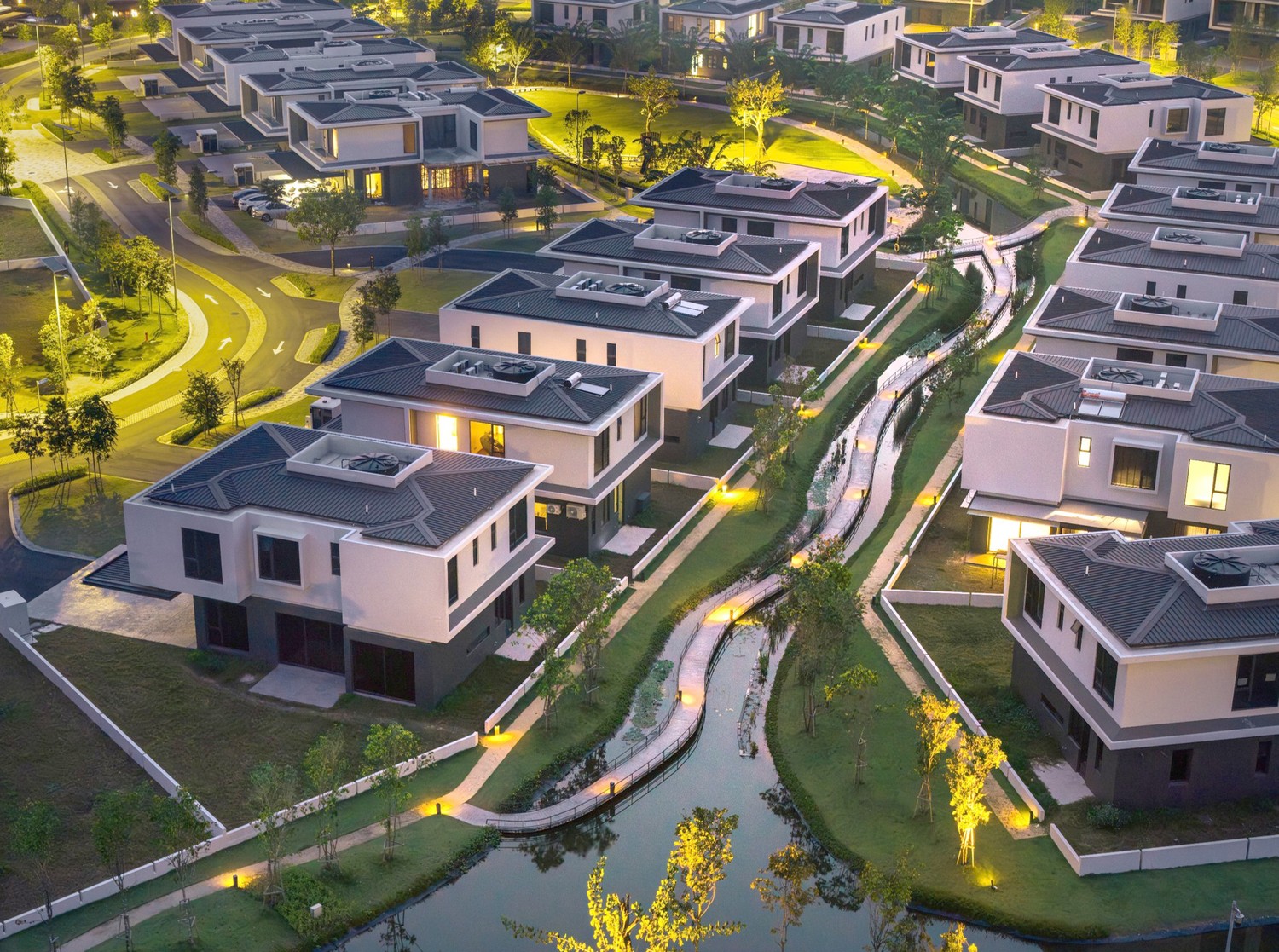
The Waterlily’s canal network weaves through the neighbourhood, integrating homes with landscaped corridors and water to shape a calm residential environment