VERTICAL PRECISION: CYCLE & CARRIAGE SUNGAI PINANG, GEORGETOWN
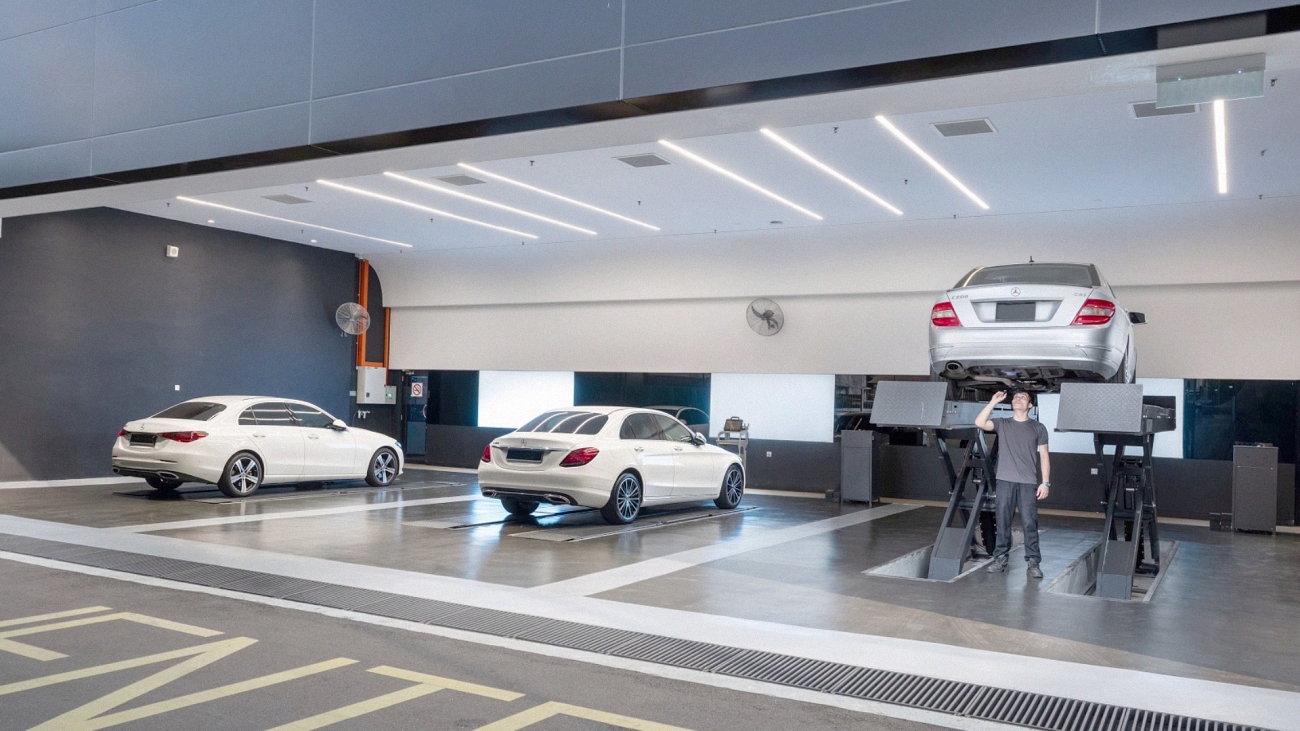
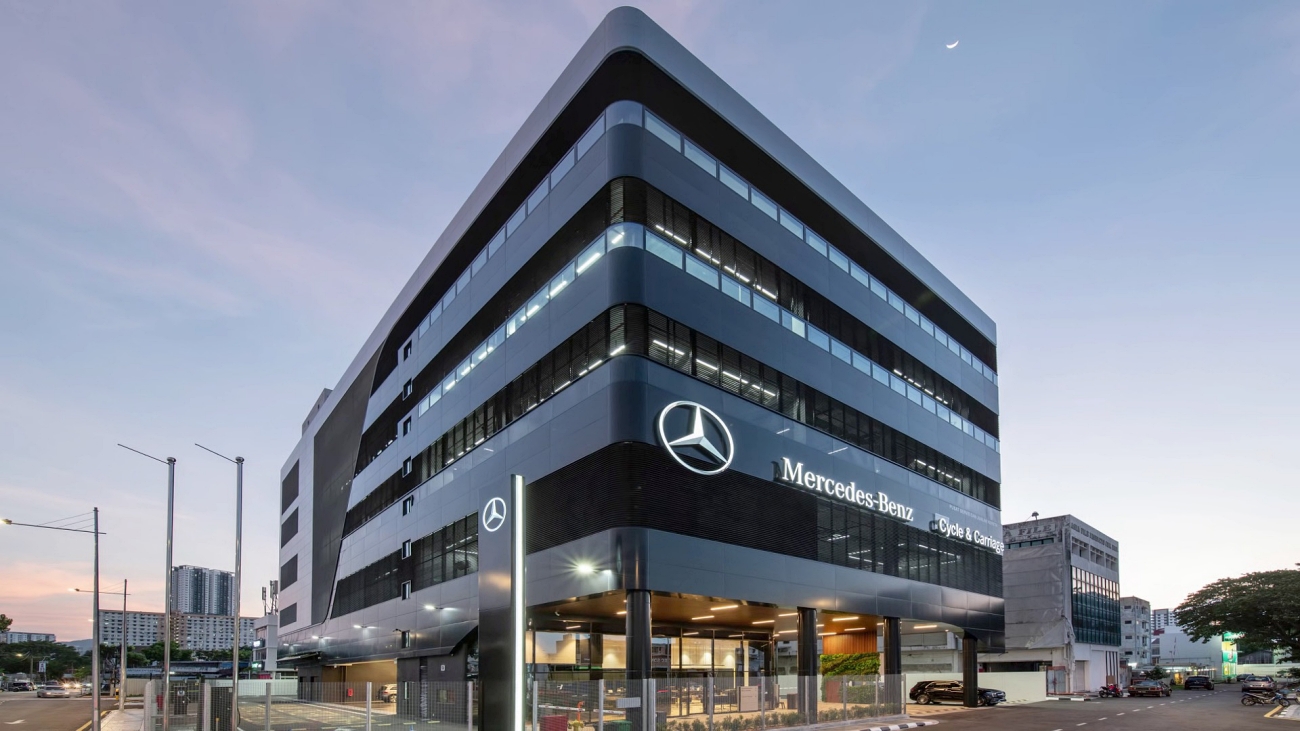
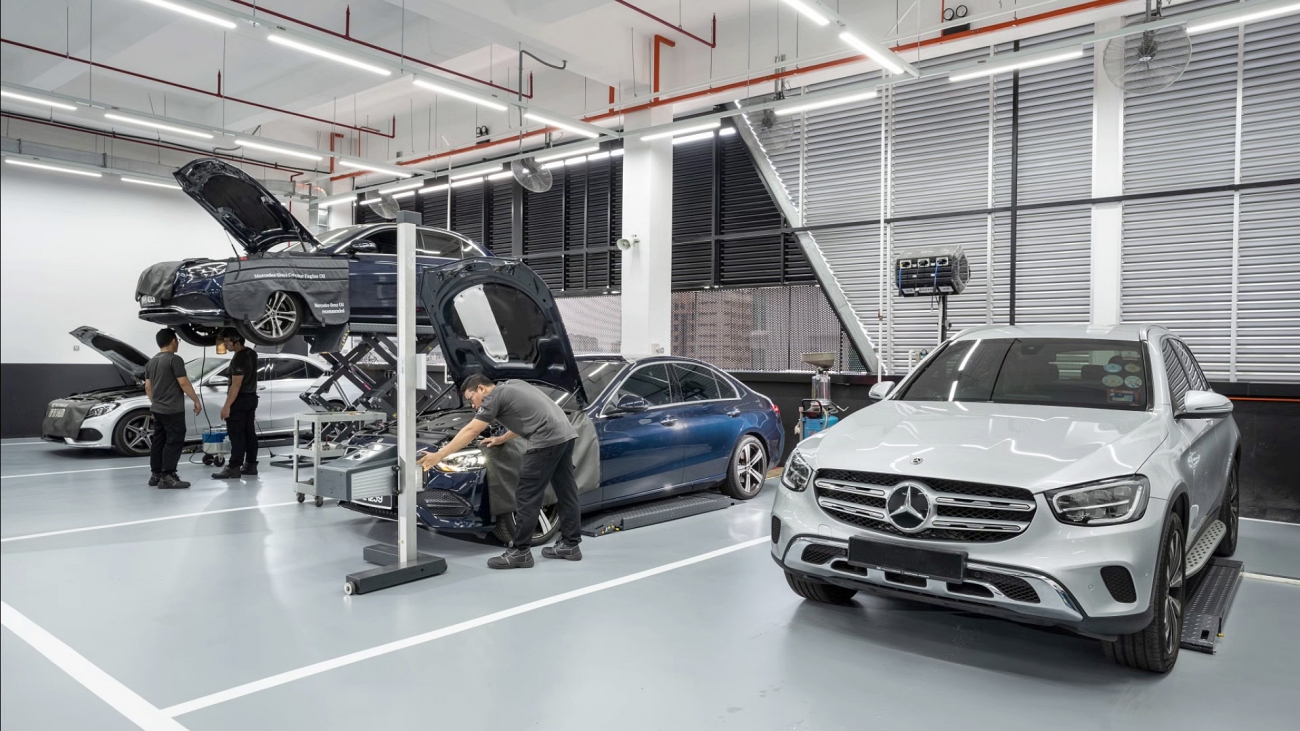
Prominently positioned at the junction of Jalan Sungai Pinang and Lintang Sungai Pinang, Georgetown, the Cycle & Carriage Sungai Pinang Mercedes-Benz Autohaus demonstrates how architectural ingenuity can transform constraint into opportunity. Built on a compact 3,290.70 sqm urban site with only 40% permissible buildable area due to stringent setbacks and partial land surrender for road widening, the project rises vertically to deliver an 8,303.39 sqm facility across five storeys, housing a luxury lounge, 21 service and repair bays.
Through lift-based circulation with full redundancy, disciplined brand integration, and measurable environmental performance, the project transforms a constrained urban site into a high-performing industrial landmark.
BUILDING UP WITHIN LIMITS
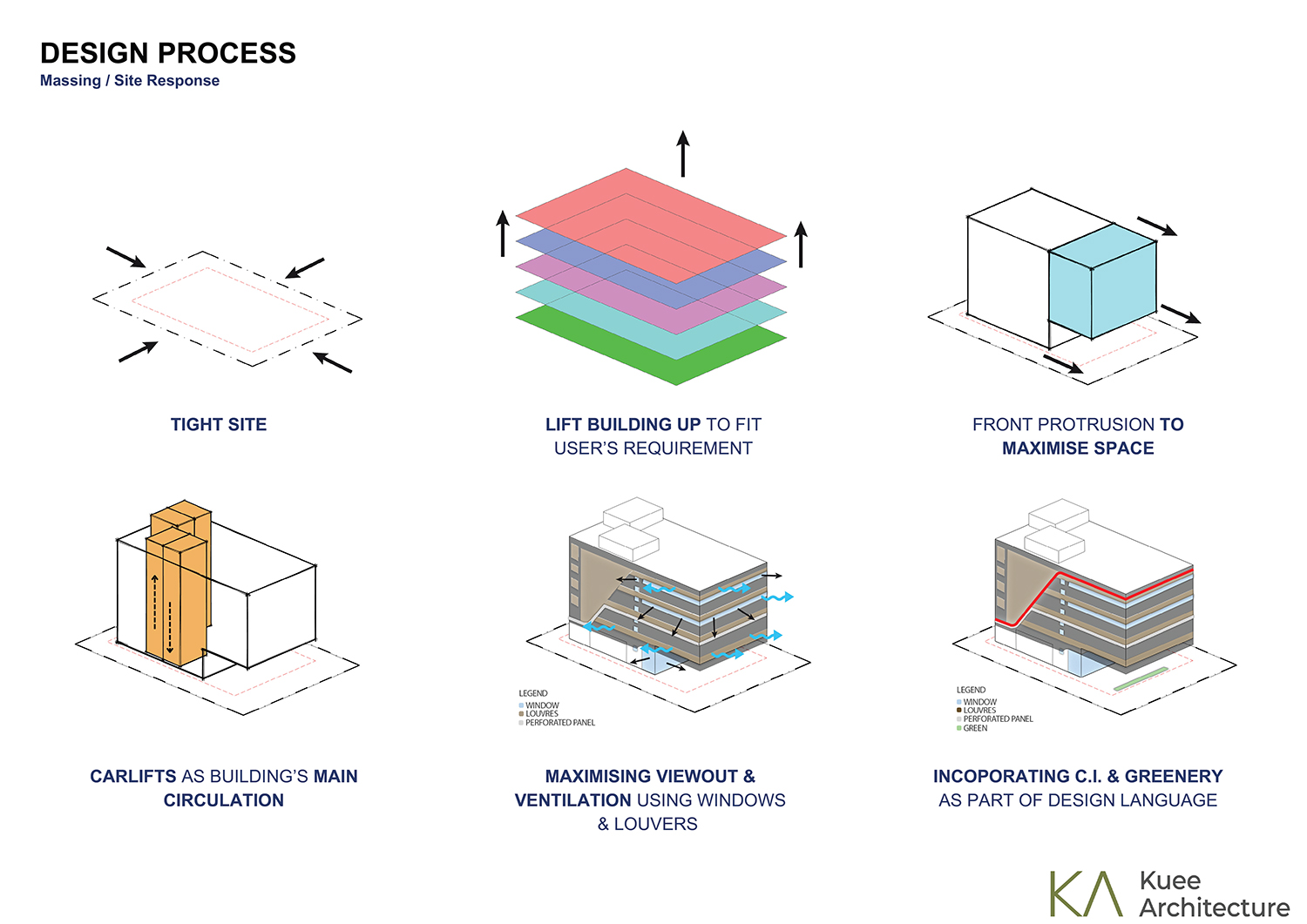
The tight footprint eliminated the feasibility of conventional vehicular ramps, which would have consumed valuable floor area and reduced operational efficiency. Instead, the design introduces four car lifts as the building’s primary circulation system. This strategy maximises usable workshop space across all levels while maintaining clear internal logistics. Critically, the lifts are supported by 100% backup power, ensuring uninterrupted movement of vehicles during outages or emergencies — an uncommon but essential technical safeguard for a vertical automotive facility.
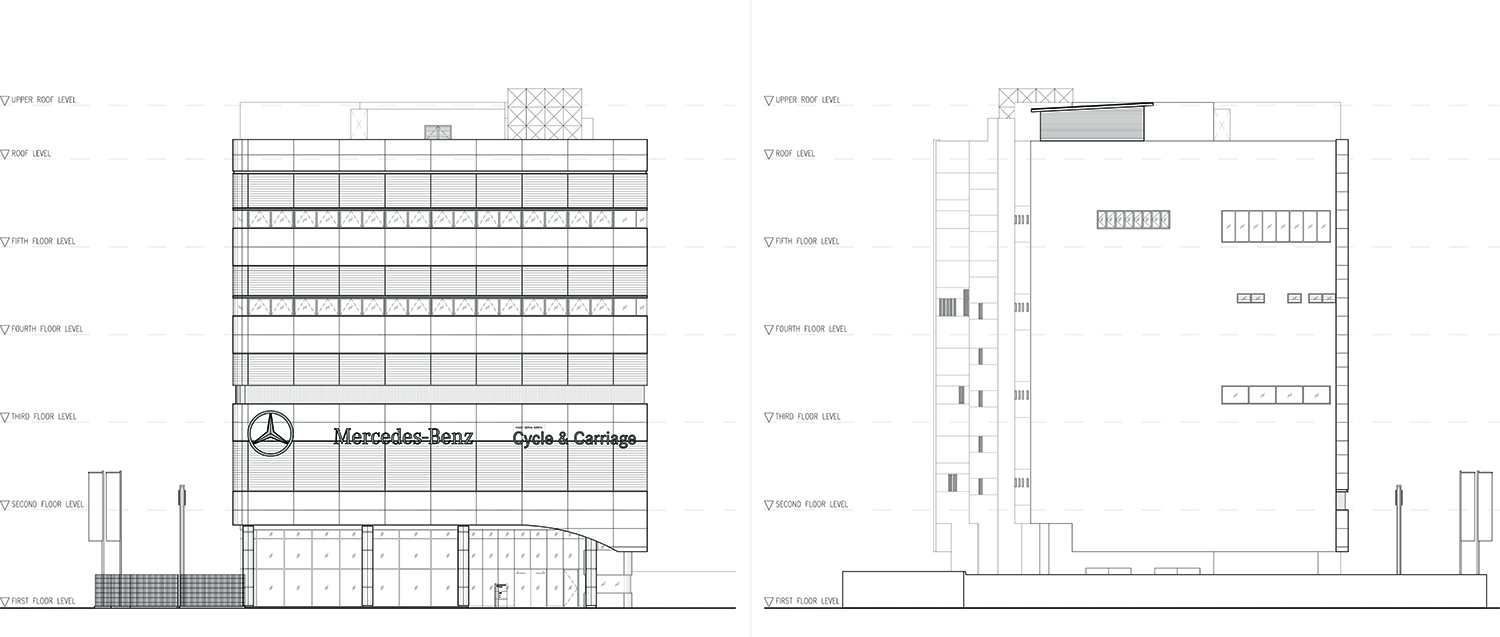
The massing strategy responds directly to the constrained site by stacking programme vertically and incorporating controlled façade protrusions to optimise internal floor plates. Openings are carefully positioned to enhance cross-ventilation and daylight penetration, achieving 84% façade external view compliance under Green Building Index (GBI) requirements. In a dense urban context, the building maintains both environmental responsiveness and operational clarity.
TRANSLATING BRAND INTO ARCHITECTURE
Aligned with Mercedes-Benz’s latest retail brand presence, the architectural language is defined by the duality of “Sky” and “Topography”. The silver upper façade, articulated with metallic cladding and horizontal louvres, symbolises lightness and technological aspiration. The darker lower volume anchors the building to the ground, expressing solidity and mechanical precision. This clear horizontal stratification strengthens brand identity while establishing a strong urban presence at the junction.
Three guiding principles: clarity, sensuous curve, and refined rounding — inform both exterior and interior expression. Clean orthogonal geometries convey rationality and functionality, while large-scale curves introduce motion and brand dynamism. Selective rounding of edges softens transitions between horizontal and vertical planes, elevating the industrial typology with a refined architectural character.
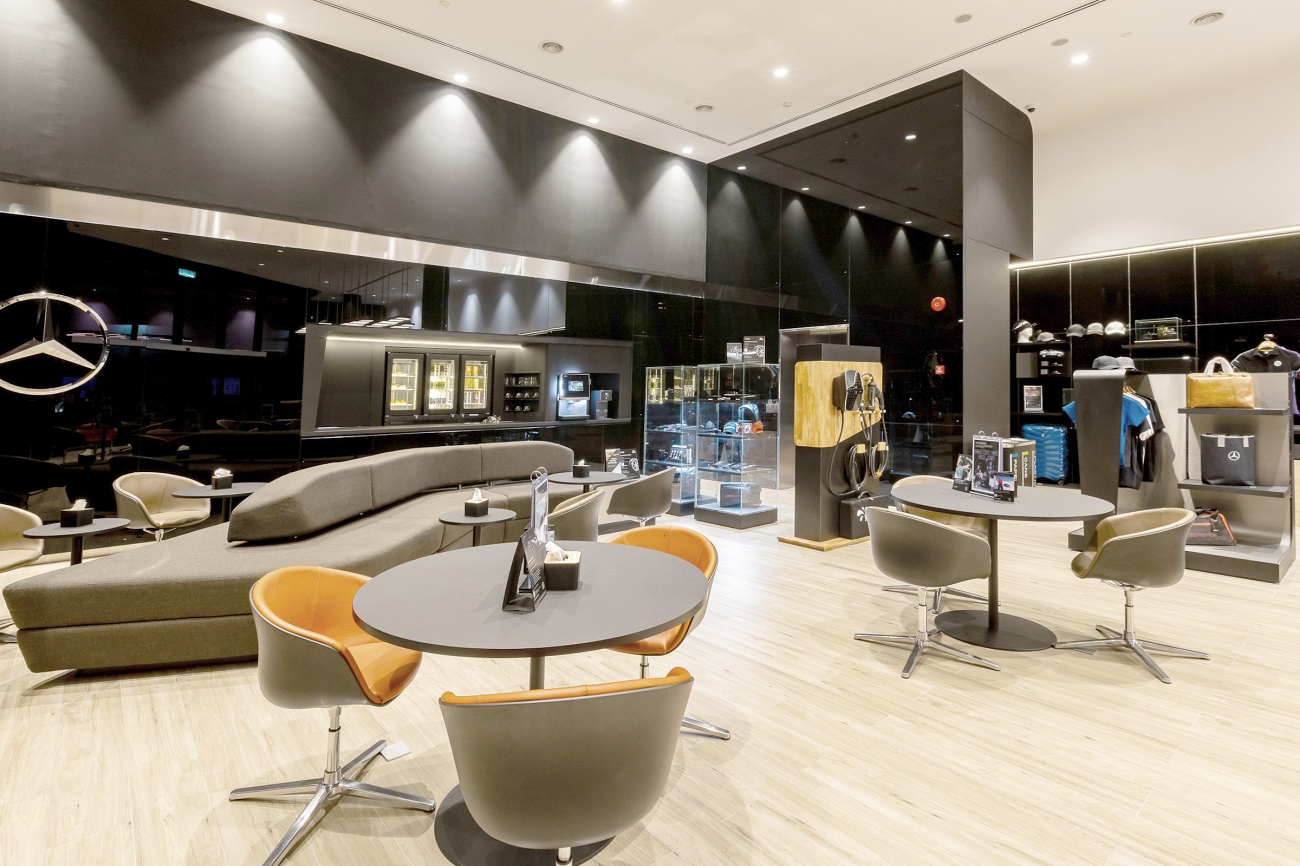
Internally, the luxury lounge contrasts with the robust workshop floors. Warm timber finishes, black glass, and carefully layered lighting reinterpret the Sky–Topography duality in tactile form. Curved floor zoning subtly guides visitor circulation, blending hospitality and service within a cohesive spatial narrative.
PERFORMANCE-DRIVEN SUSTAINABILITY
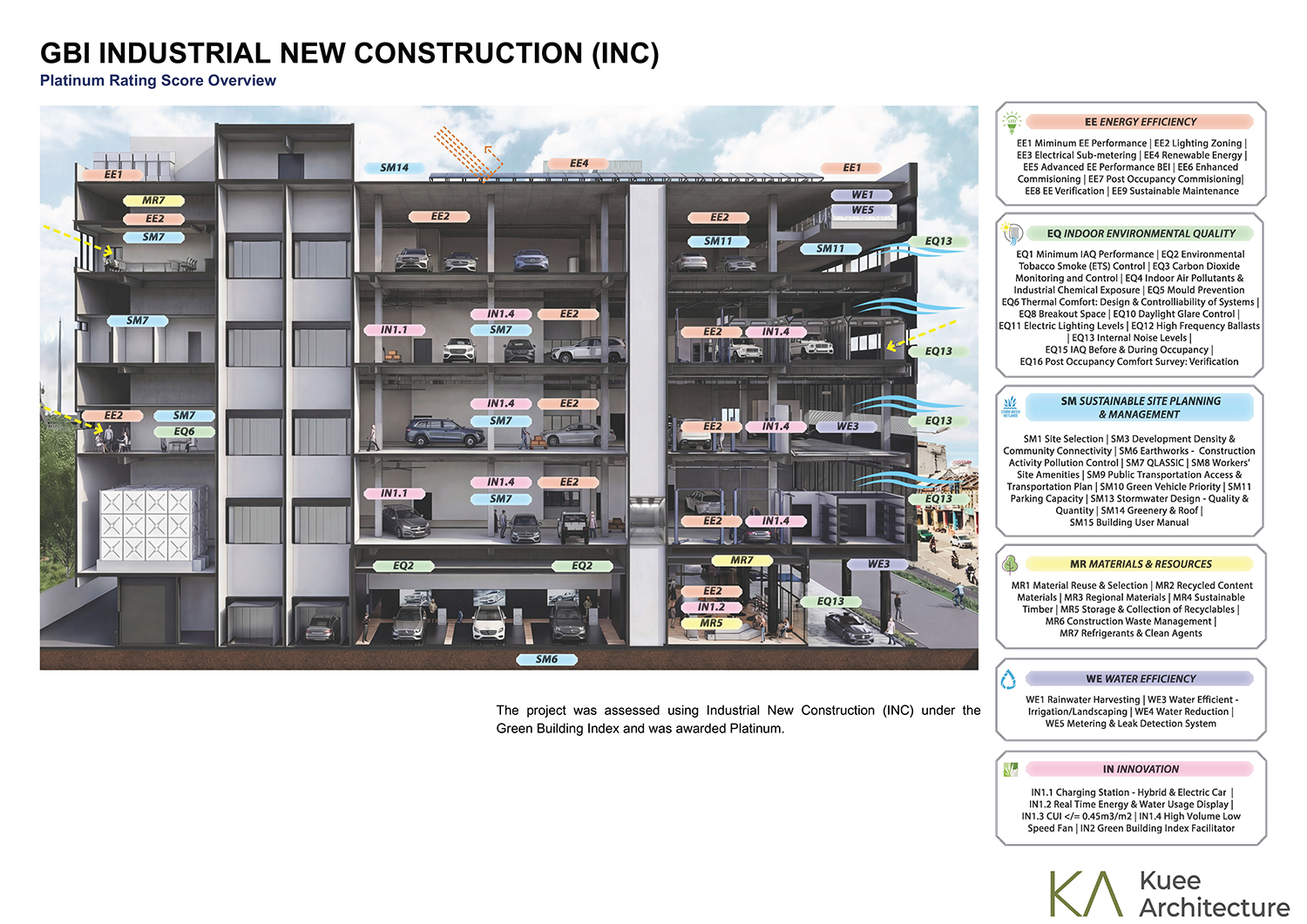
Assessed under the GBI Industrial New Construction (INC) category, the project achieved GBI Platinum certification with 5-star EE ratings. Sustainability strategies are integrated into the build- ing’s operational framework.
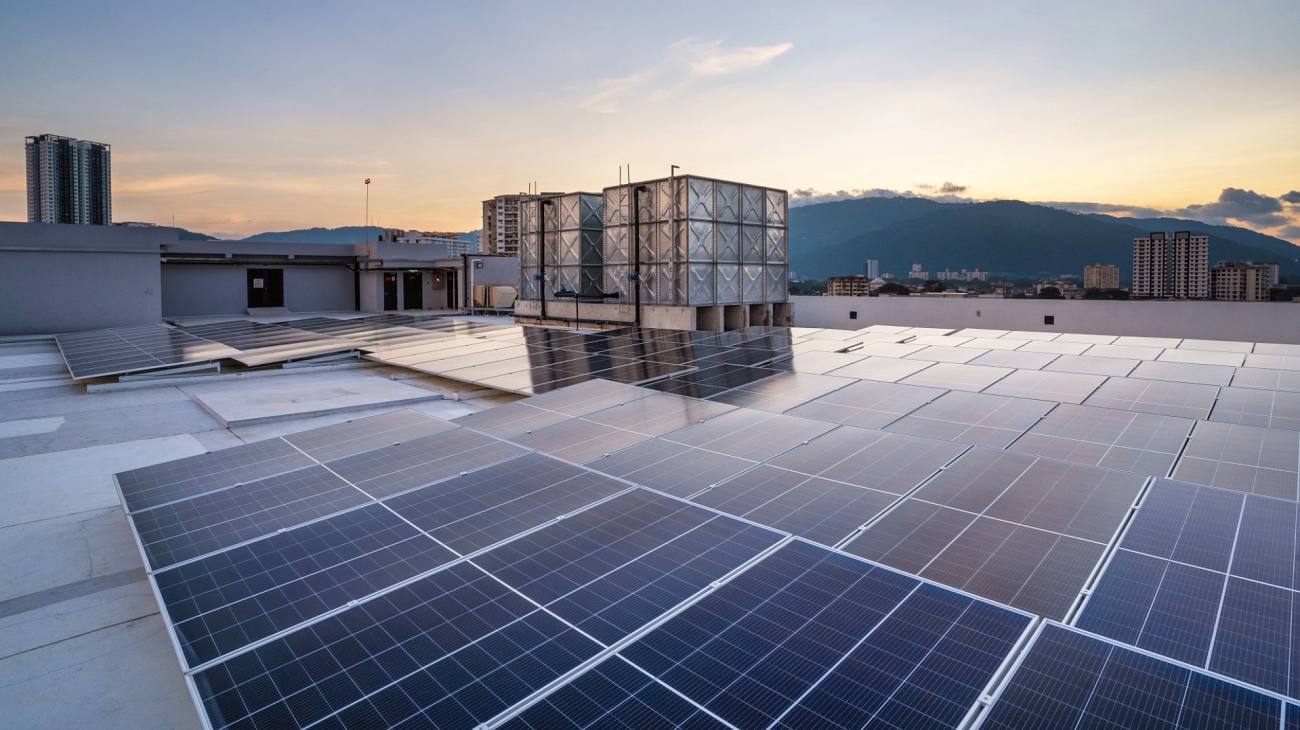
The entire rooftop is covered with solar installation, while spray-applied insulation achieves a roof U-value of 0.441 W/m²K, mitigating heat gain. LED lighting equipped with motion and photocell sensors, together with energy-efficient air-conditioning systems and comprehensive electrical sub-metering, feeds into a Building Management System providing real-time monitoring of energy and water consumption.
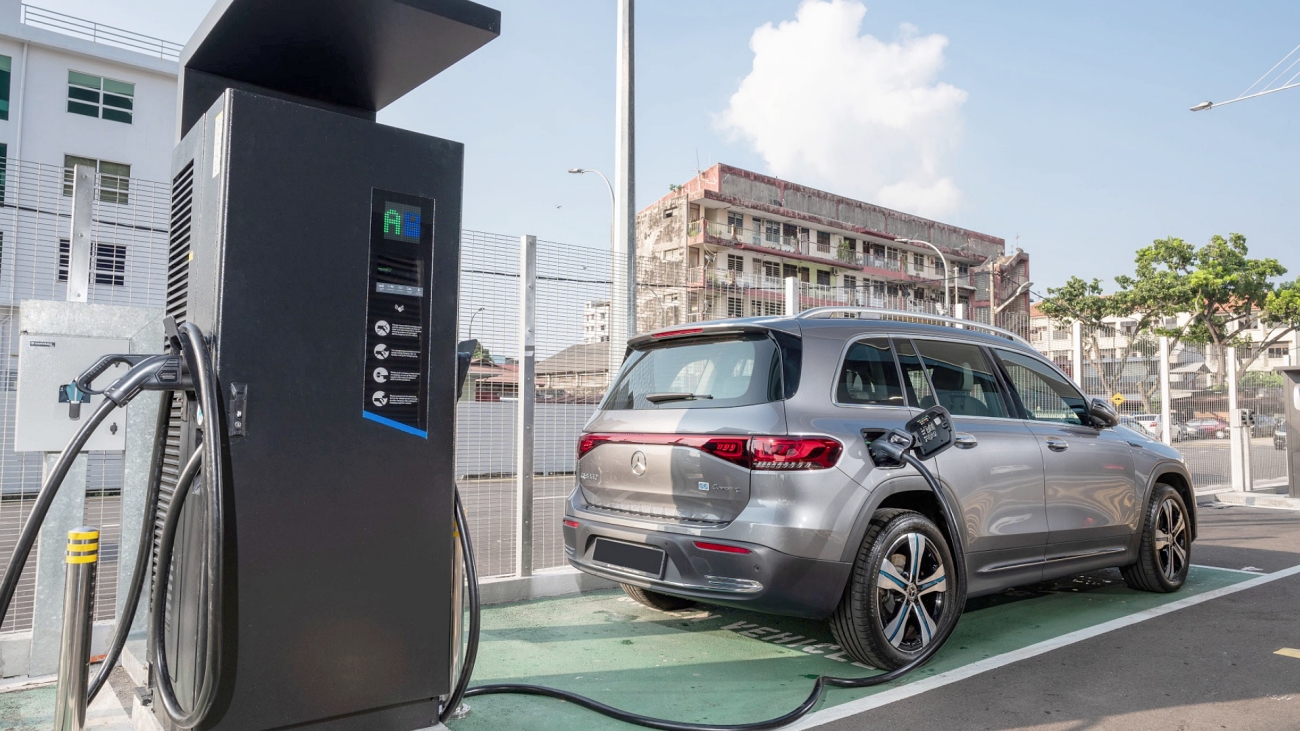
Water management is equally robust. A rainwater harvesting system collects 83.91% of roof runoff for reuse in WC flushing, cleaning, car washing, and irrigation. High Volume Low Speed (HVLS) fans installed across workshop floors enhance thermal comfort while reducing reliance on mechanical cooling. The inclusion of EV charging facilities, including a 180 kW DC fast charger and additional AC chargers, signals prepared for the evolving automotive landscape. The project was assessed using Industrial New Construction (INC) under the
Green Building Index and was awarded Platinum.
Quality assurance and construction excellence further reinforce the project’s merits. An 80% QLASSIC score was achieved, exceeding minimum requirements, while 77% of non-hazardous construction waste was diverted from landfills. Strategically located within walking distance of public transport nodes, the development integrates seamlessly into Georgetown’s established urban network.