THINKING OUTSIDE THE BOX

Garisan addresses how local housing interacts with the tropical climate, local social realities,
and its relationship with past architectural heritage.
Text by the architects

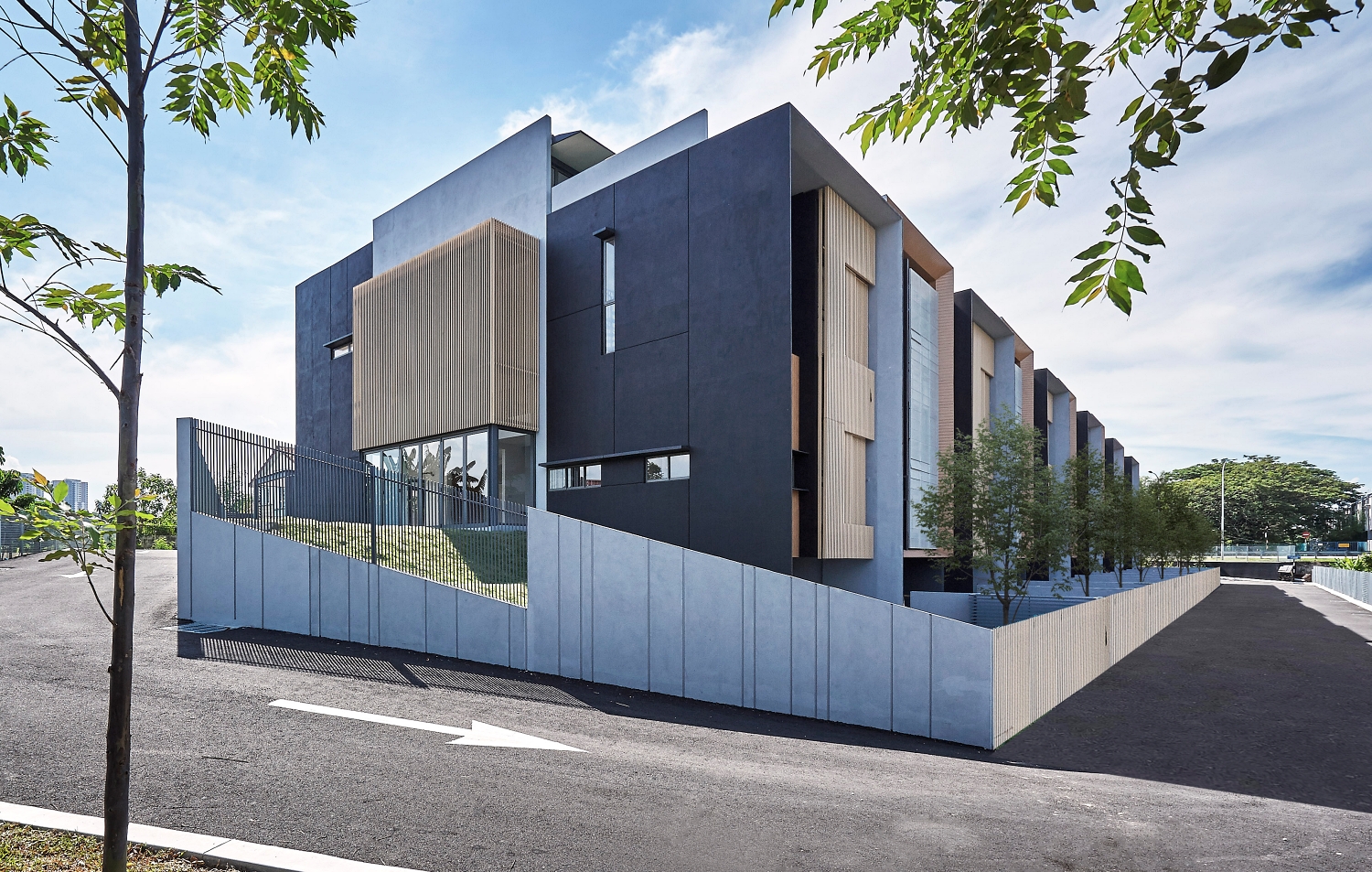
Twelve units of 2 1/2-storey linked terrace houses sit within an elongated 1-acre land in Puchong, a sub-urban area of Selangor.To the north and west of the site we reach the fringes of metropolitan area with small villages, vast landscapes and lakes.The external of the houses are articulated in two variants expressing different built heights, colours and finish textures to break away from the norm of extreme linearity in Malaysian terrace housing design.Each unit is built on a 6.4m x 33m plot size with 264sqm of floor area for family living.

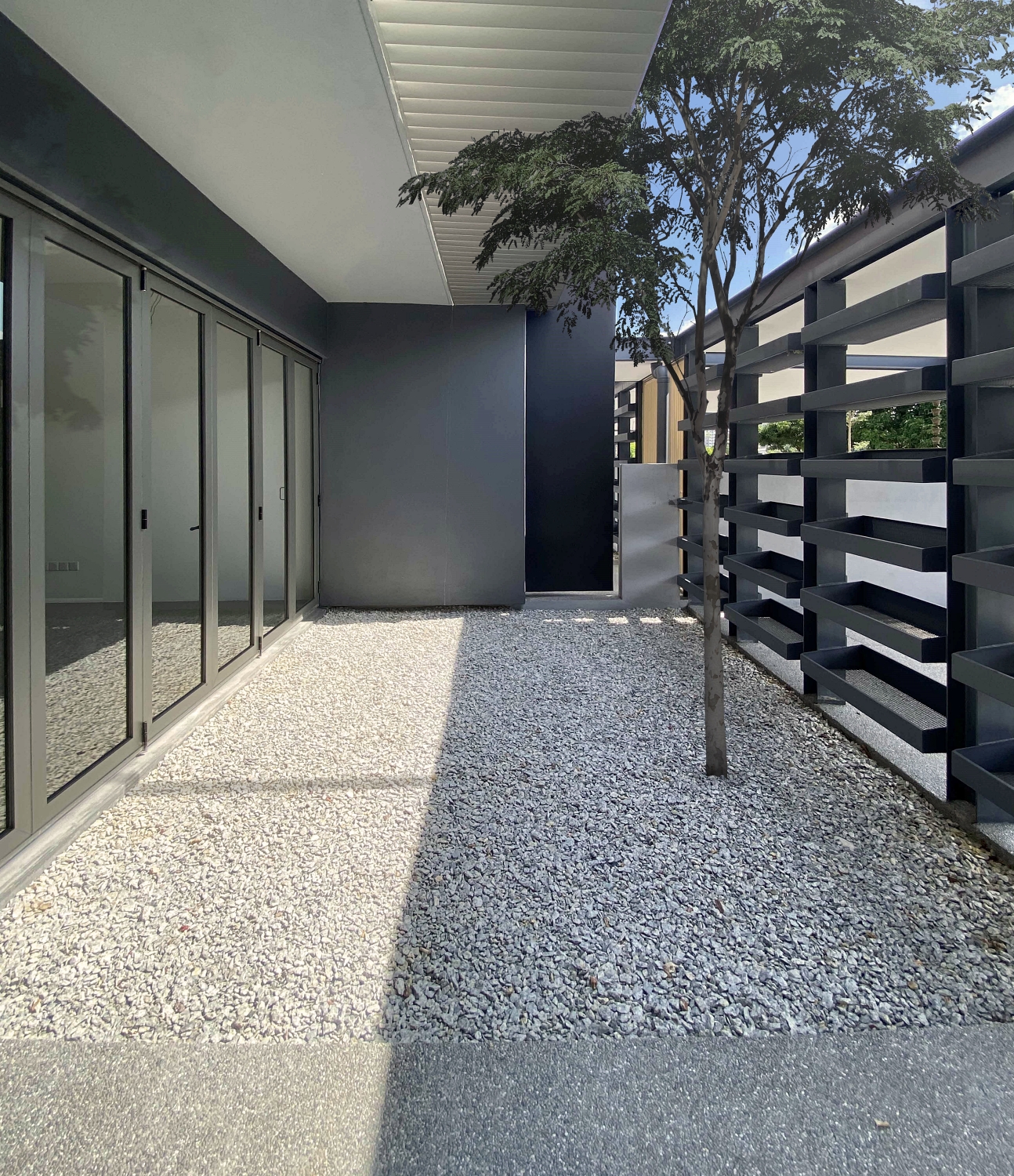
The front part of the house is two storeys and has a half-storey at lower ground towards the rear.Residents driving home can park at the front porch or slope down to park at the rear terrace area.Entering through the front porch, a landscaped front courtyard greets residents.Vertical green planter boxes screen their cars from the interior at the front; a large tree helps shade cars at the rear terrace.

Aerial view from the north
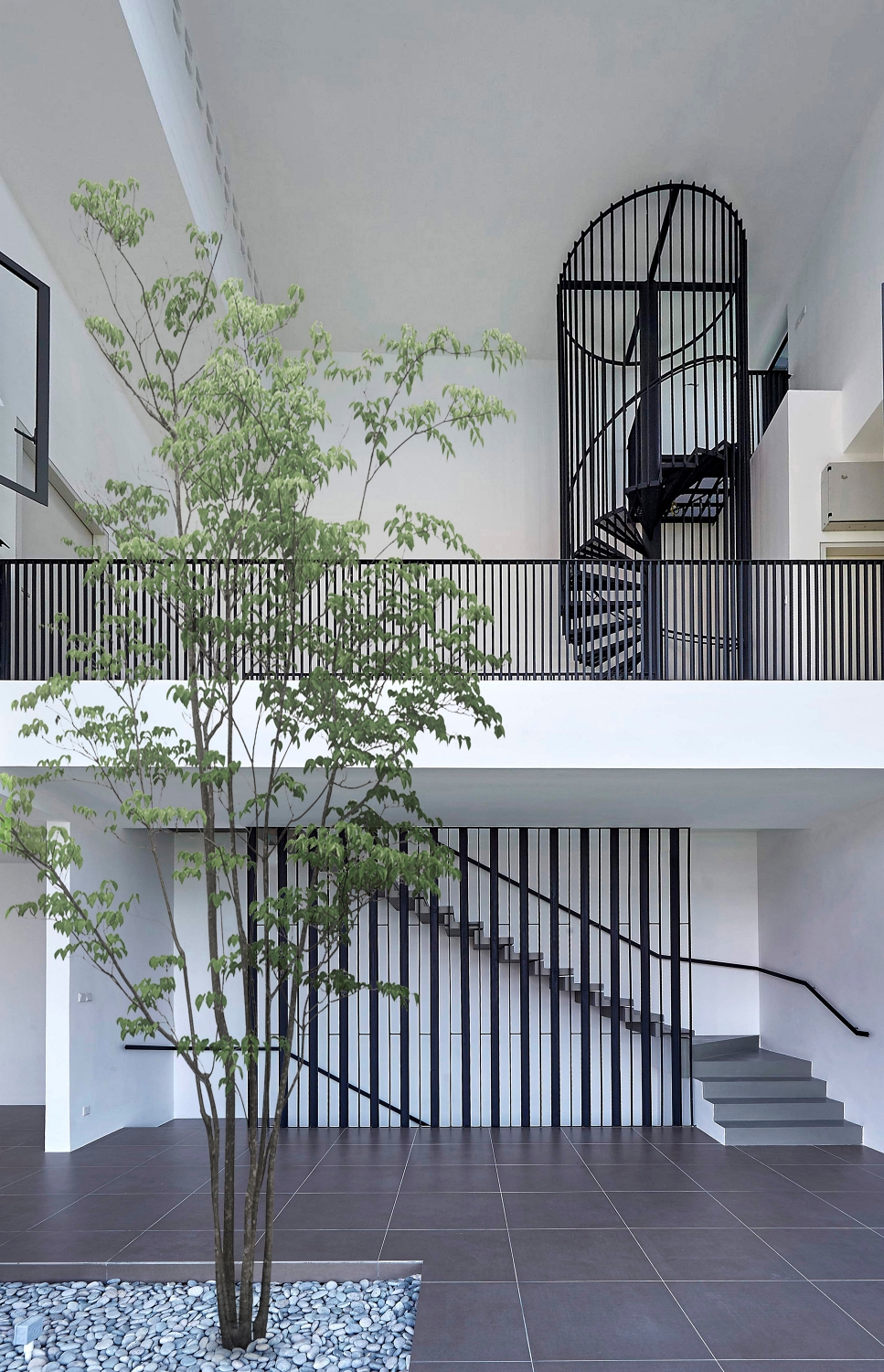
Passing the main door, the internal spaces are planned around a central triple-volume courtyard void space naturally lit with landscapes.Sunlight filters through the rooftop skylight, penetrating three storeys deep into the house.The architect took reference from Malaysian heritage shophouse design as inspiration.As a strategy to blend nature with man-made architecture, owners are encouraged to plant trees at the central courtyard.The living hall, dining and kitchen areas flanking the central courtyard can enjoy the greenery amidst a bright naturally lit high-volume environment.This is a design response to address the issue of dark interiors in a standard Malaysian terrace house plan.
Aerial view demonstrating the incorporation of curvy lines from top to the bottom of the building, softening the otherwise hard rectangular corners, expressing the tower and the podium in a more organic shape.

Walking up the precast concrete cantilevered main staircase to the first floor, one can see large windows at the master bedroom and common bedroom opening into the central courtyard.The windows encourage visual connection and interaction between different floors.The external façade of the bedrooms has ‘monsoon windows’, each with horizontal top-hung panels that allow air exchange while preventing water penetration during the monsoon rains.

Breeze enters from the front courtyard crossing the house interior and exits through the rear windows at the kitchen or bedrooms.Hot air within the house rises and ventilates through porous ventilation blocks at high roof level above the central courtyard.These natural ventilation strategies for tropical living are often neglected in the country’s mass housing developments.Windows on the east-west facing façade are shaded with operable louvers to increase privacy and protect against tropical heat while allowing individually adjustable visibility towards the exterior environment.

Street view from the east
On the first floor, a spiral staircase by the front door leads to a spacious flat roof area created as an active rooftop terrace with uninterrupted 180-degree view of the western landscape, villages and lake.The overall design responses specifically to the Malaysian suburban housing context. It addresses the critical issues underlying how local housing interacts with the tropical climate, local social realities and its relationship with past architectural heritage.
Spiral staircase leading to the rooftop terrace
Social space by the slope for various events
Corner view of the centre courtyard
Site plan
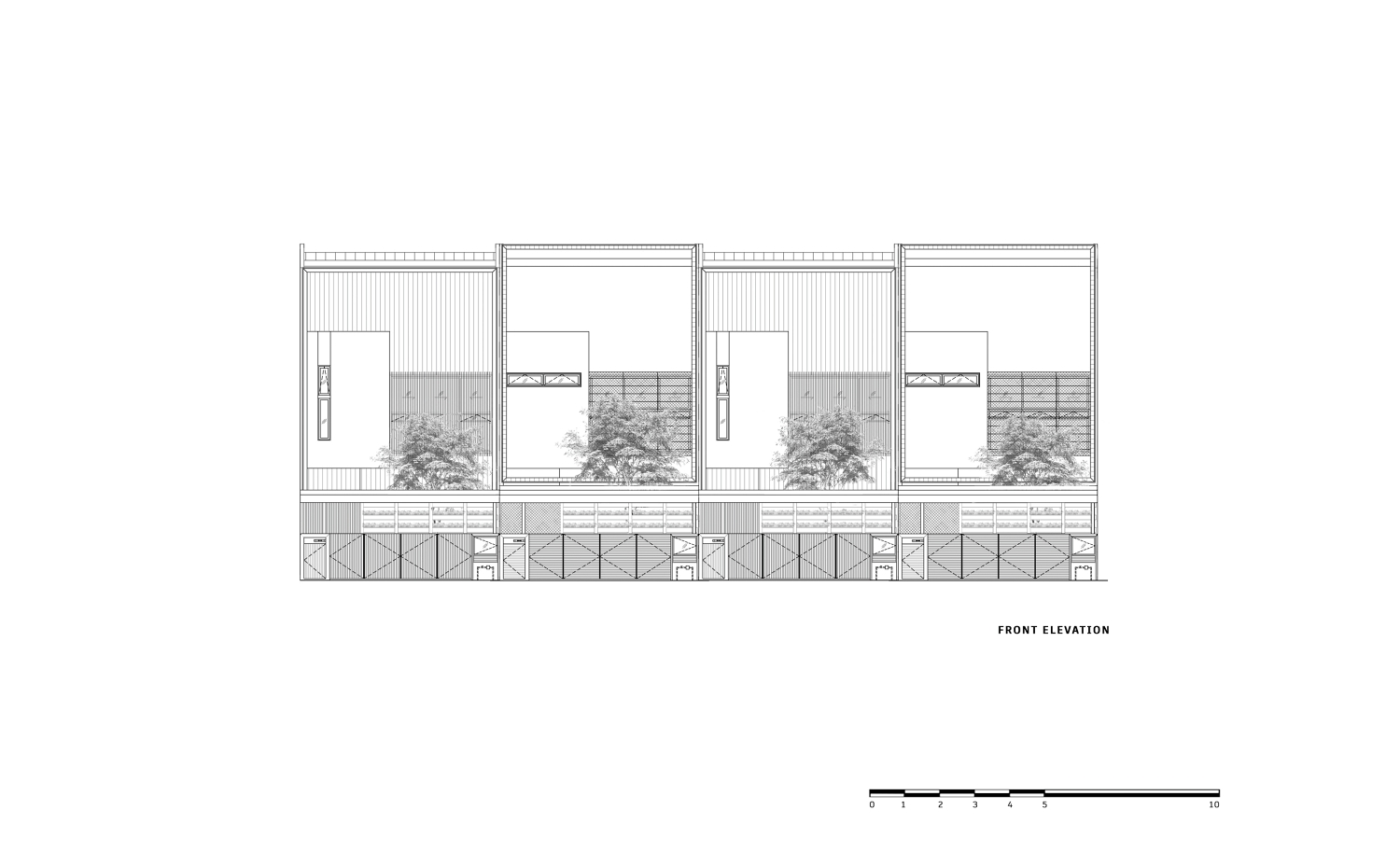
Front Elevation
Rear aerial view
Aerial view from the south

FEATURES

RELATED ARTICLES