
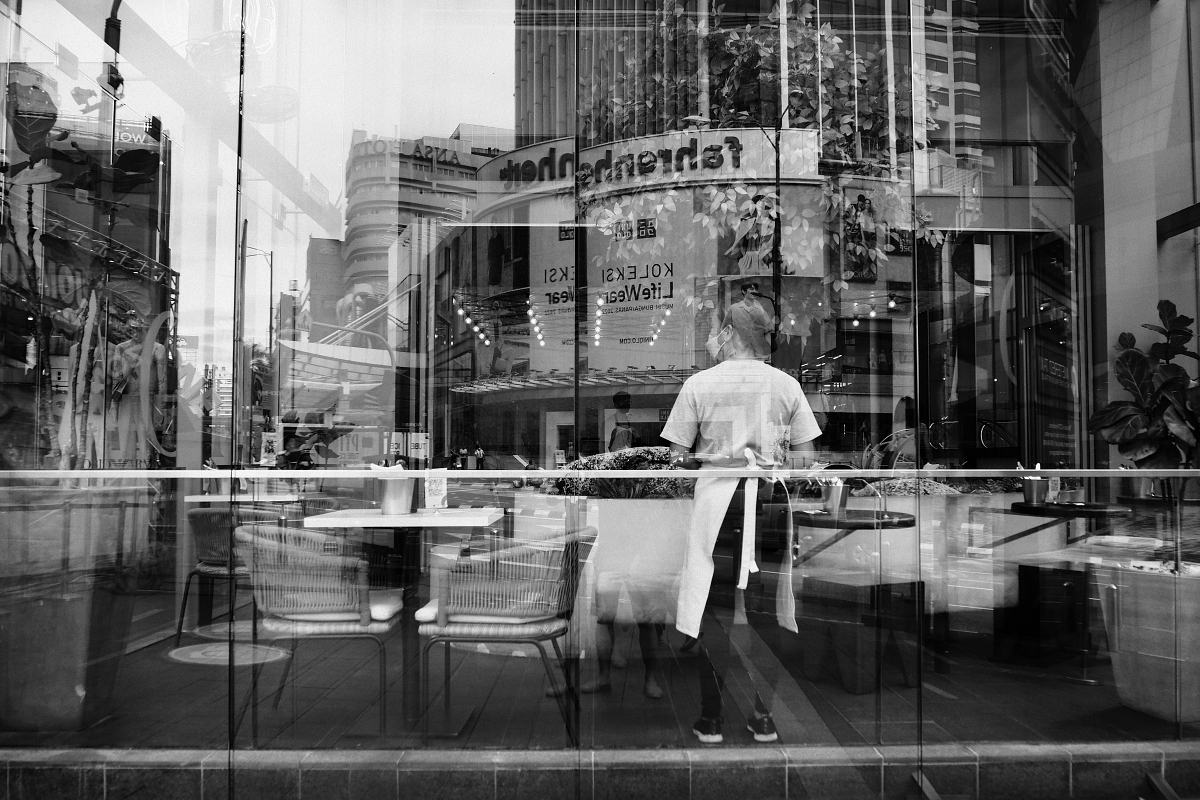
In November 2019, I did the unthinkable. As a non-architect, I gave a lecture to a hall full of architects, both seasoned professionals and students, telling them how to build better cities.
My opening statement accused them of the increased mental health problems prevalent in urban areas.“If the suicide rate continues to increase, I blame none other than architects.”The room fell still. Eyes wide open. Postures straightened.“As a member of the creative communications fraternity, I am here today to remind architects to reconsider, reframe and reimagine their expertise. Stop designing buildings without considering the human relationships inside them. Buildings are making people sick and miserable. Poor urban planning is creating social spaces that do not feel safe, thus compromising mental health. Esteemed ladies and gentlemen, architects, engineers, educators and students, form and function are preceded by the flow. That flow is human relationships. Let us walk through our city again.”
My talk, organised by Pertubuhan Akitek Malaysia (PAM), was titled “The influence of Design in Architecture on Social Relationships.”When I ended, I was approached by bewildered members saying I crossed a boundary as thick as the fortified great wall of China that has kept its imperial states protected against nomadic groups from the Eurasian Steppes.“Natasha, even architects have a hard time teaching other architects. You reminded them why they set out to be architects in the first place – to improve people’s lives.”
My point was simple and rooted in social design: Design in architecture influences the way we communicate and affects states of mental health. My question for the day was, how might we improve both aspects?
Experiences and places create social bonds. This leads to memories. We all know this because we feel it. In Experience and Education (1938) John Dewey posits an experiential learning theory that describes everything we learn occurring within a social environment. David Kolb (1984) takes it further by suggesting learners must change or transform something in their environment to learn. This is known as the “transformation of experience.”This could be a simple act of taking a stroll.
Walking in cities has a history of its own unfamiliar to many. More than just getting around, walking as a social activity was transformed by urbanisation. Tim Cresswell in his study called Reflections on Hope as a Category of Social and Psychological Analysis (2004) narrates that the idea of mobility as liberty and freedom would have made little sense in feudal society. In the early modern period, as cities grew and people were displaced from the land, the practice and ideology of mobility led to “movement and meaning reliant on the structure of spaces that we walk through.”Hence, even a stroll places us in a learning process that yields meaning. A lover’s walk under the moonlight may sound cliché but that is how we come to understand what is romanticism.
What we see heightens all our senses. As people, we impart ideological value to the place, space and mobility based on incidences, attributes and circumstances, specifics for history. A place etches memories, memories are stored and recalled as narratives. And because people love stories, a place can have a protagonist, a victim, and a villain. A bad incident leaves a traumatic imprint. Dimly lit streets make us feel unsafe and increase their potency for crime. Blind spots and dead ends increase the statistics. A bedroom is a place of sanctuary. A sanctum we return to after a long day, to recover, to reflect, to rest and for respite. Contrastingly, a person who is sexually assaulted in that very same room will see it as a place of contempt, damnation, trauma, and incessant pain. The owner of the respite is now a victim of an unfortunate time and place.
This brings us to the framework of discussion with the architects: Relationships are not an outcome of a design. Relationship formation needs to be imagined first. Your design in its architecture follows suit.
I rocked the room further by bringing insights from prison experts. Prison design researcher Isabel Hight punctuates the point architects should never forget, “Architecture sends a silent message to everyone walking into a space. It tells you what to expect and where the limits of behaviour are.”
In the article Rethinking the Architecture of Prisons, Hight describes: “Prisons are institutions meant to help the people who have strayed away from humanity to re-enter human society as a Good Samaritan. The current model of prisons is based on the correctional facilities used by the English forces, absolutely outdated. Prisons should be designed to inspire, motivate, and provide stability to their inmates. The design of the prison plays a crucial role in the emotions and mental conditions of the person staying in.”Existing typologies are designed for the value of money and easy movement of the inmates. However, for centuries we have found them to only increase agitation and violence worsened by overcrowding. Clearly, the design is flawed.
Hight outlines what is needed based on Norway’s Halden prison where “the campus-like plan trumps the usual plans of a large central courtyard, long tube, or radial plan,” writes Anamika Mathew. Points to consider include: “Humane prison ensures an excellent view overlooking the surrounding landscape. The exterior view allows the inmates to keep track of the time, season, and space. The trees are selectively planted to block the view of the perimeter security wall. The communal spaces and cafeteria are designed to increase the interactions between the guards and inmates, a strategic move to reduce the number of violent attacks within the prison. The functions are divided into various blocks – housing, administration, and visiting. The inmate has forced a commute like in real life to move from one place to another. The landscape elements around the blocks create the break spaces to help the inmates relax and calm down.”
Here, normality is necessary via continued mobility, space, and human bonding, not disconnecting them.
A wicked problem in society is our appetite and value for human discipline and punishment. Instead of improving prison architecture, we emulate them in non-prison settings. As Michel Foucault laments, we replicate them in schools, factories, hospitals, offices, and administrative buildings. So, what exactly are we doing here?
A mistake is to design a building forgetting that they are social space. Social requires interactivity. Interactivity leads to human bonding which are based on meaningful and shared experiences, critical for human survival. Another mistake is to prioritise design and then assume relationships will flow seamlessly consequently. Just as Feng Shui is important for business owners at the onset of operation, we cannot omit the importance of how a poorly-designed bedroom can increase a couple’s probability of getting divorced. If we are aiming for long-lasting harmony, warmth, and social connection, we need to ensure we provide the correct design and dimensions that can accentuate positive aspects from the very beginning. This includes natural light, fresh air, and proximity. A key component is to prioritise the “who” living in those social spaces followed by “what” they will be doing, “how” and “why”.Only then can the architecture begin.
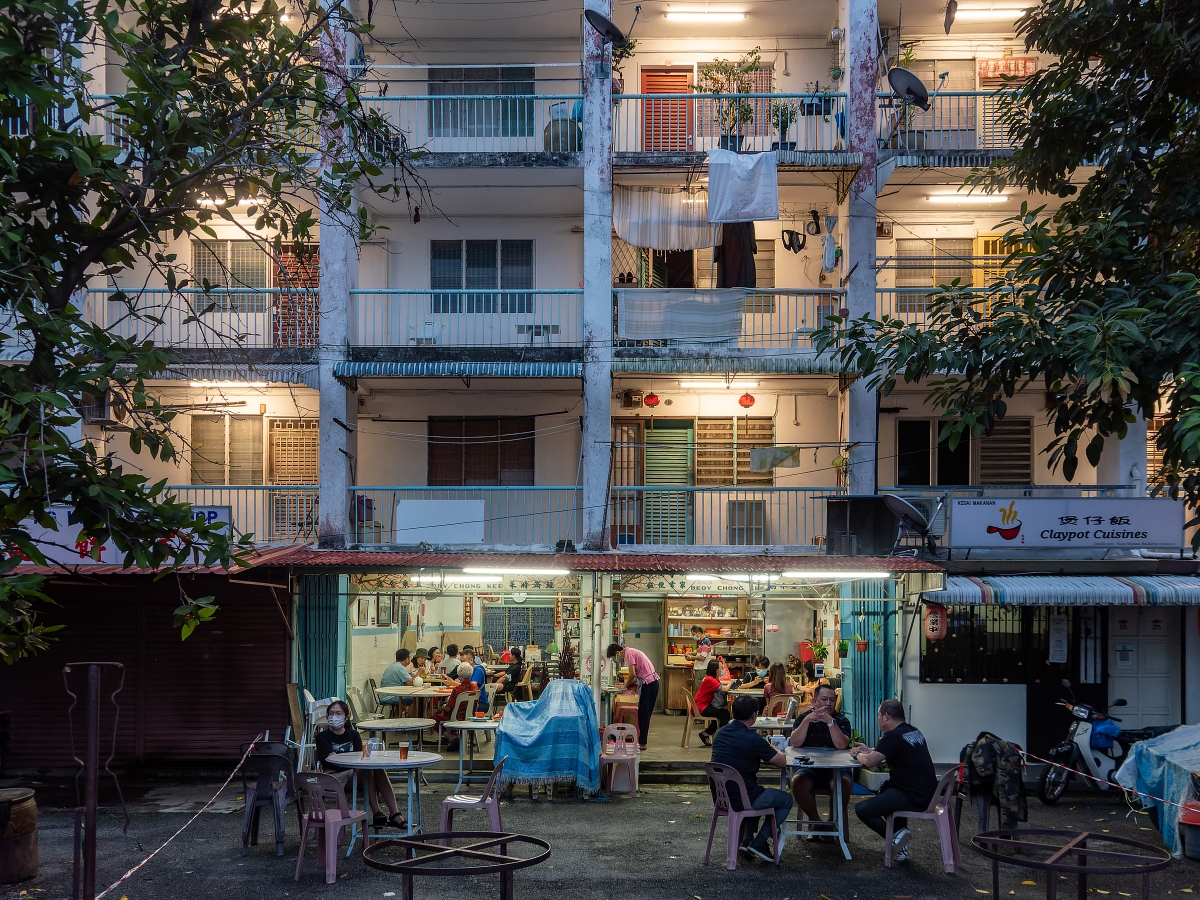
Yet, we see this mistake repeated everywhere. It is modelled in giant corporations, government-linked companies housed in some of the most impressive and expensive buildings in the world. Again, it is about power politics and risk distribution. What happened to social innovation?
In every office building a lies hierarchy of systems, discipline, and power. With power comes politics. Politics create marginalisation. Marginalisation is economics: economics of time, human capital, and social connections. Who you know within the hierarchy determines the trajectory of your career path. A man free to do whatever he wants at home walks into his office, and retreats to his designated cubicle (a place human resource management deems worthy of his qualification sized up by his salary scale), as opposed to his chief executive boss with a sprawling room replete with a panoramic view of the Petronas Twin Towers and open skies. This cubicle now becomes a constricted area for thought, freedom, and mobility.
A place he must adhere to from 9am to 6pm with an hour for relief, and stolen minutes to and fro, for social interaction. This very same protagonist now must perform his best, be creative, and deliver optimum value to his organisation. His chair, his view, his cubicle, and his hours are now in a gridiron of repetition for five to six days a week. Permission to be heard goes only as far as his arm can extend on the hierarchy ladder. How long will this continue? Is he now a man of liberty of joy, space, and mobility, or is he now a captive? And at the end of a fiscal year, human resource management will have the audacity to ask: Are you happy where you are? If he is not, no one will ask, is the building at fault? What happened to inspire, motivate, and empower?
Another mistake in urban planning is the removal of historical buildings and sites. Whether abandoned or decrepit, historical landmarks are key components that help us shape the city’s future. They are like data and memory banks that provide the rhyme, reason, and rationale towards nation-building. Urbanisation and gentrification by getting rid of historical buildings to erase the stigmas of colonisation do more harm than good. Retail centres – the mindset of “newness of things” will eventually culminate in an identity crisis and a loss of patriotism where citizens start questioning, “Who are we? What are we becoming?”The truth is you cannot erase memories, and we should not. They are part of our transformation of experience as a collective. Collective consciousness, as Emile Durkheim points out, is crucial as it informs our sense of belonging, identity, and behaviour, all of which underpins how societies function.
“A derelict is perfect for a romantic kiss under the moon,” quotes Professor Luigi Croce from the University of Venice. In a conversation we had, centred on architectural restoration, Prof Croce tells me: “In Italy, there is a natural appreciation for derelicts. What may appear to be abandoned remnants of a building with no function to us still carry historical, cultural, and functional memory.”I recall the abandoned bungalows scattered throughout Kuala Lumpur. The iconic Odeon Cinema built in 1936 by British architect Arthur Oakley Coltman, one of the few Art Deco-style buildings left in the city is set to be demolished after 83 years, to be replaced by a multi-storey retail and service apartment. This closure sits among others such as Rex Cinema in Petaling Street (closed in 2002) and Wilayah Cinema complex (closed in 2000).Kuala Lumpur Mayor at the time, Datuk Nor Hisham Ahmad Dahlan’s only comment was “We cannot stop development as it is a private building.”
Another national treasure left to disintegrate with time is Carcosa Seri Negara. Constructed in 1897 by Sir Frank Swettenham, the first Resident-General of the Federated Malay States, as his official residence, it became the headquarters of the Imperial Japanese Army stationed in Malaya. If walls have ears, the building witnessed several landmark discussions that led to our nation’s independence. In one of its chambers, the Constitution was drafted from 1955 to 1957. The Merdeka Agreement of 1957 signed by the nine rulers on August 5 was another significant moment. As a gesture of goodwill, the first Prime Minister, Tunku Abdul Rahman gifted the deeds of Carcosa and its land to the British government to be used as the residence of the British High Commissioners until 1987 when it was returned to the Malaysian government. In 1989, it was reopened as a boutique hotel lasting only up till 2015 when it closed its doors permanently. All of its historical significance has been left to wither and rot.
I took a permitted walk on the grounds of Carcosa in 2018. I was overwhelmed with sadness. I recall Prof Croce’s definitive lecture on the importance of historical and cultural preservation: “A building has a function, has ghosts of its past, and was part of the local community fabric. To dismiss its presence is akin to saying it never existed, it never had a purpose, it never had visitors. And this is a fallacy.”Swiping the local political headlines on my phone, it has been 64 years since Malaysia reached Independence. Yet, today we are at the country’s most brittle and vulnerable point. Politically disenfranchised, citizens disillusioned and bitterly conflicted, I wonder if the fault lies in our haste to modernise – building beautiful skyscrapers void of warmth and empathy, gentrification that widens socio-economic divide and demolishing buildings built by the British that would remind us of our united strength, to begin with.
Perhaps, it is because we stopped walking in the city.