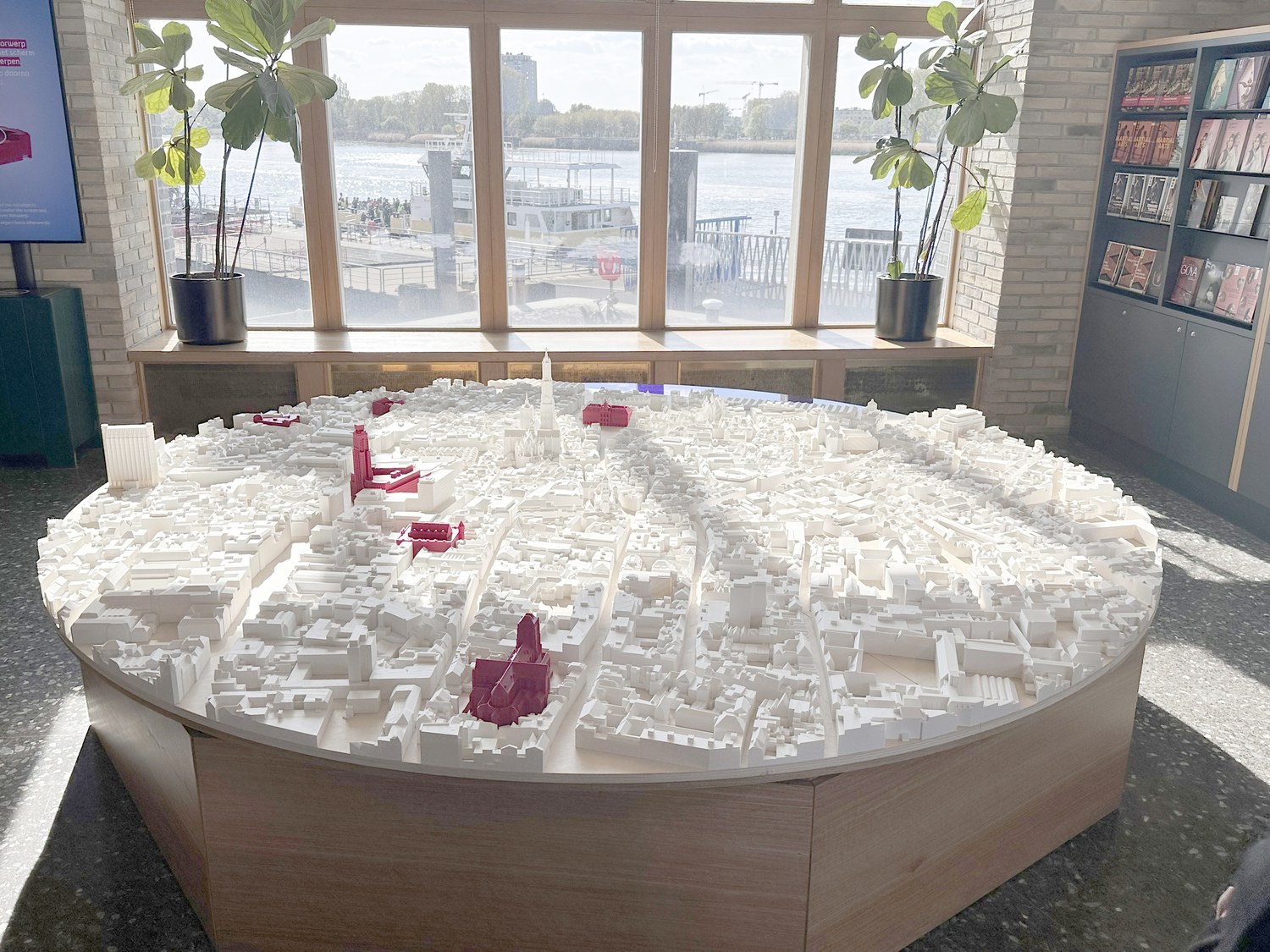
Work commitments often take us to places we might never have chosen for ourselves. In April 2026, such an opportunity brought me to Antwerp, Belgium. It was my first visit not only to Antwerp, but to Belgium altogether. Without preconceived expectations or carefully curated itineraries, I arrived with a sense of curiosity and gratitude, eager to discover a city that had long remained outside my architectural imagination, despite the short 2 days I had.
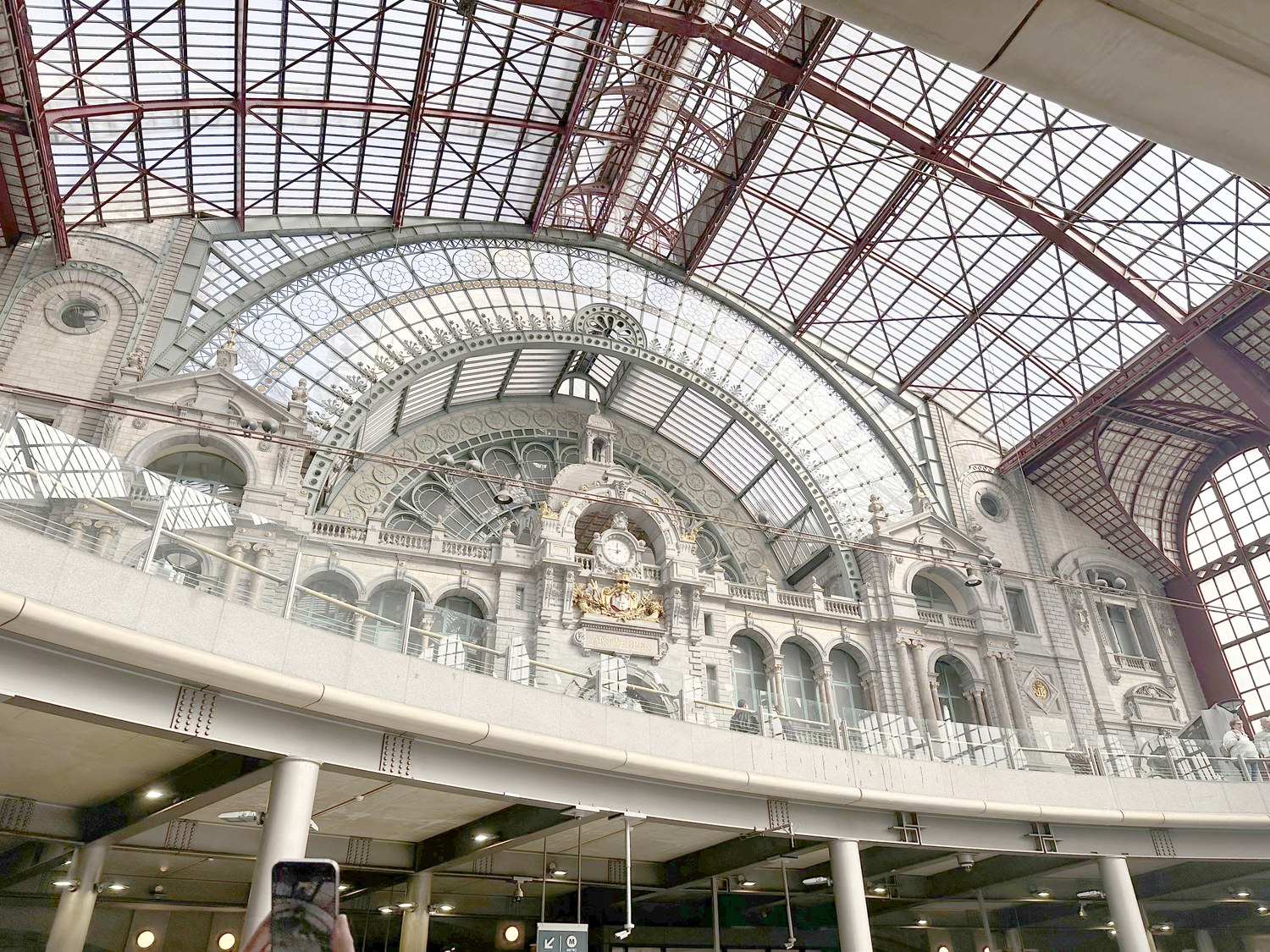
The journey itself was an exercise in transitions. After a thirteen-hour direct flight from Kuala Lumpur to Amsterdam, I boarded a train southward into Belgium, arriving at Antwerp Central Station. Often described as one of the most beautiful railway stations in the world, the station offered an immediate introduction to Antwerp’s character —grand yet approachable, historic yet remarkably alive. The soaring iron-and-glass train shed, framed by an eclectic architectural composition of stone, ornament, and engineering prowess, seemed an apt gateway into a city where different eras comfortably coexist.
Antwerp is Belgium’s second city, a place whose global reputation is often tied to diamonds, fashion, and one of the world’s largest ports. Yet beyond these economic identities lies a city of intimate urban experiences. Its medieval streets, Renaissance monuments, and vibrant public spaces reveal themselves gradually, best discovered on foot or by bicycle.
Cycling, in fact, appears woven into the city’s everyday culture, allowing residents to navigate effortlessly between historic quarters and contemporary developments.
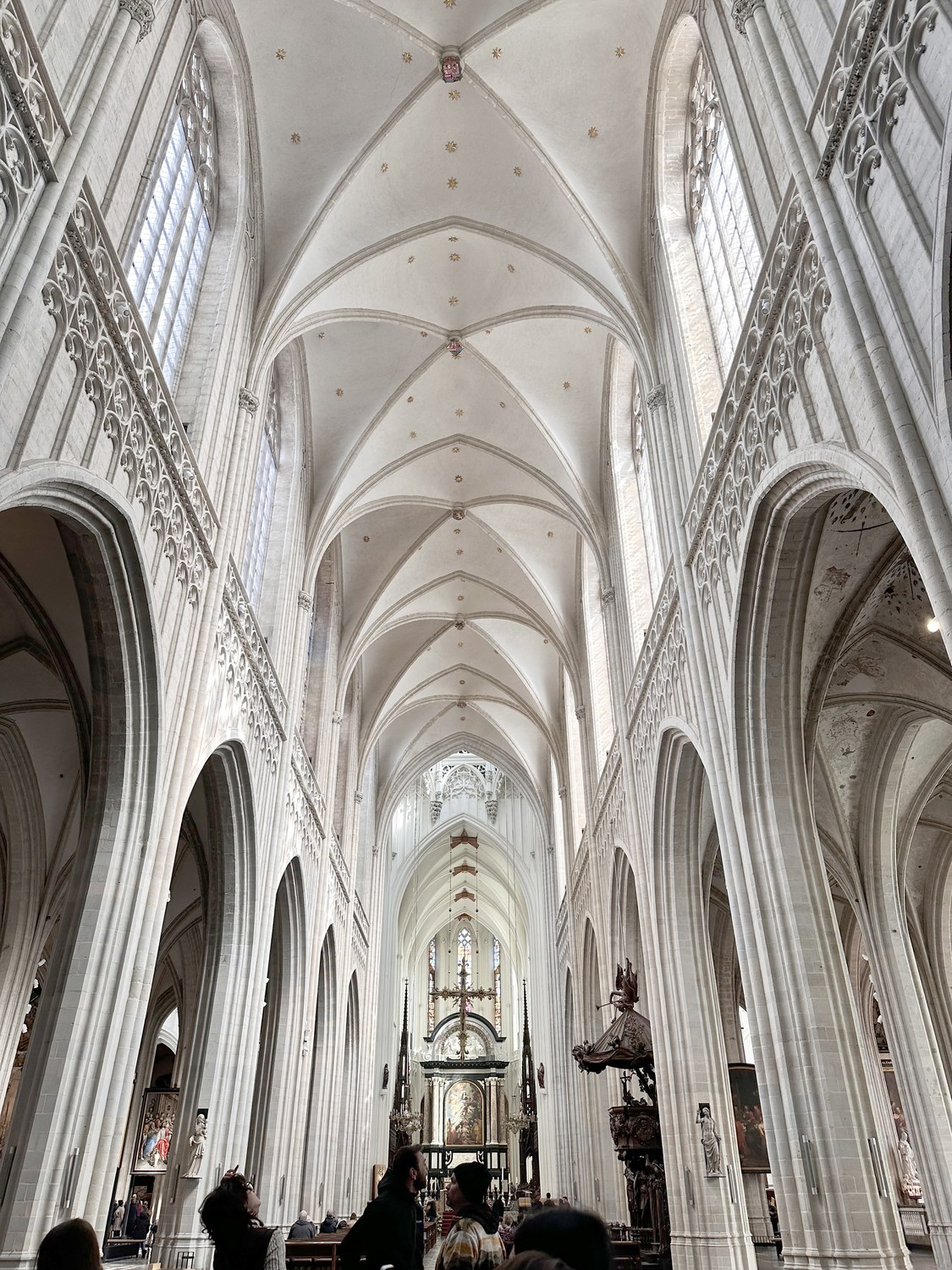
My exploration began in the historic centre, where the city’s urban fabric remains remarkably intact. Dominating the skyline is the Cathedral of Our Lady, its elegant 123-meter spire visible from various vantage points across the city. As the tallest structure in Antwerp, the cathedral serves not merely as a landmark but as a constant point of orientation. Its Brabantine Gothic architecture embodies centuries of craftsmanship, reminding visitors of architecture’s power to transcend generations.
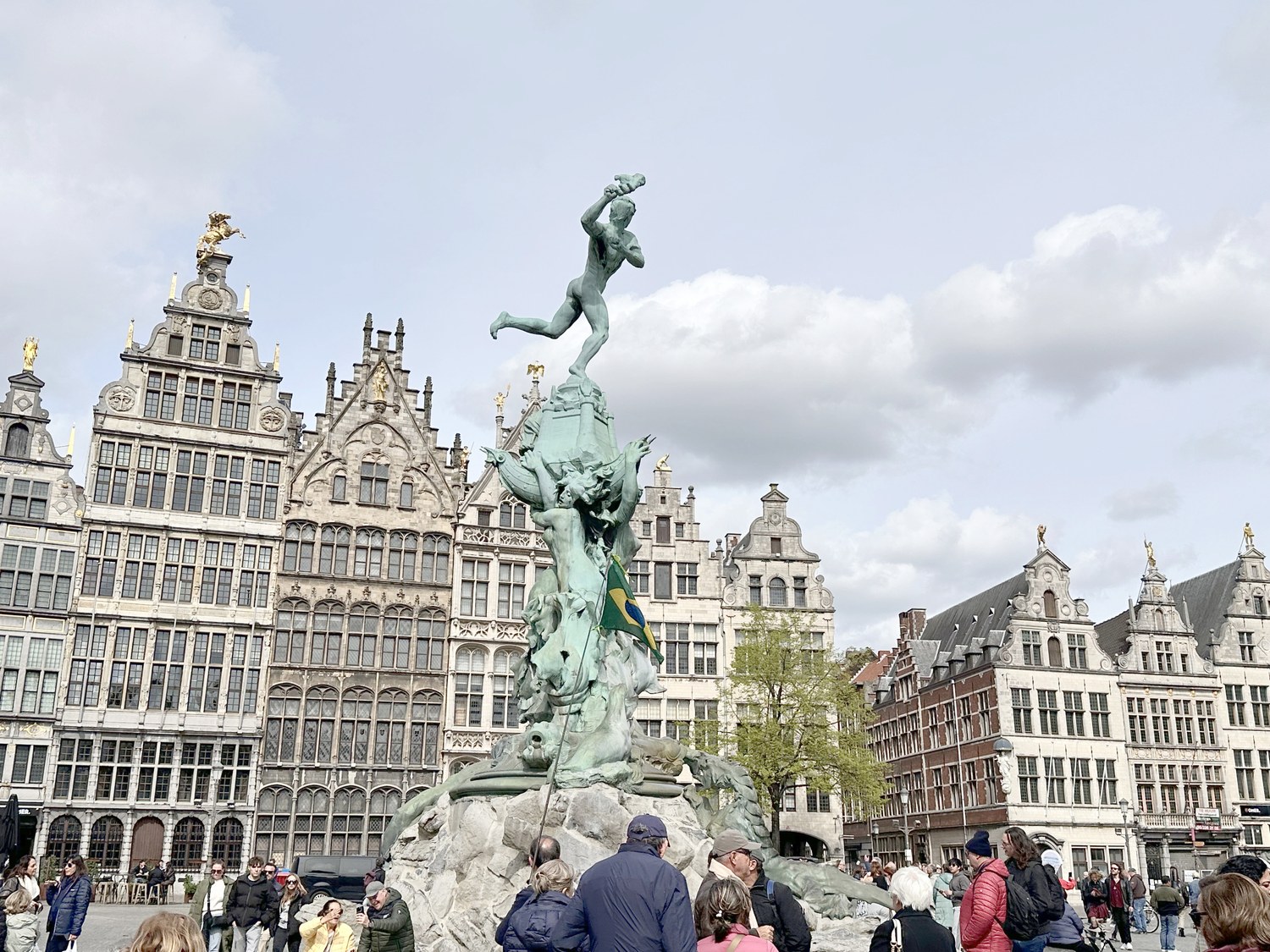
A short walk away lies the Grote Markt, Antwerp’s historic market square. Framed by richly ornamented sixteenth-century guild houses, the square speaks of the city’s mercantile prosperity and civic pride. At its centre stands the Brabo Fountain, depicting the legendary Roman soldier Brabo who defeated the giant Antigoon, a myth closely tied to the origins of Antwerp’s name. Here, architecture, urban space and storytelling merge seamlessly, illustrating how cities construct collective identity through both built form and folklore.
From the square, I wandered towards the Scheldt River, where Antwerp’s relationship with trade and water becomes more apparent. Standing along the waterfront is Het Steen, the city’s oldest surviving building. Dating back to the medieval period, the fortress once served as a defensive stronghold guarding access to the city. While modest in scale compared to Europe’s grand castles, it is significant for its endurance. Het Steen offers a tangible reminder of Antwerp’s strategic importance and of the river’s historical role in shaping the city’s fortunes.
The Scheldt waterfront also reveals another face of Antwerp— one that looks towards renewal and reinvention. This became particularly evident during my visit to the MAS (Museum aan de Stroom), designed by the Dutch architectural firm Neutelings Riedijk Architects. Rising above the redeveloped docklands, the museum is a contemporary urban marker that celebrates Antwerp’s longstanding connections to the world. Its stacked volumes and distinctive red sandstone façade create a powerful architectural presence while offering panoramic views over the city. From its elevated terraces, Antwerp unfolds as a layered landscape where church spires, warehouses, residential quarters, and port infrastructure coexist within a remarkably coherent urban composition.
The culmination of this architectural journey was a visit to the Port House, designed by Zaha Hadid Architects. Positioned at the edge of the harbour, the project embodies Antwerp’s ambition to bridge past and future. The design preserves a former fire station while suspending above it a crystalline glass volume reminiscent of both a ship’s prow and a cut diamond. The intervention is bold yet contextual, acknowledging Antwerp’s maritime heritage and diamond-trading legacy through a distinctly contemporary architectural language. It stands as a powerful example of adaptive reuse, in which heritage structures are not frozen in time but are activated through thoughtful transformation.
What struck me most during my brief stay was not any single building, but the way Antwerp negotiates continuity and change. Medieval fortifications, Gothic cathedrals, Renaissance guild houses, industrial waterfronts and contemporary architecture are not isolated episodes; they form an ongoing dialogue across centuries. The city demonstrates that heritage and innovation need not be opposing forces. Instead, they can coexist, enriching one another and contributing to a layered urban identity.
In just two days, Antwerp revealed itself as a city that rewards careful observation. Beneath its understated reputation lies an urban environment shaped by commerce, culture, craftsmanship and design. For architects, it offers a valuable lesson: cities are most compelling when they embrace their histories while remaining open to reinvention.
What lingered with me after leaving Antwerp was not the grandeur of its landmarks, but the city’s confidence in embracing its multiple identities. Medieval fortifications stand comfortably alongside contemporary interventions. Historic market squares continue to function as vibrant public spaces, while former docklands are reimagined for new generations. Architecture here is not treated as a collection of isolated objects but as part of an evolving urban narrative.
As architects, we often speak about balancing heritage and progress, yet Antwerp demonstrates how this balance can be achieved with remarkable clarity. Projects such as the MAS and Port House do not attempt to mimic the past, nor do they disregard it. Instead, they engage in a respectful dialogue with history, allowing old and new to coexist without diminishing one another.
Walking through Antwerp inevitably prompted reflections on our own cities in Malaysia. Rapid urbanisation frequently pits development and conservation against each other, forcing difficult choices between preservation and growth. Antwerp suggests another possibility—that heritage can be viewed not as a constraint, but as a resource for future-making. The city’s layered urban fabric shows how memory, identity and innovation can be woven together to create places that remain relevant across generations.
My visit lasted only two days, yet Antwerp left a lasting impression. Perhaps this is the true measure of a city: not the number of monuments it possesses, but its ability to reveal stories through its streets, buildings and public spaces. Antwerp is a city that rewards curiosity. For architects, it offers a compelling reminder that the most enduring urban environments are those that continue to evolve while never losing sight of where they came from.
VERONICA NG is a Professor and Head of the Architecture Department at the School of Architecture & Design, Sunway University, Malaysia.