Adaptive Re-Use - Silver ARCHITECT: Kenny Chong Architect in collaboration with Arch Cubica Architects CLIENT: Private CONTRACTOR: A3 Projects Sdn Bhd
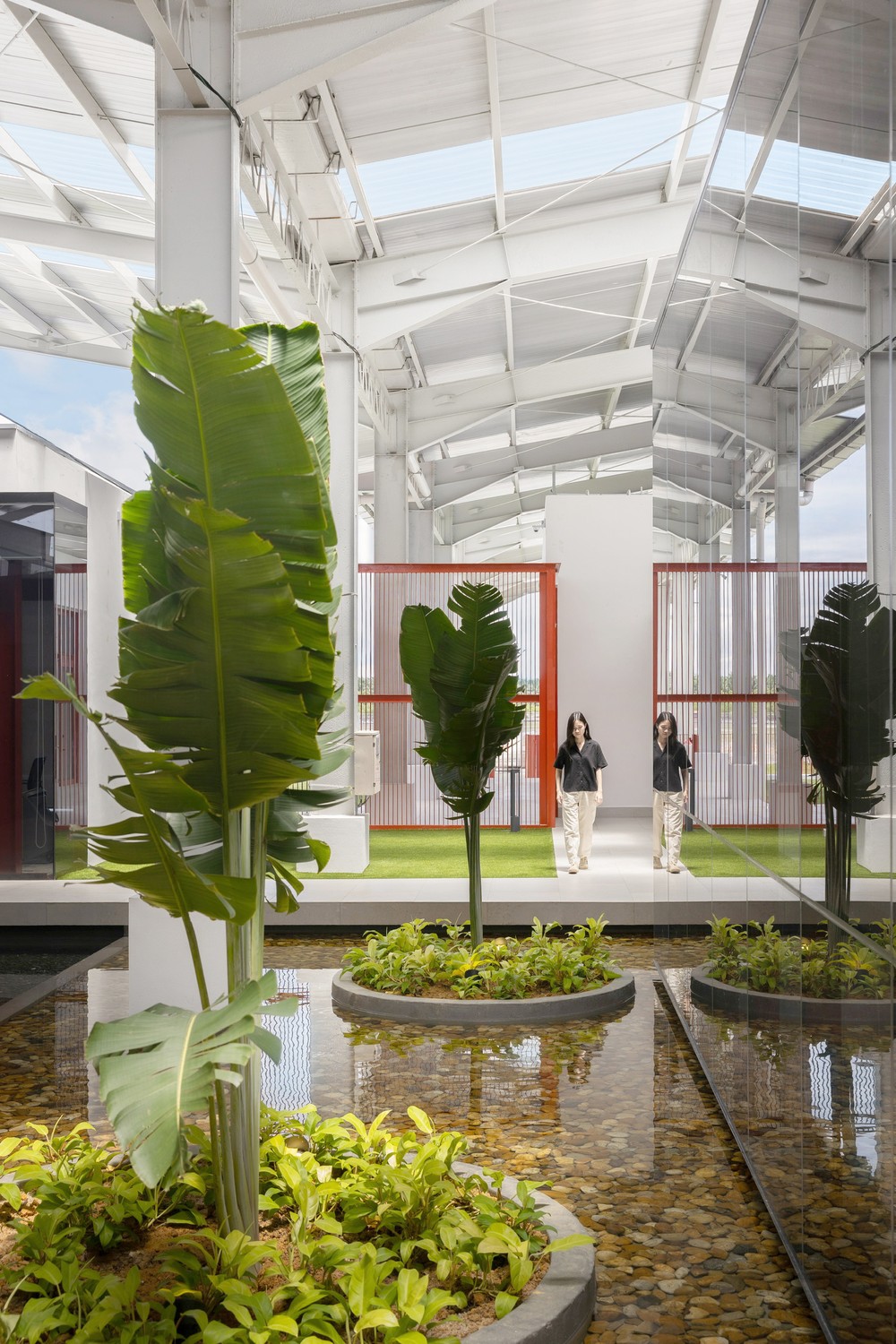
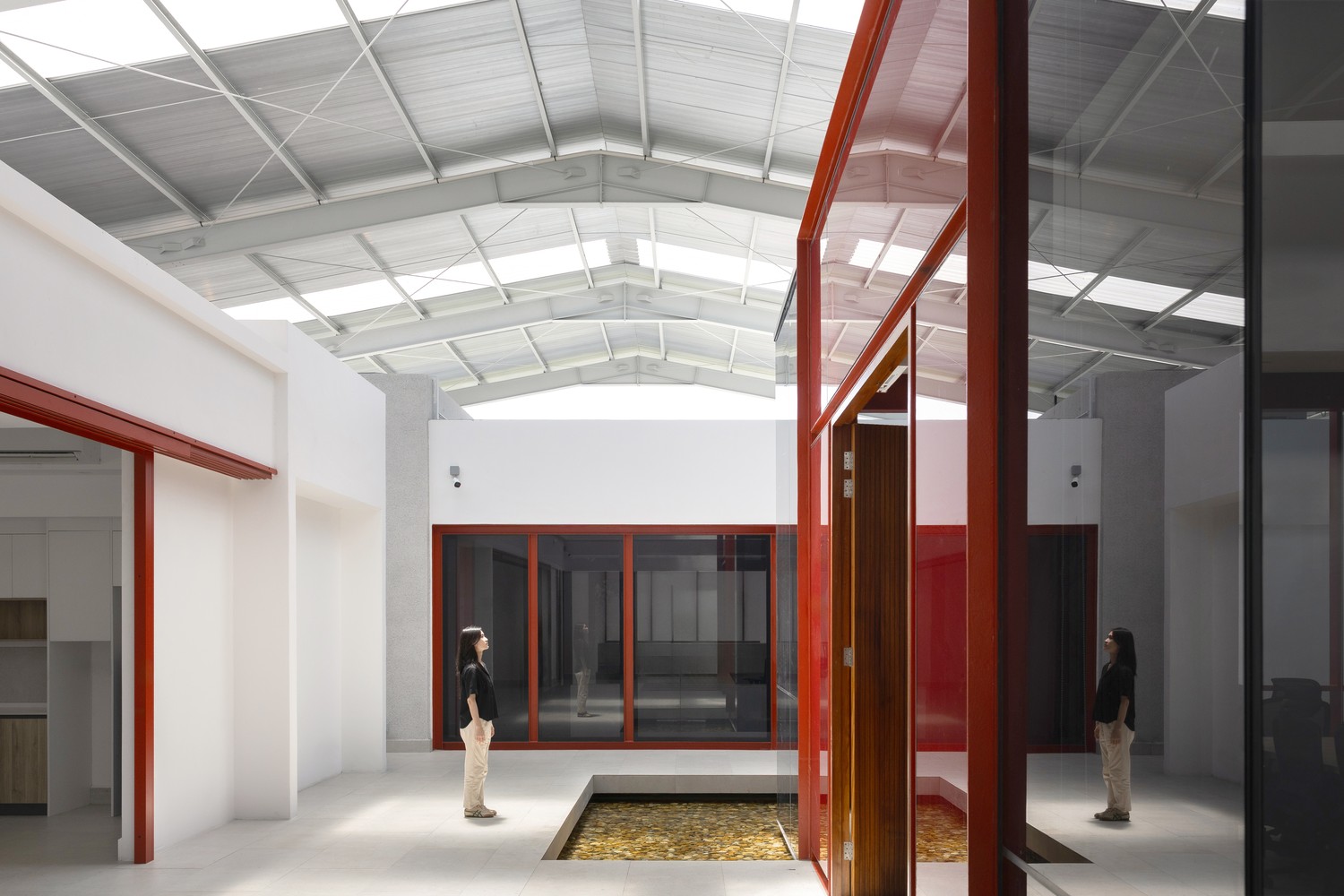
The space is organised around a central water feature that helps cool the environment and enhance comfort. High roof and minimal enclosure allow strong breezes to move freely, enabling effective cross ventilation. The combination of water, greenery, and openness
“Spynie Office, Perak River: From Shipyard to Workplace” transforms a 3.21-acre derelict shipyard in Teluk Intan, Perak, into a sustainable corporate office of an oil palm business and a vibrant community hub. Once an industrial relic along the riverbank, the site is transformed into a climate-responsive workplace rooted in contextual sensitivity and collective memory.
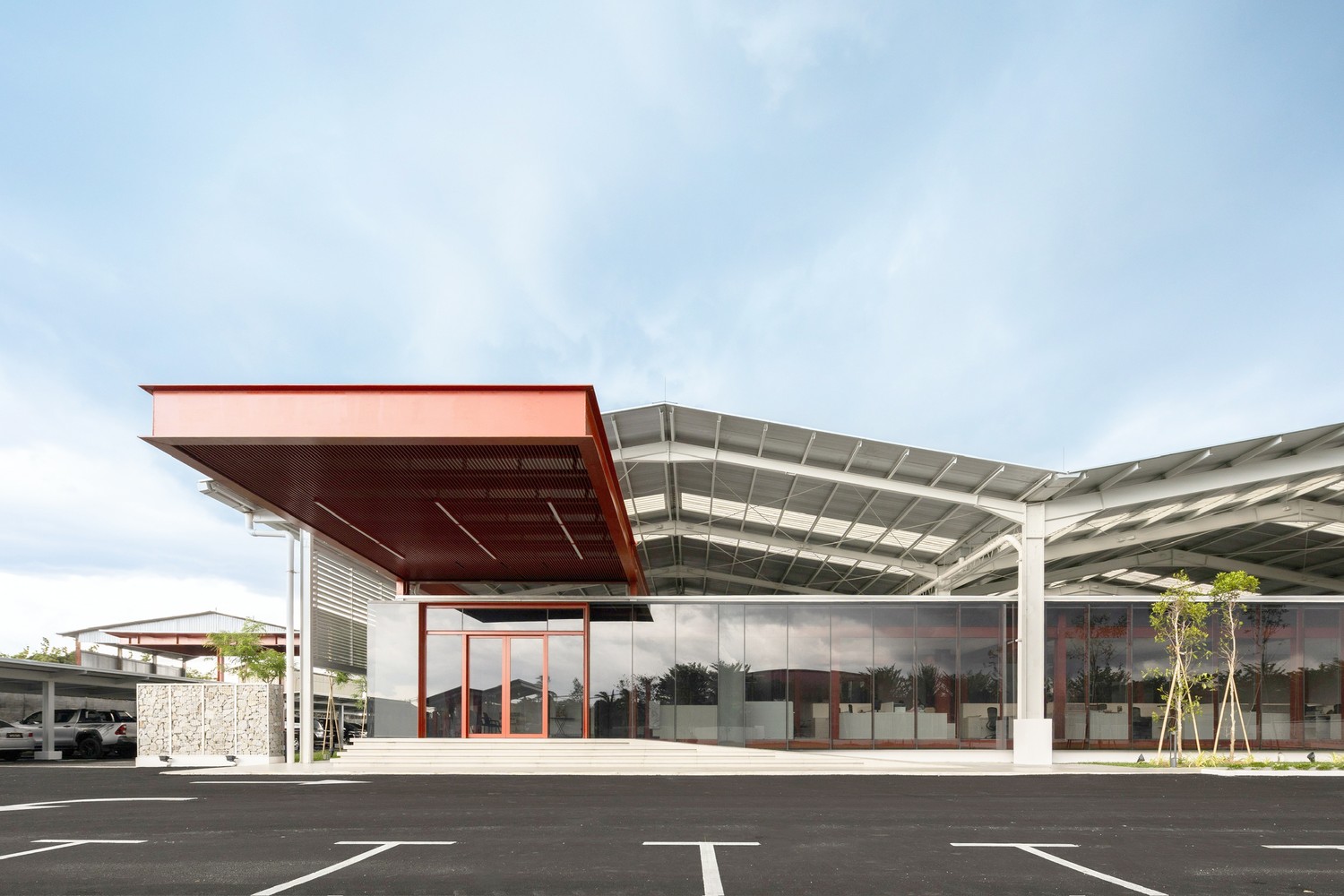
Under the retained industrial canopy, a new glass pavilion emerges, where shipyard memory meets contemporary workplace. Preserving the steel skeleton, the large shed unified all the spaces under one roof providing shelter from the tropical sun while enhancing the flow of space
At its core, the project is an act of adaptive reuse—preserving the spatial DNA and material traces of the former shipyard while reinterpreting them for contemporary use. Rather than erasing the industrial past, the design retains the existing slab and structural footprint as the foundation for renewal. The original shed is carefully rehabilitated and integrated into the new programme, allowing old and new elements to coexist in quiet dialogue. Weathered industrial textures are juxtaposed with refined glass pavilions and landscaped courtyards, forming a layered narrative of transformation. This approach minimises demolition waste, reduces embodied carbon, and celebrates the site’s industrial heritage as an integral part of its renewed identity.
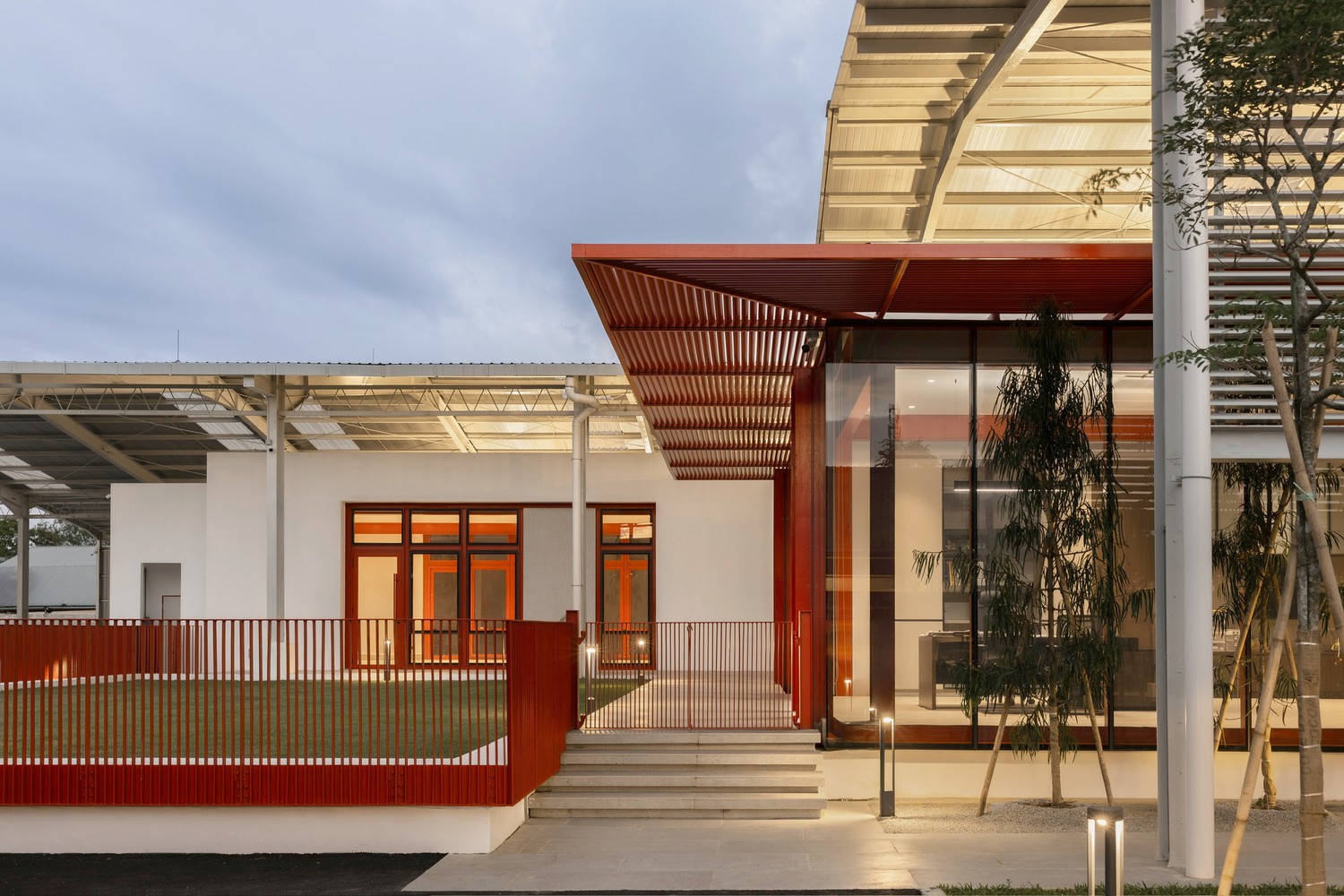
A modern insertion beneath the existing canopy reinterprets the industrial past through light steel screens, glass walls, and carefully framed outdoor space
The building, with its earthy red hues and lush greenery, subtly references the nature of the palm plantation industry. Designed around a central courtyard, the structure features a series of pavilions that offer both inward and outward-facing spaces, each capturing distinct views of the surrounding nature. The concept of a single, unified roof provides shelter from the tropical sun while enhancing the flow of space.
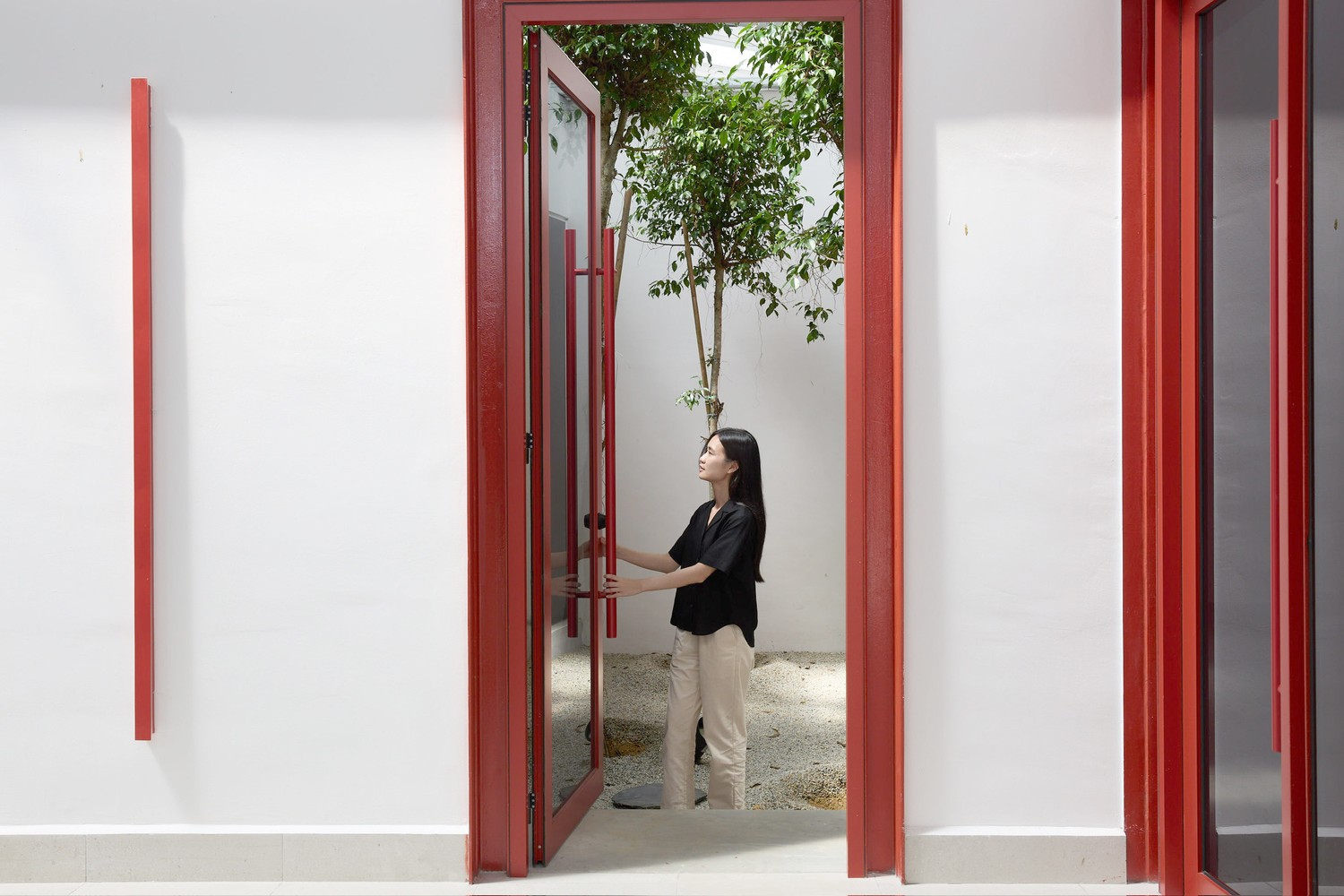
A dialogue with the courtyard. The internal courtyard provides a serene pause within the building, seamlessly linking surrounding workspaces. Daylight filters from above, while greenery brings nature into everyday areas
By integrating translucent rooflights, the design plays with light and shadow throughout the day, creating dynamic shifts in the space. This design avoids deep-plan layouts by creating multiple courtyards. To adapt to the tropical climate, multiple shading layers are used, including double planting inside and outside. Horizontal fins around the large shed and glass pavilions, positioned further inside, create a buffer from the sun. Timed trickle ventilation purges hot air after office hours, ensuring a fresh start each day.
Located near the Perak River, the building is elevated on the existing slab with backfill soil to prevent flooding. Double insulation in the roof and pavilions ensures comfort. The rear space facing the river will be transformed into a pickleball court and community area, adding social value. The water feature in the courtyard and curtain walling creates seamless reflections between old and new elements, blurring boundaries and enhancing the building’s poetic composition.
A bold and challenging adaptive reuse of a former shipyard, reinterpreting an industrial structure into a contemporary workplace through courtyards, passive cooling strategies, and refined spatial planning.
Open spaces with natural light filtering through translucent roof. With the use of roof lights, the design brings lights and shadow into the building’s ambiance. The interplay of daylight throughout the day creates dynamic shifts in the space, adding moments of delights