Single Residential - Commendation ARCHITECT: Design Collective Architects CLIENT: Anonymous CONTRACTOR: Solid Green Builders Sdn Bhd
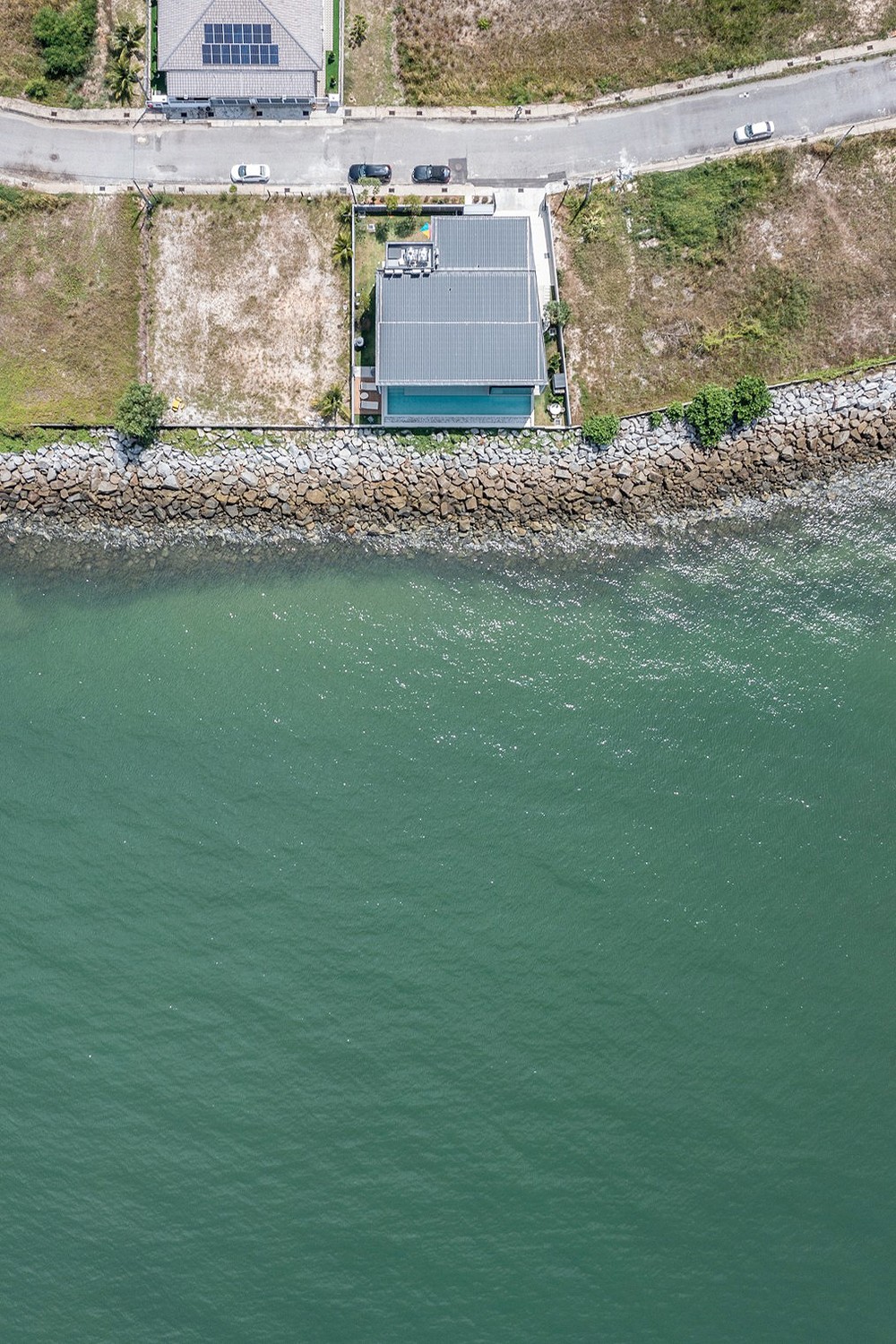
Aerial view emphasises the vast sea against the compact house, reinforcing the retreat’s quiet dialogue with the coastal horizon
La Concha challenges the typical roof typologies associated with tropical seaside houses, where pitched roofs are often adopted as the default climatic response. Instead, the house is organised beneath a single oversized roof that consolidates structure, enclosure, and environmental control into a single architectural gesture. This monolithic canopy becomes the defining element of the project, unifying the spaces below while framing uninterrupted views of the Port Dickson coastline.
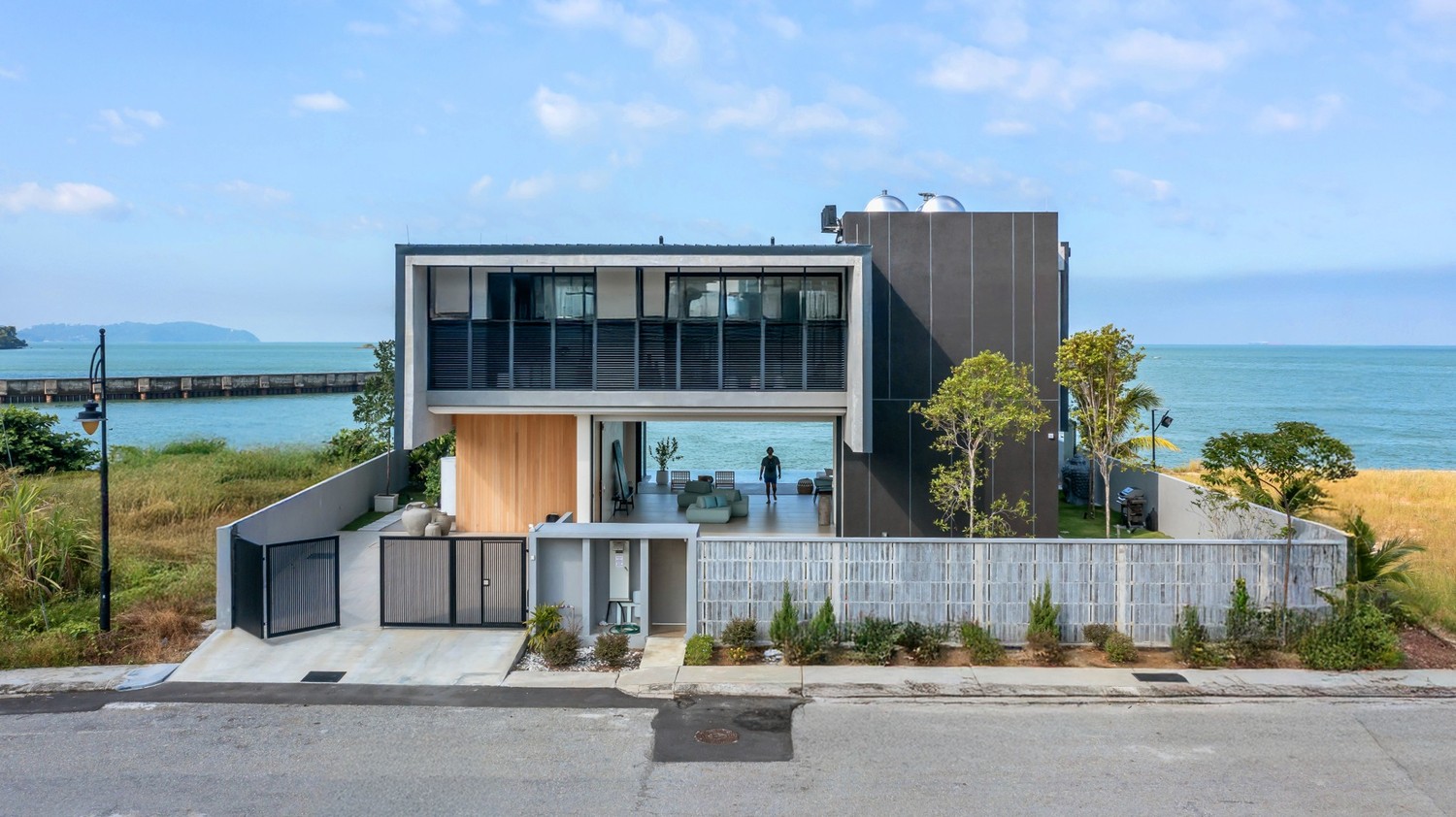
Presenting a modest street façade, concealing open living spaces that extend directly toward the sea beyond
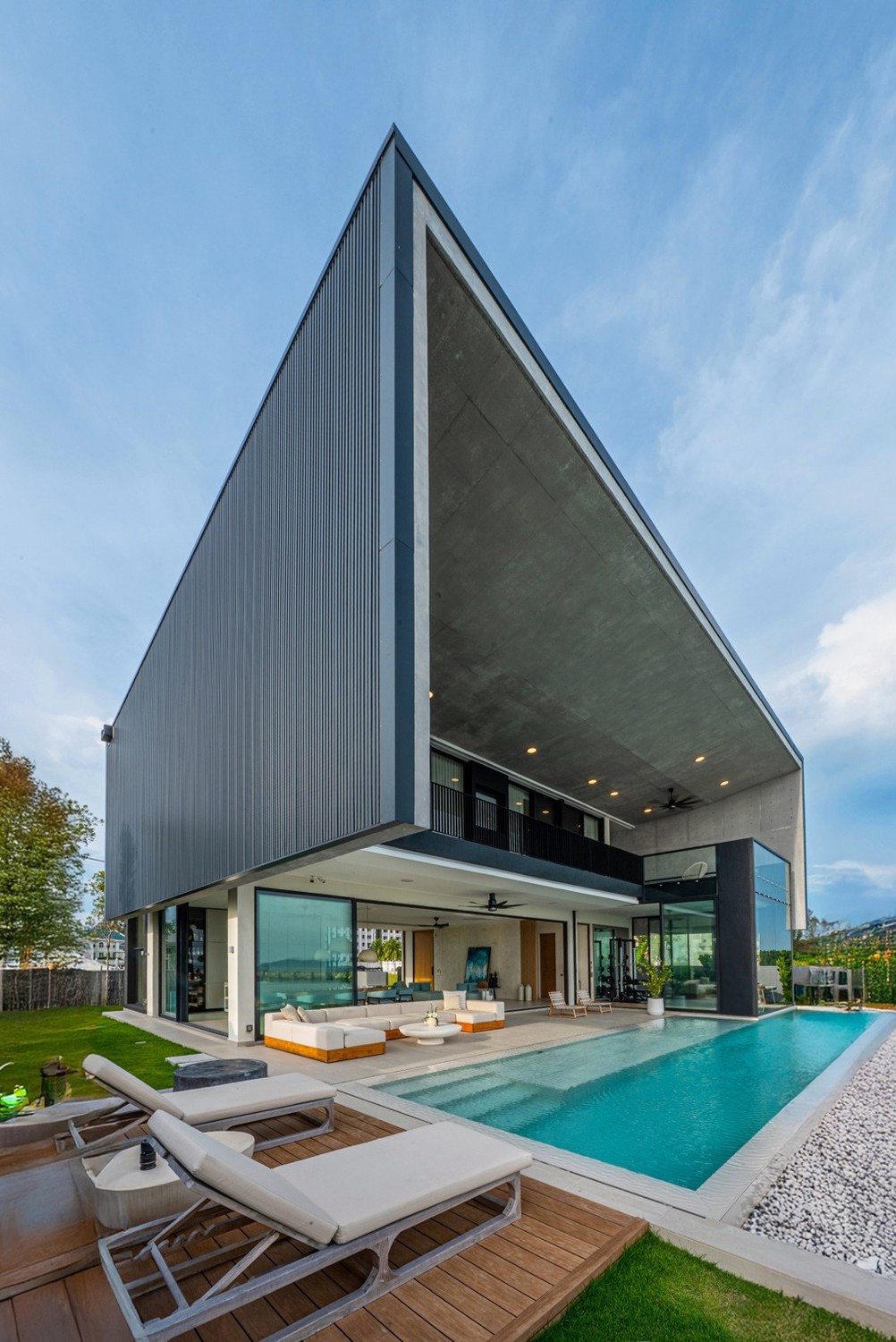
Beyond its formal presence, the oversized roof operates as a climatic device that moderates the tropical environment. Deep cantilevers extend beyond the building envelope to provide generous shading from both sun and rain, significantly reducing direct solar heat gain to the living spaces. The orientation of the house responds carefully to the site conditions, limiting exposure to the harsher east and west sun while opening the main living areas toward the sea. By shielding the building from low-angle solar exposure, the roof canopy plays a key role in maintaining comfortable internal temperatures.
Deep overhang shelters the terrace and pool, extending shaded living spaces toward uninterrupted coastal views
Within the depth of the roof structure, a hollow roof volume allows coastal winds to pass through and circulate above the occupied spaces. This configuration encourages air movement while dissipating heat accumulated on the roof surface. Openings on opposite sides of the house allow prevailing sea breezes to flow through the interior, providing effective cross-ventilation throughout the living spaces. These passive strategies keep the house naturally ventilated for most of the day, reducing reliance on mechanical cooling while maintaining a comfortable indoor environment.
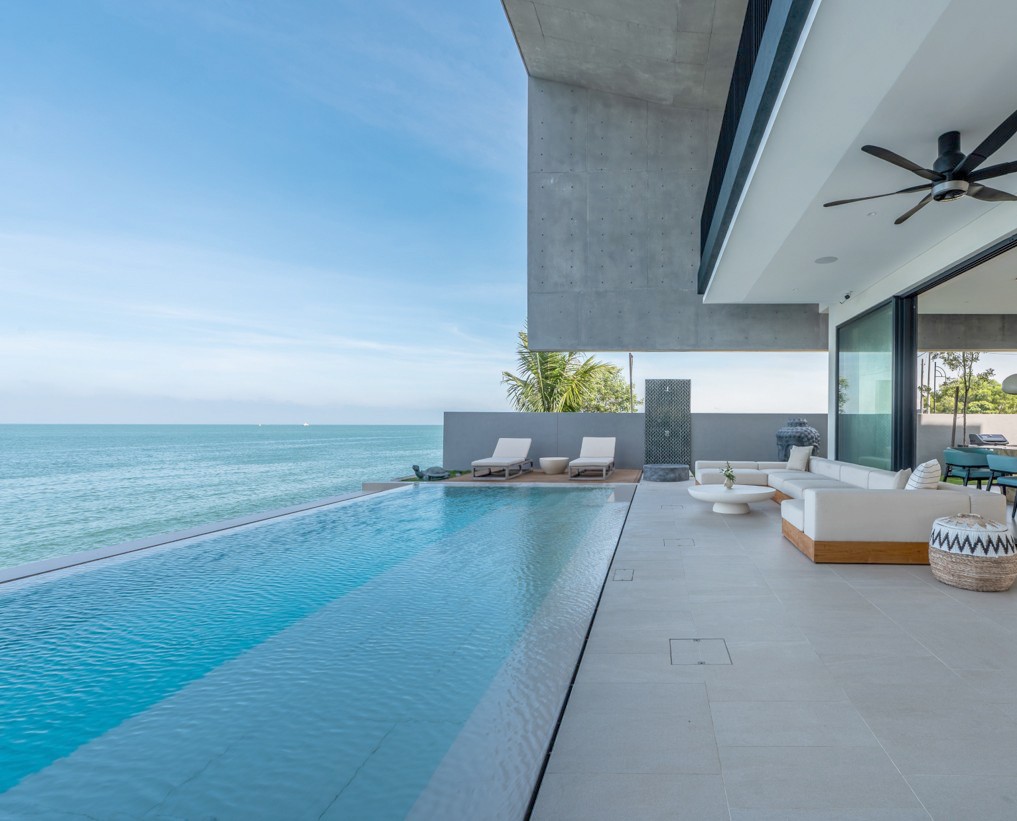
Infinity pool and open terrace merge indoor and outdoor living, extending La Concha’s daily spaces toward uninterrupted sea views
Situated on the edge of the coastline, the house is carefully positioned to maximise views of the sea while maintaining privacy from neighbouring houses and the access road behind. The architecture opens outward toward the horizon, allowing the vastness of the ocean to become a constant visual presence within the house. At the same time, the deep roof canopy creates a sheltered environment beneath it, balancing exposure to the coastal landscape with a sense of protection from the elements.
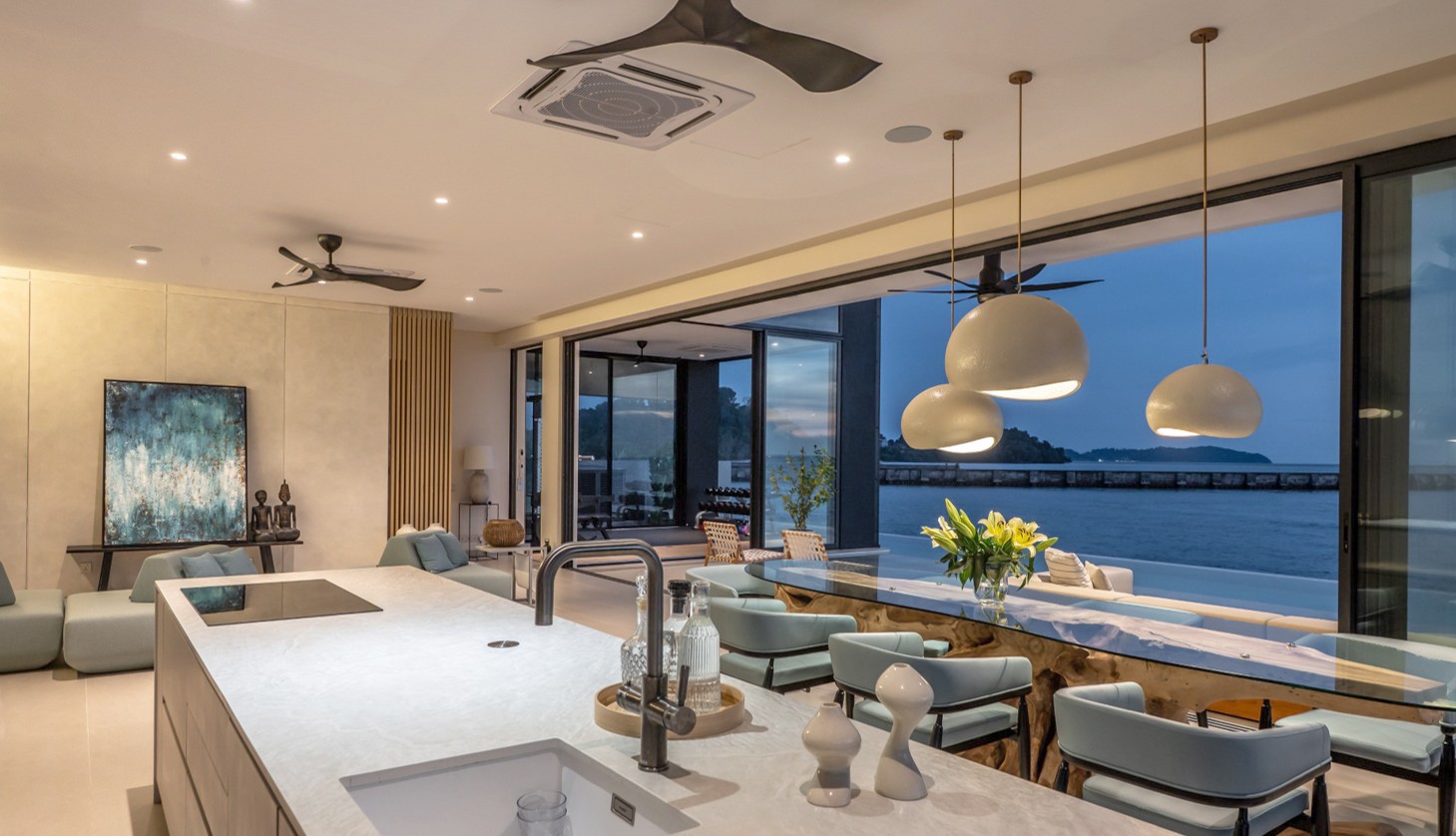
All primary spaces are arranged beneath this protective canopy, creating a clear spatial organisation that allows indoor and outdoor areas to function as a continuous living environment. Large sliding openings fully open the interior to the terrace, strengthening the relationship between the house and the surrounding seascape. High ceilings beneath the roof further assist with passive cooling, allowing warm air to rise and dissipate naturally while maintaining comfortable living conditions below.
The outdoor terrace becomes the principal living space of the house, reflecting the relaxed character of coastal living. Positioned directly facing the sea, the terrace extends the interior spaces, accommodating everyday activities such as dining, gathering, and resting. The infinity pool is flush with the floor, so the water surface visually merges with the horizon, reinforcing the visual continuity between the house and the ocean beyond.
Through a single architectural gesture and a series of carefully considered passive design strategies, La Concha demonstrates how climate-responsive architecture can shape both form and experience in a contemporary tropical home.
A commendable coastal retreat embracing sea views, natural ventilation, and seamless indoor-outdoor living.
Evening living unfolds along the coastline, where La Concha’s open interior frames the sea as a constant backdrop