INCUBATING INNOVATIONS

GBS TECHSPACE AT MEDAN BAYAN LEPAS, PENANG BY SA.LEE ARCHITECT PLANNER IS A REFRESHING
REMINDER OF THE ROLE OF ARCHITECTURE WITHIN THE LARGER URBAN FABRIC.
TEXT BY THE ARCHITECTS
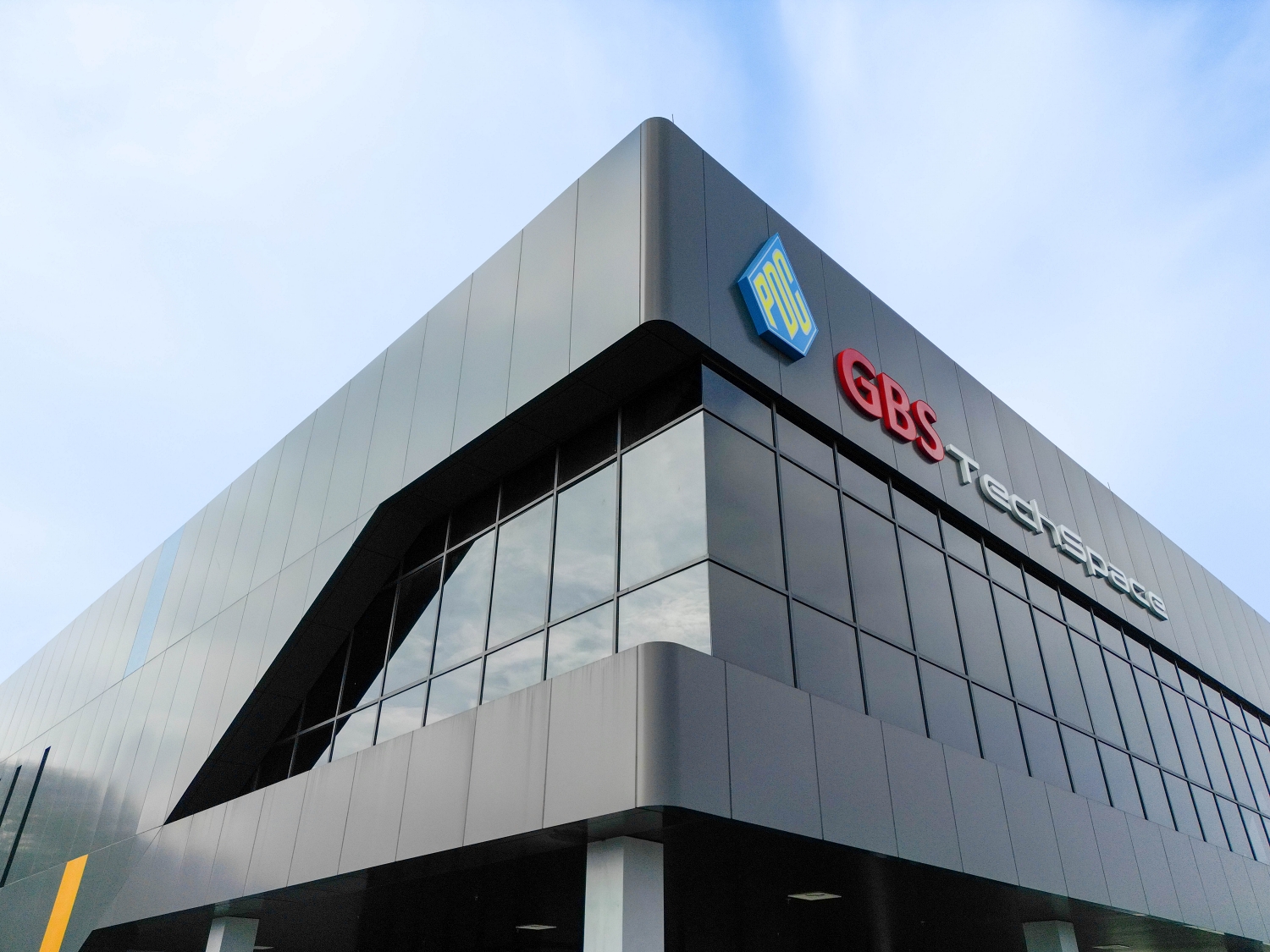
The detailing of design features on the main facade

In an industry where buildings are often designed as singularities, GBS TechSpace along Medan Bayan Lepas, Penang, is a refreshing reminder of the role of architecture within the larger urban fabric. In fact, its site was a former open car park. Its acquisition by the Penang Development Corporation has breathed new purpose into the land.

GBS TechSpace is part of a network of Global Business Services (GBS) facilities, which are spread across a five-kilometre radius of the Bayan Lepas Industrial Park. Completed in August 2024, the 78,000-square-foot facility is the fourth of five GBS facilities developed by the Penang Development Corporation, alongside GBS@Mayang, GBS@Mahsuri, GBS by the Sea, and the upcoming GBS@TechnoPlex.

This positions GBS TechSpace as a symbiotic node in a prime industrial area with the potential to synergise and elevate Penang’s robust semiconductor sector. Nestled in the heart of a well-developed zone rich with relevant talent, materials and demand for innovative output, its proximity makes it ideal as a venue for research and development of Integrated Circuits, the core focus of the Penang Silicon Design @5km+ (PSD @5km+) initiative: a collaborative effort between the Penang government, academia, and industry to accelerate the growth of the state as the Silicon Valley of the East.

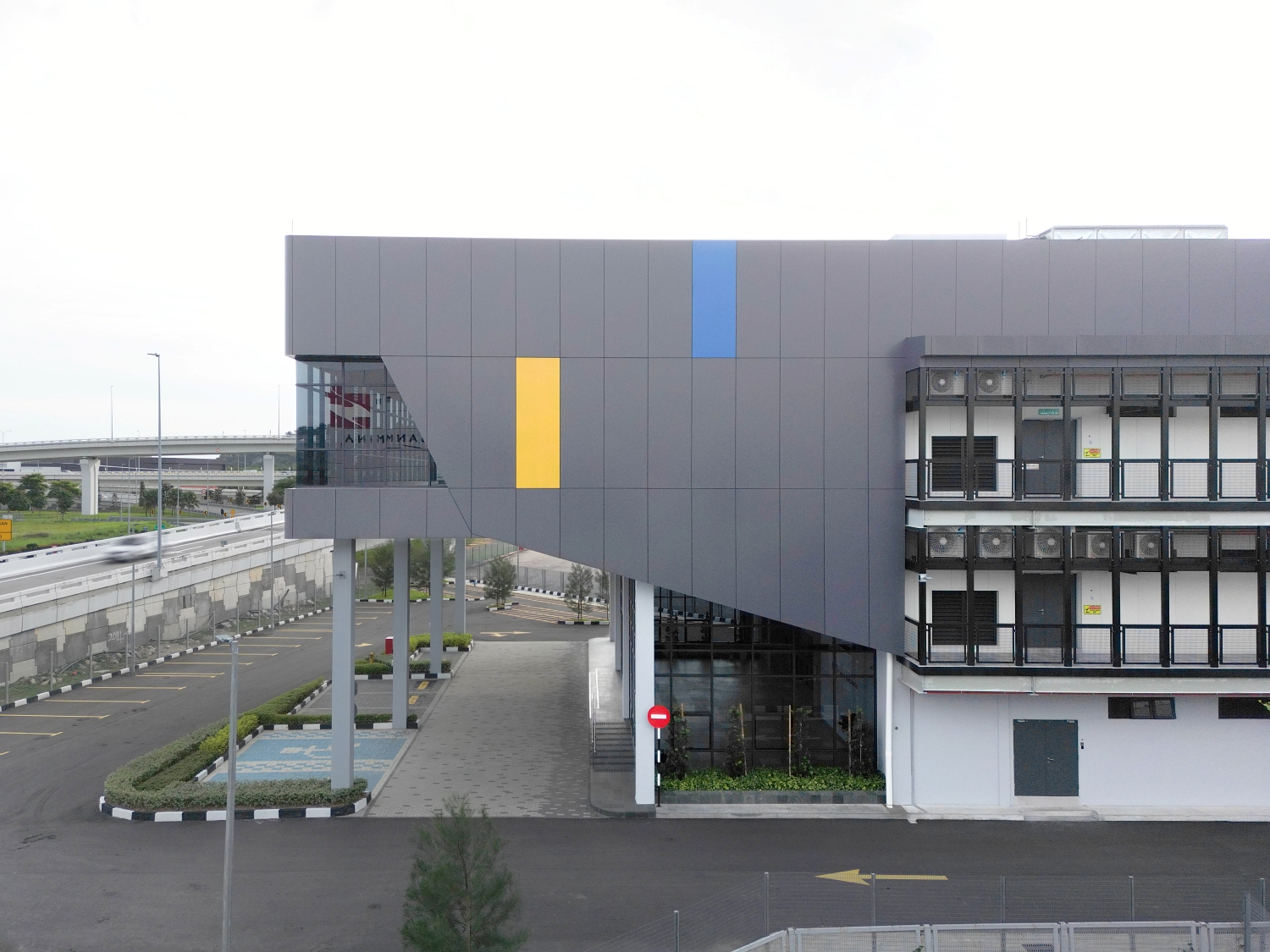
Along the building’s longitudinal façade, black steel frames establish a light and rhythmic repetition that enhances the corridor’s visual continuity

Instead of a concentrated master plan, the PSD @5km+ initiative involves a series of discrete infill or retrofitting developments within a five-kilometre radius. This radius aims to become the nucleus of a comprehensive Integrated Circuit design ecosystem, replete with the necessary physical, social, and economic infrastructure. Rather than being self-reliant, individualistic buildings, common public facilities, and amenities can be shared; GBS TechSpace is in the vicinity of the nearby Food Bayana food court and a gym in its sister GBS facility, GBS by the Sea, further down the road.

The role of GBS TechSpace in this environment can be likened to a launchpad and nurturing ground. It houses the first phase of the Silicon Research and Incubation Space, one of the three key projects of the initiative. Alongside the skills-centric Penang Chip Design Academy that offers a Chip Design Talent Cultivation Program, the Silicon Research and Incubation Space provides a physical platform to support chip design start-ups and SMEs within the final key project, the 42.5-hectare Penang IC Design and Digital Park @ Bayan Lepas, which will dedicate 1,000,000 square feet of built-up area to IC design and innovation.

GBS facilities are designed to cater to a transient community; their short-term rentable spaces are meant to be initial offices in a prime industrial location for new and foreign start-ups, who are expected to expand into their own offices in due time. As such, GBS TechSpace contains generous open-plan spaces of various sizes to cater to different scales of innovator and start-up companies. The spaces were provided with bare finishes and loose wiring points only to reduce demolition waste from tenant fit-outs.

The intersection between the bold aluminium façade panels and the light black steel corridor enhances the overall architectural expression through contrast and material interplay

In addition to adaptable layouts, GBS TechSpace is also highly efficient, achieving 80% efficiency -a great feat for its typology – through judicious use of a linear corridor. Slim, black steel frames infilled with anti-climb panels create a light, repetitive rhythm on the longitudinal side of the building, providing not only shade and a circulation route, but also a maintenance space for split-unit air-conditioning compressors suspended below the soffit. This keeps the compressors organised, somewhat camouflaged, and yet well-ventilated. As a bonus, the service corridor is also further increasing the efficiency of the floor plate’s circulation.

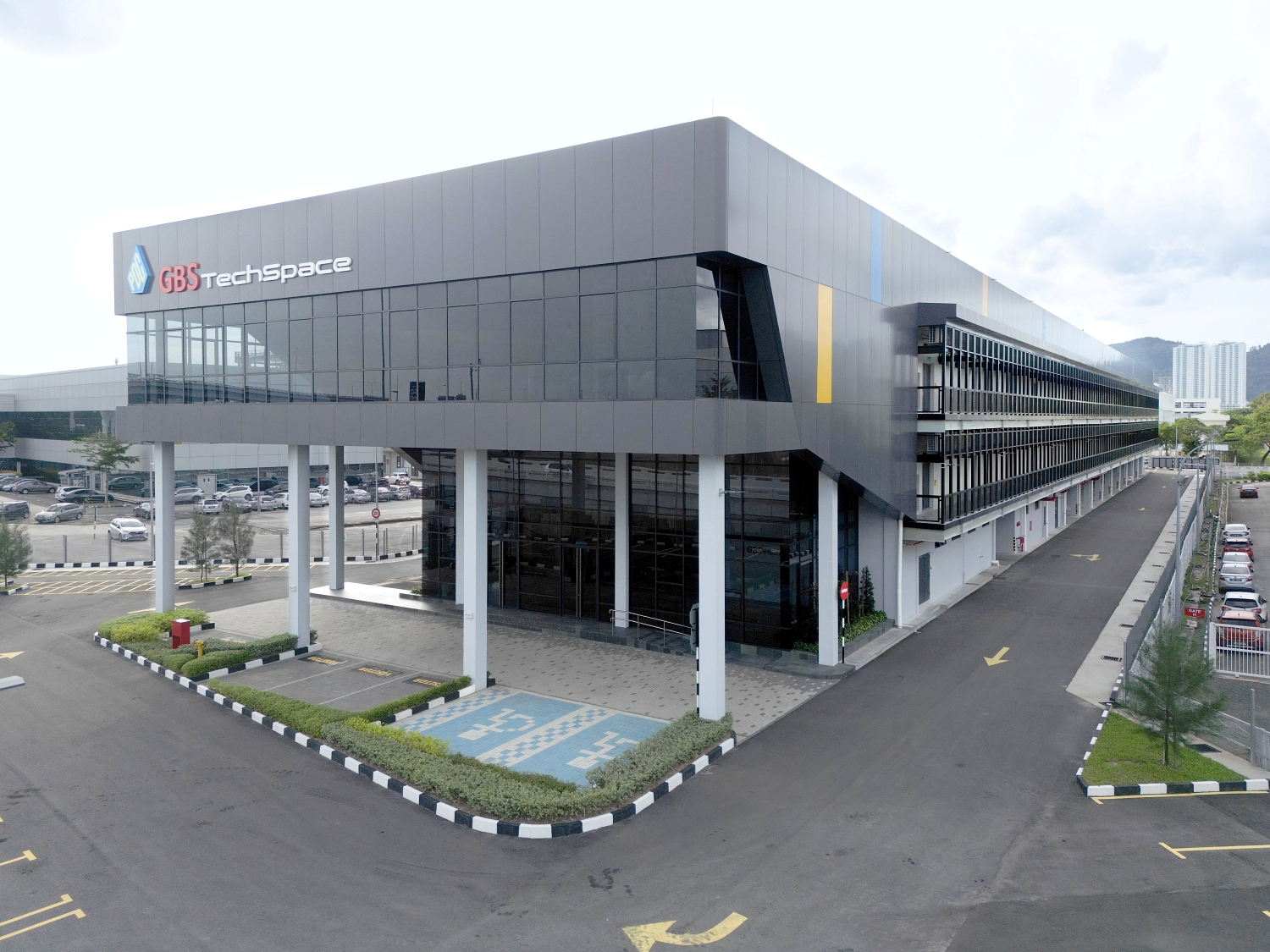
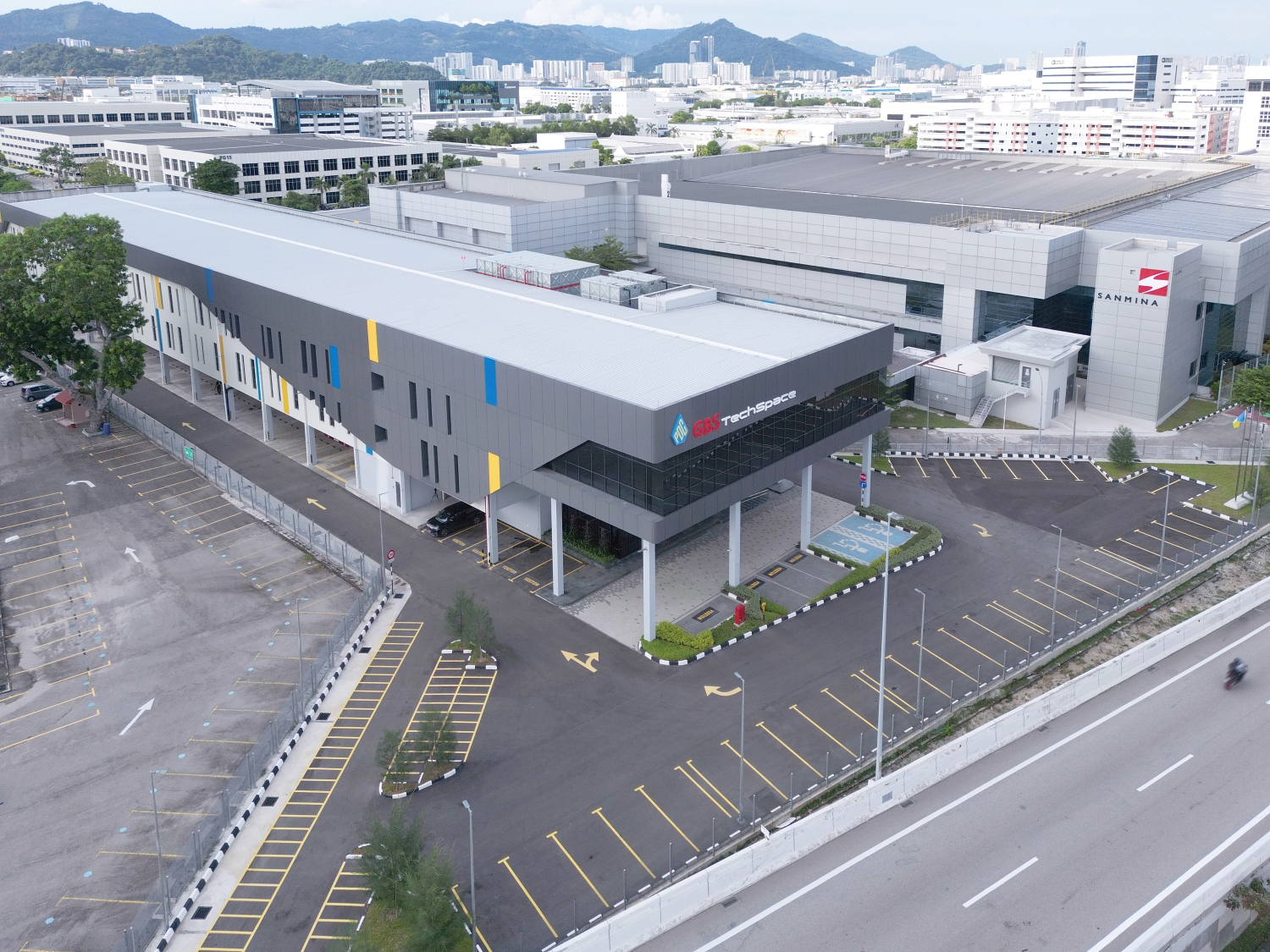
The building’s long, linear footprint, a direct response to its site constraints, is nevertheless impactful. Aesthetically, it makes up for lost frontage by packing a colourful punch. In a sea of plain white and faded grey buildings, GBS TechSpace stands out with its bold dark grey aluminium composite panels. Splashes of blue and yellow celebrate Penang’s state colours. With high visibility via the flyover descending from the second Penang bridge, GBS TechSpace is well poised as a welcoming symbol of Penang’s identity as an industrial hub.

However, the utilisation of a former road reserve was not without its challenges. Multiple underground services ran the length of the site, including water pipes and a major electrical cable from a nearby TNB Main Intake Substation (PMU). The diversion of such services incurred time and cost overruns. To mitigate further delays, materials such as polyurethane-insulated panels for walls and aluminium composite panels for cladding -modular, dry construction systems­-were used to expedite construction.

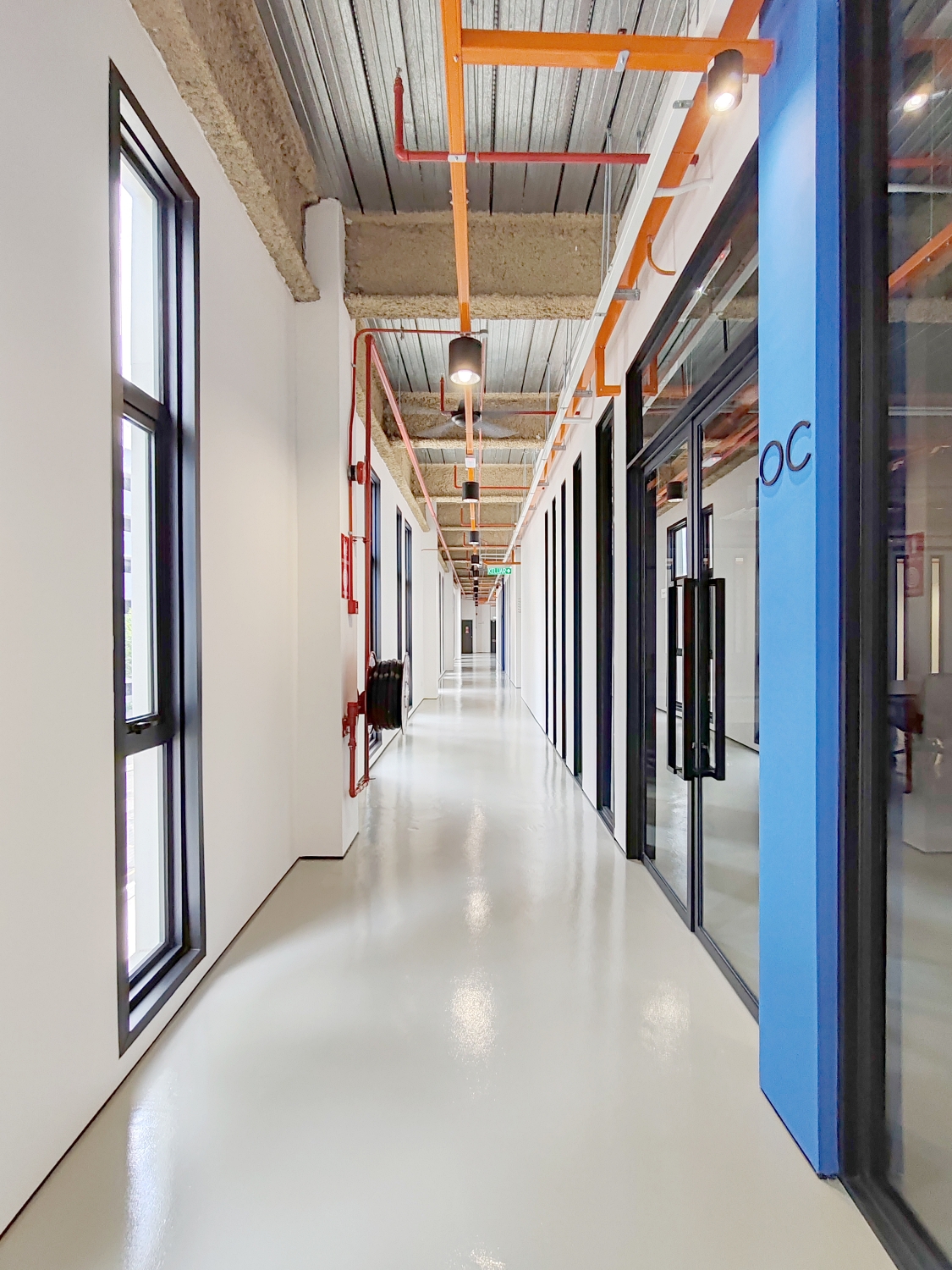
Bare ceiling design allows easy future M&E upgrades and modifications

Further considerations were also taken to make the building more environmental-friendly. The structure of the building was pre-designed to cater to future solar panels on the rooftop. In the meantime, the roof was finished in white, a colour with a high Solar Reflectance Index (SRI) that helps to reduce heat absorption through the roof. For a low-rise development, where heat gain through the roof can be significant, this sensitivity reflects sustainable and resilient design practices.

Already, the PSD @5km+ initiative has borne fruit: one of its inaugural incubatees, SiliconX, has already developed and deployed a high-end semiconductor product, the first proprietary Field Programmable Gate Array (FPGA) chip in Malaysia and South-East Asia. In due course, as the incubatees outgrow their temporary offices, GBS TechSpace and its sister facilities can continue to foster new talent while the outgoing companies spur more job and real estate development in the state.

The circular ecosystem, despite its fragmented geographical distribution, has demonstrated the viability of its concept. It goes to show that when done in the right place, at the right time, with the right program, architecture can benefit not just its own occupants, but also its surroundings.

It must be acknowledged that not all developments are as fortuitous as GBS TechSpace, which has the backing of a state-backed top-down initiative, various incentives, and a strategic location to spur its success. Nevertheless, it can still serve as an interesting case study of the synergistic effects of local and urban interventions.

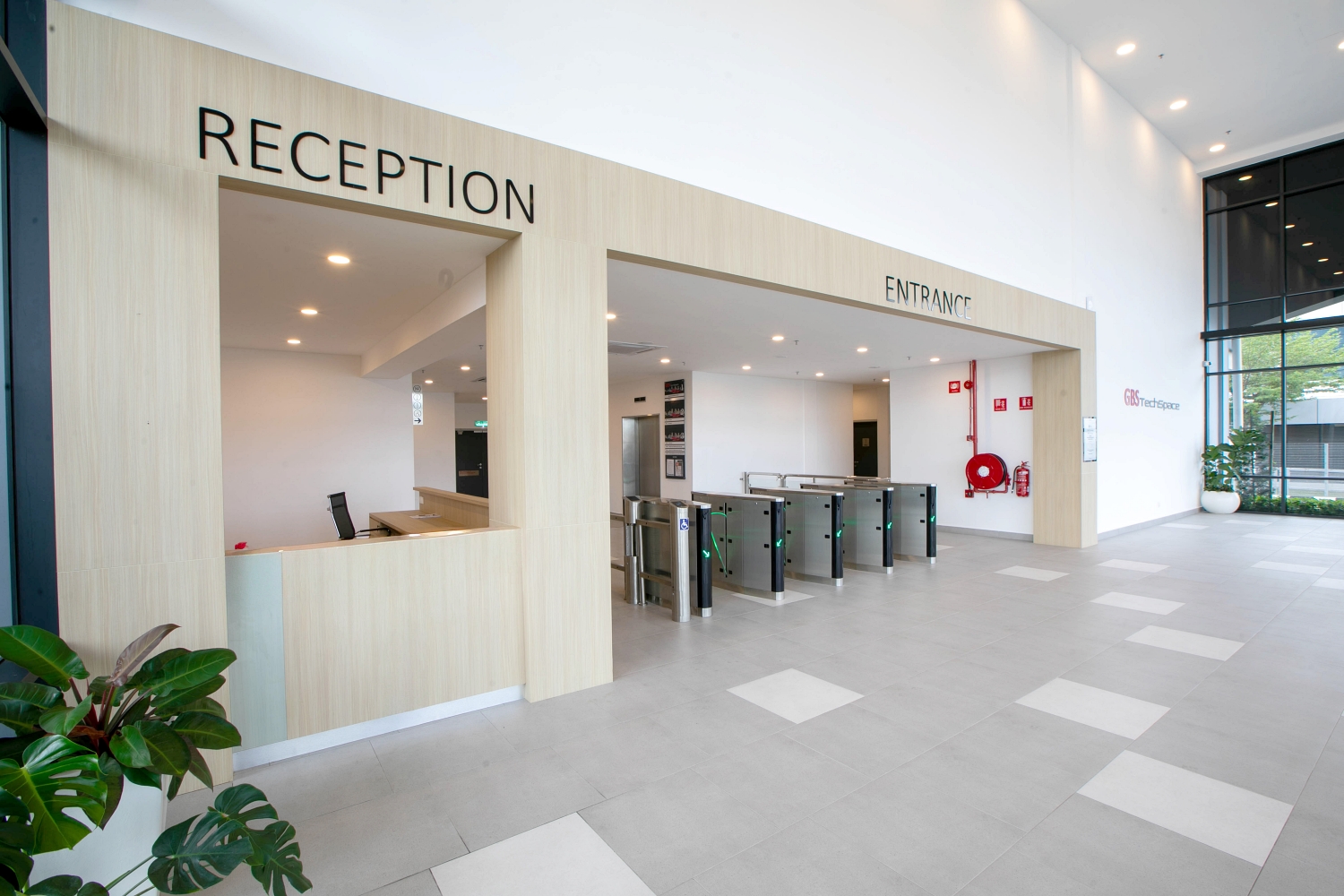
The use of timber finishes at the reception and entrance enhances the space with a warm and inviting feel
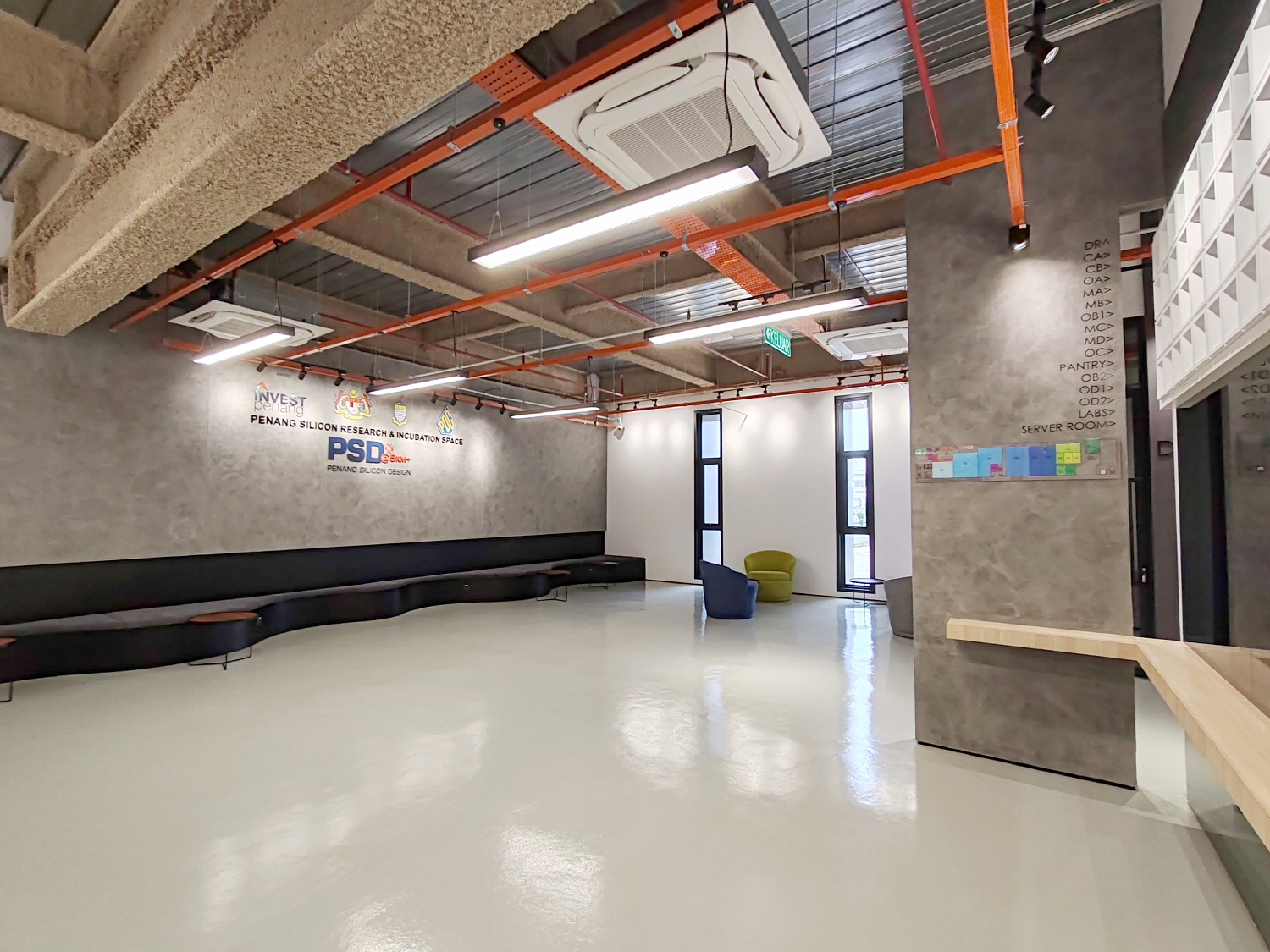
With flexibility and future-proofing in mind, the textured wall finish allows easy updates of content or logos with minimal touch-up and maintenance
Aerial view showing main drop off entry and car park facilities

FEATURES

RELATED ARTICLES