DESIGNED BY KKNG ARCHITECT, DSPC RESIDENCE REFERENCES THE LAOTIAN VERNACULAR BY
FEATURING A GENEROUS PATIO AT THE FRONT AND A CANTILEVERED TERRACE OR BALCONY AT
THE REAR, FACING THE MEKONG.
TEXT BY THE ARCHITECTS
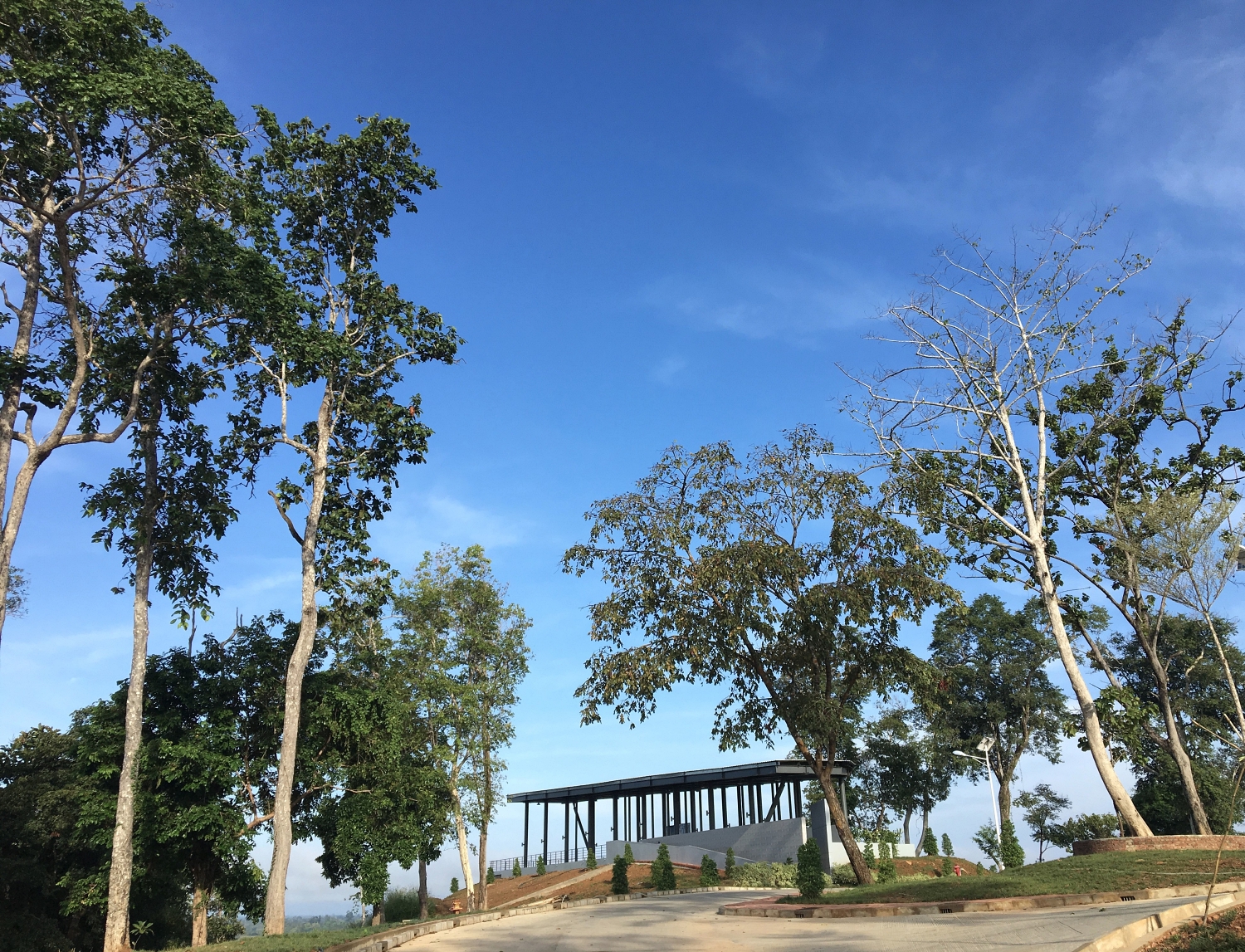
Viewing Deck as a welcoming structure, approach from the main entrance
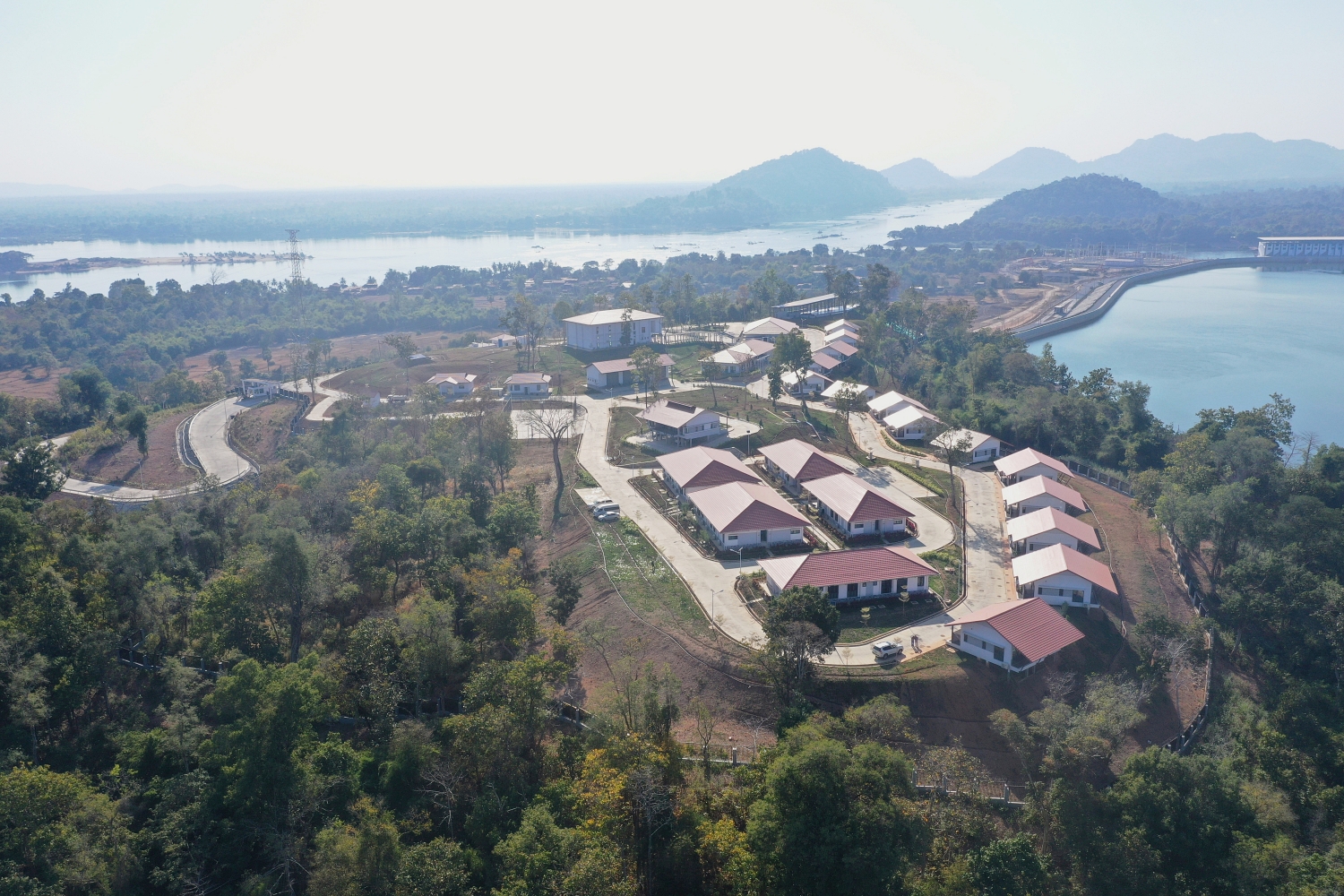
This residential estate, which is a 2.5-hour drive away from the nearest airport and town of Pakse in Laos, is meant for the technical and administrative personnel of the Don Sahong Hydro Power Station. It is perched on a hilltop and organised in a figure eight loop to minimise earthwork and to retain selected existing trees.
This estate resembles a typical Laotian village, which overlooks the panoramic thousand islands of the Mekong formed by tributaries and the waterways. Consists of a variety of Villas and Standard Room Hostels, which are placed along the peripheral crown of the hill to maximise view and privacy. Whereas the Restaurant, Guesthouse, Gym, and a Multipurpose Indoor court are located in the centre as a Facilities Hub near the Viewing Deck. The Workshop, a Fire-Engine Depot and Sewerage Plant, is tucked away towards one end.
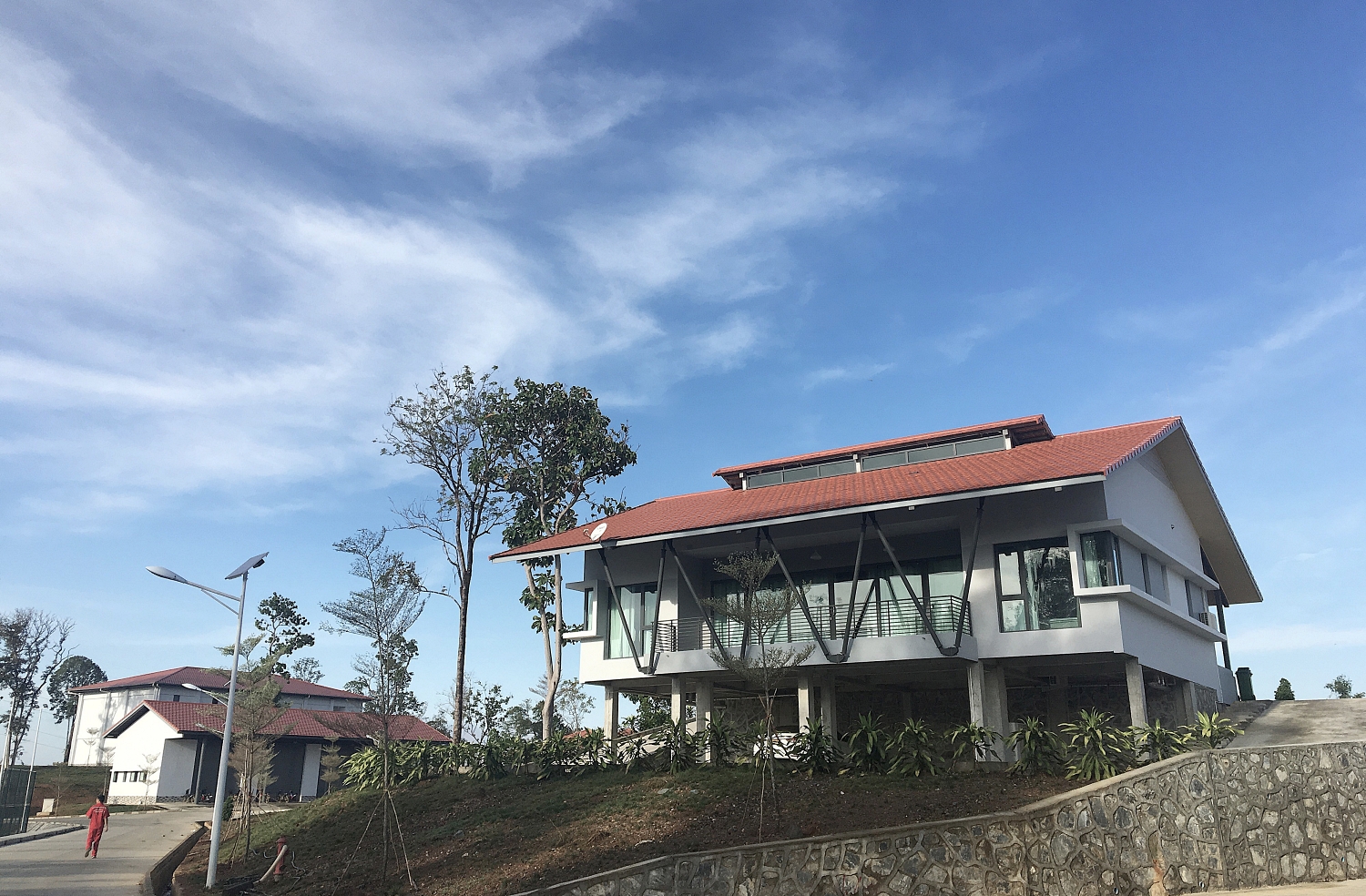
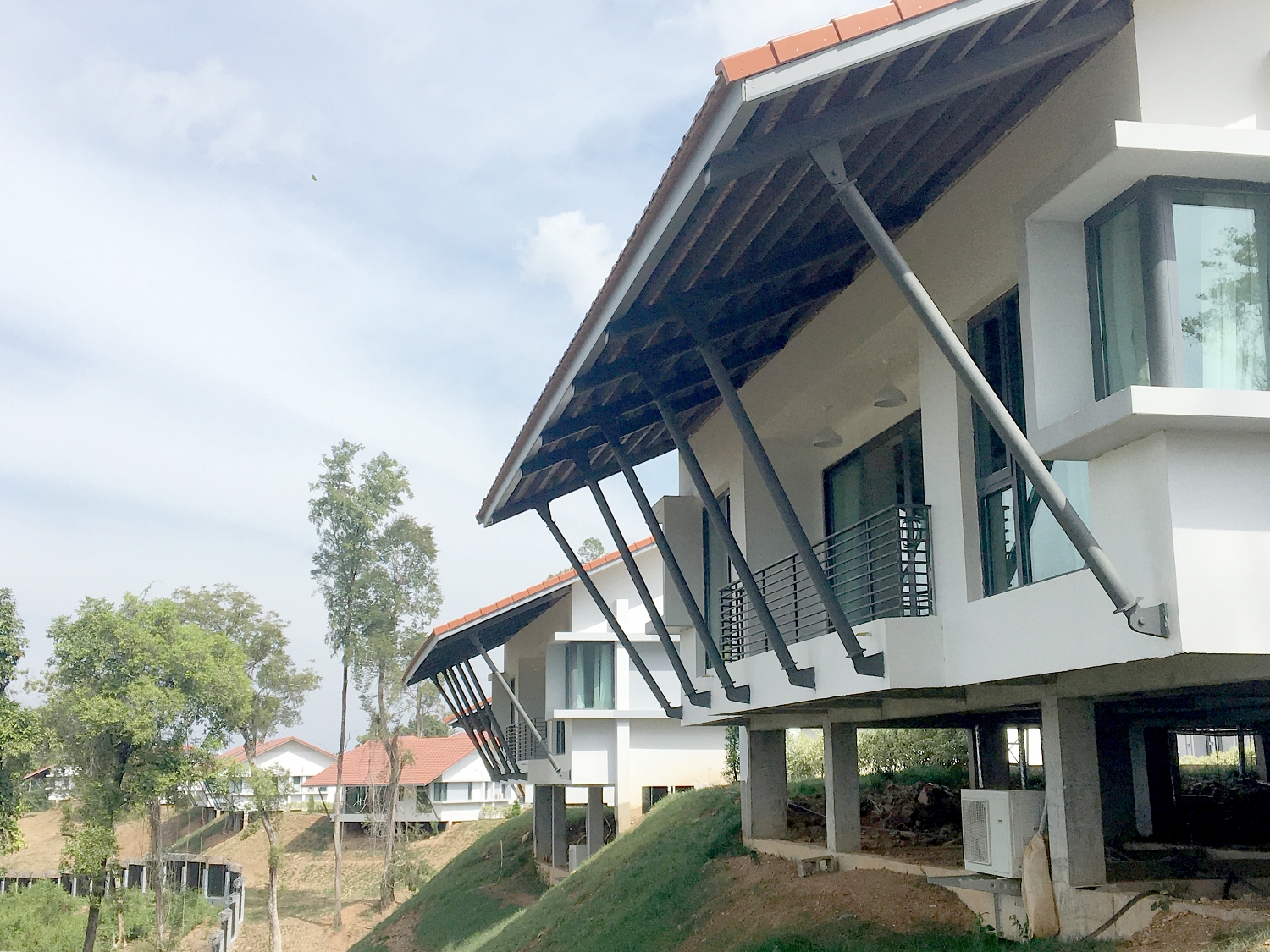
The design of the villas references the Laotian vernacular by featuring a generous patio at the front and a cantilevered terrace or balcony at the rear, facing the Mekong. In Laotian tradition, buildings are typically placed laterally along the road and arranged almost haphazardly according to the contour. We positioned each villa at the edge of the slope for a perpetual overhanging lift. Bedrooms are zoned in both wings off the living and dining areas, providing a simple, modular layout for the contractors.
A Villa on stilts to preserve the slope and minimise carbon footprint
Roof overhangs are exaggerated to shed the villas and structures from regular heavy downpours, as well as to discard tree leaves that may gather on the roofs. The rainwater runoff is collected in an On-Site Detention Pond before being redistributed to water the landscape, especially during the dry season.
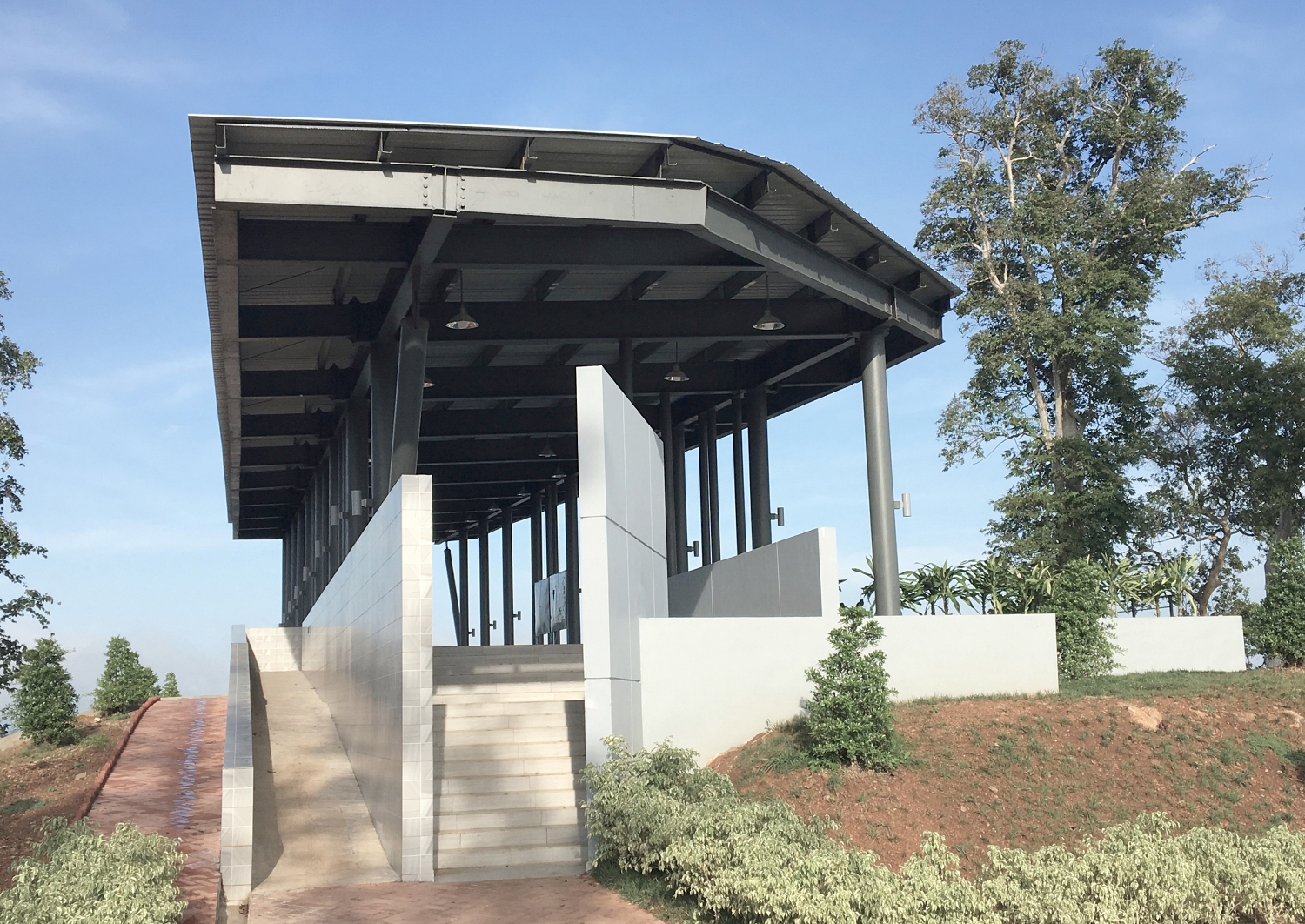
The Viewing Deck, in the Facilities Hub, is a special structure for welcoming guests or as a viewing spot. It is also used for banquets during festivals. Its shape is inspired by a swallow’s tail, stretching out from the slope toward the Hydro Dam and the Mekong River. All the bricks used within this construction are made of iron-rich black mud dug out from the river basin. The bricks were formed on site and dried naturally before being applied as an infill wall material.
The sculptural entrance of the Viewing Deck to host visitations, allowing a 180 degrees view of the Mekong
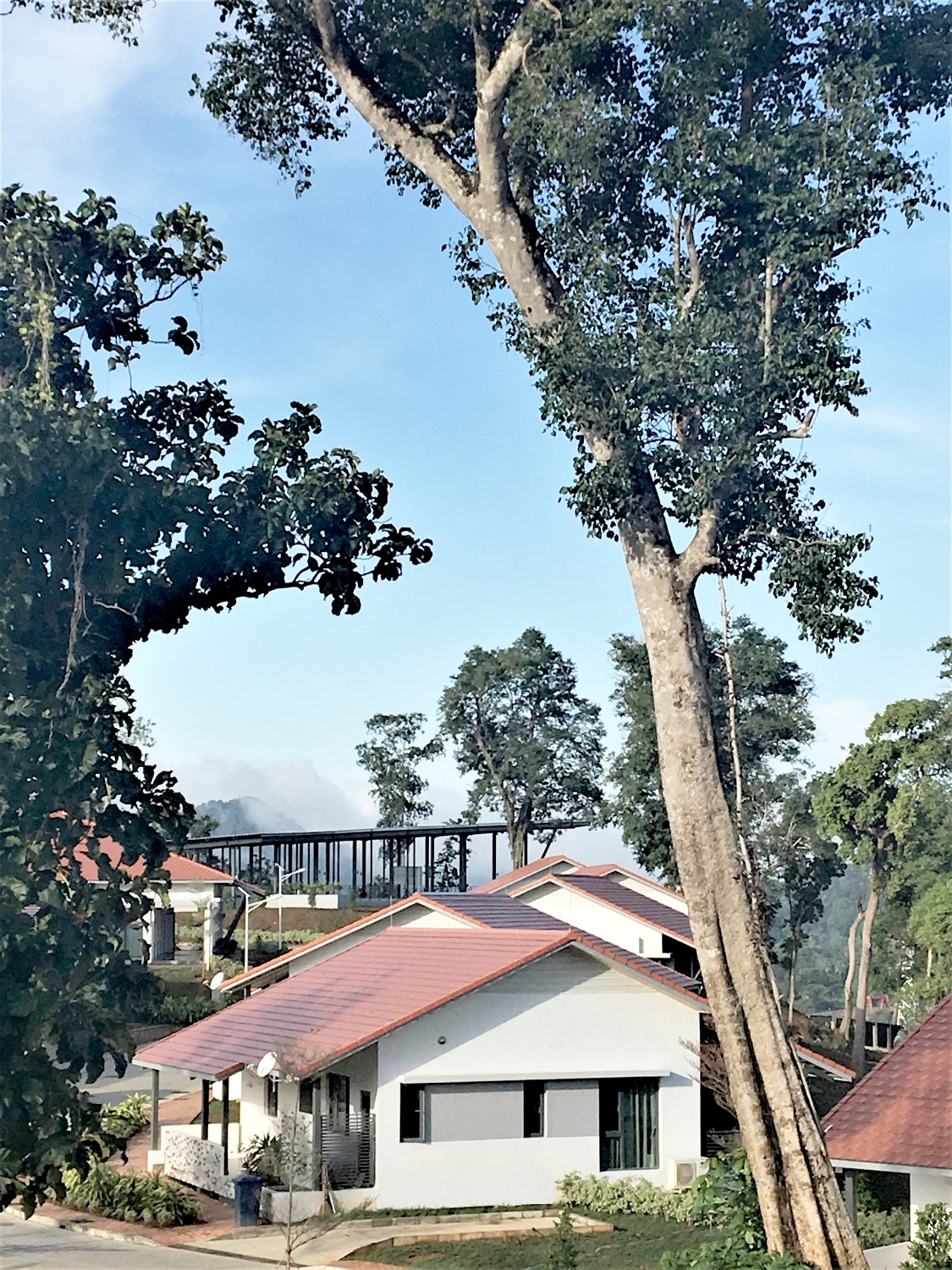
Many old and mature trees were retained without compromise, causing much inconvenience in positioning the Villas and Blocks, not to mention construction, but it proved to be a meaningful endeavour as they shade the buildings and bring down the temperature during the dry season. Interventions to the existing slopes were also minimal since we cantilevered most structures over it, retaining the original shape of this hill with minimal retaining structures.
This residence and the HydroPower station were much talked about in terms of planning, sustainability, and aesthetics. It was earmarked by the Laotian government as a model project for future energy or infrastructural projects.
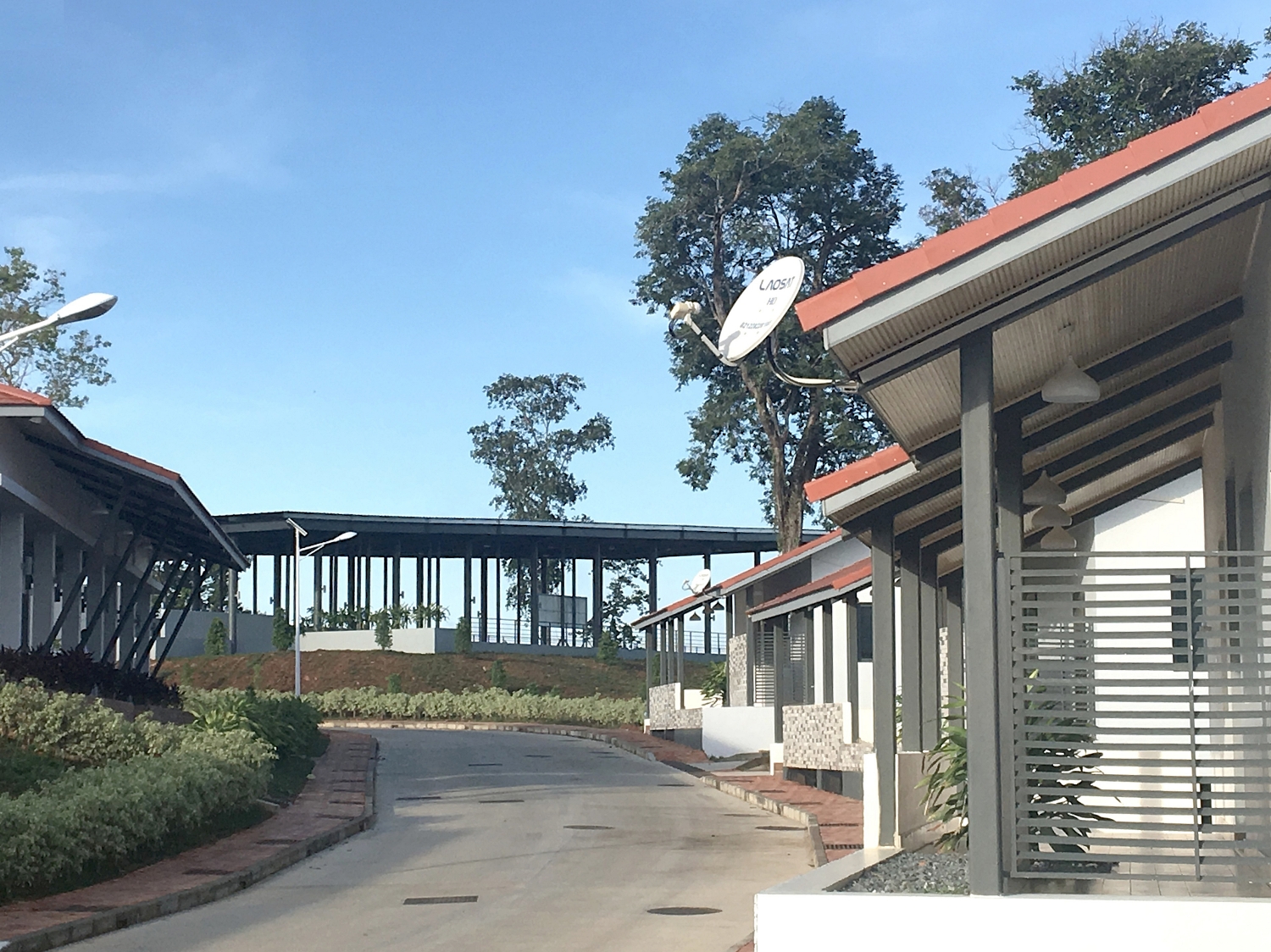
(From left) Dining Hall, Viewing Deck, Villas along the loop
Many old and mature trees were retained without compromise, causing much inconvenience in positioning the Villas and Blocks, not to mention construction, but it proved to be a meaningful endeavour as they shade the buildings and bring down the temperature during the dry season.
The Villas juxtaposed to the contour with the Viewing Deck at the background
Roof Overhang are over-stretched to shelter the Villas from torrential rain and sun
The DSPC Residence organised in a figure of 8-loop, Villas overhung to the slope, Facilities Hub and Hostels at the centre