WIWYNN FEATURES A BUILDING DESIGNED WITH GREEN AND SUSTAINABLE FEATURES, ENCOMPASSING A SUSTAINABLE FAÇADE DESIGN, ENERGY AND WATERE-FFICIENT TECHNOLOGY, A COMFORTABLE AND HEALTHY INDOOR ENVIRONMENT, AND AN ACTIVE WORKSPACE.
GBI FACILITATOR - Ir. Chua Ang Tze from BSD Consultancy Sdn Bhd
LEAD OF DESIGN AND BUILD MAIN CONTRACTOR - Lim Yeong Min from Hwa Hin Sdn Bhd
CONSULTANT ARCHITECT (TAIWAN) - R. J. Wu Architects & Engineers
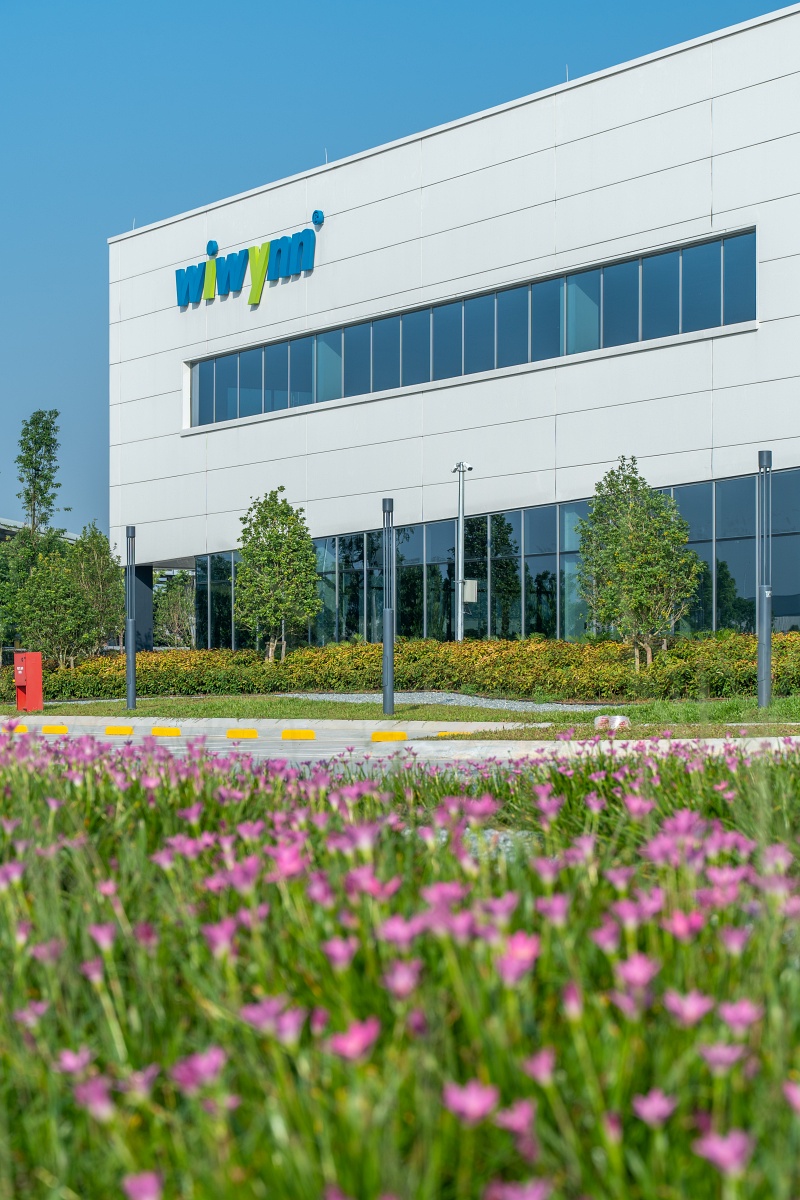
A front view of the Wiwynn building, complemented by well-maintained landscaping that enhances the aesthetic appeal of the entrance
Wiwynn, a company originating from Taiwan, has its Malaysia Plant set up in Senai Airport City, Johor Bahru. This industrial project features a building designed with green and sustainable features, encompassing a sustainable façade design, energy and water-efficient technology, a comfortable and healthy indoor environment, and an active workspace.
At the core of Wiwynn Malaysia Plant is a commitment to sustainability and self-sufficiency, reflected in the 2,530 kWp Solar PV design. This renewable energy effort can offset 26% of the total energy consumption of the plant’s operation. Besides that, the plant is also designed with recycled water facilities, including a rainwater harvesting system that enables 77% savings in potable water usage. The harvested rainwater will be used for the building’s cooling tower water make-up. In addition, a wastewater recycling system will be installed to reuse air conditioning condensate and greywater from the toilets for irrigation and cooling tower make-up purposes. The wastewater recycling system contributes up to 17%, exceeding the 10% reduction requirement. All sanitary fittings in the development are carefully selected to ensure high water efficiency.
The sustainable initiatives in architectural design include 70mm mass insulation on the façade wall claddings, roof insulation, and Low-e high-performance double-glazing units (DGU) glass windows. These initiatives significantly reduce heat gain into the building, achieving an Overall Thermal Transfer Value (OTTV) of 12 W/m², compared to the Malaysia Standard (MS) base requirement of 50 W/m². This helps lower the power consumption of indoor air-cooling systems. The green features of the building’s energy system include high-efficiency chillers, variable speed driven (VSD) air handling units (AHUs), and fan and pump equipment to run the air conditioning system efficiently. The building is also designed with a KNX lighting control system. This addressable lighting interface system can manage and control light switches or illuminance levels by reading motion and daylight sensors.
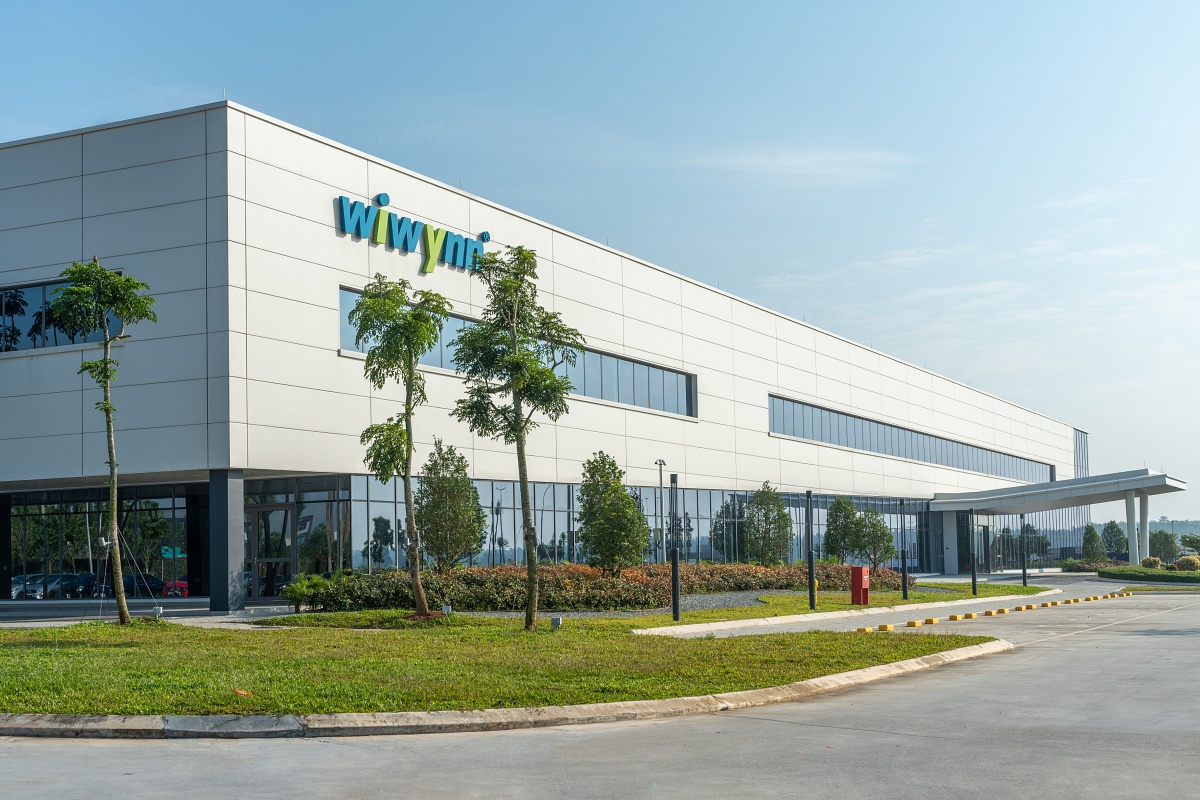
A frontal view of the Wiwynn building, showcasing a prominent, large blue and green logo positioned at the top-left corner of the structure, highlighting the company’s brand identity
The design offers greater flexibility for light switching, making it easier to illuminate only occupied areas to optimise energy savings. Carbon dioxide sensors are installed in the AHUs to provide the minimum necessary fresh air, reducing energy consumption without compromising human comfort. All these passive and active designs contribute to an energy use intensity (EUI) of 530 kWh/m²/year, resulting in a 30% energy saving. Both digital electrical and water meters are linked to the building management system (BMS) for recording and monitoring purposes. A qualified GBI Accredited Commissioning Specialist (CxS) is onboard to ensure that all energy efficiency and indoor air quality standards, among others, are met.
During construction, the building contractors practiced sustainable construction by prioritising reused and recycled-content, and regional building materials during material selection. To ensure occupant’s health and well-being, the building’s interior finishes were selected for their low volatile organic compounds (VOC) content. The contractors achieved a high quality of workmanship in construction, scoring 80 points in the Quality Assessment System in Construction (QLASSIC) system.
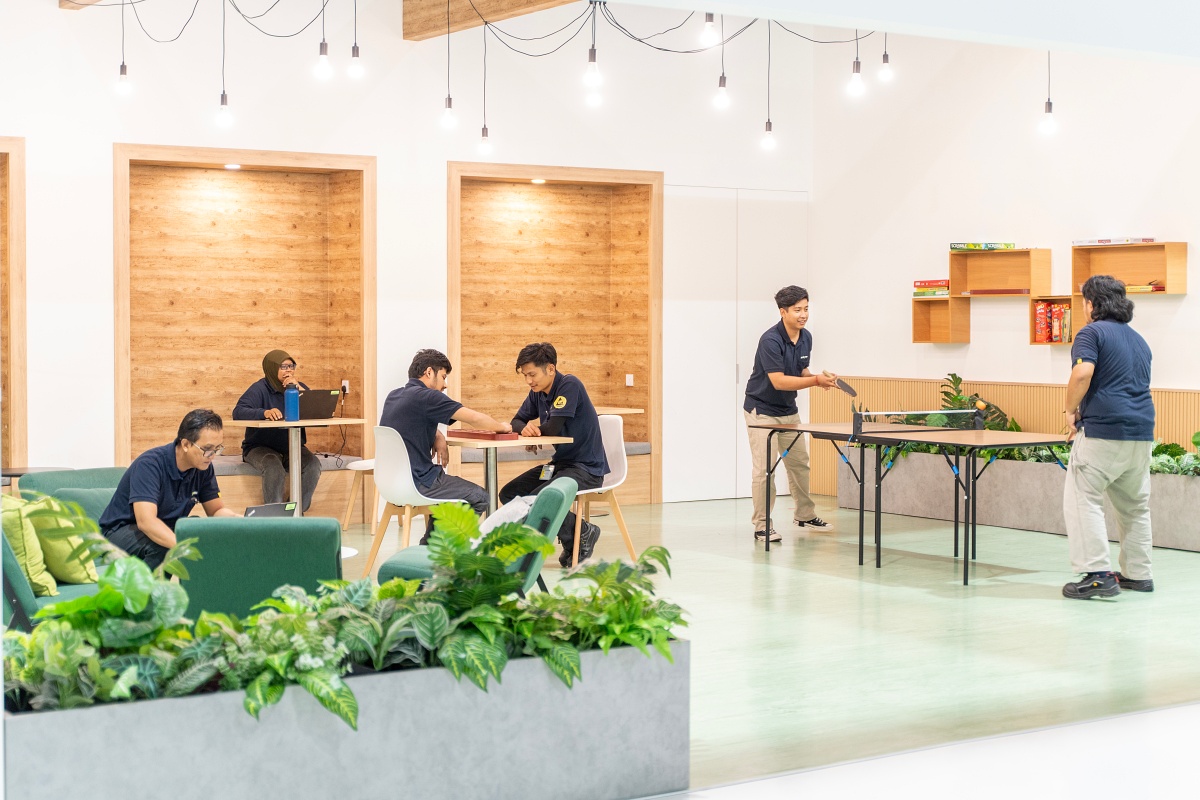
The project owner also provides breakout space, with facilities such as table tennis and board games to reduce worker fatigue. The building’s perimeter design, including the façade and windows, provides ample daylighting, ensuring visual comfort for workers while enhancing their connectivity with the outdoor environment. During operation, shufler buses are provided for factory workers to reduce carbon emissions and air pollution. Wiwynn Malaysia Plant is commifled to driving sustainability by instilling sustainable practices and lifestyles in the long run. This project aims to raise awareness about various climate issues and encourages businesses to adopt practices and policies that are more environmentally friendly.
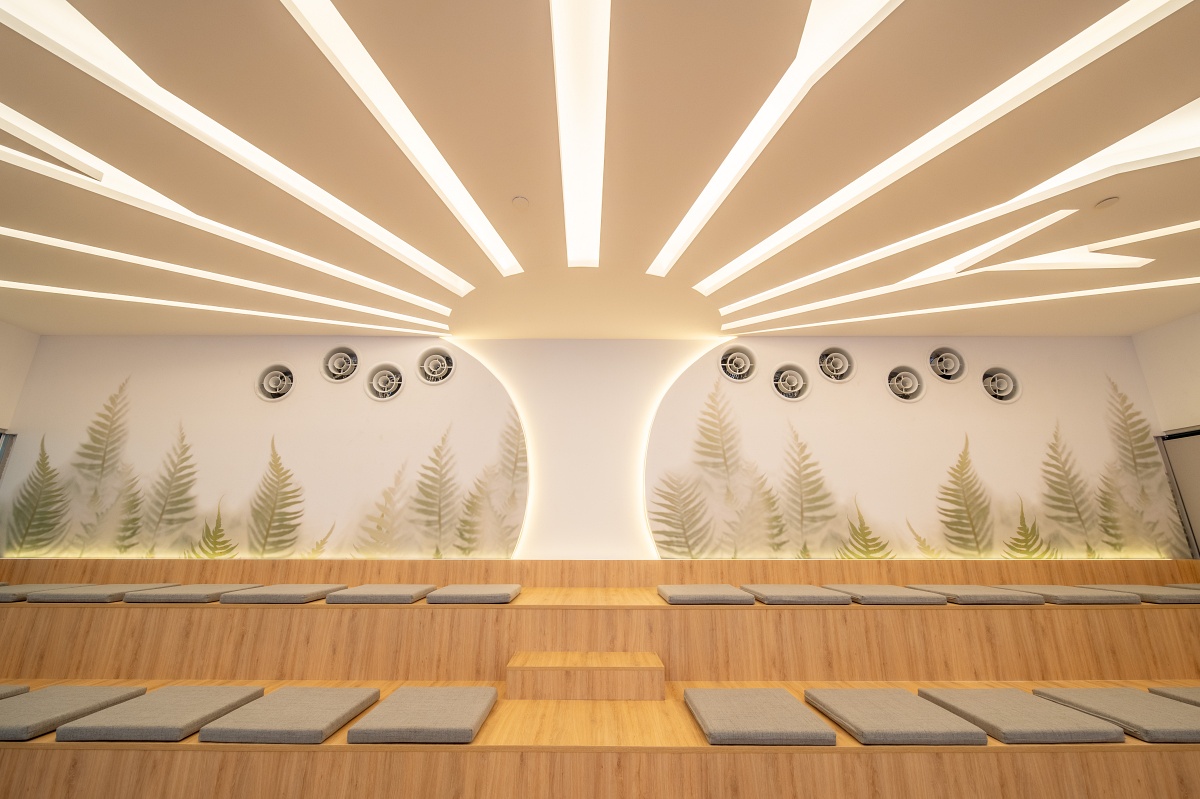
An auditorium in Agora featuring a large LED screen and a number of seats, ideal for events, presentations and staff training. The wall is adorned with a leaf-patterned wallpaper, creating a fresh and vibrant atmosphere, while the ceiling design resembles a tree, symbolizing growth and the long-term success of the business
At the core of Wiwynn Malaysia Plant tis a commitment to sustainability and self-sufficiency, reflected in the 2,530 kWp Solar PV design. This renewable energy effort can offset 26% of the total energy consumption of the plant’s operation.
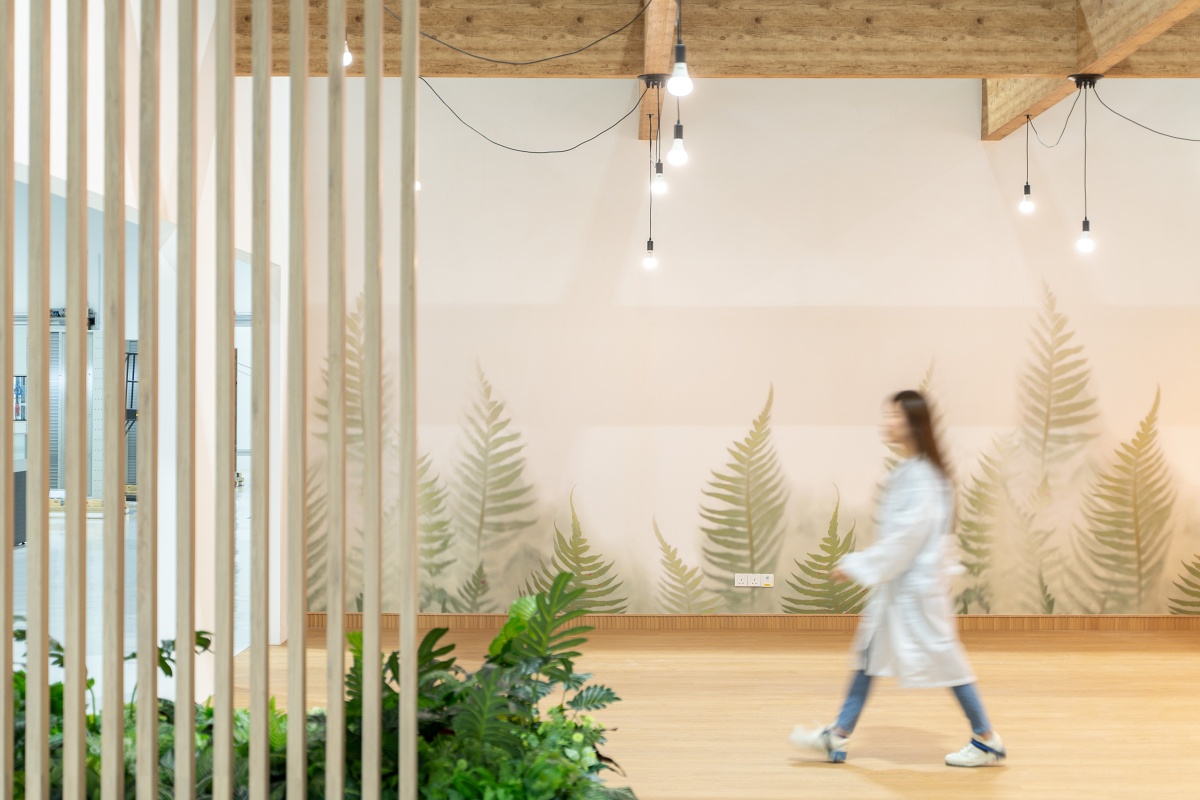
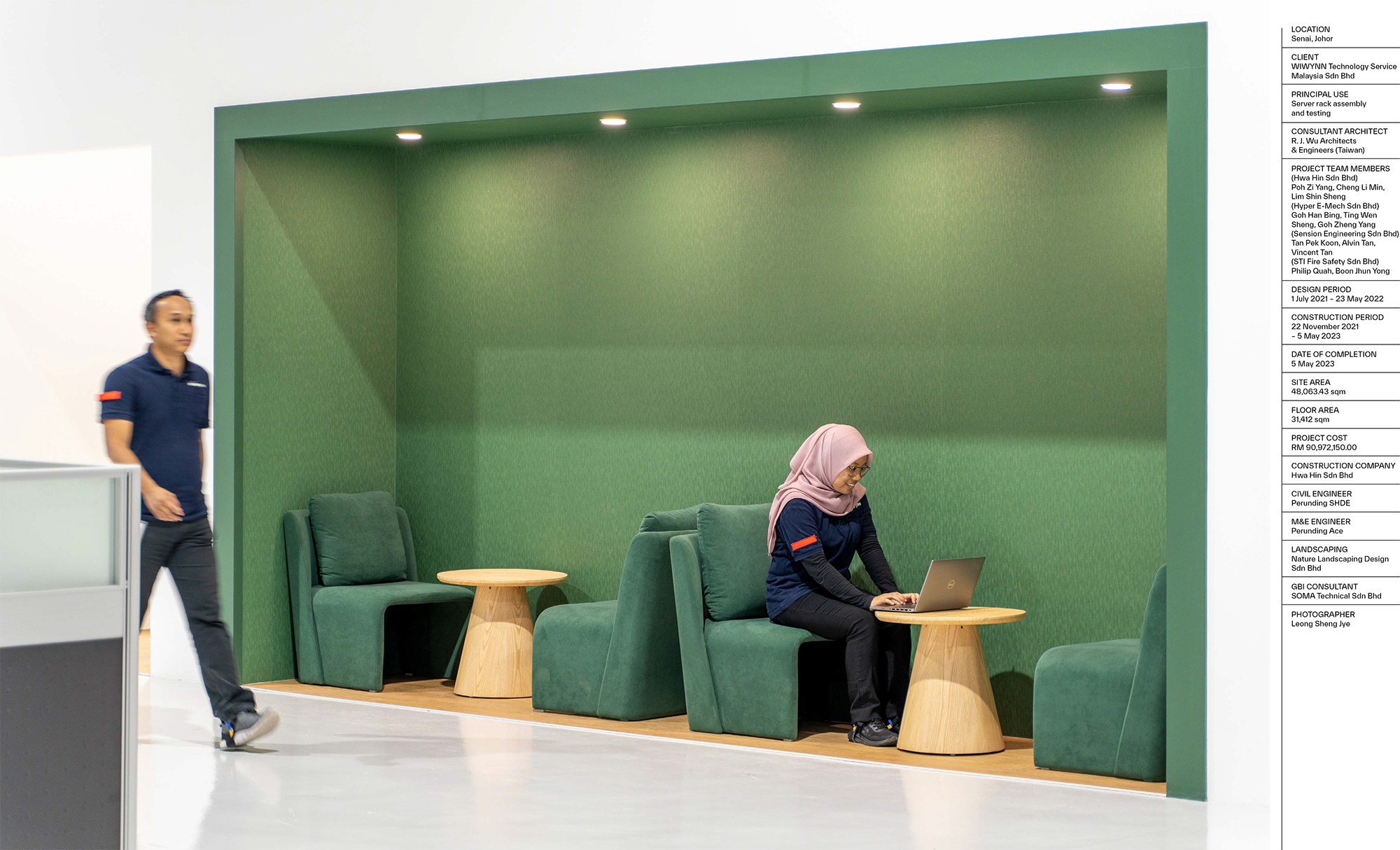
The green leaves wallpaper in the Agora and the wooden-patterned interiors add a fun, energetic feel to the factory, creating a space that's both playful and inviting
Agora is a dynamic space within the production area, featuring an auditorium, meeting rooms, and breakout spaces for staff. The breakout area allows staff to either relax, work in a comfortable setting, or enjoy board games, providing a perfect balance of productivity and relaxation
BEI (kWh/m²/yr):
EUI – 537 kWh/m²/yr (using their own baseline 766 kWh/m²/yr)
Energy savings as compared to average Malaysia office building (%):
30% energy improvement = (537 / 766 x 100) – 100)
OTTV (W/m²):
12.57 W/m²
Improvement as compared
to MS1525 (%):
74.86% improvement as compared to MS1525 = (12.57/50 x 100)-100
Rooftop PV Panels (kWp):
2,527 kWp
Building energy from PV (%):
25.90%
Daylighting (% of NLA):
31.57%
External views (% of NLA):
87%
Reduction in total potable
water consumption by the
building (%):
77%
% of construction waste diverted from landfill via recycling:
88.15%
Agora is a dynamic space within the production area, featuring an auditorium, meeting rooms, and breakout spaces for staff. The breakout area allows staff to either relax, work in a comfortable setting, or enjoy board games, providing a perfect balance of productivity and relaxation
CLIENT: WIWYNN Technology Service Malaysia Sdn Bhd
PRINCIPAL USE: Server rack assembly and testing
CONSULTANT ARCHITECT: R. J. Wu Architects & Engineers (Taiwan)
PROJECT TEAM MEMBERS: (Hwa Hin Sdn Bhd) Poh Zi Yang, Cheng Li Min, Lim Shin Sheng
(Hyper E-Mech Sdn Bhd) Goh Han Bing, Ting Wen Sheng, Goh Zheng Yang
(Sension Engineering Sdn Bhd) Tan Pek Koon, Alvin Tan, Vincent Tan
(STI Fire Safety Sdn Bhd) Philip Quah, Boon Jhun Yong
DESIGN PERIOD: 1 July 2021 – 23 May 2022
CONSTRUCTION PERIOD: 22 November 2021 – 5 May 2023