
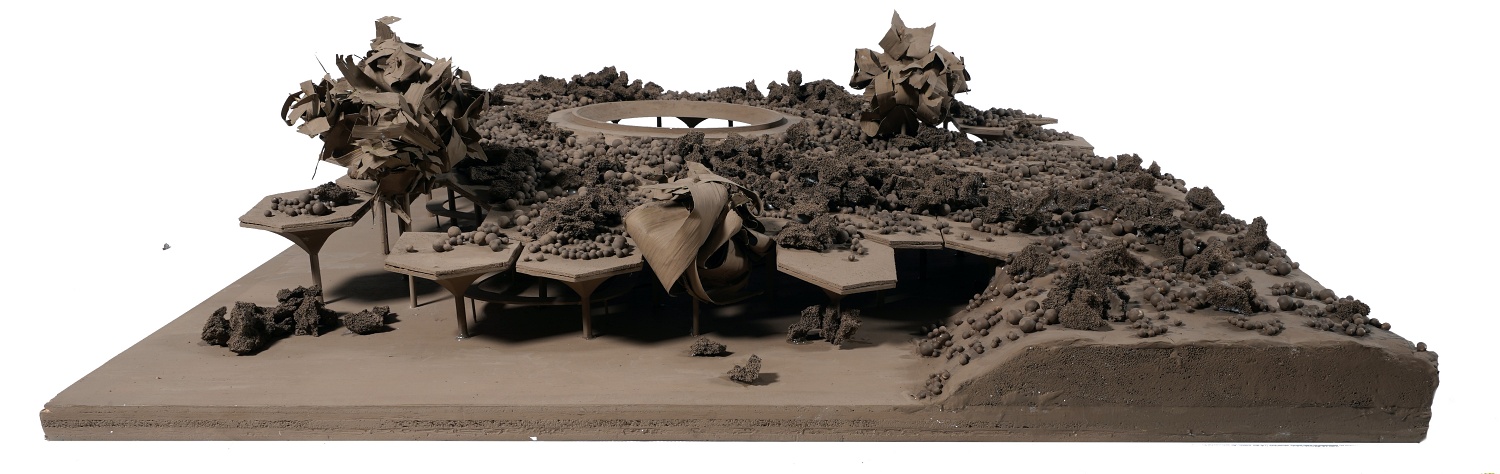
The Chiang Kai-shek Memorial Hall in Taipei is a vital public space, central to citizen activities. To enhance its role beyond its authoritarian history and engage the public in its transformation, a competition was launched to rethink its role in the socio-urban fabric. History, culture, creative design, and sustainability were explored in various schemes, culminating in an exhibition to spark dialogue, foster social discussions, and build consensus.
Titled “100 Ways to Imagine the Chiang Kai-shek Memorial Hall”, the exhibition showcases the shortlisted and winning proposals, alongside two invited teams, a local landscape architect and an international team, to provide a contrasting perspective in invigorating and enriching the final exhibition. Seksan Design and UCSI SABE Faculty merged their expertise to create a unique design idea with Rising Reflections.
“RISING REFLECTIONS: TRANSFORMING MEMORIAL GROUNDS”
“Rising Reflections: Transforming Memorial Grounds” encapsulates a design philosophy that orchestrates physical and emotional layers associated with the events that took place in Taiwan. It prioritises pragmatic fundamentals of public placemaking that embody the essence of progressions and urban transformation in Taipei. This proposal harnesses the language of design to spark a dialogue between the conscious and the subconscious, encouraging a deeper exploration of history, community, and personal identity. Through this transformative journey, the Chiang Kai-shek Memorial Hall becomes more than a monument and a public space; it becomes a dynamic, living embodiment of shared narratives, aspirations, and the rising spirit of a united community.
GLORIFICATION SHIFT
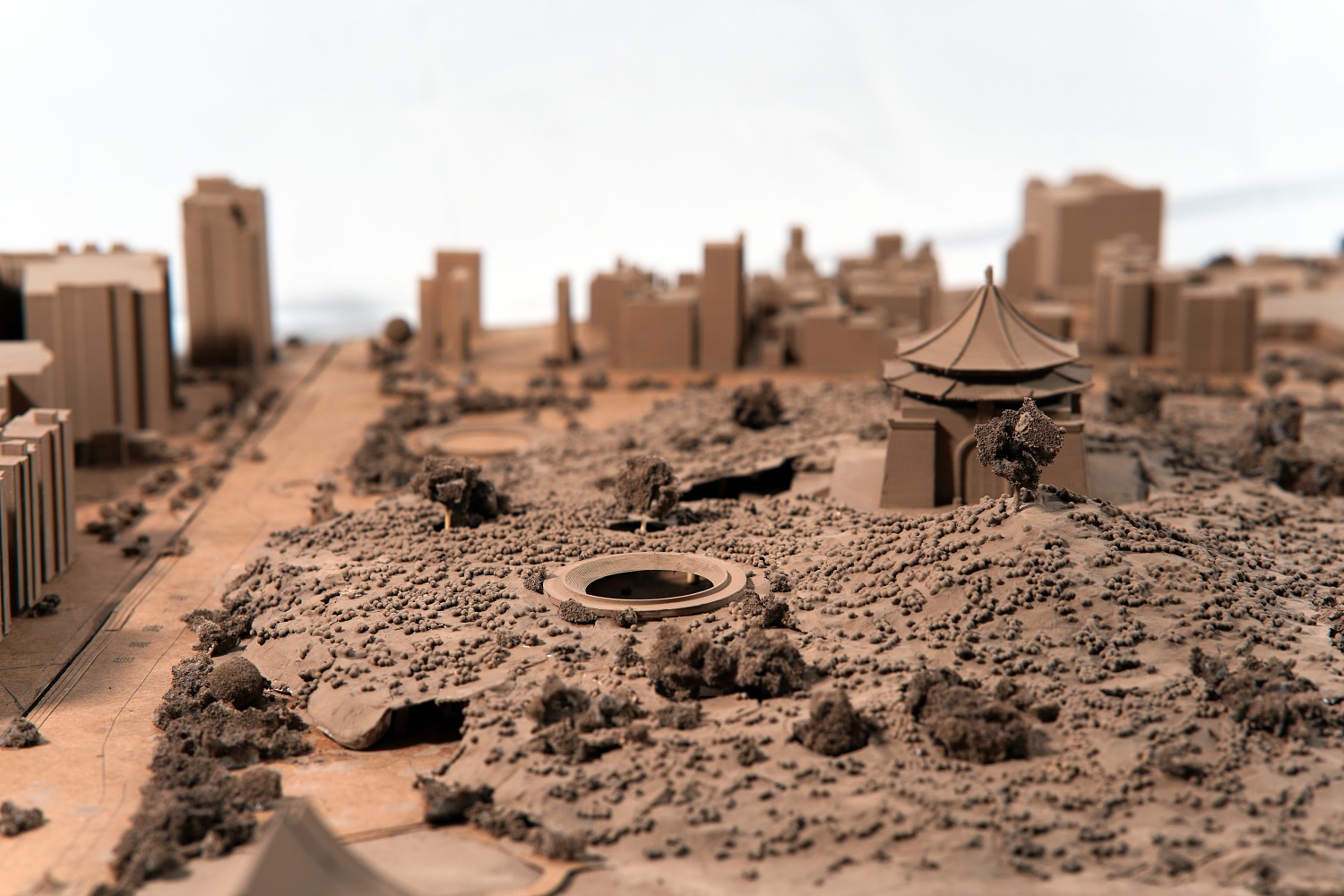
The Chiang Kai-shek Statue, long a symbol of feudal society and absolute power, takes on new meaning when relocated within the “multiplied grounds. (see Multiplied Grounds: A Layered History)” Integrated into a diverse urban landscape with open spaces and interactive installations, it invites contemplation and dialogue. Visitors may feel nostalgia, contemplation, or discomfort, sparking conversations about its historical significance and modern relevance. Placed strategically alongside other design elements, the statue prompts reflection on its context and values, fostering inclusive discussions. This approach encourages people to confront history’s complexities and promotes open dialogue for a more informed collective understanding. While symbolically significant, the off-centred placement also serves as a navigational landmark, enhancing the public space.
MULTIPLIED GROUNDS 4 A LAYERED HISTORY
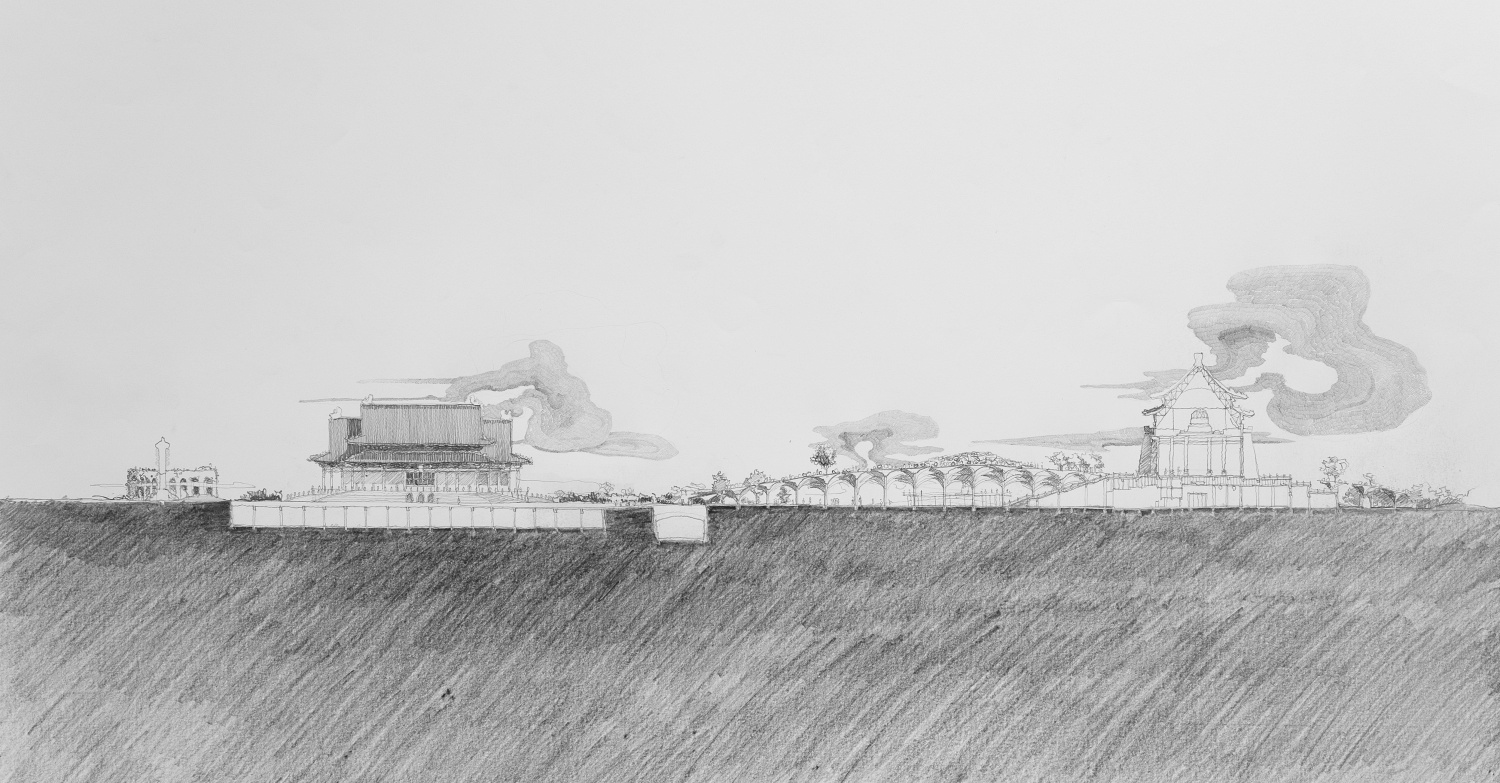
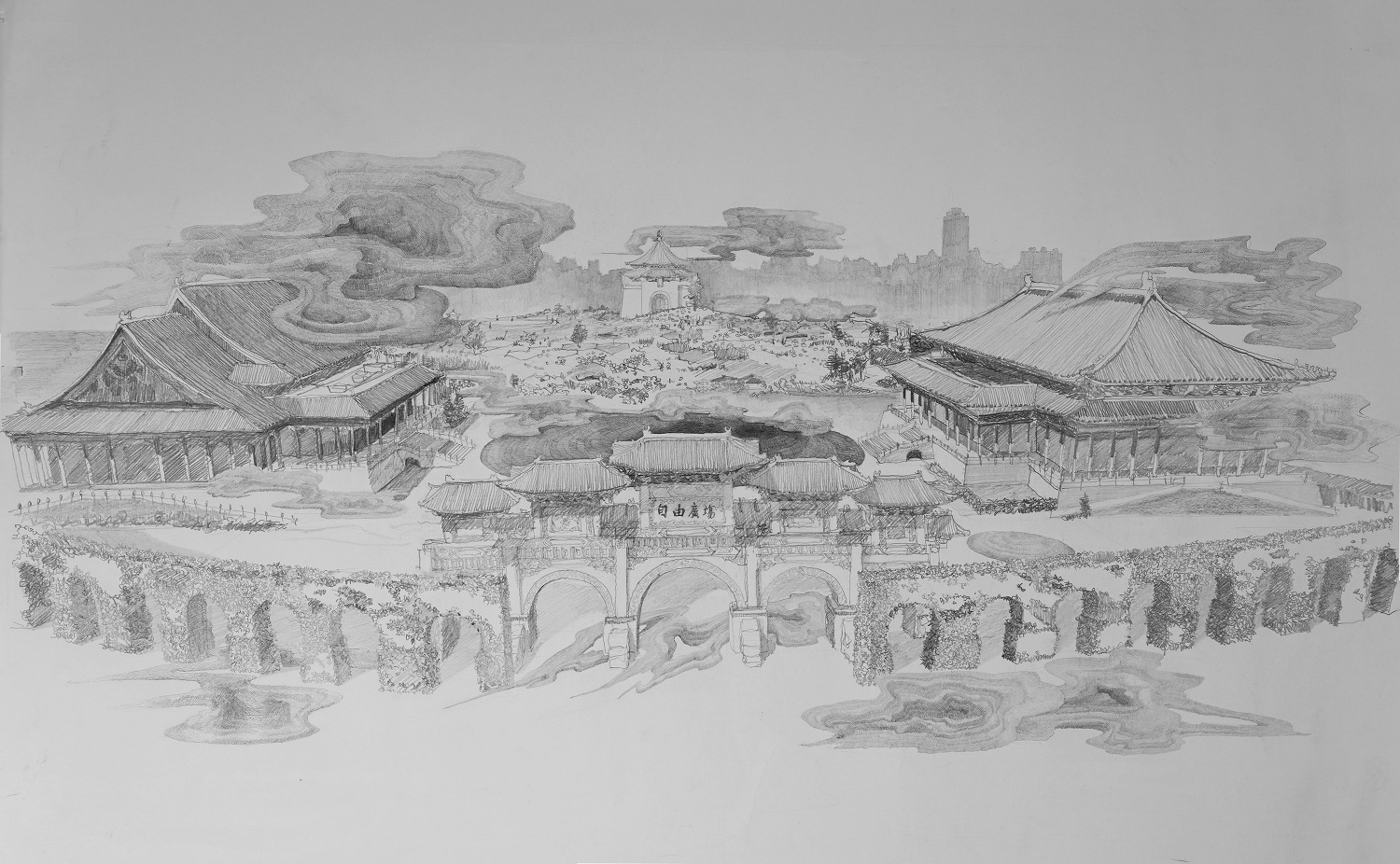
The concept of “multiplied grounds” presents an opportunity to create a new form of public space within the historical realm of the Chiang Kai-shek Memorial Hall. By reimagining a reconfigured surface environment as a dynamic, multi-layered landscape, the design proposal seeks to transform the space into a hub of diverse experiences and interactions. Elevated park structures draped over modular units form a sprawling landscape resembling Taiwan’s mountain, providing opportunities for walking, playing, and exploration. Beneath this terrain lie shaded playgrounds, performance spaces, and cafes, amplifying the park’s size and functionality. The gradual slope from Liberty Square to the memorial hall integrates the park seamlessly into Taipei’s skyline, offering distinct areas for leisure activities like outdoor screenings and live performances. This vision transforms the cityscape into a vibrant cultural hub, designed by and for the community. Within this enriched public space, the shifted statue of Chiang Kai-shek (see Glorification Shift) finds itself as one element among many, sparking curiosity and inviting reflection. The arrangement fosters open dialogue, inviting individuals to share their perspectives on history and engage in meaningful exchanges.
PHENOMENOLOGICAL HERITAGE
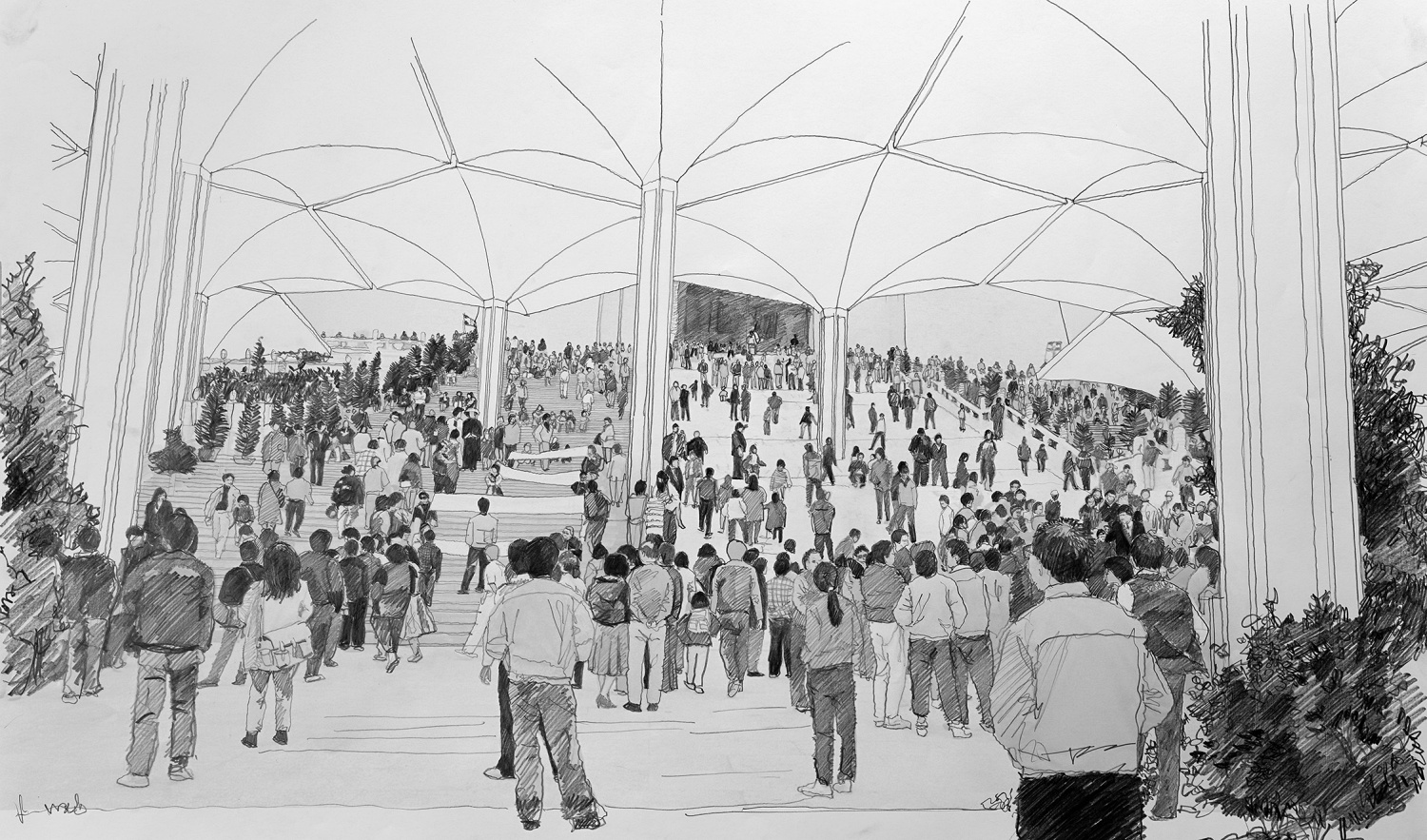
Phenomenological heritage emphasises the lived experiences, perceptions, and emotional connections people have with the Chiang Kai Shek Memorial Hall, focusing on the personal and subjective aspects of heritage. It focuses on the personal and subjective aspects of heritage, acknowledging that individuals interact with and interpret their surroundings based on their unique perspectives and emotions. It recognizes that heritage is more than just physical attributes, encompassing meanings, memories, and sensations. This approach values the stories, traditions, and intangible qualities that contribute to a sense of identity, continuity, and belonging. By designing spaces that resonate with individuals on a deeper level, it aims to create meaningful interactions with history. Reimagining the iconic 1990s photo of the Wild Lily student Movement through this lens seeks to transform it into a contemporary representation of unity and togetherness. By acknowledging past emotions and celebrating community resilience, the redesigned scene showcases diverse gatherings, interactive art, and spaces for cultural exchange. Through modern design principles, it celebrates the evolution of the place into a symbol of strength, harmony, and hope, fostering understanding, inclusivity, and collective progress. This approach aims to immerse visitors emotionally in historical events, deepening their appreciation for the heritage and its impact on the city’s collective memory.
AXIAL DEMOCRATISATION: FROM AUTHORITARIAN AXIS TO DEMOCRATIC EMPOWERMENT
Axial Democratisation marks more than just a design shift; it heralds a new era. The Chiang Kai-shek Memorial Hall and Liberty Square have witnessed numerous democratic movements and cultural events. Our design ethos surrenders urban space to the people by disrupting traditional monumentalism. The Liberty Square Archway is reimagined as a semi-circular wall, punctuated with openings to dismantle its once-authoritarian presence. This intentional disruption symbolises the dismantling of authoritative control and fosters democratic ideals. Axial democratisation prioritises public participation, transforming the landscape into a canvas for democratic expression. Public spaces and interactive installations replace authoritative symbols, empowering citizens to shape their city’s narrative. By deliberately introducing visual interruptions and designing elements that engage the public, we transform the axis into a vibrant and participatory symbol of democratic power.
IMPERMANENT PLACEMAKING: PLACES FOR THE PEOPLE BY THE PEOPLE
The elevated park proposal, inspired by impermanent placemaking, employs modular landscape structures to create a flexible environment adaptable to the community’s changing needs. Reflecting the ethos of “places for the people by the people,” it fosters a sense of ownership and active engagement in shaping the surroundings. These modular elements allow for creative rearrangement, empowering the community to customise the park for various activities and events. Departing from fixed designs, this collaborative approach embraces the dynamic nature of urban life. Impermanent placemaking emphasises the park as a shared space, inviting ongoing community involvement in its evolution to ensure vibrancy and relevance.
A COMPOSED S UBCONSCIOUS SYMBOLISM
The design elements interact to create a collective of subconscious symbols for interpretation and appreciation. In the Chiang Kai-shek Memorial Hall proposal, subconscious symbolism is key, incorporating visual elements and spatial arrangements to evoke unconscious associations and emotions. This approach taps into collective memory and cultural significance, conveying deeper messages through architectural lines and spatial configurations. Conscious of their impact, these elements foster internal dialogue and a sense of community ownership. Subconscious symbolism weaves together the physical and emotional dimensions, inviting personal engagement and encouraging contemplation about history and identity.
RISING REFLECTIONS – PROJECT TEAM
We extend our heartfelt appreciation to the dedicated individuals who contributed to the success of this project:
PROJECT ADVISOR
Ng Sek San
PROJECT LEADER
Teoh Chee Keong
PROJECT MANAGER
Doris Quek Shu Han
PROJECT ARCHITECT
Gue Yan Ting
COPYWRITER
Bakhtiar Amir
ASSISTANT ARCHITECTS
Scarlet Koon Si Qi
Gwendolyn Chan Mei Yee
Sean Tan Seong Kean
Guma Sylvester Makajil
Too Kar Yee
Teoh Jia Ming