
How vital is culture in shaping the environment we live in?

by Ilinaz Mior, Cheah Ee Von,
Dr. Christopher Heng Yii Sern, Rasyiqah Hassan
& W. Muhd. Khairul Azim
What is the Malaysian Identity? The dogma that haunts our political landscape often becomes apparent only when taken out of Malaysia and often with praises of our food. This brings the thought that perhaps our most time- tested architectural landmark should be the mamak, and not the kampong house. However, the quaint shophouses and silhouettes of the kampong house are often met with nostalgia and labelled as quintessentially “Malaysian”.

The Dutch sociologist Joop Goudsblom believed culture contains an aspect of civilisation and, all things considered, human. Culture accommodates our beliefs and ways about how we live our lives be it individually or as a community. Humans, being social creatures by nature often seek each other out and these interactions are what create social spaces that allow for mingling and activities that eventually become events, shaping the memories and actions of the participants of the space which forms a cultural identity.The social space, as studied by Henri Lefebvre, is a product of the people occupying the space, serving the activities of the users as a catalyst for interaction. These spaces become the background for events, life and history – the perfect blend to define a culture. -the perfect blend to define a culture.

When considering potential travel destinations, our natural inclination often leads us to places characterised by traditional architectural charm. It prompts us to wonder how we arrived at a juncture where, in many capital cities, the landscape predominantly comprises repetitive glass and steel structures. This transition towards modernity, marked by the elimination of ornamentation, finds its roots in the influential teachings of Adolf Loos.Loos, a proponent of architectural minimalism, vociferously declared that ornamentation serves no practical purpose in contemporary society and even deems it a manifestation of cultural decline.

Loos ardently champions the aesthetics of simplicity and plainness in design, firmly believing that authentic beauty resides within uncomplicated, functional forms, and any ornamentation merely diminishes this intrinsic allure. He vehemently criticises the prevailing fixation on ornamentation, viewing it as a frivolous and superficial pursuit.Examining Loos’ architectural creations, such as the renowned Looshaus, reveals an unadorned façade that audaciously departs from the ornate façades prevalent in Vienna during the early 20th century. Clad in pristine white marble panels with minimalist detailing and a meticulously organised grid pattern of windows, the Looshaus showcases the resolute commitment to quality materials and craftsmanship that defined Loos’ philosophy.
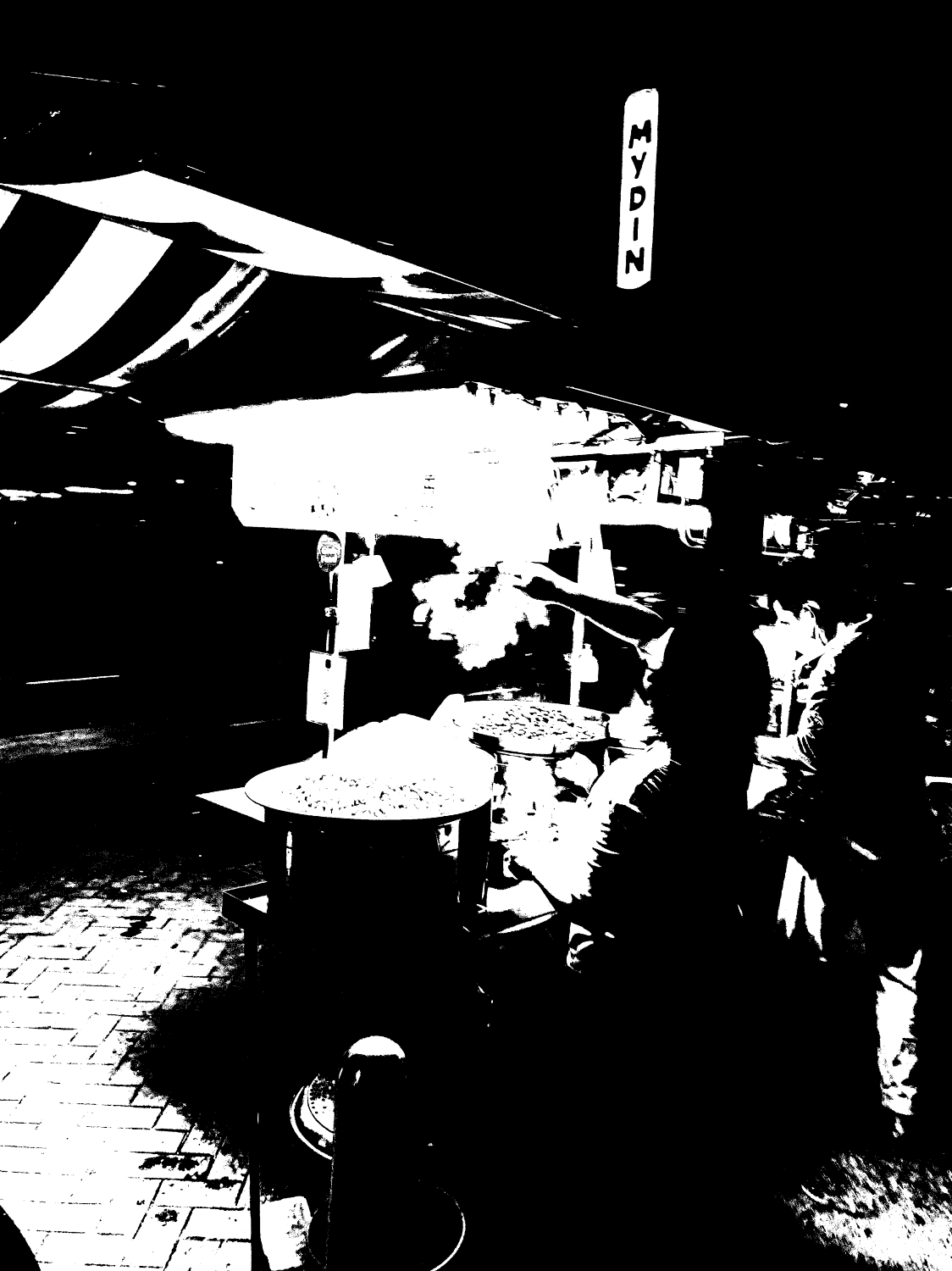
“Culture is created by the habits and the lifestyle of the society. These repetitive actions permeate into spaces in the environment. The environment cultivates the community.” Photo by Safri Shamsuddin
In my opinion, culture plays an integral role in shaping and portraying the image and identity of a place. For instance, during my travels, I love to explore the nooks and crannies of that area such as local markets, and eateries that the locals head to for their meals. Visiting and experiencing such places would enable me to “feel” the everyday life of that area. Similarly, the (built) environment that we are in now should reflect our culture. Be it a makeshift roadside stall or a street that turns into a bustling ‘pasar malam’ at night, these local ways of life should be embraced to portray the uniqueness and speciality of our culture.
We should be proud and celebrate the Malaysian traditional design of our 30-degree vernacular rooftop, ‘kaki lima’ of shophouses, high columns and stairs. Sadly, these design elements are rarely seen in today’s architecture in Malaysia because we fail to understand our own culture.

FEATURES

RELATED ARTICLES