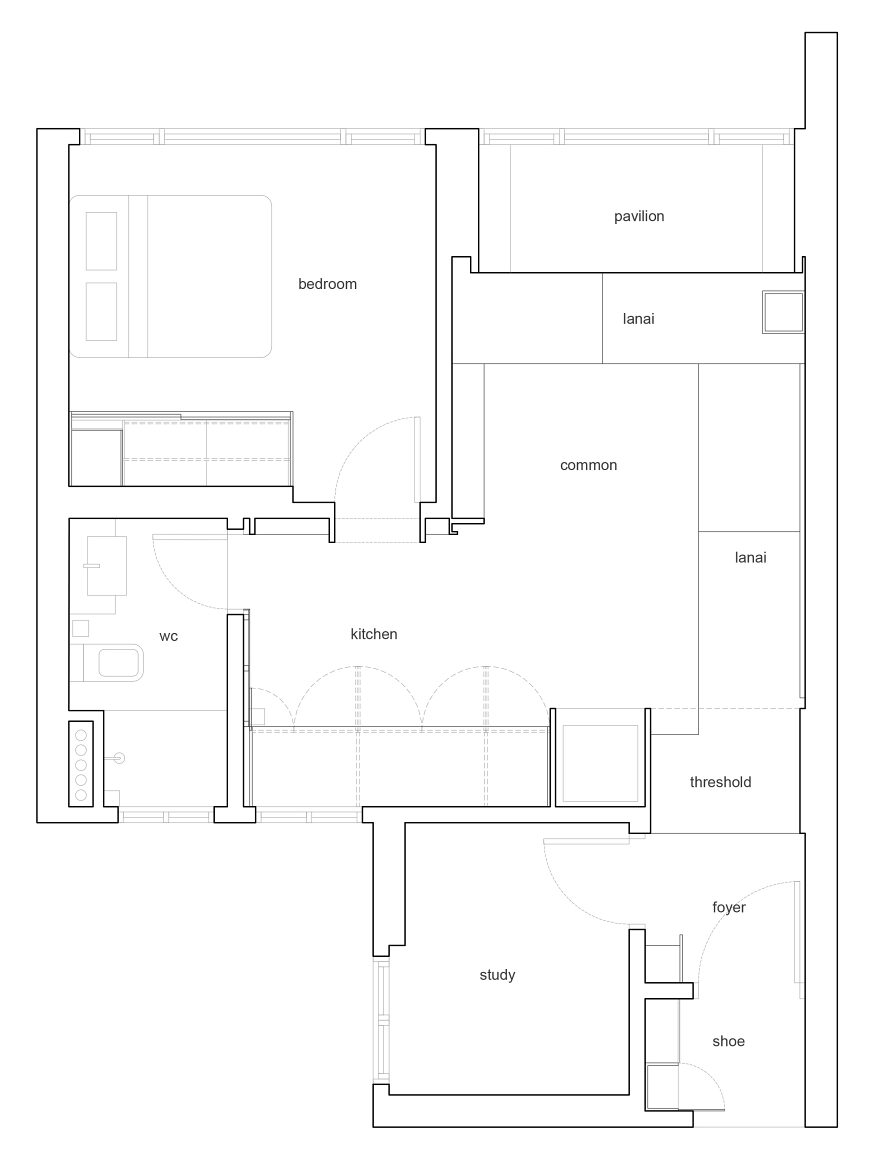

The current context of small apartment units in Kuala Lumpur is limited between 550sqft to 600sqft, and this typology has existed for decades, targeted for single bachelor or newlywed couples, which limits the adaptability of the space for the increase in household members; once a family grows in capacity, they will have to find a bigger space to accommodate their living needs.
Microliving Catalog is an experimental project located in Kuala Lumpur that aims to rethink the spatial configuration in conventional small apartments by using affordable local material plywood and raised platforms to allow for more spacious and humane micro living. Small space is often squeezed with tons of built-in cabinets to maximise the storage capacity and placement of furniture, as such the result is often a space which creates more issues when a space needs to accommodate for casual gatherings or even expanding small family. Most importantly, the very essence of ‘living’ is no longer enjoyable as there is more emphasis on efficiency over the emotional aspect of a home. As an Architect/designer/client myself, I wanted the place to be closer to what I felt when I was back at my home in Sibu, it is a place where I could hang around, take an afternoon nap on the floor and have a morning chat with my parents along the verandah; thus, the home should be a place which is not bound by ‘efficiency’ and depending on furniture to define a space, but rather a place designed to be closely associated with one’s feeling and memories.
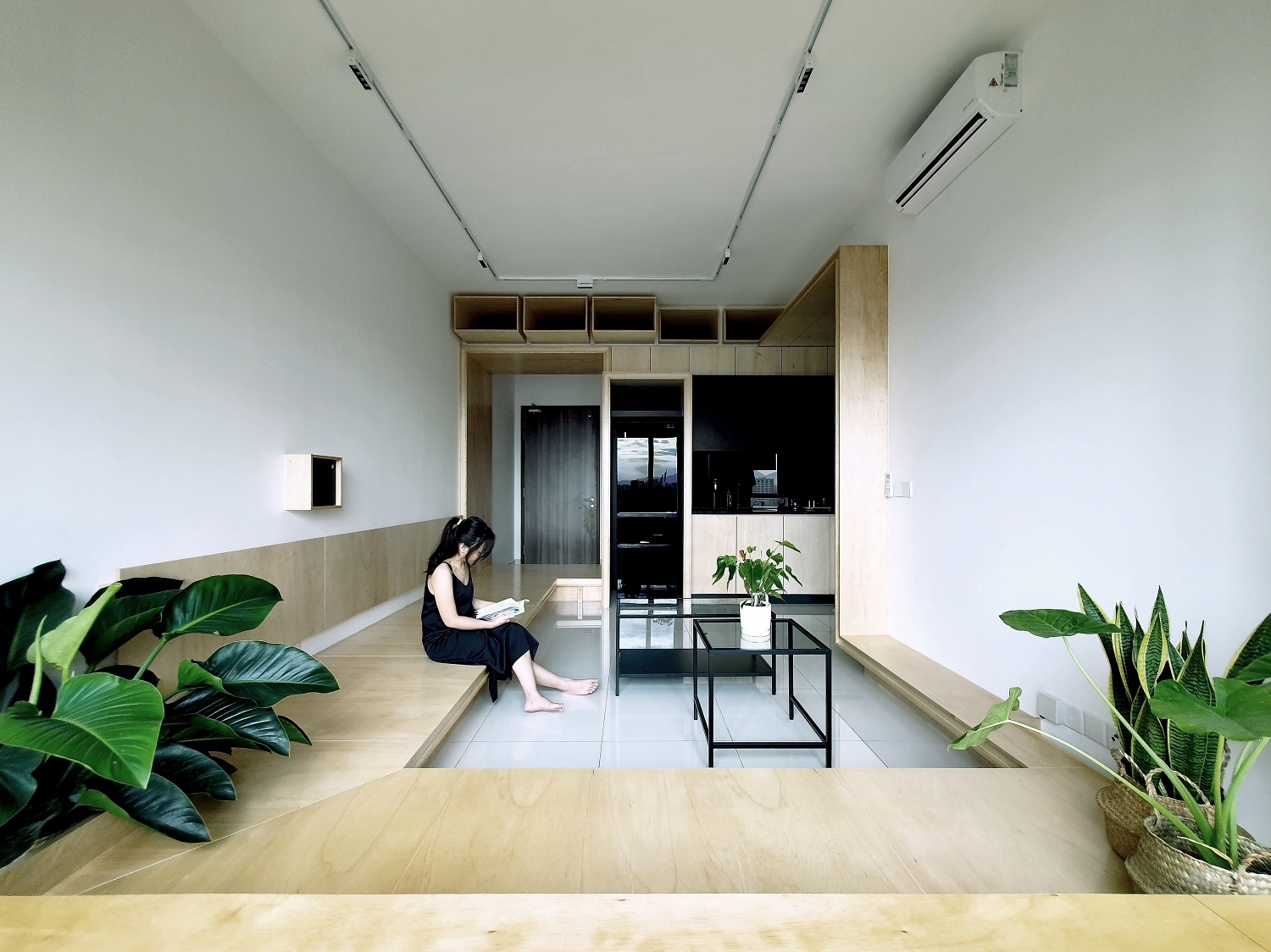
The main approach was to eliminate the need for all major furniture such as dining table sets, sofas and tv consoles to be replaced with a single continuous raised platform with the intention to bring all interactions closer to floor level; reflecting on my own/ Malaysian’s childhood memory of living-playing-reading-sleeping on the floor of a verandah, an area which activities are cooling and promotes intimacy and interaction among family members. With the introduction of the continuous platform, each corner of the space becomes usable and flexible for any form of daily activities. There is no fixed demarcation of the function as the whole space is fluid in access and use.
The centre courtyard-like space is an ambiguous open atmosphere of indoor-outdoor experience. The materiality of plywood serves as the binding element to integrate seating-table-walkway-steps into a singular language. This allows for expanded flexibility for more usage and adaptability, either for a growing family or hosting for a large group of people, which is impossible in conventional small apartments. From the continuous platform, one is able to walk up onto the window deck or become a small two-tier theatre seating.
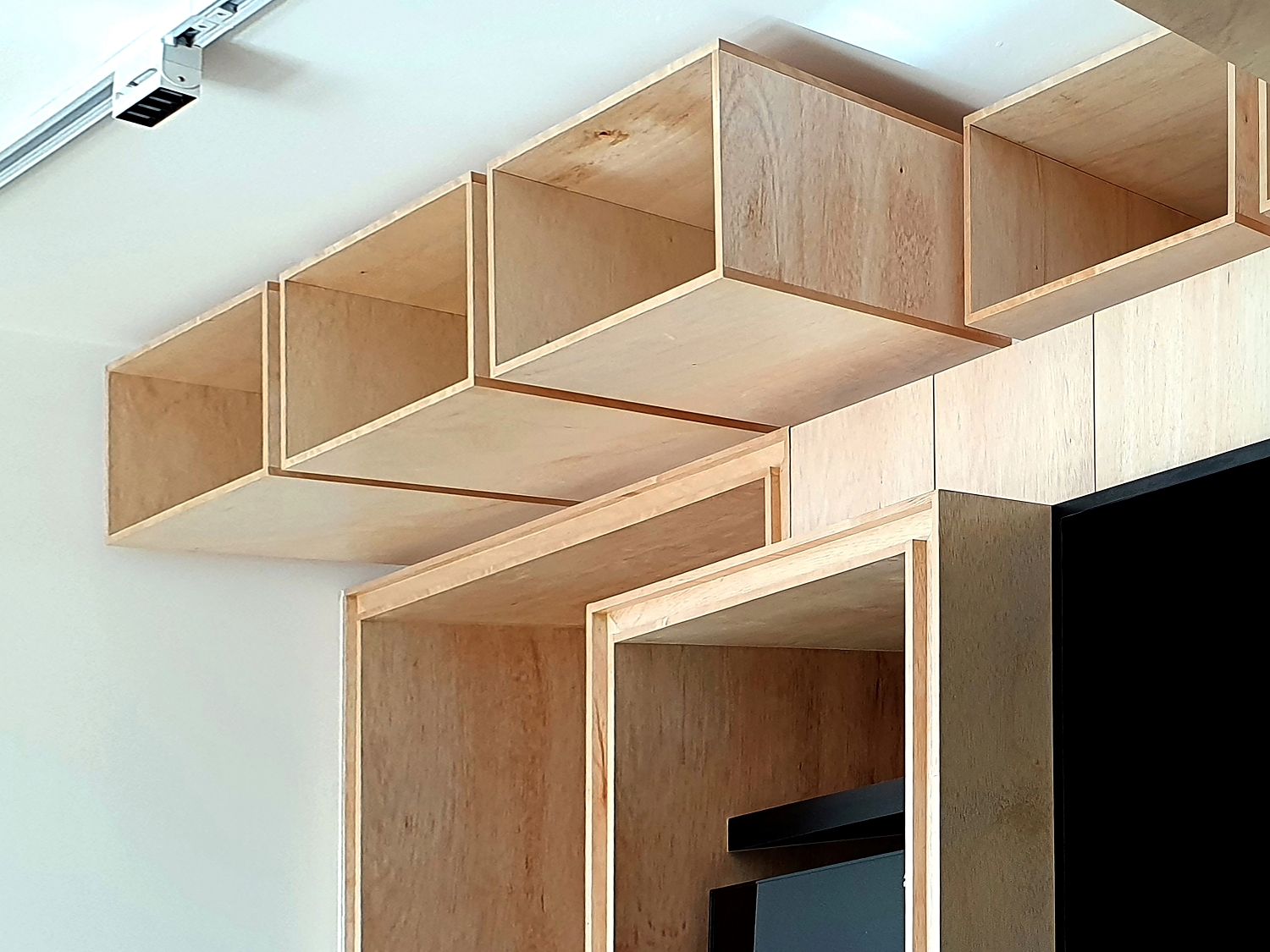
Walking up the platform is the conventional bay window with Air conditioning services underneath, which turned into a floating pavilion framing the full-height view of the cityscape. All plywood edges are extended by 25mm to eliminate odd joinery detail while expressing the true thickness of plywood and the plywood also helps to insulate the noise and vibration from the air conditioning units. All lighting is exposed and soffit mounted to save cost from expensive plaster ceilings, and high-level box features made of cheap plywood are designed as storage for utility items.
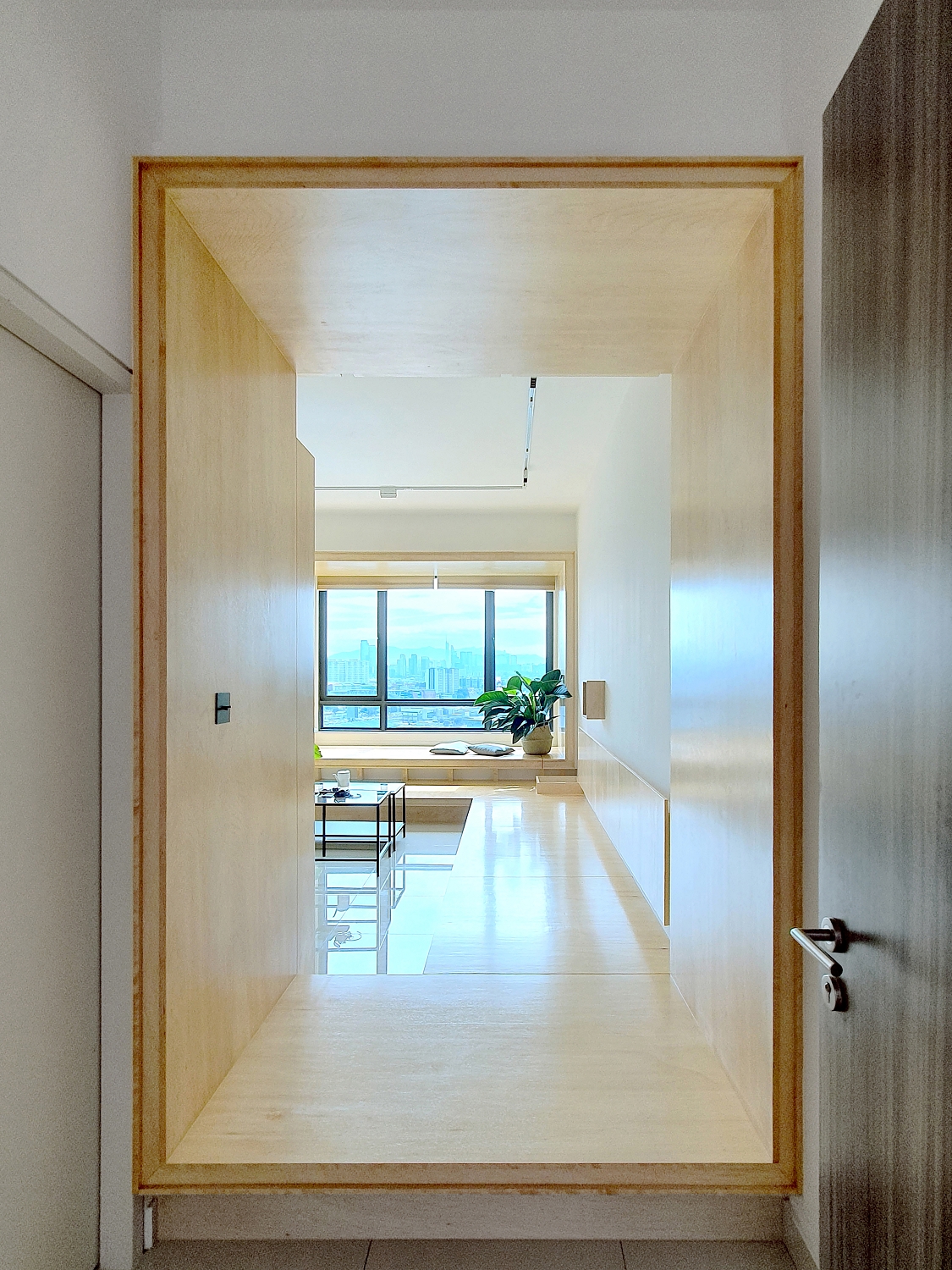
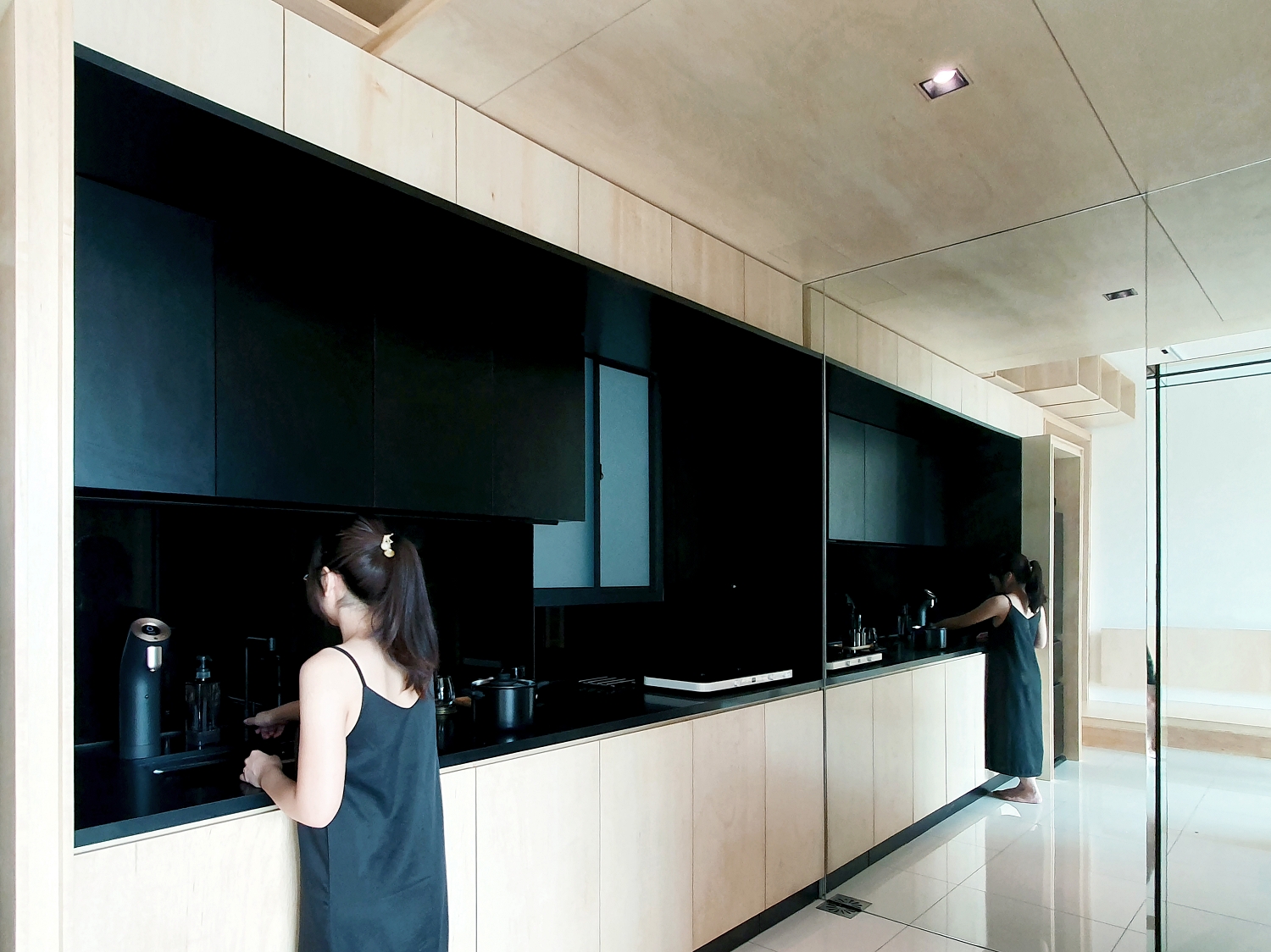
Each interior elevation is extended through the play of depth such as the extension of timber framing, linear decking-backrest, and mirror wall reflection. These elevations frame different functions-meaning such as the entrance frame: a traditional Chinese archway marked as entrance, bay window frame: floating pavilion, raised platform: pathway-seating in the garden, and mirror wall in the kitchen – spatial continuity.
LOCATION: Selangor
CLIENT: Ar. Daniel Tiong Wei Wen
PRINCIPAL USE: Residential
ARCHITECT: Ar. Daniel Tiong Wei Wen
DESIGN PERIOD: 2021–2022
CONSTRUCTION PERIOD: April 2022
DATE OF COMPLETION: July 2022
SITE AREA: 54 sqm
FLOOR AREA: 54 sqm
MAIN MATERIALS: Plywood
PHOTOGRAPHER: Ar. Daniel Tiong Wei Wen