PENCHALA RESIDENCE BY DOMAINE ARCHITECTS IS A CONTEMPORARY ADAPTATION VIA THE USE OF
VERNACULAR ARCHITECTURAL ELEMENTS THAT REMINISCE THE OLD TROPICAL BRITISH STYLE
TEXT BY THE ARCHITECT
Composition of textured and coloured fabric with natural finishes
Penchala Residence is designed for a small young family of four. It is situated on a hill beside a forest reserve next to Taman Tun. Dr Ismail, Kuala Lumpur. The house is 8,958 sqft and sits on a corner lot land that measures approximately 9,600 sqft. The land is sloppy with a significant level difference of over 9m from the highest to the lowest end.
SITE CONTEXT
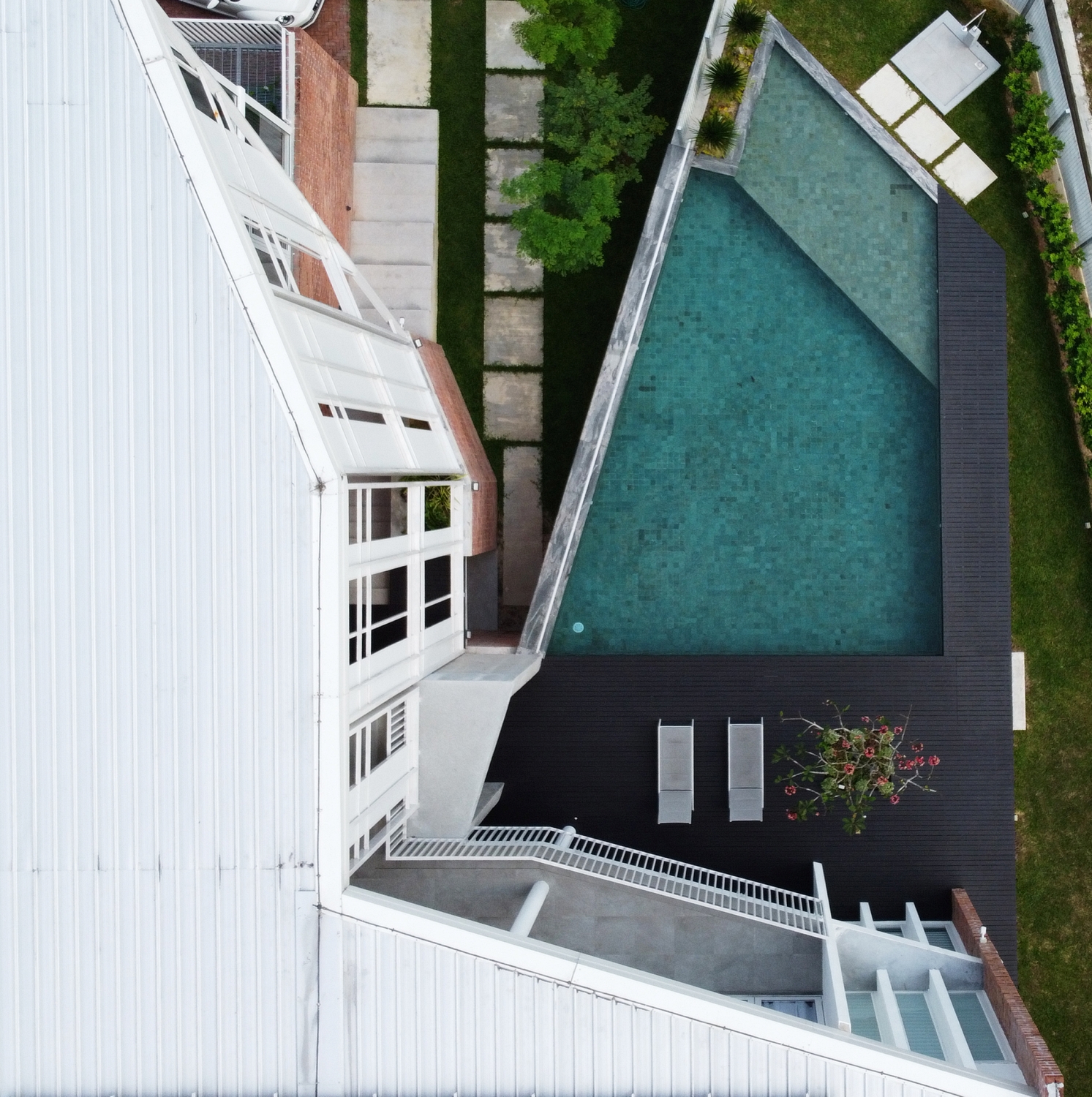
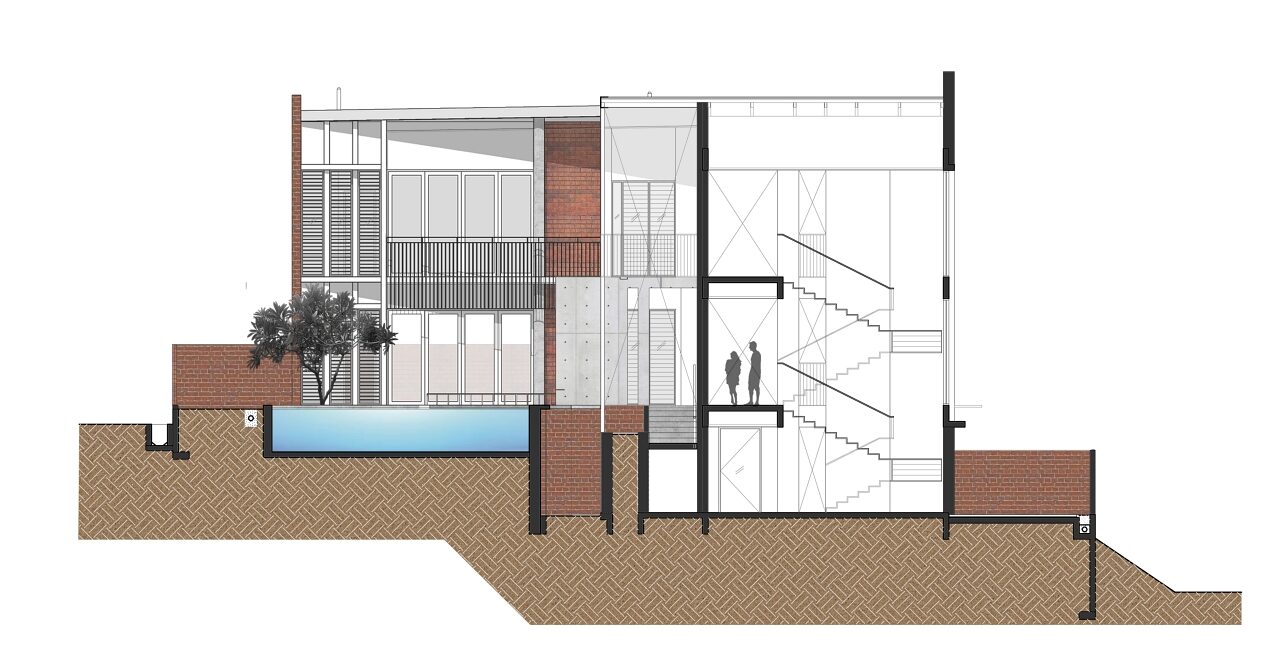
The solution is to design a 3-storey house that sits on two split-level platforms. In the centre is a long retaining wall that separates the 2 platforms, which also acts as the swimming pool structure. A garage, a motorbike lounge and a private entrance are positioned on the lower platform. In turn, this allows the main spaces to be at the same level as the corner courtyard and swimming pool on the upper platform.
Skewed angles to break away from the linearity of the site
DESIGN
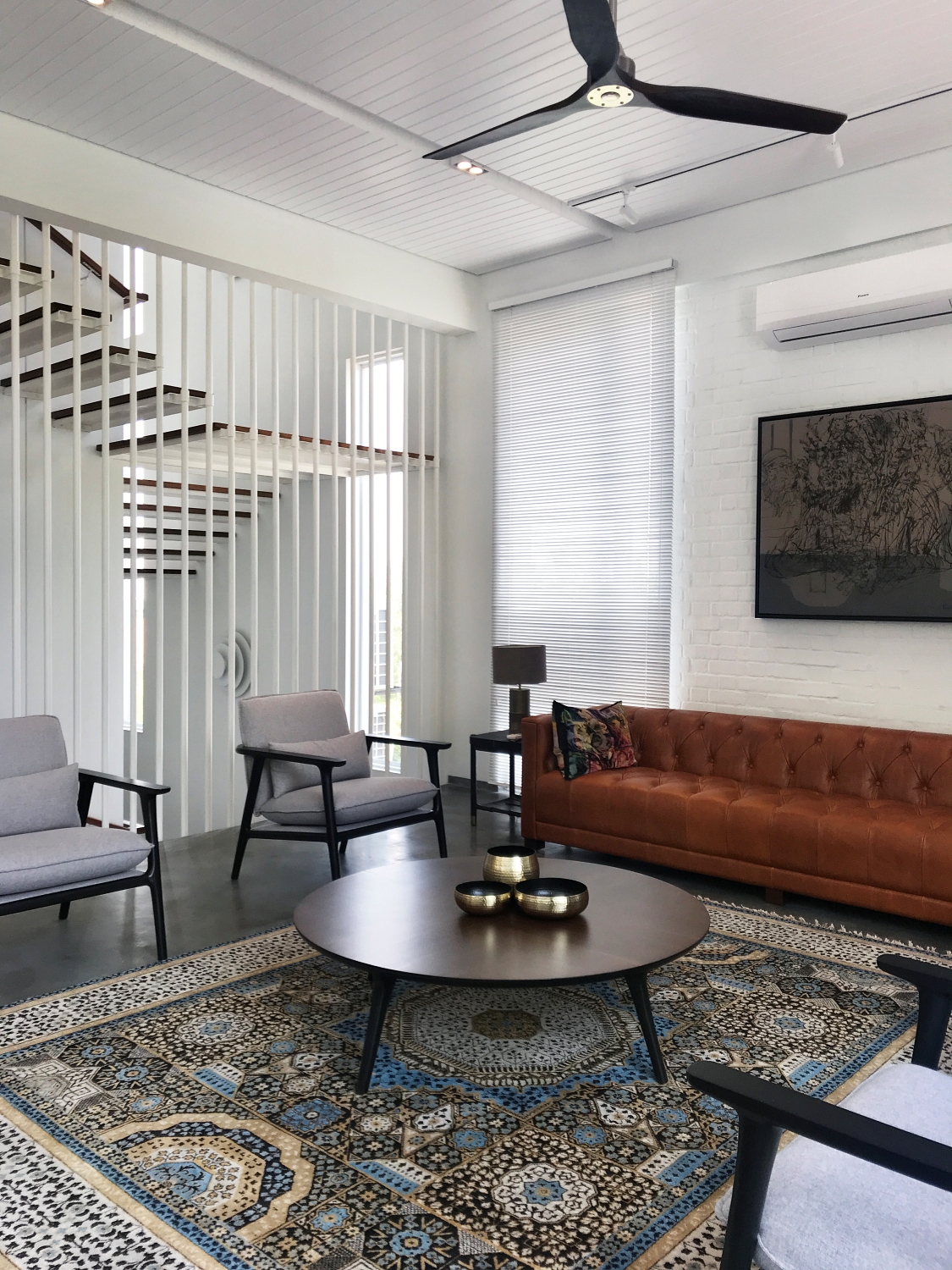
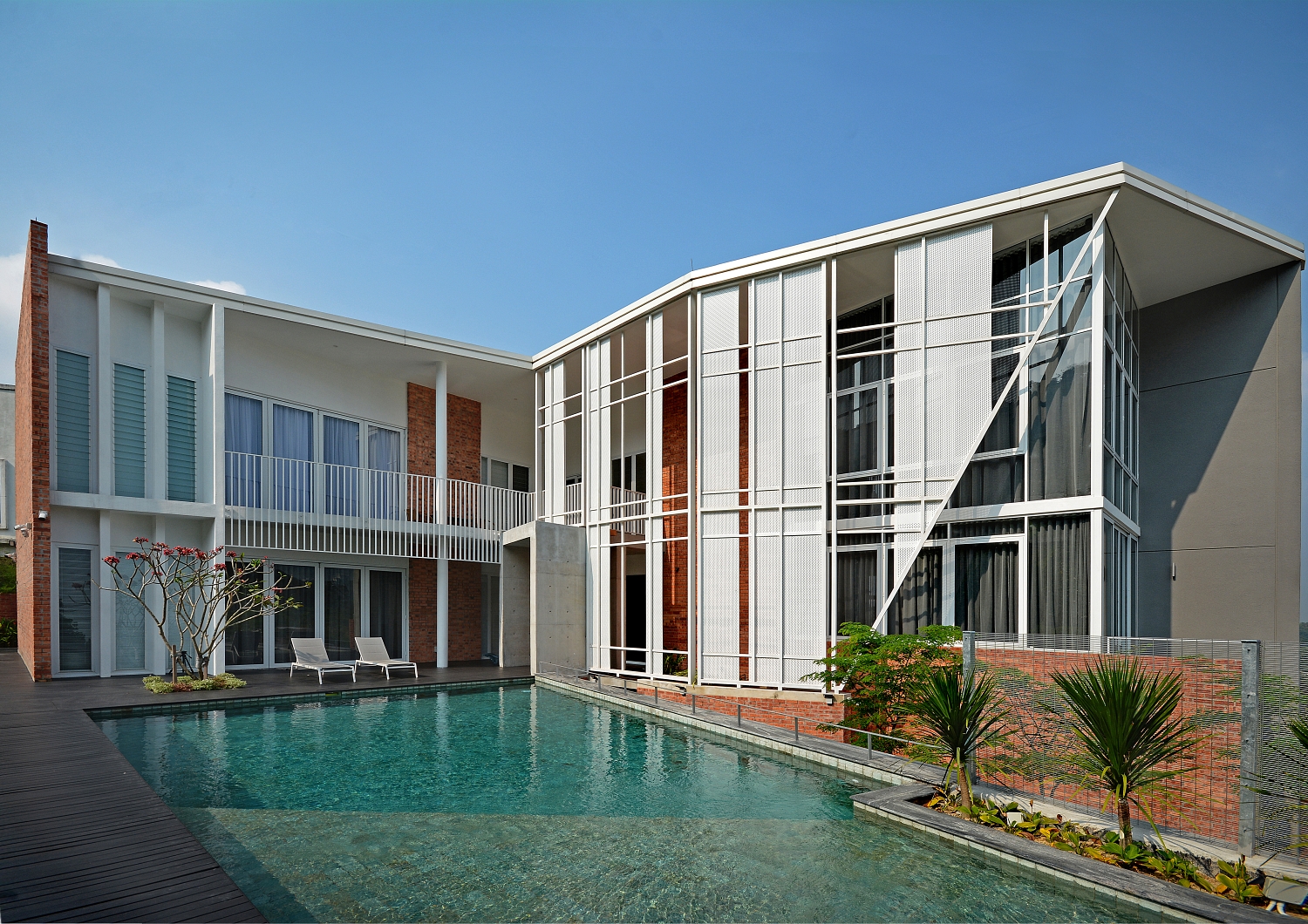
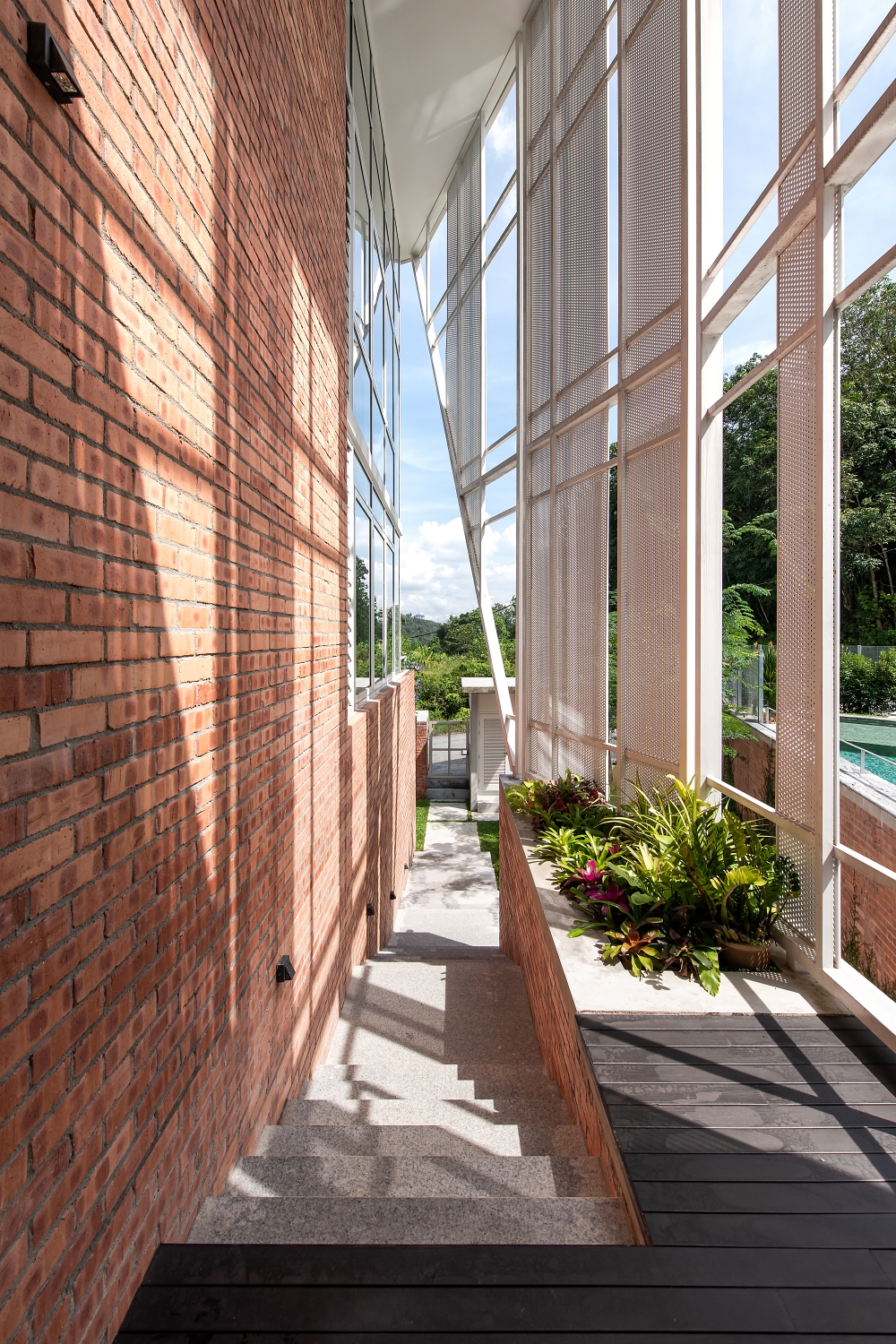
When the client approached us, they wanted a house inspired by colonial design. We took that as the main design aspiration and made a contemporary adaptation via the use of vernacular architectural elements that remind us of the old tropical British style. The house is composed of both fair face red clay and whitewash bricks, whitewash walls and timber ceiling, clear glass naco louvres and concrete ventilation blocks. The interior is filled with locally designed and made wooden furniture, mostly inspired by the mid-century era. The interior spaces are filled with an abundance of natural light with views out towards the corner courtyard and greenery. A white perforated metal screen that looks like a weaving patterned fabric is designed on the east-facing façade to filter light and view into the house.
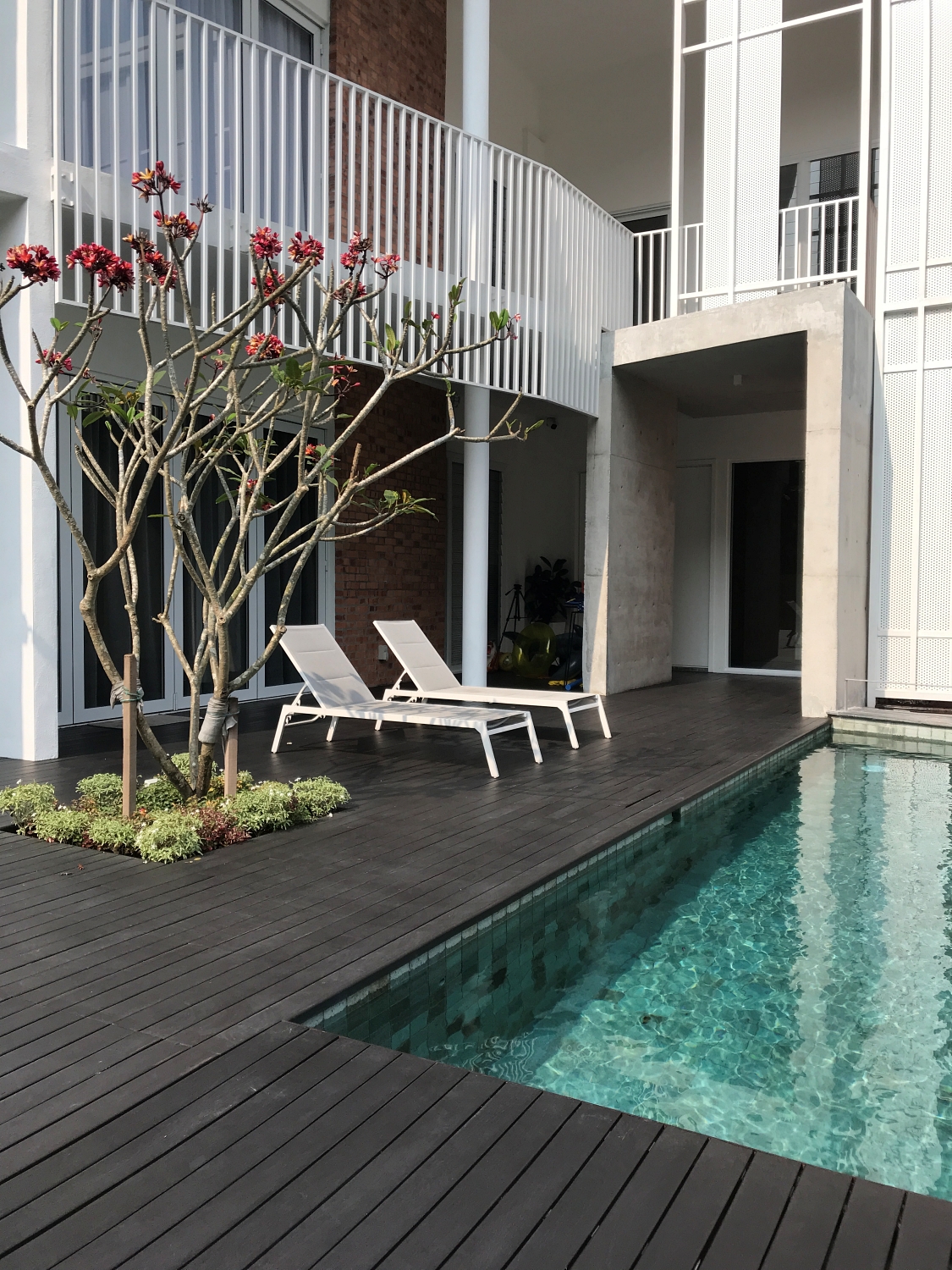
The L-shaped configuration allows the corner courtyard to become the focal point of the main interior spaces of the house. With a green hill as part of the reserve on the east side, the courtyard gets a nice filtered light that makes it perfect for a morning swim.
Internal spaces are articulated around the swimming pool
With a green hill as part of the reserve on the east side, the courtyard gets a nice filtered light that makes it perfect for a morning swim.
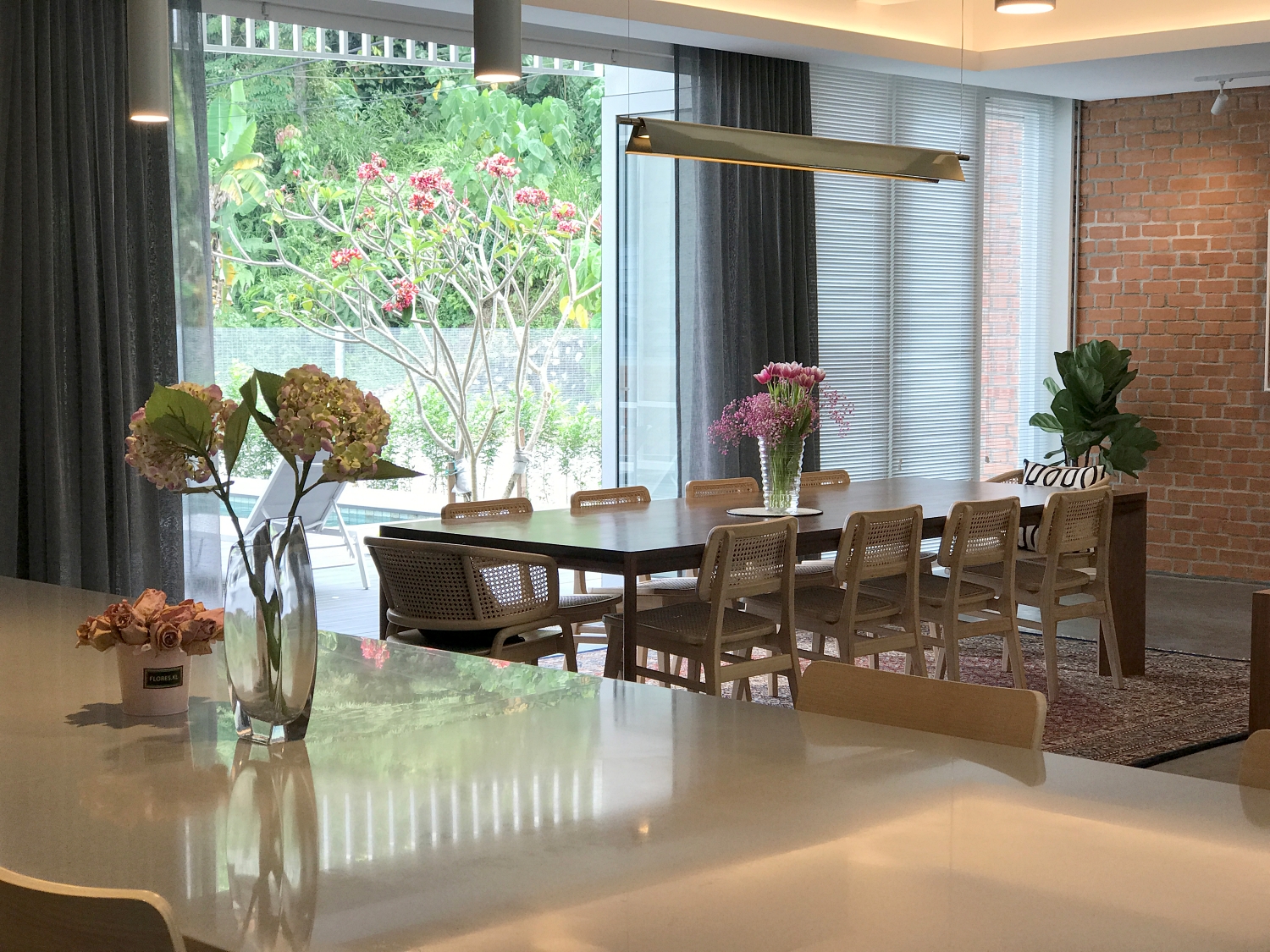
In the evening, the courtyard is nicely shaded from the afternoon sun for the family to swim and lounge on the pool deck. In addition, the placement of the courtyard next to the green reserve invites a constant cooling breeze that passes through the house. This allows the informal family space with a dining and breakfast bar to open out directly into the deck at any time of the day.
Sun shading panels to minimise direct light into interior spaces
SUSTAINABILITY
The floor plate of the house is designed to be narrow to promote natural light and ventilation. During the day, the design ensures that there will be minimal dependency on artificial lights. Large glazed windows are designed facing north and south with sunscreen on the east façade. Openable windows are placed on opposite walls of the interior spaces to promote cross ventilation, thus minimising the use of air conditioning.
Solar panels are also fitted on the roof to generate as much as 1,050 kWh of electricity per month. A small but meaningful offsetting of the carbon footprint of an estimated 20.9 barrels of oil consumed and 10.6 acres of forest a year.
At the same time, the electrical fittings and equipment were carefully selected to ensure efficient energy consumption.
Natural stained Balau pool deck
Main dining table in solid timber with brass plated linear bar light
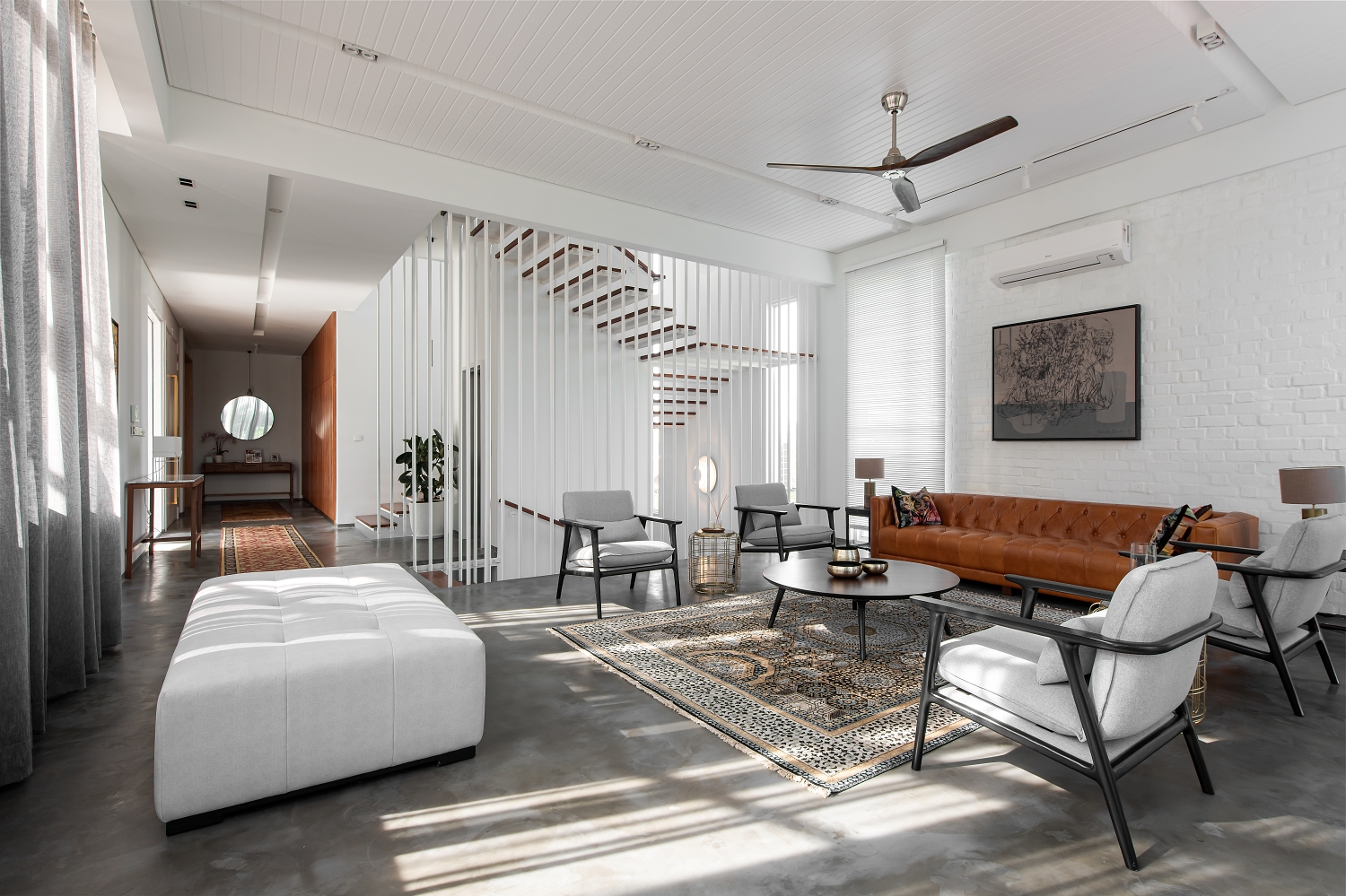
Open planning with visual connectivity between internal spaces
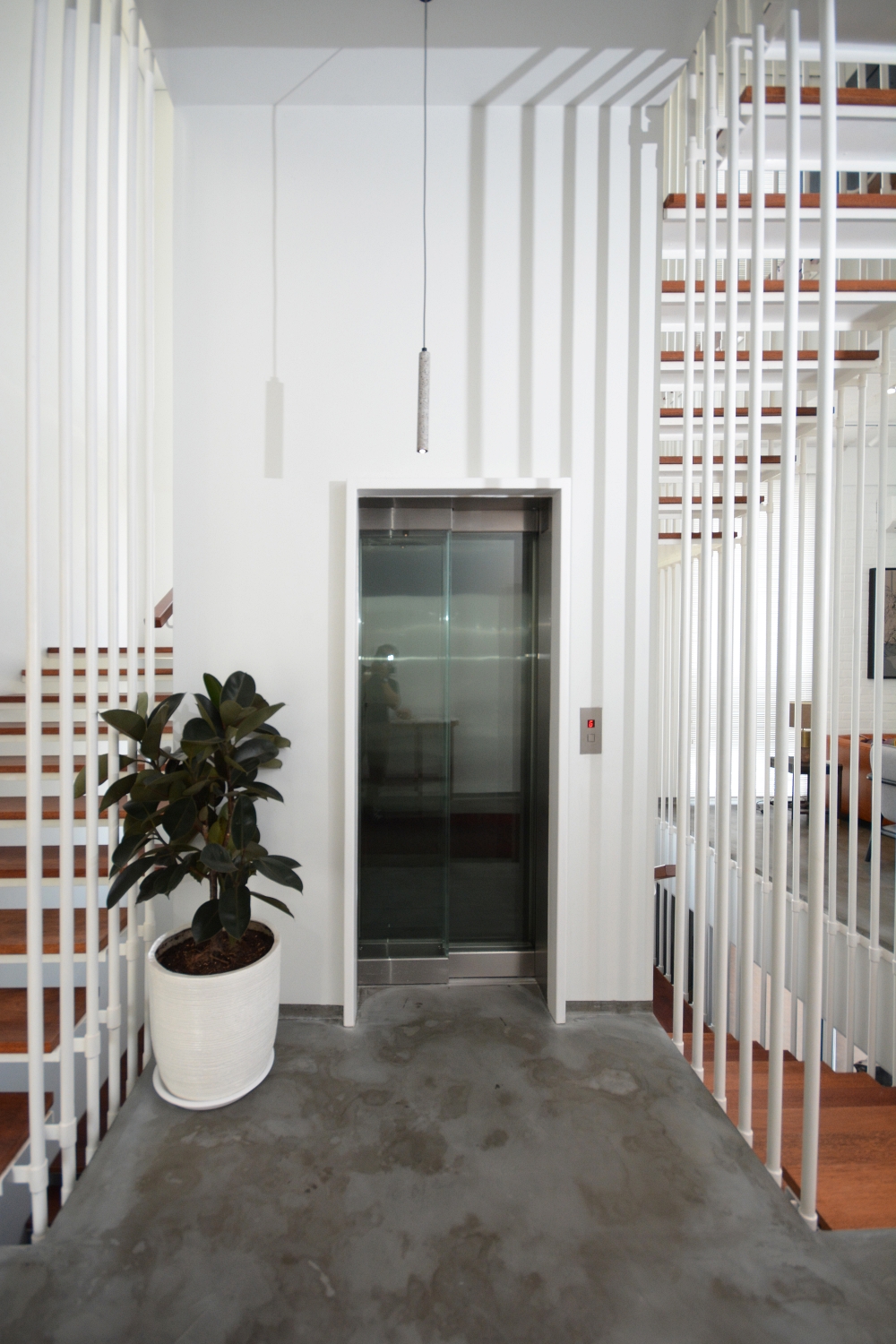
Suspended steel staircase around lift core.
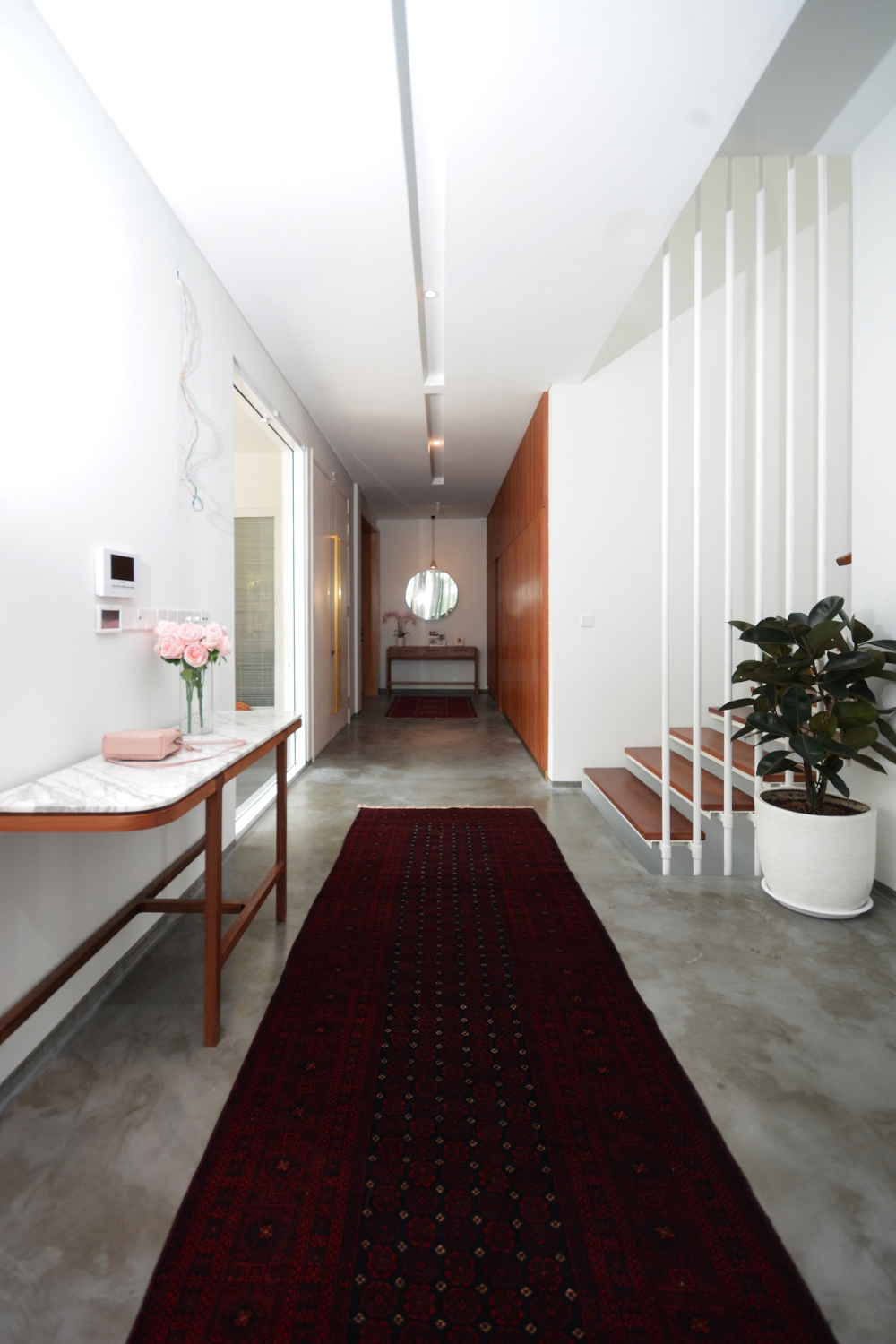
Main galleria with an abundance of natural light
Section drawing
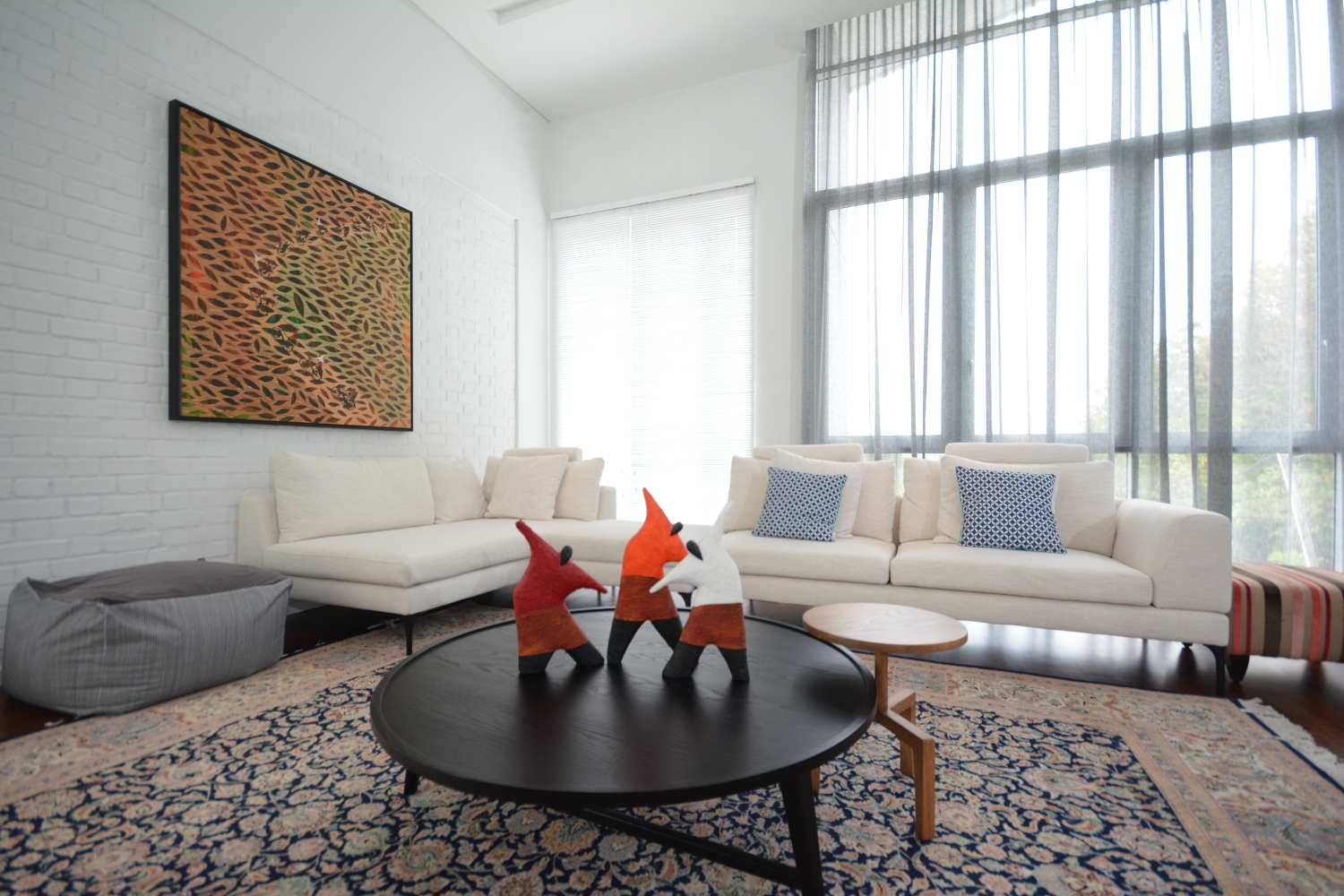
Abundance of natural light in the family living area
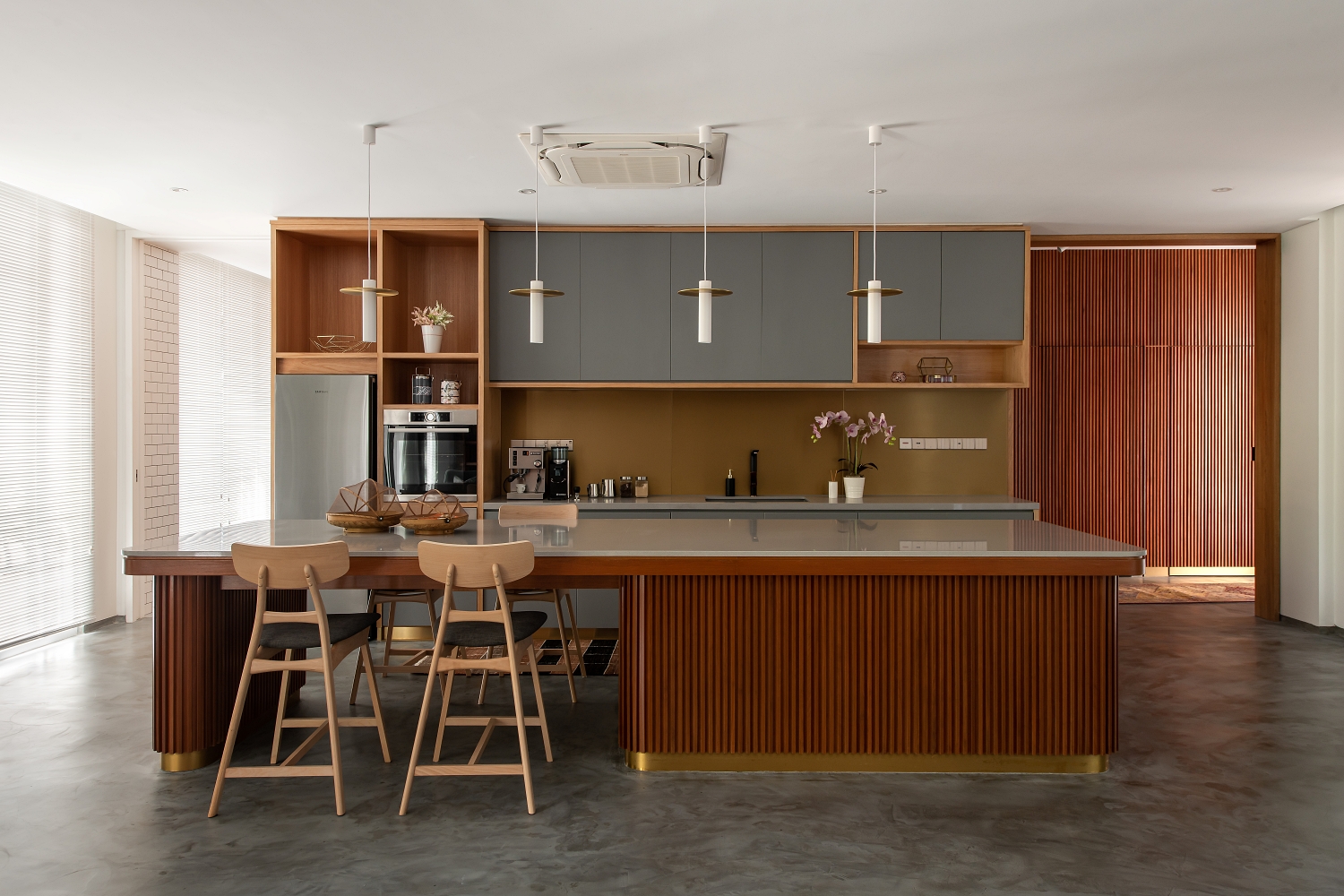
The centrepiece island breakfast bar where endless conversations take place