SACRED SYMPHONIES:MASJID AN NABAVVI

Text and photos by Acacia Diana
Towering minarets, rising above the sliding domes and folding umbrellas
Madinah, a city so deeply steeped in Islamic history and spirituality, receives millions of visitors each year. In March 2022, just at the tail end of the covid lockdown, I became one. Arriving at the city complex on my first night in Saudi Arabia, I was struck by the sheer architectural scale of this ancient place, made even more unearthly by the lack of crowds.
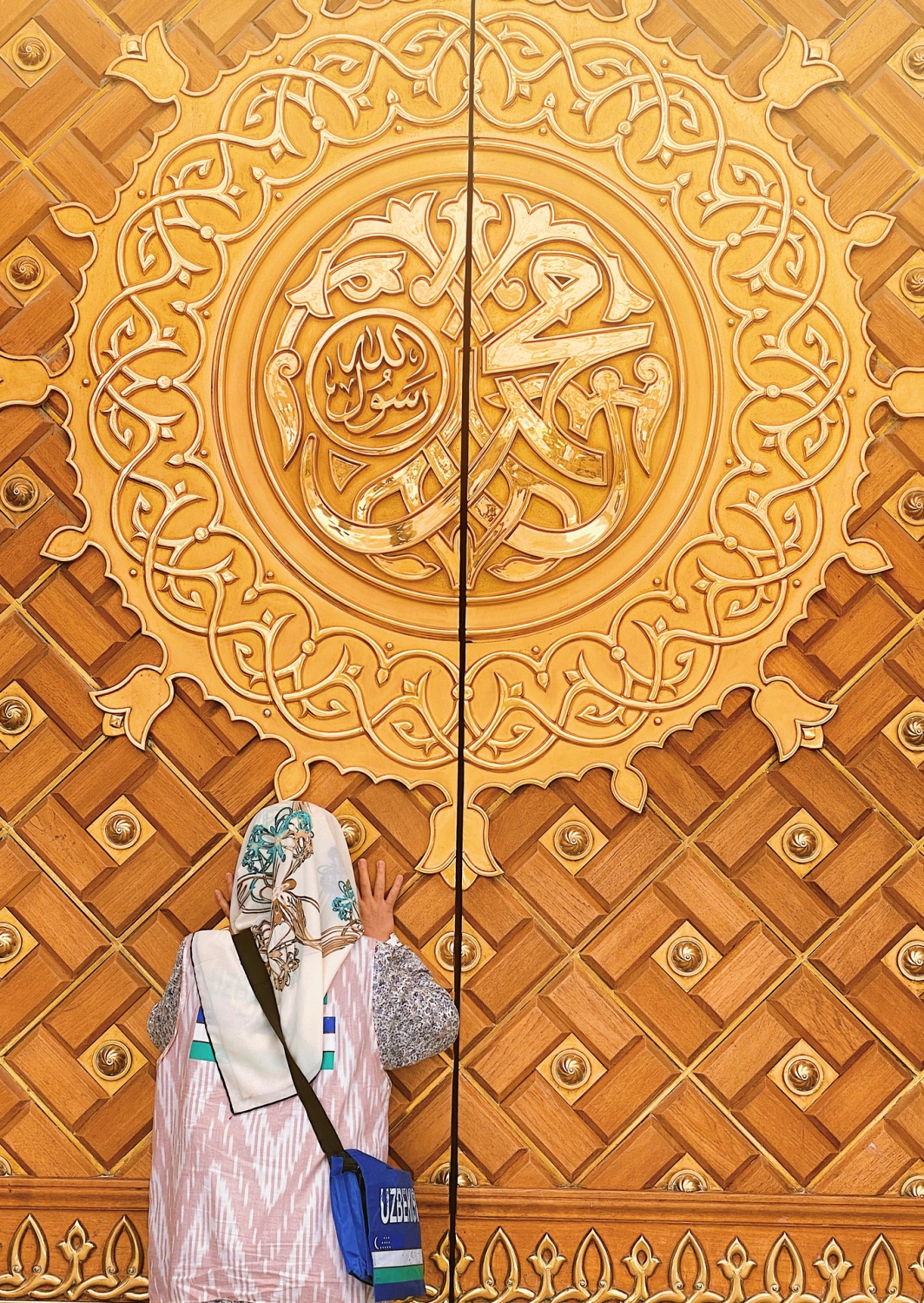
Golden gate of Masjid Nabawi, separate entrances for men and women

From my hotel room, I could see the towering minarets of the masjid, each adorned with delicate geometric patterns. Rising high against the backdrop of the sandy mountains, they provided a distinct vertical emphasis to the mosque’s design. The imposing domes, inner courtyards, elegant minarets, and intricate façades all form to create an aura of grandeur and reverence.

But it is the striking green dome, sheltering the tomb of the Prophet, that truly left me in awe. Built in 1837 CE during the reign of the Ottoman Sultan, its commanding presence symbolizes the profound religious significance of this sacred site. Even more intriguing is the Rawdah, an area between the minbar and the Prophet’s burial chamber, which is regarded as one of the Gardens of Paradise, and is a coveted place for Muslims to pray.

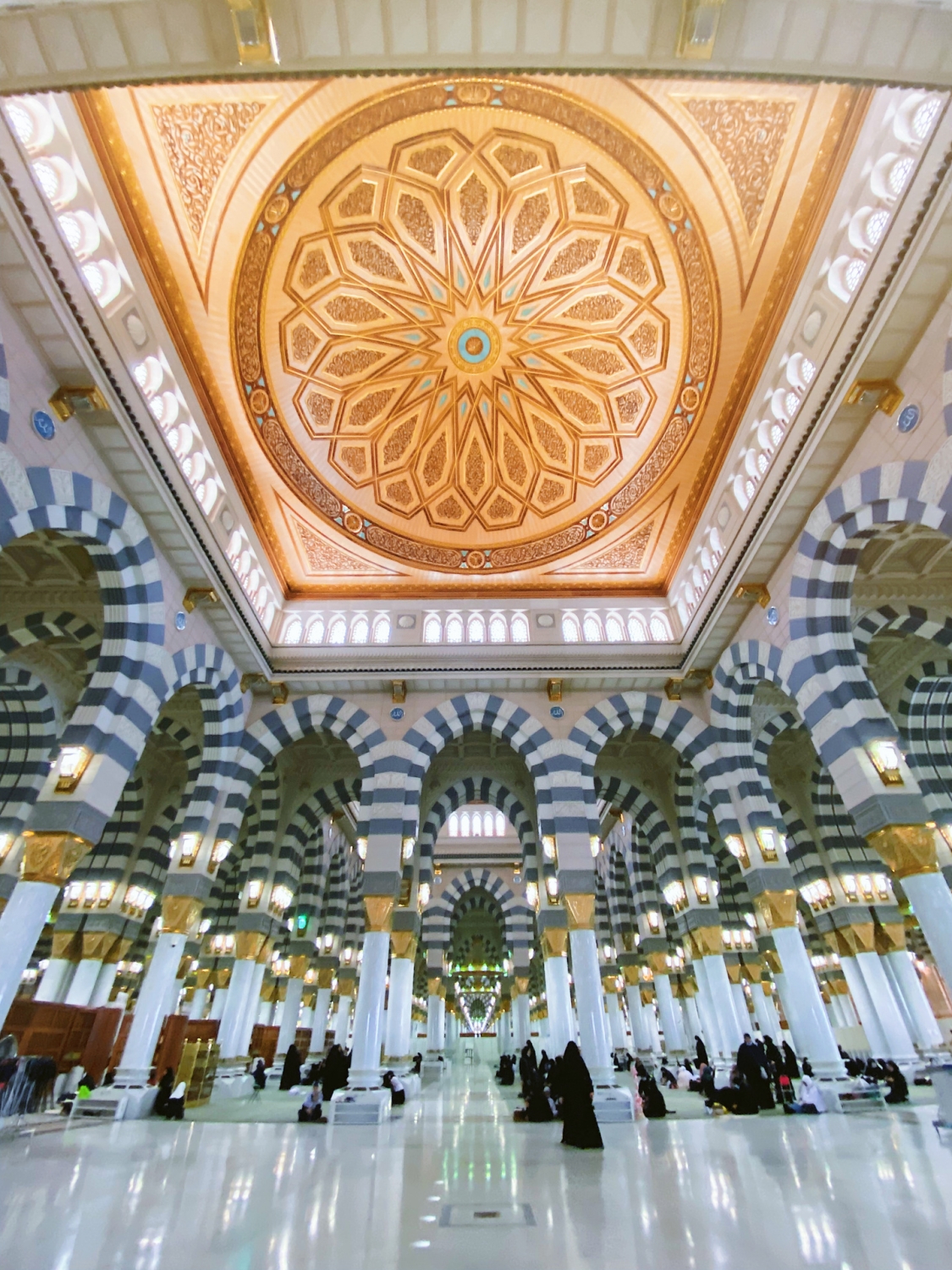
The interior arches of the mosque, with a view of the golden dome that can slide open. At the base, openings allow light to shine through from the outside

Before I knew it, the call to prayer had sounded, and I was rushing, together with the throng of people from foreign lands to the prayer halls. 43 imposing gates, coated in 23-carat gold and weighing over 2.5 tons, welcome worshippers into the prayer halls. Inside the air was cool, mingling with a heavy scent of oud. I sat underneath the striped green arches of the interior and marvelled at the huge domes. It was only when light started pouring into the halls that I realised they were constructed to slide, opening up the courtyard to the skies and allowing cool air to stream in.

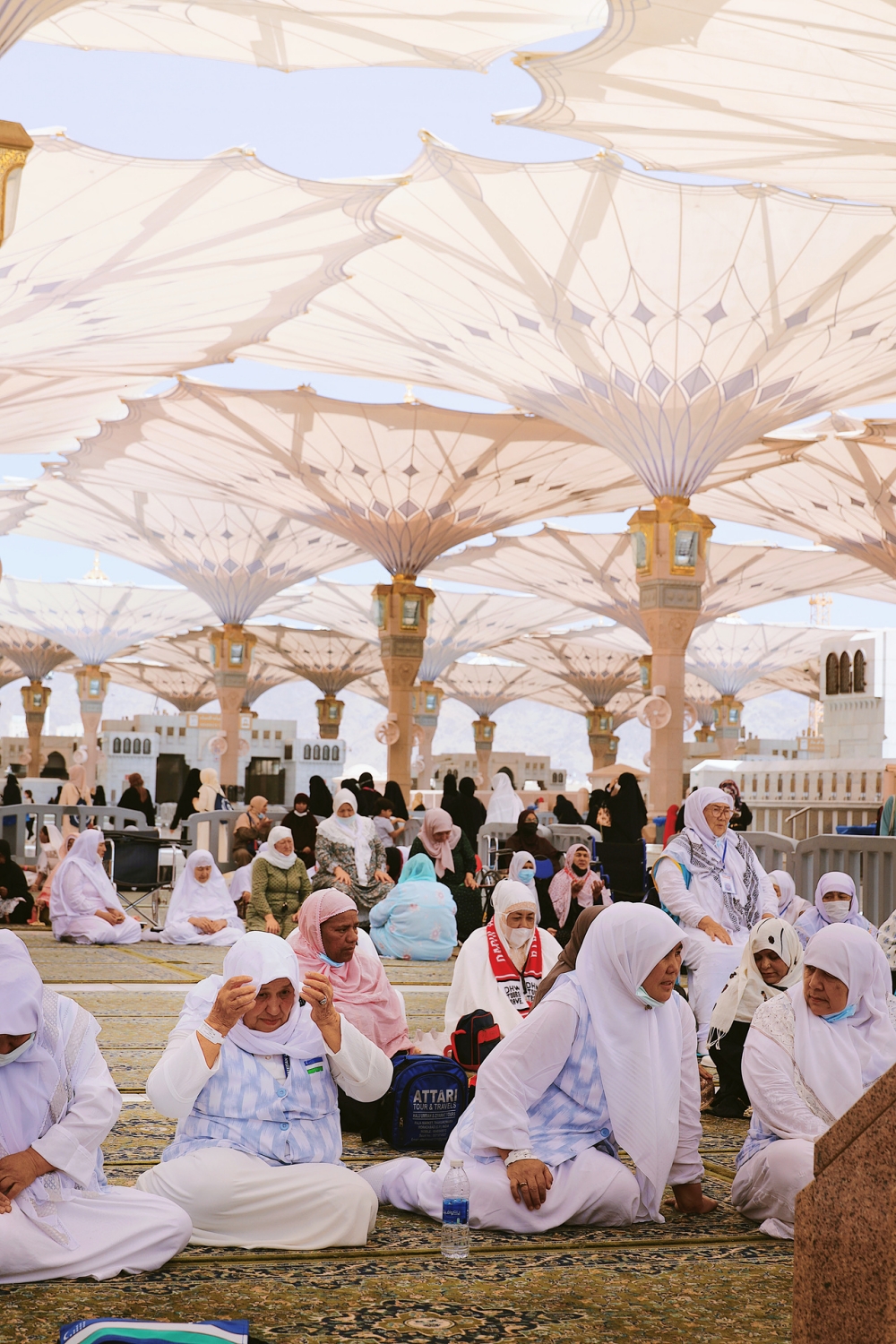
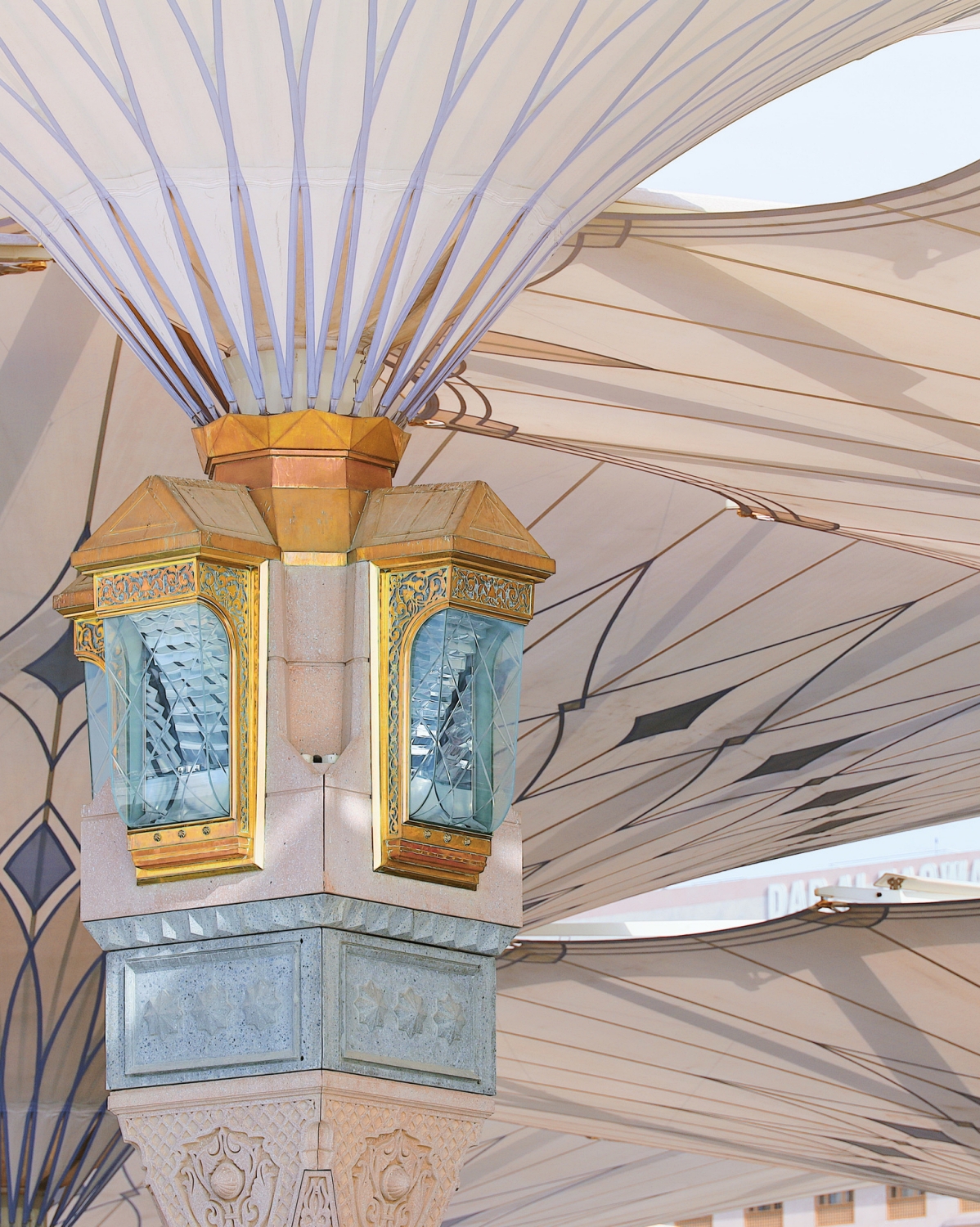
As I spent my days in prayer at the Masjid, one of my best-loved experiences was passing through the Medina Haram Piazza, a large open space shaded by 250 umbrellas. Completed in 2010, these shading devices were conceptualised by King Abdullah Abdul Aziz to protect worshippers from the heat of the sun, and from the risk of slipping and falling in the event of rain. They are made of highly durable PTFE white fabric, with Islamic motifs, developed specifically for the project.

PHOTO ON RIGHT: Women's prayer congregation at the piazza. The mosque complex allows worshippers to pray inside or outside
Sitting down under these shades every day, seeing them unfold at sunrise and sunset, only added to the symphony of the sacred place. It was as if being in a world that transcended time and space, where even the air tingled with spiritual resonance. From the glistening marble floors, and intricate heavy prayer mats, to the labyrinthian interiors, the complex around me felt illumined with profound serenity, vibrating with the beat of countless hearts seeking divine connection.
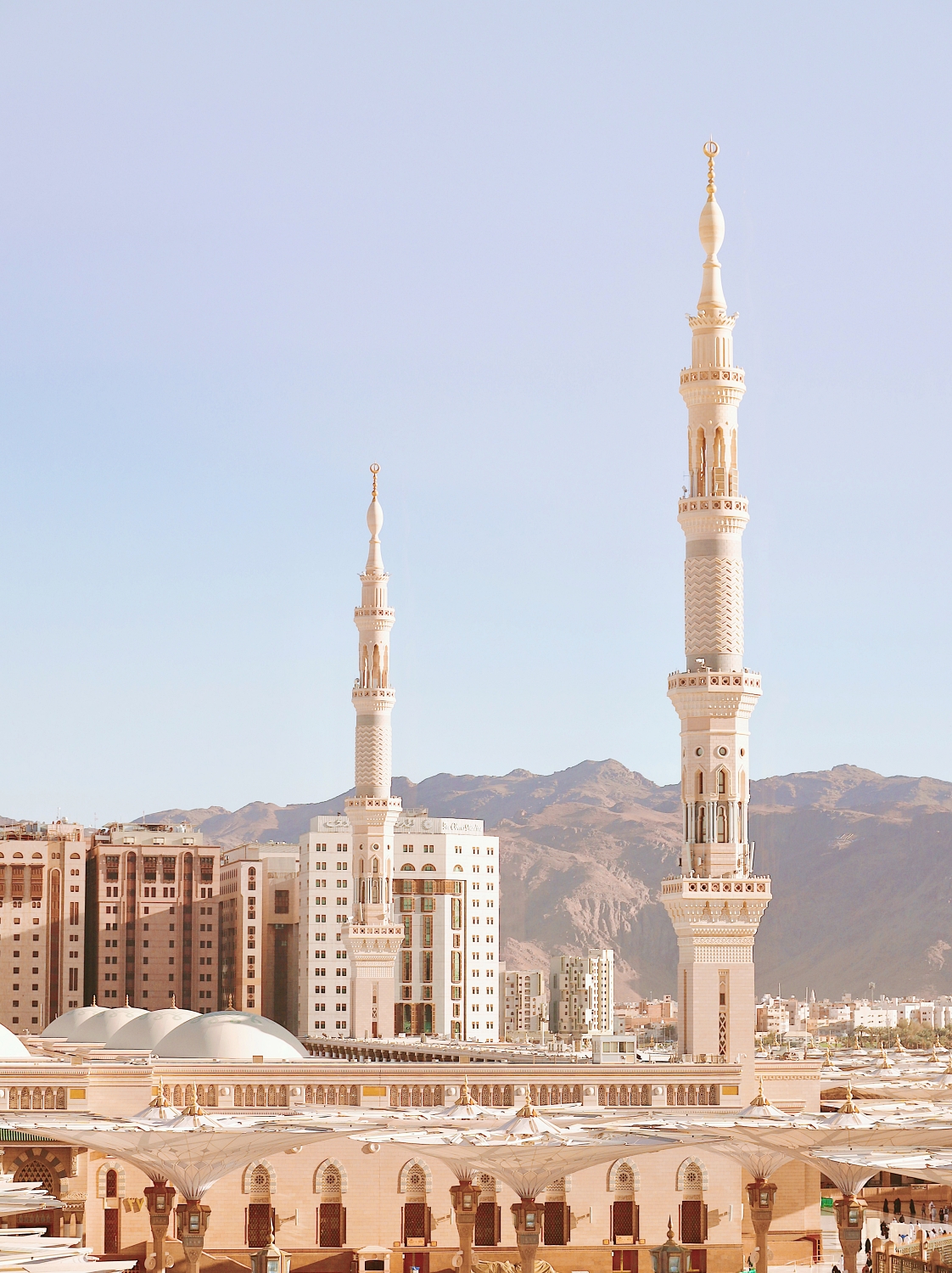
Being in a world that transcended time and space, where even the air tingled with spiritual resonance
Specially designed folding umbrellas sit atop tiled claddings 6

FEATURES

RELATED ARTICLES