
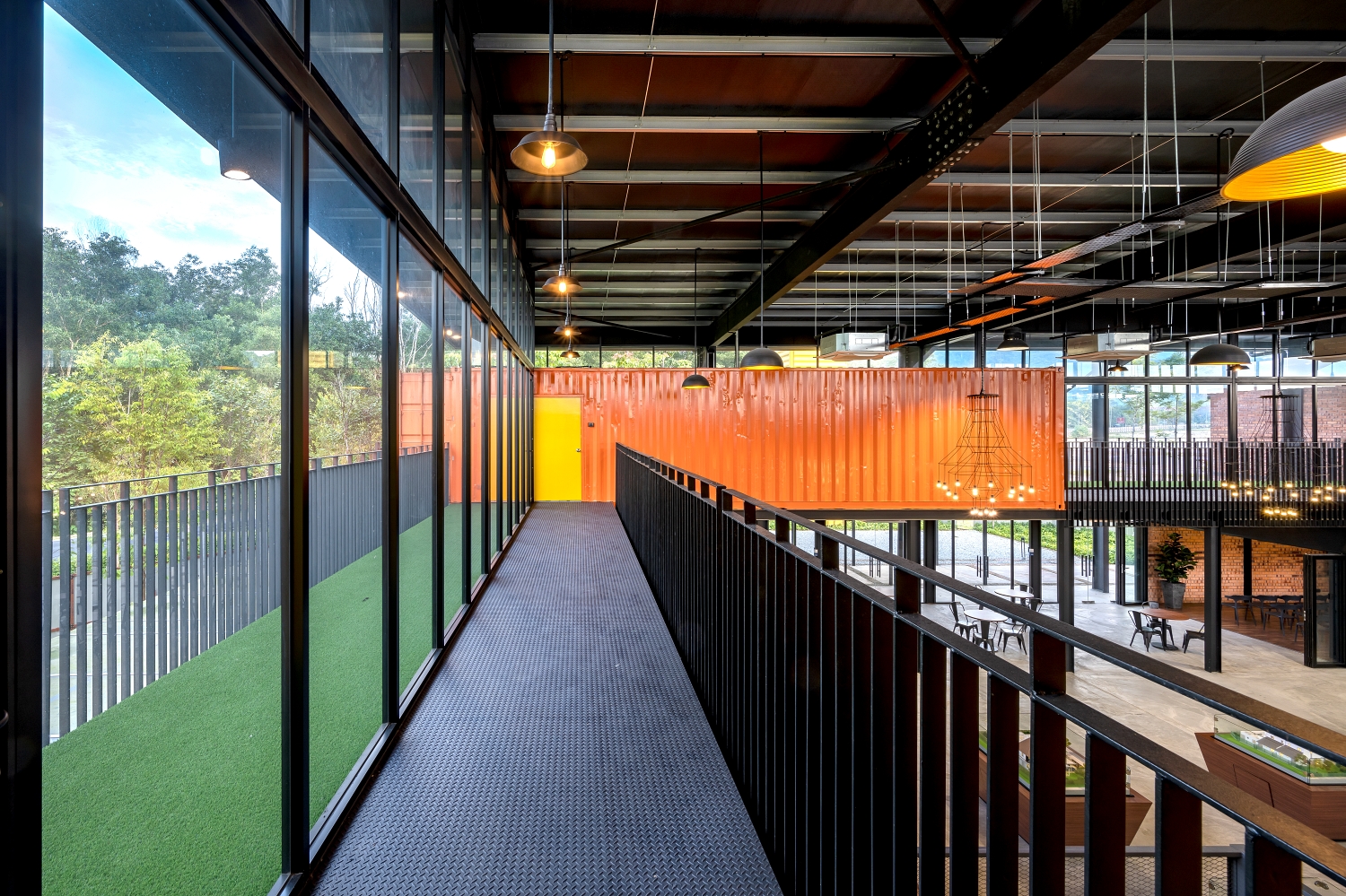
In this project, it is a prerequisite to understand what shipping containers are all about. Strength, weakness or industrial charm must be considered before adopting them into construction. Why and what narratives are to represent the buildings?
These iconic steel boxes with impeccable industrial proportions are widely used in trans-global sea transportation since the 1950s. Each of these boxes has been freighted to seaports of multi destinations spreading the seven seas, paddling under the scorching sun, drenching in the downpour, trembling in violent sea storms or hurricanes with an uncounted consignment of payloads. After twelve years minimum in service, it is time to repurpose these boxes and it is an honour to proclaim them as legendary relics which had travelled the world, authenticated with blemishes and scars of dented walls acquired from their treacherous journeys. Their characteristic appearance as the box is a symbol of their journeys.
Selindung Daun Gallery is nestled in Hulu Yam, Selangor. The speciality of the Selindung Daun Sales Gallery is that it uses shipping containers as the main subject and experiments with container boxes in a horizontal and vertical formation, creating colourful mosaics that embellish the setting up of the entire scheme as to intrigue the public eyes and to divert public perception of what is normal in a typical property development sales gallery into an Instagramable environment and to date it remains as a unique sales gallery.
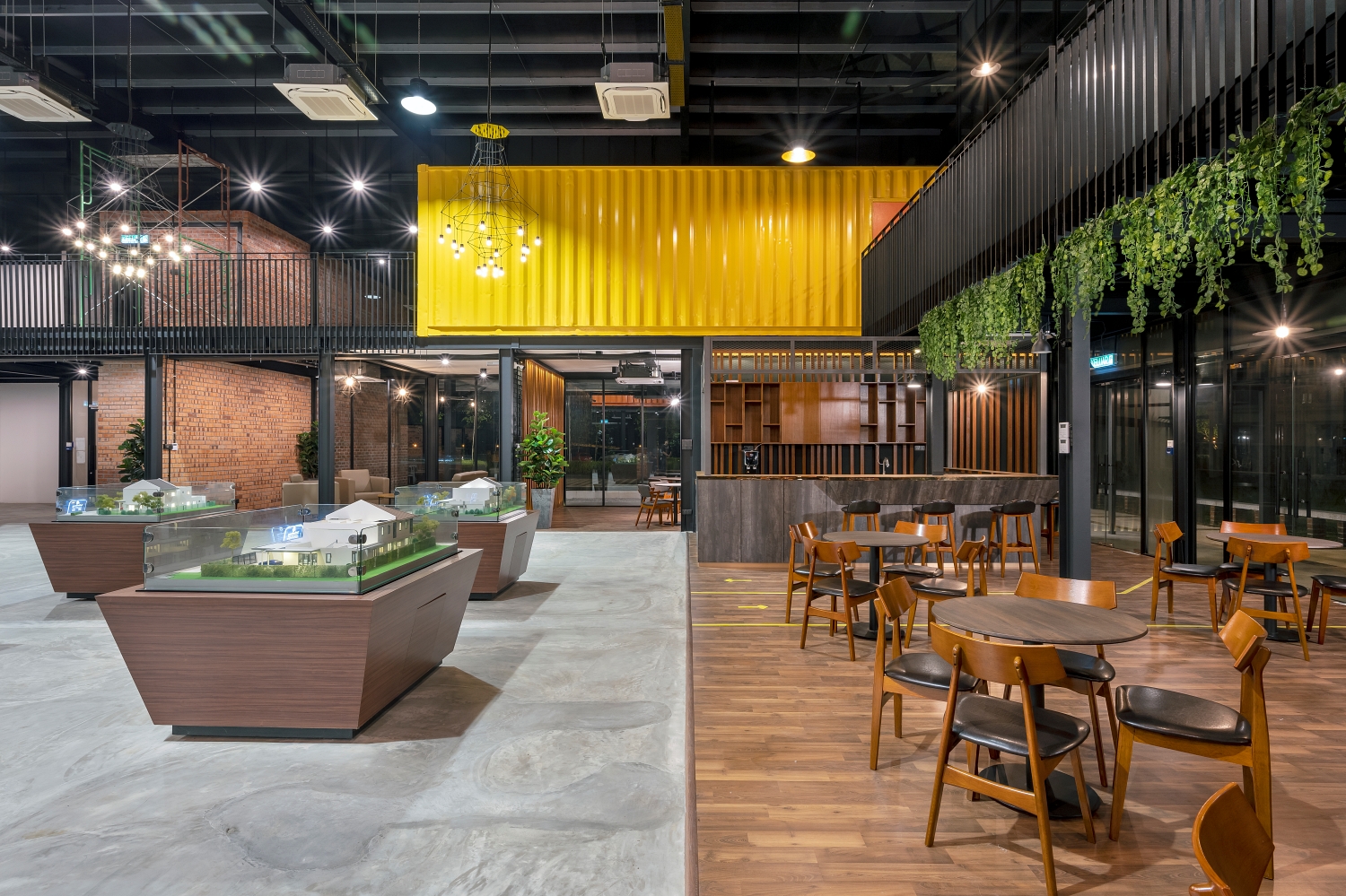
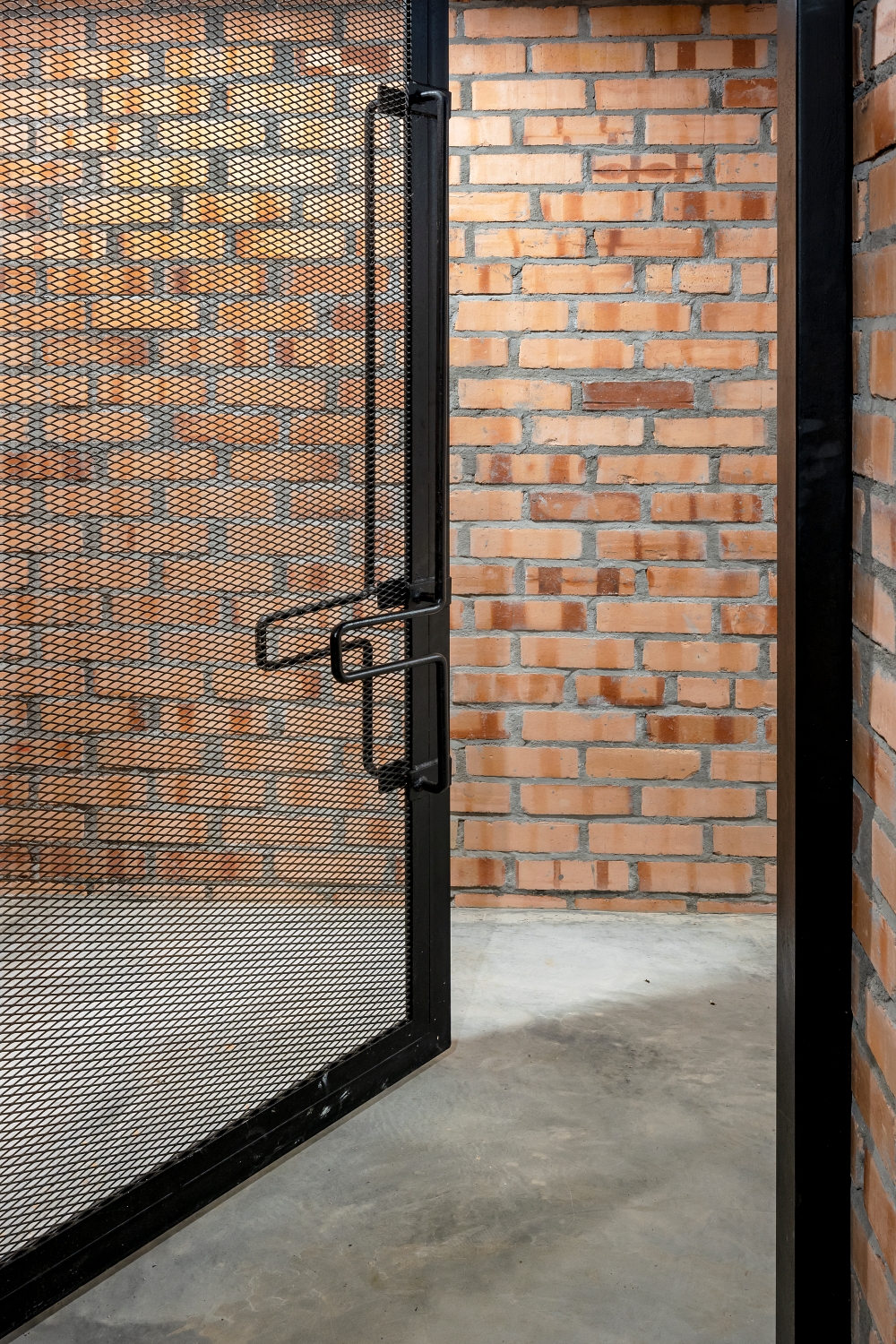
The main building was skewed towards the main road to maximise exposure. The slanted position gave an advantage in the façade display while demonstrating the characteristic of the container wall and expressing its iconic door at the end of the box.
The architectural approach was to create an independent primary structure to support the container. This strategy drives freedom for composition and interplays with the volume linearly. The plot was to experiment with different positions of the containers, providing transparency with lightness to the building in enriching virtual dialogue between indoor and outdoor spaces.
A double-volume space was designed as the main gallery flanked by 3-sided containers that accommodate offices and a VIP lounge with elevated corridors to link the spaces on this floor.
Meanwhile, on the ground level, it was designed more for public usages such as an exhibition concourse, lounges, cafes, discussion niches, children’s playroom, reception, sales office and private lounge. An expansive porte cochere is provided to welcome visitors and to keep them protected from the elements of nature. An opportunity to speak with people who are intrigued by architecture.
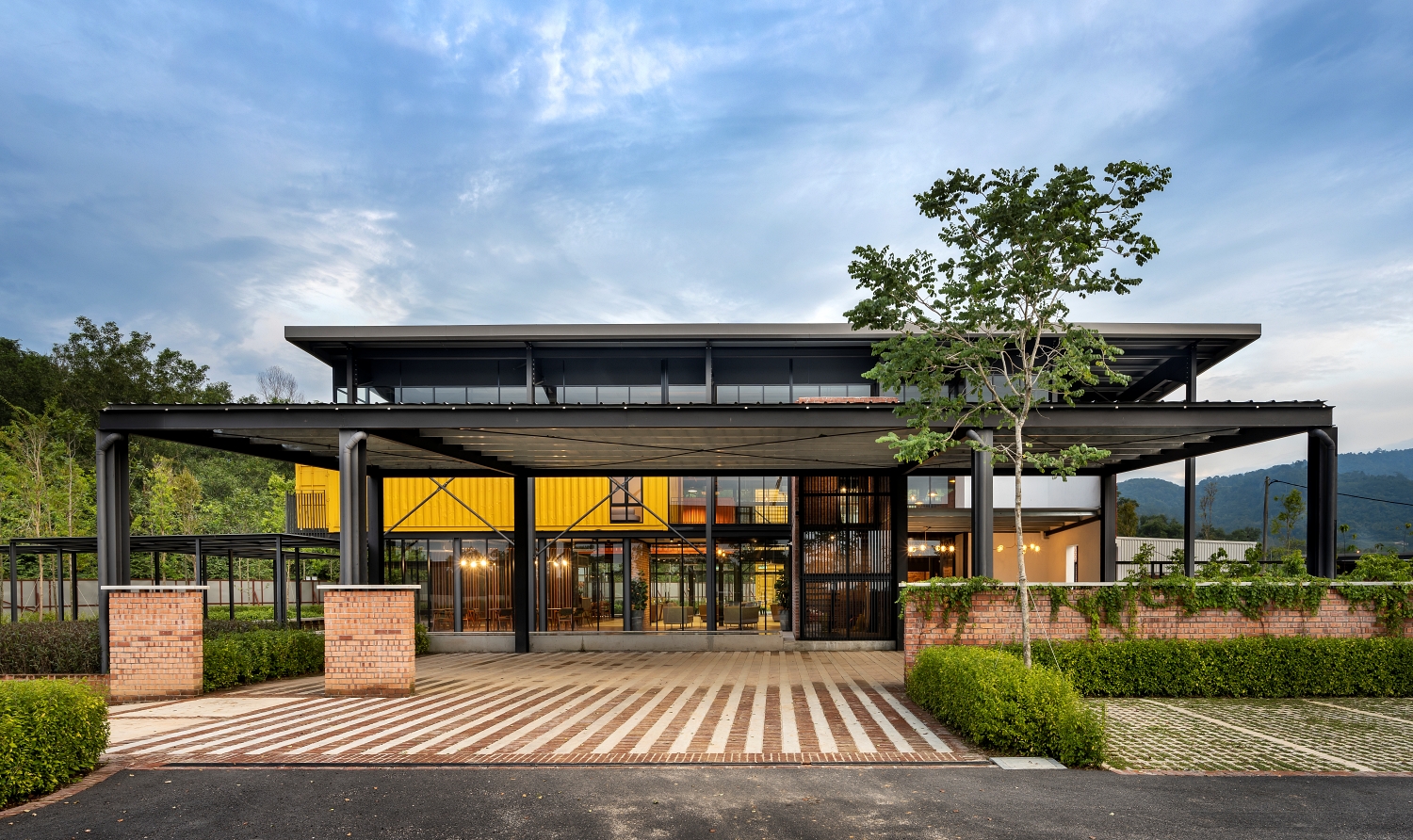
There are 6 boxes retrofitted into 3 pairs to accommodate a conference room, discussion niches with a lounge and project office interlinked via an elevated walkway. To enhance the appreciation of these ‘relics’ boxes, they are elevated to the 1st floor as pre-eminent objects with the boxes’ blemished outer walls emerged as an internal feature wall of the double volume voids.
A pair of Corten steel doors with industrial vigour allows an extension to lengthen the box profile as well to provide an opening for daylight with ventilation. It was accomplished with the introduction of a cantilevered balcony by stretching the floor plate.
The elevated walkway that connected them was served with two functions divided with glass walls to grant visual connectivity between the indoor and outdoor spaces. It translates the internal walkway as a walking gallery, stage, and atrium audience in relation to the double volume space while the external walkway serves as a linear balcony to hold outdoor activities. The presence of an elevated walkway creates an interplay between the solid box and void in translation for building depth, rhythm, and shadows and to promote vertical and horizontal visual communications.