
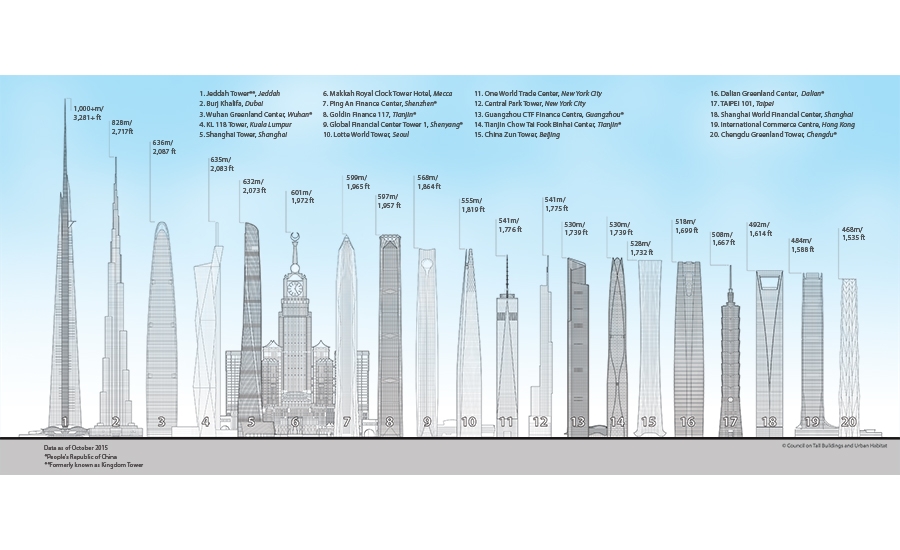
With populations that keep rising, the largest urban area creates an increasing demand for tall buildings. Available land areas are constantly being eaten away by urban spreading through suburban developments. The tall building can accommodate many more people on a smaller land verse a low-rise building on the same land. A tall building is in effect a vertical transformation of horizontal expansion.
There has been evident neglect of the human factors in urban design at the expense of liveability and quality of life. The outward expansion of cities into the suburbs sprawling resulted in more traffic, the building of highways, and increased traffic congestion. The prospect of travelling for a long time, to and from work, is detrimental to the social well-being of the commuter and results in losses of fuel and productivity. The clustering of buildings in the form of tall buildings in densely built-up areas is the opportunity for creating open spaces like playgrounds, plazas, parks, and other community spaces by freeing up space at the ground level. Besides the impact on the city skyline, tall buildings thus influence the city fabric at the level where they meet the ground.
Among the most important advantages that skyscrapers offer to consumers is the fact that they tend to have well-established occupier profiles – in other words, tailored neighbourhoods. The other appeal factors for skyscrapers are that they offer all the conveniences of modern life, including swimming pools, gymnasiums, grand entrance lobbies, and high-speed elevators.
Vertical expansion means they can accommodate more residential/commercial space per square meter of the ground floor than single-storey buildings which take up more ground floor or land. They are suitable for highly populated or overpopulated countries with a land shortage.
The overall cost of land, preliminaries, foundations, and roofing is much lower for skyscrapers when compared to single-storey horizontal developments of the same magnitude. Skyscrapers offer much better security to tenants than a ground-level development, providing multiple access points for intruders. More security is often required for a single-storey complex. Skyscrapers buildings release more space for other CBD developments, reducing travelling distance within a location.
Skyscrapers are also a unique addition to the landscape; their appearance could significantly boost the value of surrounding properties.
A great skyline could also effectively prompt the surrounding proprieties sales, skyline-view houses are similar to sea-view houses as the scenery of tall towers is just as attractive as the sea, a great many buyers hope they can see such a magnificent tower from their residences. So, the tallest tower is not only providing residences within the tower, but also lots of saleable residences surrounding it.
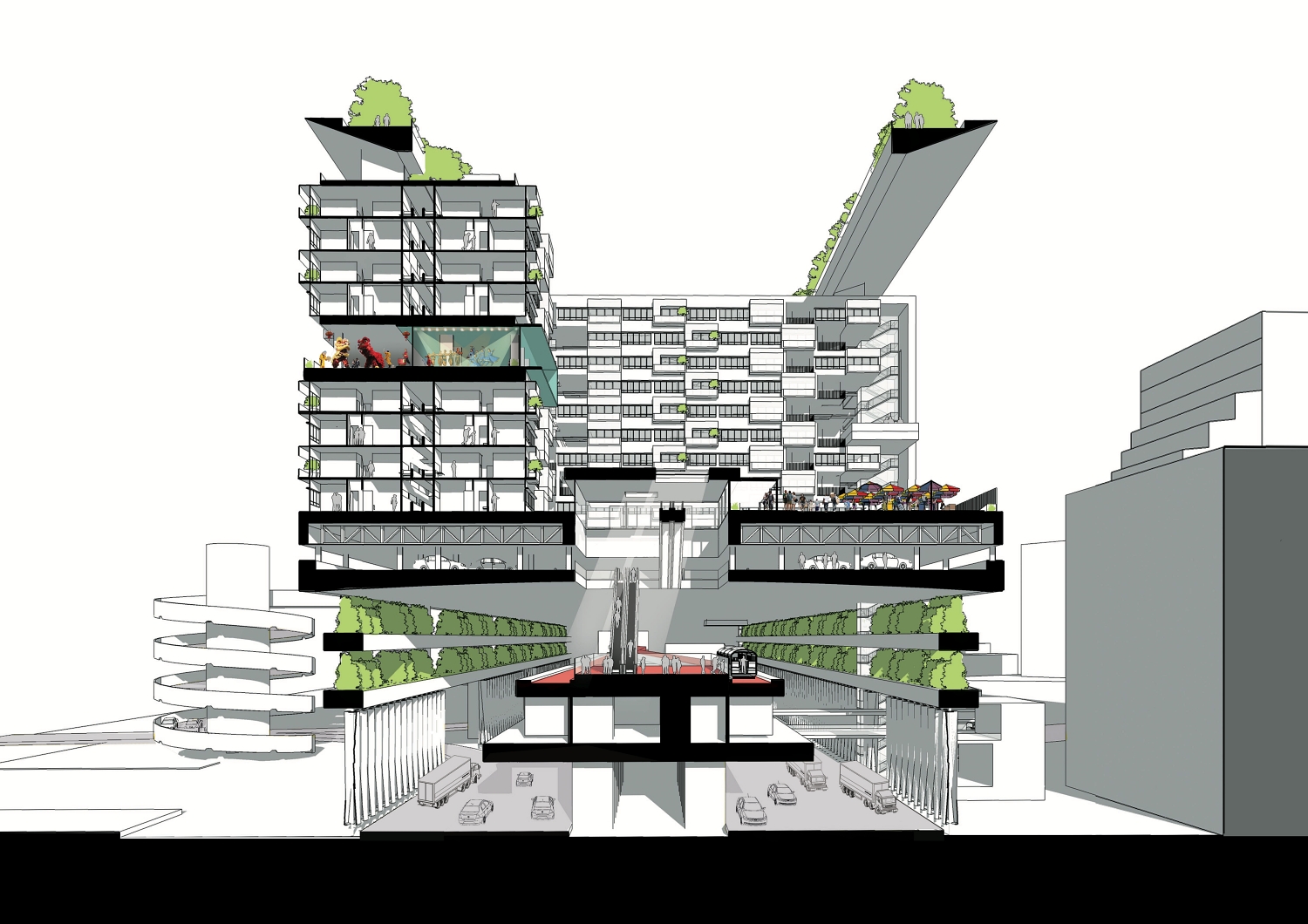
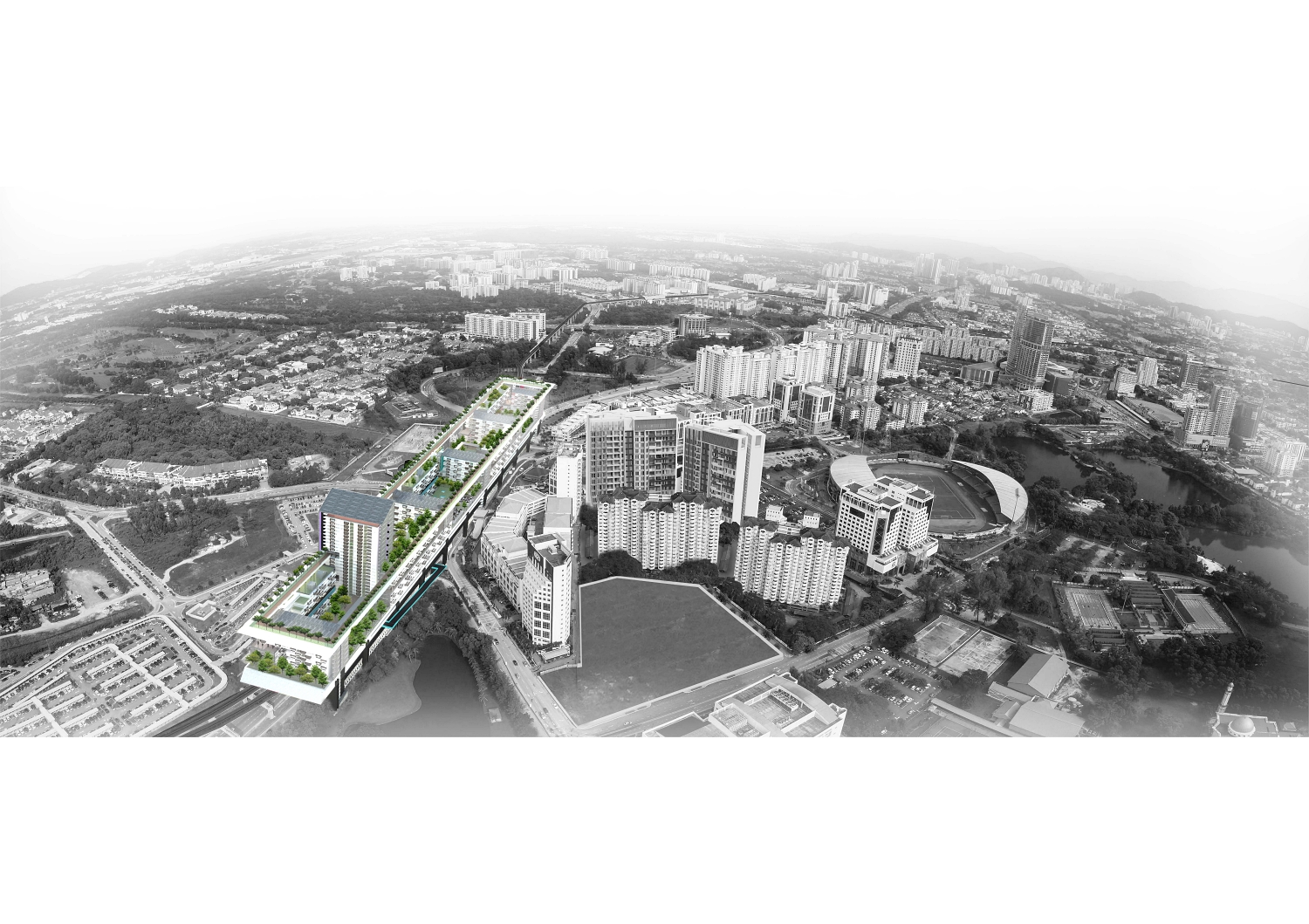
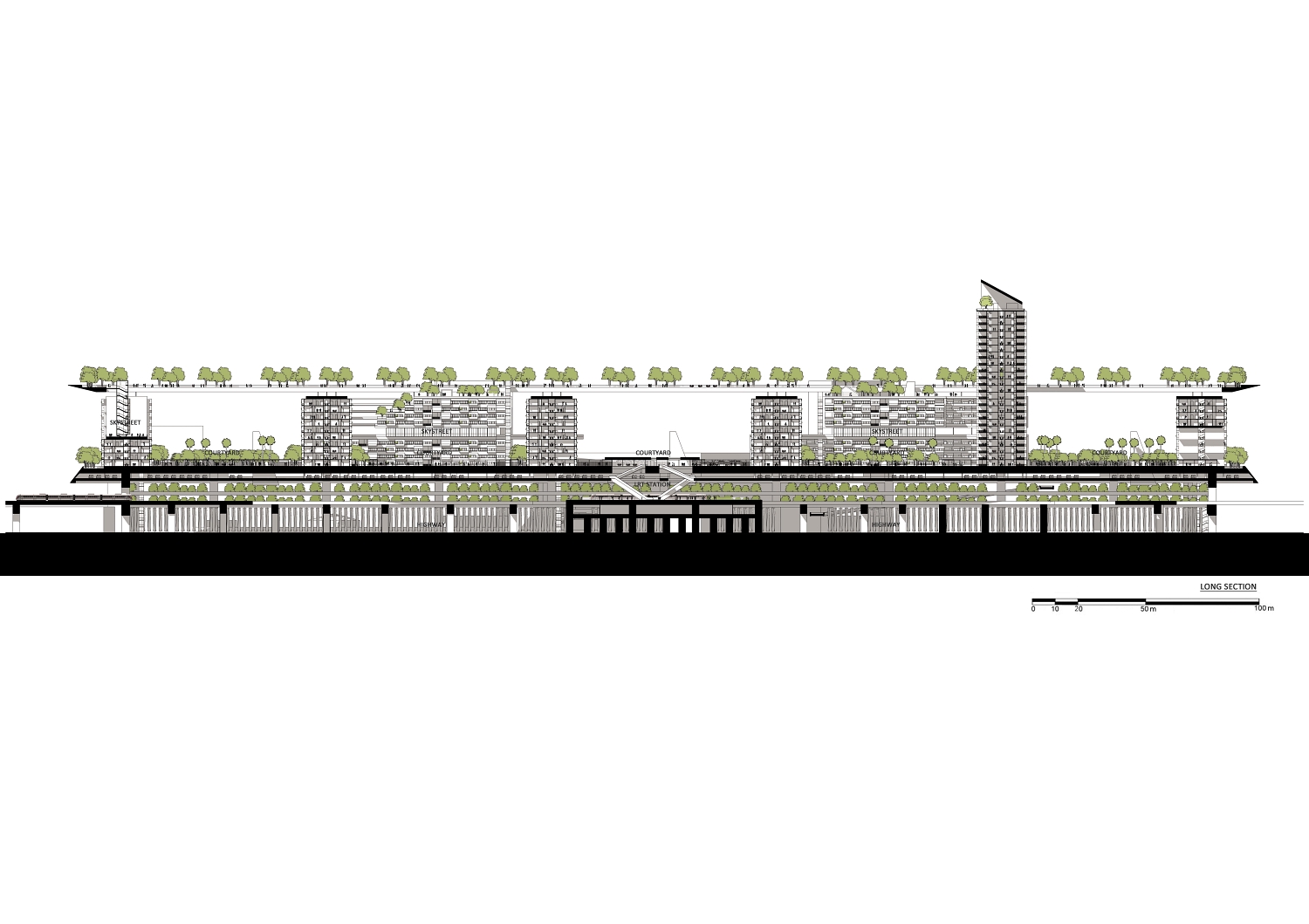
High-rise living is mostly suitable for the younger generation as compared to families with the elderly due to the socio-psychological impacts of living in high-rise housing. It may be less desirable for a family with children. Some sociologists argue that the environment of tall buildings can make inhabitants feel claustrophobic by creating a rat-cage mentality.
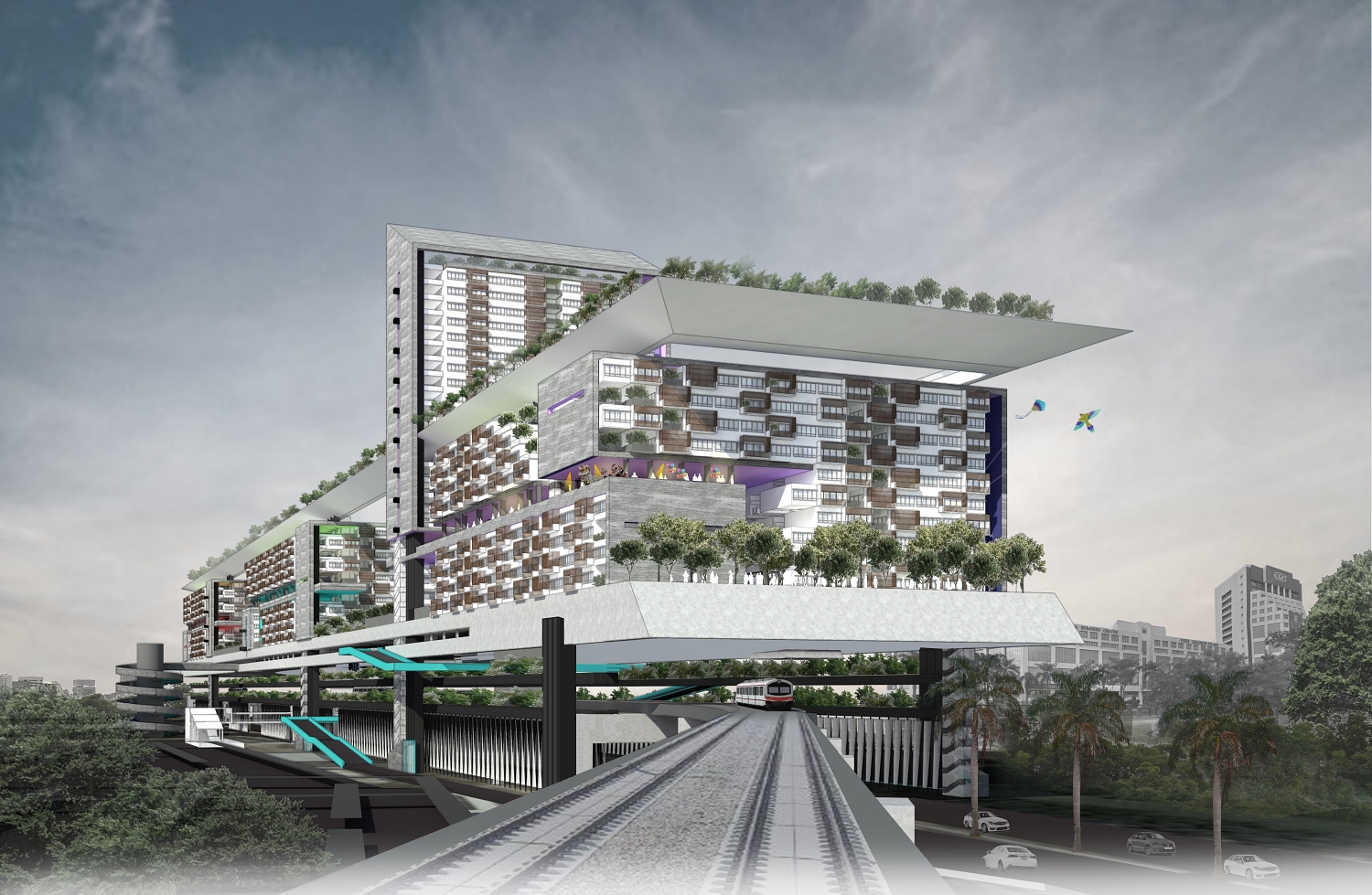
2020 is a year of the global pandemic with over 1 million people killed worldwide due to the Coronavirus. While the COVID-19 virus is primarily transmitted between people through respiratory droplets and contact routes, there is a possibility of such a virus developing airborne transmission capability. Most countries have implemented lockdown measures, limiting travel between home and workplace, and restricting close contact between humans and the outside world.
The question is how do we live in the future if we are unable to permanently curb the thriving of such viruses that contaminate our external environment?
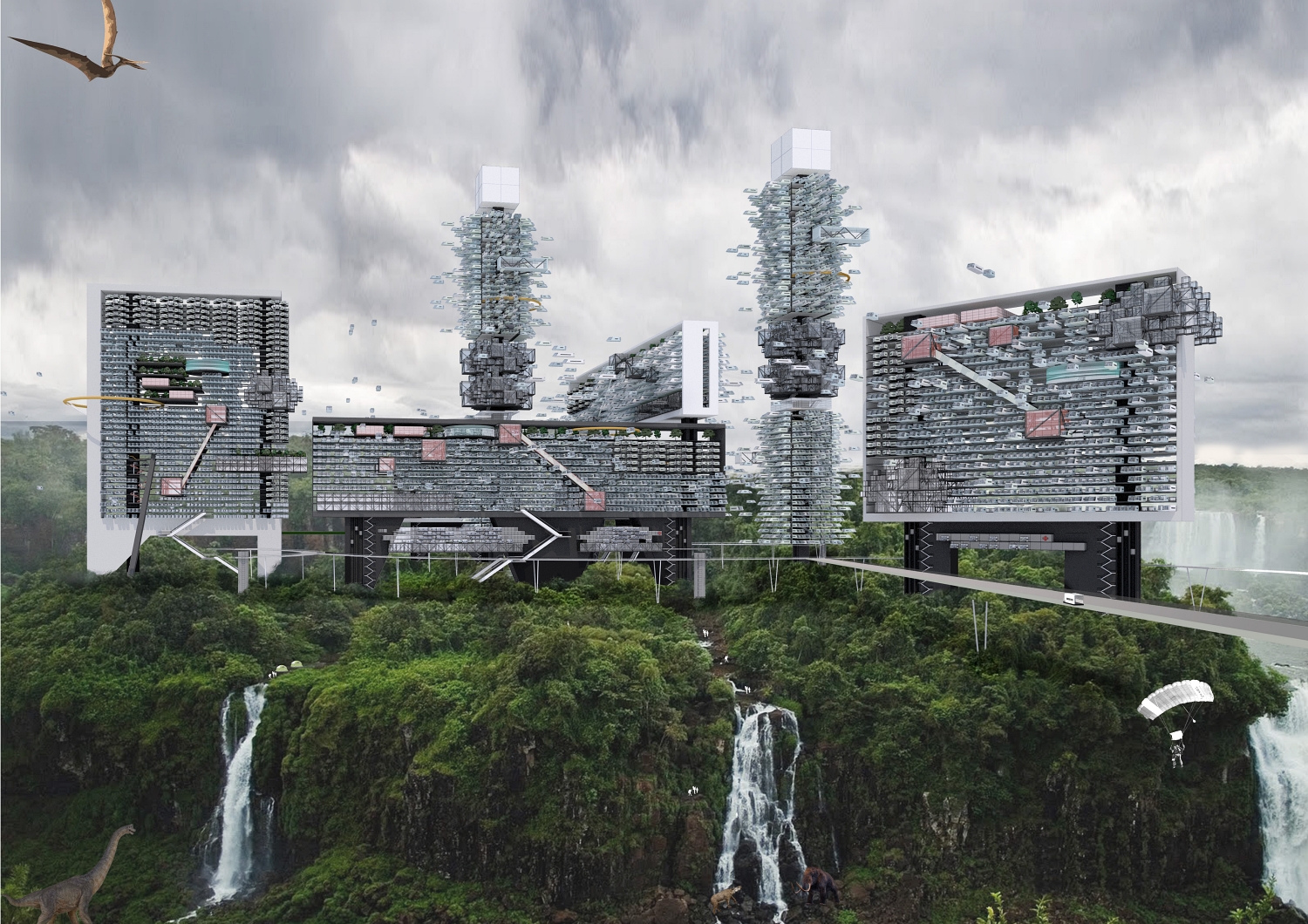
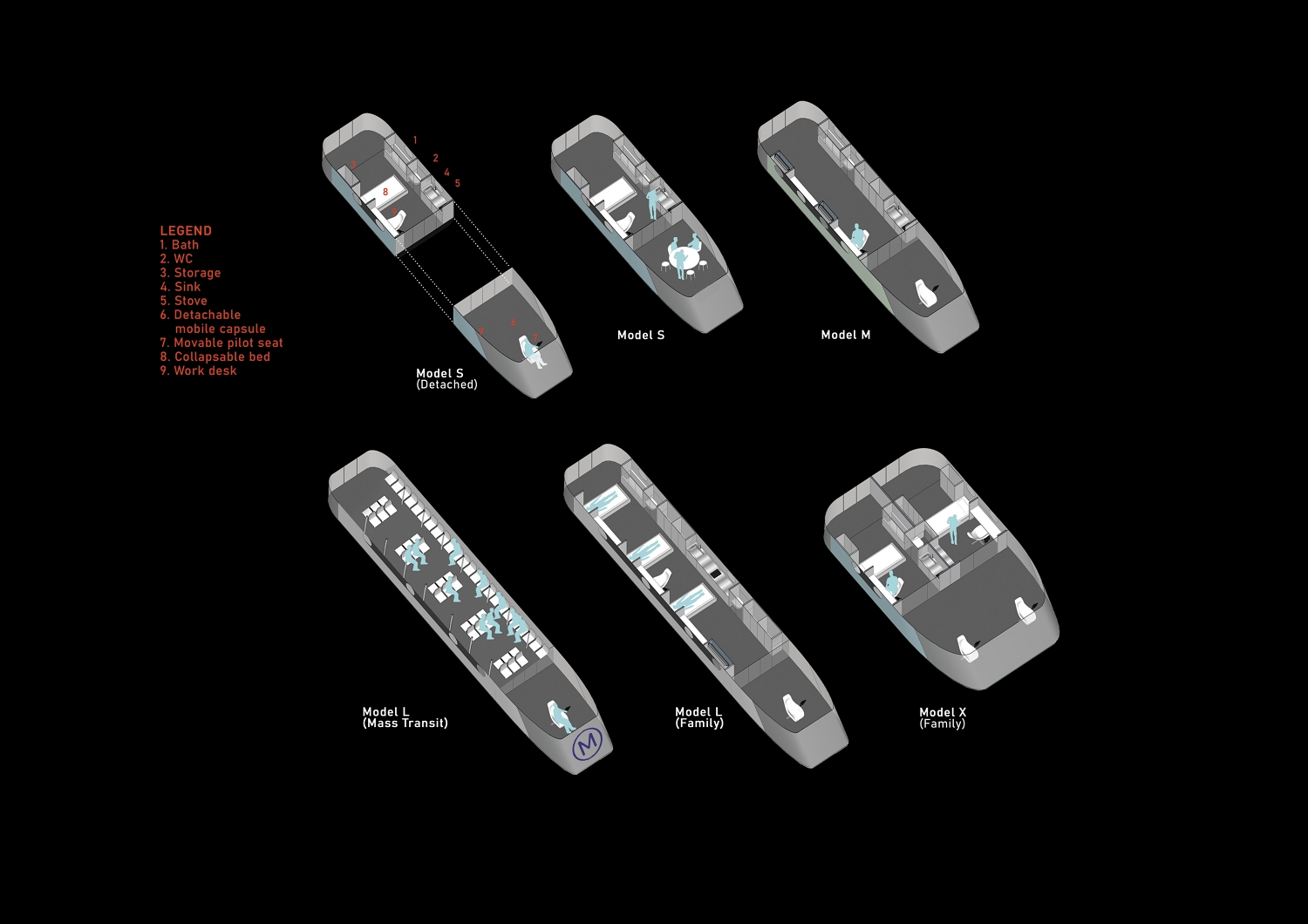
On the technological front human have realised personal flying cars, a car-plane hybrid that gives maximum freedom of mobility. During the pandemic time, online meeting technology allows us to virtually interact via the computer screen, physical distance is no longer a hindrance to meet. But how do we balance living in isolation during the pandemic time and swallowing low a degree of freedom of movement and interaction?
Technological changes shape society and cities are defined by the technological potential of the time. In moments of global pandemic crisis and deterioration of the natural environment, the new epoch requires us to interact differently and to set Nature free.
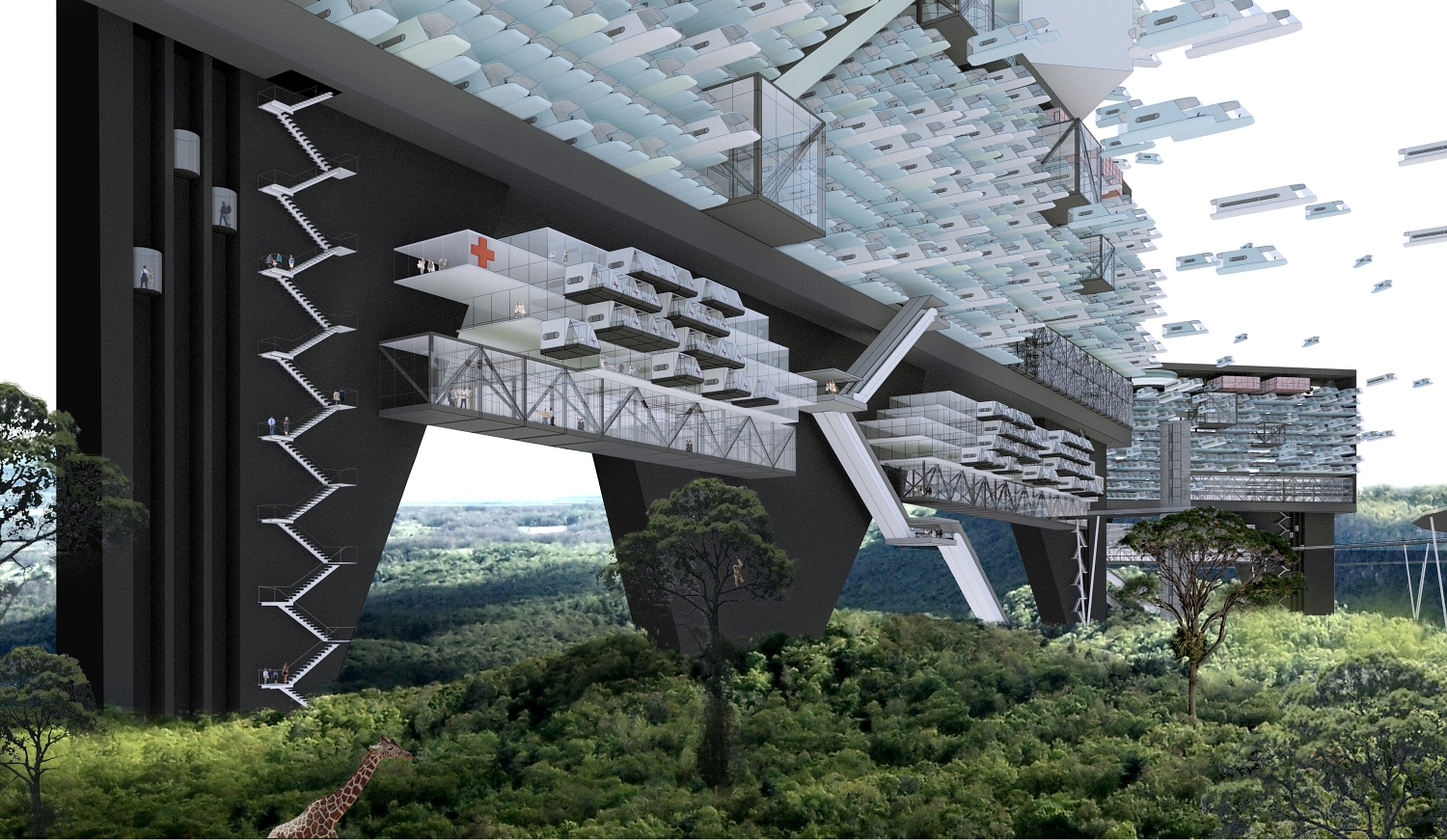
We propose a version of a future city that integrates work, life, and mobility infrastructure as One. Zero wastage of floor space, zero road, zero deforestation, and zero suburbs. A series of elevated self-sustaining towers with individual small flying capsules as hybrid spaces for living and working. A live-work-travel Crossover. The nature forest and rivers are allowed to be left intact, restored, and subsequently thrive.
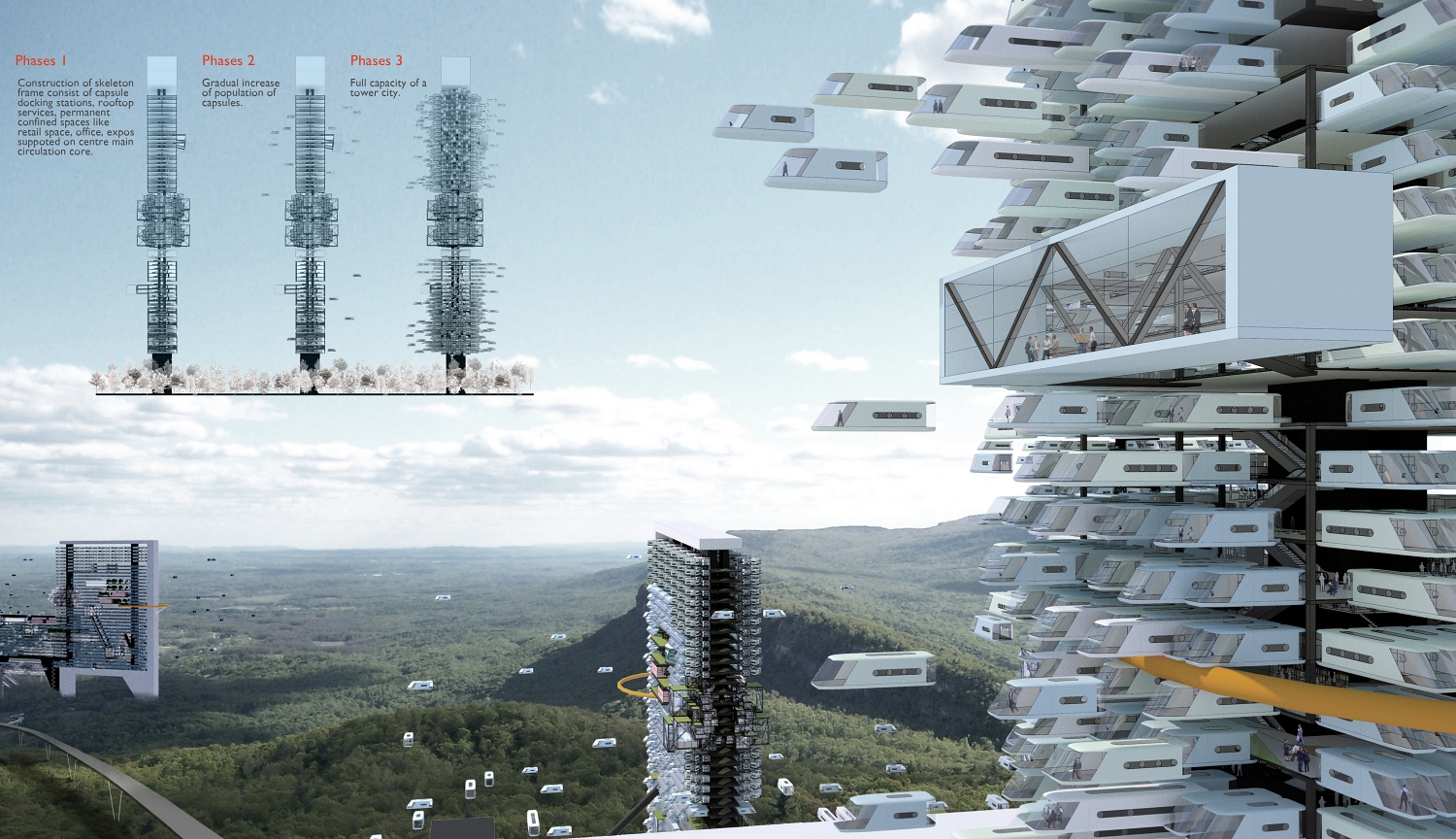
A City is consisting of several self-sustaining Towers. Within the self-sustaining Tower, one can find places for work, play, shop, sport, and culture. Each Tower has work meeting platforms where individual capsules meet physically within a controlled and sanitised environment. There is a retail street to cater to daily needs and dedicated sports complexes with sports courts and various physical activities programs. After plugged-in into the Tower, people can remain indoors and interact thru the capsule glass panel or disembark and interact physically with people at the central interaction platform. The central platform is a controlled street where one can meet people and travel between floors and visit neighbouring capsules.
There is a medical hub built at the lower core of a Tower that serves as quarantine and to respond to the pandemic situation. It is the checkpoint before one enters or exits the city.
Towers are linked by a network of elevated bridges for capsules and people. Each City is then linked to another nearby City by the same bridge.
With a Self-sustaining city, the future of city planning can be decentralisation to avoid overcrowding at the city centre as an office area and sprawling across the outskirt as living space. This model of the city has caused scenarios of death in cities at different times, massive traffic congestion, and keep rebuilding roads and networks of connectivity.
China, home to some of the world’s tallest towers, has decided to limit the construction of super skyscrapers as a means of reducing the country’s energy consumption. The government labelled these structures as “vanity projects”, explaining that in low-density cities where massive skyscrapers are impractical and can be replaced with other typologies that better complement the urban fabric. The country’s new construction rules dictate that skyscrapers taller than 150 meters (490 ft.) will be strictly limited, and those higher than 250 meters (820 ft.) will be banned for areas with a population of less than 3 million. In cities with over 3 million people, the government decided to limit structures taller than 250 meters.
Dense cities that don’t have enough empty lots to build low-rise projects on are restricted to only erecting structures upwards to accommodate their populations. Regardless, numerous solutions are being proposed to explore different feasible options that could take advantage of the scale of towers but offer a more environmentally and socially responsible approach.
So, should the future skyscraper not only contain a single program but multiple programs that replace the city on the ground and start freeing up the ground back to mother nature? To be continued…