
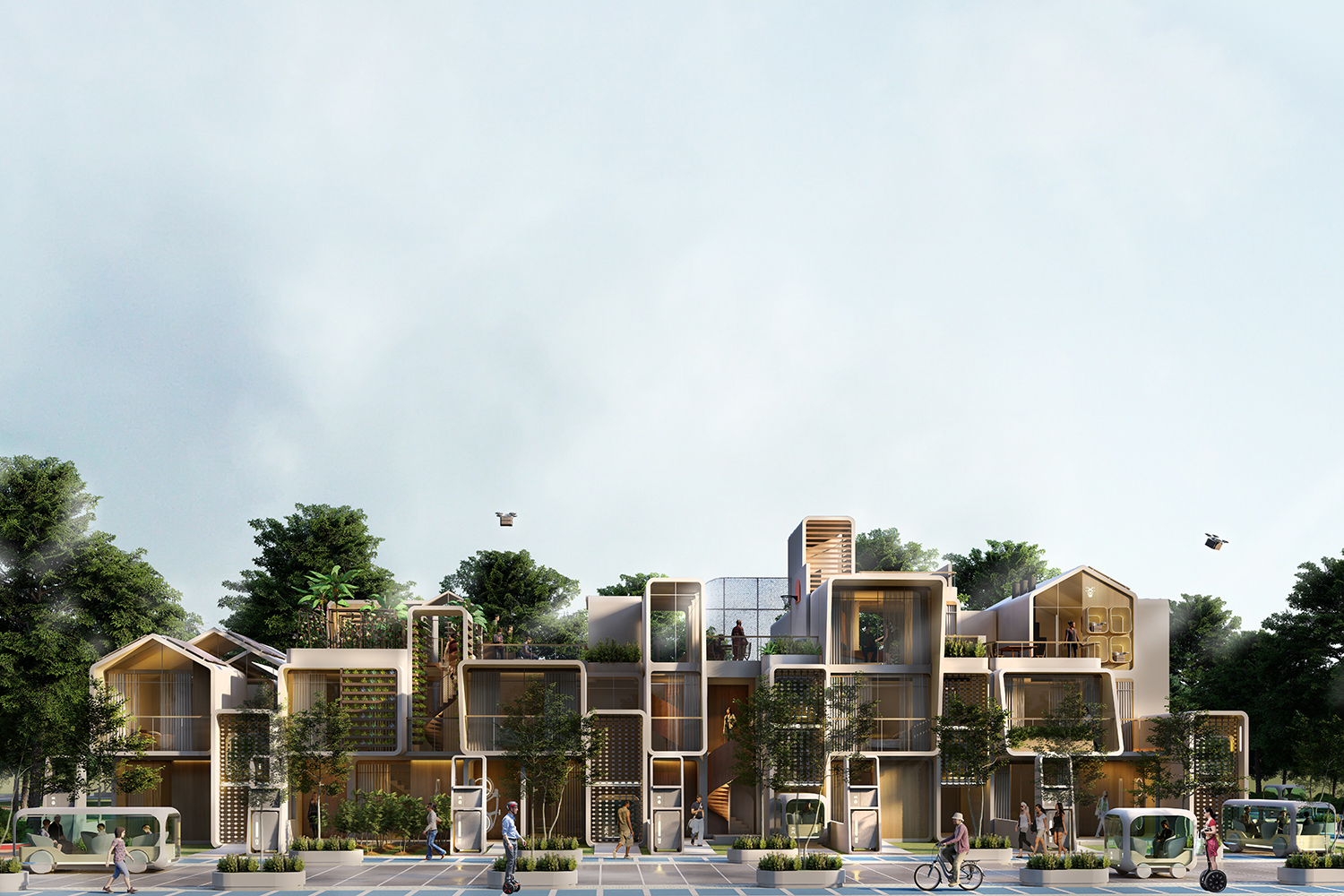
In a bid to transform the homes in Malaysia, Sime Darby Property introduced Concept Home 2030 (“CH2030”), an initiative that aims to reinvent how houses can be designed and built in the future. It is a platform that allows architects and visionaries to engage and exchange solutions with industry experts, consumers, and the public to turn great ideas into great designs, and great designs into prototypes.
With the pandemic inadvertently forcing us to take a good, hard look at the industry and ponder whether the homes now are flexible to support our future needs, the CH2030 is a timely initiative to push innovators of the built realm to produce ideas and home designs that stand the test of time. The first phase of CH2030 featured the Concept Home 2030 Competition (“Competition”) which challenged visionaries to redesign the quintessential Malaysian terrace home.
Sime Darby Property partnered with the Malaysian Institute of Architects (PAM) and received 171 registered participants which marked the highest number of regstrants in the history of PAM’s competitions. Several impressive submissions showed excellent potential in disrupting the industry, such as the ideas to gamify property owning experience using blockchain technology, and innovative construction methods that are expandable and customisable to evolving lifestyles.
CH2030 seeks to push property developers from the ‘form follows function’ method of building today’s homes and redesign future homes which incorporate diverse features and flexible use of space, adapt to the effects of climate change, and more. The initiative aims to encourage the industry to work together to build tomorrow’s homes equipped with new technology and capabilities that are emerging technology, vision and capabilities that are already in use in some parts of the world. Now more than ever, property developers have the opportunity to rethink the ideal home of the future and push the possibilities to the next level.
Malaysian terrace house typology is a evolution from Dutch traditional row houses that inspired the Malacca townhouses dating back to the 17th century during the 183 years of Dutch occupation. Subsequently, Chinese shophouses were developed with better-climatised solutions in the 19th century. In the early 1970s, linked houses/row houses or terrace houses as they are commonly known in Malaysia were popularised in the suburbs as the quintessential domestic dream home. They are popular today, as they make up more than 40% of the total residential property archetype in Malaysia.
Malaysian terrace housing is a row of identical or mirror-image houses that share side walls, with a driveway for cars and a back lane in between two rows of houses. Their repetitive nature and speed to build are vital in addressing the housing needs of a developing nation. New satellite townships have mushroomed and bloomed to be thriving communities. It is affordable and provides a quality of life with an open lawn in front of the house, mimicking the open lawn in the village or ‘kampung’ setting.
NON-FUNGIBLE TERRACES
The idea of Non-Fungible Terraces derived from the urgent need to rethink terrace housing in Malaysia. For many Malaysian families, a terrace house is an aspirational life purchase. Ironically, purchasing high-ticket items is less democratic, less personalised and has fewer options. If you observe some of the common high-ticket items we buy in our lives starting from a flagship smartphone, a car and then a home, variants or options are becoming narrower. That is the paradox we try to invert, by enabling and empowering purchasers to craft, customise and possibly personalise the biggest purchase of their life.
The term NFT was borrowed from the technology associated with blockchain, which refers to cryptographic tokens that exist on a blockchain and cannot be replicated. The individualistic nature and democratisation of expression enabled by technology are what the next iteration of the terrace house has been waiting for. Currently, mainstream adoption of NFT technology revolves around digital art, and slowly more and more utilities are being introduced with them. We believe there is a huge potential for the adoption of Malaysian terrace houses at many levels of their lifecycle.
Non-fungible simply means unique and can’t be replaced with something else. At a glance, it is characteristically opposite to the nature of terrace house development in Malaysia which typically are standardised. Hence, we formulate a generative design platform powered by Artificial Intelligence in an attempt to derive personalised design for each buyer based on their digital footprint. This will enable Sime Darby Property to address the new generation of home buyers by analysing and profiling their preferences and lifestyle. The new way of designing terrace houses will be a liberation instead of compromise and optimisation instead of limitation.
With a quick drive in any mature terrace housing estate, you will instantly realise that all homeowners are longing and desperate to express their individuality through their terrace iteration. It is not just a matter of personal preference or taste, but it goes to reflect their lifestyle and spatial need of their phase of life. By purchasing a customised terrace house directly from property developers that fit the buyer’s life aspiration, terrace houses will no longer be a compromise. Our work attempts to pave a way for buyers to get the freedom and flexibility of a crafted home, in the format everyone loves.
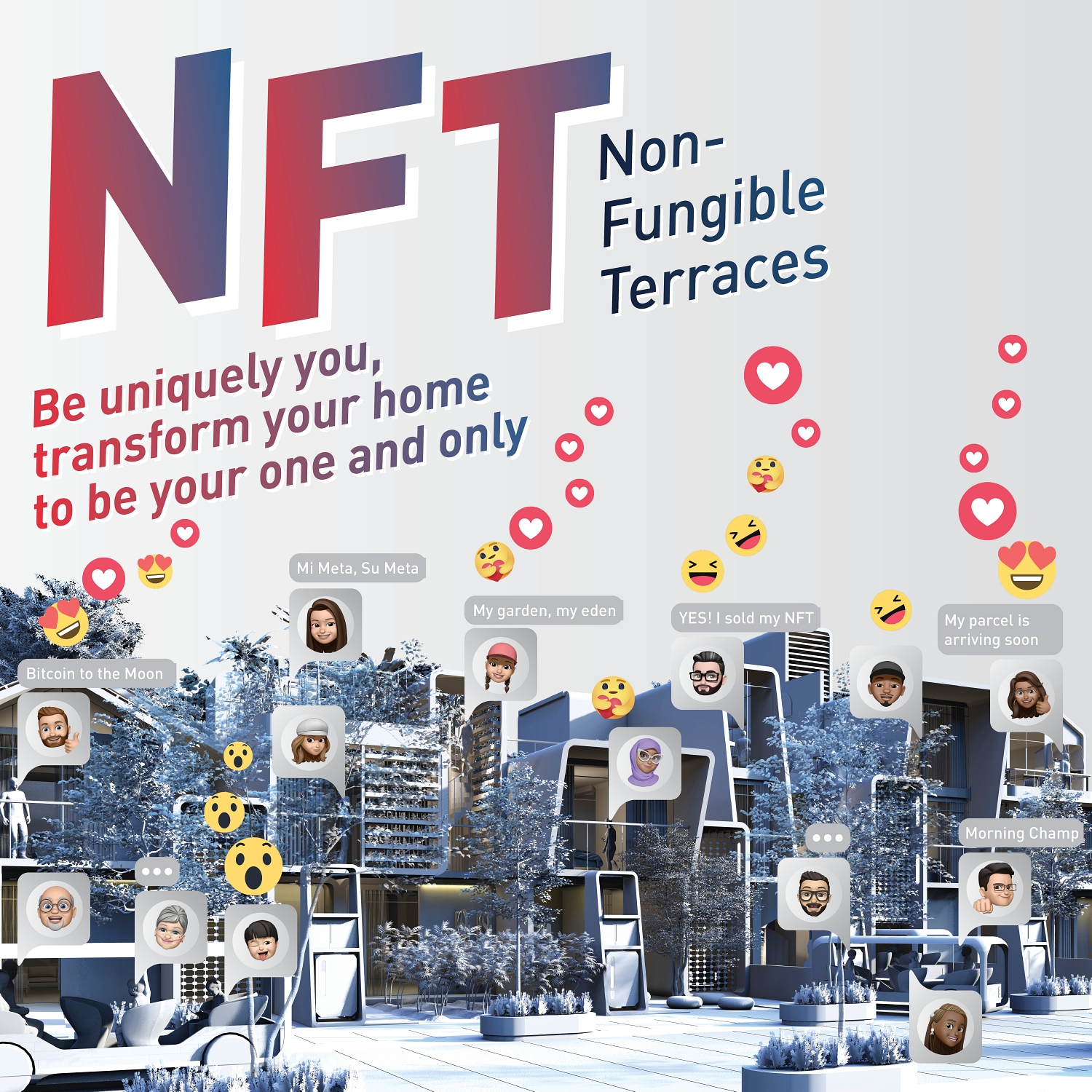
From another perspective, we are attempting to optimise the terrace house to be more productive and allow homeowners to leverage their digital domestic assets against their mortgage. Just like how Grab turns private vehicles into mobility service providers and Gojek turns domestic kitchens into thriving cloud kitchens. The digital twin of the house can be utilised as a digital space for online tuition, work meetings and online stores for their SME products to name a few. This applies to the approximately 2.3 million current terrace housing stock as well, the concept doesn’t necessarily need a new physical development to take effect. The potential of case use of the digital alternative of the house opens up a new avenue for possible revenue generation.
Future homebuyers have an everchanging digital lifestyle. Their house will be an extension of their personality, and priority. Hence, this provides an opportunity for future Sime Darby Property products to incorporate flexibility and agility of change, to mirror the phase of life of its occupants.
Every housing unit is uniquely crafted by its owner and then minted on the blockchain. These purchased meta-terraces are in the form of NFTs and they can be enjoyed in the proposed Sime Darby Property-metaverse as a digital domestic space where buyers can socialise, host and work. When the time comes for Sime Darby Property to other physical terrace lots in a township, terrace house token holders can commit to building their dream homes. This allows future Sime Darby Property communities to be developed in the metaverse before they are translated into the real world. The project will revolutionise Sime Darby Property to become the first developer that can sell digital land and actual real estate products to future consumers/meta-sapiens.
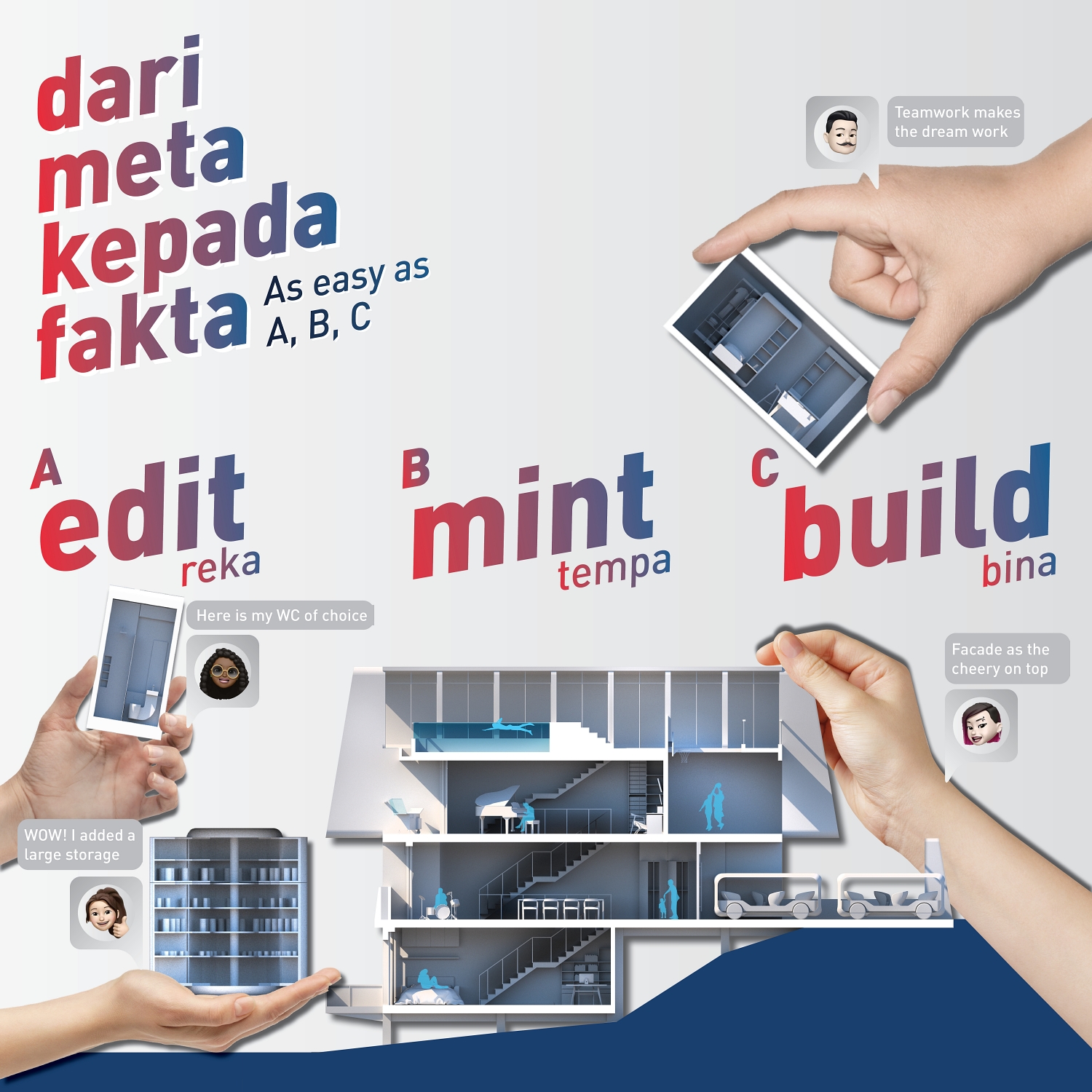
We define Meta-sapiens as anadvanced member of the Homo Sapiens species, to which modern humans possess abilities to live seamlessly between physical and digital worlds such as the metaverse. An evolved phygital (physical-digital) society that is present in both parallel domains, enjoying the best physical experience while automating mundane and repetitive tasks in the digital.
All terrace house purchases must be transacted through the existing legal framework that we already have in the country. Compliance with the Housing Development Act is crucial to protect the interest of purchasers and developers. Even by working with the current legal framework of today, we still think there is plenty of room for innovation. However, since we were working on the scheme with 2030 in mind, we have streamlined the purchasing process via a Web 3.0 application.
Can they be bought with cryptocurrency? A lot of possibilities may come by 2030, the house could be bought with fiat, cryptocurrency, a combination of both, or a new future asset class. Our research has shown that the physical component of the house is heavily regulated, hence fiat currency might still be in the picture. But entities that form an extension of the house in form of digital assets are much less so. At the end of the day, it will all boil down to the market appetite in 2030 and the developer’s marketing and sales strategy formulation.
In our past research undertaking, we always factor in the pathway to realisation and real-life application. The Concept Home 2030 Competition aims to step outside the box to produce ideas that will truly make a dynamic shift in the domestic real estate market. With our future collaboration with Sime Darby Property, we may even see the project executed as a virtual and/or physical prototype. We believe with such an able partner i.e. Sime Darby Property, the ideas will find the time under the daylight soon enough.
The scheme we presented wascomplex, as it answers four main pillars of the competition. The pillars are:
• Sustainable solutions
• Modular, customisable and expandable
• Modern methods of construction
• Tech-infused / a home brain
Hence, the execution of the idea can be realised in multiple stages, as some ideas are processes or procedural while others are more material. A roadmap leading to 2030 will be drafted to ensure there is a clear pathway to realisation.
While formulating the concept, we put together a small focus group to gauge acceptance and comprehension of how blockchain can be integrated into real estate products. Even though blockchain technology is not new, its critical mass adoption window might just be here, with the popularity of NFT in the art world. We can certainly say that beyond crypto and NFT players, regardless of age bracket, there is a lot of work that needs to be done to advocate blockchain technology and its case use in real estate.
Another challenge is the constant and fast-paced technological revelation in the blockchain ecosystem. We continuously reposition and refine the mechanisms in favour of better solutions that have just come out fresh from the oven. At the same time, the office is in a tenacious upskilling mode, to cope with the latest developments to peek at an architectural opportunity in the large gamut of blockchain case use.
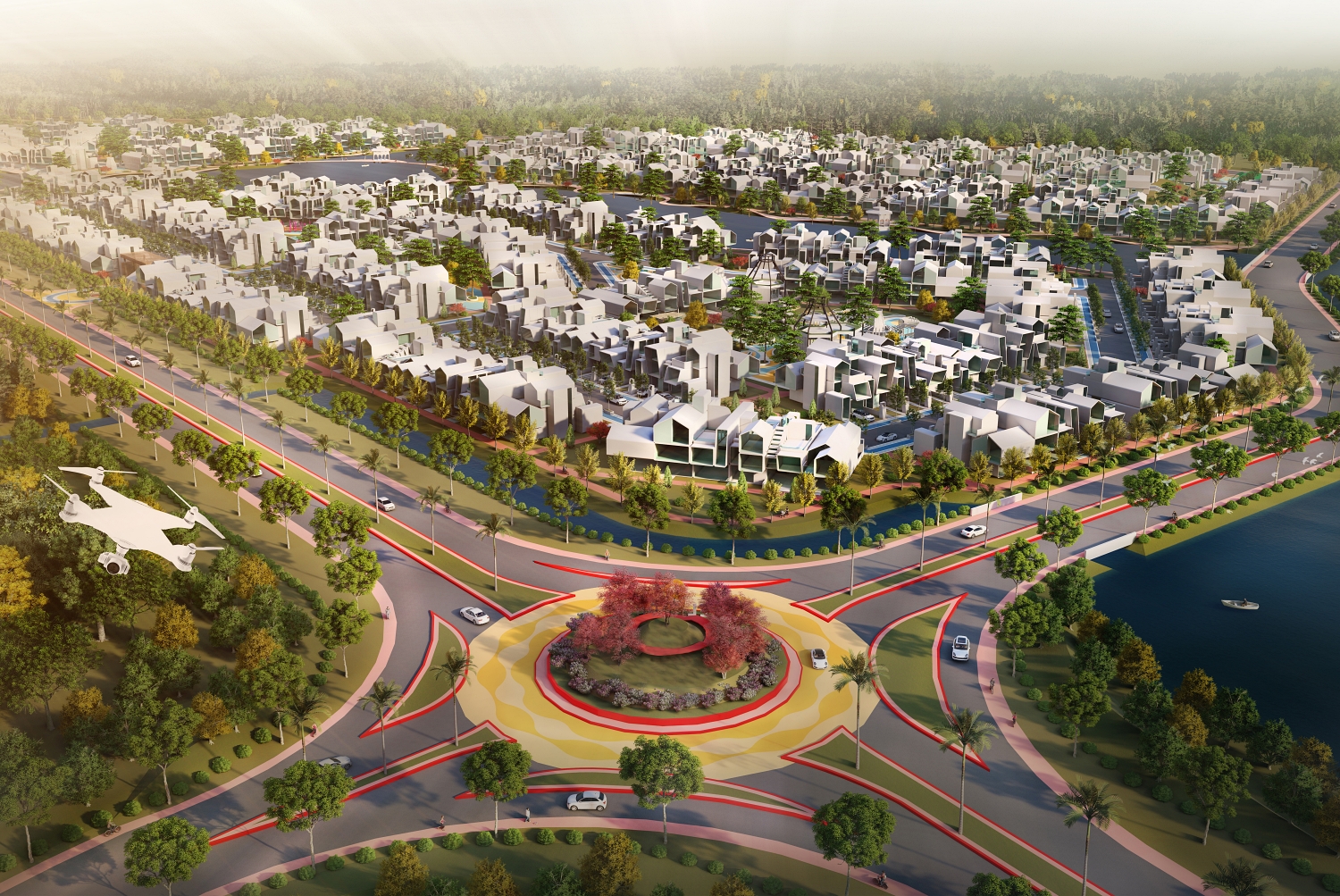
Current metaverse software and hardware limitations on texture fidelity and geometry count are also a hurdle. Architecture documentation and modelling Level of Development (LOD) in BIM is higher and closer to real-life dimensions. Currently, that level of detailing can’t be supported in the metaverse. The limitation of computing hardware and internet speed has pushed current metaverse development to be built on low polygon 3D assets or voxels assets. Hence the way we approach modelling a certain mass must be strategic, highly optimised and planned carefully for the metaverse. A working building 3d model in any CAD software will have to go through a geometry dieting regime to get it working well in the metaverse.
Works to materialise the related tech ecosystem are already underway through our tech startup venture. The startup, Seetizens Plus Sdn Bhd is a strategic digital agency that works in the AR, VR, Metaverse, Web3.0 and NFT space. Currently, Seetizens Plus is building our on-chain real estate metaverse platform, Seetiverse. We are building Seetiverse to supply real estate assets in the form of digital land that will eventually host the individual house metaverses. It is designed to be closer to the real-world proportion and scale, to ease the transition of the mass public into our metaverse platform crafted by multidisciplinary professionals such as Town Planners, Architects, Lawyers, multimedia designers, programmers and game designers.
Through minted digital land ownership, owners will be able to plan their future development with user-generated content and reimagine new spaces such as residential, commercial, office space, storage, institutions, exhibition space, heritage digital twin, and even farm and graveyards. Supported by sustainable tokenomics and a good Decentralised utonomous Organisation (DAO) governance mechanism, it will be an inclusive metaverse platform that accommodates individuals, communities, NGOs, businesses, and government agencies.
Non-Fungible Terraces brings the dawn of Big Data Analytics into managing housing stock as a national commodity, to ensure a healthy real estate market. Precision housing simply means that we can procure suitable dwelling typologies to match specific household needs. Of course, it is easier said than done as access to housing archetypes and locality are restricted by many social, economic, and legal hurdles.
The first step into the possibility of managing this resource requires a collective effort to establish a database that enables Big Data Analytics to exercise and simulate housing models with pricing, size and locality as the main parameters. Raw datasets might already be in possession of the Local Authorities, Developers and Building Management Corporations, which are kept in a silo with little to no avenue of leveraging the data to provide a clear picture of the state of our housing stock.
To a certain extent, social media, e-commerce platforms and prop-tech industries manage to improve the matching of housing stock offerings with demand in the market. This is a bandage solution until we can model future housing demand and work on a concrete dataset for our future housing developments.
Non-Fungible Terrace’s conception is an attempt to broaden the discussion and possibility of our darling and beloved terrace houses in the era of blockchain. It is certainly not to be seen as the silver bullet that combats all the woes that dawn on the domestic real estate market. Instead, it should be explored as a beacon of hope for a democratic real-estate market, that is climate positive, empowers consumers, and enriches lives.