COEX @KILANGBESI BY ALM ARCHITECTS PLAYS A PART IN THE URBAN RENEWAL OF THE
CITY BY TRANSFORMING AN OLD SCRAP METAL YARD INTO A COMMUNITY"DRIVEN HUB
FOR CREATIVES.
TEXT BY THE ARCHITECTS
Continuity of space from inside to outside
CONTEXT AND ETHOS Nestled in the heart of Penang and at the doorstep of George Town’s designated UNESCO World Heritage Site, COEX plays a part in the urban renewal of the city by transforming an old scrap metal yard into a community-driven hub for creatives. This humble project sits alongside its well-established counterpart, Hin Bus Depot, which has recently celebrated its ten years of glory with many more years ahead. Seen as the missing piece, COEX completes this puzzle and ignites a sense of belonging to many budding local creatives.
Established in 2021 under the umbrella of aLM Architects, COEX has since made its name known; with various interpretations among the public and creatives. One would wonder why ‘COEX’? The play of words ‘COEX’ is very fluid and could be interpreted as it fits best, however, it is rooted in the idea of a ‘community experiment’. COEX is like a blank canvas, advocating creative-minded individuals to curate their thoughts and express their creativity. Living in a time where commercial centre development dominates the world, art development is an inclusive and forgiving haven. We believe that we as creatives could collectively cultivate the art ecosystem and reinstate the glory through a bottom-up approach.
This community-driven establishment has hosted various events and expanded way more than one could ever imagine. One would expect its scene to change now and then as there are programmes scheduled every other week with always something for everyone. Its ephemeral quality and fleeting experience allow one to always be looking forward to their visit.
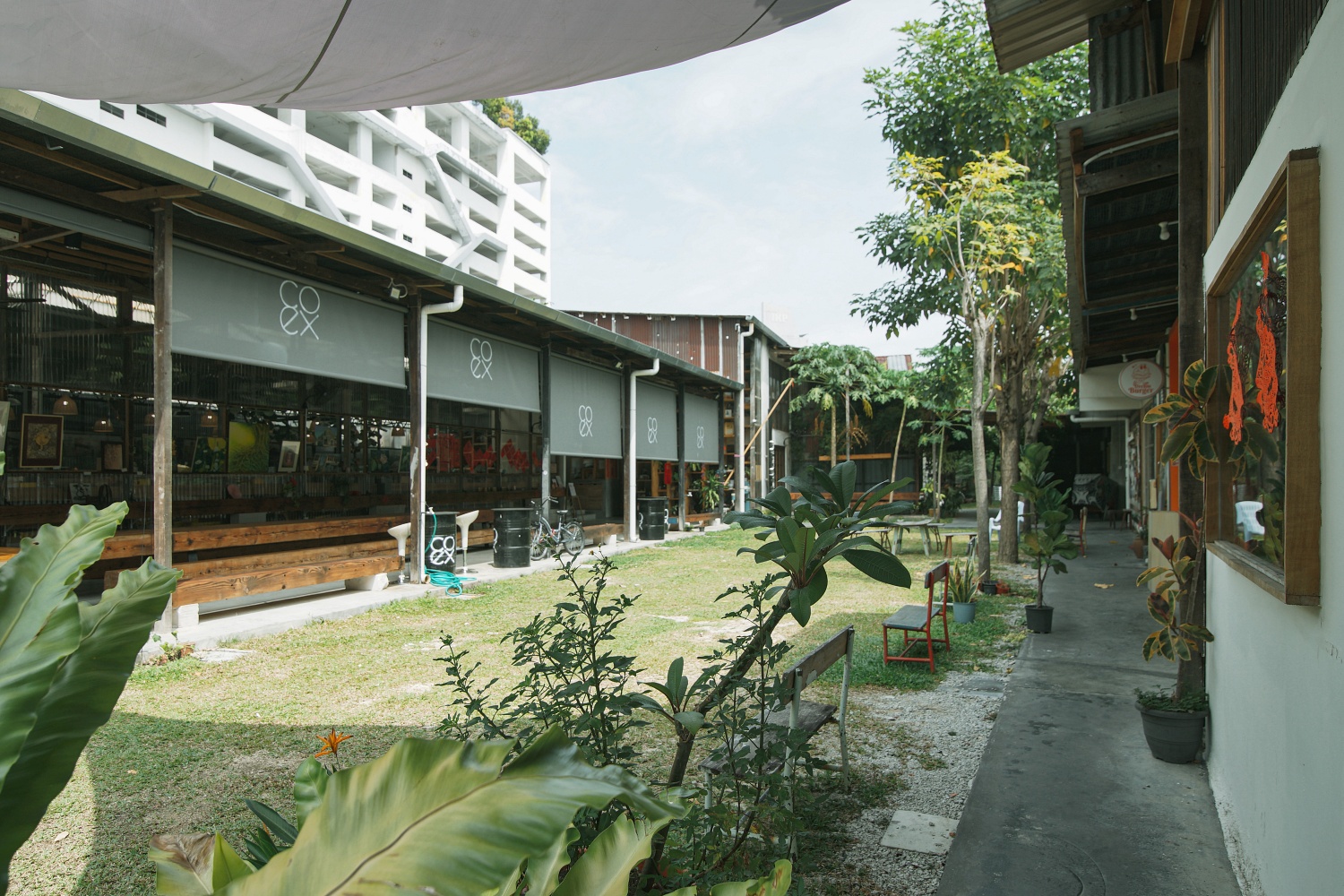
The relocation of the architecture practice into COEX represents itself as a facilitator to fertilise opportunities for exploration and experimentation. This integration opens a dialogue with the community; setting a narrative for future collaborations that would drive the growth of the practice. Enclosed by the architecture practice and a row of independent shops, the central lawn area and the semi-outdoor space form an intimate space for activities to take place such as exhibitions, talks, sharing sessions, music events and even more ad hoc activities.
View from the independent shops opposite the architecture practice
ARCHITECTURAL DETAILS AND MATERIALITY
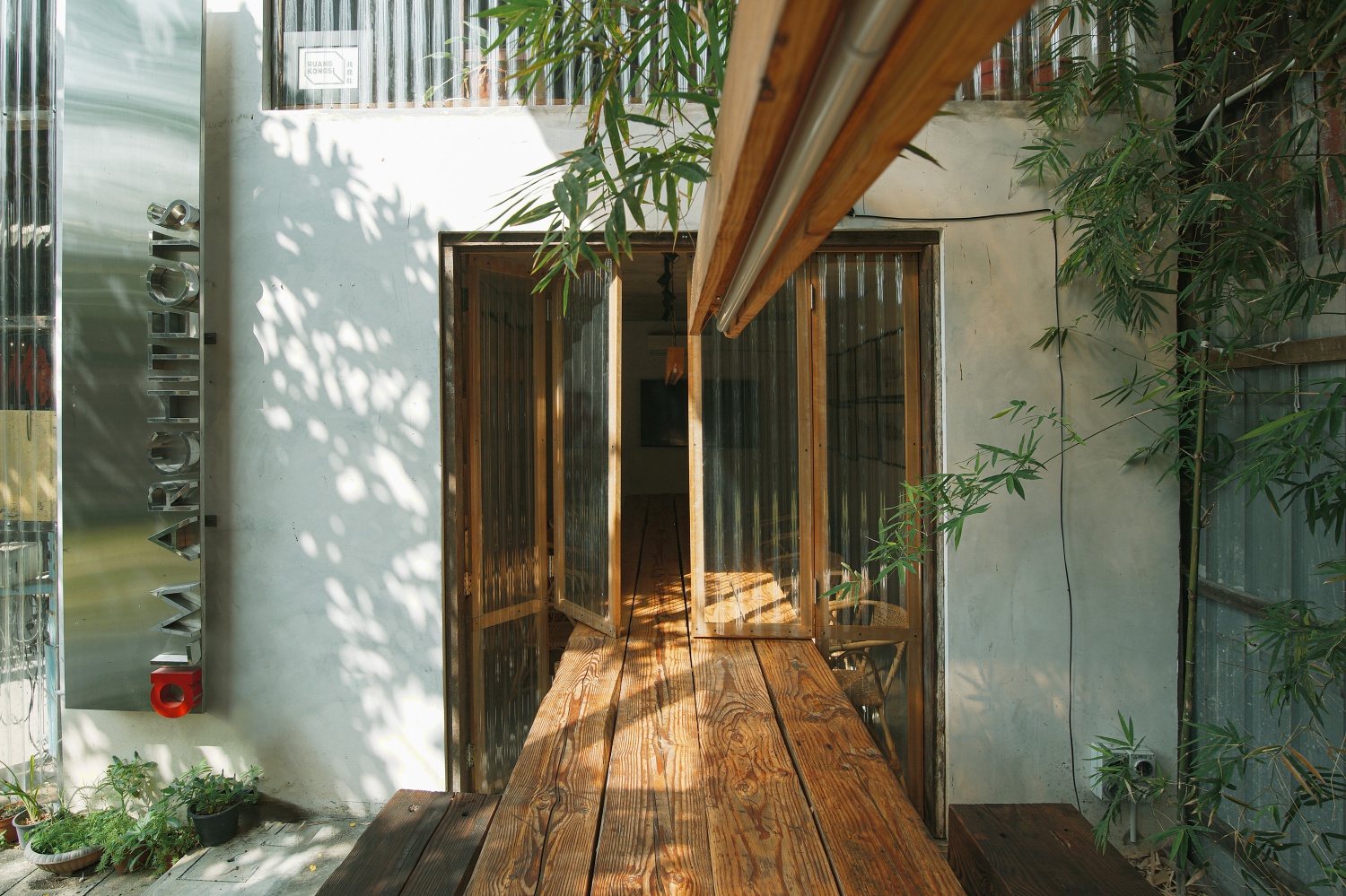
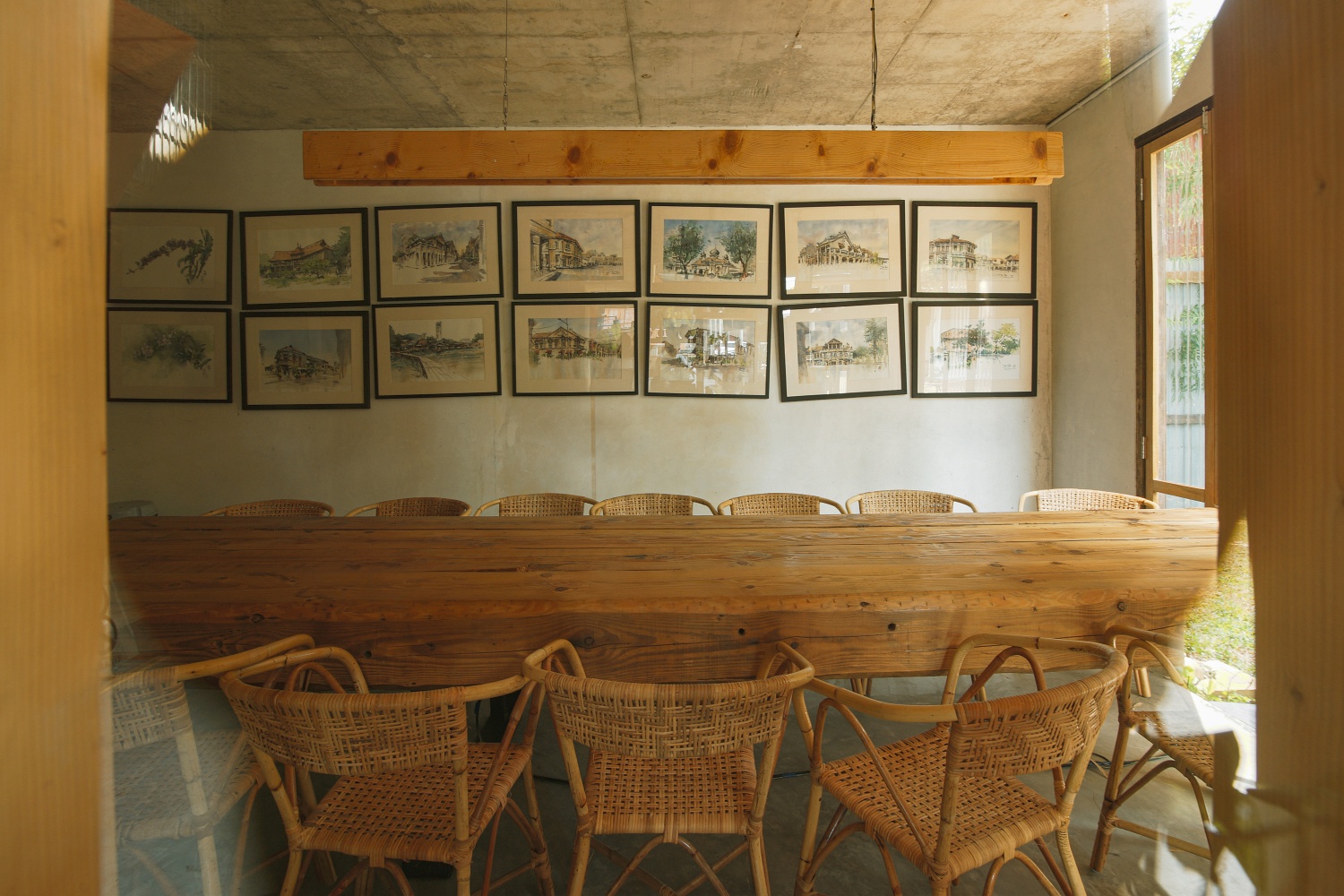
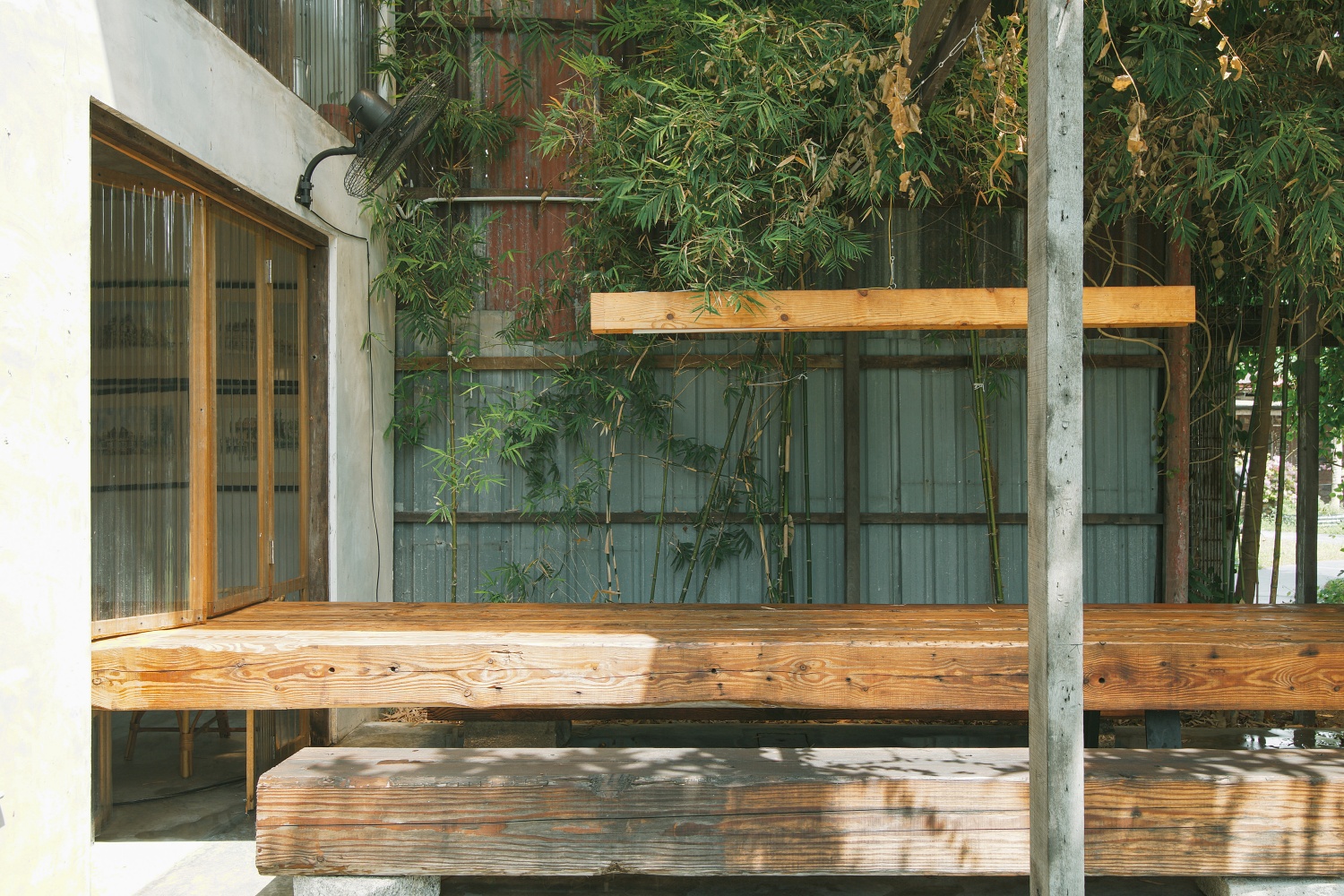
Recycled timber from old electric posts was made into statement pieces within COEX. The most dominant piece would be the central long table. The ambiguous ownership creates a dynamic social space which fosters incidental encounters for the public and COEX. A clever intervention of puncturing a piece of furniture from the practice’s meeting room through to the public area means it could be opened up to accommodate a larger crowd hence maximising its usage when required. Upon approaching the entrance, one is welcomed by a shelf-like piece which is multifunctional – a display space, a division and to accommodate the stairs to the community library above.
With the absence of typical windows, the visual connection is maintained by using transparent and corrugated bicarbonate sheets. The notion of bridging nostalgically the continuity of the past and present was seen through the use of zinc sheets.
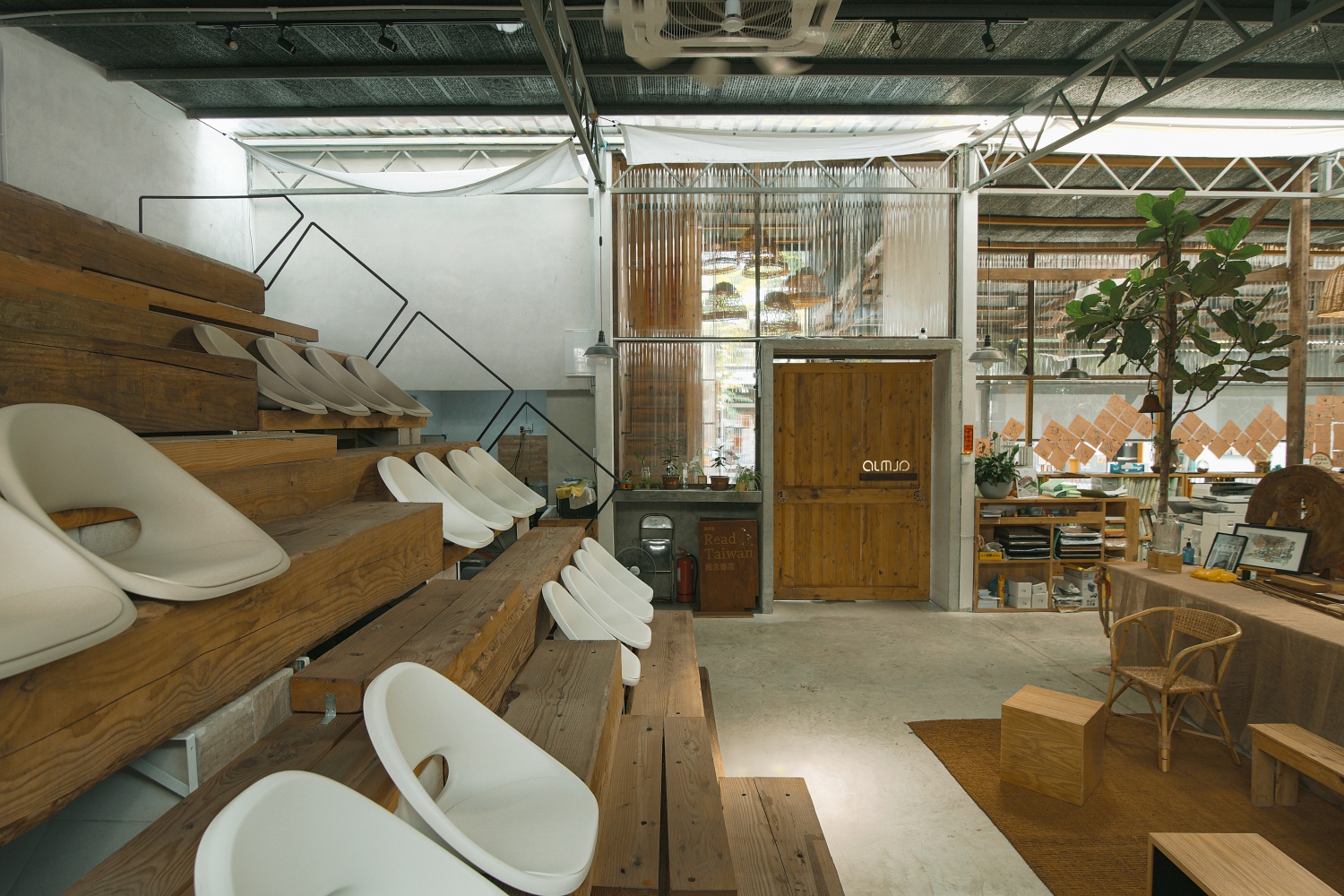
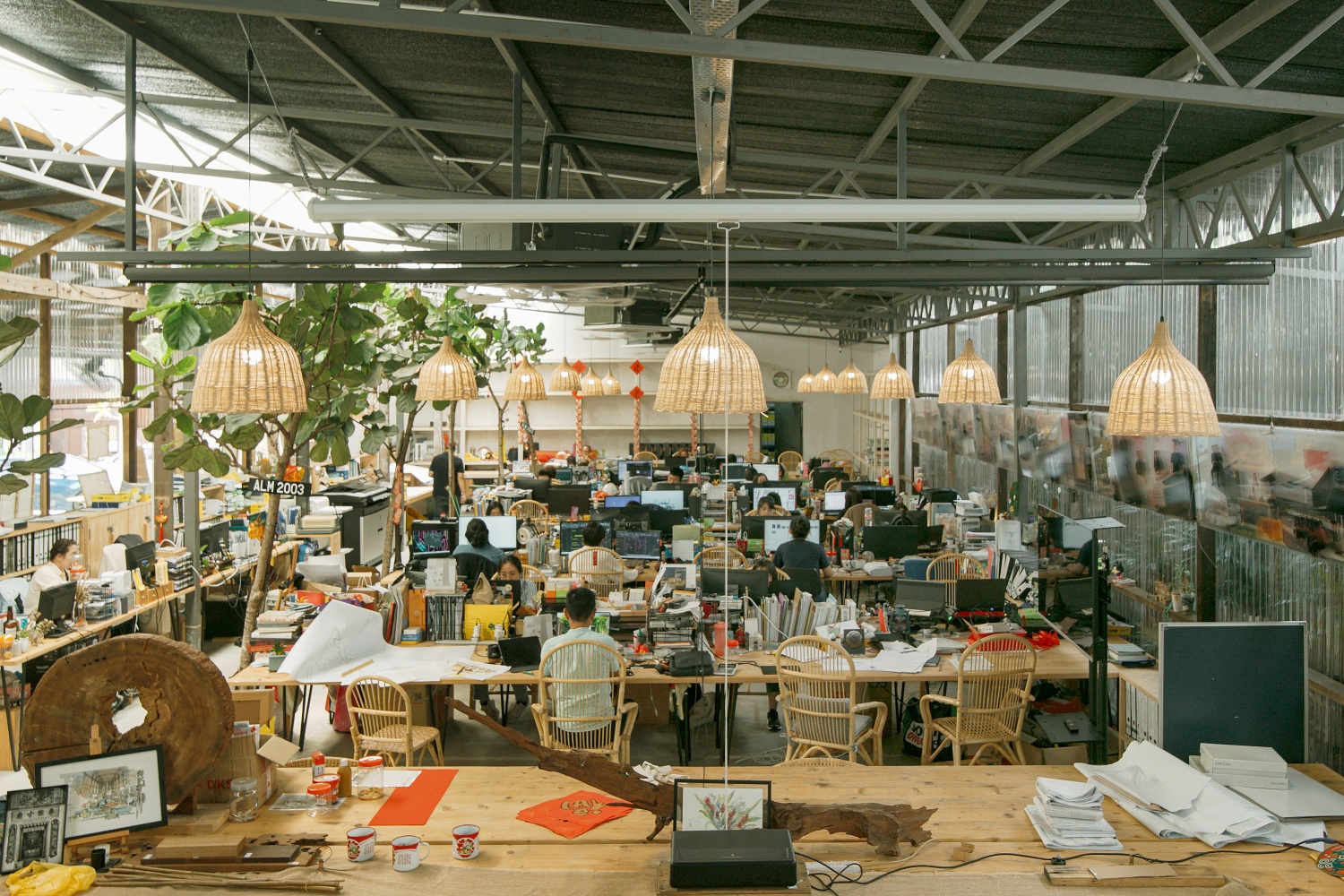
Inside the open office sits a stair-like timber structure which doubles as an informal meeting space for the practice and a platform for COEX. During the day, the practice is seen as in a humble working environment however it casually transforms into an event space in the evening. The duality of space is only made possible with the coexistence of both spaces which fosters a feasible environment for events to take place. Trees and natural light were introduced into the space, forming a sense of continuity from the landscape outside; blurring the boundaries between both realms.
The duality of space is only made possible with the coexistence of both spaces which fosters a feasible environment for events to take place. Trees and natural light were introduced into the space, forming a sense of continuity from the landscape outside; blurring the boundaries between both realms.
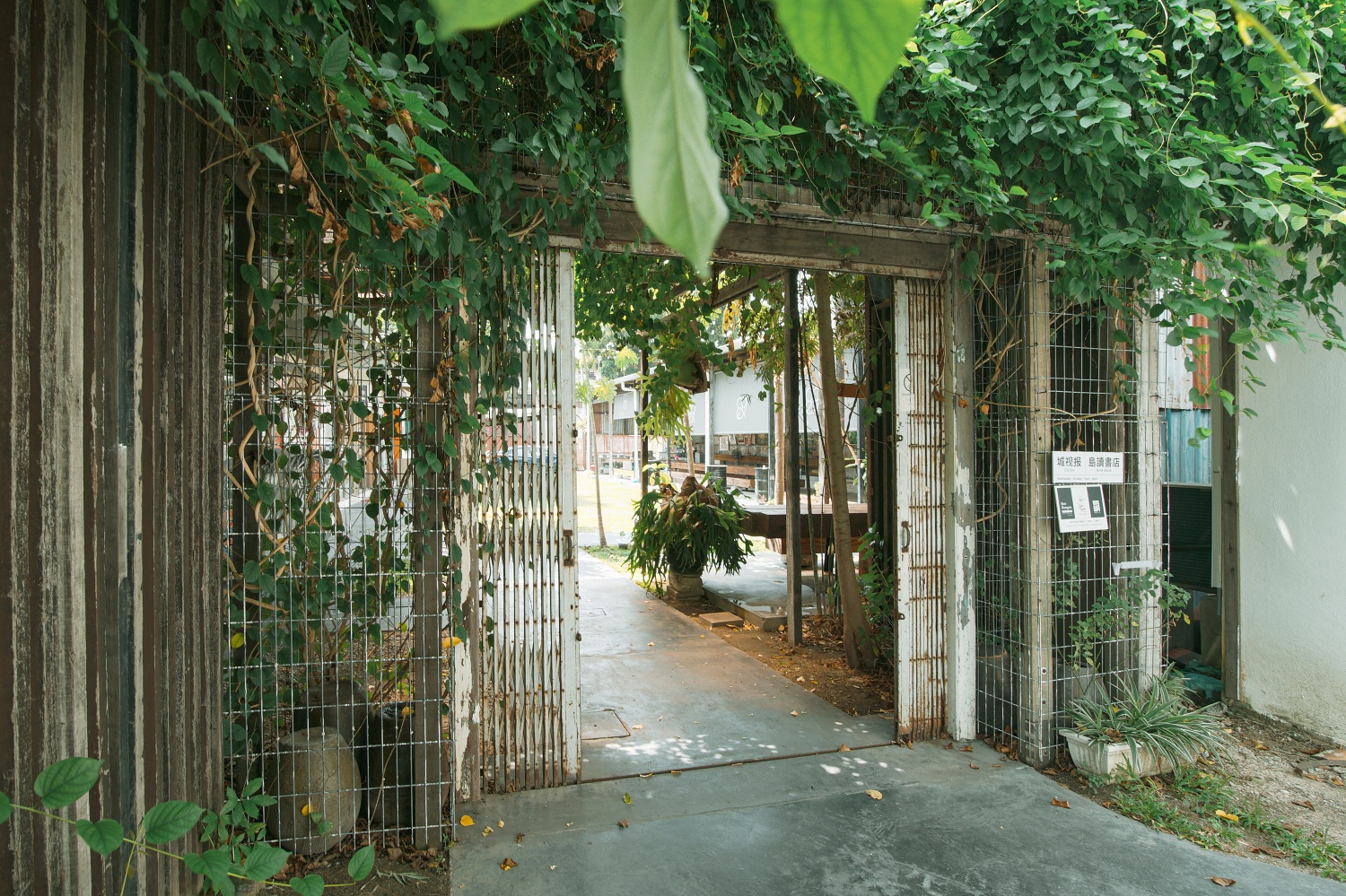
The alternative entrance to COEX from Hin Bus Depot
The view into the meeting space
Elevation 1
Elevation 2
PLACEMAKING AND VISION
Placemaking has been the core of this initiative whereby architecture acts as a tool and the architect a curator. The initiative stays away from creating a ‘controlled environment’ for things to take place but curates a canvas for experience to naturally happen. Thus, COEX takes on a more proactive self-gentrification approach in contrast to the more assertive and activist approach. For us, it is an ongoing learning process of discovery and exploration which we as a practice are constantly feeding back into the ecosystem. The nature of COEX fosters diversity most organically and sets out an identity that is embedded within the cultural DNA of Penang. The vibrant intervention has paved a precedent for Penang which is an avenue that should be explored. We foresee that this impetus will continue to influence the cultural scene of Penang on a larger scale, where it extends beyond COEX and soar to greater heights.
A flexible meeting space which extends beyond the practice and into the public realm
View from Tangga, the informal meeting space to the entrance
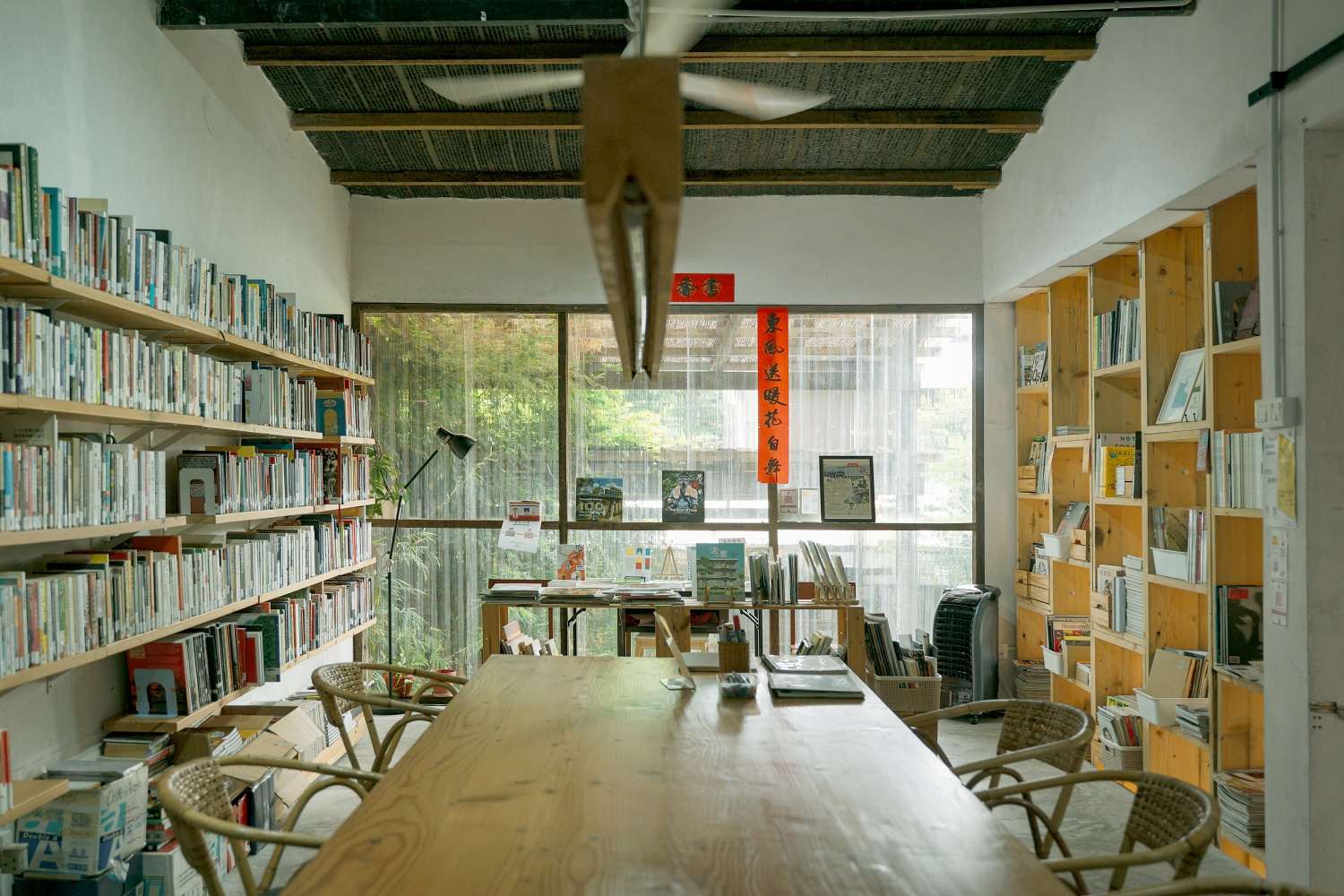
Ruang Kongsi, a community library
The architecture practice within the setting of COEX