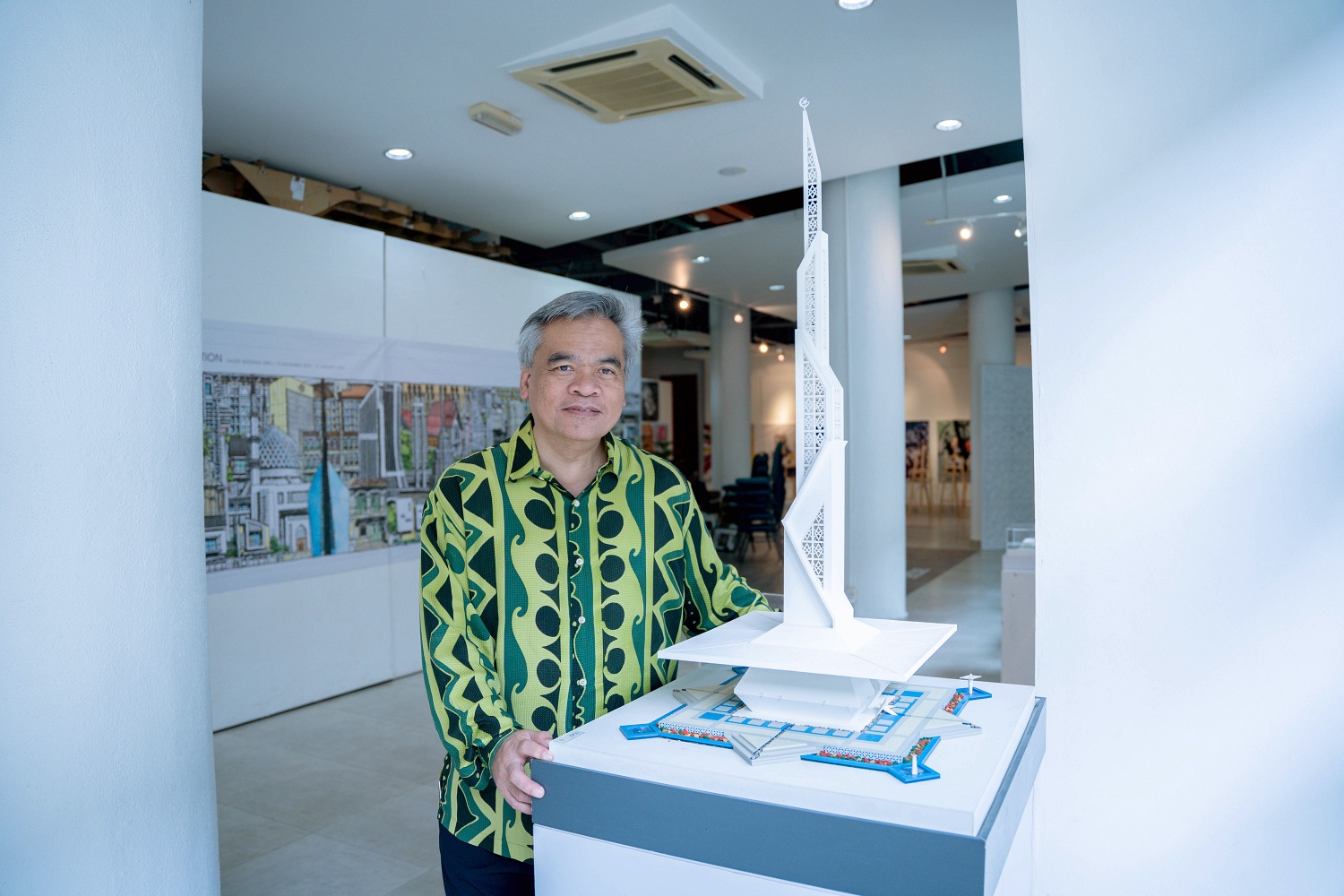
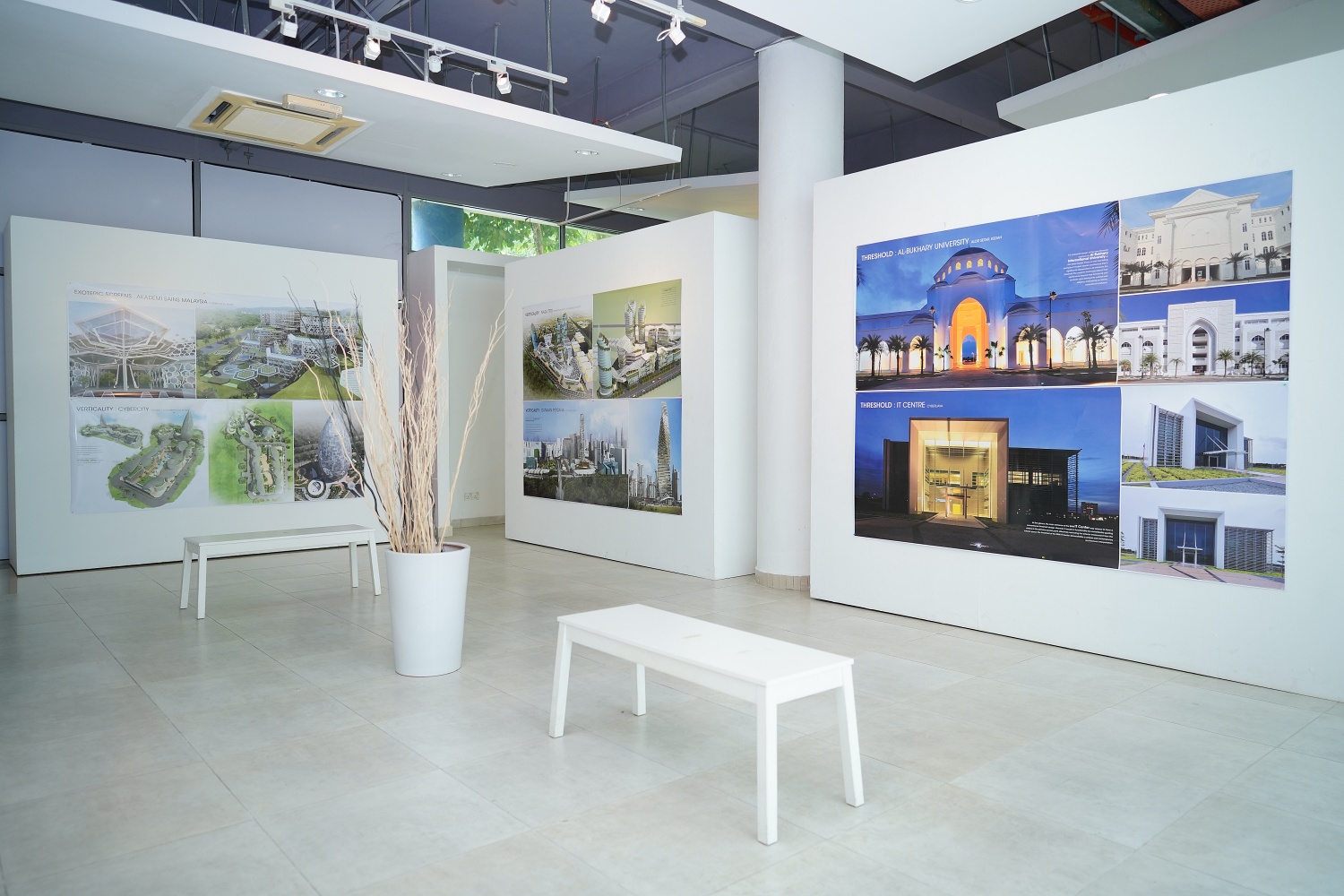
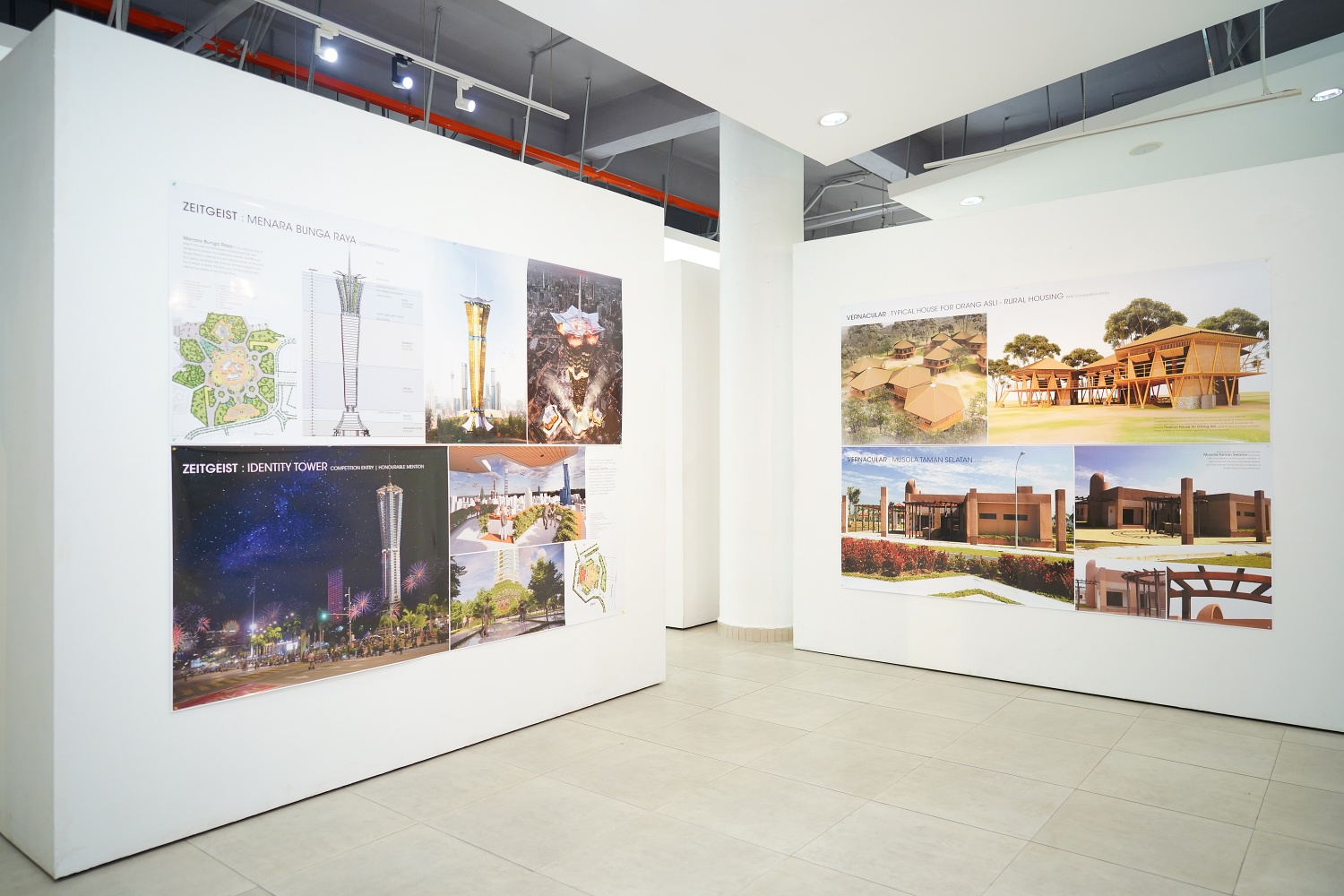
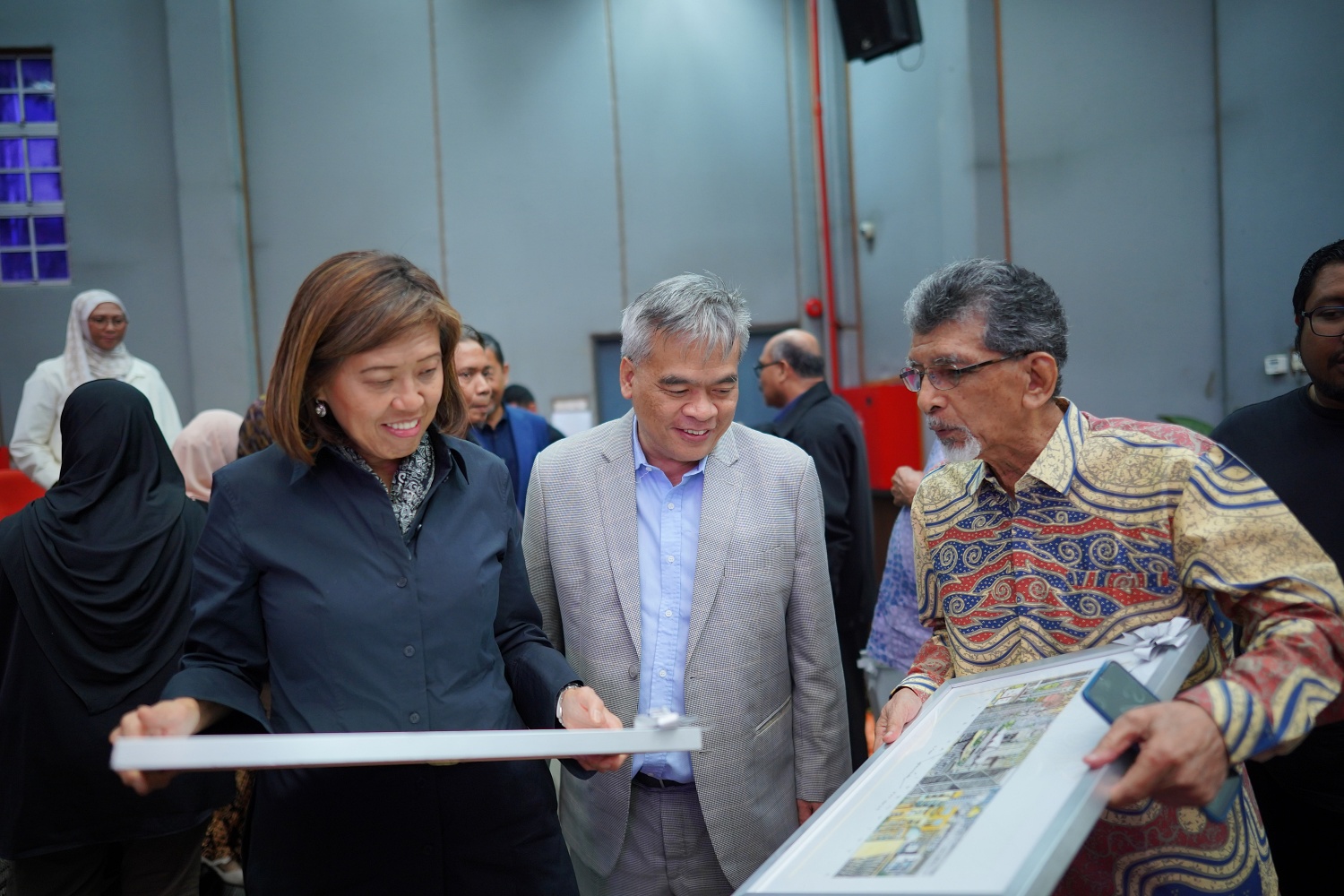
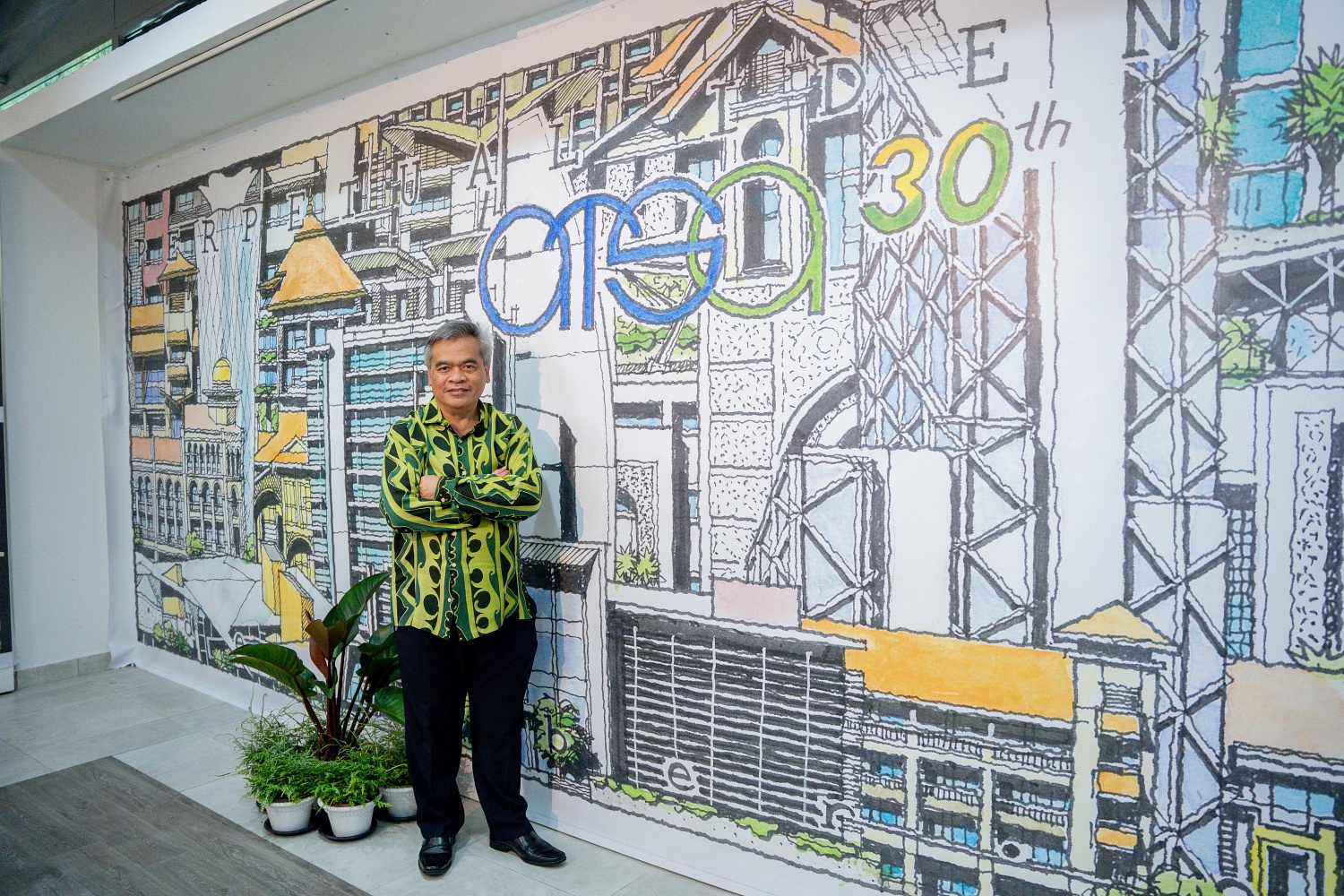
In a jubilant celebration marking three decades of architectural endeavour, ATSA Architects Sdn Bhd commemorates their illustrious journey with a grand exhibition hosted at Fakulti Rekabentuk dan Seni Bina (FRSB), Universiti Putra Malaysia (UPM). The 30th Anniversary Exhibition of ATSA Architects, aptly themed “Perpetual Identity,” serves as a testament to the enduring spirit and design philosophy that have defined ATSA over the years. The exhibition spanned eight weeks, commencing with an Opening Ceremony on November 21, 2023, and concluding on January 16, 2024. Throughout this period, it featured talks from a dozen distinguished speakers in the architectural field, and a variety of events such as a photography competition and sketch jamming sessions. The closing ceremony of this momentous event unfolded at the prestigious Galeri Serdang, UPM. After the event, Ar. Qhawarizmi (QWA) had the pleasure to speak with Ar. Azim Tan Sri Aziz (ATSA) for more insights into his work.
QWA:
Good morning, Ar. Azim. Congratulations on your 30th Anniversary Exhibition! Thank you for accepting our interview invitation from Architecture Malaysia. In this interview, we would like to learn about ATSA and the exhibition that has been held recently. So, let’s get started. Can you tell us about the most significant projects or achievements of your company over the past 30 years?
ATSA:
There are a few significant projects we have done over the years, but the two most significant projects we did were the CIMB Tower at Jalan Raja Laut and the Raja Fi Sabilillah Mosque in Cyberjaya, the first green platinum mosque (GBI-DA) in Malaysia even maybe in the world.
QWA:
Congratulations on the remarkable achievement! Can you tell us what motivated ATSA to commemorate its 30th anniversary with an exhibition?
ATSA:
There are many reasons but there are two main reasons; one, I have always been interested in organising exhibitions and have organised several exhibitions in the last 30 years. But, most of all, the exhibition will display some of the works that we have done over the years. It is gratifying and satisfying to be able to exhibit our work in the manner in which it was done. It is really interesting how to best exhibit architectural works. It was a learning experience working with UPM’s curator, En. Mohd Nasir Baharuddin, Prof Dr. Mohamad Fakri Zaky Ja’far, Prof Ar. Meor Mohammad Fared Meor Razali and Dr. Noranita Mansor. The planning of the exhibition took us slightly more than a year and involved several people.
Most of all, we hope that this exhibition will inspire architects to exhibit their work.
QWA:
Talking about organising an exhibition, what message does the company hope to convey through the exhibition, and what impact does it hope to have on the industry and the community?
ATSA:
As it was at UPM’s FRSB Galeri Serdang, It was preliminarily aimed at students, not only those studying at UPM but those who were interested as well. The exhibition was to showcase work done by our office. It was also done to inspire future budding architects to excel.
Initially, we struggled to come up with a theme. In the planning stages, we eventually settled together with the curator on the topic of “Perpetual Identity“, a case of Malaysian Architectural Identity. Malaysian architecture has had a long preoccupation with Identity Architecture. It has been a preoccupation since our independence in 1957. It was also an attempt by our office to provide a different view of Malaysian Architectural identity in the context of contemporary architecture.
QWA:
Wow! It is such an interesting topic to be highlighted as a theme. Now, let’s move to the question about your company. Can you share with us what are the key factors that have contributed to your company’s success and longevity in the industry?
ATSA:
Design is an imperative ingredient to differentiate one practice from another. The design has to always be relevant from time to time. A good design and good design solutions will always stand out. Equally important is providing fair and good service.
Besides, having a good team and people who share similar values do help in the longevity of the firm. In comparison, similar to pop singers, those who write their songs or a companion who writes songs for them constantly will have a long career and survive.
Brushing up with people you know by having good PR also helps to be appointed repeatedly. It is not always a natural trait for architects. Many have mastered this and have been successful.
QWA:
ATSA:
Good design always works by incorporating elements of Genius Loci, the spirit of the place, into any design work, and Zeitgeist, defined by the spirit of the time, will automatically make one’s design timeless, relevant, and true to its time. Remaining true to design at all times will guide one’s design to be everlasting. Sustainability and resilience are now part of design. It is to be aware of the future challenges that could wreck the world. However, convincing a client is often not an easy task.
QWA:
ATSA:
Challenges are aplenty. Practising architects face challenges almost every day and many of them are not due to design but due to clients changing their design approach, local authorities’ matters, contractors, etc.
Our milestone throughout the years has been having our buildings completed and our ideas put into reality. Some of them have been recognised with a variety of prestigious awards, reflecting the achievements of our hard work and commitment to excellence.
QWA:
How do you balance innovation with staying true to the company’s identity?
ATSA:
We must always innovate. There is a saying by Peter Drucker, a management consultant, previously said “Innovate or die”, which means to succeed, we have to be more innovative, more creative, and able to add more value to our work.
The identity of a company is perpetual as time goes by. New approaches and thinking will always improve over time, but the difference is to manage the identity carefully to remain relevant. Only the Paranoid survives as said by Andrew Grove, founder and CEO of Intel.
QWA:
ATSA:
I am always interested in history and the future. The future technologies will come and we just need to be aware of it. It is not always the best move to be the first who adopt the newest technology. In our industry, new technology is expensive, and not many people (clients) are willing to pay for it. In the future, technology will constantly change rapidly. With the rise of AI, the profession is in for a rude awakening and a major disruption.
QWA:
ATSA:
QWA:
ATSA:
For thousands of years, architectural drawings and design were done practically the same, using pens, pencils, tracing papers, set squares, and scale rulers on draughting boards. Rows and rows filled office spaces. By the mid 80’s that all changed with the introduction of the all-powerful computers, software, and the internet has rendered those traditional ways obsolete but made doing part of the work faster. However, due to technological advances, the demands from the clients and local authorities have increased. All of the new technological advances have accelerated the cost of setting up a business as well as other costs of doing business.
The future of architecture from now on beginning as recently as 202O will undergo rapid changes that will alter how the future of practising architecture will be.
The age of AI, AI BIM, will in a few short years, alter the way we practice architecture and be treated. Currently, the role of architects has been diminished and the respect for architects has been relegated to merely producing designs that are neither of quality nor of any significance. By the year 2045, when technology transcends biology, the age of singularity. The world, not only architecture, will change dramatically.
We will have to motivate ourselves constantly to seek to be in constant search and to adapt to the changes. We hope to embrace the architectural technologies of the future and clearly the schools of architecture is presently are not fully ready. The next 30 years (2050’s mid-century) will be interesting. It requires young blood and probably new leadership to steer ATSA into the next generation.
QWA:
ATSA:
We do not have any specific aims for the projects we are doing now or in the future. I guess we followed our thoughts at this time to provide the most contemporary solutions and the best standards to include all matters on the users’ needs, sustainability resiliency, and their ever-changing lifestyles.
One aim is to always have a better contemporary design that will always be a different set of approaches but in keeping with our design DNA.
QWA:
Based on the company’s experiences and accomplishments, what advice would ATSA give to aspiring architects?
ATSA:
We have been in practice for over 30 years and before that, we worked with others, i.e., Team 3 Architects, also known as Jurubena Bertiga International and Ar. Zulqaisar worked at BEP Architects. During this time, approximately five years, we both gained tremendous experience from it.
I believe that we (the profession) have many talented architects. Those who are passionate and live in architecture will probably be those who create the most bespoke architecture of our time. However, architecture is not only about design. Architects have to know how to communicate their ideas, present them, and know people. Learn about issues that are besieging the built environment and provide solutions. Most of all, they to able to secure commissions after commissions to continue practicing architecture.
Document your work throughout your practice, one can learn from our past works. If possible, get good partners that you can work with. In today’s work environment, we probably need more than one person to offer good service.
QWA:
In these exhibitions, you strongly emphasise competition-related works. How does participating in competitions contribute to your practice? Is it something you do for fun, or is it essential for generating innovative ideas after 30 years in the field?
ATSA:
I always keep a sharp eye out for opportunities to compete with the younger generation, testing the validity of my ideas. I love to surprise myself to see the end product. For sure we do not always win but we will reflect on what we have done and identify potential for improvements in terms of technology, presentation, and so on. That’s why I have continuously been involved with universities to keep me on track. So that I won’t lose touch with the ideas of the near future.
QWA:
The exhibition shares a substantial amount of work. In terms of practice, is it normal to provide more than one option in your work? When working with clients, do you prefer to present options one by one as changes arise, or do you prefer to provide multiple options at once?
ATSA:
QWA:
ATSA:
QWA:
ATSA:
I think it was simply a phase in my life. One of the things that inspired me back then was Masjid Negara, which occurred to be close to where I lived when I was younger. When we were allowed to construct the Cyberjaya Mosque, I was eager to learn more about mosque architecture. So, we completed three books, which required two years of dedication for each one. One was about the World Mosque, the second was about the Malaysian Mosque, and then the modern mosque.
After that, I tried to distance myself from it, but the perception remained. I am currently focused on my most recent project, which has a more futuristic approach.
QWA:
ATSA:
My interest in book publishing was sparked by my father. Despite being a civil servant, he managed to publish a couple of books. Witnessing his achievement inspired me to explore the world of book creation. After graduating, I gained valuable experience working at Jurubena Bertiga, a highly regarded firm, that happened to be around 25 years old during that period. I was assisting the firm in documenting their works, in preparation for a publication. However, the publication never saw the light of day as they wanted it to be a deeper and intellectually stimulating piece. I have a deep passion for documenting, as it allows me to reflect on my own experiences. Despite the challenges of selling books in today’s market, I have still managed to write a few books. I have intentions to release additional books in the future. The process of publishing a book involves a substantial amount of work. Consequently, I hope that I can sustain this momentum.
QWA:
ATSA:
People’s perceptions or ideas on identity can vary. I believe that it is important to educate the general public about the concept of identity, as there are individuals who may hold differing opinions on this matter. Our sense of self-realisation evolves as we grow and experience new things. In my opinion, the younger generation has a unique perspective on life and the world. It represents the youthful spirit of Generation Z.
In the near future, the upcoming generation will be born into a world that is fully interconnected. In the past, we used to have a designated time when we were not allowed to use phones, watch TV, use computers, or access the internet. However, nowadays, you have the luxury of being able to access digital content for 24 hours and have unlimited access to the internet. It implies that your sense of self evolves as time goes on. The narrative surrounding identity is perpetual. So, we are working on adapting our identity to better fit the current era. Our approach to work may not align with the next generation’s perspective, but the beauty of time is encapsulated in the architecture of the day.
QWA: