TWO TAIPEI EDIFICES
From late November to early December 2023, I had the opportunity to visit Taipei as an academic delegate from Taylor’s University to the New Interpretive Grounds Architectural Design Thesis Forum organised by Ming Chuan University. Now in its 5th iteration, this annual forum which has brought together selected students and academics from Taiwanese and Southeast Asian universities since 2019 involves programs such as graduate work exhibitions, roundtable discussions, project presentations and a forum for academic presentations. In addition to the intellectually stimulating experience of the forum, I was energised by the visit to the city of Taipei itself; lively, vibrant and with a deep sense of culture. My stay in Taipei was short and with a packed schedule of presentations and discussions. My exposure to its vibrant urban life was, unfortunately, limited.
However, during my stay in the city, I was fortunate to have visited two new buildings which to me represent a radical commitment to the public life of the city through moments of audacious architectural intervention. The first building visited as part of the program of New Interpretive Grounds was the soon-to-be-opened Keelung Tower by Jay Chiu of AxB Architecture Studio, an urban infrastructure which aims to strengthen urban legibility in the port city of Keelung. The second building visited was The Taipei Performing Arts Center by Rem Koolhaas and David Gianotten of the Office for Metropolitan Architecture (OMA) which was completed in 2022 after a protracted construction period following its original design competition in 2008 a theatre machine which aims to question the way theatre performance is produced. This article will share observations from the visit to these public and cultural edifices as well as thoughts on the relationship between architecture, the public and the city.
BETWEEN THE MOUNTAINS AND THE SEA: KEELUNG TOWER
Keelung is a port city which forms New Taipei and Taipei City, the Taipei Keelung Metropolitan Area. Surrounded by mountains on its west, south and eastern peripheries, the city faces the East China Sea on its northern side. This geography has made it a much-favoured harbour and port for hundreds of years. Located about 23 kilometres to the northeast of Taipei, Keelung is also known as “The Rainy Port” due to its frequent rainfall. It was on such a rainy day that we were taken on a guided tour of the soon-to-be-opened Keelung Tower by the project’s designer, the architect Jay Chiu of AxB Architecture Studio.
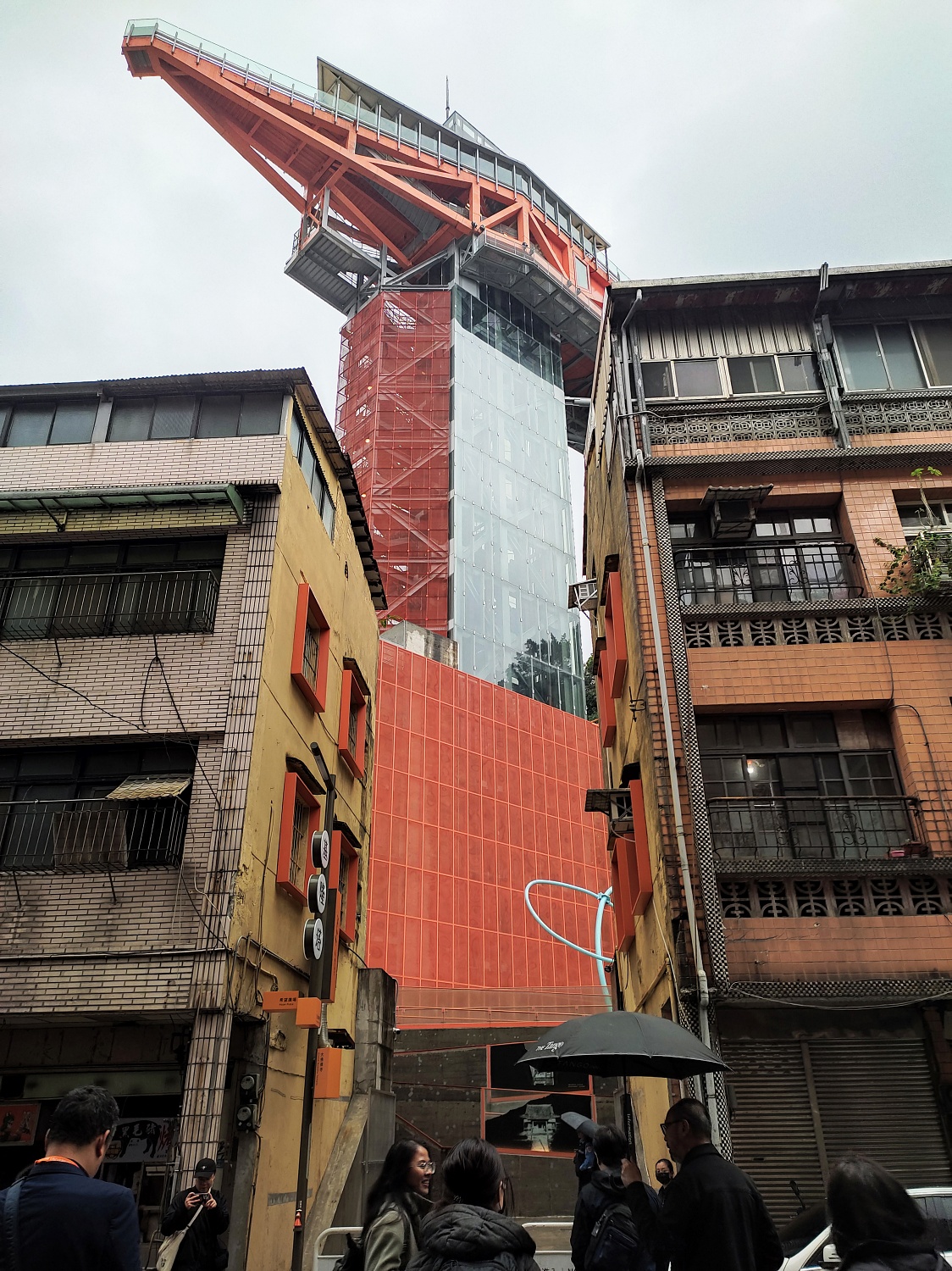
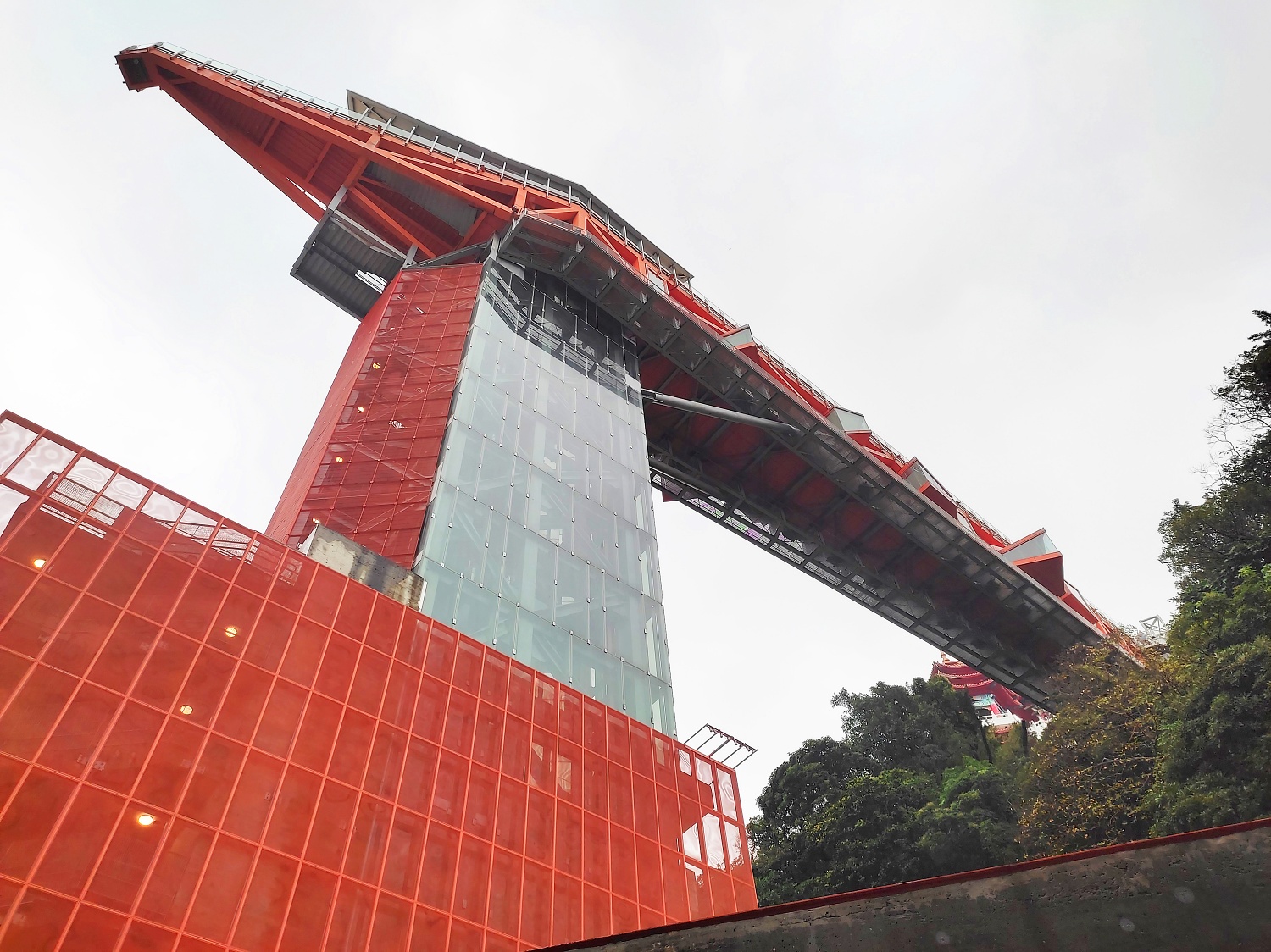
The Keelung Tower – in reality, a tower-bridge hybrid is a bold urban gesture which directly connects the city and its streets with the Zhupu Altar, the main temple overlooking the city from the top of the hills. Rising from a ramped, triangular plaza somewhat hidden at the back of existing buildings, the tower provides a vertical connection to a horizontal structure – a bridge which acts as an open-air observation platform. The bridge structure provides access to the Zhupu Altar on the hills. From the observation platform, the view is truly spectacular. More than simply offering a fantastic view, the tower contributes towards urban legibility and visual connectivity by showcasing the entirety of Keelung City, as well as the mountains, the port, and the sea from its vantage point. The muscular, industrial architecture of the tower, which might seem out of place on first encounter, makes sense when one sees the equally muscular, industrial cranes at Keelung Port.
Apart from the observation platform, which also displays information related to the project and Keelung, the bridge also contains a restaurant and a bookshop. We were informed by the architect that from inside the restaurant – still being fitted out at the time of the visit and therefore inaccessible – views towards landmarks such as the Great Buddha, the cruise ships in the harbour and the surrounding mountains are carefully framed by the angled design of the facade. Through these gestures, visitors will constantly be aware of the tower’s position in relation to the urban fabric of Keelung.
More than an iconic piece of architecture – from the rest of the city, the tower is surprisingly somewhat invisible – the Keelung Tower is a truly urban architectural gesture. Rather than being imposing, the tower does not compete with the landmark Zhupu Altar, rather it is a publicly accessible architecture-infrastructure hybrid which physically and visually ties together the city, the mountains and the sea, a generous public edifice for Keelung.
A FRIENDLY MACHINE: THE TAIPEI PERFORMING ARTS CENTER
The Taipei Performing Arts Center (TPAC) is located in the Shilin District of Taipei, known for its active nightlife centred around the famous Shilin Night Market. Completed in 2022, the TPAC complements the already existing and vibrant nightlife. The original competition proposal by OMA had envisioned the night market activities extending underneath the raised volumes of the TPAC. Although this vision has not materialised, the TPAC is a generous cultural edifice for the city.
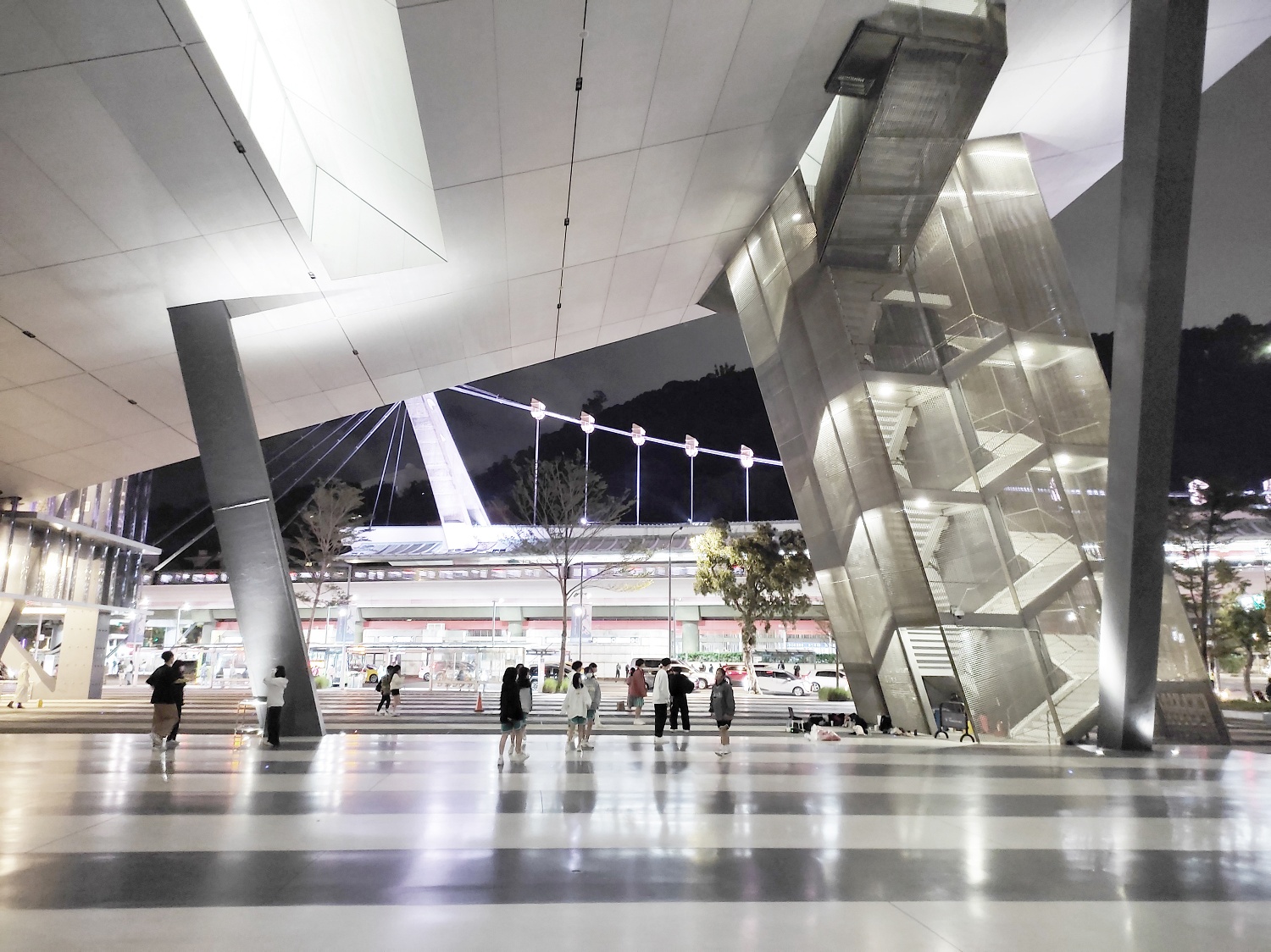
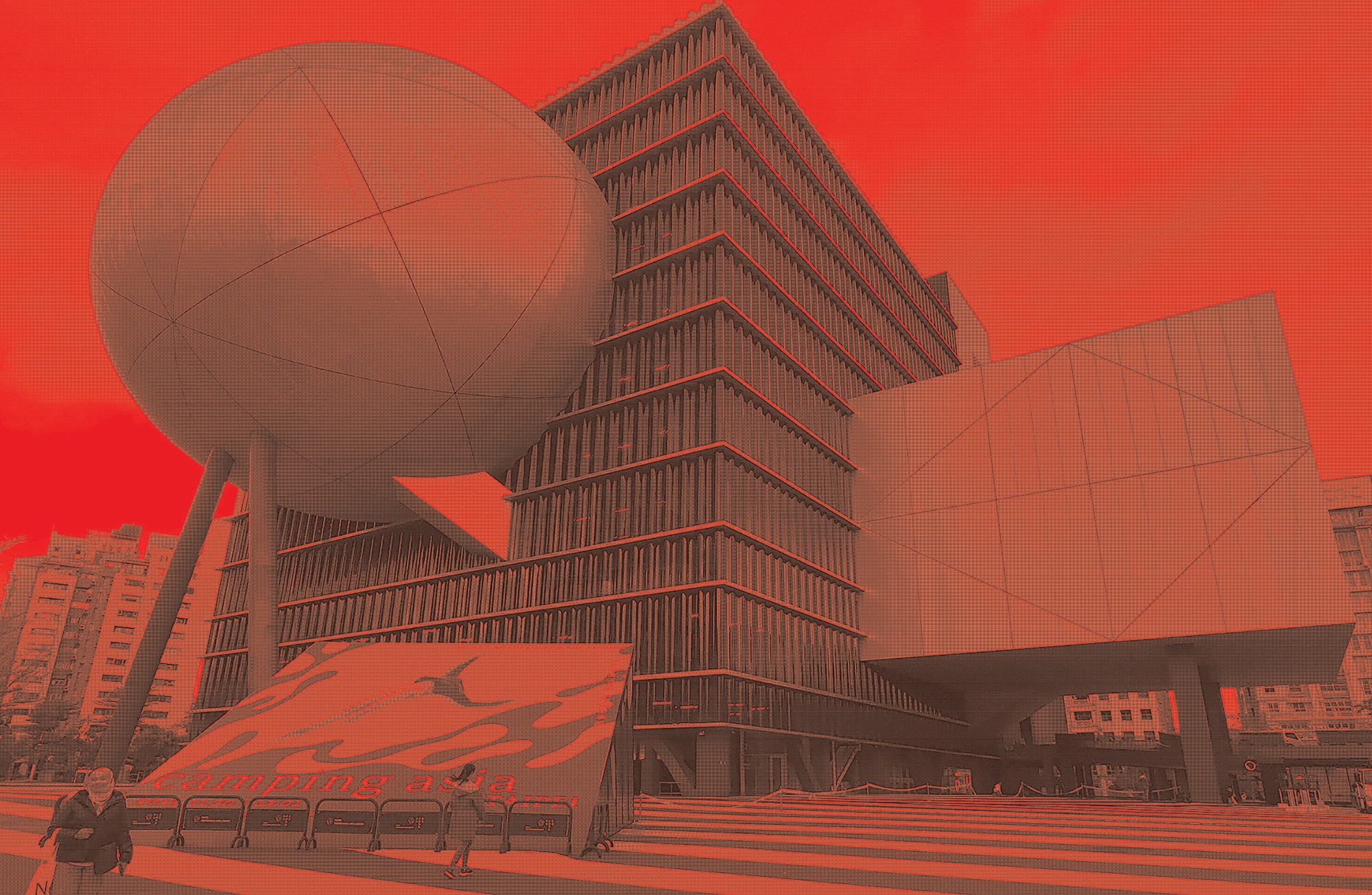
The main idea of the building, a central cube intersected by three theatre volumes – a sphere and two rectangular boxes – allows for experiments in theatre production. Apart from this machine-like aspect of TPAC, what was impressive to me was the generosity of the building towards the city. The main lobby, the mezzanine lobby, the restaurant, the café, the bookshop, and the spill-out areas for the theatres are publicly accessible up to 9 in the evening. During my evening visits, these spaces are occupied by teenagers and senior citizens, having coffee, visiting the bookshop or simply sitting in the mezzanine lobby looking out at the city through the corrugated glass façade. At night, the spacious plaza outside the building – sheltered by the overhanging volumes of the theatres – is enlivened by activities such as dance classes and street music performances, a truly vibrant public realm.
Another design gesture of the TPAC is the Public Loop; a complex system of escalators and stairs beginning from the outdoor plaza which takes visitors on a ‘behind the scenes’ tour of theatre production. During our guided tour of the Public Loop – very popular, but no photos allowed – we ascended through a winding path, seemingly carved between the various volumes, layers and structure of the building. Within the Loop, openings looking into the theatre spaces and their machinery expose the process of theatre production to visitors. From within the belly of the building, the Loop emerges onto a rooftop open-air performance space with the city as the background from which an elevator took us back down to the plaza. We were pleasantly surprised that the bulk of the visitors to the Public Loop tour were not architects or designers, but people who were interested to know more about the building and the process of theatre production.
Beyond the volumetric and structural theatrics of the project, it is the publicness of the TPAC and the generosity and connectedness of its spaces towards the city which impressed me. These aspects define an architectural and cultural contribution towards the city which does not depend simply on the program. Imagine the possibility of spending your days and evenings hanging out in the generous spaces of a cultural facility, absorbing culture without even directly engaging with the main program.
POSTSCRIPT: WHERE ARE OUR GENEROUS EDIFICES?
Last year, social media was abuzz with the opening of several new shopping malls in Kuala Lumpur. These malls all promise some sort of new experience, yet what they offer are simply ever-shiny spectacles for a society of consumption. Contrary to the generous public and cultural edifices visited in Taipei, these malls are neoliberal edifices. They are signposts of a market-driven process of neoliberal urbanisation and are spatial factors in the shaping of the public into “citizen-consumers”.
For me, the Keelung Tower and the Taipei Performing Arts Center demonstrate how architecture can become generous edifices for the public and the city. These edifices open space up for public life in the city, without relying purely on consumption. They are extensions of the city’s public realm. If the buildings that we spend our time in shape our way of thinking, then these Taipei examples promote an awareness of the legibility of the city (Keelung Tower) and the processes and mechanisms of cultural production (TPAC). This begs the question; beyond becoming committed consumers, how does time in shopping malls shape our worldview? For me, the examples from Taipei require us to question what are the conditions needed for similar types of public and cultural projects to be commissioned in Malaysia. What are the values of architecture for the public and the city? Where are our generous edifices?