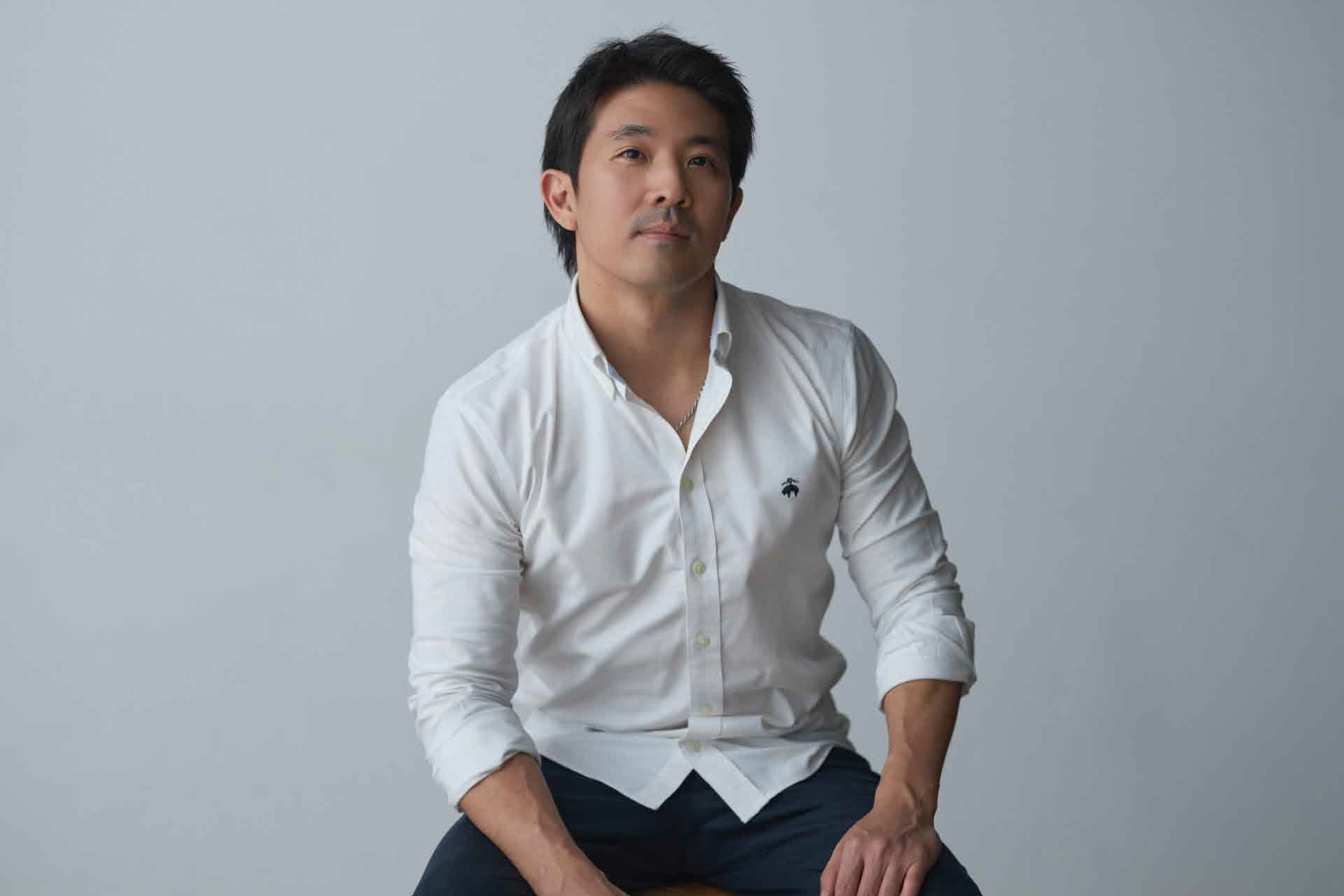
An interview was conducted with Kody Kato, principal of ODE,
to shine a light on a different facet of architectural practice.
Interview by Xing Yue
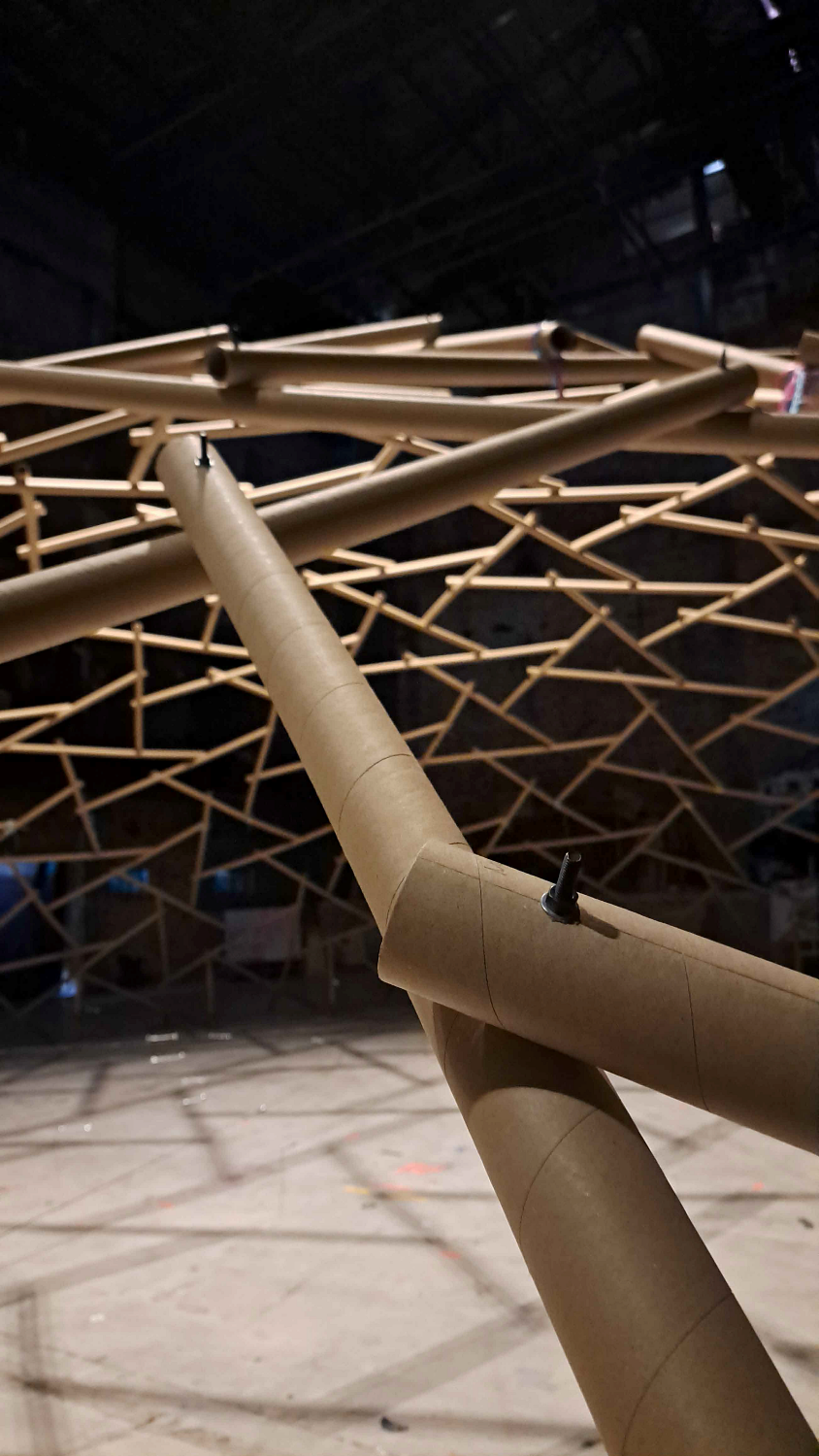
Close-up of Reciprocal Frame Joints. Photo credit: Ramboll
In light of the successful completion of the Paper Power project at RexKL last June, an interview was conducted with Kody Kato, principal of ODE, and also the designer of the installation, to share his journey and aspirations. The interview aims to shine a light on a different facet of architectural practice, one that blurs the lines between architecture, material science, art installation and construction.
Close-up of Reciprocal Frame Joints. Photo credit: Ramboll
XY
First of all, can you tell us more about ODE’s background and aspirations?
KK
I have always been inspired by engineering, materials and evolutionary biology. When I was 19, I formulated a design philosophy known as “Creative Engineering”.
This idea stemmed from the resistance I encountered when attempting to pursue a double major in architecture and engineering. Despite being told by the college of admissions department that combining these disciplines was unfeasible for any student, I refused to be confined to a singular focus in architecture.
Determined to bridge the gap between my passion for architecture, material investigations, and engineering, I conceived “Creative Engineering”, a unique design approach rooted in my innate childhood strengths and interests.
Long story short, to my surprise, the university tailored my academic program to suit what I was interested in.
I truly believe that it is important for us to have that appreciation for engineering, whether it is mechanical or structural because it can enhance the creative process, especially on how materials are formed and used.
XY
Can you explain more about “Creative Engineering”? What do you think helped refine your design philosophy along the way?
KK
Creative Engineering is about seamlessly harmonising architecture with material science, engineering, nature, and diverse construction methods, redefining how we live, work, and perceive space. Since its inception in 2003, I have diligently refined “Creative Engineering” through experiences under the mentorship of visionaries such as Dr Ken Yeang in Kuala Lumpur, Yasuyori Yada [Arata Isozaki’s office], Hyoungjune Park [MIT; Board Member of Architectural Intelligence], and Byoung Soo Cho, a former GSD faculty member at Harvard University.
My mentor, Byoung Soo is one of the major influences on my investigation into materials. He specialises in custom handcrafted fabrications that challenge conventional construction techniques, emphasising a close connection to the human scale. He dedicated an entire floor of the 3-storey building to this. Imagine having a design discussion on the computer and there is a table saw right behind you!
In 2017, I established the design practice ODE, operating as a dynamic lab rooted in the philosophy of “Creative Engineering”. Our explorations focus on seamlessly integrating alternative and sustainable materials into building structures, celebrating handcrafts, and engineering, and respecting diverse cultures.
This approach has led to transformative projects like Beyond Surface in London, Liberated Memories in the United States, and the recently completed Recycled Reciprocal Frame [Paper Power] in Kuala Lumpur.
Plastic ties were used as initial support during construction process. Photo credit: Ramboll
XY
You mentioned that ODE focuses on the exploration of sustainable materials. What are your thoughts on the importance of design research within a practice, especially for a practice like yours?
KK
Research is at the heart of our design philosophy. It is important as the design, and the creation processes should be informed by a thorough investigation and understanding of the project. It implies a commitment to inquiry, to making informed decisions, and to continuous learning.
I believe that research fosters innovation by exposing designers to new ideas, emerging materials, and alternative approaches. With the Evidence Based Design approach, by leveraging data analytics, mechanics of materials information, and behavioural research, designers can validate their design hypotheses, identify areas for improvement, and refine their creations iteratively. This helps to push the boundaries of conventional design practices.
By integrating research as part of ODE’s creation process, we can ensure the result aligns closely with user needs, and also cultivate a mindset of curiosity and continuous improvement within design teams.
XY
Are you working on any research project at the moment?
KK
Sorry, we are currently unable to share more about our current research projects.
XY
No worries. So, what prompts you to explore architectural approaches beyond the conventional idea of making buildings only?
KK
I believe in starting at a small scale first, and then working toward larger applications. It could start as a piece of furniture, or an installation.
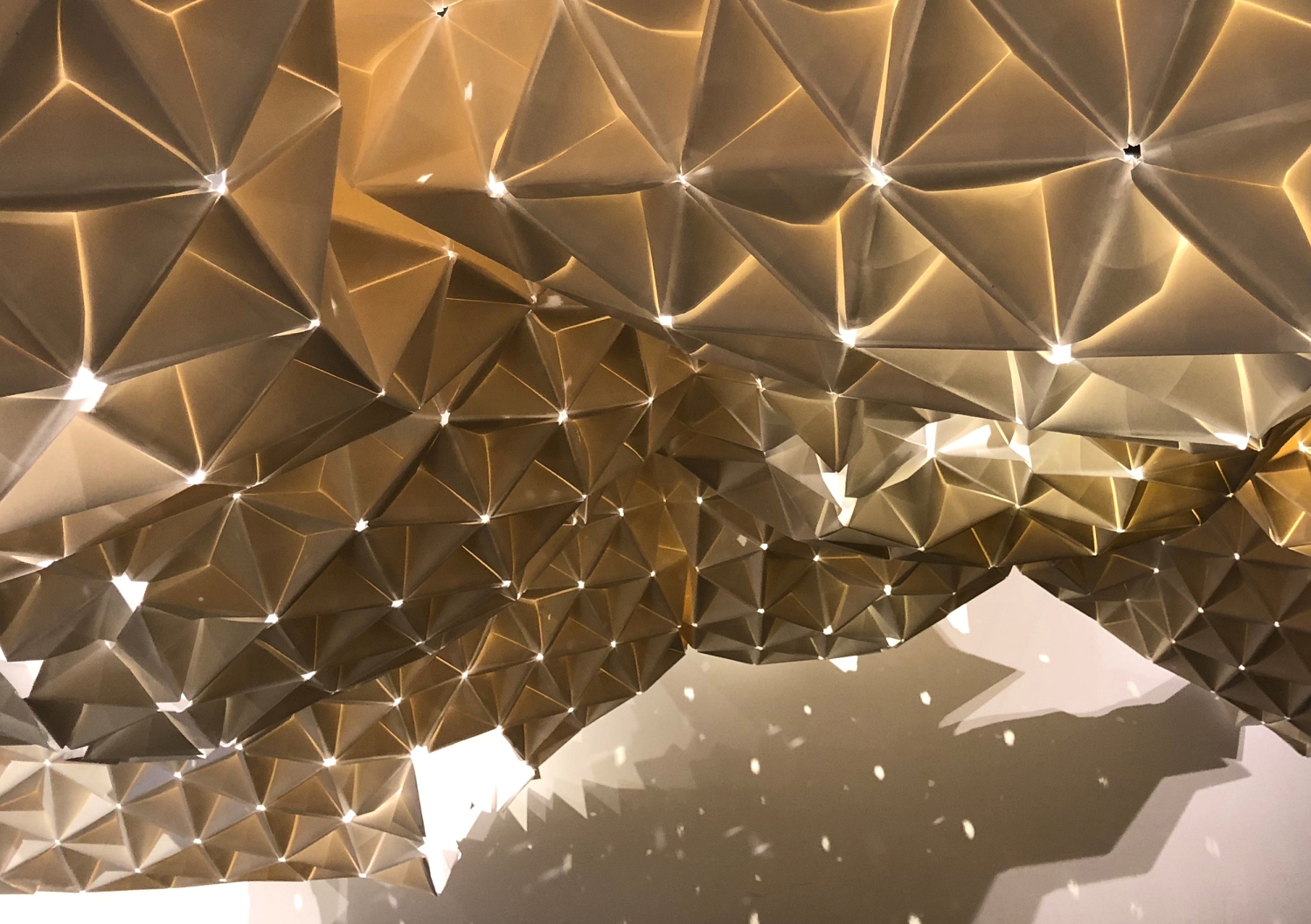
Beyond Surface Project. Photo credit: ODE
XY
Why did you choose to establish in Malaysia out of all the countries you have worked in?
KK
Malaysia has a very interesting history, and culture, and is still developing. There is growth potential in Malaysia and room for us to develop as a practice.
XY
You have recently completed the Paper Power project. What is the starting point for your installation projects?
KK
It started when G.F. Smith came to us in 2017. They wanted to investigate their newest line of paper, Takeo Tela, in a different direction than what they normally do.
We investigated the material science of paper and its interaction with gravity. The exploration of the structural aspects and mechanical properties of the material led to the creation of the Beyond Surface project — a structure that defies gravity by leveraging the strengths and weaknesses of Takeo Tela.
To understand the properties of the paper, we initiated a series of tests that resulted in the development of three discrete joinery methods and an origami structure made from 5,546 interlocking papers suspended from 16 vertical supports.
Beneath this suspended form, the joints radiate from the vertical supports, forming a network of catenary like surfaces and an unobstructed space bathed in light.
Within this space, the public experiences the ethereal qualities of the paper, as light from above transmits through its various layers and reveals an assortment of colors and shadows.
XY
That’s interesting. Is the Beyond Surface project the work that best represents your design philosophy?
KK
Yes, it is a good example of our philosophy because it pushes the boundaries of what recycled paper can achieve, but I think it is still only scratching the surface of what we are capable of doing.
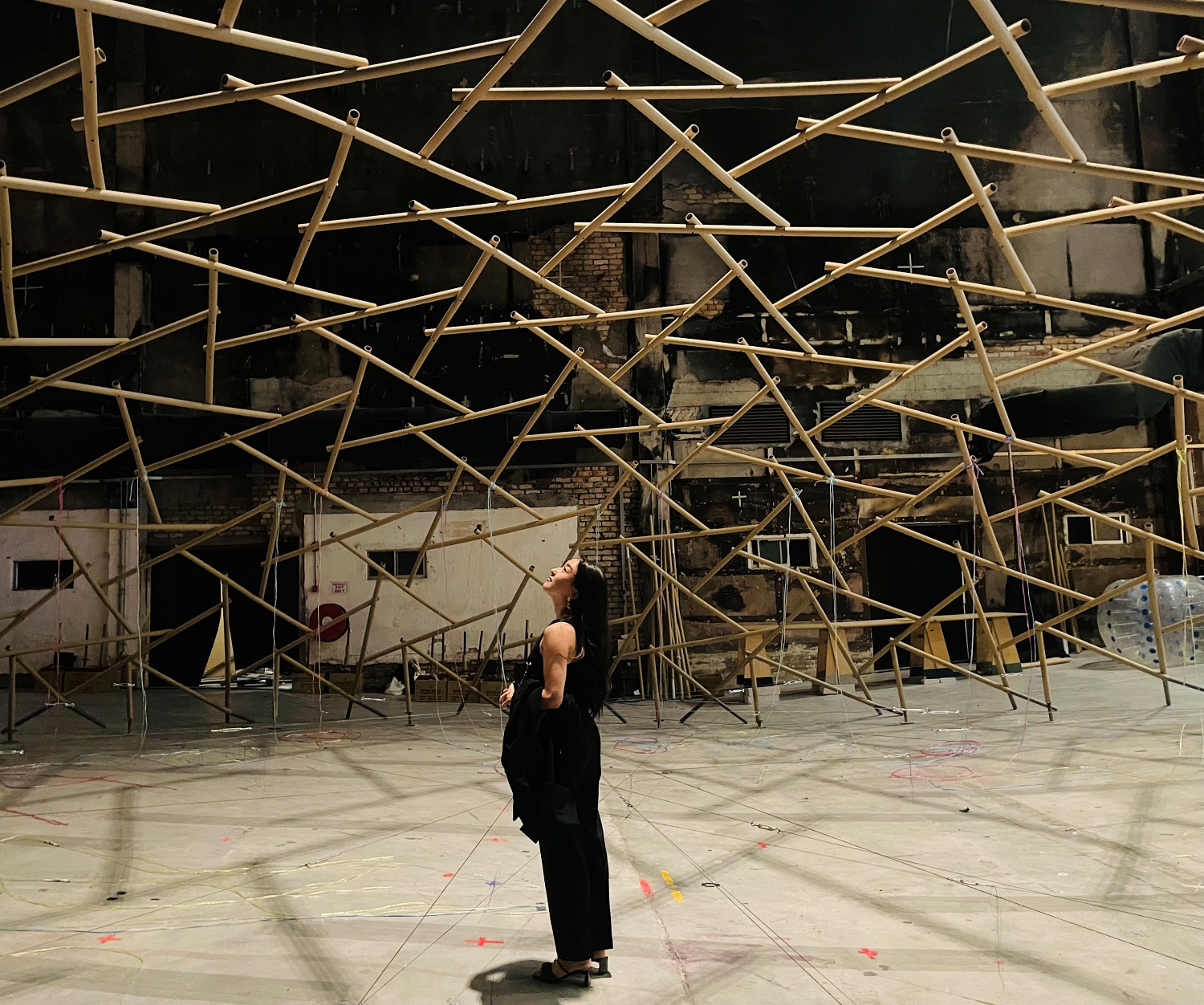
Paper Power Project experienced from within. Photo credit: ODE
XY
Back to your most recent work, can you further elaborate on the process of constructing the Paper Power project? Looking back, were there any lessons or thoughts you would like to share?
KK
Paper Power is one of the investigations where Web Structures and I set out on this journey together.
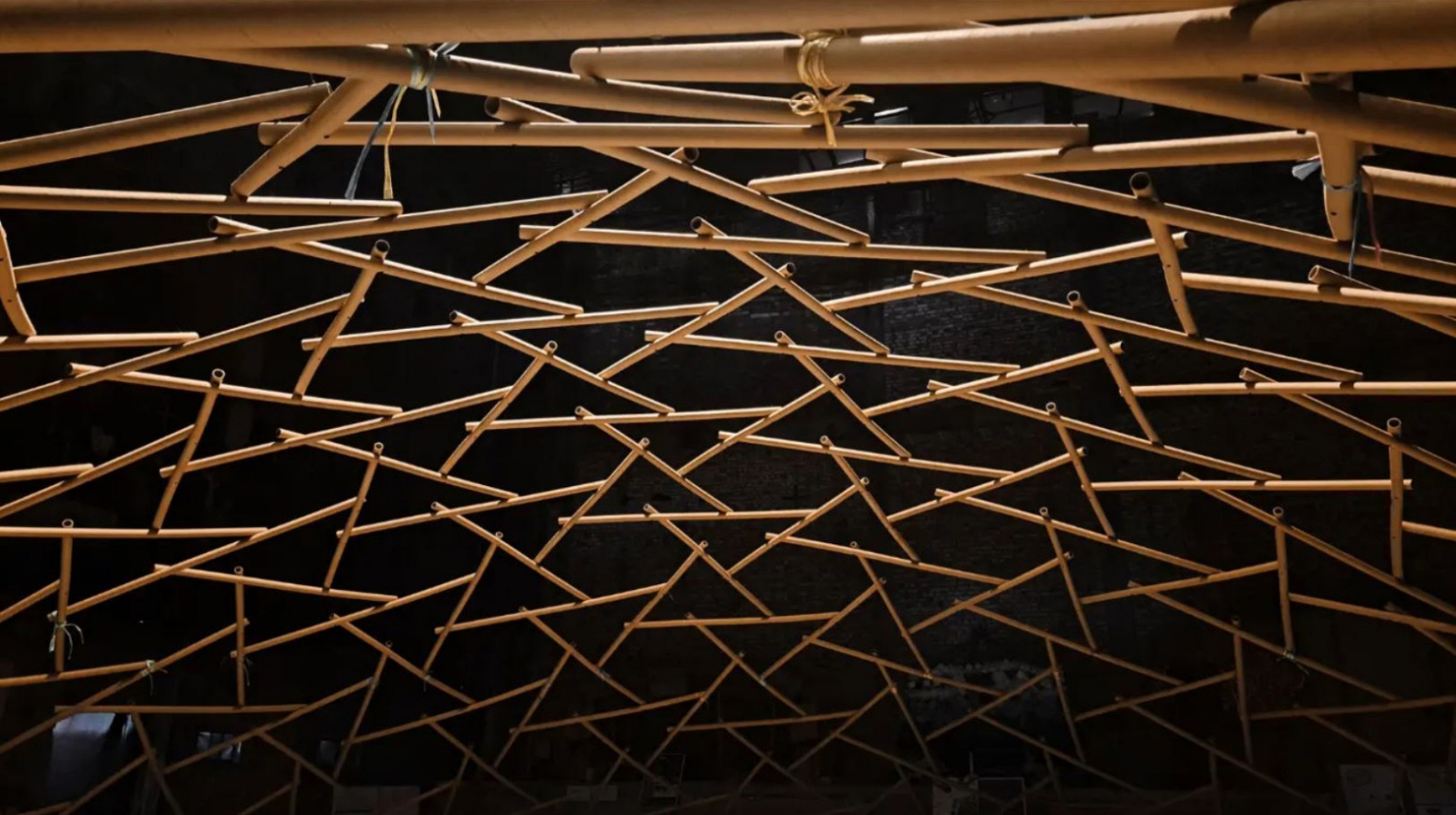
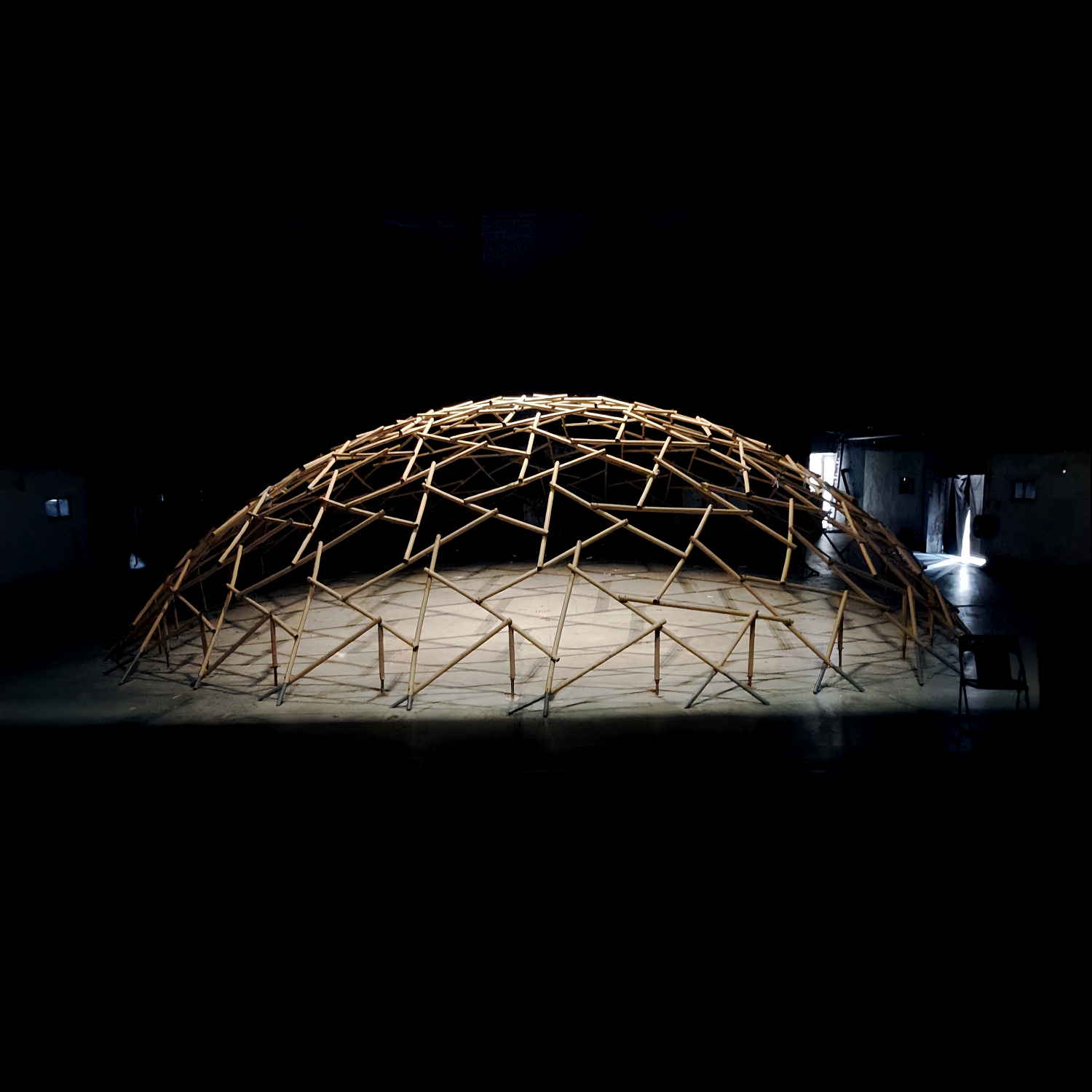
It was inspired by an ancient Chinese bridge-building technique known as a reciprocal frame that predates the era of steel and concrete. This technique was designed to span considerable distances using short wooden members. However, its application was confined to two dimensions, limiting its potential in the evolving landscape of architectural design.
For Paper Power, we were able to extend the capabilities of this technique using thin recycled paper tubes that are 50mm in diameter, to create a three-dimensional reciprocal structure that spans 14 meters. Even though reciprocal frames look simple, it took a high order of mathematical computing to resolve the joints.
When you are within the structure, you experience how the interconnected members form an unobstructed space, where the light casts patterns and shadows on the floor.
The structure for the Paper Power project is 230 kg. It’s interesting from a structural perspective if you think in terms of the weight of buildings. Steel and concrete can fabricate long members but a lot of times, other materials don’t come in such sizes and are very heavy; a lot of material is used for foundations to support the weight of our buildings.
XY
That’s a lot of waste that could potentially be reduced if we can optimise the construction and materials used for a building.
KK
Yes, I see the Paper Power Project as a direction toward a greener, more imaginative future – a celebration of sustainable innovation rooted in tradition and limitless possibilities that emerge from it.
XY
I enjoyed the Paper Power project installation exhibited at RexKL. What is the reason for using recycled paper?
KK
UCSI University was interested in exploring this material further, so they approached me. I think that there is so much more potential in other materials, not just paper.
XY
We are living in a very exciting and fast-changing environment where there are many emerging technologies. What are your thoughts on how architectural practices can stay relevant in the future, and how do you see ODE in it while staying true to your philosophy?
KK
Explore new tools and technologies, research, continuous learning, and collaborations. At ODE, we are always looking for ways to do things more efficiently and effectively.
XY
Lastly, what advice would you give to young creatives looking to explore experimental approaches to architecture? As in, to follow in your footsteps.
KK
Have an open mind and keep practising.
The 14-meters Reciprocal Frame dome. Photo credit: Ramboll