PROLOGUE
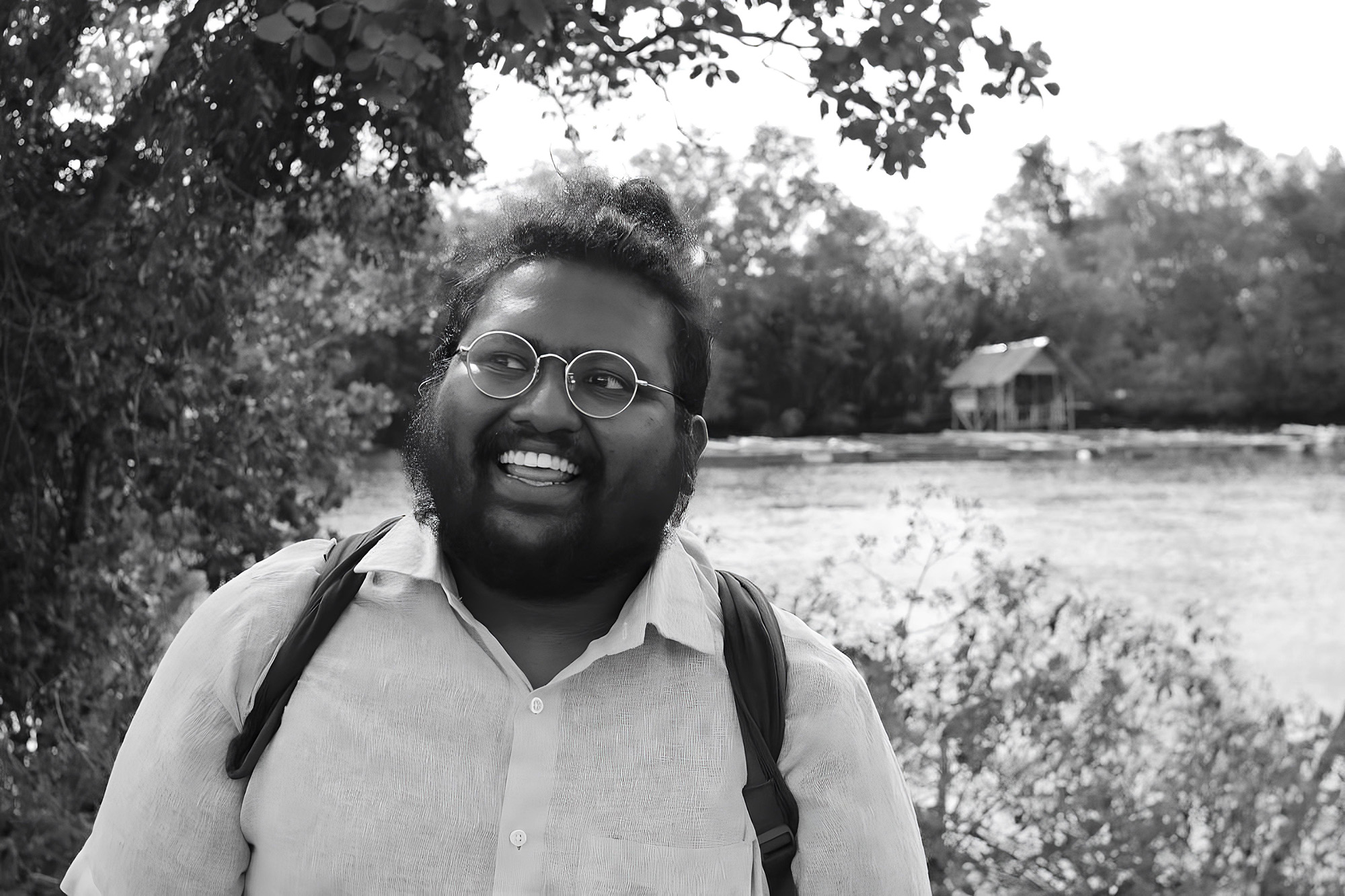
Architecture and filmmaking, in their essence, are the art of telling a story. This is what Gogularaajan Rajendran discovered and held dear throughout his journey as a filmmaker upon graduating with an architecture degree from Universiti Malaya.
Gogularaajan, or Gogu for short, had always been the quirky one in the class; always prompting conversations, and always sketching. And that camera of his… he never puts it down! His first forays into movie-making were his study trip vlogs and faculty events’ promotional skits.
Outside of the Design Studio, he actively created satirical Tamil videos about the Indian community for YouTube. Even though these were just for fun, they were the catalysts in developing a critical perspective on his community and craft.
“Through this experience, I made new friends and a group of young Indian artists passionate about films,” Gogu shared. “It was easy for me to transition to filmmaking as it wasn’t
a completely foreign world.”
Interestingly, Gogu did not immediately venture into the cinematic world after finishing his architecture studies. “I was hesitant… I was not confident I could make filmmaking my primary career!” Gogu exclaimed. Only 23 years old back then, the young graduate found a perfect excuse to postpone any important decisions by establishing an independent design studio with his classmates.
“We took on freelance design and video jobs, allowing me to dip one foot into architecture and the other into filmmaking.” However, the artist in him could only sit on the fence for so long. He has stories to tell! That’s when Gogu crossed paths with the Next New Wave Filmmakers’ Workshop.
ACT I:
YOUNG AND EMERGING
Next New Wave’s Young Filmmakers Workshop is no stranger to the Malaysian movie industry. Founded in 2015 with a noble mission to nurture young budding filmmakers in Malaysia, this initiative helps sow the spirit of experimentation and innovation in storytelling and technology. Next New Wave is also a platform for established Southeast Asia directors to share their experiences, opening Gogu’s eyes to the reality of the profession.
“During the workshop, I was surrounded by professional directors who were deeply invested and serious about their craft… and I felt like I had been cheating myself. Filmmaking isn’t something I could treat as a hobby or a pastime… This profession is a vast sea! To truly pursue it, I had to fully commit and be devoted to learning every aspect of the craft.
“Thanks to this workshop, I learned there was no room for pretence in filmmaking. It is a brutal art that will strip you bare, and reveal who you truly are and what you are made of. The only way to make films is to be honest,” said Gogu.
Architecture has always been intertwined with filmmaking, and they are not limited to the background and studio sets. In fact, architecture should not be reduced to merely a 2-second transition shot to indicate the plot’s location. Architecture and filmmaking, in their essence, are the art of telling a story. Both disciplines use space as their narrative: architecture makes use of the physical environment, whereas the movie industry utilises cinematic space.
We all know how stories flow: there is a beginning, body and ending. Architecture always starts from the front door… the entrance statement. Is the layout intuitive enough for them to traverse without signage? Perhaps this room would benefit from mood lighting. About this wall… let’s leave it deliberately empty so it doesn’t steal the limelight of the adjacent feature wall.
Likewise for a movie. The first five minutes dictate the audience’s interest to continue watching. Does the main theme and sub-themes stay coherent with the plot? Perhaps a darker ambience will help establish the actors’ raw emotions. About this scene… let’s clean up the messy backdrop so that audiences can focus on the story.
All these considerations, justifications, and decisions… It’s a never-ending cycle! For Gogu, storytelling is a process of translating a director’s dream into a visual and audio medium. It’s a practice of communicating what’s inside, efficiently to the outside. It might sound easy, but how would one devise dreams, emotions etc into something tangible?
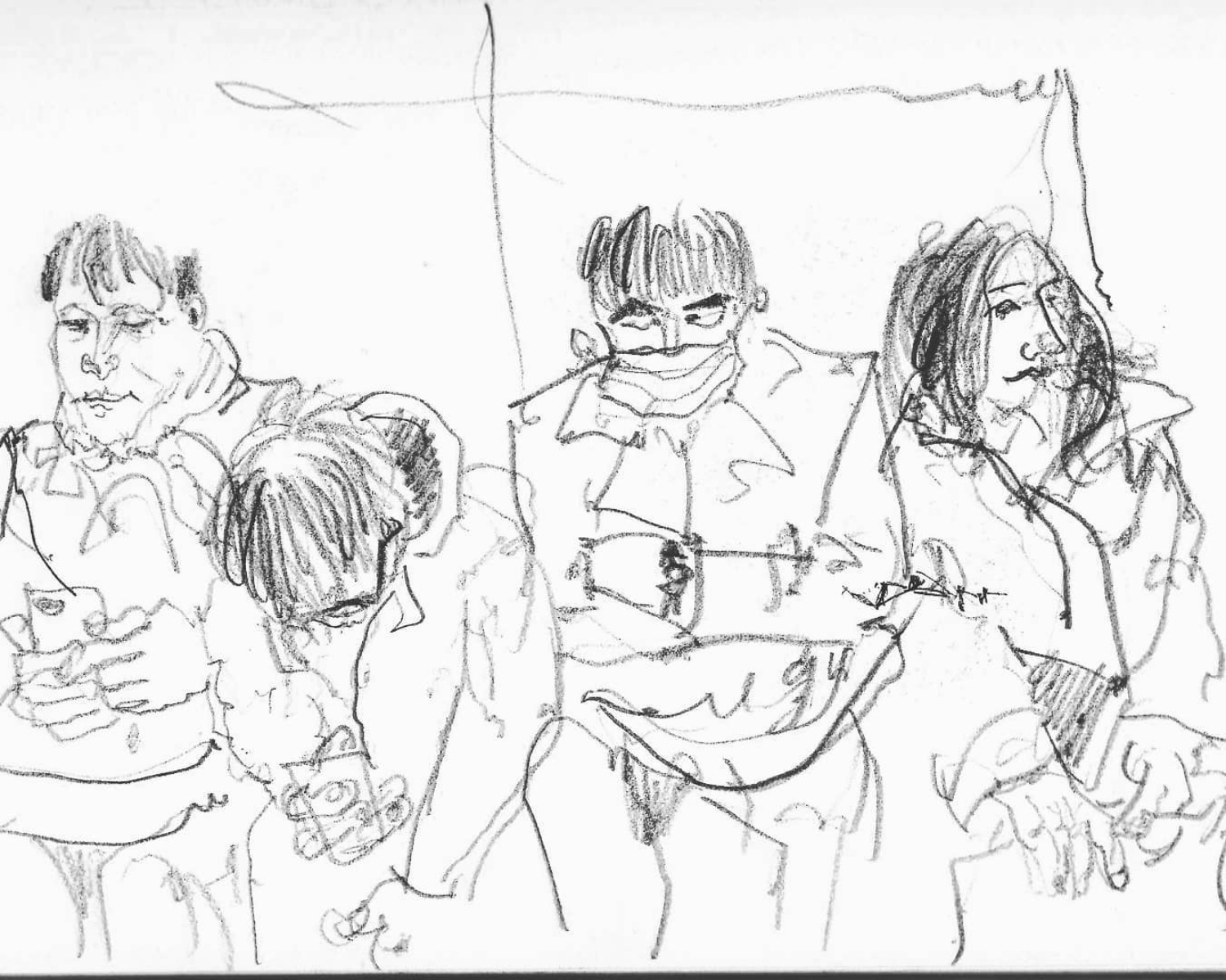
The 31-year-old director dedicated this find to a sketching class he took in university. Here, he was taught architecture is beyond a physical building: architecture is also about observing, absorbing and expressing in design.
“You don’t just look, you should also see. You don’t just hear, you should also listen,” was the lecturer’s mantra. Gogu took this concept to heart and quit chasing perfection. Suddenly, reality revealed its deeper side, leading his hand through countless movies
and recently the red carpet of Cannes Directors’ Fortnight.
ACT II:
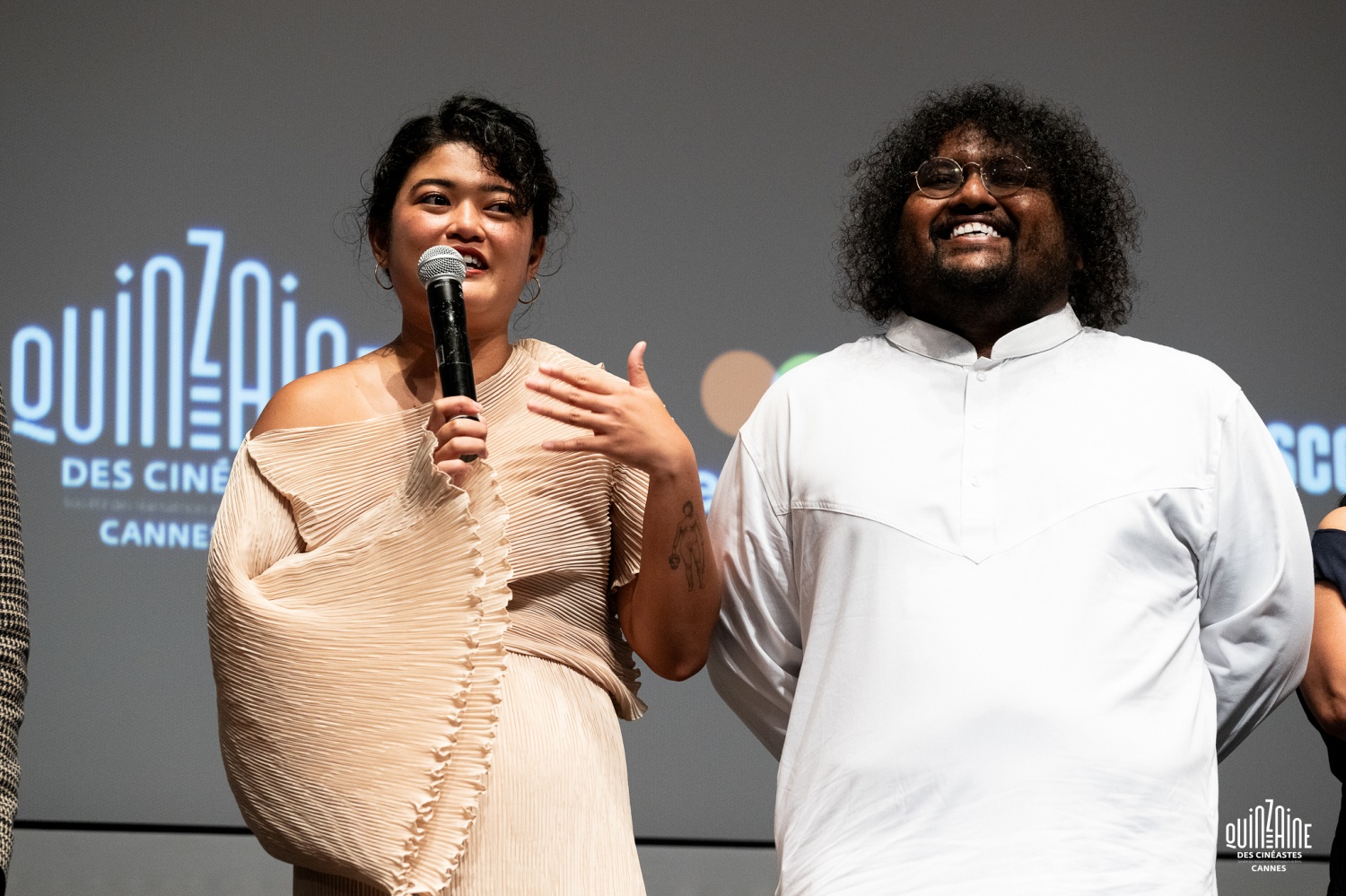
DEBUTING IN CANNES DIRECTORS’ FORTNIGHT
Cannes Directors’ Fortnight is a special section at the Cannes Film Festival, a platform for new talents to showcase their unique mode of artistic expression. It celebrates freedom of thought and innovative forms of dialogue, representation, and editing. In other words, the art of storytelling.
Under the Directors’ Fortnight is the Directors’ Factory, aiming to foster new talents on the international scene. The Factory partners with a new country every year to mentor eight promising filmmakers, pairing up four directors from the host country with four other international directors. The resulting short films will be screened as part of the Directors’ Fortnight, aka Quinzaine des Cineastes.
During the programme’s open call in 2023, Gogu pitched his feature film, Kaali: The Depth of Darkness. His storytelling earned him the opportunity to work alongside Filipino director, Eve Baswel. Together, the duo co-wrote and co-directed a short film titled Walay Balay.
Walay Balay tells the tale of a mother and daughter from Marawi, a southern island of Mindanao, Philippines. When a war breaks out, the duo is forced to evacuate to a temporary abode by the sea. The story starts eight years later when they are informed they can finally return to the rubbles once called home. Conflict arises as only one of the women chooses to return.
There are many ways to capture this tension, and Walay Balay chose to play with colours. Or, precisely, the lack of colour as Gogu and his team curate this drama in black and white.
The 31-year-old director believes that black-and-white mediums have the power to penetrate the souls of the characters. This colourless cinematic space inherently cuts away all the distractions of the external world, returning the focus to the internal landscape.
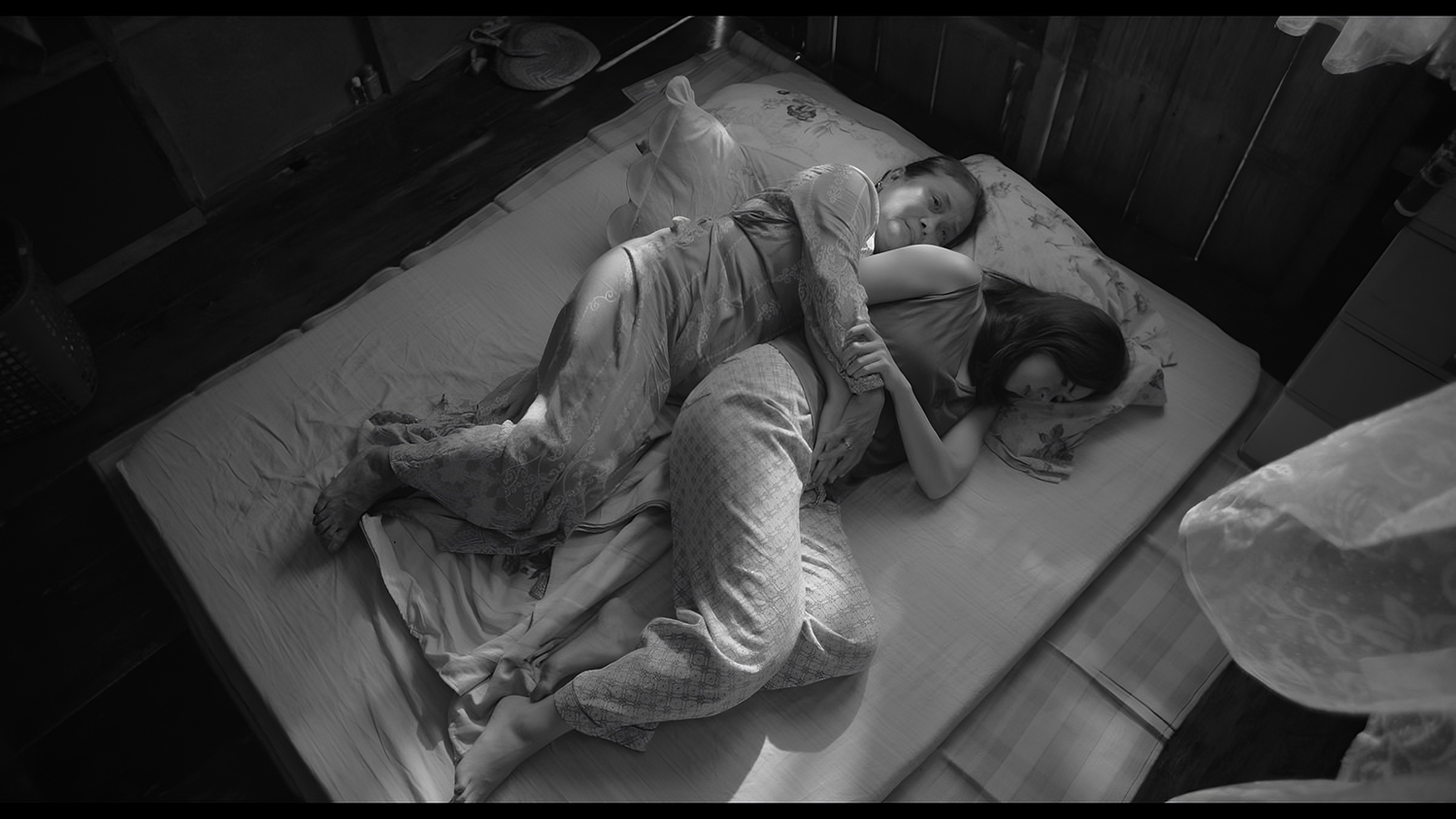
Composition, light and shadow suddenly mattered. One of such is this still published on the Cannes Directors’ Fortnight website, where the mother and daughter share a mattress in their temporary abode.
The mattress feels like the house itself: it occupies the entire space! When asked about the thought process behind this giant mattress, Gogu confessed the original plan was actually much tighter… he wanted the mattress to cover the whole frame!
“There are logistic problems, so we stick to this perspective,” Gogu laughed. “Even then, I feel this angle gives more life to the frame.” It definitely is. The cheeky sun rays snuck into the negative space of the dark house, drawing the eyes to the positive space of the white mattress and two women. The grief on the mother’s face. The daughter was solemn, refusing to meet her mother’s gaze, yet tightly clutching her hand.
Such rich emotion from a singular still. “This particular shot comes at the very end of the film, when these two characters who have drifted away ever since the arrival of the letter… finally accept their differences and acknowledge each other’s pain by slowly, but also awkwardly, coming together into an embrace.
“We wanted to express this tingling feeling of something that has been so long apart, finally coming back to meet each other. There is a little turbulence due to the long separation; with gentle persistence, they fit perfectly back. They are complementary,” Gogu explained.
Walay Balay discusses the concept of “home”. A home is not a house; it is not confined to the built environment, but rather the sense of longing and varying associated experiences. Or perhaps there’s no home? After all, “Walay Balay” means no home in the Filipino language.
ACT III: SENSATIONS, ON-CAMERA AND OFF-CAMERA
Exploring the various interpretations of “home” is quite challenging, if not almost too abstract to work on. How does Gogu manage that? Will it not grow too heavy for one man to bear? Surely he’ll reach a point in the journey where he meets creative impasses… or even worse, burnout?
“One should always start with a strong vision,” Gogu explained. “A vision that matters enough, that is precious enough for others to invest their heart into, and work with passion as if it’s their own.”
Next, he needs to have faith: in himself. Almost everything about Walay Balay is Gogu’s first. His first film in was in the Philippines. His first story revolves around a political war… and telling them a foreign language. These are almost everything that he is not. Things are trickier for Gogu, the man who wears the Director’s hat. He has a team of people waiting for his answers to everything.
Gogu equated the confidence of an artist to the soul of an art, i.e. the foundation of their creative expression. If the artist is pounded by self-doubts, it’s their art that suffers. And fear will only impede the artist’s growth.
The good news? Confidence and faith are not fixed principles. They could be cultivated.
“Confidence is not merely something that magically appears, but something that you build over experience,” Gogu reflected. “And when I completely surrender to my faith, something more beautiful manifests itself. You would be surprised at how your heart has the ability to expand
and adapt!”
However, self-doubt is not necessarily a bad thing. Instead of viewing them as creative blocks, the Malaysian young director treated them as motivators to create better work. The more he acknowledged this place of lack and his limits, the closer he felt his art fitting his taste.
“It’s almost like a constant backand-forth journey between light and darkness. There is no birth without darkness; likewise, there is no blooming without light. Both are essential for growth and creativity.”
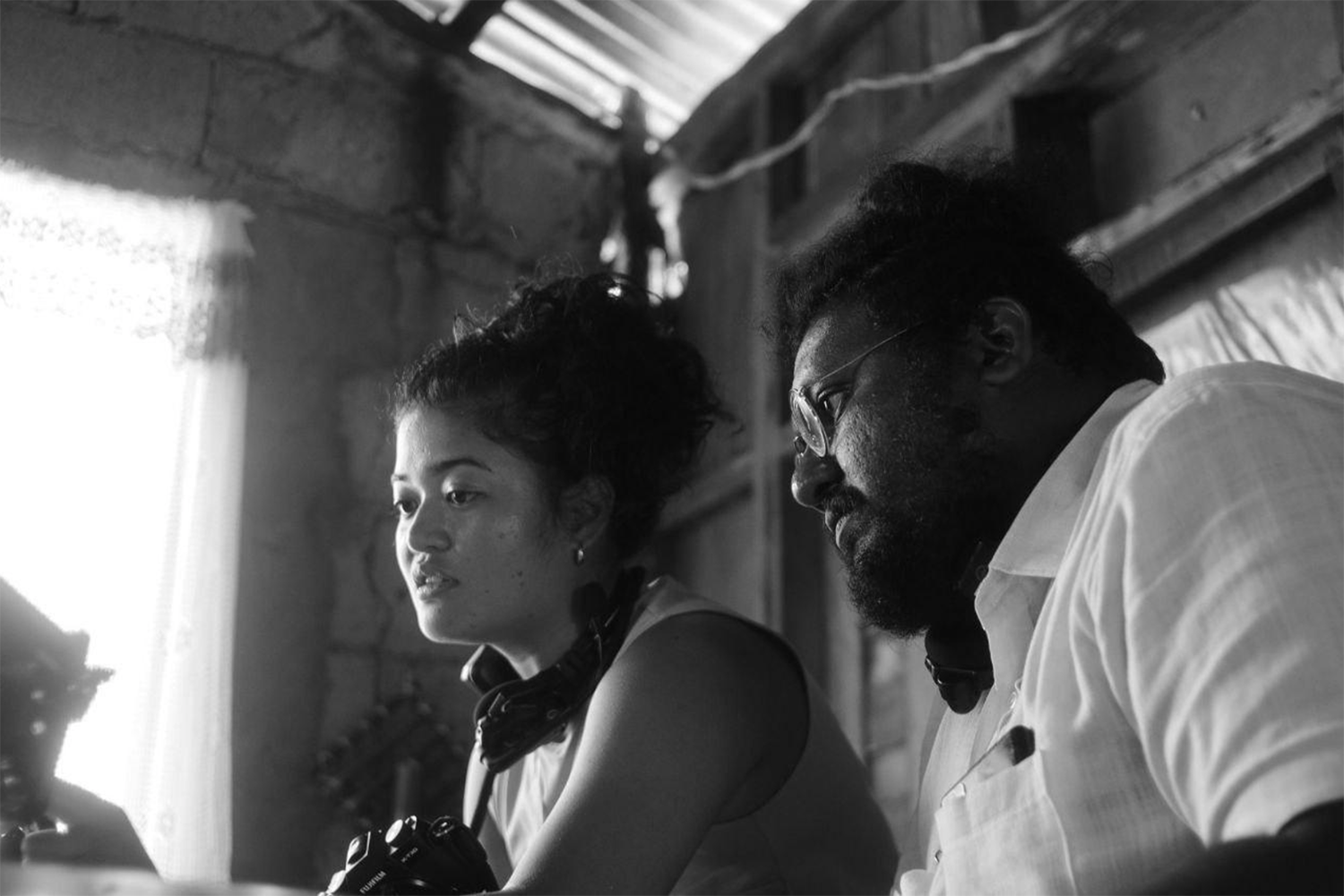
Apart from instilling confidence in his skills, Gogu learned to also have faith in the people he’s working with.
“A vision is dynamic: it grows. When collaborating with my team, I see how my vision grows but still retains its essence. That’s why it is crucial to assemble the right team: the ones we can trust. They are not merely labourers who built the work for me, they are also creative contributors who open their hearts to own the movie as their own. Each of their energies affects how to film shapes.”
Yet another similarity in architecture and filmmaking: collaboration! An architect’s sketch remains a design concept if the engineers, specialists, contractors etc are not in the bigger picture. Likewise, a filmmaker’s vision remains a dream if not for the crew of technicalities, logistics, lighting… and the list goes on.
“I’ve been very grateful to have talented and wise producers, Weijie Lai and Kuma,” Gogu added. “These are the people I work closely with, trying to make sense of my crazy ideas and bring them to something partially tangible.
“Once we get the right people, it’s all about spending hours and hours of talking, discussing and exploring ways to manifest the ‘dream’ in its most potent form.”
EPILOGUE:
WRITING THE FUTURE
The Cannes Directors Fortnight may have only wrapped up, but Gogu already has a few projects up his sleeves. Talk about being one of the most promising Malaysian directors!
“I’m currently working on my first fiction feature, Kaali.” Yes, Kaali: the Depths of Darkness… the very same feature film that earned him a ticket to Cannes Directors’ Fortnight.
“The research materials will also be used to produce a complementary documentary,” each of Gogu’s syllables is rich in excitement. “Both of these films explore the Malaysian Indians’ past and history in the plantations… I cannot wait!”
Ah, those beaming eyes of his. One simply couldn’t miss the spark of exhilaration whenever he speaks about his work. The thrill of creating something new, the passion in designing every detail. The joys of meeting new people and exchanging stories. The satisfaction of finally seeing the project standing tall… Let’s do it all again! Perhaps architects and filmmakers aren’t so different after all!
AUTHOR’S NOTE
Truth to be told, storytelling exists in every aspect of life. Even this article is based on the art of storytelling: the back-and-forth conversations between AM and Gogu, the brainstorming for a writing theme, the repetitive editing to test the reading flow… and the list goes on.
This skill is even more apparent in Gogu, whose mind contains the wonders of an architect and a filmmaker. I like to think his artistic adventure has come to a complete circle: the architect’s side of him designs the external landscape, while the filmmaker he is now completes the internal.
It has been a great pleasure to listen to Gogularaajan’s journey. I wish him all the best in his future endeavours, and may we see more of him in the Malaysian cinematic world. Cheers!