
Art books, zines, monographs, magazines, photo books, chapbooks, printed matters, limited editions, and more. These are a selection of categories on offer at Malaysia’s largest art book fair – the Kuala Lumpur Art Book Fair (KLABF).
But what is an art book fair, and why is it important? Art book fairs are curated fairs or exhibitions to display, sell and network between artists, art book creators, independent publishers, and the audience. Art book fairs are less formal than traditional book fairs, normally having an energy and culture of the artistic community. They are a way to interact, collaborate, and learn from each other. The general term of art books can encompass many different expressions, such as magazines, graphic novels, zines, creative writing, poetry, and many other types of publications. The first art book fair was started in New York as the New York Art Book Fair (2004) by Printed Matter, and subsequently, other cities started hosting their art book fairs to showcase and provide a platform for artists in their home country, such as Tokyo Art Book Fair (2009), LA Art Book Fair (2013), and now Kuala Lumpur Art Book Fair (2021).
For Driv Loo, founder and Art Director of LIE Design, art book fairs are an inclusive platform and genre-ending. “Photographers, designers, illustrators, and even architects all have their trade fairs. They are fairly niche and targeted to their own. But with art book as a general and encompassing term, this book medium could gather people from different genres together which is very nice for me. You could check on what other people from other professions are doing that you might not encounter usually. These are the happy things that happen in art book fairs.”
THE PEOPLE BEHIND KLABF – LIE DESIGN
The people behind KLABF are LIE Design, the design studio behind iconic designs such as One Half Coffee, Niko Neko, Piu Piu Piu, and many more. LIE, which stands for Little Ideas Everyday, are passionate about design and is involved in a diverse range of visual communication projects. Constantly practising and seeking fresh approaches every day, and not sticking with the norm or patterns, they believe there’s always room to explore in design.
LIE not only works on graphic and art direction for brands, but they are also passionate about their publications. They started their risograph zine, Lain-Lain, in 2018, where they wanted to depict “the spontaneous and playful attitude in the process of creating while exploring the possibilities of the everyday objects and matter that often go unnoticed through graphic elements and storytelling; in an attempt to give them new meanings that could hopefully inspire us to keep our minds at play and ideas going, little by little”.
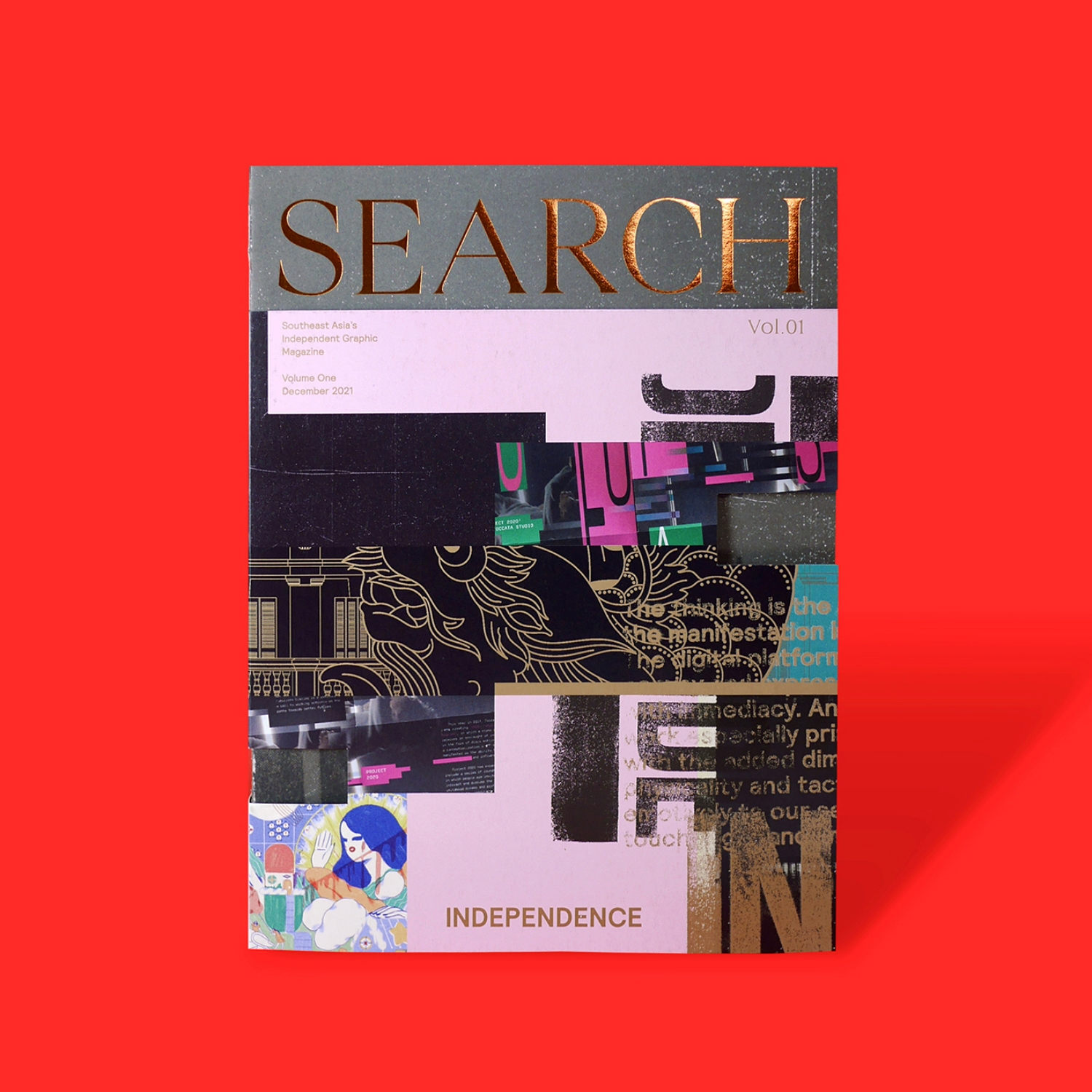
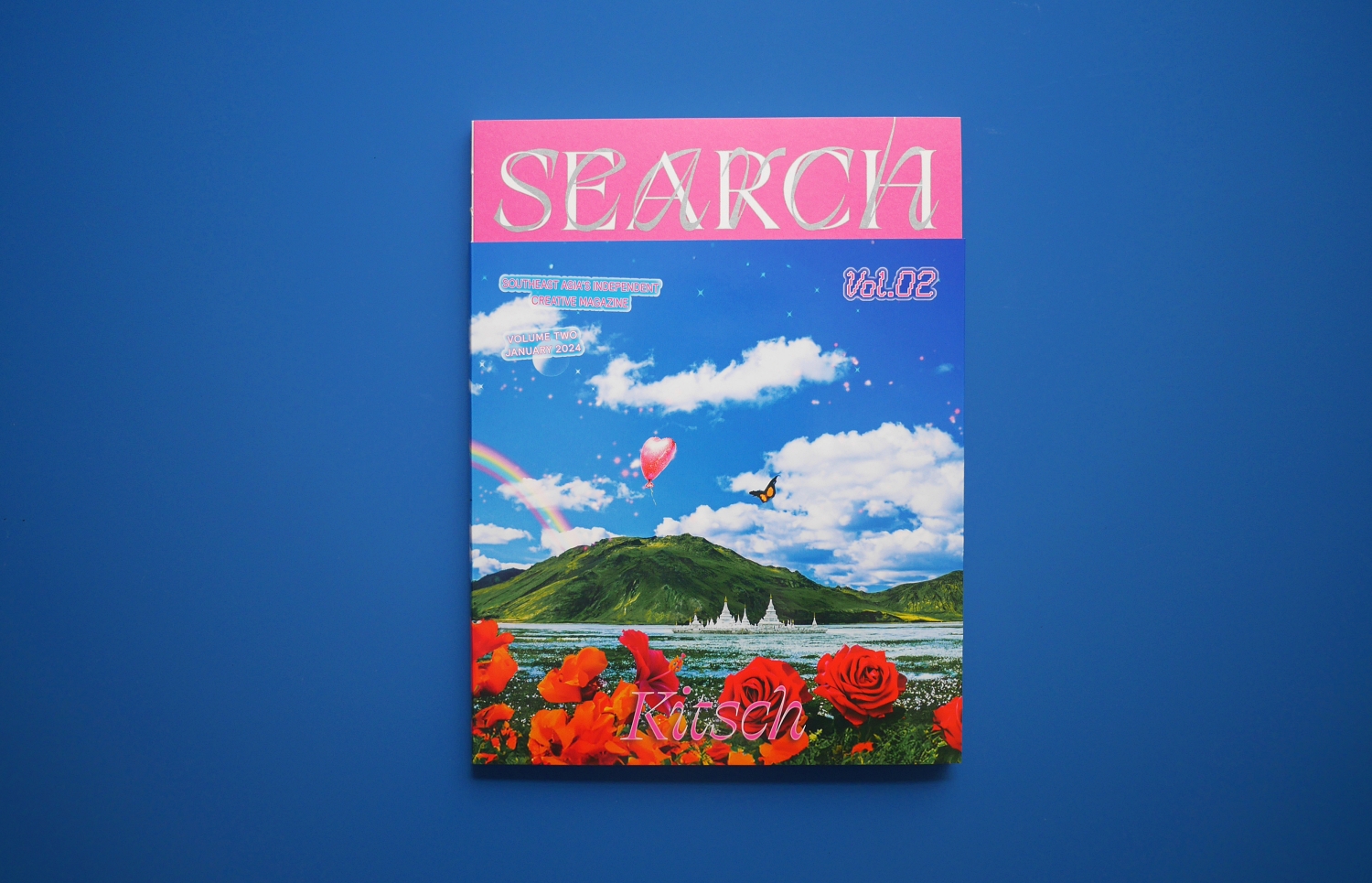
Other than zines, LIE has also produced its first self-published book, SEARCH, showcasing 40 Southeast Asia graphic design studios and a range of design works, peeking into their creative process and showing the diverse portfolio of Southeast Asia graphic designers. The book eventually led to the publication of a magazine of the same name, focused on uncovering and investigating the designs, subcultures, and changemakers that are reshaping the creative landscape of Southeast Asia. Each issue takes a single theme and explores it from a design point of view, with a focus on local and regional perspectives and narratives about design.
Through the publication of their book and zines, LIE got to travel and participate in different art book fairs across Asia, such as Singapore, Tokyo, and Bangkok. Through their experience, they were able to participate in the wider artist community and brought home the experience and ideas with them. “We really enjoyed our experience in the art book fairs throughout the years, so when we came back, we wanted something similar for KL,” said Loo. “We waited to see if anyone would organise something for the local art book scene. But when nothing came up, we decided to just do it ourselves.”
Working off their initial idea, the first thing they created was the all-important Instagram account (@klartbookfair). However, as they started their plans, COVID came around and put a pause on their plans. As 2021 rolled around, people started reaching out. “People started to reach out to us and ask, ‘Hey, I saw your Instagram account, is it still active?’ And I thought that since we had venues contacting us, we might as well try. And that was how it began.”
DESIGNING AN ART BOOK FAIR
One thing that catches the eye of the masses is the intricate posters designed by the team. Each year it explores a different theme, whether it be a type of print or an idea. “How do we select the theme and design? It’s very random.” laughs Loo. “The way we do it is free and easy.” They take into consideration multiple different things when creating the design, from the venue, and the type of printing, to the type of paper used.
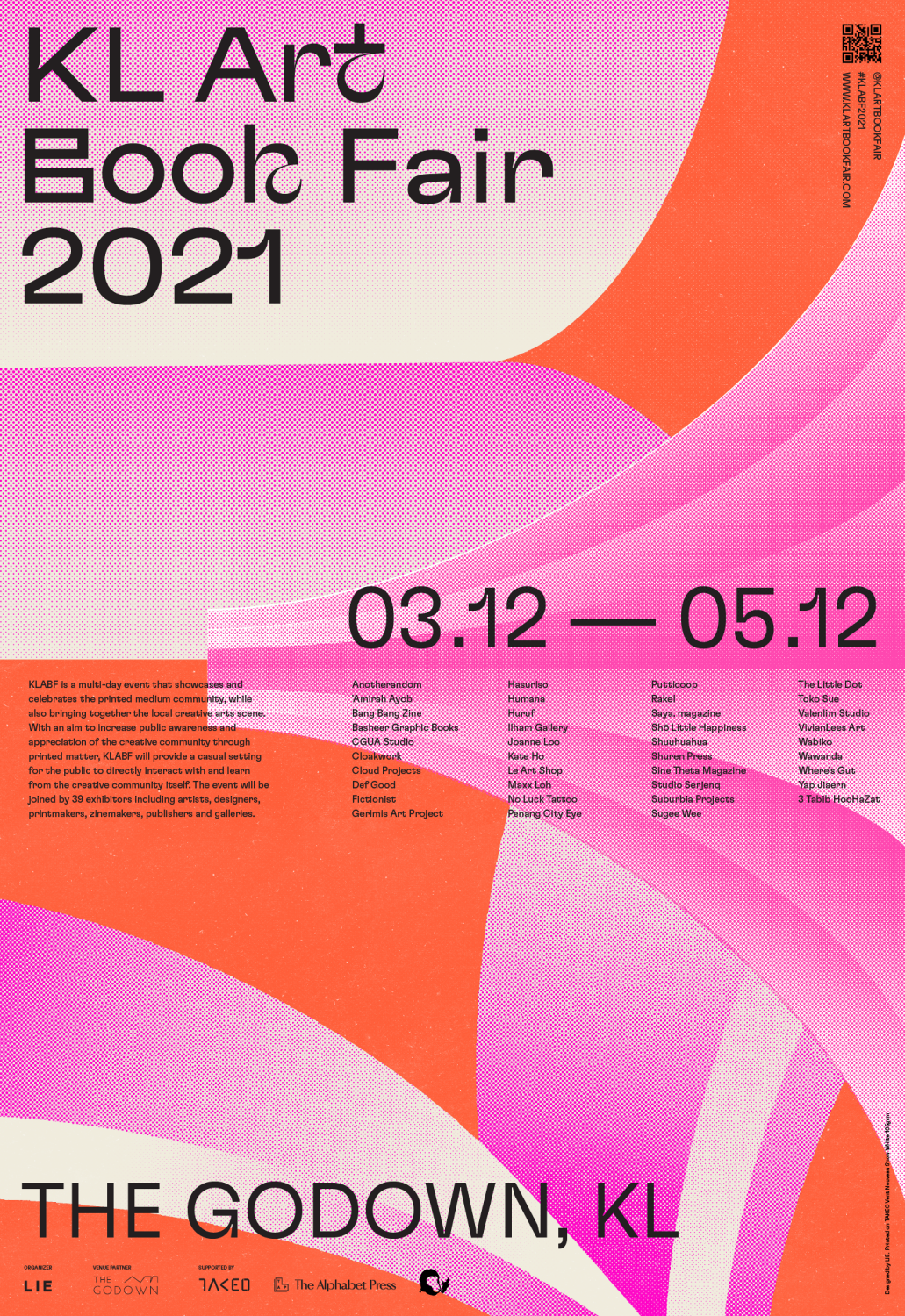
For the first year, the team wanted to introduce the idea of printed materials to the public to appreciate printing, so they created a risograph-like print using offset printing. The fluorescent oranges and pinks along with the dotted print texture reminiscences of risograph printing.
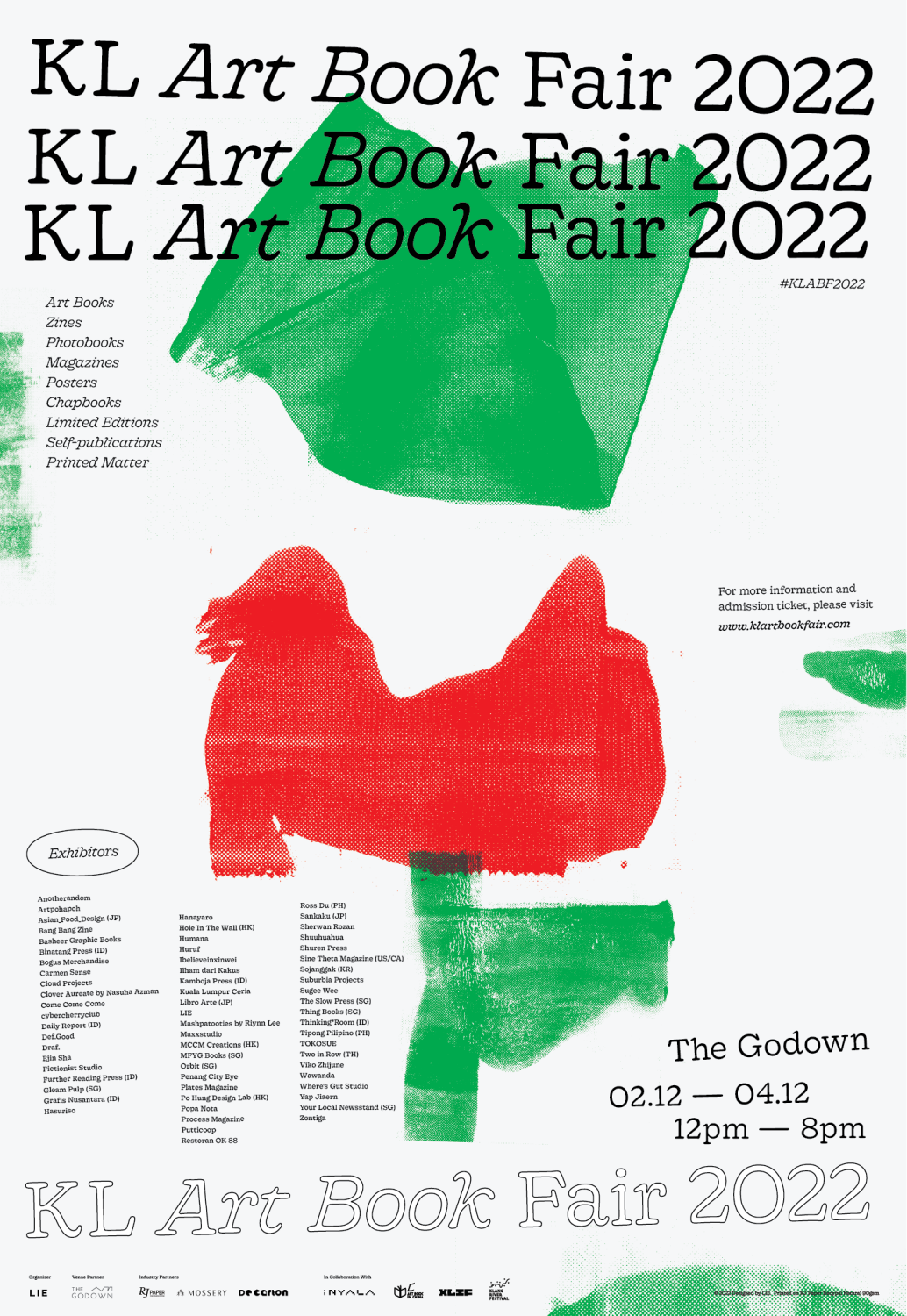
The following year, they wanted to showcase the DIY spirit, akin to their journey and process of setting up the art book fair. This was also the year the art book fair included international exhibitors. They wanted to invoke and inspire people to do something, as well as to create something grungier. The design is a take on roller flowers, where rollers are used to create the flowers, stems and leaves, as well as making use of folding techniques to create the unpredictable and grungy aspect.
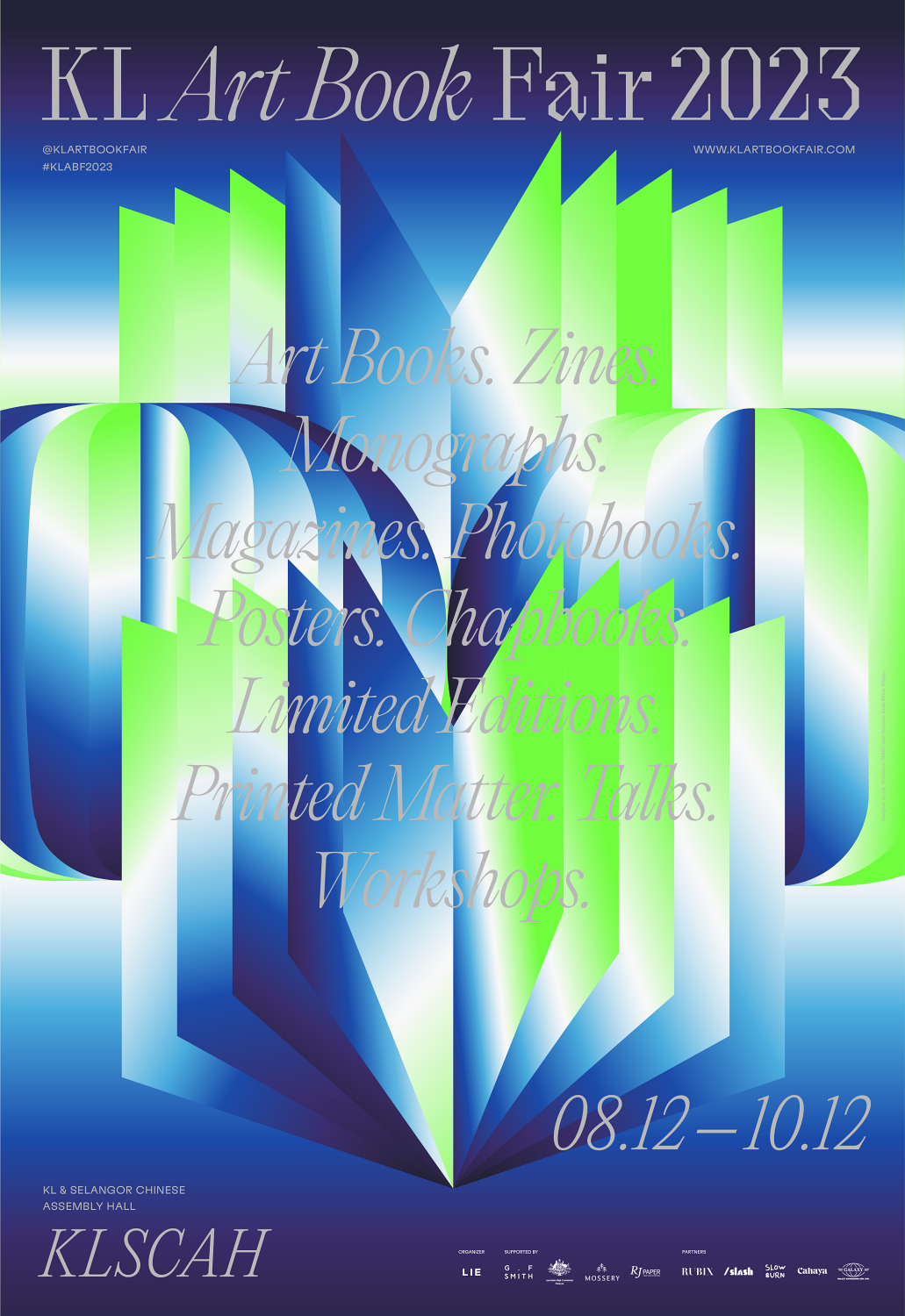
In their third year, as they moved to the Kuala Lumpur and Selangor Chinese Assembly Hall, they were struck by the heritage building. “It was very classical and historical, so we wanted to have a contrast in our design.”The design was futuristic, an abstraction of the pages of a book flipping open, with vibrant greens, blues and silver. The choice of paper used for the poster also differs from the previous year. Where the previous posters used matte, uncoated paper similar to that of thick newspaper, this year uses glossy, shiny paper to contrast against the historical building. The glossy paper stands out from the surrounding brown walls of the venue.
LAYOUT AND STORYBOARDING
Planning of the art book fair was a gargantuan task. LIE is a small independent studio of three to four people, without any event organisation experience of this scale. “It was very daunting for sure. We were doing everything ourselves, from the design to the website to ticketing, to managing vendors, to crowd control. We just wing it and just whack only. For the first year, we were just learning as we go and getting used to the procedure, ensuring that the earning was enough to cover the cost.”
For their inaugural event, KLABF was held at the Godown in 2021. Due to COVID restrictions, the event was limited to only localvendors. “We weren’t sure how many vendors we could get at first, as there aren’t many people or independent publishers doing zines or indie publications. We’re not like the big book fairs like Big Bad Wolf or Popular.
The call for vendors was put out and the team went through a screening process to get a mix of different artists and mediums, ranging from indie artists, designers, photographers, publishers and more. The criteria that were set out was that vendors had to have at least one publication.
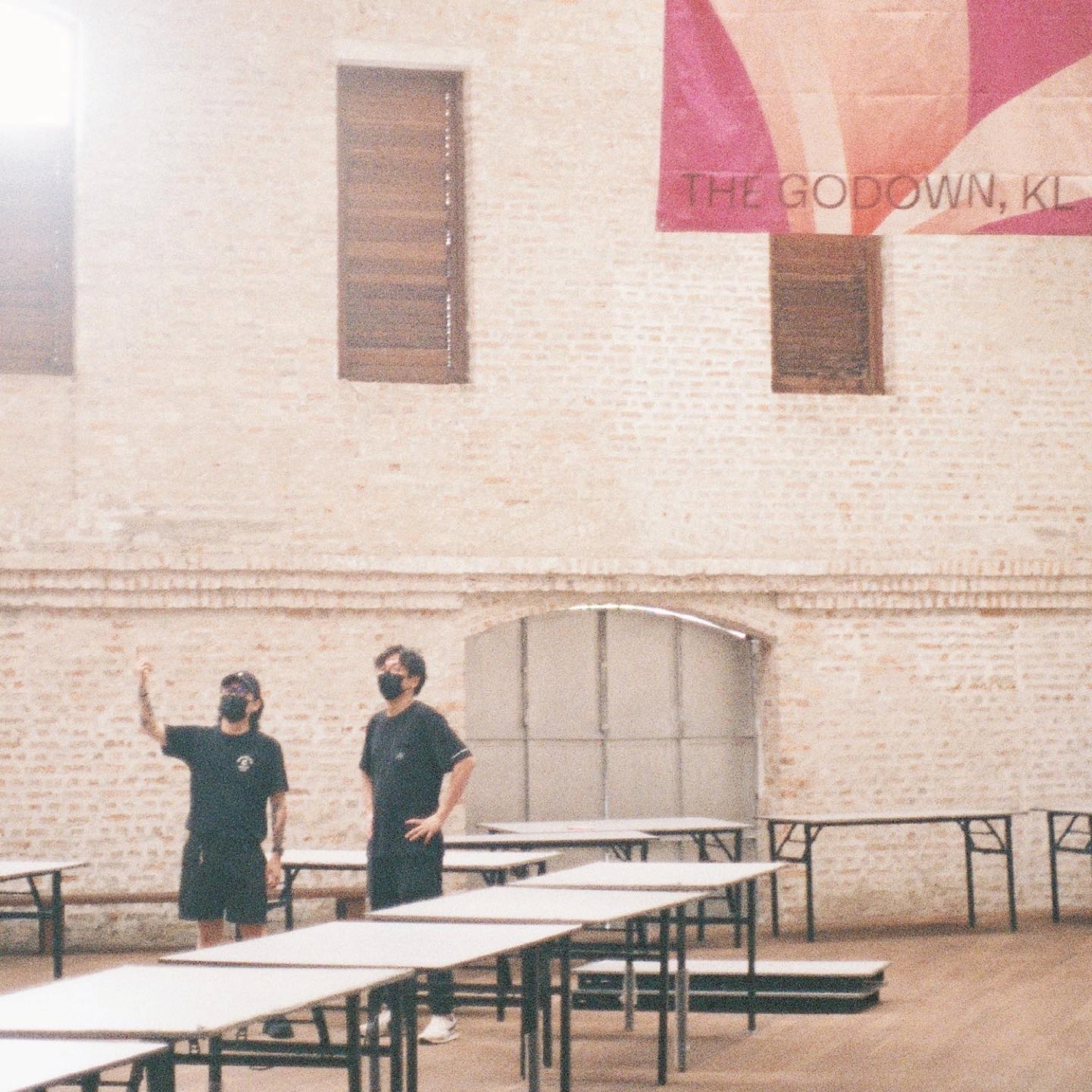
“It was our first time, and I think because of that it gave the event a more infortmal feeling and a certain kind of creative buzz. On top of that, we were in the middle of opening up from lockdown, everyone was just excited to be there.” In the first year, the art book fair was marketed solely through word of mouth and social media. “Surprisingly, our Instagram engagement is quite high,” said Loo.
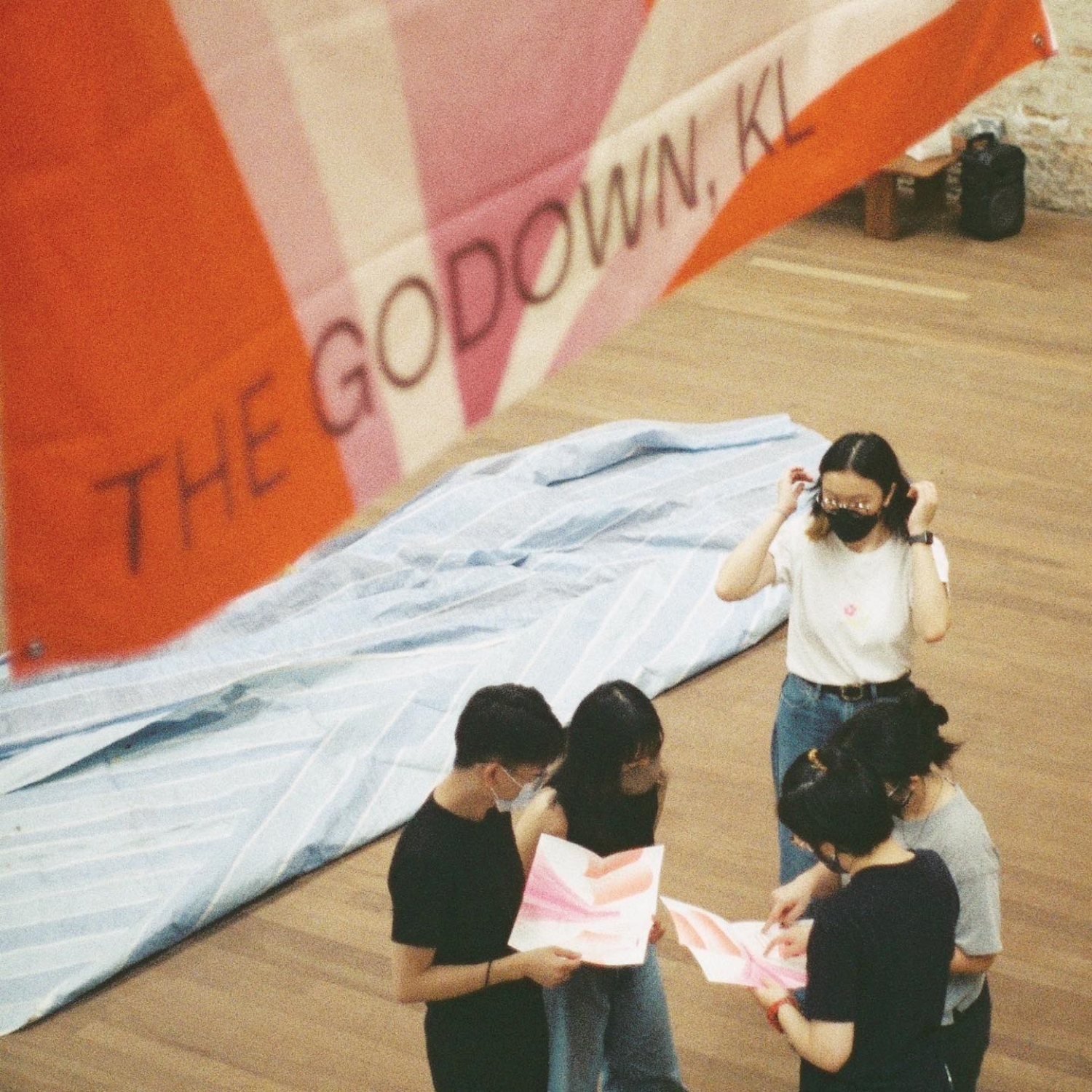
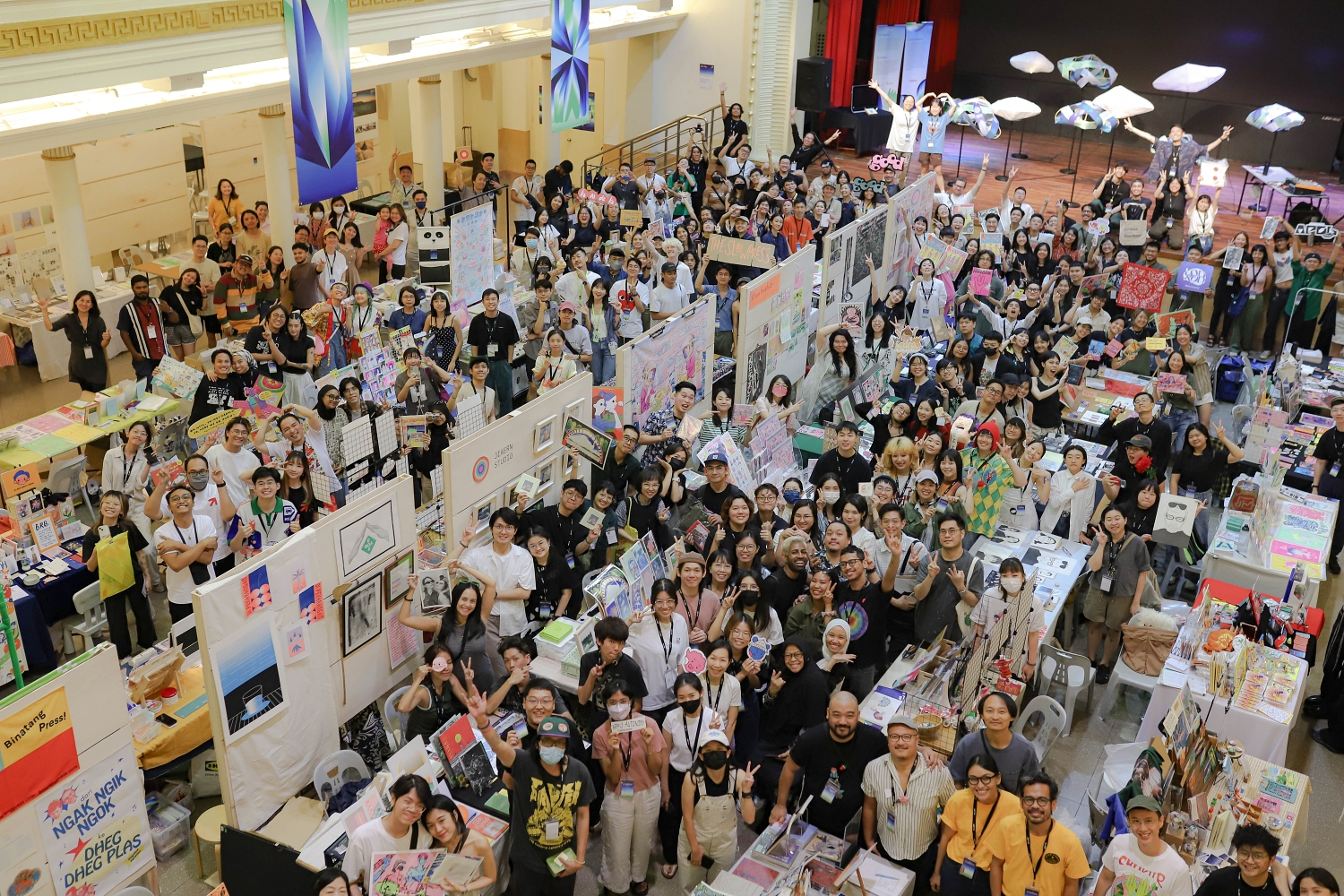
KLABF has grown tremendously in over 3 years, from having 53 vendors in 2021 to 121 local and international vendors in 2023. Across the 121 vendors, the team tries to get a good mix of different kinds of printed materials, such as monographs, zines, and prints. “In Malaysia, we have a lot of comic artists, so we had a lot of comic artists and illustrators coming to apply for it. We try to limit the number of vendors from the same genre and get different mixes such as the same genre but using different prints. For us, we try to have a mix of a bit of everything. We even had someone who published his poem book, and that was a really interesting mix.” KLABF also invites international exhibitors from around the world. Loo explains that in arranging the exhibition, he carefully tried to put in international exhibitors amongst locals to spark interactions. “I try my best to allocate people with similar styles together. Then when we put them together, they would automatically mix and learn from each other. Sometimes we also had to put contrasting styles next to each other, perhaps due to the space constraints, we might put them together at random.
THE GROWING VIBES
What makes KLABF so special is the special vibe that it brings. “There is a different vibe as compared to the Singapore art book fair. We had media who attended both events and they told us, ‘I actually kinda like the vibes here in Malaysia.’” Perhaps it’s because we had just started, we had this indie, independent vibe to ours. We’re still figuring out our approach and procedure, and that lends itself to a more indie, artsy, energetic vibe compared to [Singapore Art Book Fair] who have been doing this for many years now.” The Singapore edition is quite established within the art book fair circles, and they tended to attract larger publishers with a larger catalogue of books and magazines. “Some of our exhibitors did reflect to us that there weren’t enough books in our art book fair, as most of the products are mainly art prints or stationaries. Compared to Singapore who have well-known publishers with many books and magazines” Loo said that for KLABF, they try to balance a mix of artist designs with books and publications. “I like that kind of mixing; the early stages of exploration and experimentation are exciting for me.”
With the growth of the art book fair, there are also pressures of scaling up operations. Vendors pay to rent a space within the fair, which is used to pay for the venue. The ticket costs cover the operational cost of the team along with all the printing and materials. What’s most impressive is that the book fair is organised without any sponsors. “We don’t have any corporate sponsors. Once one gets too established, there would be corporate sponsors and more coming in, and that might change the tone of the art book fair. I would like to keep the kind of freedom, creativity, and spontaneity we have now of doing whatever we want without the influence of sponsors.”
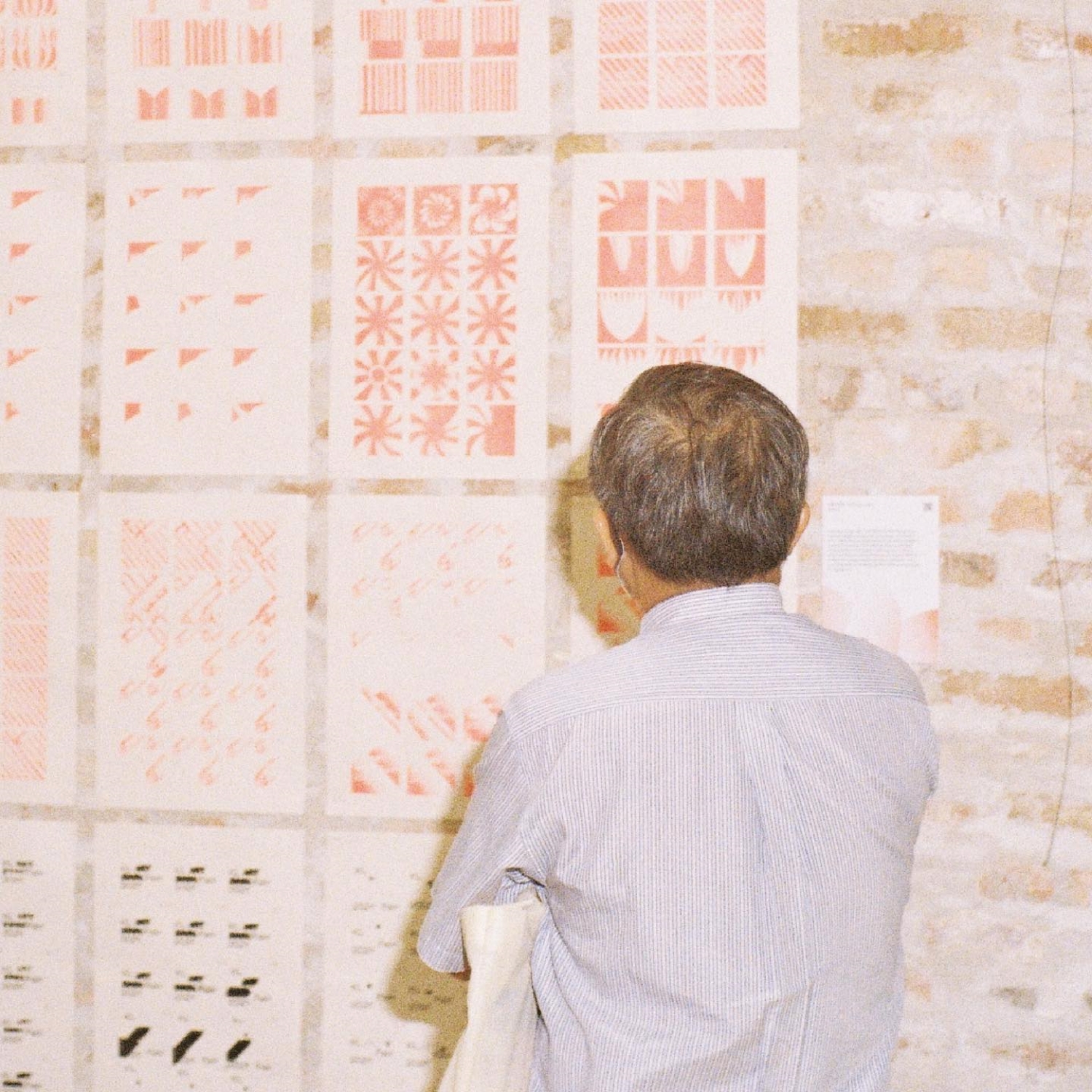
As more and more people take part in the art book fair, the experience that the audience is getting is of the utmost importance to the team. Loo explained that they do limit the number of tickets sold to give everyone the best experience possible. “The first year was the best experiencein my opinion, because we had time slots due to COVID restrictions, but that also allowed everyone to have the time to browse and talk to the artists.” He also agreed that he wants more people to be able to come and that they do have the capacity to allow more audience members, but they also want everyone to be able to interact and be inspired by the artists, and too many people would crowd the halls too much to be conducive to foster interaction. “From the exhibitors’ point of view, they want more people to come in to sell more books, but from our point of view I also want everyone to have a good time, so it’s to balance expectations for everyone.” Theyhave worked with an events team for the 2023 edition to facilitate the crowd control and internal flow of the exhibition to get the best experience for everyone involved.
WHY ARE ART BOOKS IMPORTANT?
“I think it’s really important for creatives to make something, to produce something. We have a lot of young talents in Kuala Lumpur, but we don’t have a platform to showcase them. We have artists, photographers, design studios and so on, but they don’t normally participate in [mainstream markets] and they don’t produce stuff for the general market. So art book fairs are important as they’re different from traditional markets, and more niche. And because it’s an annual thing, it pushes creatives to create something, like an artwork or a product to showcase. Even for us also, we would think, ‘What do we showcase for next year’s art book fair? Our magazines are gonna be old by that point.’ So, it does force us and the wider creative field to publish something which I think is a very good energy to have and allowing them to have a platform to showcase their stuff every year.”
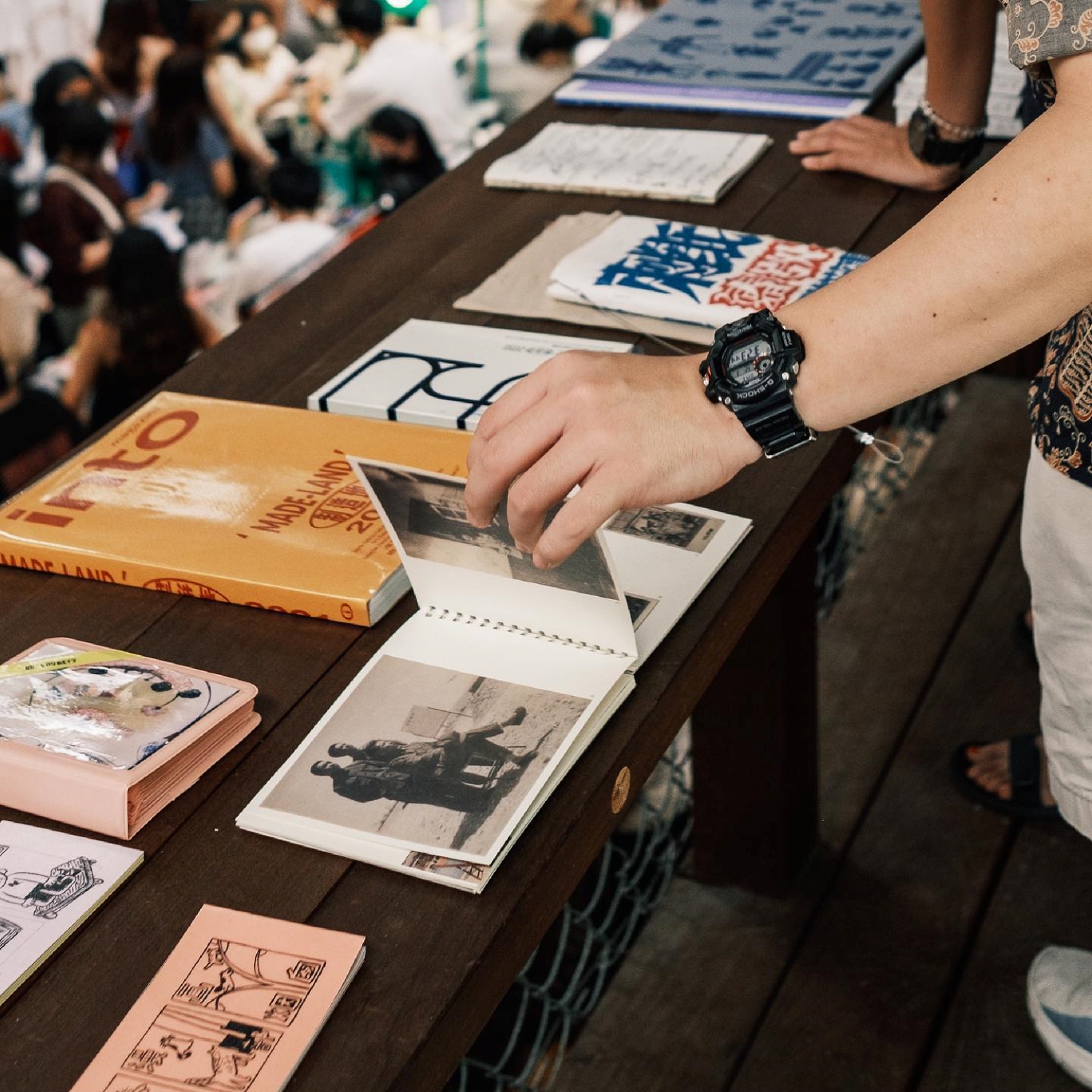
To Loo, art books are a part of the creative practice itself. Growing up in a time when there weren’t many digital mediums, books were the main source of information and inspiration for Loo. “All the information I’ve collected and learned was from books. Nowadays, everything is accessible by the internet, but to me, books are still a good medium to transfer knowledge and it’s something you can keep and touch.” Of course, Loo agrees that books have taken on a new position in society.“In the past, any information that we have, we could put it into the magazine and publish it every week. But nowadays, this kind of information is easily replaced by the digital medium. So, to me, books have a different function, in that they are more akin to collectables or an archive. It is something that people take time to craft and design, and it is something that you can keep and touch.”
Every publication goes through the process of filtering, analysing, and curating. The creative can learn, analyse and develop ideas through the curation process, ultimately expressed in a creative medium of the book.
BEING INDEPENDENT
One of the key highlights of KLABF is the gathering and showcasing of independent publishers and artists in one stage. “I think it’s very important for us to have independent publishers within the creative scene,” said Loo. “When I first graduated there weren’t a lot of options, we could only go to big agencies doing advertising and more. Nowadays it is actually more diverse with more independent and indie publishers. Just like music, there used to only be big music labels, but now with social media, we see a lot of independent indie artists, and you could become your own label.
Perhaps it is due to my personality, I think that being independent gives you freedom and allows you to express what you want to say. That’s the beauty of being independent.”
Loo previously worked with large advertising agencies in Singapore and Shanghai, working on projects with big clients such as Nike, Coca- Cola and more. However, he explained that within an agency structure, there are a lot of layers to go through for a project. “You have the art director to approve the designs first, then the creative director’s approval, and it’s to the clients, which then goes through target market research. If it fails at the research stage, then it’s back to square one. It’s a long process, and you have to take care of a lot of things, which might end up with a generic design that has to suit everyone’s taste. In the end, I got fed up with it and thought that I should just do it by myself, and that’s how I started my own studio.” Loo shares that in his studio he tries to do everything and not be commercially tied to one particular client, and that affords him the freedom to choose the type of projects to take on.
WHERE ARE ART BOOKS GOING?
With the rise of digital mediums, more and more people see the digital being an easier avenue for them. Digital art books open up different possibilities, such as incorporating animations and motion graphics that printed materials are not capable of. When asked if digital art books would still be considered art books, Loo reflected, “I don’t want to be too conclusive, because who knows what might happen in the future right? But I think at the end of the day, as long as they still deliver the knowledge and message, they could still be considered an art book. Perhaps they serve a different function or purpose.” He gives an example of kids’ books, where the animations could help engage and stimulate interest in a child. “If you use it in a good way, I think it’s still a book, perhaps a subcategory of art books.”
Would digital art books be considered to be included as part of KLABF? Loo ponders, “I think it would be a no for now. We come from a very traditional graphic design and media background, and we do prints and publications. So, we want to celebrate and preserve the part of design that focuses on printed materials and the art of printing it-self. We want to educate the younger generation on printing, like risograph printing, silk screen printing and so on. Even with offset printing, what kinds of paper and textures are important to consider?“ The digital medium could be a supporting or an extended experience to a publication, and that could be something I could consider including in KLABF with an exhibition. It could include the use of projections on paper or augmented reality. However, the main core medium should still be the printed matter.” Malaysia is just starting to get its footing when it comes to art books, and looking at art books on a global scale, Loo shared that some interesting things are happening in other countries. “If you look at art books from Singapore or Japan or even China, there are so many more interesting things going on. They have many photobooks, crazy printing [methods and products], and they have more indie publishers.” Loo shares his hopes that there will be more serious independent art book publishers in Malaysia. He hopes that there would be more independent publishers focused on art books, rather than just prints and products.
HOPES AND DREAMS?
The global art book community is energetic and vibrant. Larger publishers travel to pit stops of art book fairs across the world, from Singapore to Bangkok, to Tokyo and so on, sharing and learning from each other. And Loo hopes that Kuala Lumpur could be one of the stops for international publishers. “One thing cool about KLABF is that we have a lot of international exhibitors, and they are always excited to come and share. In Kuala Lumpur, we don’t usually get to see this kind of interaction, and the kind of content they bring and create is seldom seen anywhere, so it’s very refreshing to see it at art book fairs. This kind of international exchange is what makes art book fairs special and inspiring.”
To Loo, one of the goals of the art book fair is to also hopefully generate interest in the general public to enjoy art and art books. There aren’t any art book stores in Malaysia, he laments, perhaps only with Tsutaya Books or Basheer, but they don’t carry indie art books. Meanwhile, there are many indie bookstores in Japan and Taiwan. He hopes that when people see that there is a growing audience for art books in Malaysia through KLABF, it will inspire more people to start producing. “I hope that the art book fair could spark something in people and push them to create something. A lot of people want to do a lot of things, but they keep thinking about it and not really doing it, so I hope that this would be the push for them to start doing something.”
KLABF has grown tremendously in the past 3 years, and one thing Loo would want to maintain is its grassroots vibes. “I don’t think KLABF would grow to be in a place like KLCC with sponsors, I think that might lose some of the vibes and authenticity of the art book fair. However, financially it might be inevitable as more money means that we could do more iterations of KLABF.
“So, should we grow or should we not? We want to let it grow organically and see where it goes. I hope that we could have more public joining the art book fair and the wider artist community, and not just having designers and artists.”
In the future, KLABF is going to continue to grow and reiterate itself. “We might get more friends to come and help with the program. Art book fairs in China would invite other exhibitions to exhibit alongside them to show different programs and fields together. So hopefully we could have more diverse interests and programs that could be incorporated.” KLABF not only hosts the exhibition, but also conferences, workshops and more, and they hope to expand more.
KLABF would definitely be coming back with a bang this year. “We’re currently amid planning and venue scouting. We’ve had other venues contacting us about hosting KLABF in their space, but I do like the vibes and the layout of our previous fair. We might end up in the same space, but we’re open to ideas.” They plan on putting out the call for vendors sometime in the middle of the year, and the exhibition at the end of the year.
When asked how he felt about KLABF growing into what it is today, Loo was humble. “I feel okay, good. There’s not really a special feeling, we just wanted to continue doing it. I don’t dare to hope what it will be like in the future, it’s very tiring.” Loo jokes heartily. “I like to just take it one step at a time.”