SHOWROOM - GOLD
ARCHITECT - MOA Architects Sdn Bhd
CLIENT - OSK Holdings Berhad
CONTRACTOR - PJD Construction
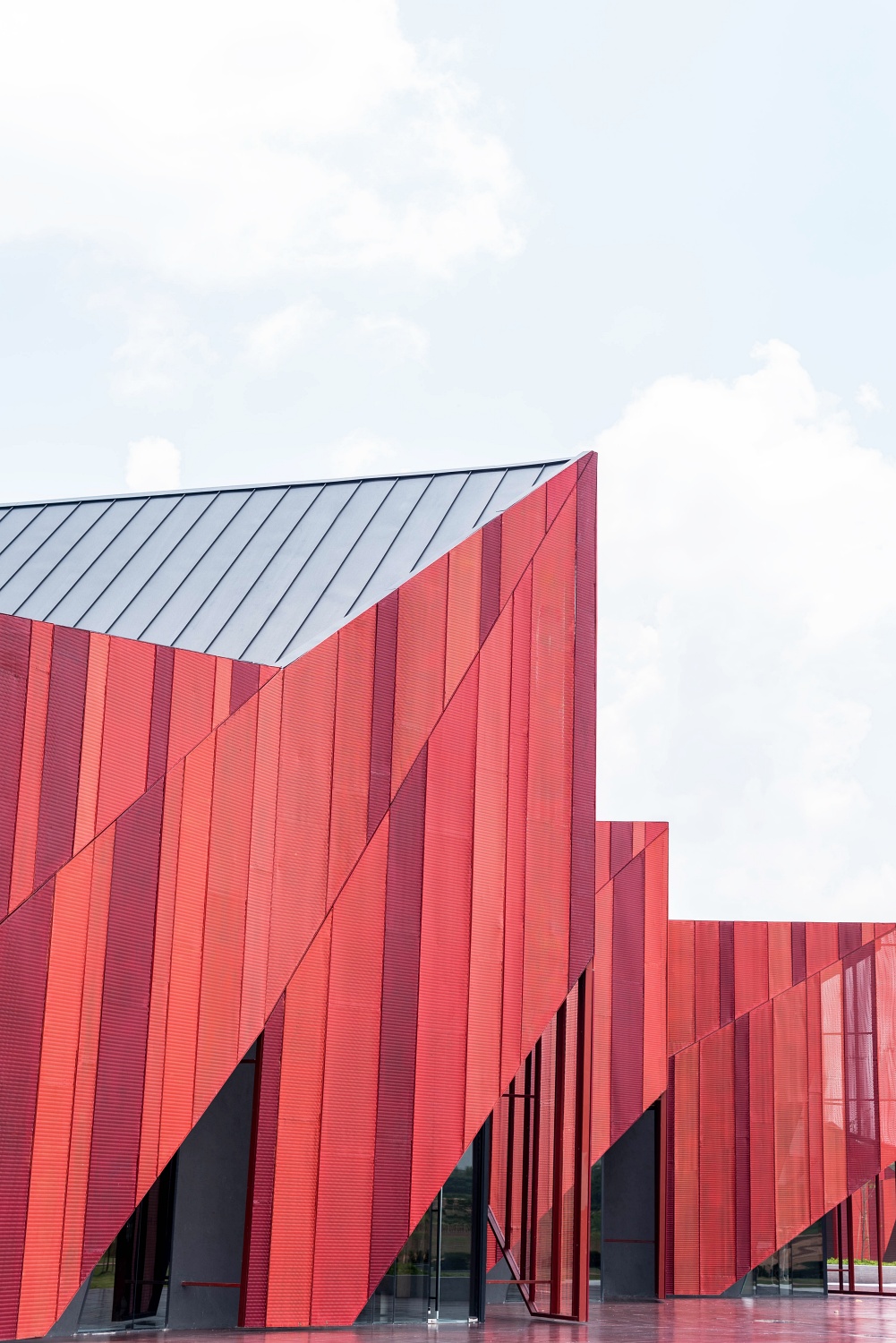
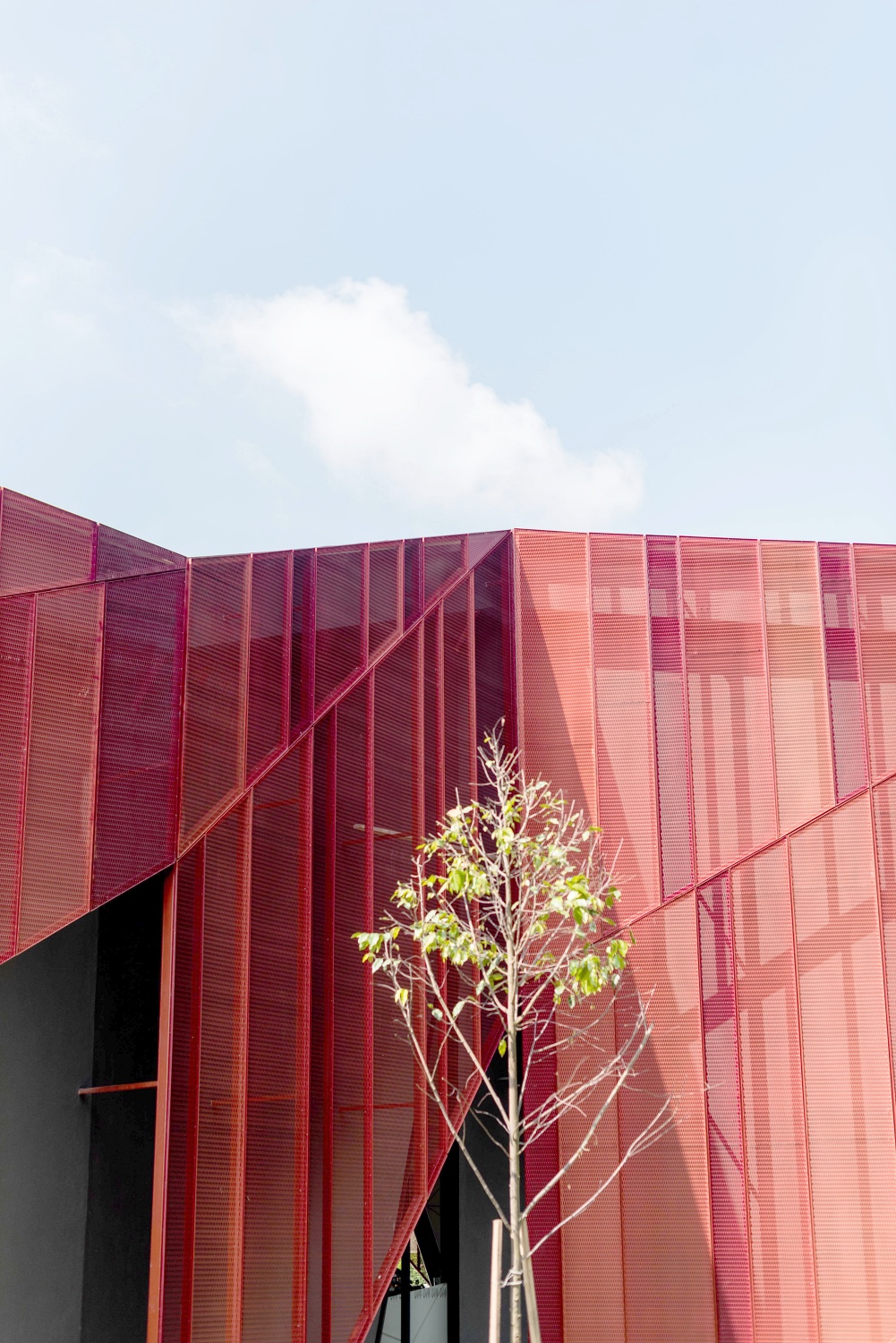
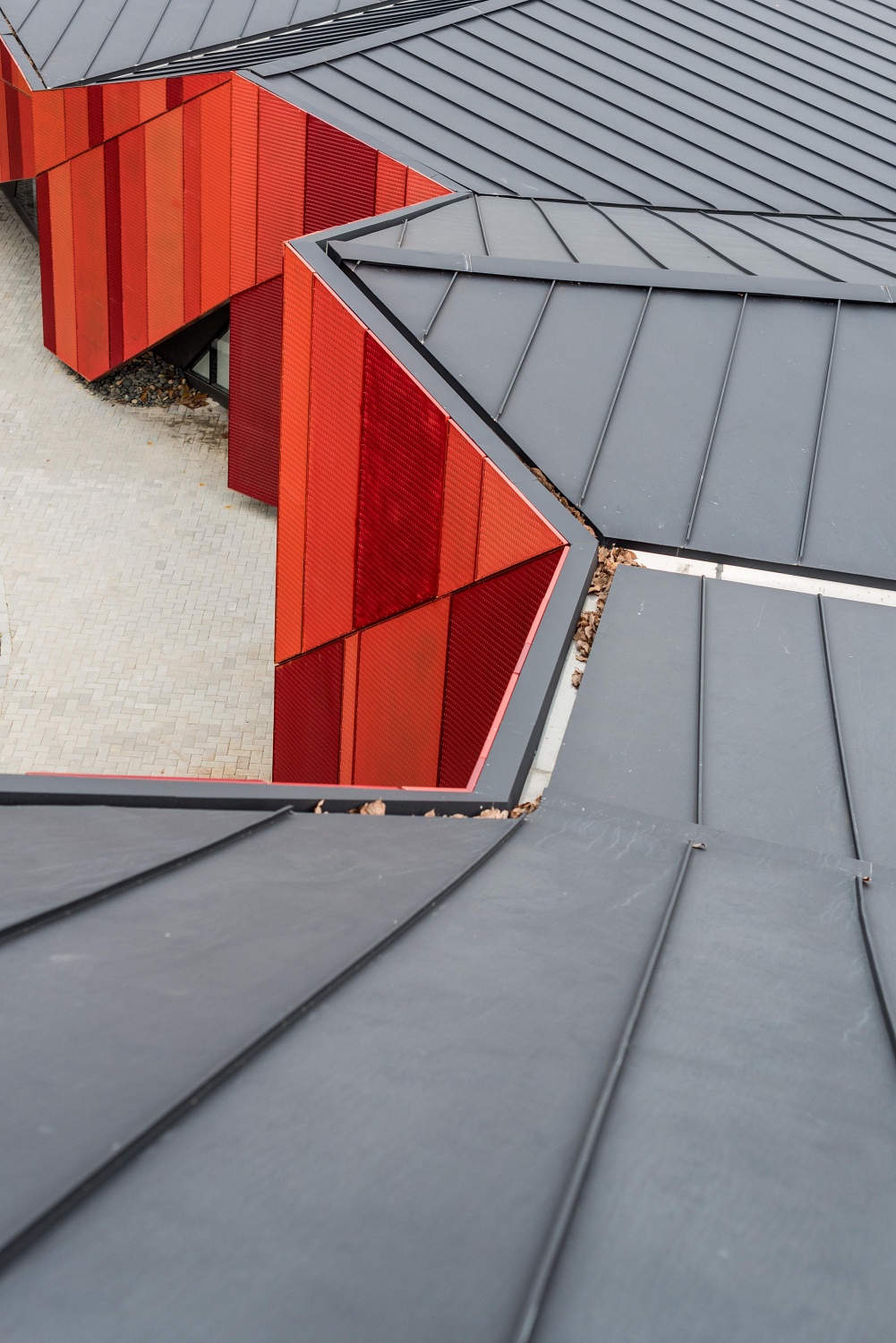
Double skin metal mesh façade
Through discovering the existence of the rubber plantation site, the project started by questioning the relationship between our agricultural landscape, the client’s brief and the built environment. The design approach of Iringan Bayu Sales Gallery was therefore developed based on the following four key design strategies:
PRESERVING AGRICULTURAL IDENTITY
The journey to the site began as an arduous adventure on foot, starting at the edge of a small tropical town. In a bewildered quest to locate the site boundary within a hinterland, the architect trekked through acres of abandoned oil palm plantations and one of the few remaining grasslands for a local dairy farm. The exact location of the site remained unidentified on the first day, as the crew felt disoriented amidst large, undulating hills within an agricultural landscape slated for urban housing development.
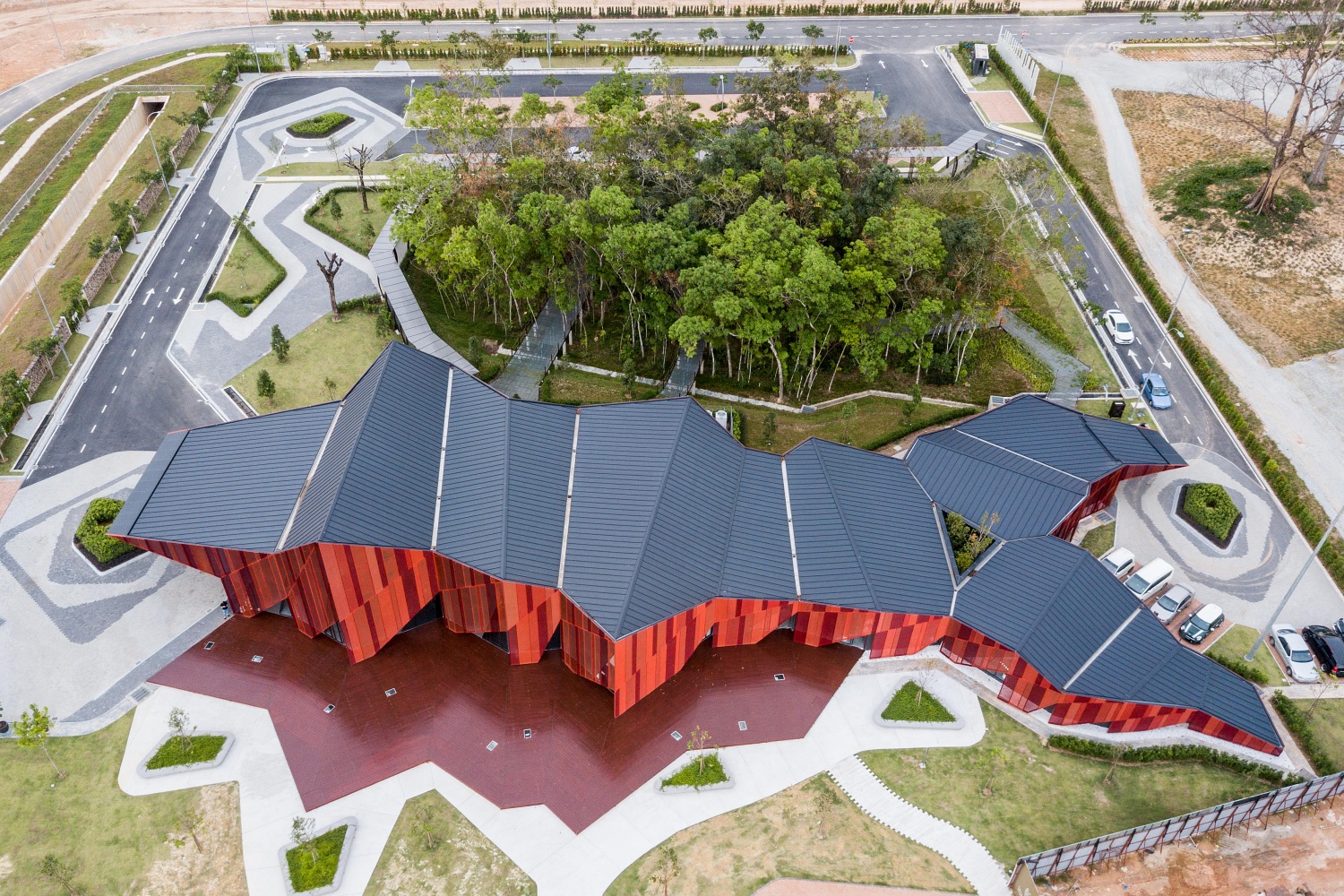
While studying the site, an unusual landscape pattern emerged. The prevailing palm oil trees formed a border around an area later identified as a cluster of rubber trees preserved during the land-clearing works. After extensive discussions, the client was convinced by the architect of the importance of preserving the rubber trees. This decision significantly influenced the subsequent design process.
Aerial view
JOURNEY OF APPROACHING
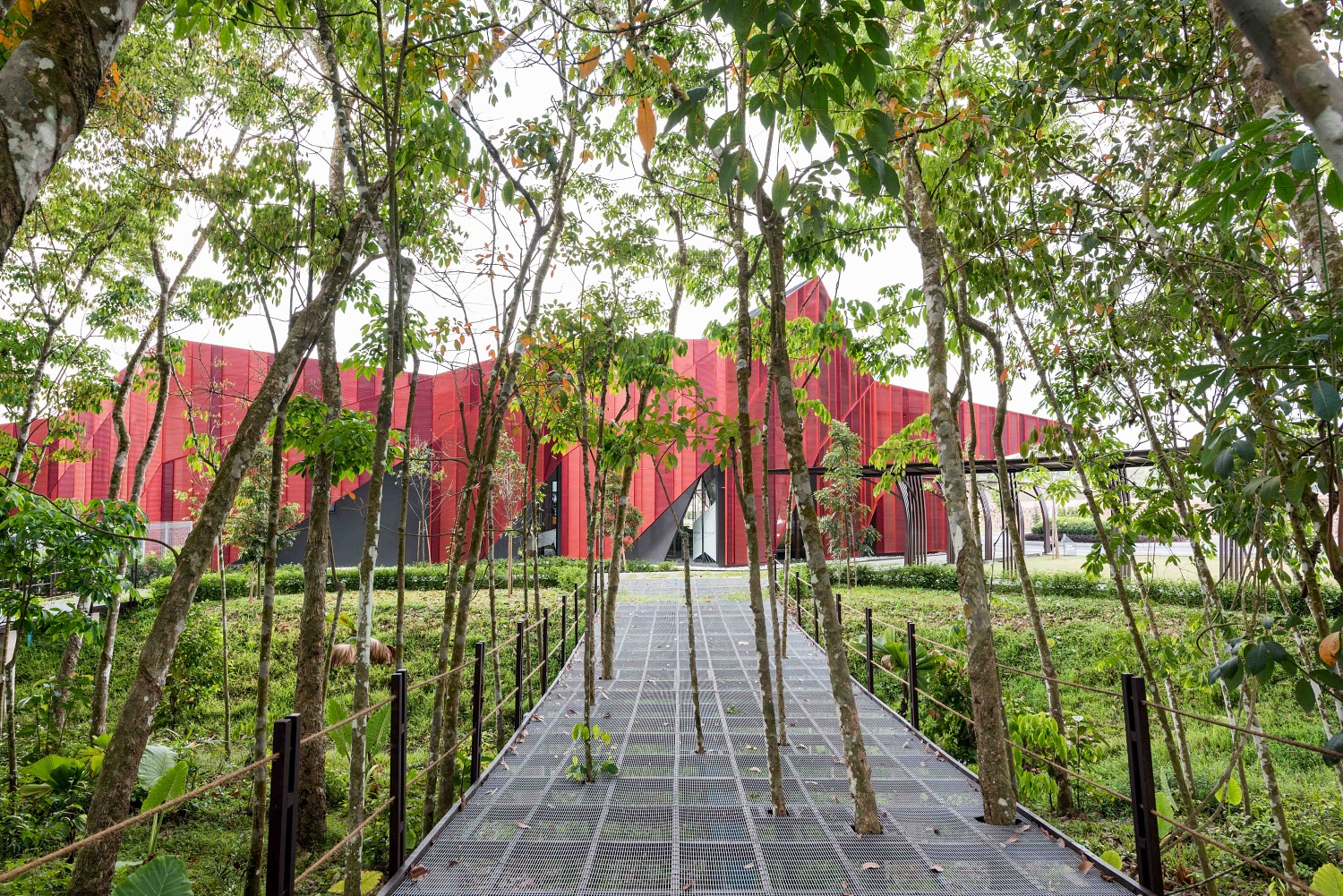
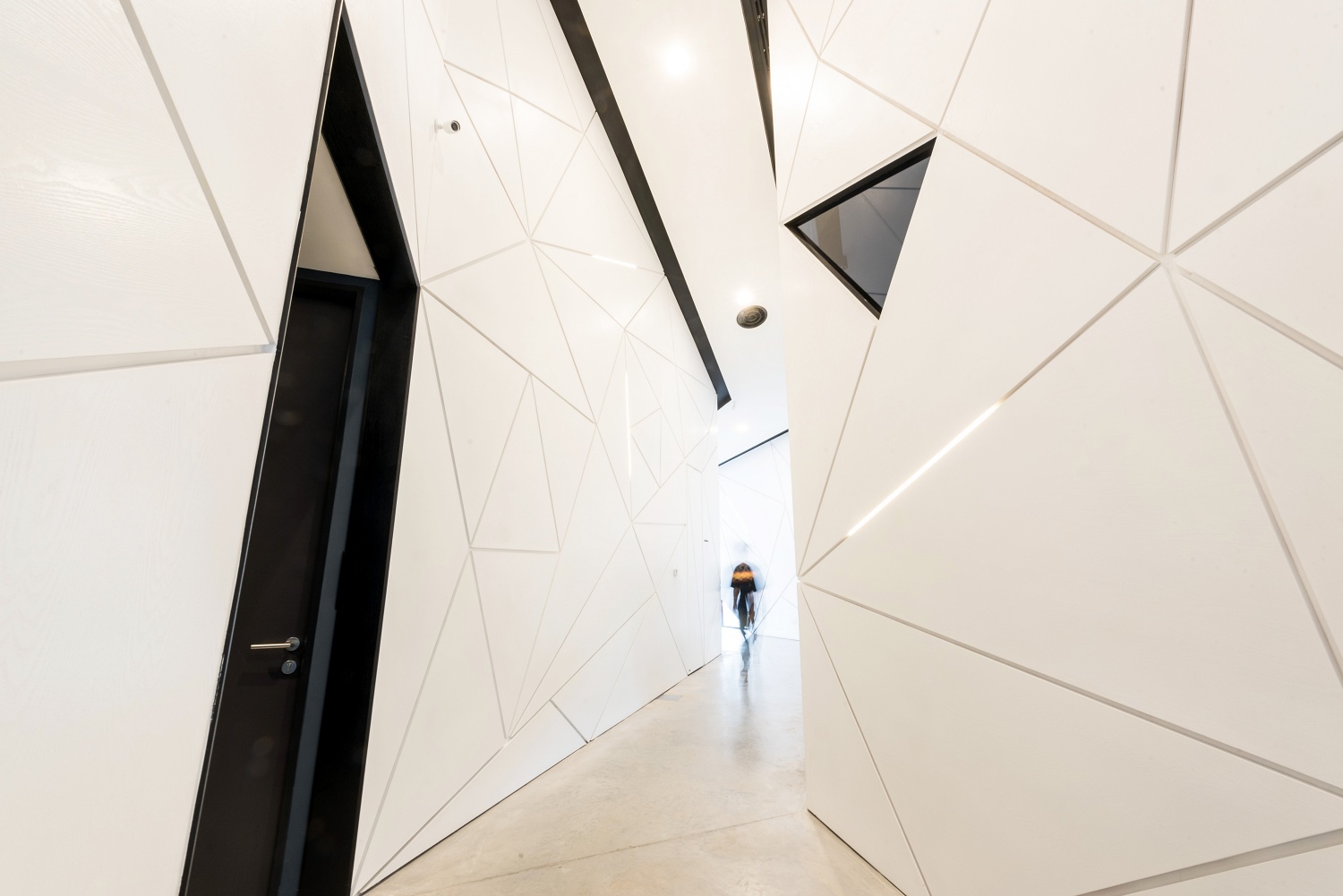
The design prioritised creating a human experience before conceptualising the actual building. This is a journey of discovering a forgotten place. The path to the gallery begins at one end of the preserved rubber forest, inviting visitors to find their way through the trees on a winding, elevated metal platform. The building’s striking red facade is always faintly visible behind the forest, yet its full form remains elusive. Entering the forest path feels like venturing into a dark cave, while the gallery within the building appears as a vast white cave.
A FUNCTIONAL HILL
How can a building shape its form through logical spatial sequences and varying scales of spaces? The building, with its black roof silhouette, is designed in the shape of a hill, commemorating the original agricultural landscape. Across different functional areas, the scale of space changes dramatically. Ceilings rise and fall, and walls fold in and out, framing fragmented views of the outside at various angles. A zig-zag corridor leads to an internal courtyard garden, serving as the central point of the office space, mirroring the experience of searching for a destination in a forest.
As one leaves the site southward, the building is fully revealed with the forest behind it. Its form evokes the compressed, undulating hills that slope towards the ground, disregarding any sense of scale. This design allows visitors to connect their internal experience to the natural surroundings.
The forest path leads to the gallery
SUSTAINABILITY
The building is designed to achieve low energy consumption. The envelope is fully covered in a double skin facade, with an external layer of sun-shading mesh and an internal layer of 200mm thick block wall. The roof is an insulated metal deck. Windows are oriented to avoid excessive sunlight while framing views of the landscape and forest. Some landscape materials are directly sourced and recycled from the site, enhancing the building’s sustainability.
By preserving the rubber trees and integrating the agricultural landscape into the design, the project honours the site’s history while providing a unique architectural experience. This approach not only conserves the natural environment but also creates a meaningful connection between the past and the present.
A poetic interplay of form and context, Iringan Bayu Gallery gracefully preserves nature, echoing topography with striking red facades and an immersive spatial journey through a former plantation.