ARCHITECTURAL DESIGN
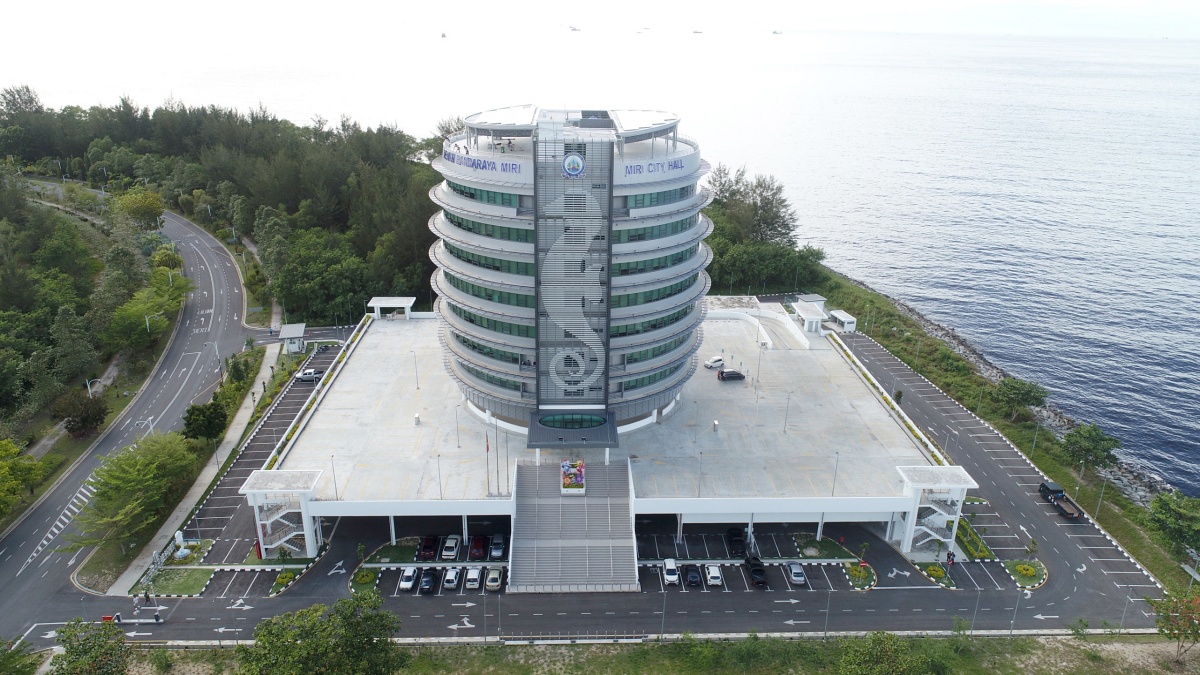
The proposed Miri City Hall with a land area of around 1.29 hectares (3.2 acres) is a 9-storey City Hall Tower developed under Miri City Council to house the Miri City Council’s various departments and offices. The site is located on Lot 2407 (Part of Lot 2262, Parent Lot 1359), Block 9, MCLD, Jalan Bandaraya, situated along the peninsular of Miri Marina Reclamation Project, adjoining the existing Miri Central Park.
The nature of the site, strategic location, surroundings and its immediate context all contribute towards the conceptual approach of the proposed building, with careful consideration given to the design of a landmark building befitting Miri City.
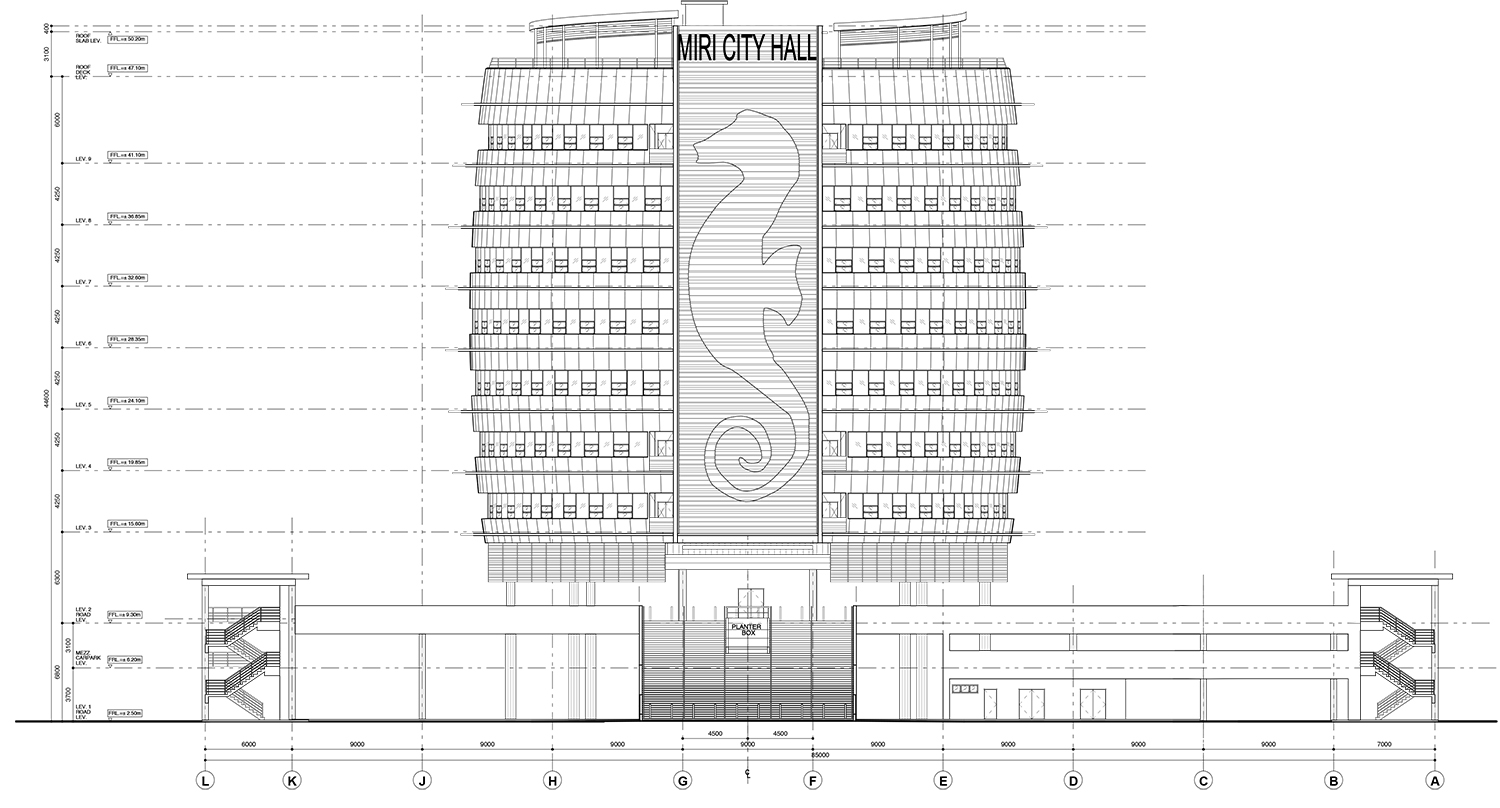
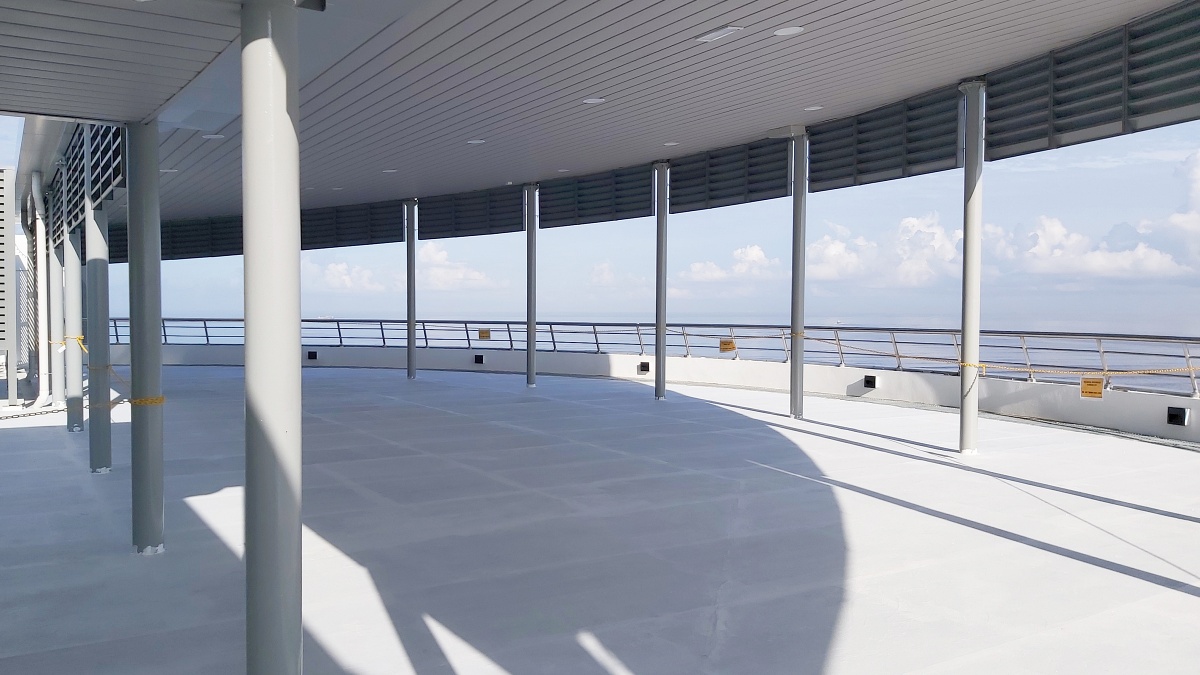
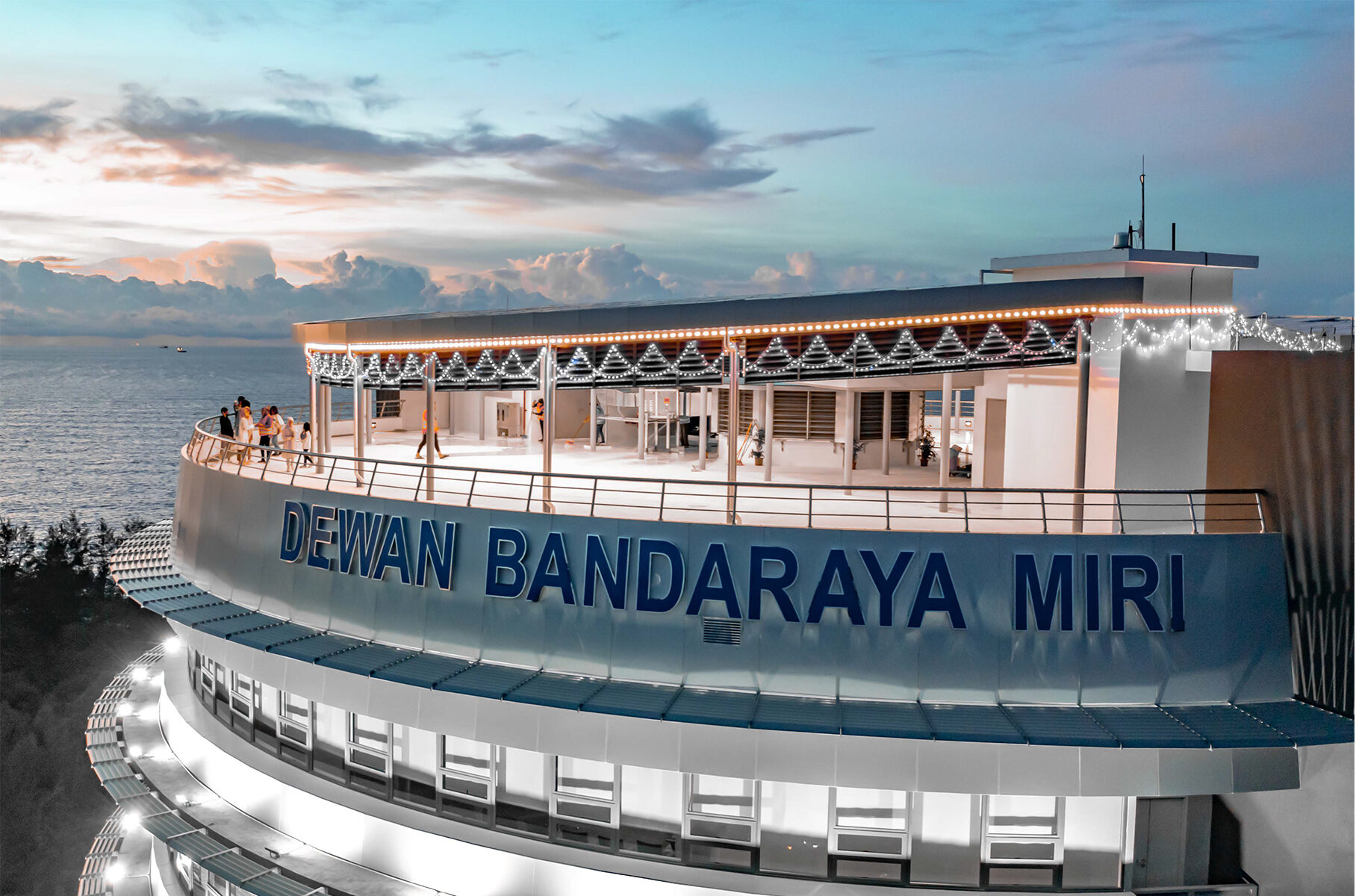
With its intent to be an iconic monument, the design sets the 9-storey City Hall Tower on an open elevated promenade platform, 5.0m high above the street level, with grand entrance steps toward the main axis of the existing Miri Central Park, a separate vehicular and pedestrian zone and levels, creating a highly visible landmark structure. The main entrance steps along the eastern side of the building can double up as a seating area for viewing surrounding activities and views.
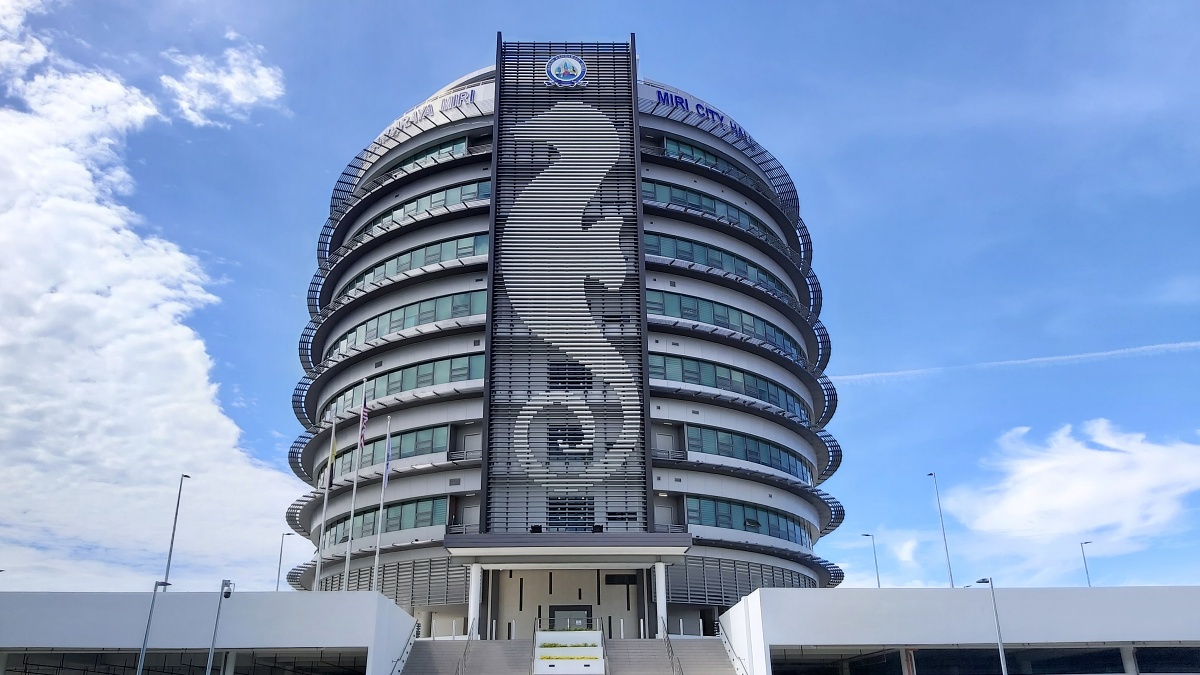
The elevated City Hall Tower takes on the shape of an oil barrel, honouring Miri as an oil-producing region while its elevation form takes the shape of the sail of a sailing boat signifying a non-static form and because of its round form, wind resistance is less. The colonnaded double volume level 2 podium represents openness. The open elevated promenade platform allows for unobstructed views of the surrounding marina and sea.
Miri City Council has adopted the “Seahorse” as the city’s official symbol. This is reflected in the decorative panel of the front elevation to represent the multi ethnics and cultural diversities of Miri as well as identifies Miri being located near the sea, and the associated beautiful beach coral reefs and sea creatures.
The building design also incorporates Green Building Index elements namely energy efficiency, indoor environmental quality, sustainable site planning and management, materials and resources usage, water efficiency and innovative design to promote sustainability in the built environment.
GREEN BUILDING FEATURES
The proposed office building is designed to deliver a power consumption of 98 kWh/m² per year with office facilities to accommodate approximately 400 office staff.
Miri City Council has adopted the “Seahorse” as the city’s official symbol. This is reflected in the decorative panel of the front elevation to represent the multi ethnics and cultural diversities of Miri as well as identifies Miri being located near the sea, and the associated beautiful beach coral reefs and sea creatures.
This ideology is prominent on a site scale, as the 2 to 3-storey facility sits humbly, fittingly, yet distinctively within its industrial context. Both roofscape and streetscape portray a universal architectural language, with the extensive use of Zincalume® steel (AZ150). The façade is also a unified collage of texture and colour, complemented by building elements that match the steel.
A captivating design statement is displayed by two steel halos, painted in red and interconnected by a curvaceous roof at the front building. Inspired by the kernel of the teel seed, these halos symbolise longevity and infinity, and they are instantly recognisable from the streetscape.
Some of the green building design features are as follows:
- Low-e coating glass and overhanging horizontal shading louvres to reduce the Overall Thermal Transfer Value (OTTV) of the building.
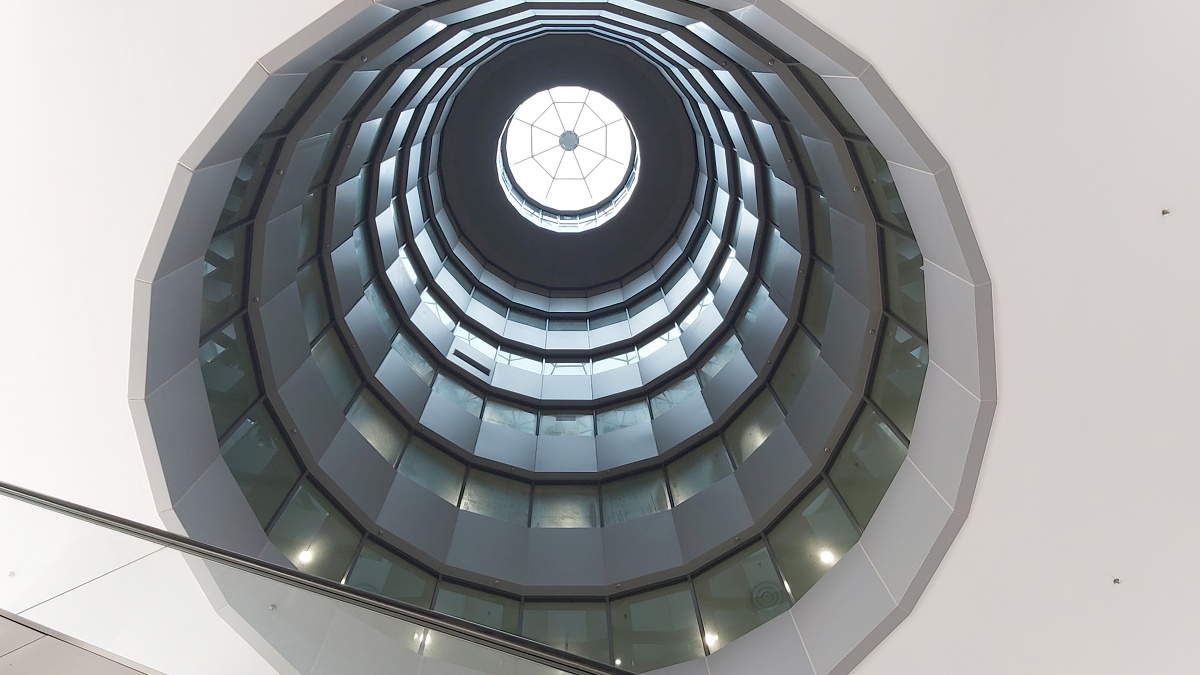
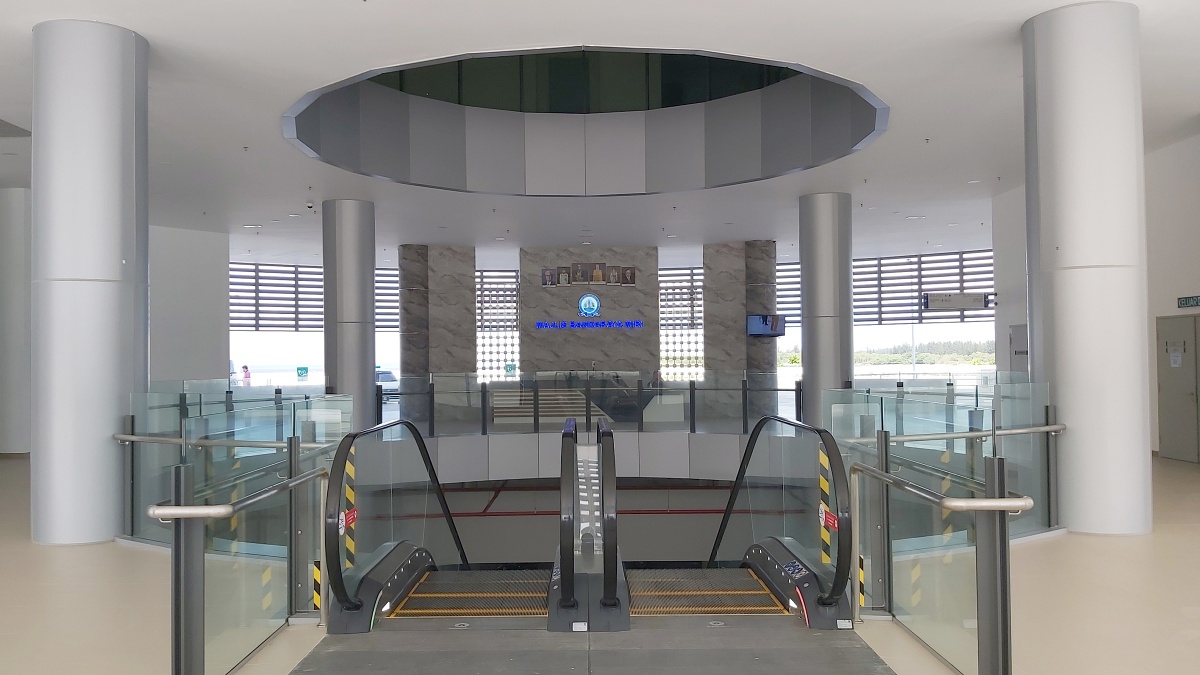
- Central atrium to promote vertical stack effect by taking in cool air at level 2 and exiting the hot air at level 10 rooftop.
- Various M&E engineering design concepts and innovations are used to reduce the building’s energy consumption such as Solar Photovoltaic Systems, Variable Refrigerant Flow (VRF) Air Conditioning Units, Lift Regenerative Drive etc.
- Energy Management System to control and monitor usage and building energy performance.
- Flow meters which are linked to the Central Energy Management System (CEMCS) are provided to monitor water consumption and detect water leakage.
- Information Display Board to display the real-time Building Energy Intensity (BEI) of the building.
- Green Vehicle Carparks and Charging Stations for Electric Vehicles.
- Portable Water Saving through water-efficient fiflings, recycling of sprinkler test water and harvested rainwater for flushing water and landscape.
- Indoor Environment Quality for building occupants
- Pre-cooled outdoor air supply to maximise dehumidification of moist outdoor air and provide effective IAQ.
- Lighting level control with daylight harvesting concept for perimeter lighting and daylit areas.
BEI (kWh/m²/yr):
98.05 kWh/m²/yr (BEI office baseline 250 kWh/m²/yr)
Energy savings as compared
to average Malaysia office
building (%):
60.78% energy savings as compared to average Malaysia office building = (98.05 / 250 x 100) – 100)
OTTV (W/m²):
23.48% improvement as compared to MS1525
= (38.26/50 x 100)-100
47 kWp
5.52%
33%
82%
15%