INTRODUCTION
As Malaysia strides into the 21st century, we find ourselves at a crucial juncture where the demands of urbanisation, climate change, and technological advancement converge. At the heart of this evolution lies the Green Building Index (GBI), Malaysia’s premier green building rating tool.
The Green Building Index (GBI) was founded in 2009 in response to an overwhelming need for the Malaysian construction industry to embrace sustainability and go green. At the BPIC (Building Industry Presidents’ Council) meeting, stakeholders across the industry acknowledged the urgency for Malaysia to develop its green rating system. However, it was Pertubuhan Akitek Malaysia (PAM) and the Association of Consulting Engineers Malaysia (ACEM) that took the decisive step forward. Both organisations contributed invaluable resources and rallied their volunteers to spearhead the development of the tool, reflecting a shared vision to champion sustainable design and construction practices in Malaysia.
It has been 15 years since the inception of the Green Building Index (GBI), and this milestone offers a valuable opportunity to reflect on how it has grown over the years and the impact it has achieved. This year, GBI has reached an extraordinary milestone, with over 321 million square feet of certified space across Malaysia. This remarkable achievement translates into a significant environmental contribution, preventing approximately 1,854,000 tonnes of CO2 equivalent (tCO2e) emissions from being released into the atmosphere annually. Such progress underscores the transformative role GBI has played in reducing the carbon footprint of Malaysia’s built environment, setting a powerful benchmark for sustainability in the region.
THE CORE INTENT OF GBI
The core intent of the Green Building Index (GBI) is to create a building rating tool tailored specifically to Malaysian issues and aligned with the interests of the local construction industry. It aims to ensure that Malaysia’s vernacular architecture, such as the iconic kampung house, is recognised and celebrated as a sustainable building model. These traditional structures are the true progenitors of green architecture in the country, embodying design principles that harmonise with the local climate and environment. However, the wave of modernisation driven by global architectural movements such as the ‘international movement’ of the 60s has often homogenised buildings, rendering them non-contextual, soulless, and ill-suited to their specific climates.
In this context, GBI not only acknowledges the wisdom of vernacular architecture but also operates as a performance-based tool rather than a prescriptive one. This approach empowers architects and engineers to devise multiple creative solutions to sustainability challenges, fostering innovation instead of mandating rigid, one-size-fits-all standards. By offering designers a significant degree of freedom, GBI rewards ingenuity and encourages solutions that resonate with Malaysia’s cultural and environmental identity.
STEADY GROWTH AND NATION BUILDING
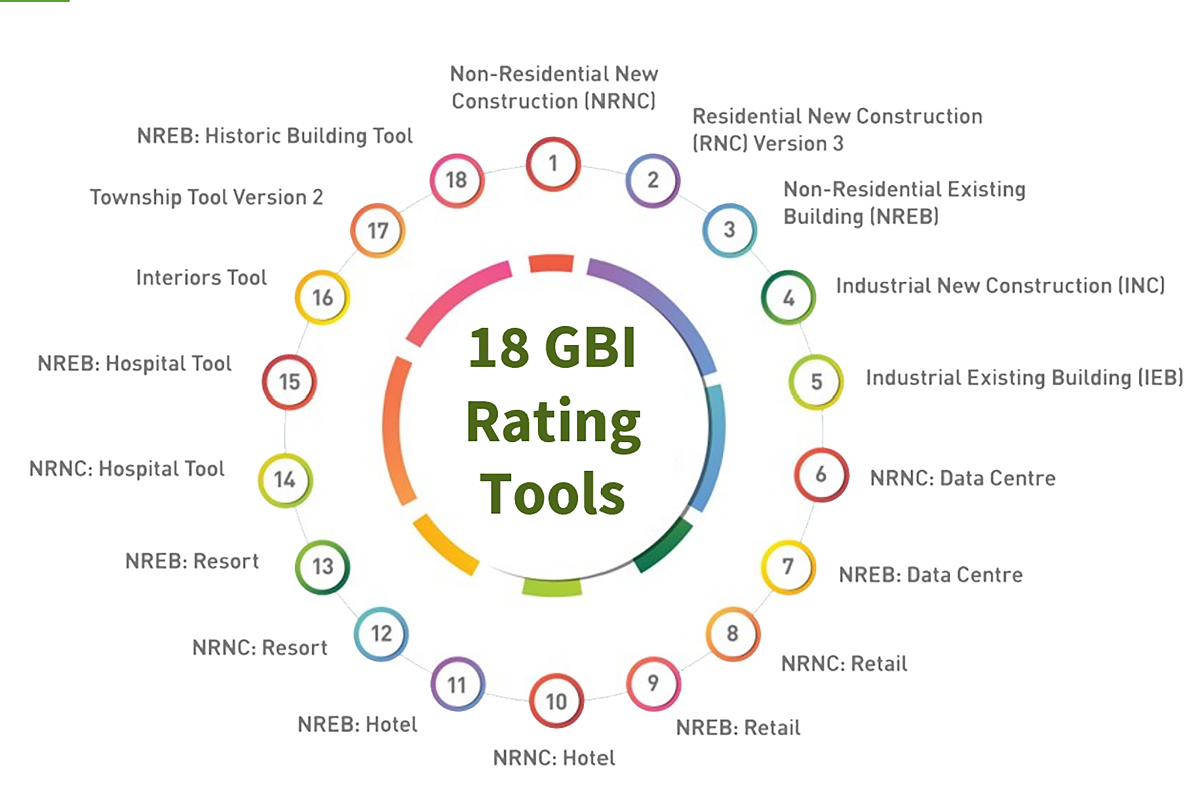
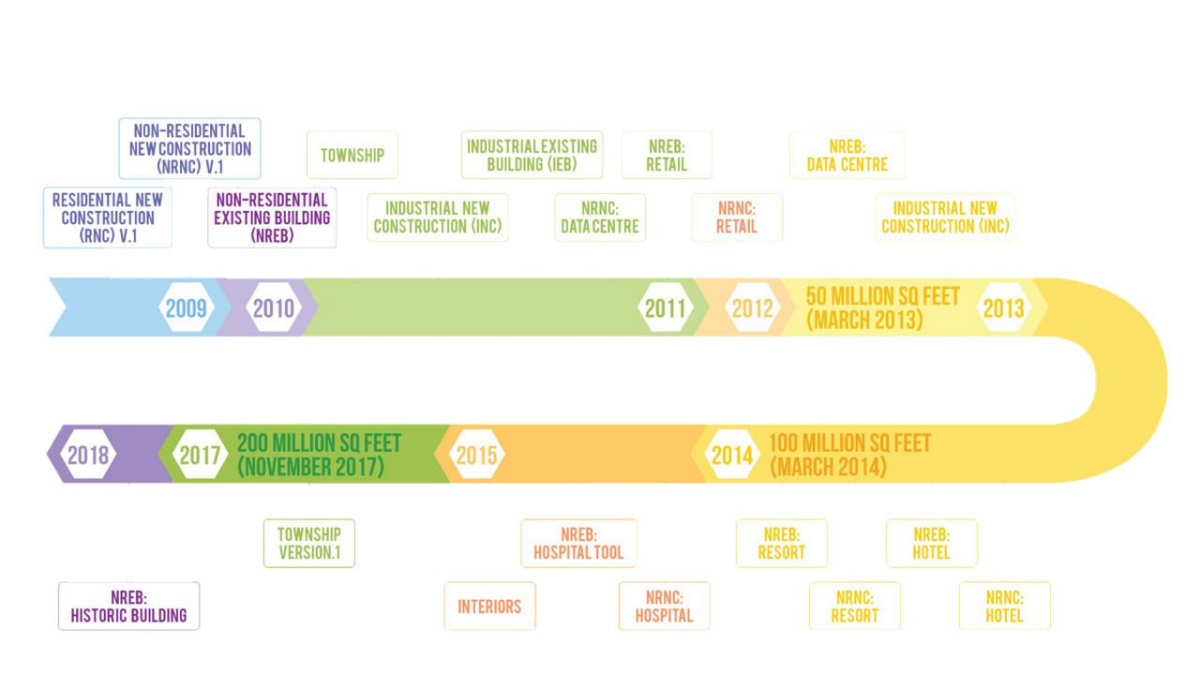
Since its inception 15 years ago, the Green Building Index (GBI) has become a cornerstone of Malaysia’s sustainable development, charting steady growth while addressing the needs of a rapidly evolving construction industry. GBI began with two foundational tools: Non-Residential New Construction (NRNC) and Residential New Construction (RNC). These tools were pivotal in setting initial benchmarks for commercial and residential developments. Over the years, GBI has expanded significantly, developing an impressive 18 specialised tools to address the diverse typologies of buildings in Malaysia, each with tailored benchmarks and performance criteria.
This evolution stems from the understanding that different building types operate under unique conditions and requirements. For instance, a shopping mall has distinct operational parameters
— such as energy usage, occupancy patterns, and peak hours — that differ vastly from a commercial office building. To account for these variations, GBI created a specific mall tool, benchmarking a mall’s sustainability performance against other malls, and ensuring fairness and relevance. Similarly, specialised tools were developed for hospitals, given the unique demands of medical facilities, including round-the-clock operations, complex mechanical systems, and stringent hygiene requirements.
These specialised tools were developed collaboratively with key stakeholders to ensure practical and industry-specific relevance. The mall tool was crafted with input from the Malaysian Shopping Mall Association (PPK-Malaysia), while the hospital tool was developed in partnership with the Ministry of Health and private hospital operators like KPJ Healthcare Berhad. Such collaborations ensured that the tools addressed the needs of both public and private stakeholders, fostering widespread adoption. The Interior Design (ID) tool, another important addition, was created with guidance from the Malaysian Institute of Interior Design (MIID), acknowledging the critical role of interior spaces in sustainable design.
Moreover, GBI tools have extended to encompass additional building types such as industrial facilities, data centres, and even heritage buildings. These developments showcase GBI’s adaptability and its commitment to driving sustainability across the entire built environment. The industrial tool, for example, addresses the energy-intensive nature of manufacturing facilities, incorporating guidelines for energy-efficient processes and renewable energy integration. Meanwhile, the data centre tool emphasises cooling efficiency and energy management, aligning with the demands of Malaysia’s growing digital economy.
Such growth and diversification underscore GBI’s strategic role in nation-building. By ensuring that sustainable practices are embedded across a wide range of building types, GBI not only reduces the environmental footprint of Malaysia’s construction industry but also enhances its global competitiveness. The expansion of these tools also reflects GBI’s commitment to inclusivity, ensuring that all sectors—from healthcare to retail and industrial — can benefit from green certification.
Despite these achievements, the journey is far from over. Malaysia continues to face pressing challenges, including climate change, resource depletion, and rapid urbanisation. These realities necessitate bold, systemic transformations. GBI must continue to adapt, integrating emerging technologies and innovative strategies to meet the needs of the future. As the built environment grows increasingly complex, GBI’s role as a performance-based, industry-aligned rating tool becomes even more critical. By fostering collaboration, innovation, and excellence, GBI can help shape a greener, more resilient Malaysia for generations to come.
THE CHALLENGES: FACING A COMPLEX FUTURE
One of the major challenges faced by green rating systems worldwide is
achieving financial sustainability. The difficulty lies in keeping the rating tool self-financing while adhering to the non-profit model adopted by most green building tools. Experiences from other countries highlight the limitations of this approach. For instance, running a green rating agency on a profit-oriented model often proves unsustainable unless it operates at a significant scale, as seen with the Indian Green Building Council. Alternatively, some organisations, like the US Green Building Council with LEED, have commercialised their tools to gain global reach. However, for Malaysia, with its relatively small and limited market, the challenges are clear—operations must remain lean to sustain long-term viability.
That said, remaining lean does not mean compromising on quality and thoroughness. GBI’s commitment to excellence remains steadfast, ensuring that every certified project meets stringent benchmarks and delivers on the promise of sustainability. The rigorousness of the certification process is essential in maintaining credibility and trust within the industry, ensuring that GBI-certified buildings continue to set the standard for environmental performance.
Looking ahead, GBI must carefully balance the flexibility provided by its tools with the need for operational sustainability. To ensure certification remains accessible, GBI has consistently kept costs low, starting at just RM5,000 for a single residential unit. Maintaining such affordability in the future will require a commitment to efficiency and innovation. Embracing emerging technologies will be key. The construction industry is rapidly evolving with advancements such as the Internet of Things (IoT) and artificial intelligence (AI), which offer unprecedented opportunities to enhance building performance. By integrating these technologies, GBI can streamline operations, automate processes, and ensure that energy usage and resource efficiency are monitored and optimised in real time. This approach will not only secure the financial sustainability of GBI but also future-proof its standards, inspiring a new generation of sustainable buildings in Malaysia while maintaining the highest standards of quality and impact.
THE NEED FOR EVOLUTION
As the urgency of climate action intensifies, the Green Building Index (GBI) must evolve to remain at the forefront of sustainable development. The creation of improved versions of its existing tools is essential to address the complexities of modern building typologies and performance requirements. These enhanced tools must integrate more sophisticated metrics and benchmarks, ensuring they stay relevant to the changing needs of the industry. A critical evolution for GBI lies in the integration of carbon measurement into its rating system. This could take inspiration from Singapore’s Green Mark, which has included carbon accounting in its latest iteration by setting a per-square-meter carbon average for the country. This practical approach provides an effective starting point for GBI to incorporate carbon metrics, aligning the tool with global net-zero goals while tailoring it to Malaysia’s context.
In addition, GBI tools must embrace the rapid advancements in technology, ensuring the rating system remains cutting-edge. For instance, our update on the Data Centre Tool reflects the significant advancements in data centre creation and management. Modern data centres now incorporate highly efficient cooling systems, AI-powered energy optimisation, and renewable energy integration—all of which need to be accounted for in updated benchmarks. These technological shifts are reshaping how buildings operate, and GBI must stay ahead by incorporating these innovations into its framework. By adopting carbon metrics and integrating the latest technological advancements, GBI will remain a powerful driver of sustainability, empowering the Malaysian construction industry to lead in environmental responsibility and innovation.
CONCLUSION: A CALL FOR COLLABORATION AND INNOVATION
At this crossroads, the responsibility to innovate and lead is a shared one. As architects, developers, policymakers, and industry leaders, we must come together to reimagine the future of our built environment. The Green Building Index is not merely a certification tool; it is a catalyst for change—a symbol of our collective commitment to the environment, to future generations, and to the values that define us as a nation.
The path forward is clear: we must innovate boldly, embrace technology, and prioritise long-term sustainability over short-term convenience. As architects, we have the power to shape not just buildings but the lives within them. Let us rise to the occasion, transforming our cities and communities into beacons of sustainability, resilience, and hope.
Together, let us build a greener tomorrow—one building, one project, and one community at a time.