Special Category - Silver ARCHITECT: aLM Architects CLIENT: Island Landscape Properties Sdn Bhd CONTRACTOR: Island Landscape Construction Sdn Bhd
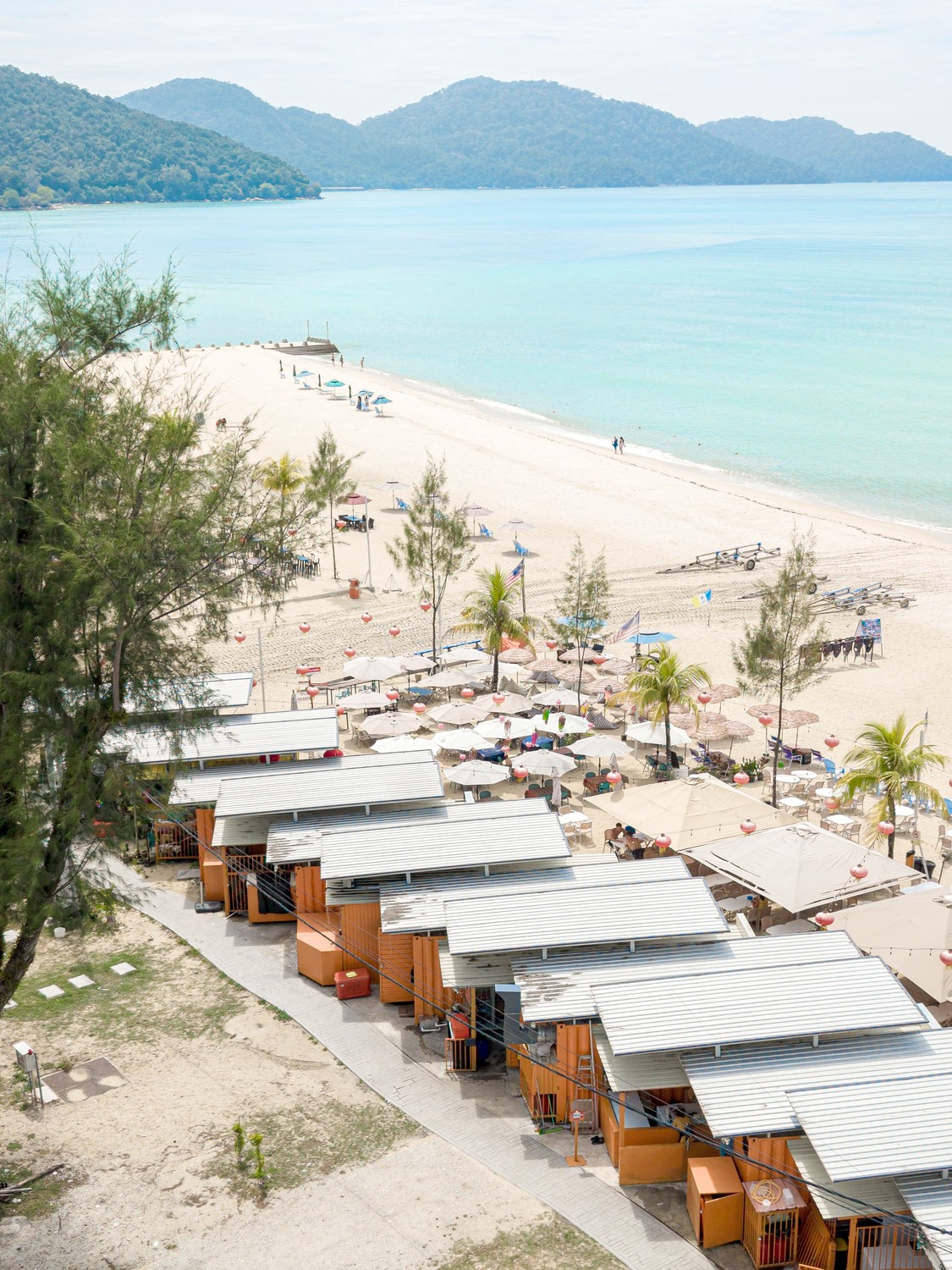
A linear intervention along the coastal edge. Photo by Yzhensian
Ferringhi Bay Container Boulevard is a temporary commercial and public-space intervention along the Batu Feringghi waterfront in Penang. Positioned between the beach and the inland road, it occupies a coastal edge that had gradually lost its everyday energy. The site was originally formed by a cluster of abandoned containers from a previous commercial venture—weathered steel modules that suggested both constraint and opportunity. Rather than clearing the site and starting anew, the project embraces adaptive reuse as its primary strategy, transforming what remained into a renewed architectural and social framework.
The intervention emerged during a transitional period, bridging temporary evacuation and the community’s eventual relocation. Repurposed shipping containers offered an appropriate response due to their practicality and environmental value. Their reuse reduces construction costs and embodied carbon while enabling rapid deployment and minimal waste should the project be relocated or dismantled later. At the same time, the containers introduce a contemporary industrial identity along the shoreline without relying on heavy or permanent construction, allowing the architecture to remain light, reversible, and responsive to future change.
MODULAR CONSTRUCTION
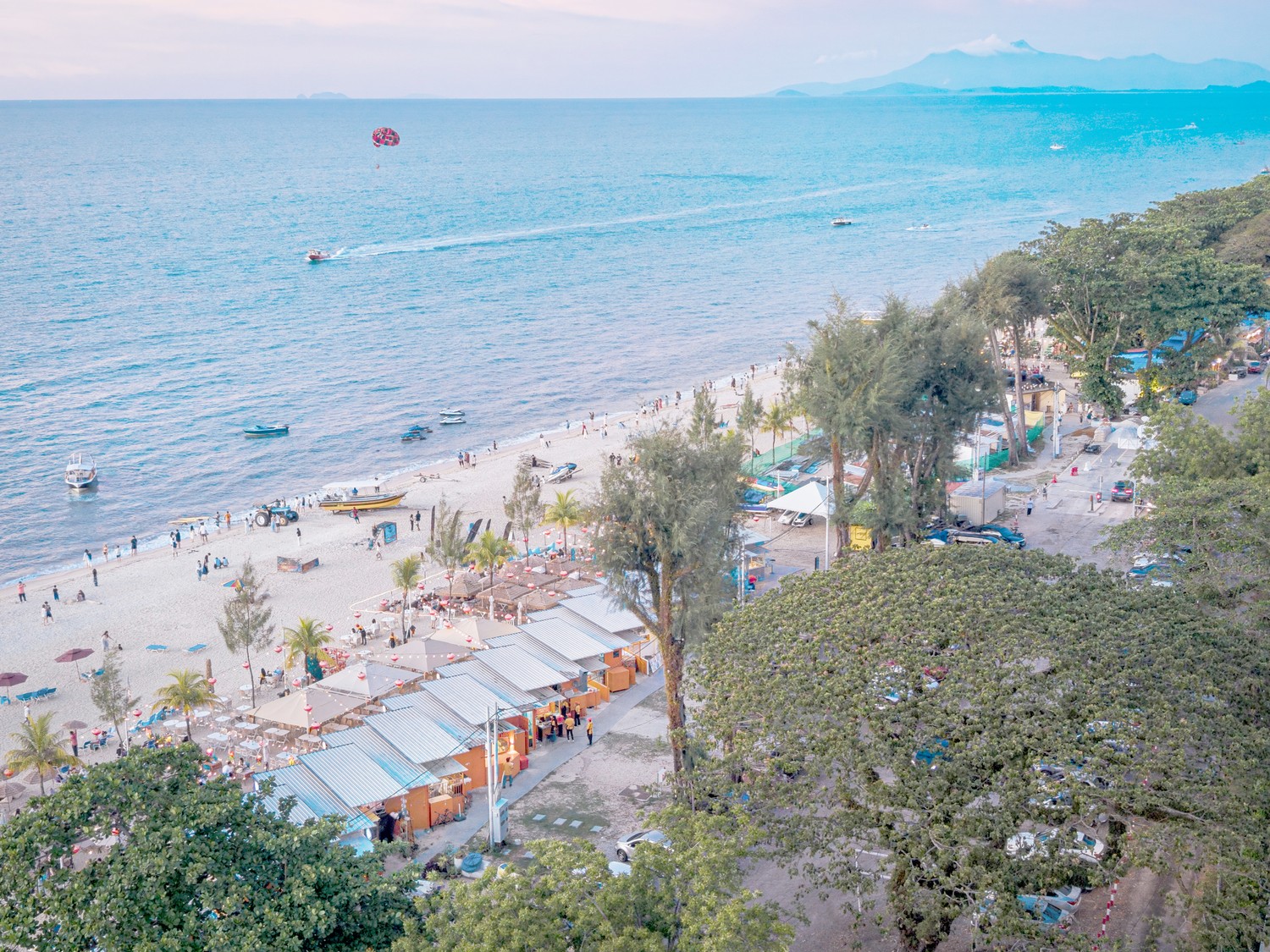
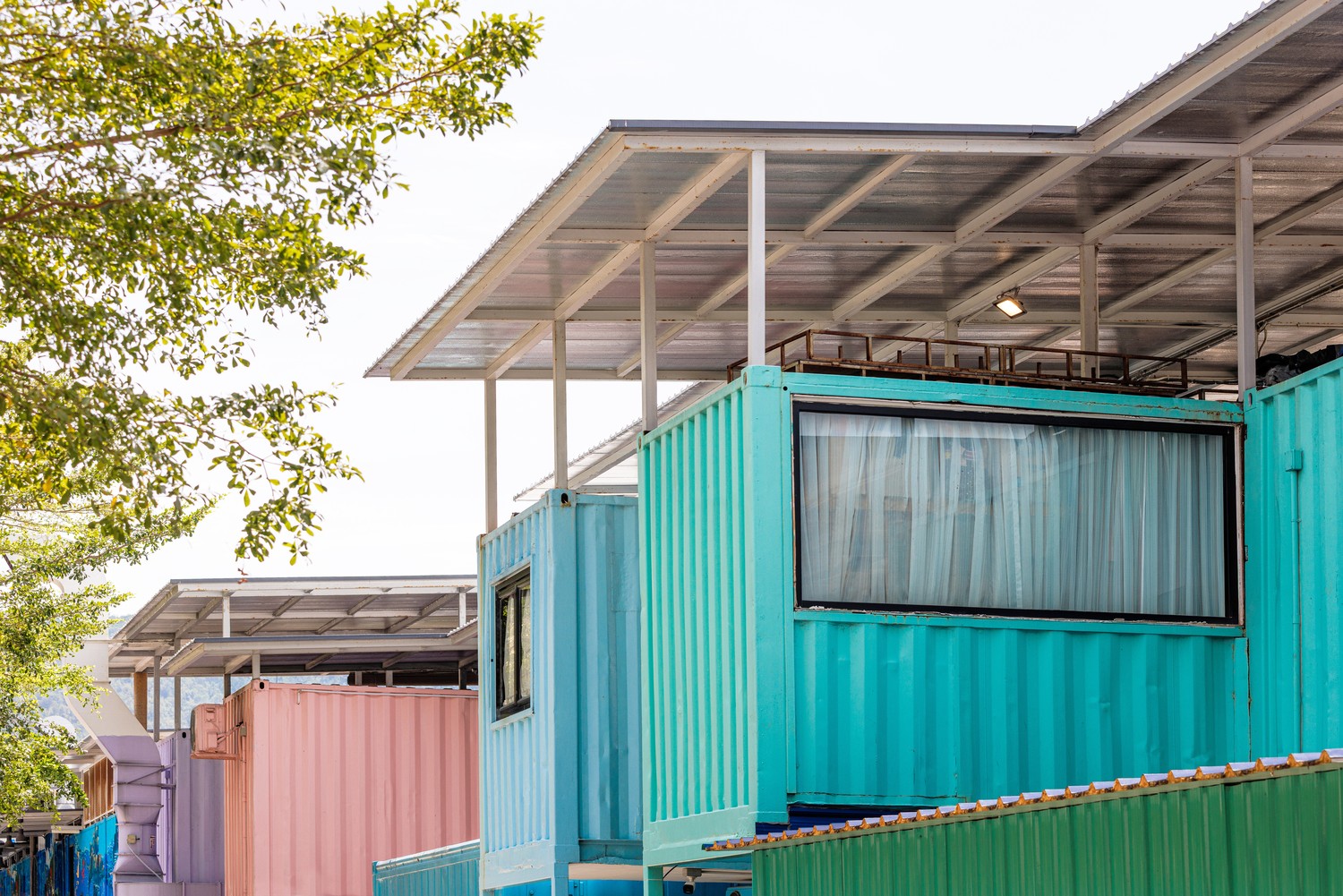
Shipping containers are repurposed as modular units to form a linear boulevard comprising four commercial zones, each supported by shared public facilities. The containers are arranged in a consistent waterfront-facing line, establishing a clear public edge while maintaining openness toward the sea. This organisational clarity provides a coherent spatial structure while allowing flexibility in how individual modules are assembled and occupied. A lightweight structural layer ties the modules together and improves comfort within the tropical climate. Roof canopies extend beyond the container volumes to provide shade and shelter while visually unifying the boulevard. The architecture remains intentionally open and breathable, with covered walkways, shaded thresholds, and permeable edges that encourage cross-ventilation and support activity throughout the day and evening.
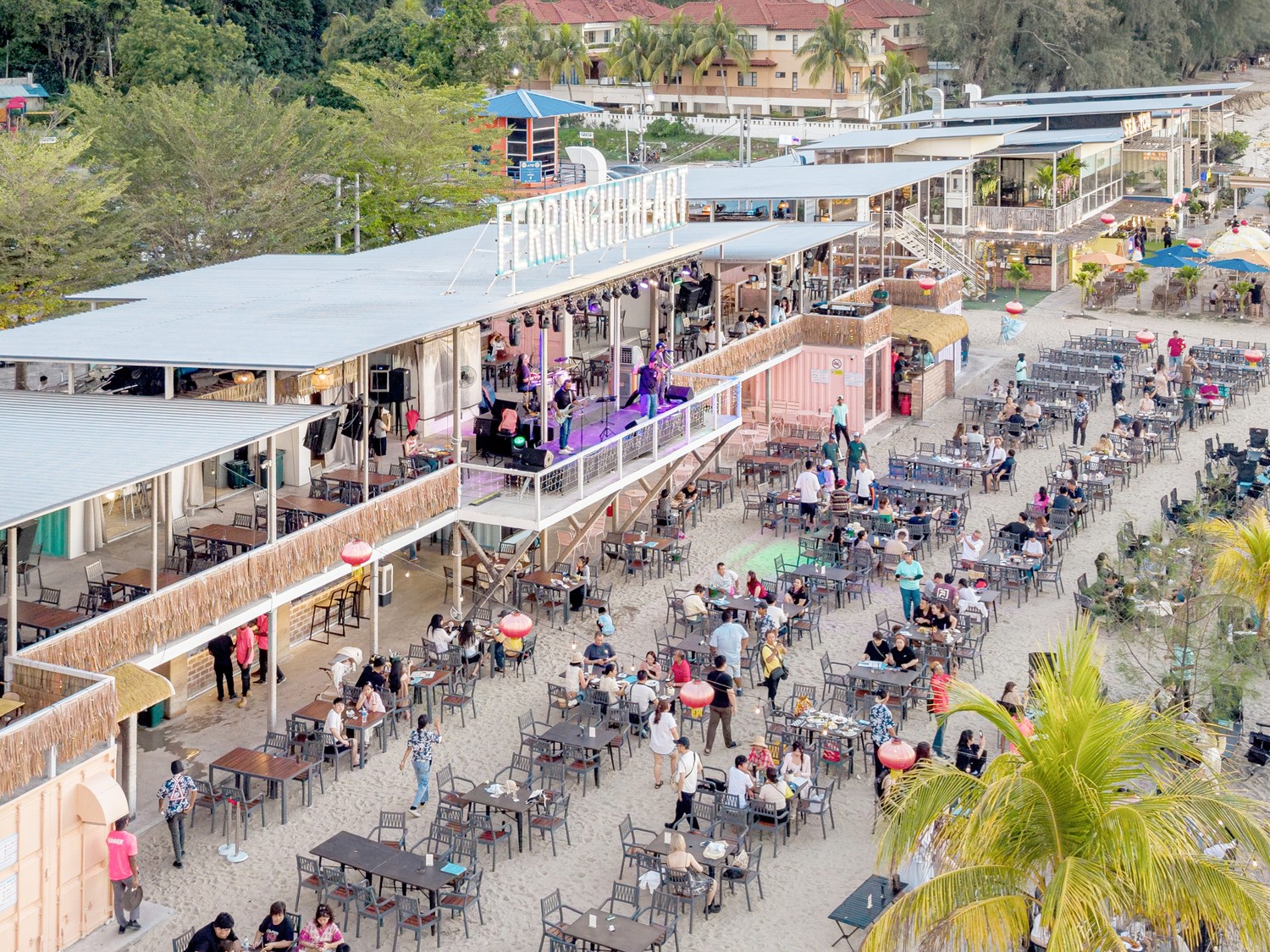
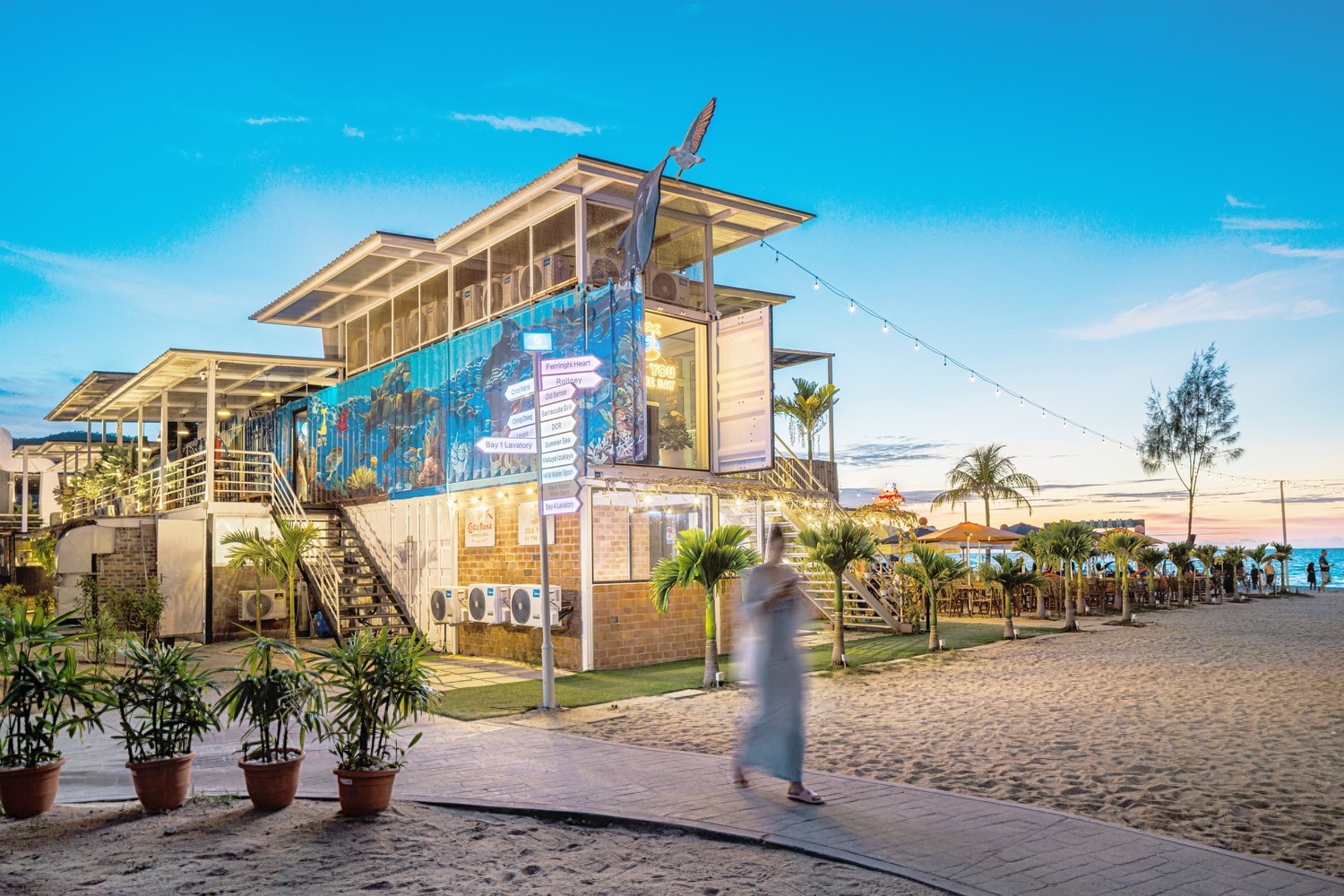
Zones One and Two adopt a slightly more complex configuration through selective stacking, creating two-storey clusters that support larger tenants and more layered programmes. These assemblies introduce elevated decks and viewing platforms, extending the spatial experience vertically while maintaining a light footprint. Zones Three and Four adopt a more direct arrangement, allocating one container per tenant to support smaller operations and flexible turnover. This variation allows different business types to coexist while maintaining a coherent identity across the boulevard.
Lightweight structures anchor new activity along a once-quiet stretch of beach. Photo by Yzhensiang
DESIGN INTENTION
Circulation is organised as a continuous promenade linking the four zones into a single waterfront walk. This promenade supports movement along the coastline while creating moments for pause, gathering, and informal occupation. Staircases and elevated platforms introduce new vantage points, allowing visitors to experience the waterfront from both ground-level seating areas and upper-level terraces overlooking the sea.
Shared amenities are integrated to support both public life and operational needs. Public toilets, refuse management areas, and service spaces are positioned to function collectively across the site, reducing duplication and preserving the beachfront frontage for people. Seating and spill-out areas are treated as part of the spatial framework rather than leftover spaces, allowing dining, resting, and socialising to extend naturally beyond the container units.
Stacked container units form an elevated commercial spine that activates the beachfront through layered dining and performance spaces. Photo by Yzhensiang
CURATING EXPERIENCE
For aLM Architects, the project forms part of a broader architectural inquiry into “curating experience.” Across projects such as COEX, Penang Container Art, and now Ferringhi Bay Container Boulevard, we continue to explore how architecture can frame, activate, and cultivate social life beyond merely providing physical space. In this sense, the boulevard is conceived not as an isolated object but as a spatial framework that encourages movement, gathering, and interaction along the waterfront.
Over time, the boulevard has revealed qualities beyond its initial intentions. It has demonstrated vibrant usage patterns and has become a valuable platform for observing real user behaviour. For architects and developers, the site functions as a living learning environment where movement patterns, consumer habits, and tenant performance can be observed directly. The project highlights how bottom-up behaviours often reshape spatial intentions and how spaces perform differently across different times of day. At each time of day, it generates distinct activity rhythms, and recognising these temporal patterns helps refine future spatial planning and programming strategies.
Equally important is the project’s capacity to evolve. The tenants, programmes, and spatial arrangements can adapt over time, ensuring the boulevard remains responsive to changing needs and opportunities. In doing so, the project highlights the role of architecture not merely as a finished object but as an enabling framework for ongoing activity.
A tectonic assembly of stacked modules, defined by exposed structure and elevated decks. Photo by Yzhensiang
PLACEMAKING
Ultimately, Ferringhi Bay Container Boulevard demonstrates how modest means can generate meaningful placemaking. By extending the life of existing containers and assembling them into a flexible public framework, the project reactivates a once-dormant stretch of waterfront into a sequence of shaded, sociable spaces that support commerce, gathering, and coastal public life. It also reinforces a broader lesson: architecture alone cannot fully define a place. The vitality of a space depends equally on programming—on the activities, events, and everyday uses that continue to activate and reshape the framework over time, whilst generating lasting value for the urban waterfront.
A vibrant placemaking intervention that activates the beachfront through adaptable modular spaces, creating an engaging social environment for both local hawkers and the public.
Stacked containers articulated by lightweight steel canopies, forming a modular framework of shade and enclosure. Photo by Yzhensiang