Education - Commendation ARCHITECT: PDC Design Group Sdn Bhd CLIENT: Borneo Covenant Sdn Bhd CONTRACTOR: Pavilion Paragon Sdn Bhd
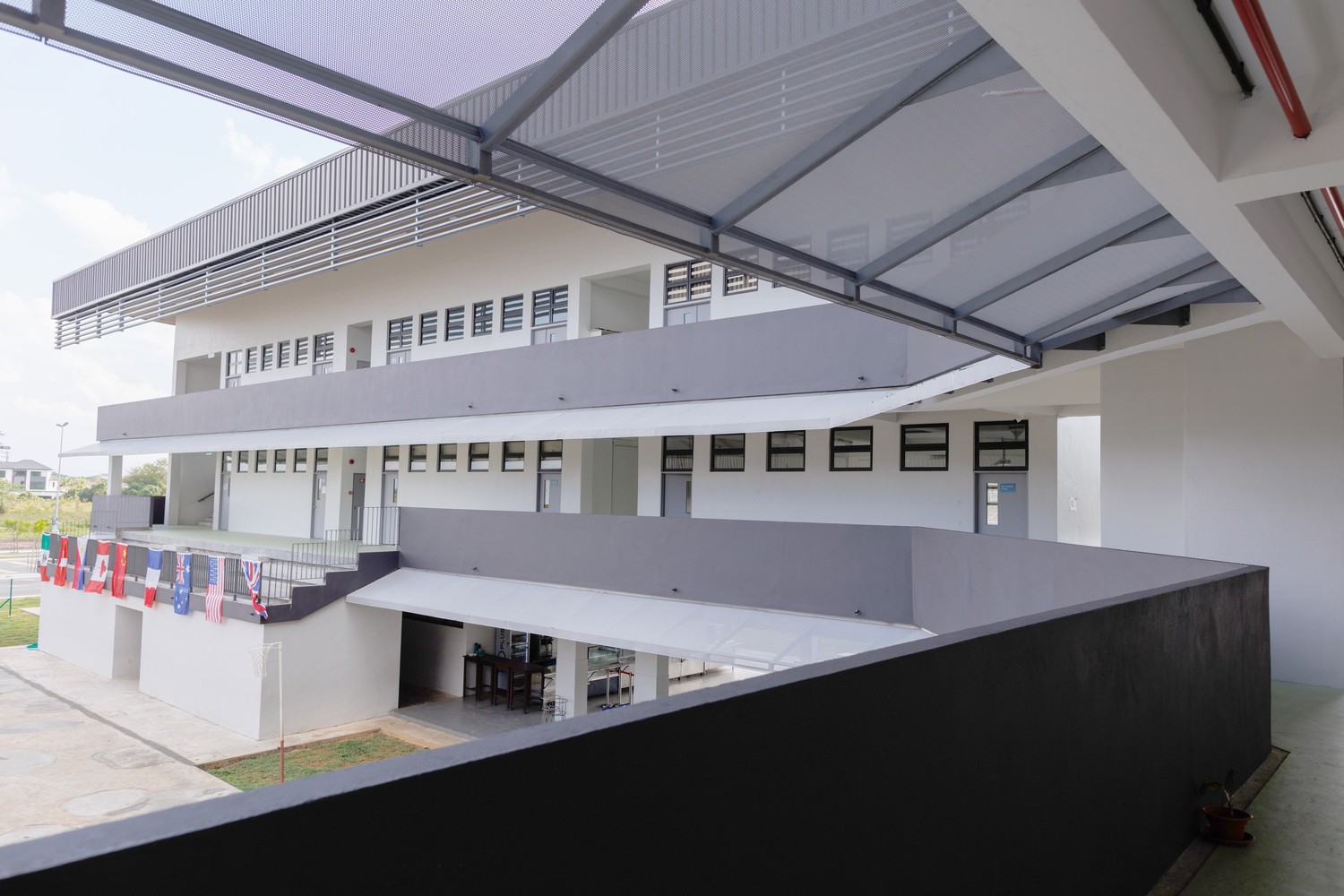
Seating steps have been installed along the corridor, offering a view towards the basketball court
The architectural concept of Borneo International School is conceived as a contemporary learning environment that challenges conventional school typologies while responding sensitively to its tropical context. Positioned along a main arterial road within a growing residential precinct, the school is envisioned not only as an educational facility but also as a future neighbourhood landmark.
Central to the design is the idea of the “Living Street”, a spatial strategy that replaces the typical linear school corridor with a series of interconnected, animated spaces that encourage social interaction, informal learning, and visual connectivity. These intermediate spaces bridge the polarities between focused academic learning and physical, social, and creative development, allowing students to move fluidly between indoor and outdoor environments. Quiet observation zones, collaborative areas, and active learning pockets are carefully layered to support a wide range of learning experiences.
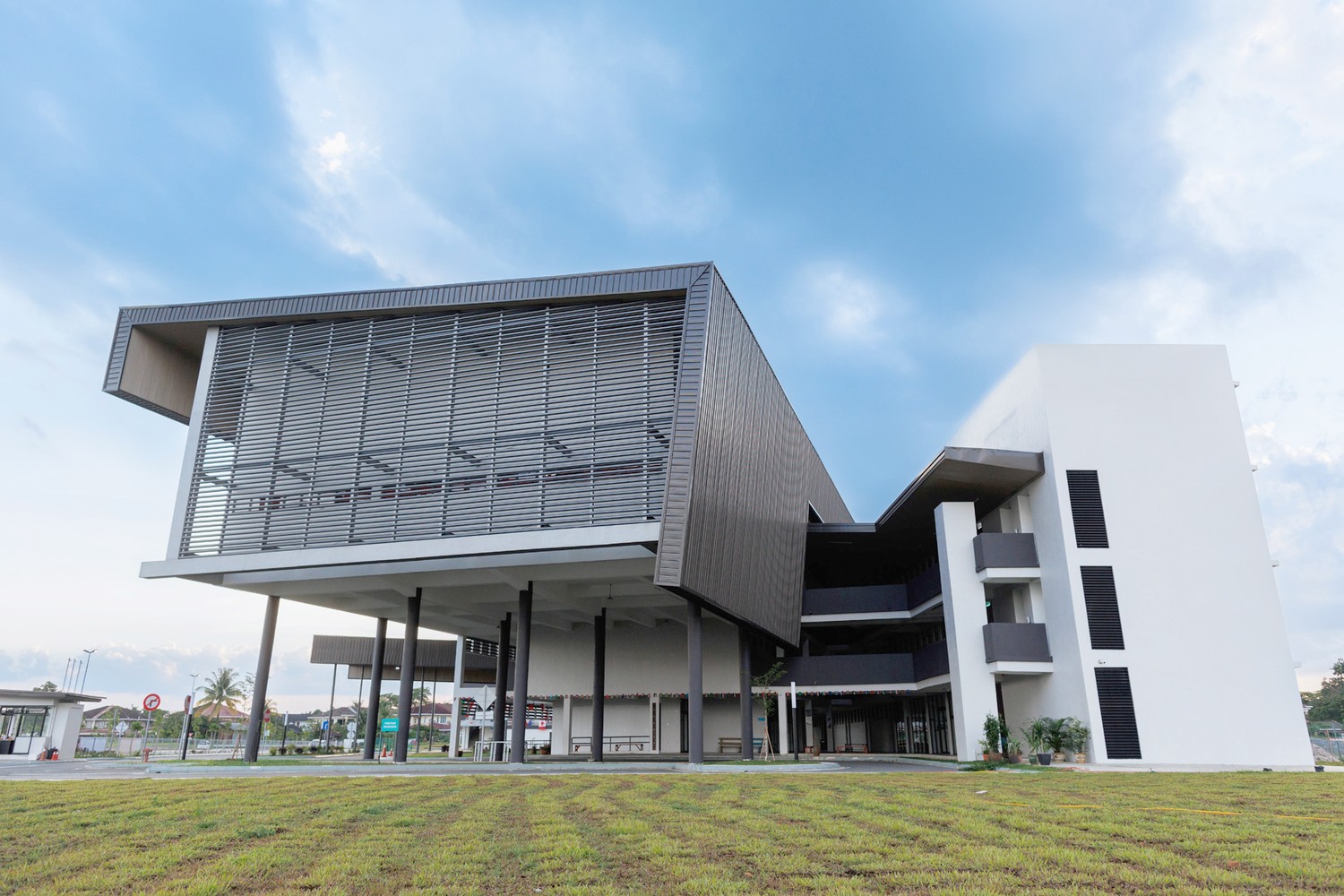
The front entrance of the school is architecturally elevated, housing the multipurpose hall above, with the main drop of area situated beneath it. This design not only creates a prominent entrance statement but also provides a shaded area for comfort and convenience
The building massing is articulated through setbacks, subdivision, and expansion-contraction strategies to enhance permeability, daylight penetration, and natural ventilation. Courtyards are carved between blocks to bring light and air deep into the plan while creating communal gathering spaces that foster interaction. The elevated multipurpose hall marks the main entrance, creating a strong architectural gesture while providing a shaded drop-off zone beneath, an important response to the tropical climate.
Climatic responsiveness is a key design driver. The building is predominantly oriented along a north–south axis to minimise heat gain while maximising cross-ventilation through prevailing winds. Large roof overhangs, vertical fins, screens, verandas, and landscaped buffers are integrated to reduce solar exposure and enhance thermal comfort.
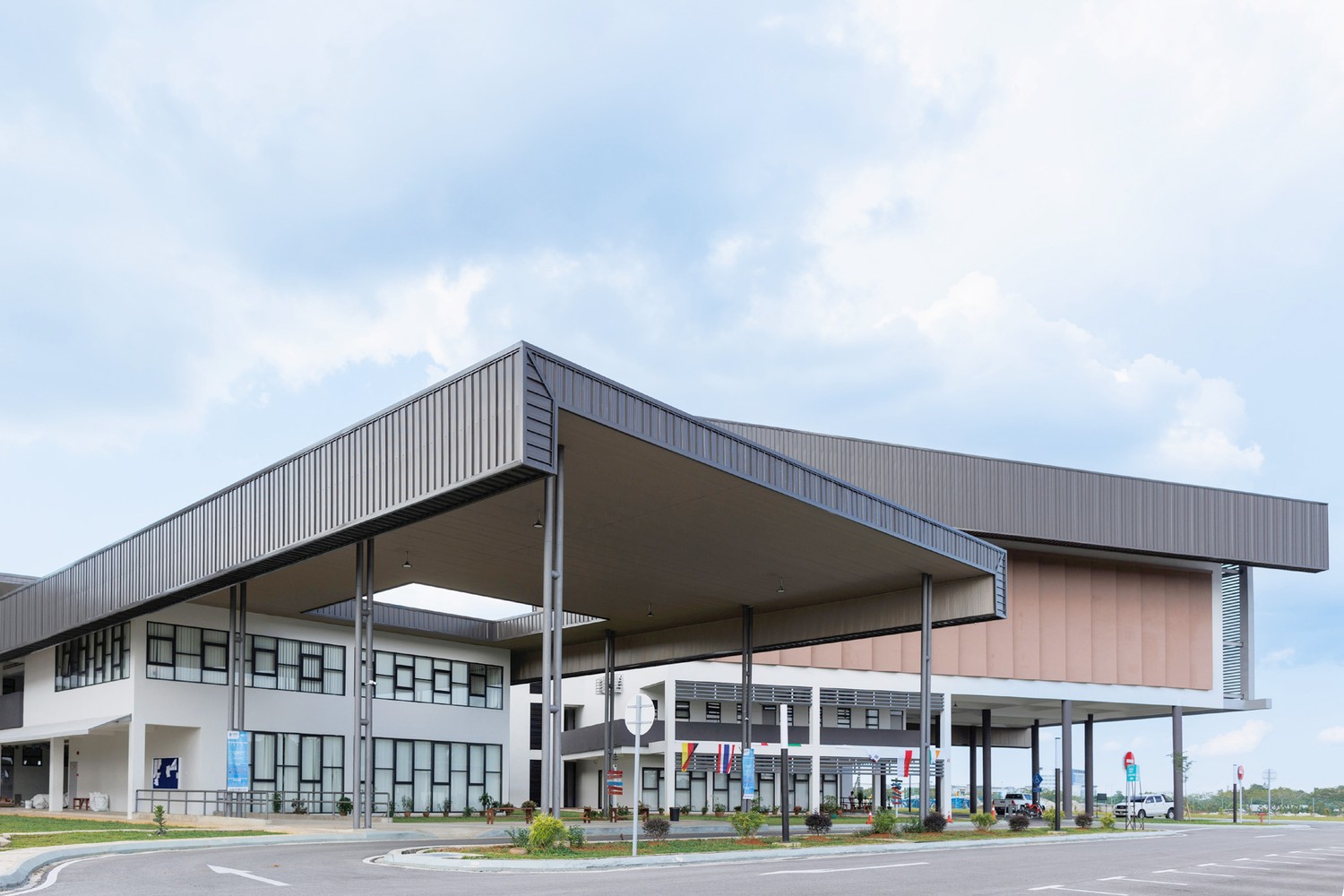
A large drop-off roof covers the central area in front of the library space, offering shade for the waiting area. The roof features an opening that allows for a tree to grow through in the future, enhancing the space with natural light and greenery
Overall, the design seeks to create a balanced educational environment (one that is structured yet flexible, functional yet playful), demonstrating how thoughtful architectural strategies can support holistic learning while remaining cost-effective and contextually grounded.
A refined Tropical Modernist campus shaped by porous learning streets, deep overhangs, and climate-responsive shading that seamlessly integrates education, social interaction, and passive environmental design.
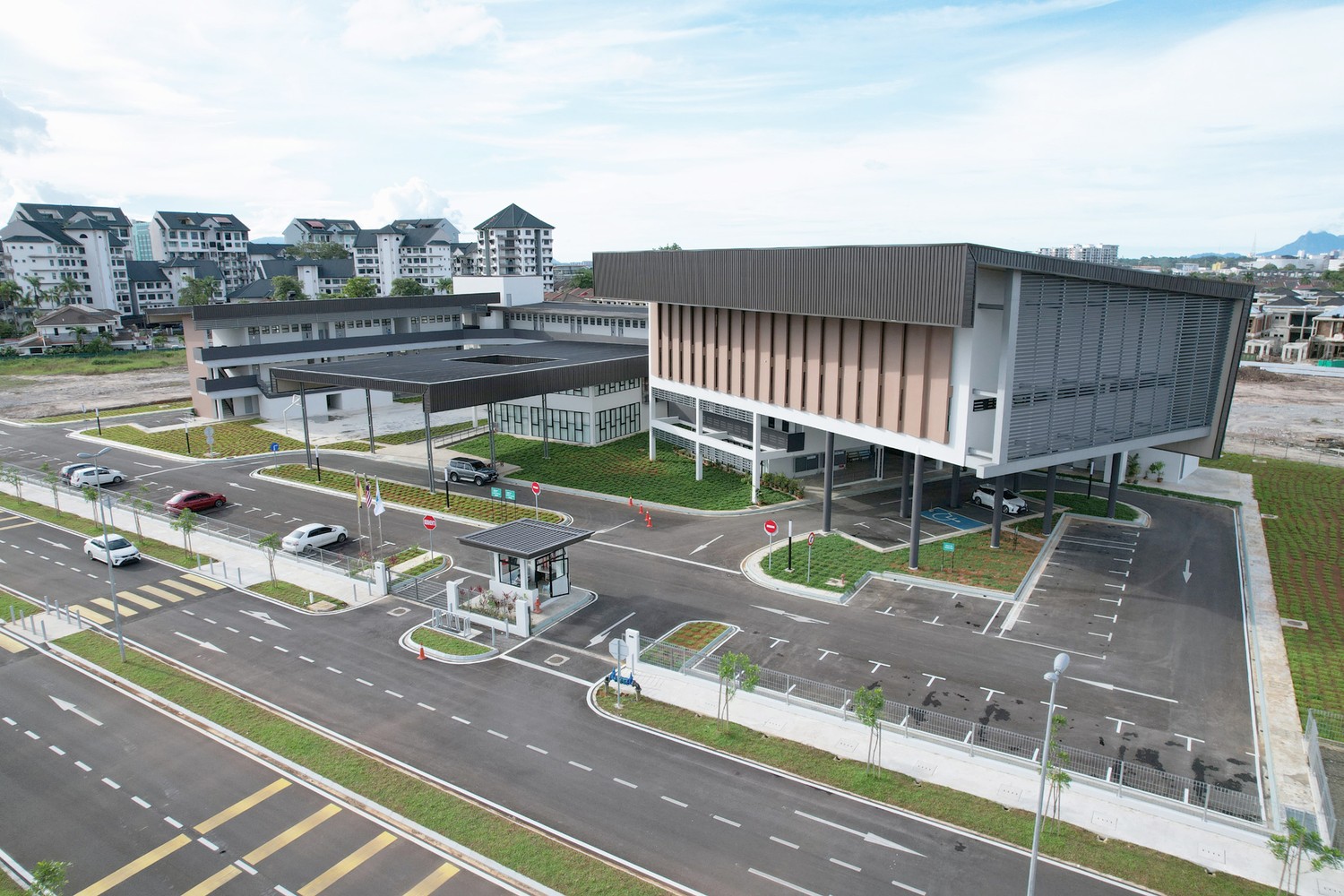
Aerial view of the school with its blocks stretching along the main road, showcasing a playful architectural massing and an informal composition