LC Yap Architect created a serene, uninterrupted connection with the surrounding greenery in the Eaves by emphasising generous natural light and spatial transparency that encourage visual continuity.
Text by the architect
Connection between the internal and external space
The design is deeply rooted in the principles of Japanese minimalism, drawing from its emphasis on simplicity, calmness, and the seamless coexistence between nature and built form. Central to the concept is the philosophy that architecture should not compete with the natural environment but instead frame, enhance, and harmonise with it. With this in mind, the home is shaped as a tranquil retreat where interior spaces flow effortlessly into the landscape.
Through this careful orchestration of light, space, materials, and landscape, the design embodies a holistic fusion of nature, architecture, and tranquillity — capturing the essence of Japanese minimalism while responding sensitively to its environment.
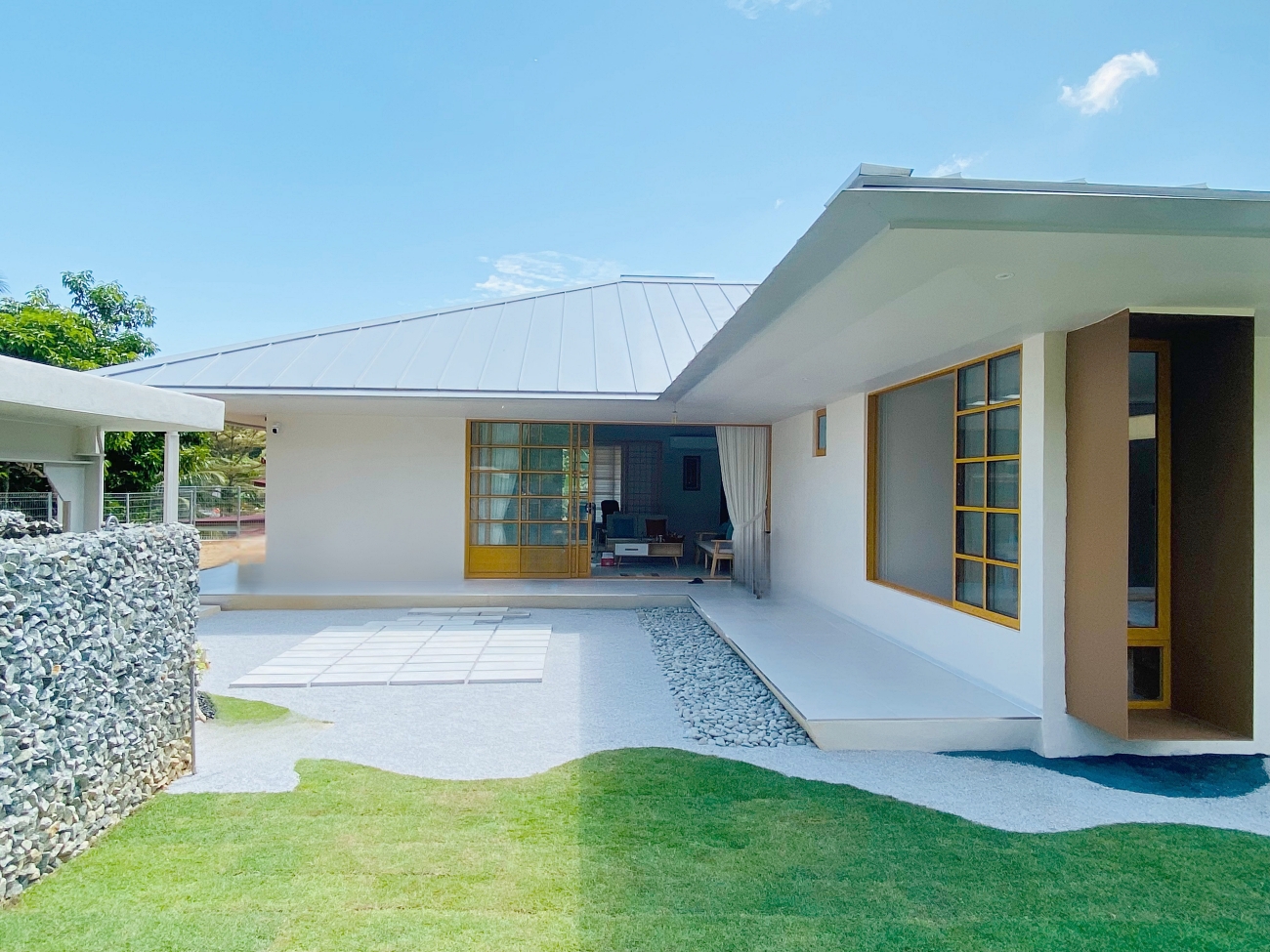
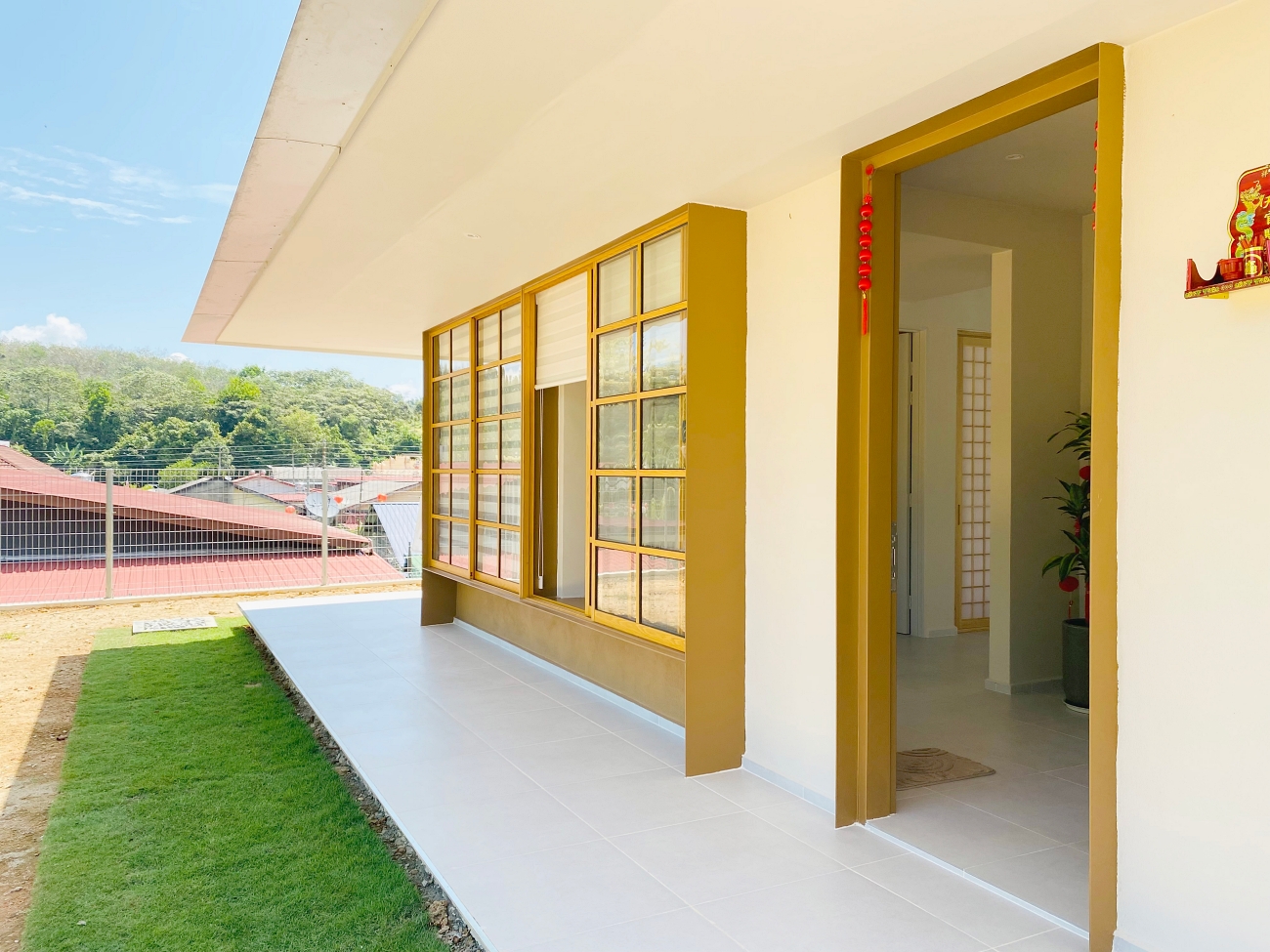
Large opening with a continuous terrace connecting the living area and garden
A key design priority was strengthening the relationship between the house and its gardens. To achieve this, we emphasised generous natural lighting and a spatial transparency that encourages visual continuity. Large sliding doors dissolve the threshold between indoors and outdoors, while the wide verandah and deep roof overhangs provide shaded, transitional areas that soften the shift from enclosed space to open air. These elements work in unison to create a serene, uninterrupted connection with the surrounding greenery.
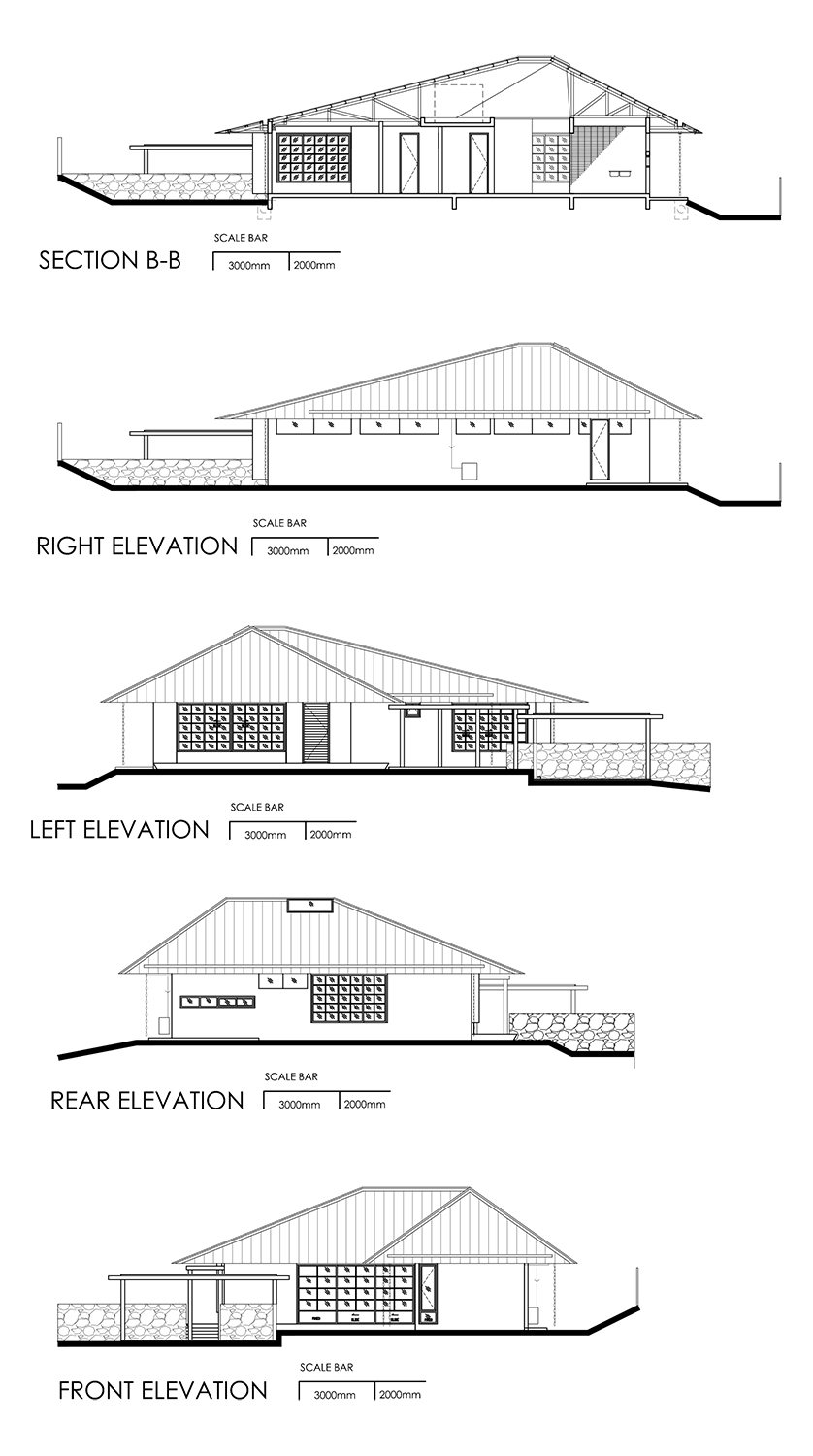
In the living hall, the spatial composition is further elevated by the introduction of a skylight and a tapered ceiling. These features not only articulate the hierarchy of spaces but also curate a dynamic play of natural light. Throughout the day, the shifting movement of the sun casts changing patterns of shadow and brightness, bringing a sense of rhythm and vitality to the interior. This ever-changing interplay creates an animated environment that constantly responds to nature’s cycles.
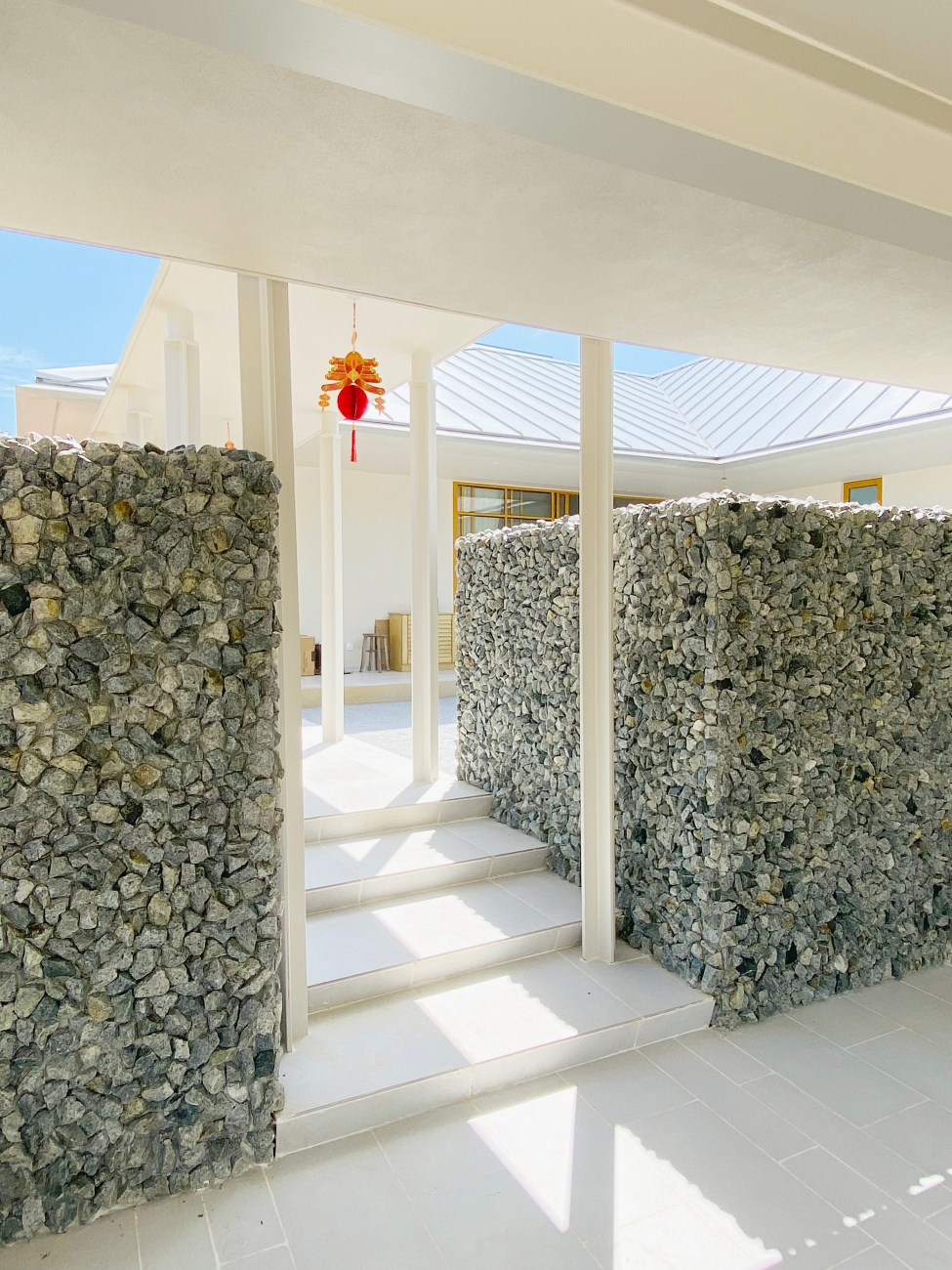
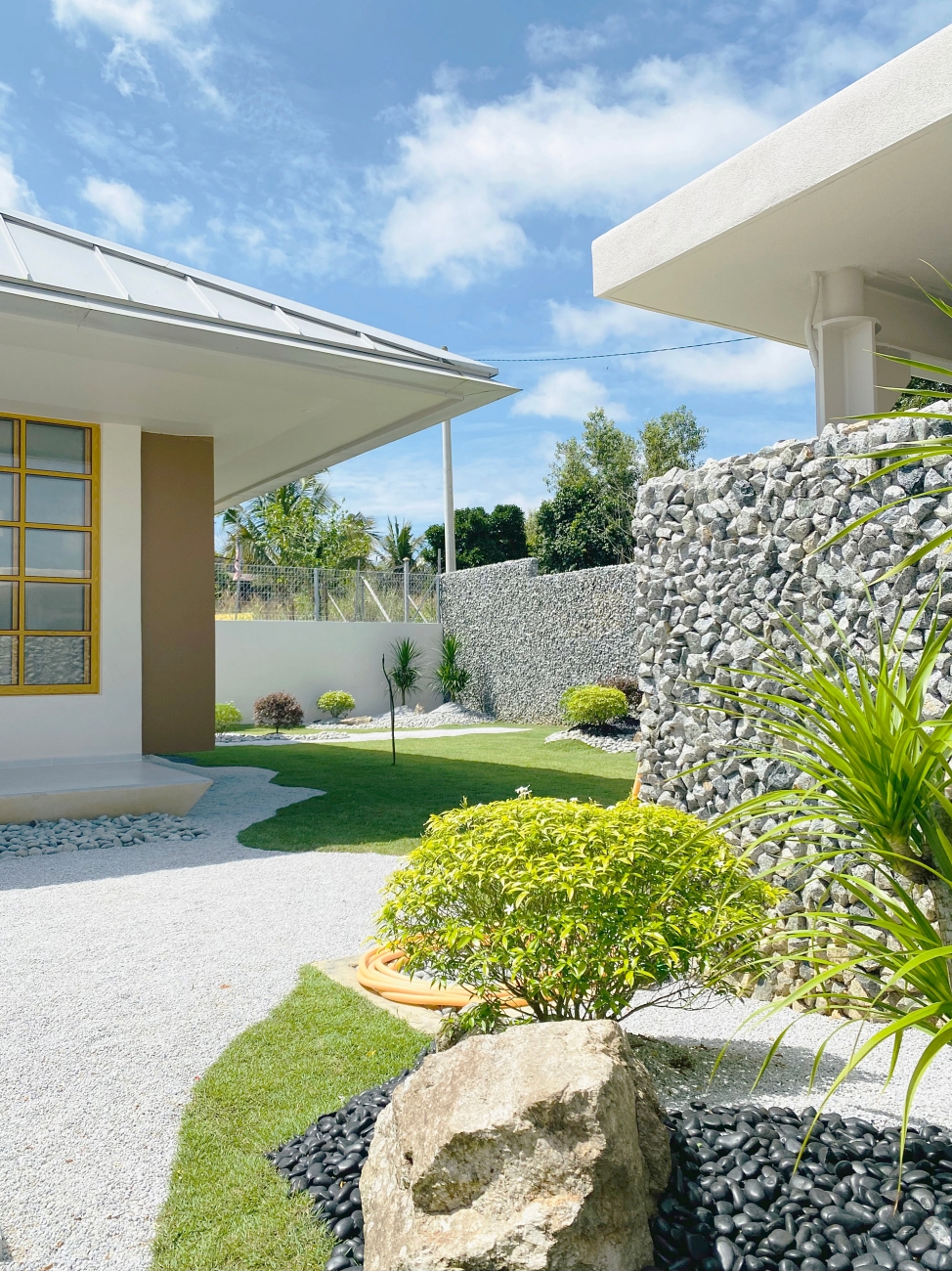
A sense of journey and mystery when entering the compound
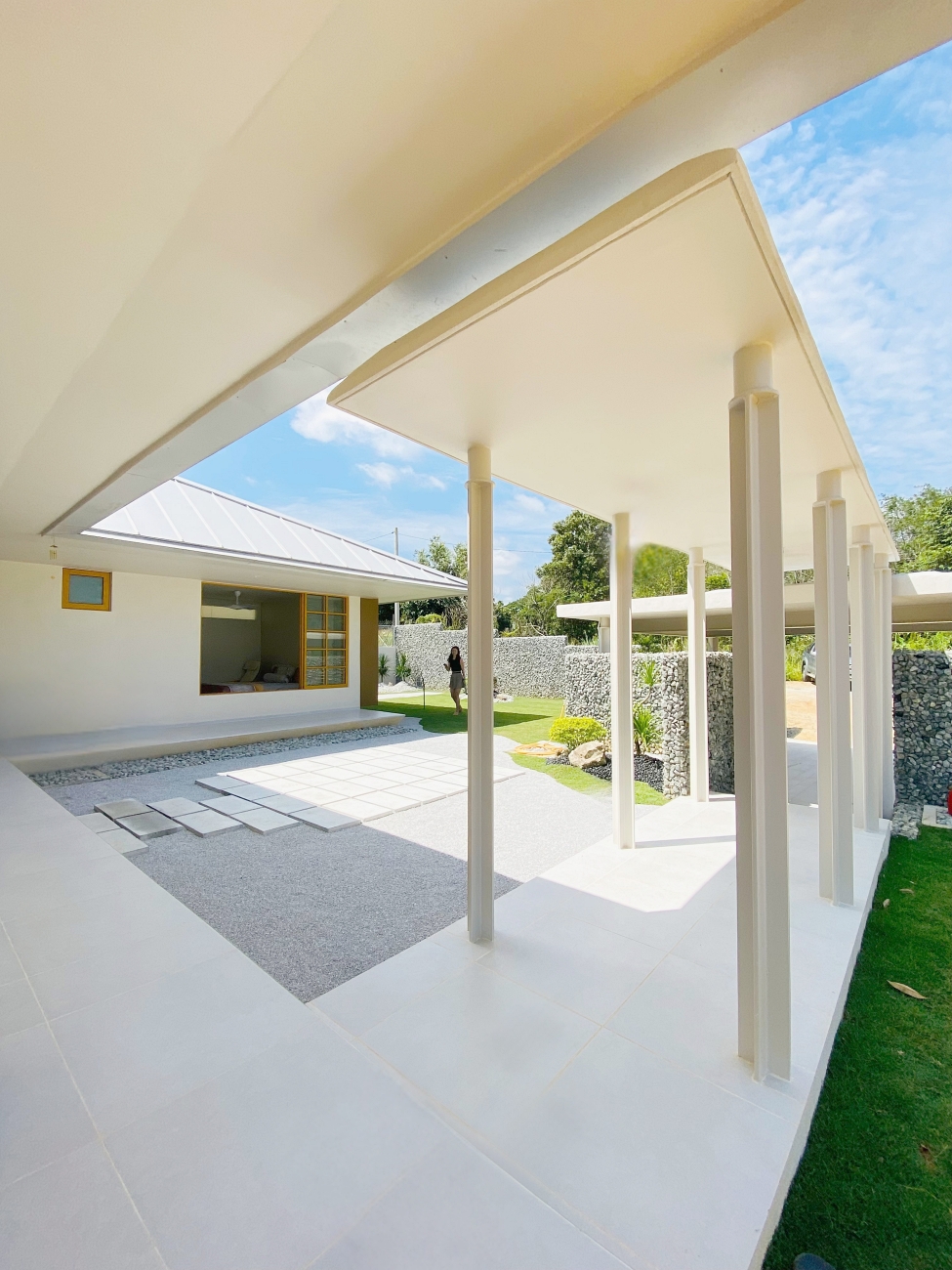
A linked walkway from the car porch to the main building
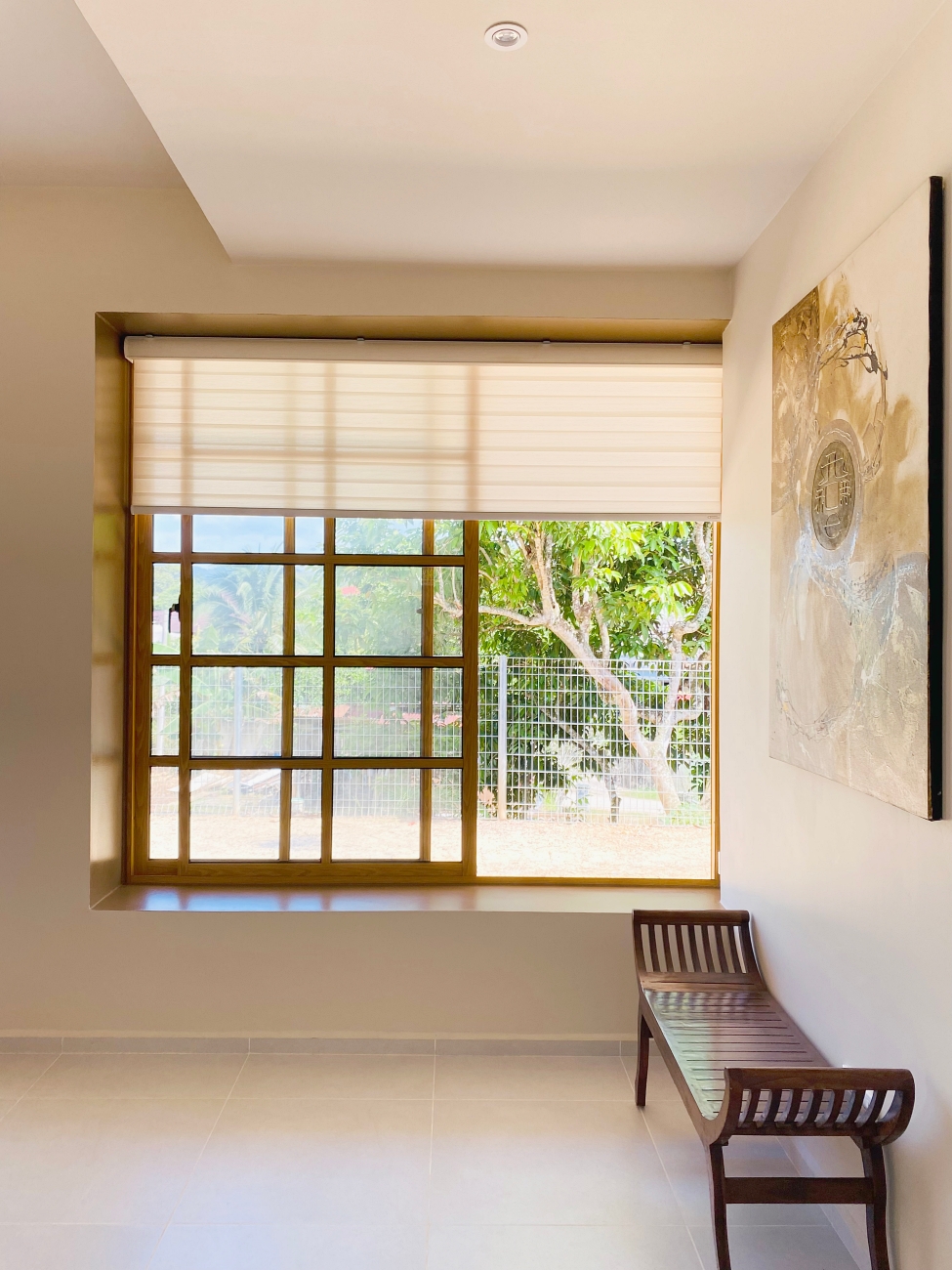
Every window and opening in the house is thoughffully oriented to capture curated views of nature. Rather than merely providing ventilation or daylight, these openings act as delibeate frames, presenting small, composed scenes of the outdoors — turning the landscape into a living artwork. Material choices, such as stone aggregate, further reinforce the home’s connection to nature. Their tactile and organic qualities evoke a feeling of groundedness and sustainability, allowing the structure to blend gently into its surroundings.
One of the main challenges of this project was balancing the requirements of Chinese cultural principles (Feng Shui) with the limited outward views caused by the surrounding residential context. We addressed these constraints by adopting an island-style layout, incorporating pockets of gardens that create self-contained, internal views.
To meet the cultural considerations, we carefully integrated Feng Shui elements with both precision and practicality, ensuring that the design harmonises the conceptual vision with traditional cultural expectations. The spatial journey into the home is also intentionally choreographed.
The main entrance
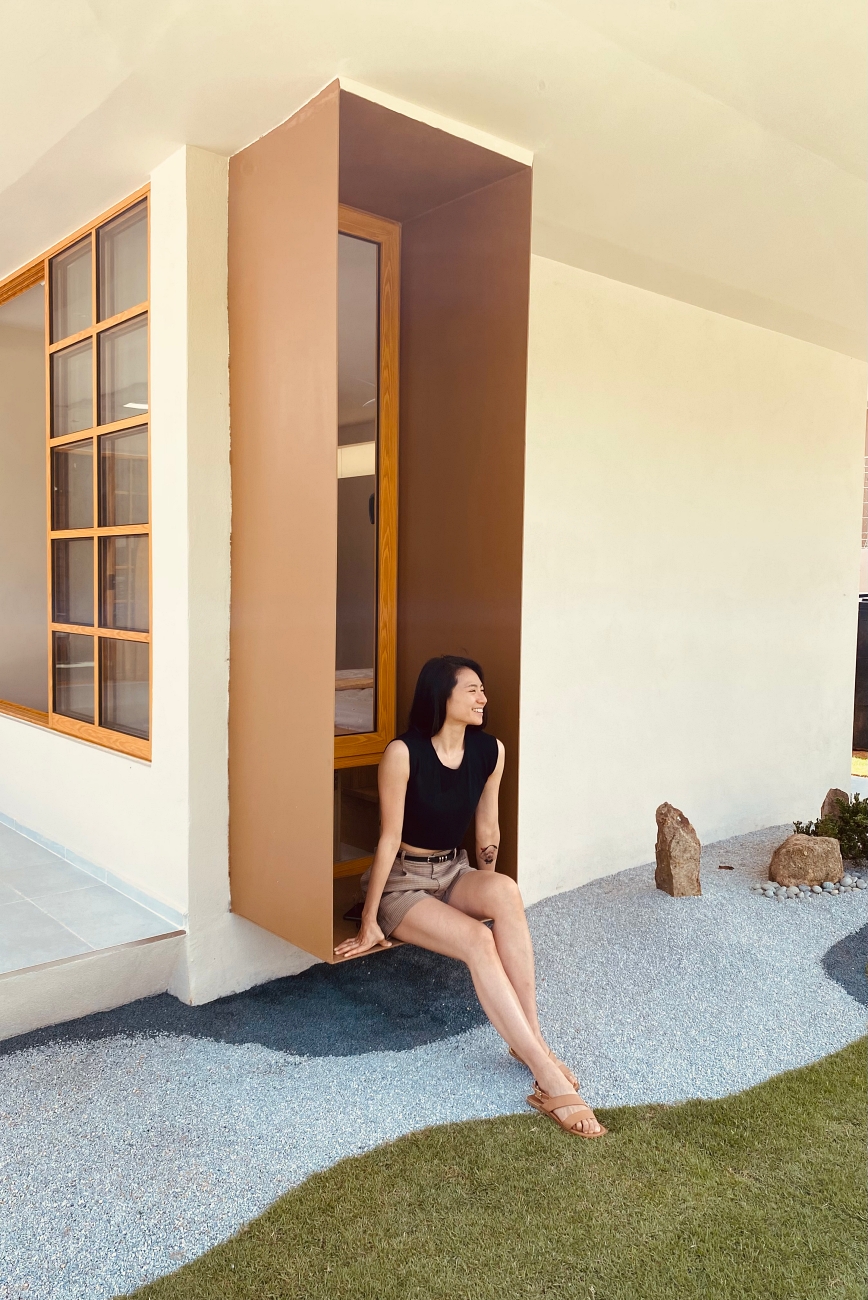
The bay window is a statement and also functions as a practical bench to enjoy the garden
This pathway encourages residents and visitors to pass through the garden before entering the interior, fostering a moment of stillness and connection with nature. This transition blurs the boundaries between exterior and interior and redefines the garden not as a secondary element, but as an integral component of the overall living experience.
Through this careful orchestration of light, space, materials, and landscape, the design embodies a holistic fusion of nature, architecture, and tranquillity-capturing the essence of Japanese minimalism while responding sensitively to its environment.