Restored by WK Khor Architect in 2021 and adapted by Z & SR Architectural Ventures in 2023,
123 Macalister embraces an adaptive reuse strategy that both preserves and revitalises the building. Text by Ar. Au Tai Yeow
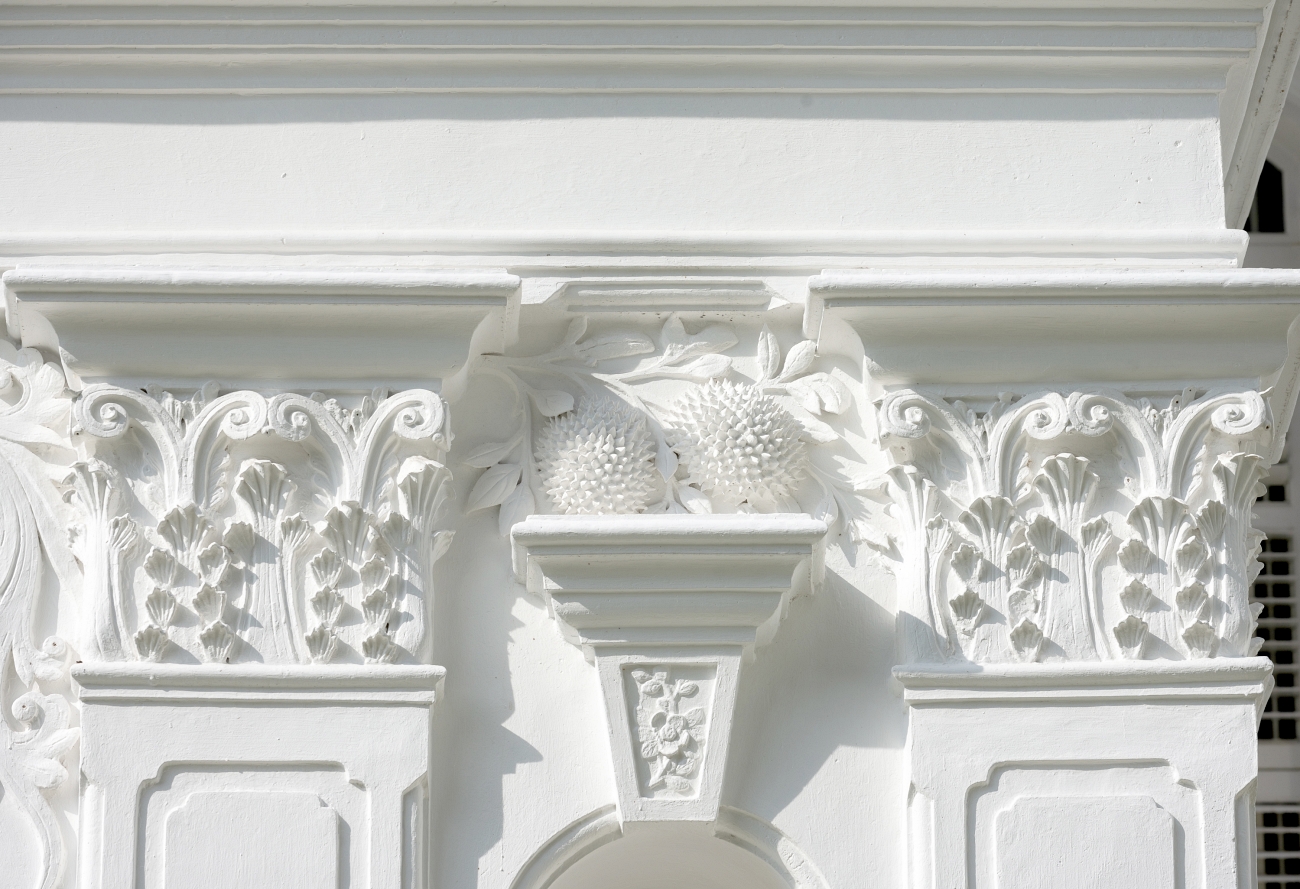
Durian motifs on keystone at front right façade of 123 Macalister
INTRODUCTION
George Town’s UNESCO World Heritage Site (WHS), inscribed in 2008, spans 109.38 hectares with over 1,700 pre-war buildings. The surrounding 150.04-hectare buffer zone holds more than 2,700 structures. Development in these areas must comply with strict heritage guidelines under the George Town Special Area Plan. Outside these zones, over 100 privately owned buildings were listed by the State Commiflee for a Heritage Inventory in the 1990s. Though lacking WHS legal protections, many are still regarded as heritage assets.
Macalister Road, named after Colonel Norman Macalister, Governor of Prince of Wales Island (1807–1810), is one of George Town’s most prominent roads. Its famed Angsana tree canopy was planted in the early 20th century by Charles Curtis, the first curator of the Penang Botanic Gardens. Like Jalan Sultan Ahmad Shah’s “Millionaire’s Row,” Macalister Road’s heritage homes face increasing development pressures. While some have been conserved, others have been lost. Jon Lim, in The Penang House and the Straits Architect 1887–1941, described “Straits Eclectic” as a stylistic blend of Chinese, European, and Malay elements developed by the region’s wealthy non-Europeans’ aspirations of modernity, hybridity, and status. 123 Macalister is a classic Straits Eclectic edifice and one of four heritage bungalows along Macalister Road listed by the authorities.
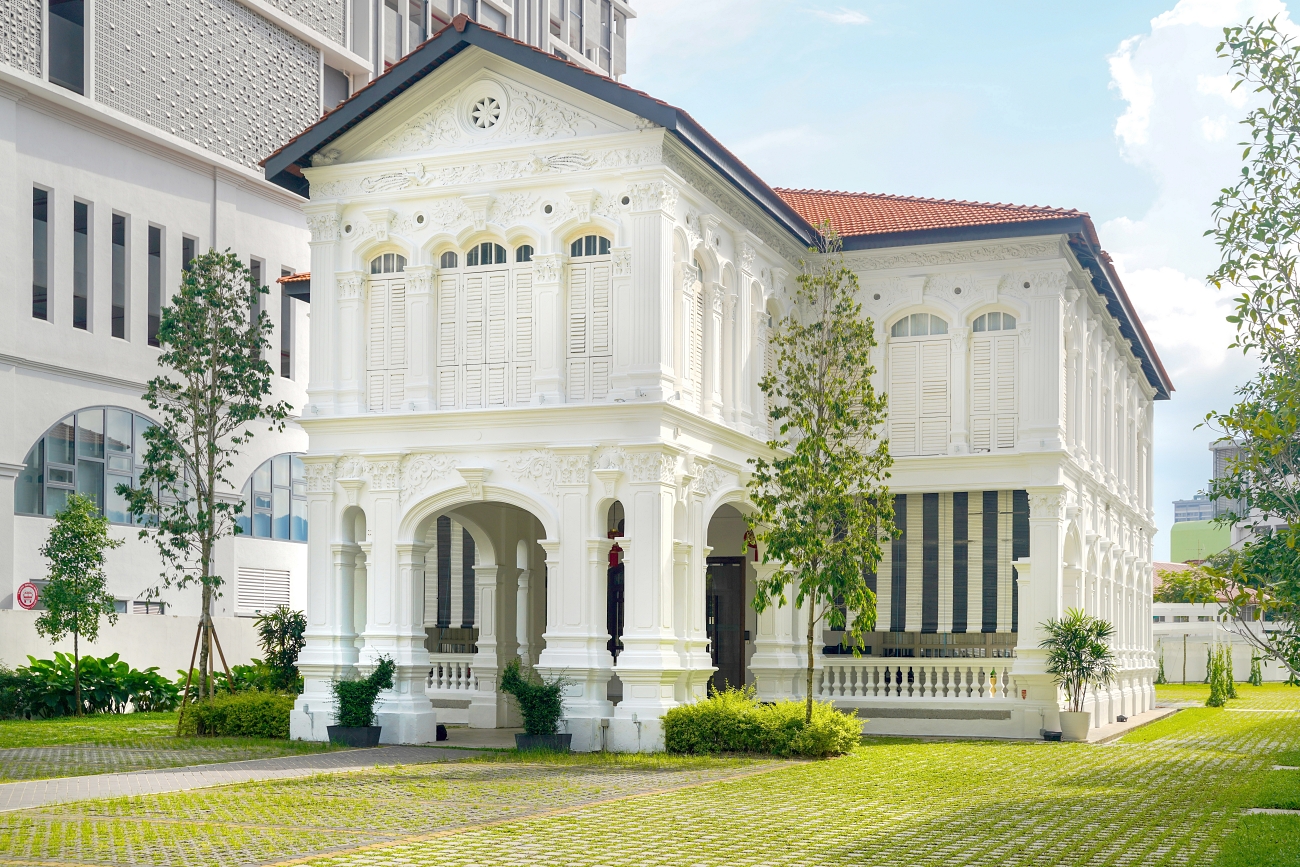
Front façade of 123 Macalister after renovation works
Ornate designs that mimic Chinese woodwork adorn the building. They were crafted and detailed from lime plaster and painstakingly restored and preserved by craftsmen.
HISTORY
123 Macalister Road was commissioned by Tan Chong Keat, a notable businessman in early 20th-century Penang, who previously lived at 140 Huflon Lane, a bungalow purchased in 1918 from Abdul Wahab, a Malay jeweller. Built in 1893, the Huflon Lane residence showcased a unique Sino-Malay hybrid style: a Malay pyramidal roof with Chinese and European features, reminiscent of other grand mansions like the Syed Al-Attas Mansion. Design elements included a crescent-and-star tympanum and neoclassical fanlights.
123 Macalister may have drawn on designs from 138 Huflon Lane. The property featured a main house, detached kitchen, and garage with driver’s quarters-standard for elite households then. After Tan’s death in 1926, the mansion was sold to Khoo Loon Teik of the prominent Khoo clan for 41,000 Malayan Dollars, a substantial amount at the time. Khoo furnished it with mother-of-pearl inlaid furniture, antique chandeliers, Chinese wood carvings, and ornate mirrors. The estate’s gardens included a variety of tropical fruit trees.
In 1959, the Tang family acquired the property. The last occupant remained until the early 2000s. After that, the building fell into disrepair. By 2012, scavengers had stripped it of fittings, timber floors, doors, and window frames. When the Ooi family purchased it in 2016, it resembled a ruined cathedral—grandeur faded but not erased.
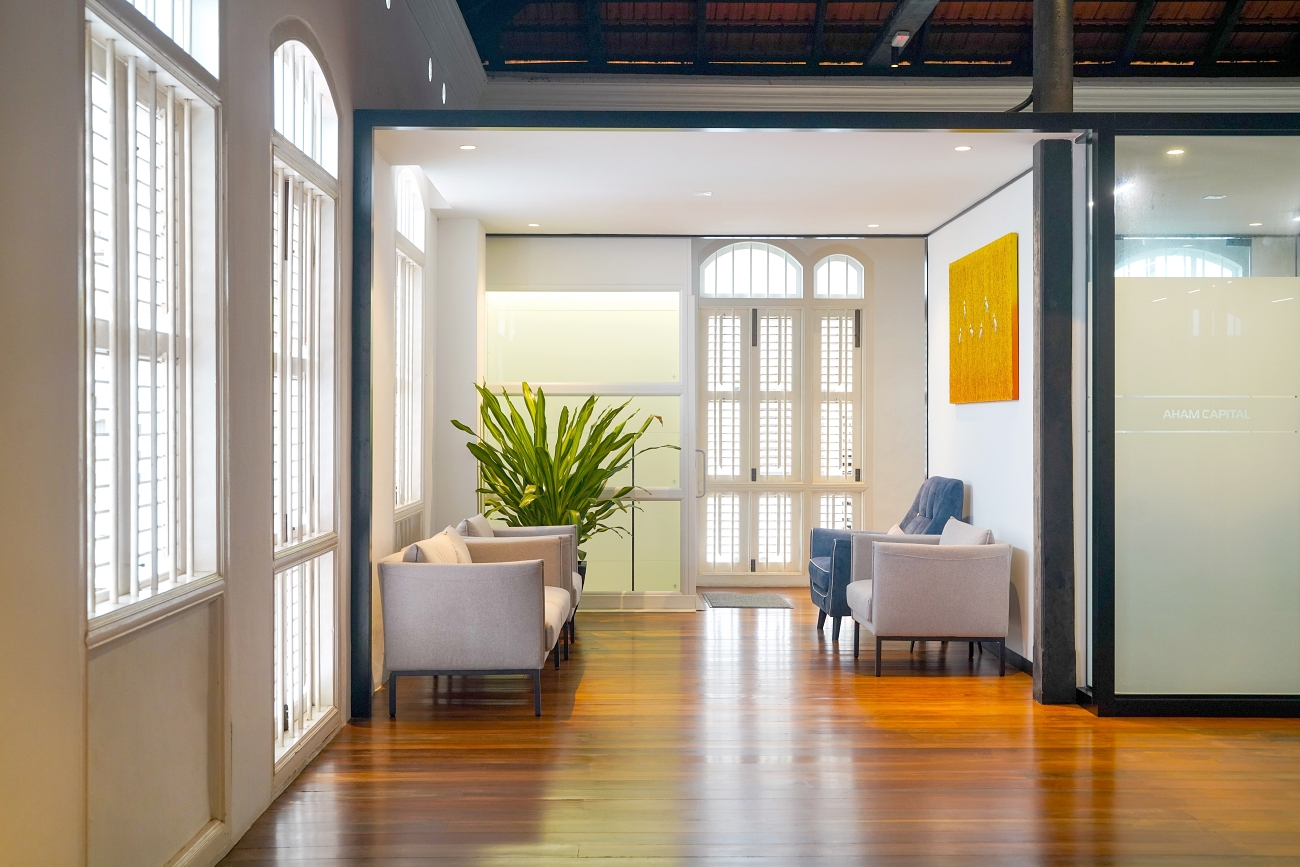
Interior of 123 Macalister with new passenger lift
RESTORATION AND LEGACY
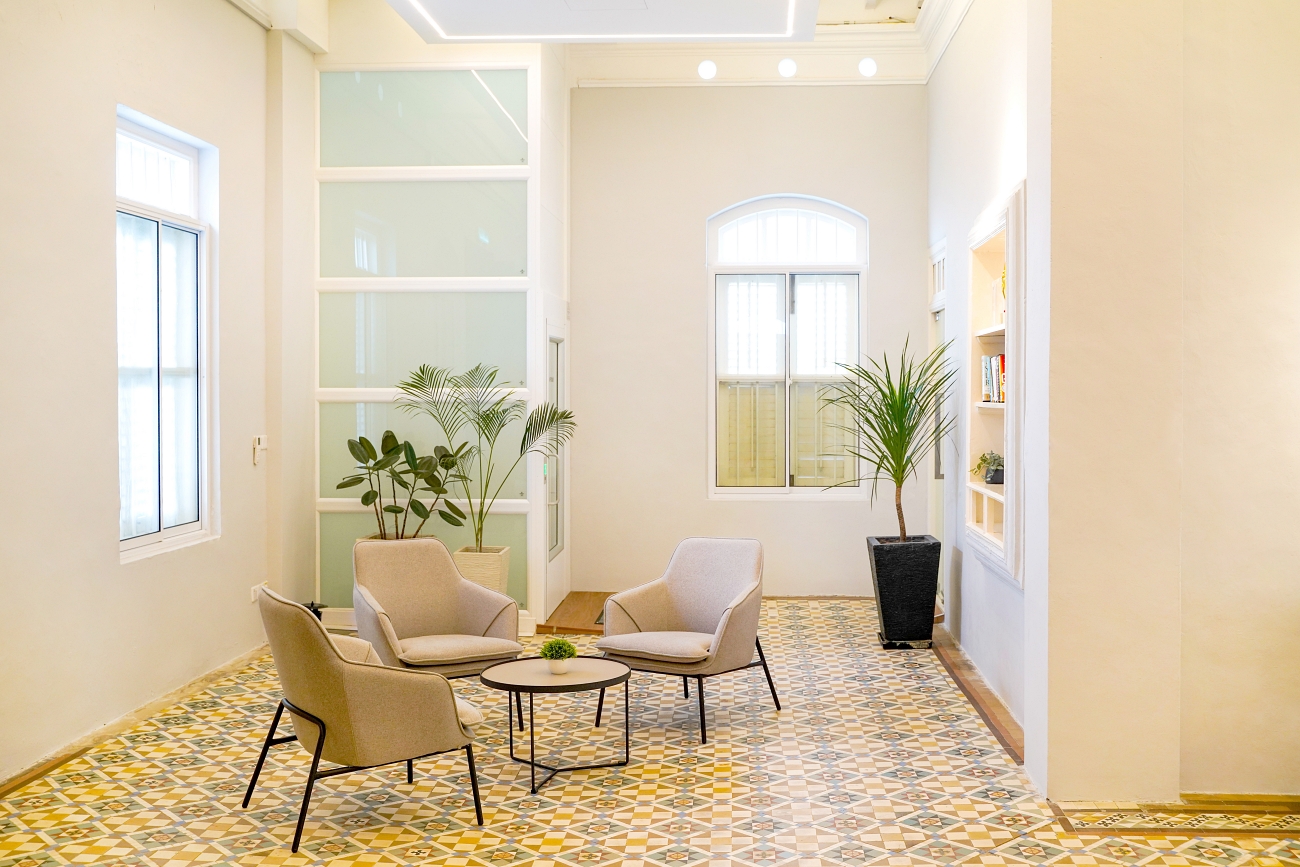
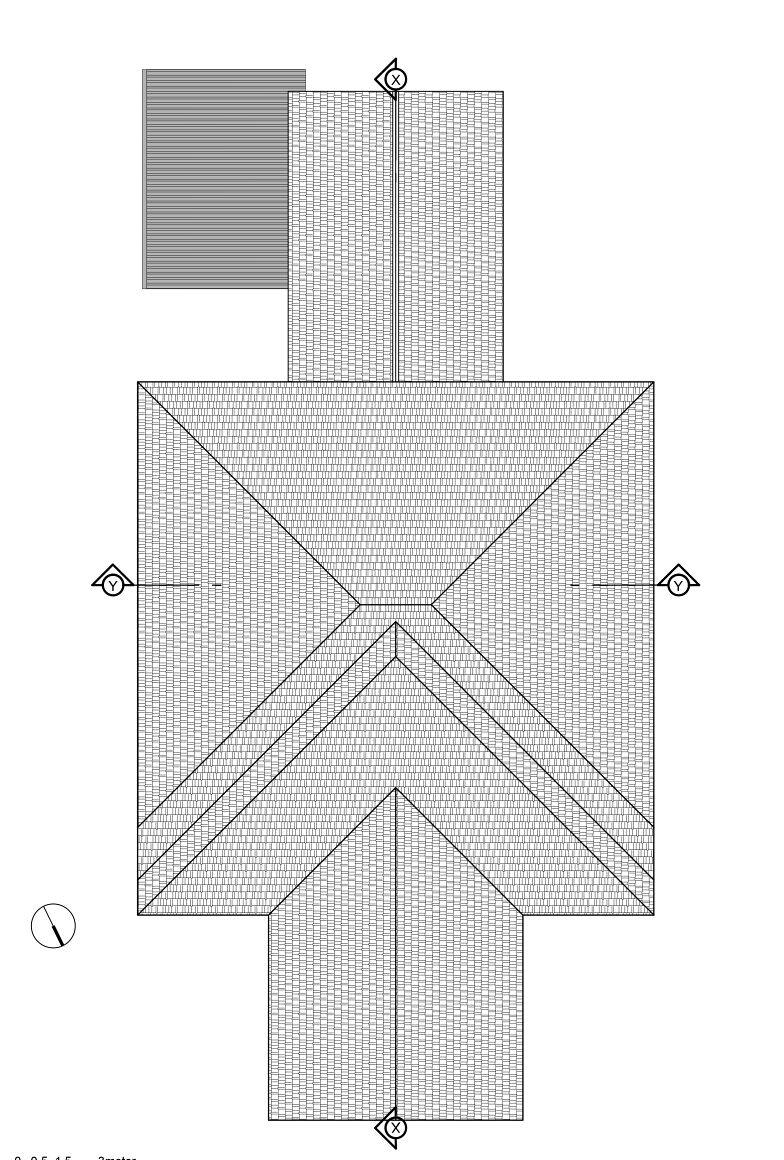
In 2017, the Ooi family initiated restoration works for 123 Macavlister. Original Stoke-on-Trent tiles from England were cleaned and preserved, timber flooring was replaced with matching hard-wood, and Marseilles roof tiles together with hardwood timber trusses were sourced to maintain authenticity.
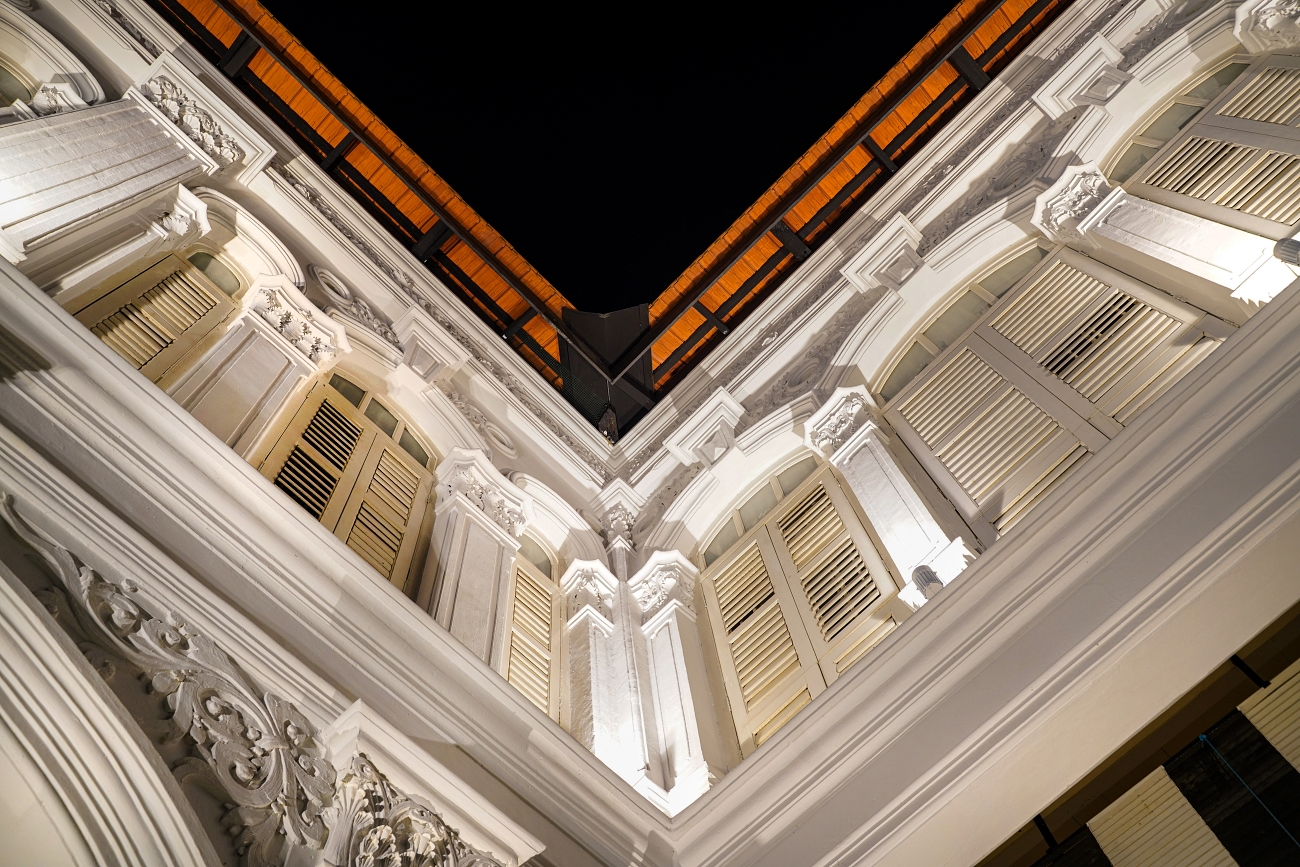
Ornate designs that mimic Chinese woodwork adorn the building. They were crafted and detailed from lime plaster and painstakingly restored and preserved by craftsmen. Two Chi-Lins (mythical creatures symbolising good fortune and wisdom) flank the main portico, while the keystone above the porch features an imaginative fusion of a durian fruit with Corinthian pilasters. Other preserved symbols include the Peranakan ‘buah delima’ (pomegranate), representing fertility and abundance; and phoenixes, linked to rebirth and feminine virtue. An Edwardian rosefle now decorates the tympanum. After the completion of the restoration works to the main house around 2000, the Ooi family decided that the mansion could no longer be reverted to a residential home and a concerted effort was made to find a suitable tenant. While tenants were evaluated, additional facilities such as toilets and an exterior ramp for the physically impaired were added.
Lounge, 1st floor of 123 Macalister after tenant occupancy
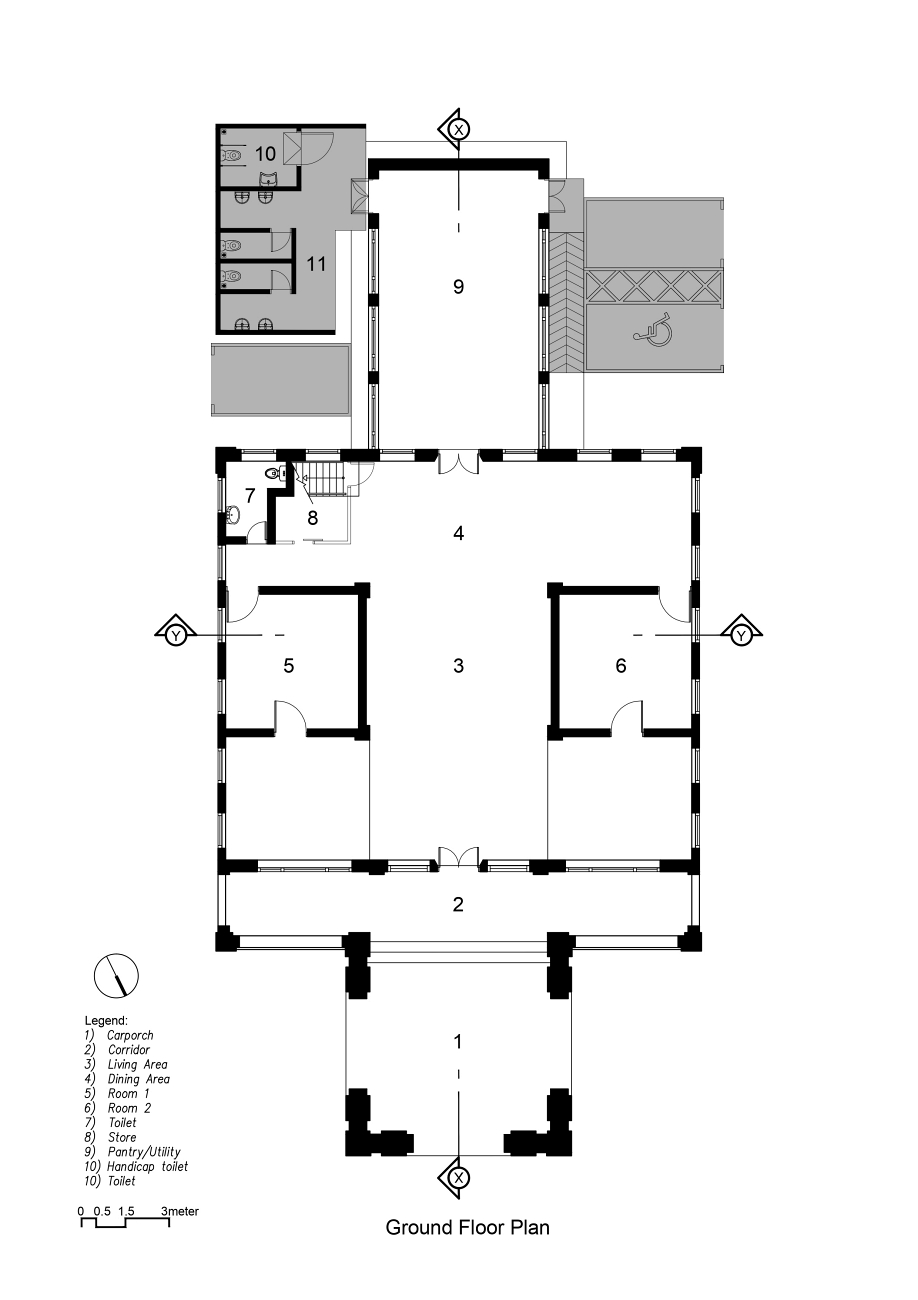
Floor plan
Ground Floor plan
ADAPTIVE REUSE
In 2022, the mansion was finally leased to a financial institution whose tasteful updates blend with the original architecture. A new consultant team respected the earlier restoration works and adapted them — demonstrating that heritage structures can be successfully integrated with new uses without sacrificing their character. Modern additions were introduced with minimal disruption to the building’s historic fabric and included air conditioning systems, electrical conduits, data cabling, all discreetly installed within existing recesses and service zones, maintain-ing the aesthetic continuity of the interiors.
The ground floor was reconfigured for universal access, including widened doorways and ramps, and a compact escalator was installed to connect the two levels, ensuring vertical accessibility without compromising the spatial integrity of the building. This sensitive integration shows how historic structures can serve modern purposes without losing their character.
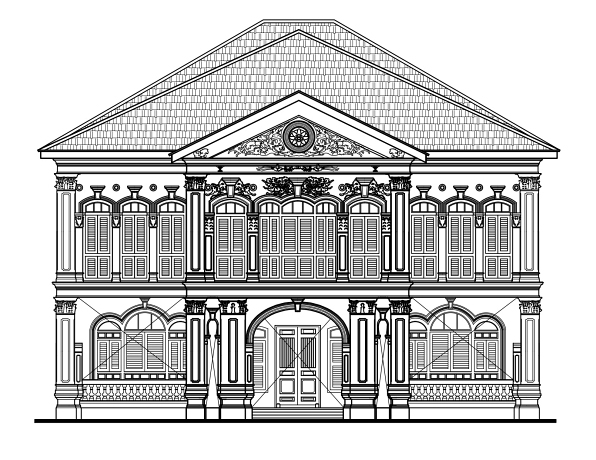
Front Elevation
EPILOGUE
Many neighbouring lots surrounding 123 Macalister have made way for high-rises. Some projects were required to conserve the original heritage buildings alongside the new development.
Although technically compliant with heritage regulations, these new structures often reduce the historic buildings to façades — overwhelmed and overshadowed by towering modernity. Against this backdrop, 123 Macalister stands out. The Ooi family has steadfastly resisted the pressures of commercial redevelopment and instead, embraced an adaptive reuse strategy that both preserves and revitalises the building.
123 Macalister remains one of the few intact pre-war mansions that exemplifies the Straits Eclectic style and serves as a testament to Penang’s layered cultural identity — a blend of Eastern and Western influences, colonial legacies, and local in-novation. Its survival underscores a broader story of migration, enterprise, and resilience in the Straits Sefllements.
Night view of the restored architecture facade details