“Mountains within the city, waters within the garden”. Cheah Ee Von marvels at the beauty of Suzhou gardens, their spatial organisation, poetic pavilions, and carefully orchestrated beauty.
By Cheah Ee Von
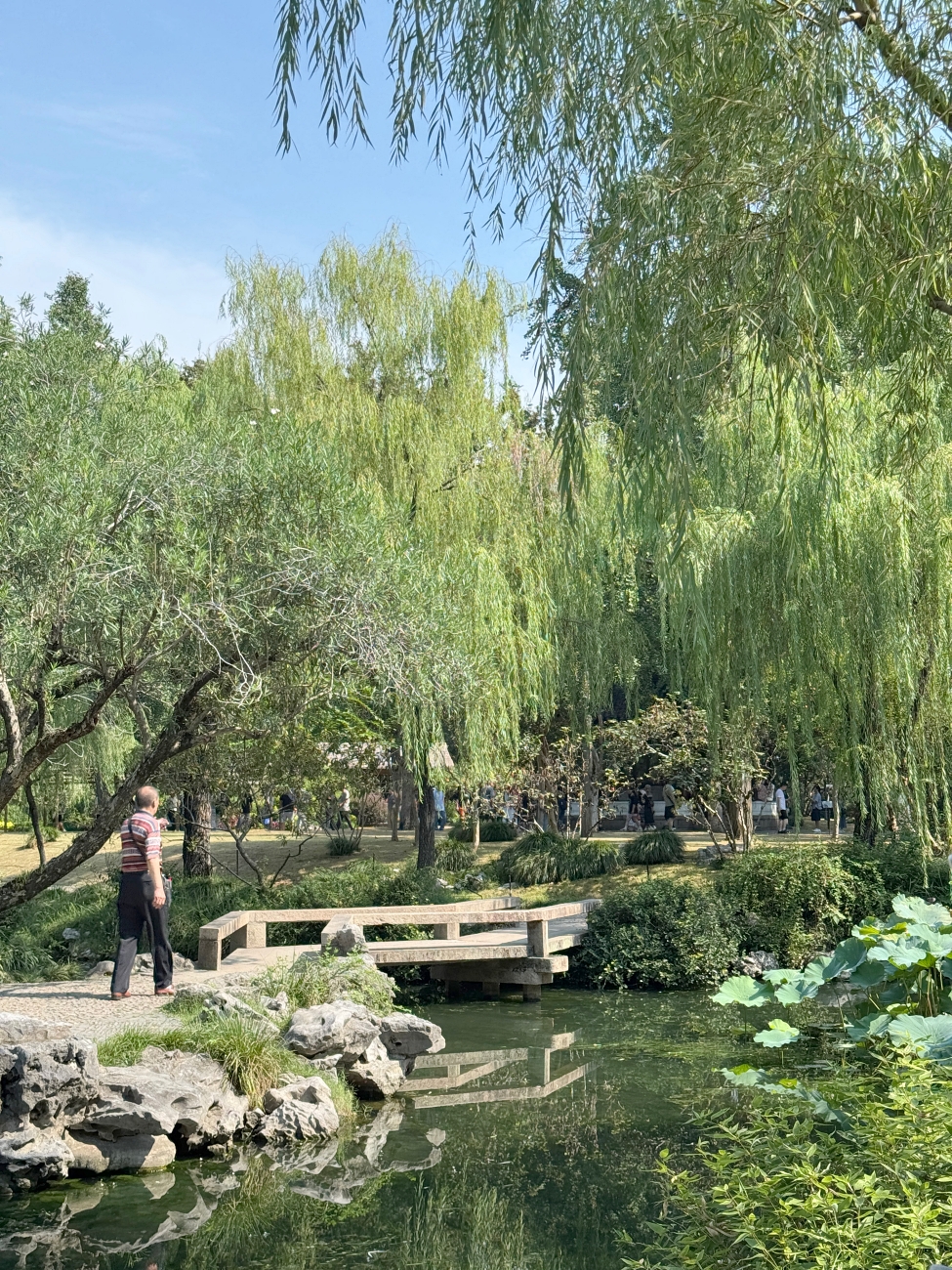
Winding waterway with willows at Humble Administrator's Garden
Suzhou gardens use a highly refined compositional technique known as “borrowing scenery”, employing various methods of visual integration to create a sense of natural beauty. Within a limited area, they evoke a rich and layered landscape experience.
The beauty of Suzhou gardens is a composite one. It is not only the beauty of individual elements, but the harmony between nature and human intervention, that strives to maintain a delicate balance. Architecture, pavilions, artificial rocks, water, plants, and pathways are all carefully orchestrated in response to one another— contrasting yet complementary, opposing yet unified — so that nature appears effortless and unforced.
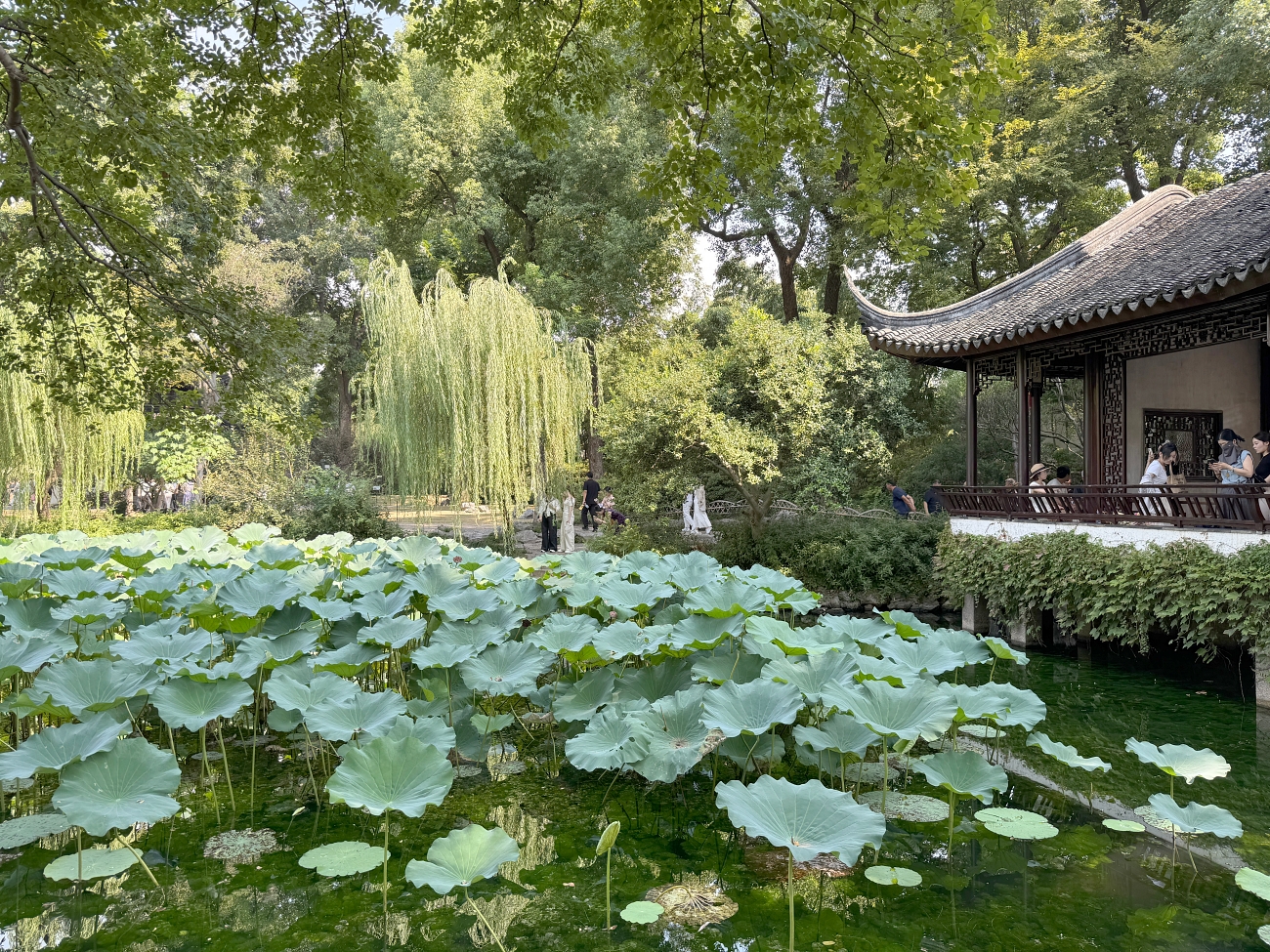
Lotus Pavilion located in the Eastern Garden section of Humble Administrator's Garden is a "half-on-land, half-on-water" structure. The front part of the pavilion extends over the pond, supported by stone pillars, while the back rests on the bank Botanical elements such as lotus, weeping willow, and Chinese pine,
Suzhou gardens are often described as “mountains within the city, waters within the garden.” Water is used as a central organising element, while architecture frames views and guides movement. The gardens do not attempt to replicate vast natural landscapes directly; instead, they distil and reinterpret nature through artificial means, creating an idealised vision of the natural world.
The Humble (or Inept) Administrator’s Garden, created in 1509 during the Ming Dynasty by retired official Wang Xianchen, is one of China’s most celebrated classical gardens, known for its poetic balance between nature and design. Rather than a grand spectacle, its beauty lies in restraint, where architecture guides the experience without overpowering Nature. The garden reflects the scholar-official ideal of retreat, contemplation and harmony, making it a lasting reference for landscape, architecture and spatial storytelling.
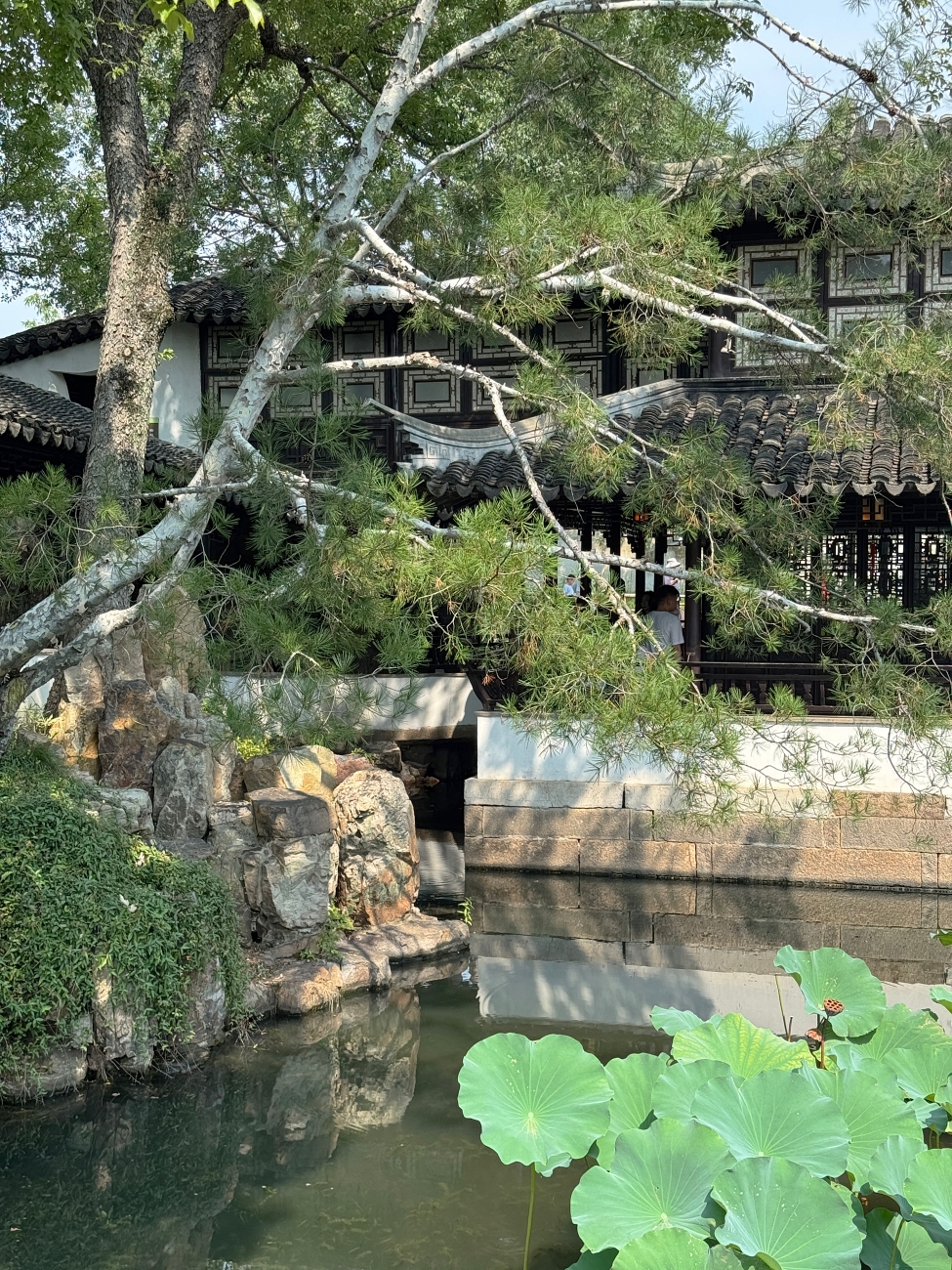
Botanical elements such as lotus, weeping willow, and chinese pine, makes up the "living layers" of Humble Administrator's Garden
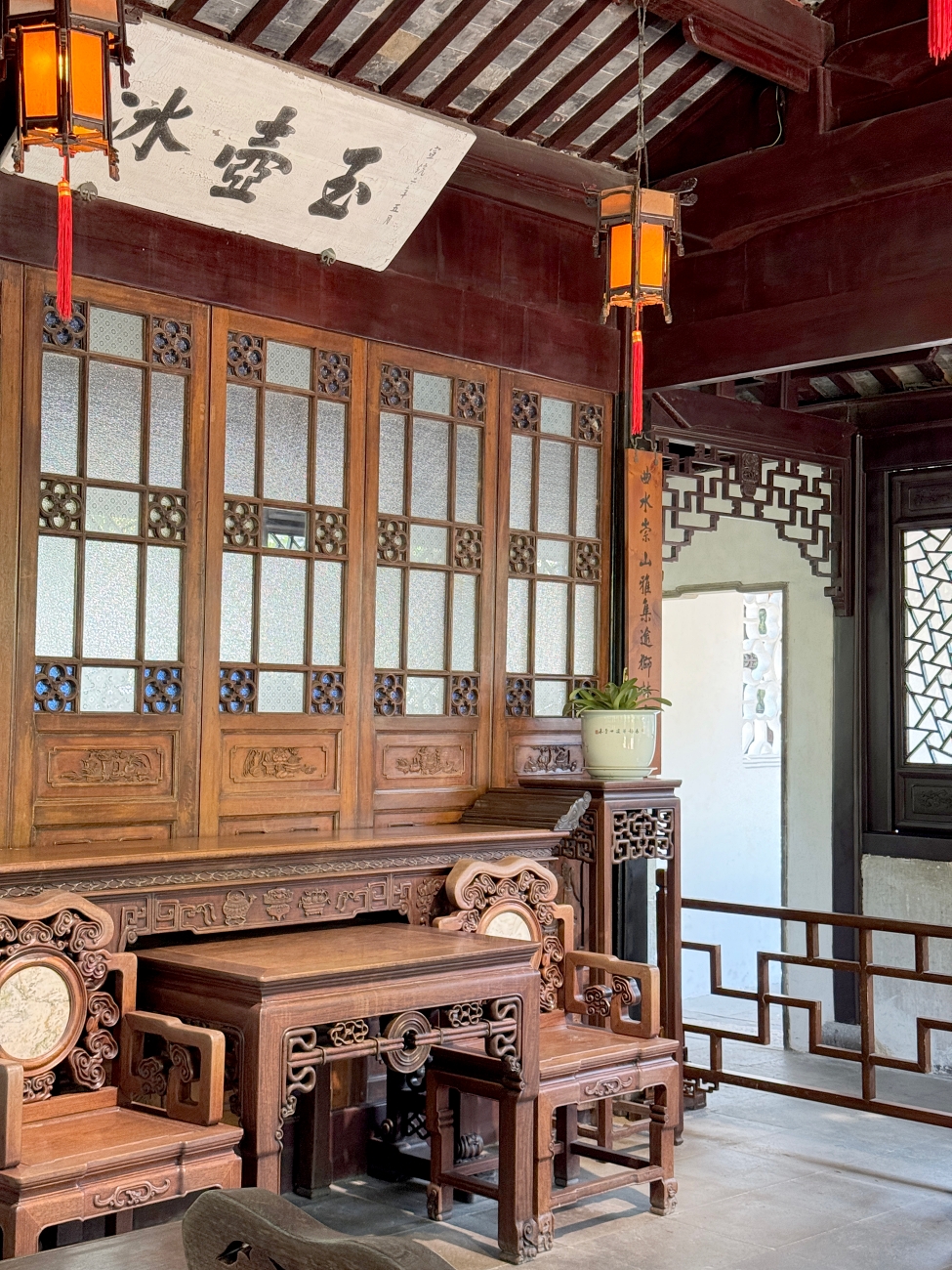
One of the pavilions that touched me deeply in the garden is the Linglong Hall. The hall derives its name from a poetic image described by the Song dynasty poet Su Shunqin, who wrote of sunlight filtering gracefully through green bamboo. Delicately shaped limestone once stood before the hall, set against a courtyard planted with bamboo, reinforcing this imagery of refined elegance.
Inside the hall hangs a plaque inscribed with the phrase “Jade Pot Ice”, a metaphor for purity and tranquillity. The expression originates from a poem by poet Wang Changling, who likened serenity to the clarity of ice contained within a jade vessel. This poetic ideal is echoed throughout the architectural details; the window lattices and courtyard paving adopt cracked-ice patterns, visually translating the inscription’s meaning into built form and enhancing the hall’s quiet, refined atmosphere.
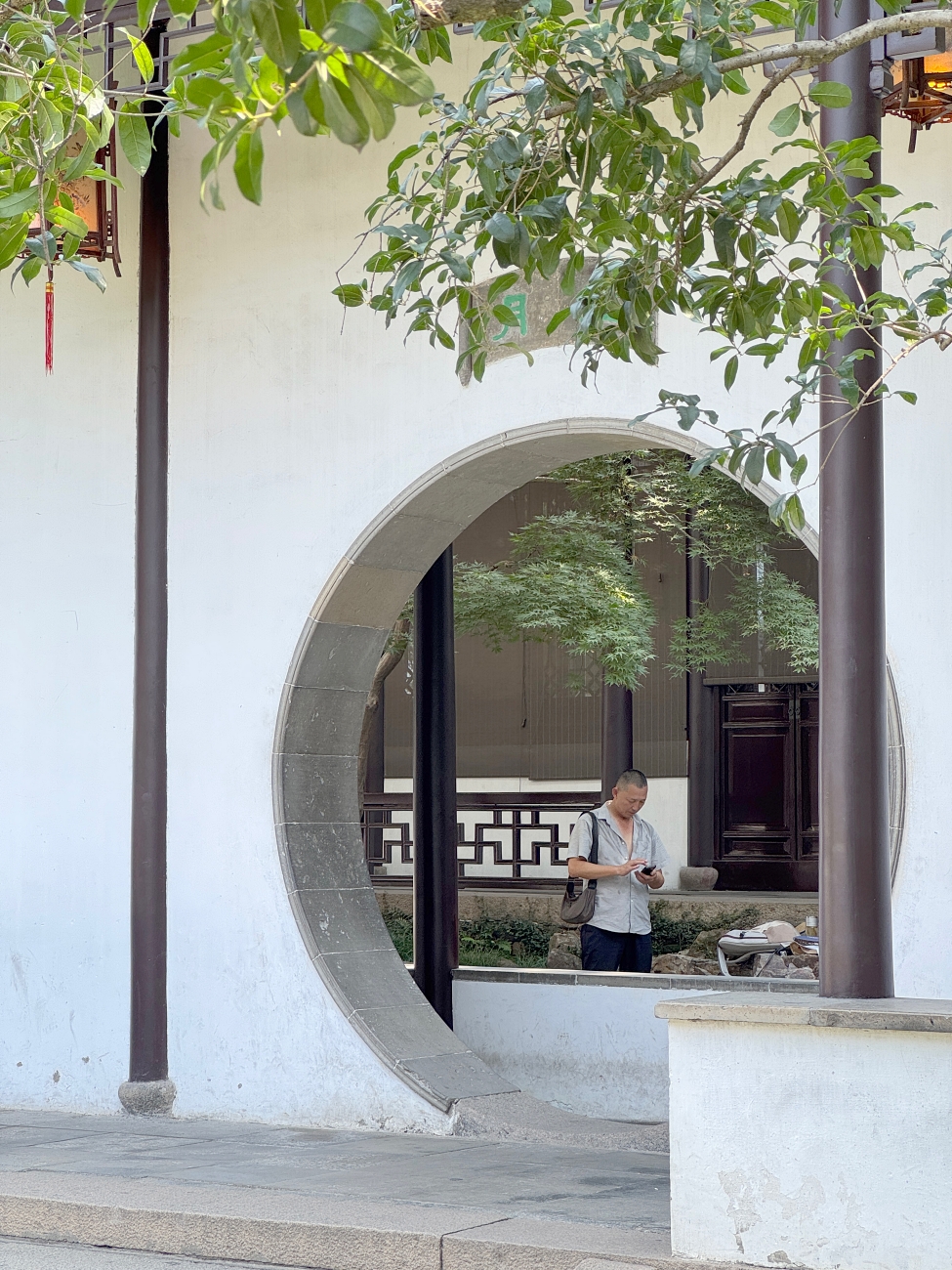
A moon gate is a circular opening in a garden wall that acts as a symbolic portal, representing perfection and unity while framing specific views as one transitions between different garden spaces
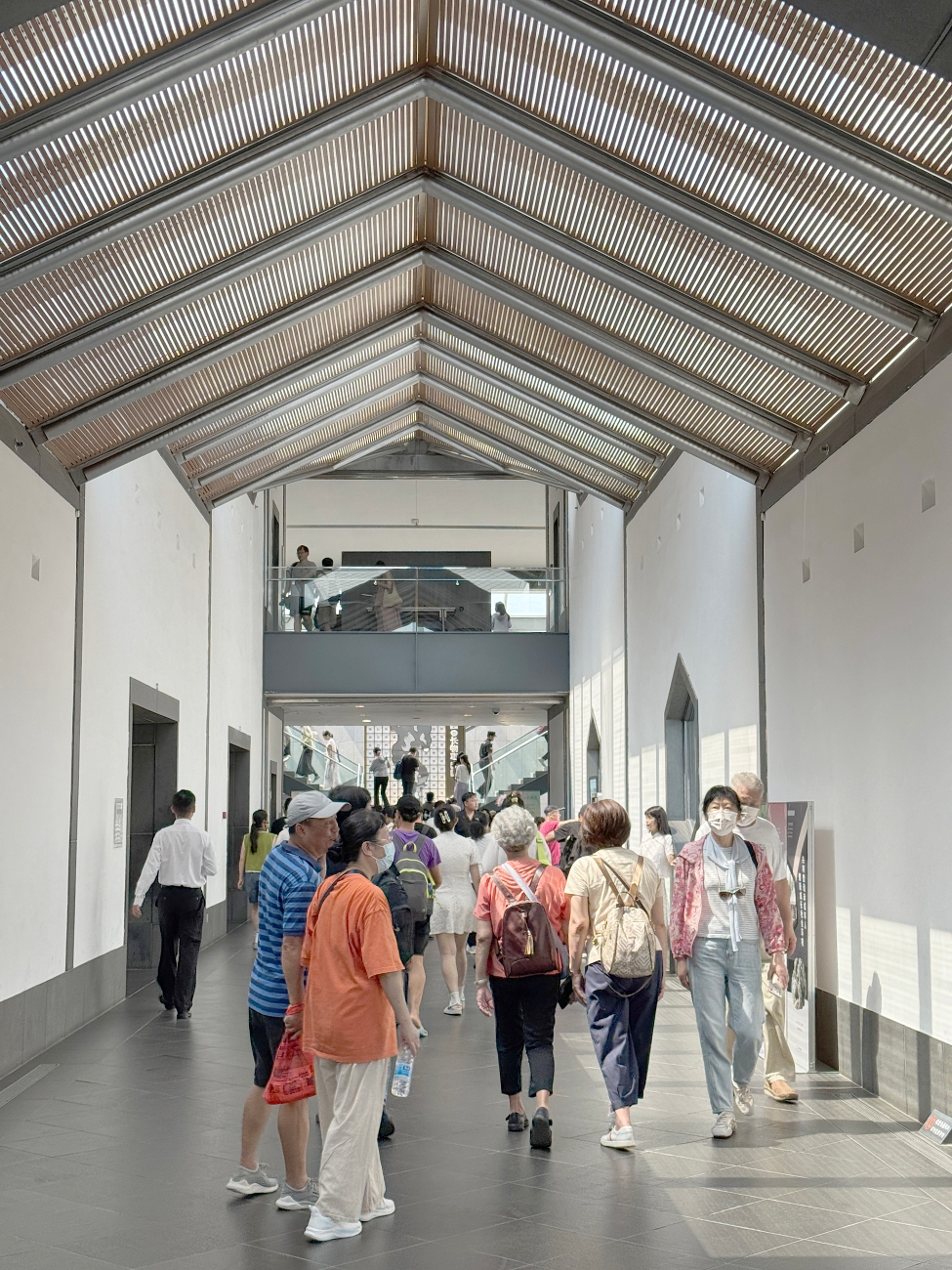
I.M. Pei reinterprets Suzhou's classical heritage through modern geometry and a signature ceiling that mimics the silhouette of traditional roofs
Although Suzhou gardens are relatively small in scale, their spatial organisation is highly complex and continuously varied. Each view is never isolated; rather, it is part of an interconnected system composed of buildings, flowers, mountains, and water. These fundamental elements are integrated into a complete whole, forming landscapes that are both independent and mutually interrelated.
After exploring the classical beauty of the Humble Administrator’s Garden, the pilgrimage would not be complete without visiting its contemporary counterpart: I.M. Pei’s Suzhou Museum. Instead of copying historical forms, Pei abstracts the underlying principles of Suzhou gardens — balance, sequence, framed views, and the dialogue between architecture and landscape — and translates them into a modern architectural language. In doing so, the museum engages with the spirit of Jiangnan gardens rather than their literal appearance.
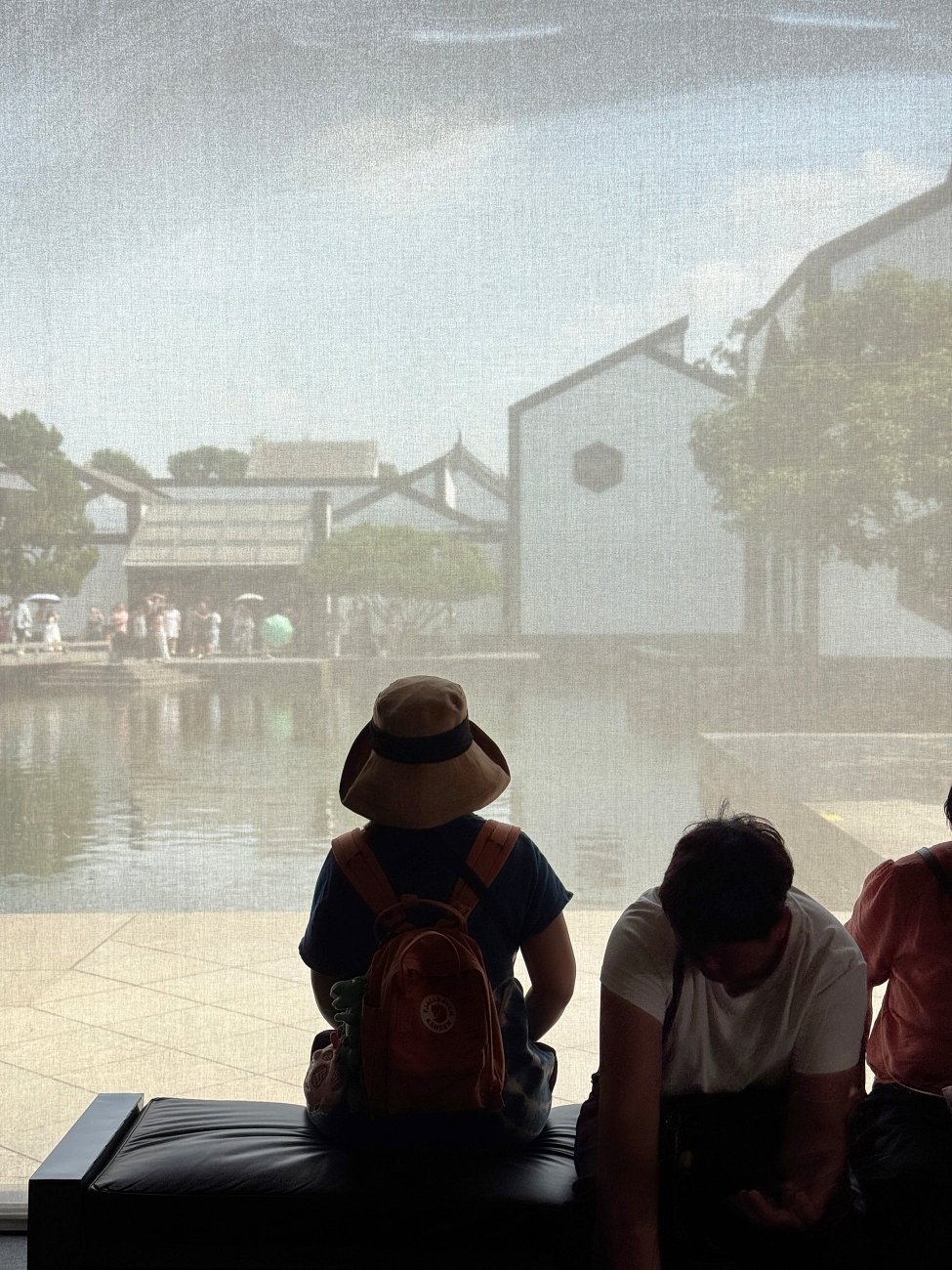
A textured screen filters the light, turning the window into a composed vignette
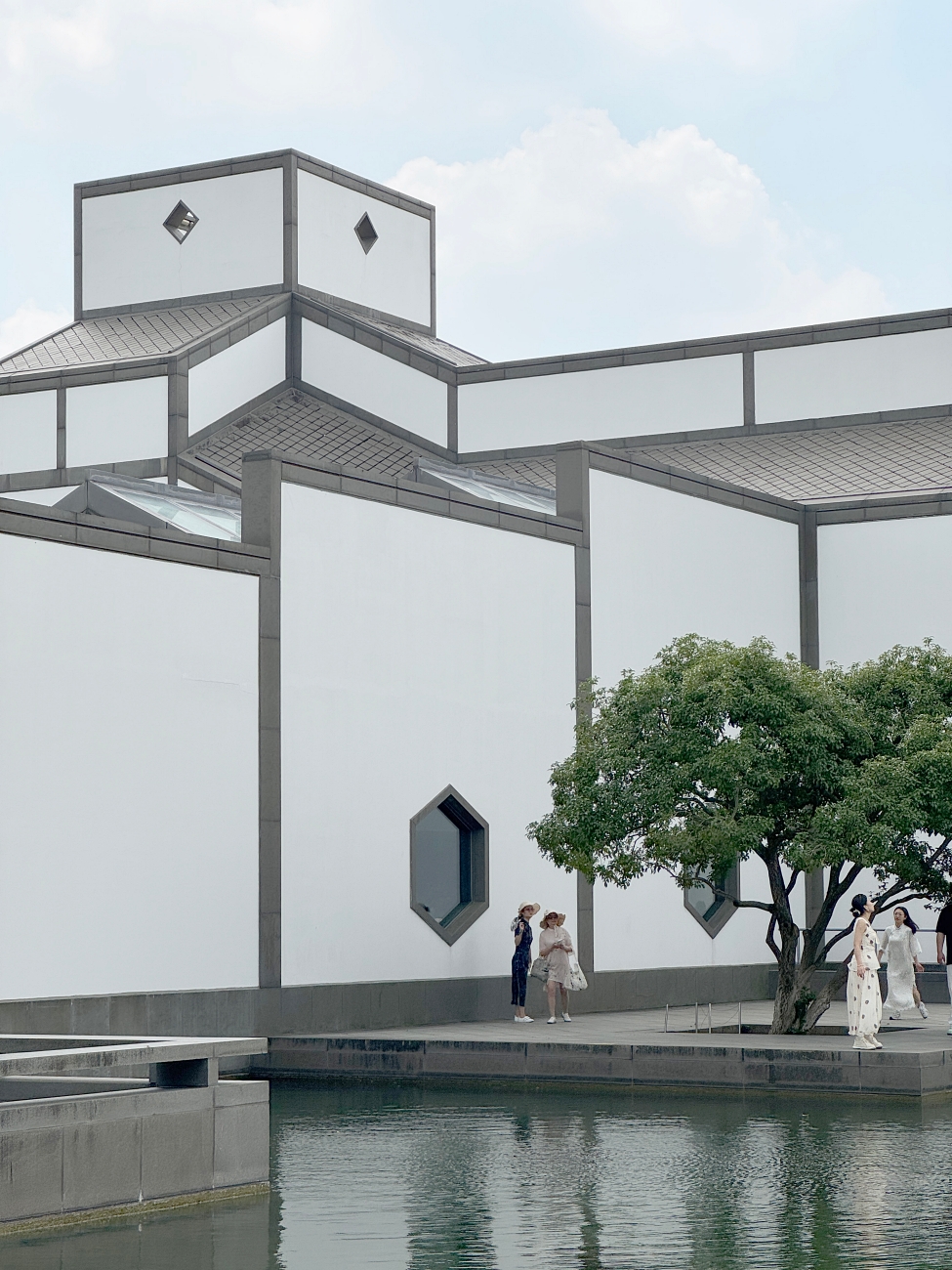
I.M. Pei simplifies the traditional "white wall and grey tile" aesthetic into a play of sharp angles and hexagonal windows, reflecting the quiet soul of Suzhou with a modern twist
Movement through the building unfolds gradually, guided by court-yards, water features, and shifting perspectives. Pei replaces winding corridors and artificial rocks with crisp geometries and glazed surfaces, yet the experiential logic remains similar: spaces are revealed through progression rather than immediate exposure. Views are carefully framed, allowing moments of pause and contemplation that echo the garden tradition of “one step, one scene.”
Pei’s treatment of materials and form further reflects a contemporary reinterpretation of garden aesthetics. White walls, grey stone, and dark rooflines recall the restrained palette of Suzhou architecture, while triangular skylights and modern construction techniques introduce a distinctly modern sensibility. Water plays a central role, not as an ornamental excess, but as a reflective and spatial device, much like in classical gardens where water anchors composition and enhances tranquillity.
The classical gardens of Suzhou and I. M. Pei’s museum do not stand in opposition, but in conversation. Together, they reveal a city where memory and modernity coexist with rare clarity — one that lingers long after the visit ends, quietly calling for a return.
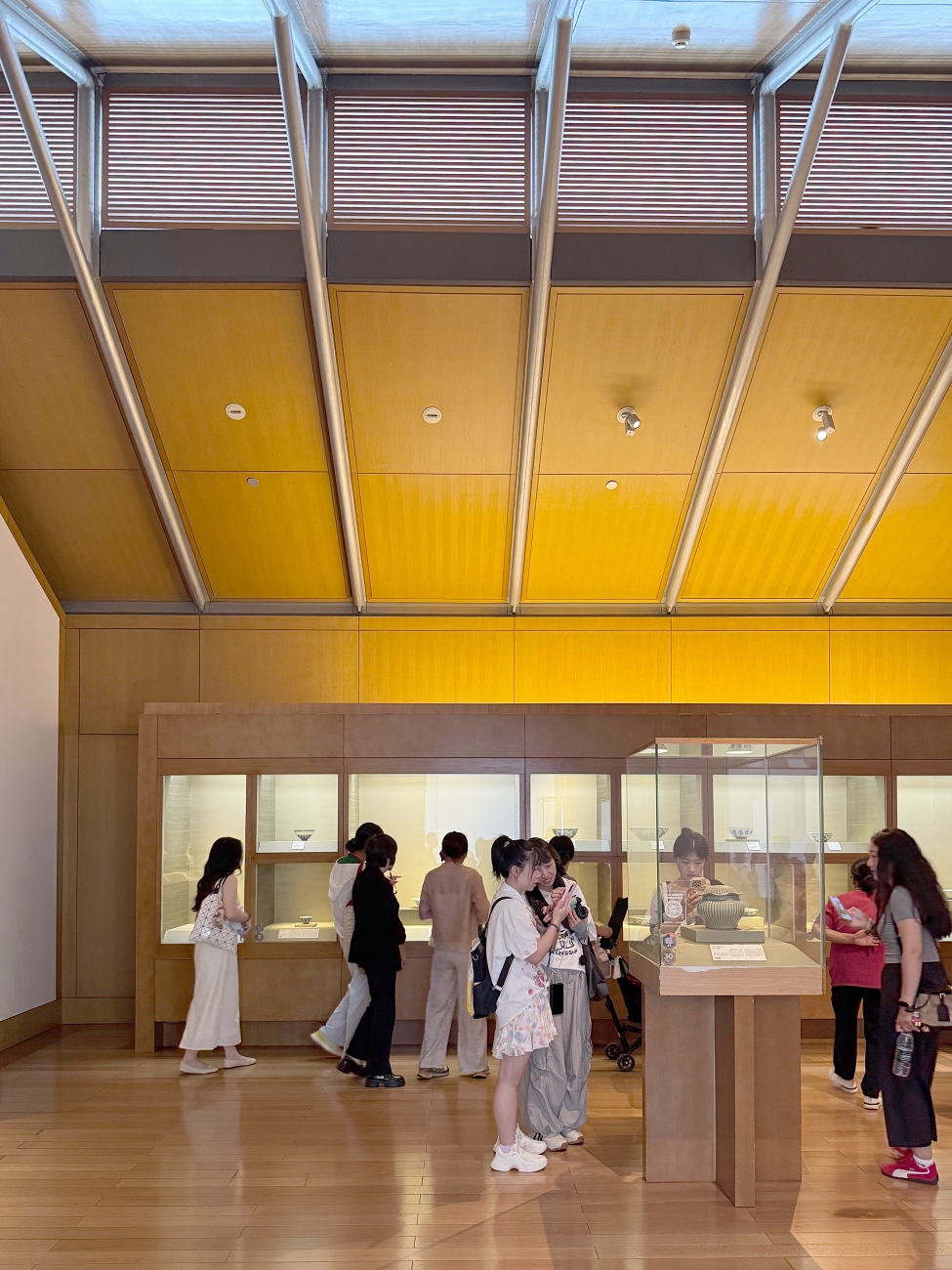
Geometric wooden panels and contemporary lighting reinterpret the warmth
The cracked-ice lattices of Linglong Hall translates the "Jade Pot Ice" inscription, a poetic metaphor, into an architectural expression of crystalline purity and serenity