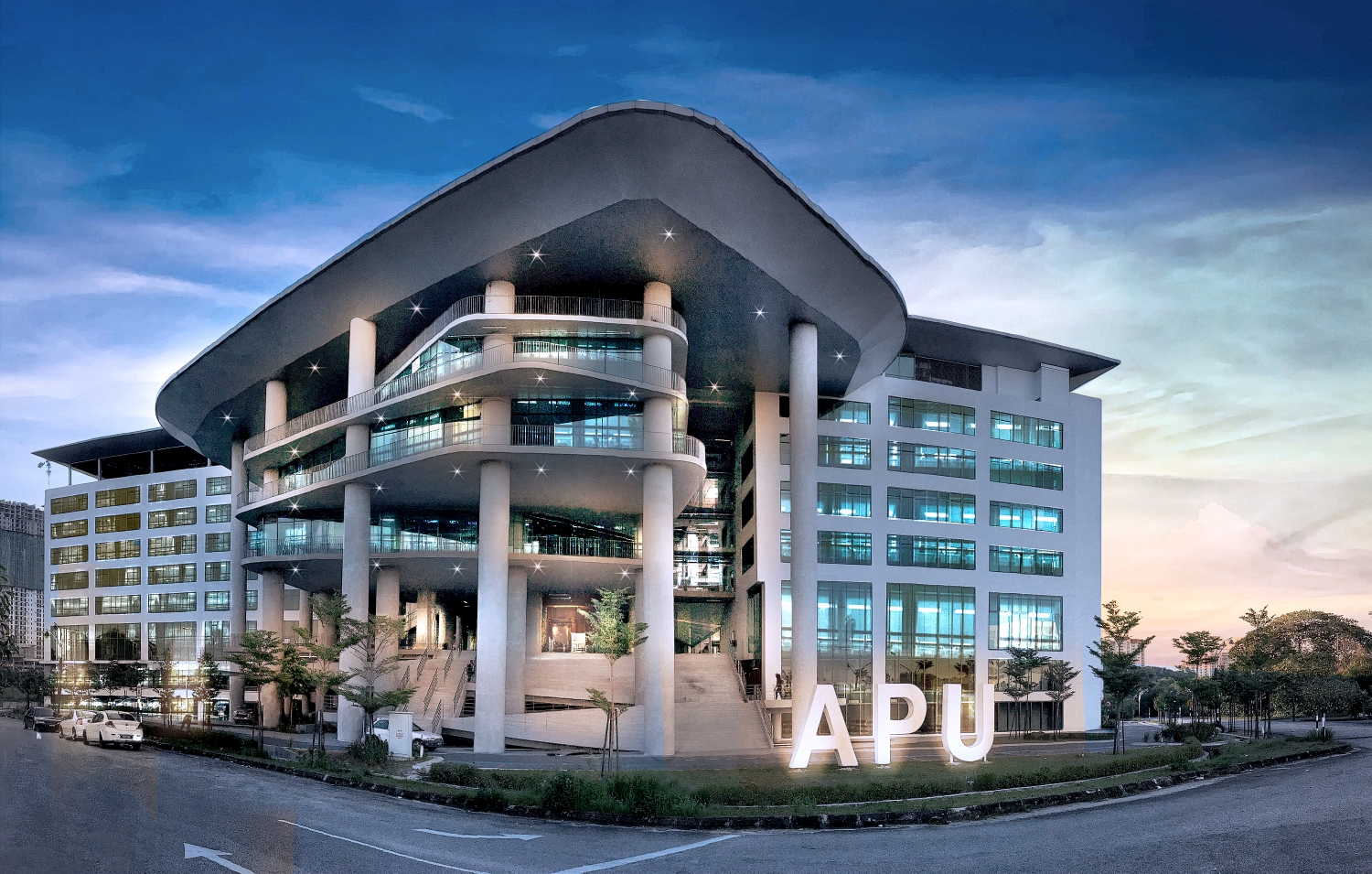
Situated within the grounds of Technology Park Malaysia, one of the nation’s earliest and most ambitious technology development corridors, Asia Pacific University of Technology & Innovation (APU) represents a decade-long architectural evolution shaped by academic growth and the cultivation of a cohesive campus community. The master plan was conceived in 2014 to be delivered over three phases spanning approximately 10 years, responding strategically to the university’s steadily expanding student population and its aspiration to create a dynamic, contemporary learning environment for more than 15,000 students.
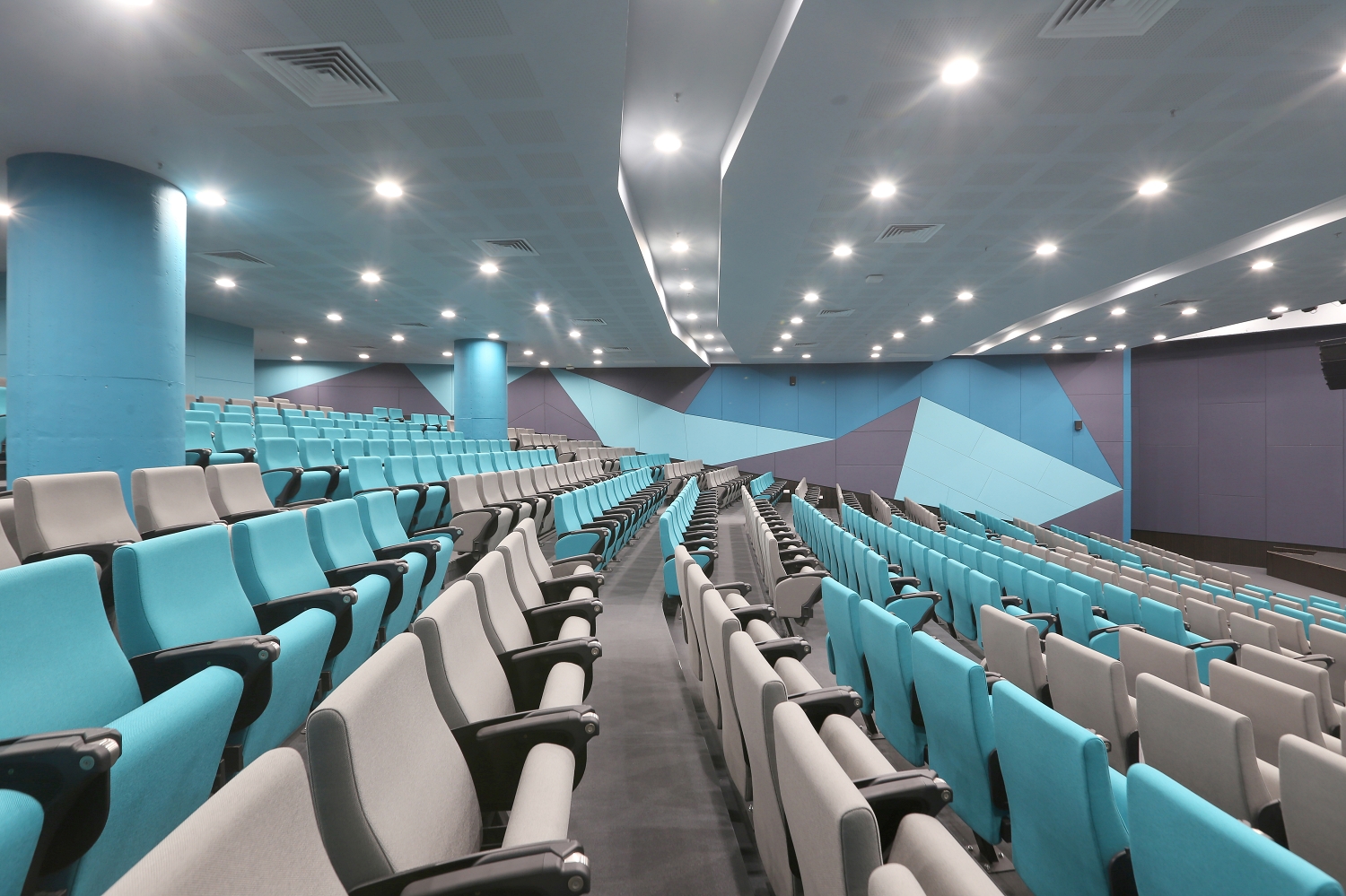
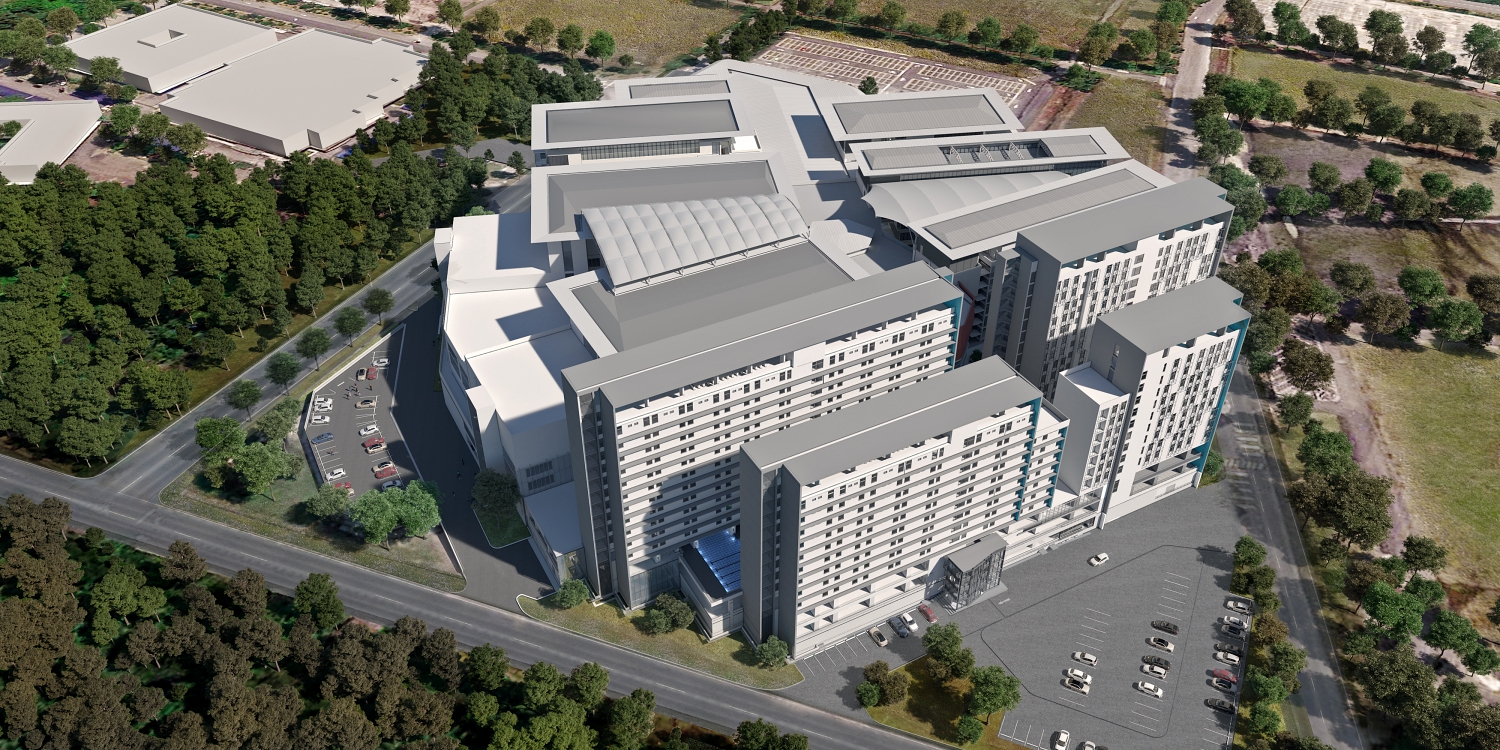
The 11-acre integrated campus forms a compact, vertically layered academic environment that may be understood as a city campus within a suburban setting. With its density, diversity of programs and facilities, and a central organising public spine, the project establishes a strong sense of academic identity and belonging. With an ultimate GFA of approximately 1.375 mil square feet, the campus incorporates extensive teaching, research, social, cultural, and residential facilities, including more than 100 lecture rooms and laboratories, 14 signature double-volume lecture theatres, a multi-purpose hall, sports facilities, specialty food and beverage outlets, a two-storey library, and full hostel accommodation for approximately 1,600 students. The development also accommodates more than 2,000 parking bays, discreetly placed within a two-level podium structure that elevates the perceived ground plane of the university.
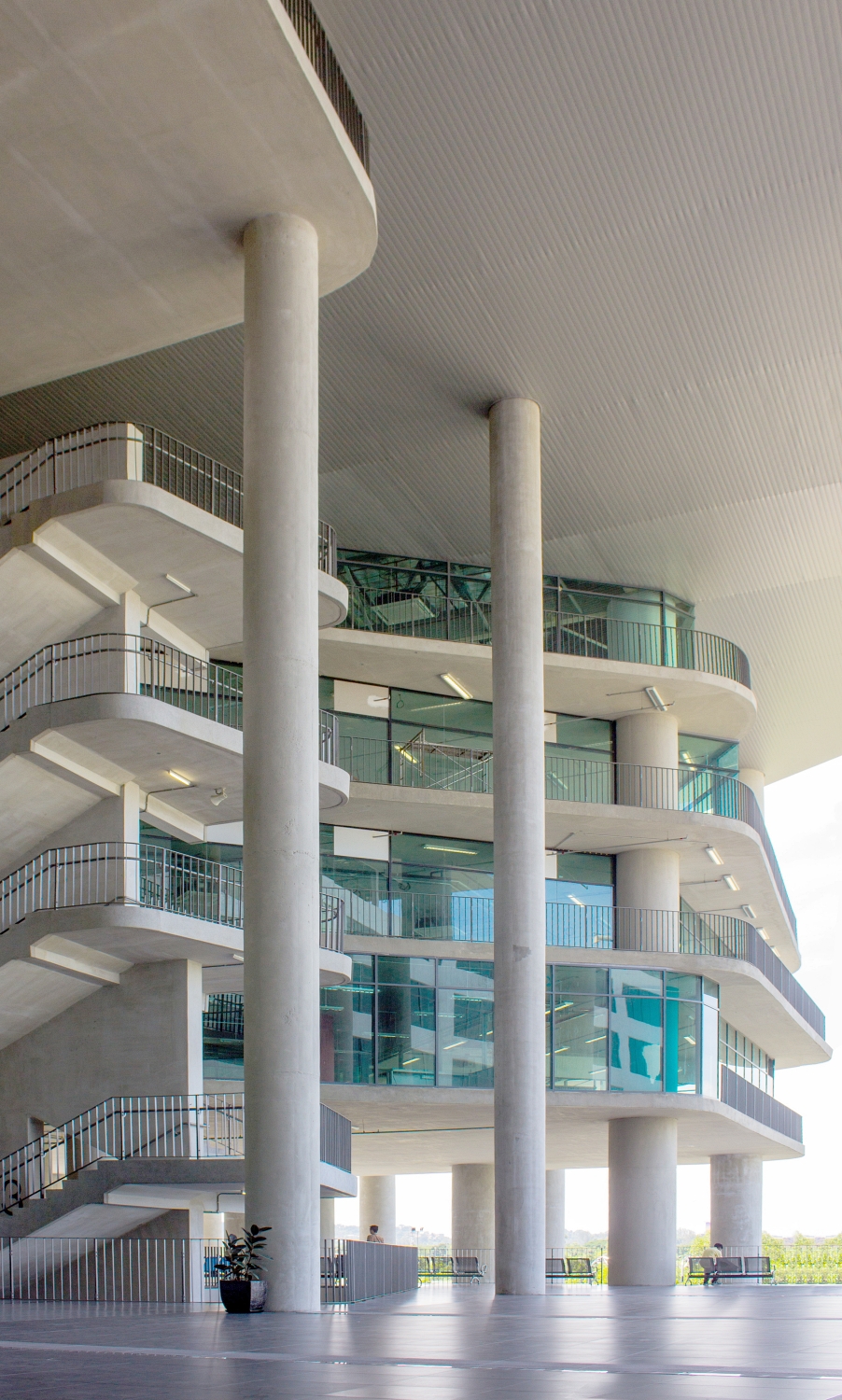
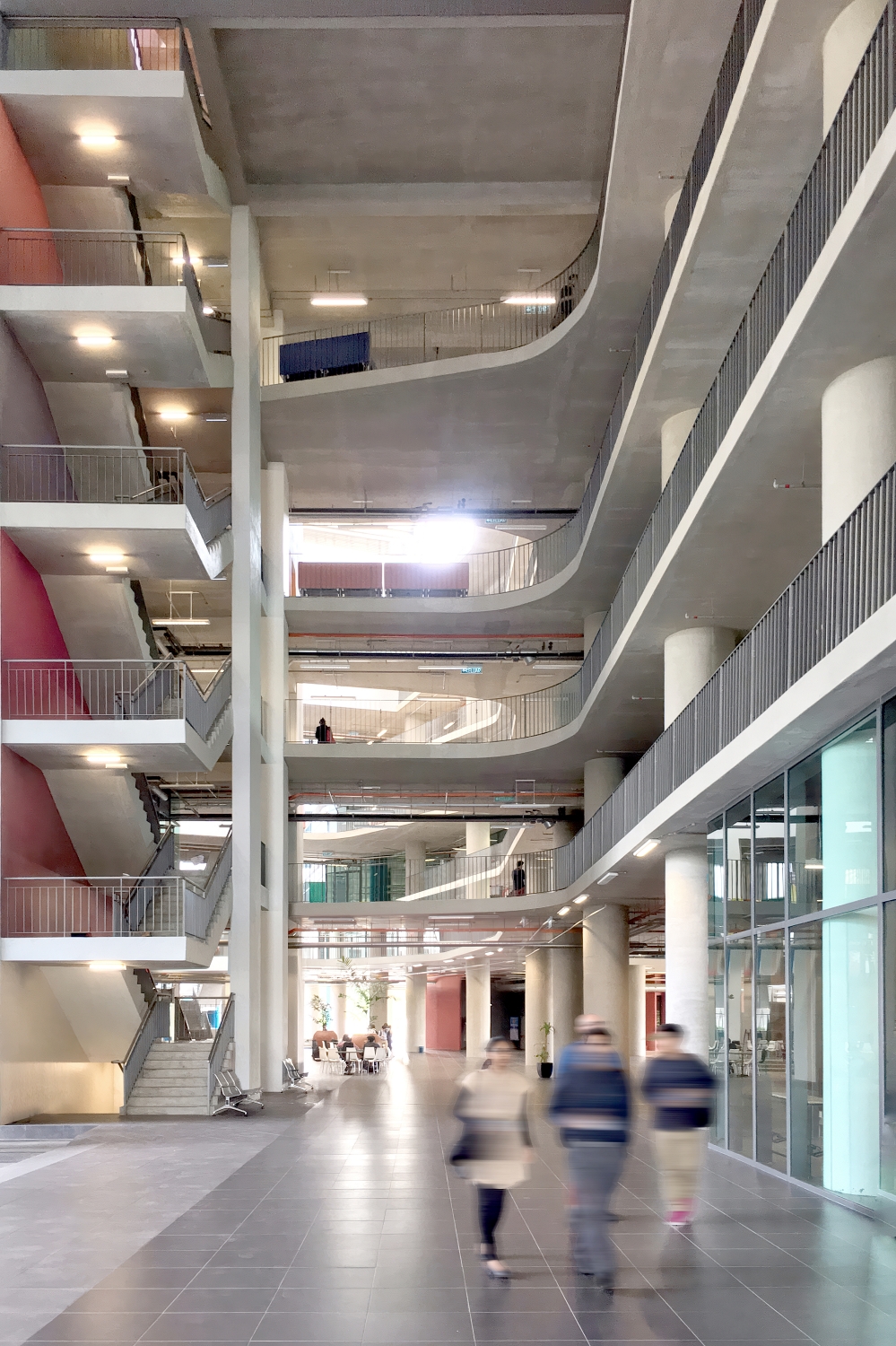
From the outset, the design brief called for a campus that would foster community, one where academic life, social engagement, informal study, and daily movement would be naturally interwoven. In response, HL Architecture developed a master plan structured around a primary public domain, a linear circulation spine that runs diagonally across the site. More than a walkway, this spine forms the social, spatial, and climatic heart of the campus. The spine unfolds over seven levels and is naturally ventilated, sheltered beneath a broad-span, iconic canopy that filters light, frames views, and provides thermal comfort throughout the day.
Teaching blocks, social facilities, and student hostel towers are arranged perpendicular to the spine, creating rhythm, legibility, and clear organisation while maximising openness between buildings. A series of garden terraces emerges between these blocks at the podium level, providing pockets for reflection, casual discussion, and outdoor learning. The resulting spatial composition encourages cross-flow movement, social encounters, and visual connectivity across varying levels and programs. The approach is essentially urban in strategy-an internal street that defines the campus, bridges between buildings that act as connectors rather than separations, and circulation spaces that are treated as places rather than corridors.
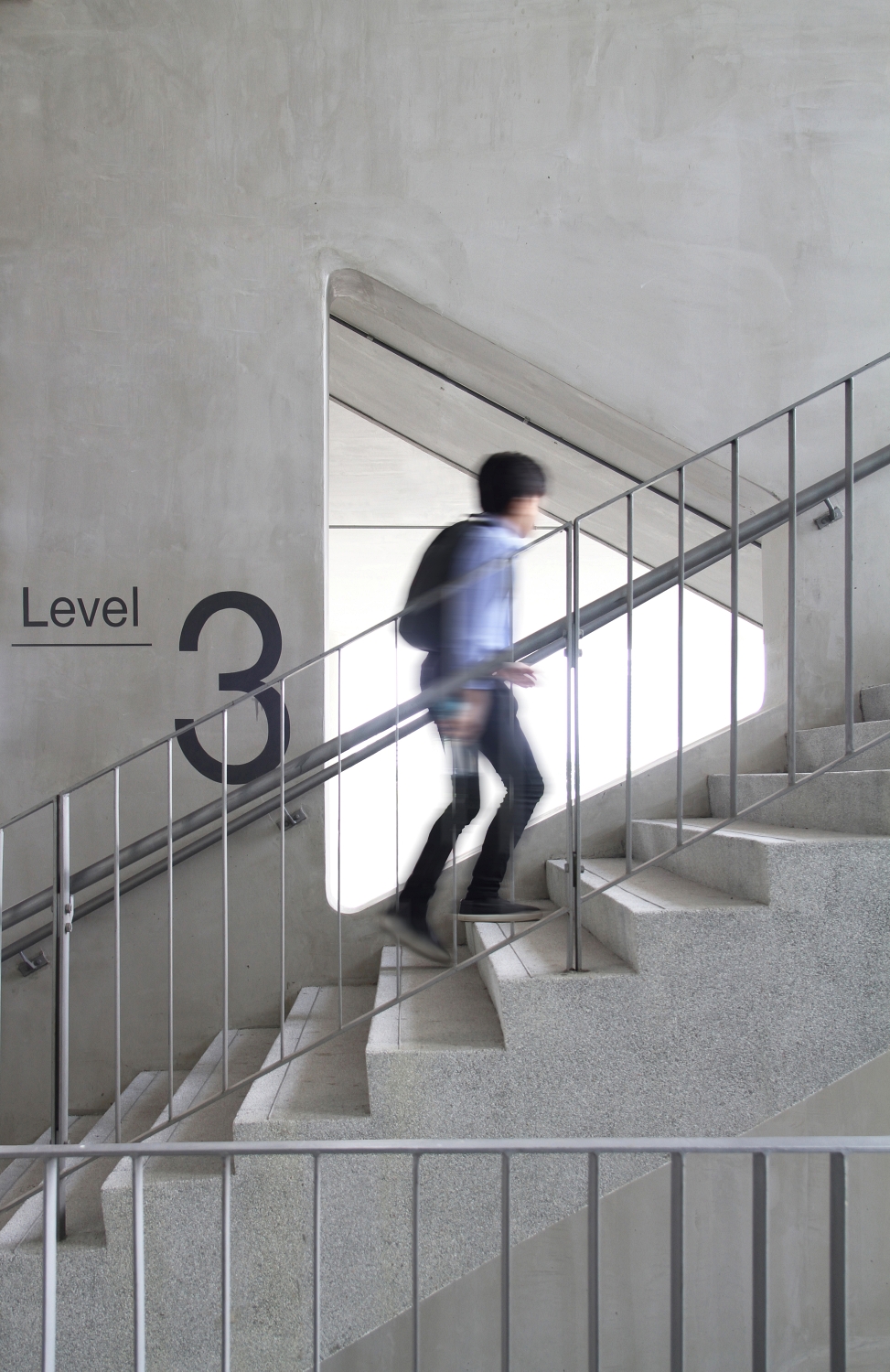
At the midpoint of the campus, the spine shifts gently, generating a moment of expansion that forms two primary focal zones on Level Three, the effective ‘ground’ plane of the university with the car park podium beneath. Here, the architecture transitions from linearity to openness. One node houses the main food court, establishing a daily hub of activity and movement. Adjacent to it, the smaller open courtyard serves as the social heart of the campus for events, gatherings, and more.
This courtyard serves as a space for orientation, celebration, and dialogue. It is framed by active edges and overlooked by circulation balconies and double-volume learning spaces. The multipurpose hall will open onto the courtyard, enabling it to transform into a major event platform when required. The space is deliberately informal and porous, encouraging students to occupy it in multiple ways, from group discussions on steps and ledges, to individual study, to larger gatherings hosted by student societies.
APU is a campus that grew over a decade, responding to enrolment increase, curriculum diversification, and new technological aspirations. Based on a pre-determined master plan, the phased execution did not produce architectural fragmentation; instead, the clarity of its spatial logic allowed the campus to expand while preserving its coherence.
It is this long-term adaptability, rooted in a strong, flexible organisational structure, that has enabled APU to retain a cohesive identity even as it continues to evolve. The university welcomes students from more than 130 countries, offering programs that range from digital technology and engineering to media, design, business, and analytics. The architecture supports this diversity not by specialising spaces into narrow use categories but by providing open platforms for exchange, collaboration, and reinterpretation.